

Independent Horology · Timepieces
Timepieces
Close reading of individual watches — movements, design languages, and the decisions behind them.
The collection · 111 essays

The Rise of Independent Watchmakers in a Conglomerate World
There’s a certain sound you can hear if you linger outside the big booths at a watch fair. It isn’t the clink of…
Read the essay ↗
The Omega Constellation and the Era of Observatory Trials
The first time I heard the phrase “the Omega Constellation,” I was standing in a corridor that smelled faintly of ozone and old…
Read the essay ↗
The Breguet Classique and the Shape of Watchmaking Memory
There are watches that tell time, and there are watches that tell stories, even when they never leave the wrist. The second kind…
Read the essay ↗
TAG Heuer Carrera: Racing Heritage on the Wrist
The first time you really notice a TAG Heuer Carrera, it rarely happens under perfect lighting in a boutique. It happens the way…
Read the essay ↗
Piaget: Ultra-Thin Mastery and Mechanical Elegance
There is a moment, usually late at night, when the world goes quiet enough for a wristwatch to speak. Not with sound, exactly,…
Read the essay ↗
Parmigiani Fleurier: Quiet Luxury in Independent Watchmaking
There’s a particular kind of silence you notice only after the room gets loud. It’s not the absence of sound so much as…
Read the essay ↗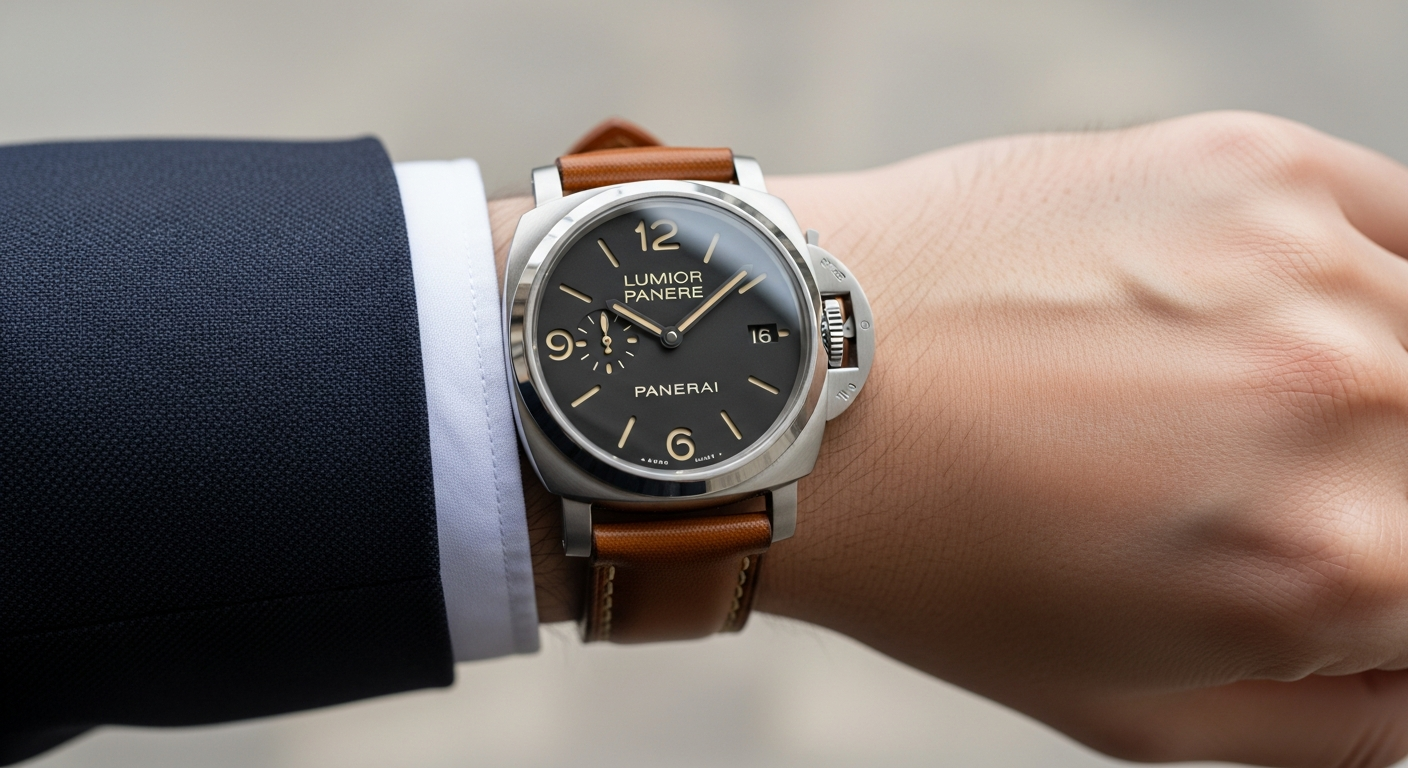
Panerai: From Italian Naval Tool to Cult Collector Icon
There’s a particular kind of romance that clings to certain objects even after their original purpose has dissolved into history. Not the polished,…
Read the essay ↗
Nomos Tangente and the Mathematics of Silence
I first noticed the Nomos Tangente the way you notice a quiet person in a loud room: not by what it did, but…
Read the essay ↗
Nomos Glashütte: Bauhaus Minimalism with Serious Horological Substance
There’s a particular kind of quiet you notice when you first arrive in Glashütte. Not silence exactly—more like a disciplined hush, the sort…
Read the essay ↗
Montblanc Minerva: From Writing Instruments to Mechanical Mastery
There’s a particular kind of quiet that falls when you uncap a fountain pen and hold it just above the page. Before ink…
Read the essay ↗