Panerai: From Italian Naval Tool to Cult Collector Icon
There’s a particular kind of romance that clings to certain objects even after their original purpose has dissolved into history. Not the polished, poster-ready romance of luxury advertising, but the grittier kind—salt in the seams, scratches that don’t get buffed out, and a design language shaped by necessity rather than taste. Panerai lives in that space. It’s a name that, for many watch lovers, still feels like it should be whispered in a dockside workshop rather than spoken under the bright lights of a boutique. And yet it’s also a modern cult—argued over, hunted, traded, and mythologized with a fervor that few brands inspire.
The truth is that Panerai’s story isn’t just the story of a watch. It’s the story of a tool that accidentally became an icon, of military pragmatism colliding with collector obsession, and of a brand that has spent the past few decades trying to balance the weight of its own legend with the realities of contemporary watchmaking. It begins, fittingly, not with collectors, but with secrecy.
In the late nineteenth and early twentieth centuries, Officine Panerai in Florence was not a global luxury name. It was a supplier—an outfit that understood instruments, precision, and the kinds of requirements that don’t leave much room for artistic interpretation. The association with the Italian Navy was not a marketing origin story concocted later; it was a working relationship that shaped what Panerai would become. You can feel that in the designs that would arrive: big, legible, and built for the practical reality of low light, underwater conditions, and the kind of pressure that isn’t metaphorical.
Many watch brands like to borrow the aesthetic of purpose. Panerai was built by it. The early military pieces were tools in the purest sense. Plain where decoration would be a liability, bold where clarity could save time, and engineered not to charm but to function. If the modern luxury watch is often about the performance of refinement, the early Panerai is the opposite: refinement as silence, as the absence of anything unnecessary.
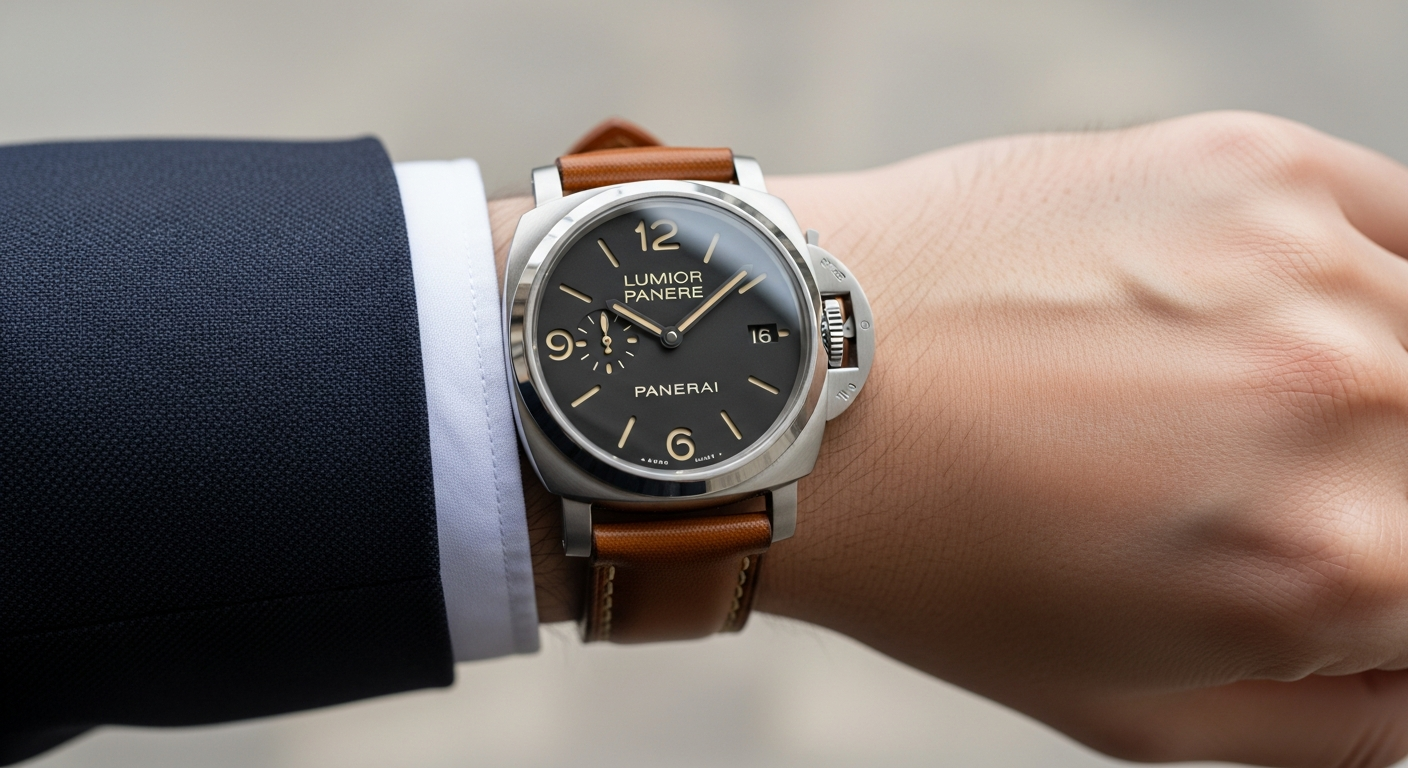
One of the most persistent ideas attached to Panerai is that you can recognize it from across the room. That’s not an accident of branding; it’s a byproduct of its original job description. Oversized cases weren’t an attempt to dominate a display window. They were about wearing the watch over equipment, ensuring visibility with a quick glance, and creating a substantial housing where a robust movement and a protective case structure made sense. The crown-protecting bridge—today a signature silhouette—reads like design theater when you meet it in a boutique. But it began as a practical response to the vulnerabilities of water ingress and the need to secure a critical point of entry.
Then there’s the dial: the famous sandwich construction, where layers create deep-filled numerals and indices that seem to glow from within. In the war-era context, legibility wasn’t a matter of preference. It was essential. Luminous material—once radium-based—was not chosen for its charm or its rarity but because darkness underwater doesn’t negotiate. When you look at historic Panerai pieces, especially those tied to military use, what stands out is how little “design” there appears to be. But that’s precisely what makes it feel so designed. Every line exists for a reason.
Of course, there’s a shadow in that history: the secrecy. Military supply contracts, specialized units, wartime technology—these are the kinds of associations that blur into legend because documentation is incomplete by nature. Some stories are confirmed, others more fog than fact, and that fog became part of the appeal once Panerai entered civilian consciousness. Collectors love certainty when it comes to provenance, but they also love mystery. Panerai offers both, and the tension between them is one of the reasons the brand is endlessly discussable.
When Panerai emerged into the wider civilian market in the 1990s, it did so in a way that feels almost improbable compared to how brands typically grow. Many luxury names scale gradually, building recognition step by step. Panerai arrived like a fully formed character walking into the room. The watches were unapologetically large at a time when the industry still leaned conservative in sizing, and their design code was instantly identifiable. It wasn’t subtle, but it wasn’t loud in the usual luxury sense either. There were no ornamental flourishes to catch the light. It was boldness of shape and presence—an instrument aesthetic made wearable.
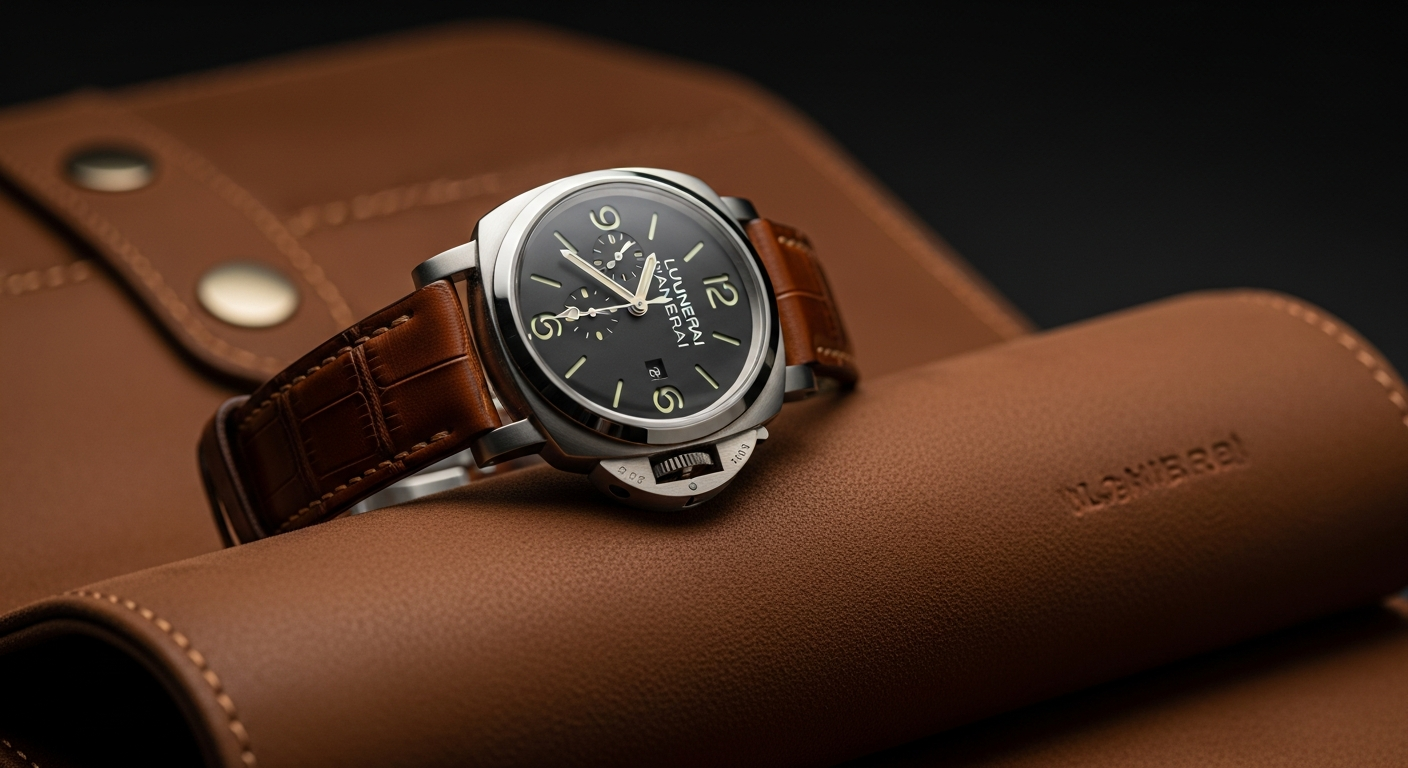
Then pop culture poured fuel on the fire. A watch can be mechanically excellent and still remain niche; what often creates cult status is the sense that it has been “discovered” by people outside the traditional collector circles. Panerai had that moment. Suddenly, the brand was on the wrists of actors and visible in places where tool watches typically weren’t. And yet the appeal didn’t come from celebrity alone. It came from the tension: this was a watch that looked like it belonged on a diver’s wrist in the dark, now peeking out from under a cuff in a restaurant. It had the allure of contraband—something not originally meant for the world at large.
That’s where the cult roots really began to take hold. Paneristi—devoted Panerai enthusiasts—formed a community that felt less like a fan club and more like a fraternity of people who had found a shared language. They traded information, debated references, hunted for rare dials and early production quirks, and elevated the brand’s insider knowledge into a kind of sport. This is one of Panerai’s most unusual contributions to modern watch culture: it helped demonstrate what a brand community could look like when it’s not merely encouraged by marketing but built by obsession.
The watches themselves became canvases for that obsession. Dial text variations, case shapes, the subtleties of handset length, the differences between a Luminor and a Radiomir, the role of the Rolex-supplied movements in historic pieces, and later the era of ETA and then in-house calibers—each shift created a new layer of taxonomy. For outsiders, it can seem comical that a brand with such a minimal aesthetic could generate so much granular debate. But that’s exactly how cult objects work. When the overall form is simple, the details become everything.
Still, Panerai’s evolution into a collector icon has never been a straight climb. The brand’s popularity surged, and with it came the pressures that always accompany success: more models, more variations, more limited editions, more opportunities for enthusiasts to feel like the brand was speaking directly to them. At times it did. At other moments, it felt as though the brand was speaking too much, too often, in too many voices. Scarcity is part of cult appeal, but manufactured scarcity can start to feel like a trick when it becomes predictable.
The tension became especially pronounced as the broader watch world shifted. The 2010s and into the 2020s saw a new kind of collector—one who can learn the basics in an afternoon online, who expects transparency, and who treats brand narratives with a healthy skepticism. Panerai, with its mix of genuine military heritage and occasional marketing overreach, found itself under sharper scrutiny. The same community that could elevate a reference into legend could also critique the brand with the intensity of disappointed devotees. And Panerai inspired this kind of devotion precisely because it had once felt so pure.
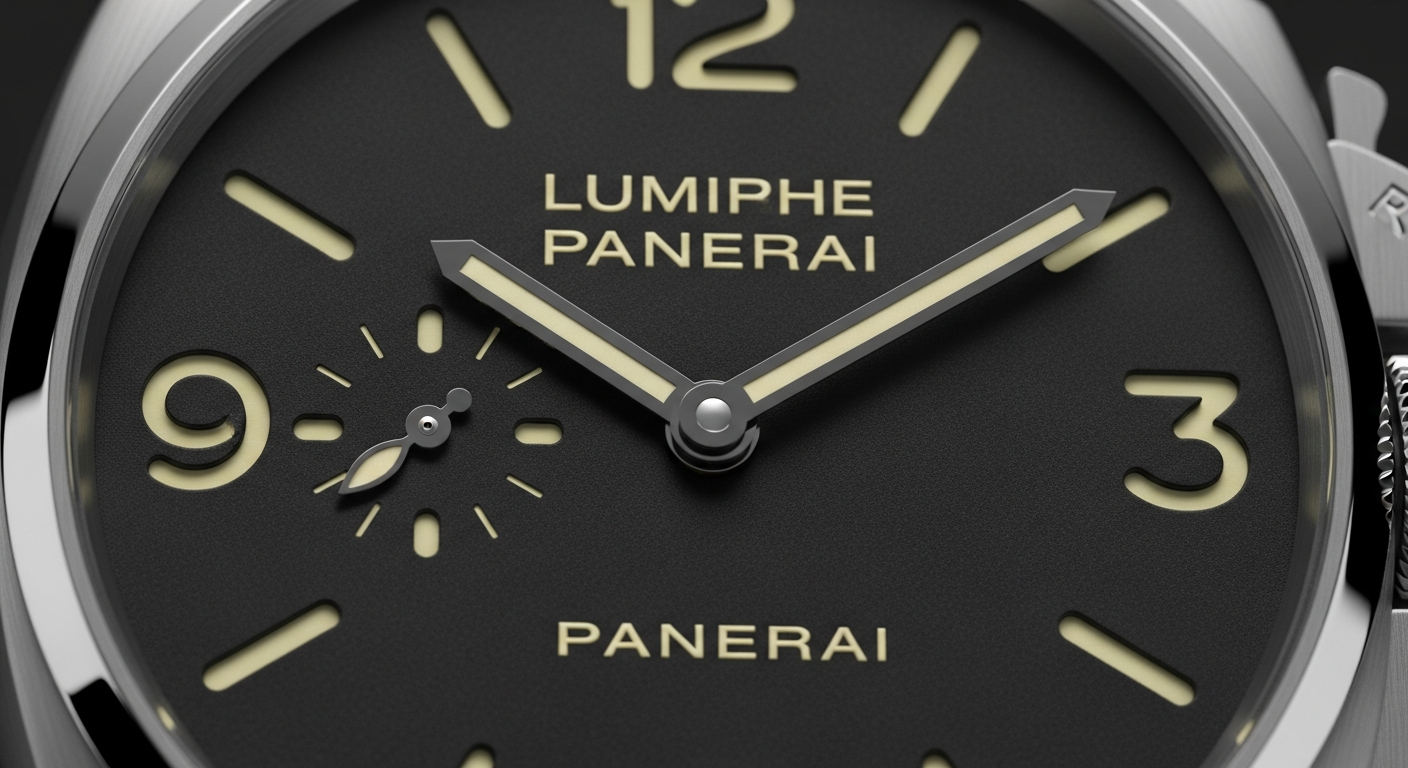
Yet even in the midst of that push and pull, the essential Panerai appeal never really disappeared. Put a classic Luminor on the wrist and it still does what it has always done: it asserts itself. Not through sparkle, not through ornate finishing that begs for a loupe, but through presence. The case has a muscular simplicity, the dial reads instantly, and the crown guard makes the whole silhouette feel engineered rather than styled. In a world where many luxury watches are designed to signal status through recognizable motifs, Panerai’s signal is different. It says: this object was made with a job in mind, and it refuses to pretend otherwise.
That refusal is what makes Panerai complicated—in a good way. The brand sits at an intersection that many watchmakers envy but few can occupy convincingly. It’s both Italian in spirit and Swiss in execution. It’s both historically anchored and heavily modern in its business reality. It’s both an enthusiast’s obsession and, at times, a mainstream luxury purchase. Those identities don’t always harmonize, and Panerai’s story over the last few decades is largely about the brand learning how to keep them in the same room without one drowning out the others.
There’s also a deeper truth about why Panerai became a cult collector icon: it offered an alternative definition of luxury. For a long time, luxury watches were framed as elegant, slim, and refined to the point of delicacy. Panerai challenged that. It made size and sturdiness feel luxurious. It made legibility feel sexy. It suggested that a watch could be beautiful because it looks like it belongs to a difficult life, not despite it. Even people who never plan to dive, never touch salty water, and never operate anything more dangerous than a laptop can still feel the pull of that fantasy. The watch becomes a passport to a version of yourself—more capable, more adventurous, more quietly tough.
But fantasies are fragile. They require care. When you build a brand on authenticity, the audience becomes vigilant. Every design decision, every movement choice, every claim in a brochure is weighed against the myth. Panerai’s collector culture is not content with vague gestures; it craves specifics. That appetite can be unforgiving, but it’s also a sign of respect. People don’t fact-check what they don’t love. Panerai has been, at various moments, the recipient of both intense affection and intense disappointment for precisely the same reason: it matters.
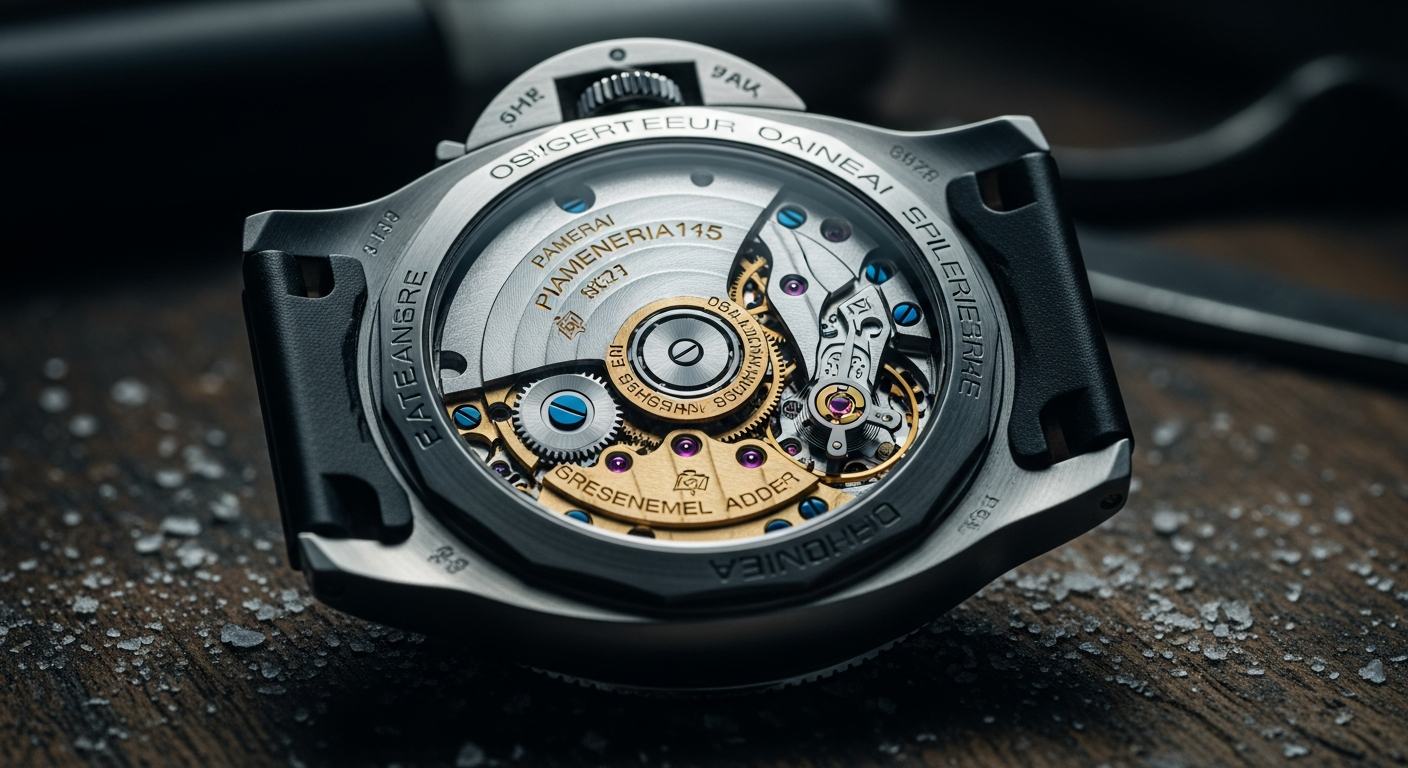
What’s striking, looking back, is how much of Panerai’s modern identity is rooted in restraint. Even when the brand has experimented—materials, complications, colors—the core of what collectors respond to is still the simple equation of form and function. A cushion case that feels like it could be a piece of equipment. A dial that speaks in large, confident numerals. A crown guard that turns a practical feature into a totem. The watches that endure in the collector conversation are often the ones that feel closest to that original purpose, even if they’re built with modern machining and modern tolerances.
And then there’s the wrist experience, which is perhaps the most underrated part of why Panerai endures. Many iconic watches are easy to admire and hard to live with. Panerai is the reverse for many people: you might think it’s too large, too blunt, too much—until it’s on your wrist. The broad dial opens up readability in a way that smaller watches can’t. The case, despite its dimensions, often wears flatter than expected. The simplicity becomes calming. It stops shouting and starts feeling like a companion. For those who get it, that’s when the cult becomes personal.
In the end, Panerai’s transformation from Italian naval tool to collector icon isn’t a tale of a brand chasing relevance. It’s a tale of relevance finding the brand, again and again, in different forms. First through genuine utility, then through the strange alchemy of secrecy and scarcity, then through community, and finally through the enduring allure of something that looks like it was made for a world more dangerous than our own.
Panerai remains a kind of test. Not of wealth, but of taste and temperament. Do you want a watch that whispers refinement, or one that contains a little bit of industrial confidence? Do you want to disappear into tradition, or stand slightly apart from it? Panerai’s fans aren’t necessarily looking for the “best” watch in some objective ranking. They’re looking for a specific feeling—one part history, one part design, one part identity—that very few watches can replicate.
That’s why, decades after it stepped out of the shadows of military supply and into the colorful glare of modern luxury, Panerai still feels like it has saltwater in its veins. The brand can change strategies, update movements, revise its catalog, and respond to the push of the market. But the heart of its appeal is stubbornly old-fashioned: a watch that looks like it was built to be used, and by accident of time and desire, became something people collect, argue about, and love as if it were alive.