Montblanc Minerva: From Writing Instruments to Mechanical Mastery
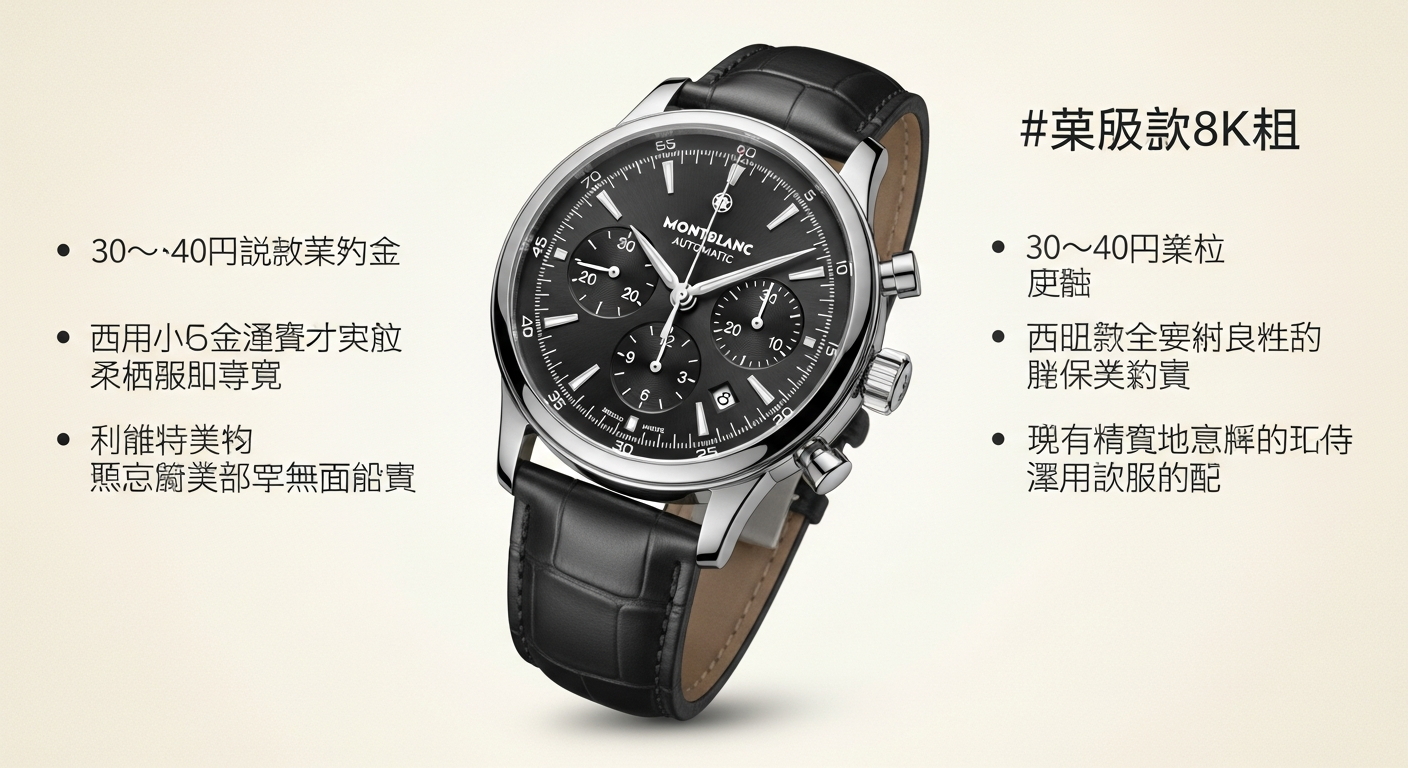
There’s a particular kind of quiet that falls when you uncap a fountain pen and hold it just above the page. Before ink touches paper, before a sentence begins to argue with itself or confess something it didn’t mean to say, there’s a pause that feels almost mechanical—a suspension of motion that asks for intention. Montblanc has built a century-long reputation on understanding that pause. The brand’s white star has long been shorthand for writing as ritual: the weight of resin and precious metal, the soft resistance of a nib, the small private satisfaction of making words permanent. Yet Montblanc’s modern identity contains a second, equally obsessive kind of silence: the hush between the ticks of a finely adjusted chronograph, the taut stillness of a movement waiting for a pusher to be pressed. In that space, Montblanc’s story becomes less about ink and more about time, and the name Minerva becomes the hinge that swings the door open.
To appreciate what Montblanc Minerva really represents, you have to start with an idea that sits at the heart of both writing instruments and traditional watchmaking: the belief that utility is only the beginning. A pen can be a stick that makes marks, and a watch can be a device that keeps appointments. But a great pen insists on being held and noticed; a great movement insists on being understood. Both ask their owners to slow down, to learn texture, pressure, cadence. Montblanc mastered the language of that intimacy in writing, but for a long time it was a language spoken mainly with nibs and feeds and black lacquered caps. The pivot into horology wasn’t just a brand extension. Done carelessly, it could have been a logo on a dial. Done seriously, it needed a grammar as rich as the one Montblanc already possessed.
The first chapter of that pivot is easy to summarize and hard to dismiss: Montblanc entered watchmaking and, like any newcomer, had to prove the difference between assembling and creating. Building respectable watches is not the same as building a watch culture, the way a pen culture exists in objects that get passed down, refilled, repaired, and carried into daily life. Montblanc’s early watch efforts were competent and increasingly ambitious, but “competent” is not the word that makes collectors lean forward. The turning point came not from simply trying harder, but from linking Montblanc’s future to someone else’s deep past: Minerva.
Minerva is one of those names that, once you notice it, turns up like a watermark in serious chronograph conversation. Founded in Villeret in the nineteenth century, Minerva earned its reputation the old way: by making movements that watchmakers admired, by designing chronographs with architecture you could read at a glance, by building mechanisms that looked like they were meant to be serviced and contemplated rather than hidden. And perhaps most importantly, Minerva represented a continuity of handcraft and mechanical coherence that never quite went out of style—it only became rarer.
When Montblanc acquired Minerva, it wasn’t simply purchasing machines or a workshop; it was gaining a lineage. The relationship between a modern luxury house and a traditional manufacture can sometimes feel like a transplant that doesn’t take. The donor heart is strong, but the body rejects it with marketing gloss. In the best scenario, the heart begins to beat on its own again, and the rest of the organism learns to live to its tempo. Montblanc’s challenge was to make Minerva’s beating heart audible without turning it into a museum piece.
If the writing side of Montblanc is about authorship, the Minerva side is about exposure. A fountain pen hides its mechanics on purpose. The magic is in the line, not the feed. A high-end chronograph movement does the opposite: it invites you to look, and in looking, to learn. This is where the storytelling gets interesting, because Montblanc didn’t simply “add” Minerva to its catalog. It began to let Minerva’s logic influence its identity. The brand that once sold the romance of signing your name started to sell the romance of starting and stopping time—of capturing a mechanical event with the same deliberateness that you choose a word.
The first time you see a Minerva-style chronograph movement in the metal—especially one of the traditional, manually wound calibres that trace their DNA to historic designs—you understand why people speak about it with something close to reverence. The bridges have a shape that feels inevitable rather than decorative. The chronograph levers and springs aren’t just there; they sit like components of a well-plotted sentence, each curve suggesting its function. There’s a kind of honesty in old-school chronograph design. You can see the handshake between parts: the wheel that engages, the clutch that slides, the column wheel that coordinates the entire performance with a firm, precise click. It is mechanical mastery not as a stunt, but as a discipline.
Yet mastery is never purely technical. It’s also aesthetic, and Montblanc had long been fluent in aesthetics. Consider the brand’s approach to materials in writing instruments: deep black resin polished to mirror levels, precious metals used not to shout but to frame, a preference for forms that feel classical even when modern. Minerva’s movements, meanwhile, are classical in the purest sense: not because they look “vintage,” but because they reflect a standard of proportion and finish that predates modern shortcuts. The unexpected harmony is that both cultures—penmaking and traditional chronograph making—depend on tactility. A good pen is felt in the fingers before it is admired in the pocket. A good chronograph is felt in the pusher before it is admired under a loupe.
There’s a small moment that watch people talk about the way writers talk about the right adjective: the feel of the chronograph start. A cam-actuated chronograph can be excellent, but it often has a certain springiness; a column-wheel chronograph, done well, offers a crisp, confident engagement that feels like the mechanism decided, without hesitation, to do what you asked. That sensation is not unlike the way a well-tuned nib begins to write without scratching, without skipping, as if the pen had been waiting for the page. Montblanc Minerva lives in these micro-moments, where luxury becomes not decoration but feedback.
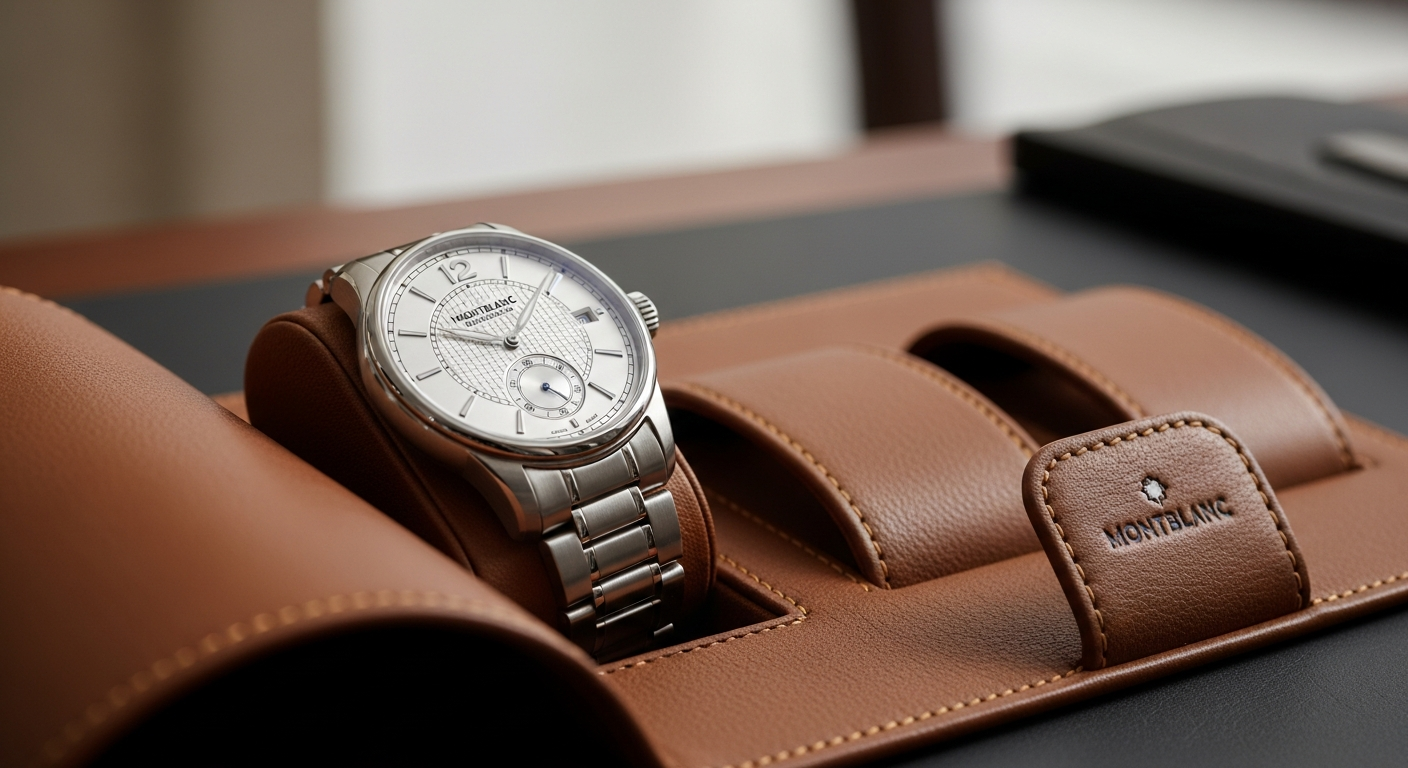
Of course, a brand cannot live on movement beauty alone, not if it intends to speak to more than a handful of connoisseurs. Montblanc needed to translate Minerva’s mechanical language into watches that could be worn, desired, and understood by people who might never remove a caseback. That translation is where editorial debates begin. Some purists want Minerva to remain rarefied and untouched, a workshop producing only the most traditional expressions of itself. Others are grateful that Montblanc has placed Minerva’s name—and more importantly, Minerva’s standards—inside a modern context where it can survive and evolve.
The truth is that survival has always required evolution, and Minerva’s story is a testament to that. Watchmaking history is crowded with brilliant names that did not make it through the changing economics of the twentieth century. What Montblanc offered was stability, scale, and access to a broader global audience. What Minerva offered was credibility that cannot be bought with advertising. When it works, it becomes symbiotic: Montblanc’s contemporary reach gives Minerva a future; Minerva’s workshop gives Montblanc a depth that changes how the entire brand is perceived.
But there’s another, subtler shift that happens when a writing-instrument icon embraces mechanical watchmaking. It changes the way we think about Montblanc’s core promise. The brand has always sold the idea of permanence: the pen as a companion through careers, travels, and diaries; the signature as a mark that outlasts the moment. A fine watch complicates that idea. Time is the least permanent thing we have. A chronograph, specifically, is a device for admitting that fact and trying to grasp it anyway. Start, stop, reset. In writing, you set ink down and it stays. In a chronograph, you measure an interval and then erase it with a push. And yet the mechanism that makes that erasure possible may outlast the person pressing the pusher. Montblanc Minerva, at its best, is about that paradox: the fleeting moment made tangible by something enduring.
There is also a craft parallel worth lingering on. Both high-end penmaking and high-end movement finishing exist in worlds where “good enough” is not the point. A nib can be mass-produced to write smoothly, but a nib can also be tuned, tipped, polished, and adjusted until it becomes personal. A movement can be industrially decorated to look acceptable, but it can also be finished by hand until its edges catch light in a way that feels like proof of care. Anglage, Geneva stripes, perlage, interior angles that can’t be done by machine—these are the equivalents of a pen’s subtle details: the crispness of an engraving, the balance of a clip, the way threads engage when you cap it. In both cases, the value is not merely in the time spent, but in the skill that makes time visible.
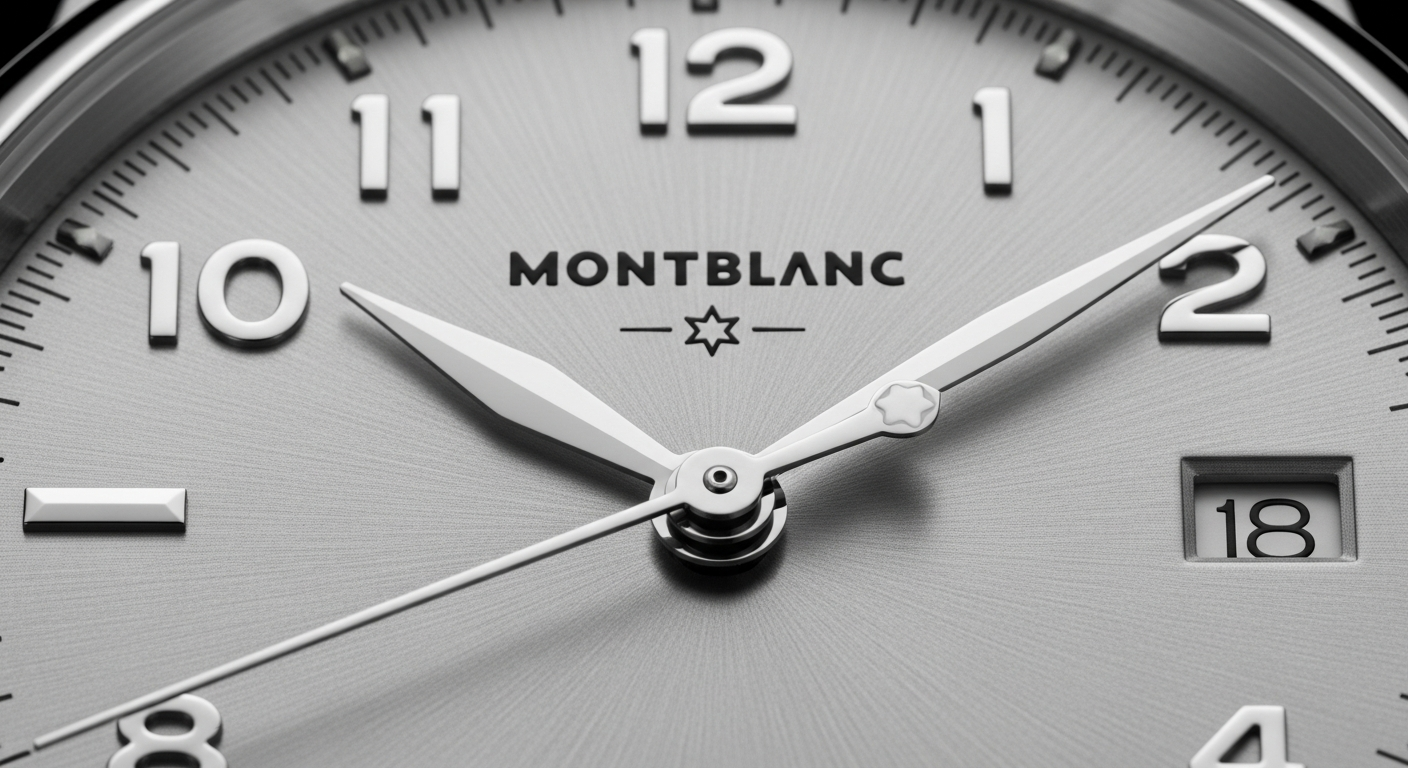
Montblanc’s Minerva-connected pieces often carry an aura that is different from the “brand watch” stereotype. They are not simply accessories with prestige attached; they are objects that invite inspection. Even the marketing language tends to shift around them. There is more talk of calibres, of heritage, of Villeret, of traditional chronograph architecture. The watches become less about owning a symbol and more about entering a dialogue. What is a monopusher chronograph? Why does a column wheel matter? What does hand-finishing actually look like, and why do some bridges have that particular contour? These are questions that pull an owner into the mechanics, the way a fountain pen can pull a casual jotter into caring about ink flow and paper quality.
And yet, there is a danger in romance. Mechanical mastery can become a costume if it is not paired with restraint. The temptation, once you have access to a storied manufacture, is to overuse the story, to turn every model into an overt historical citation. But Minerva’s legacy is not just a set of visual cues; it’s a set of principles. One of those principles is clarity. Traditional chronographs, especially those built for timing rather than mere display, are meant to be legible and purposeful. The mechanism is complicated, but its purpose is simple: measure time intervals accurately and reliably. In the best Montblanc Minerva executions, that clarity carries over from movement to dial to wearability. When it does, you feel the same satisfaction you get from a good sentence: not ornate, not forced, but clean and complete.
The editorial lens that matters most, though, is not whether Montblanc “deserves” Minerva in some abstract hierarchy of brands. The more interesting question is what this union says about modern luxury. We live in an age where so much is frictionless: messages vanish, screens refresh, files replicate without degradation, and even handwriting can be simulated by a font. The appeal of a fountain pen is that it adds friction back into communication; it makes you slow down and commit. The appeal of a traditional chronograph is similar; it adds friction back into timekeeping. You must wind it. You must decide when to start. You can feel the mechanism respond. In both cases, friction becomes meaning.
This is why Montblanc Minerva feels less like a product line and more like a philosophical bridge. It connects the act of making marks with the act of measuring moments, and it suggests that both are worth doing in a way that honors craft. There’s an old idea that tools shape behavior. A cheap pen encourages disposable writing; a fine pen encourages you to keep a notebook. A phone makes time abstract; a mechanical chronograph makes it physical. Montblanc, through Minerva, has effectively placed itself on the side of physicality.
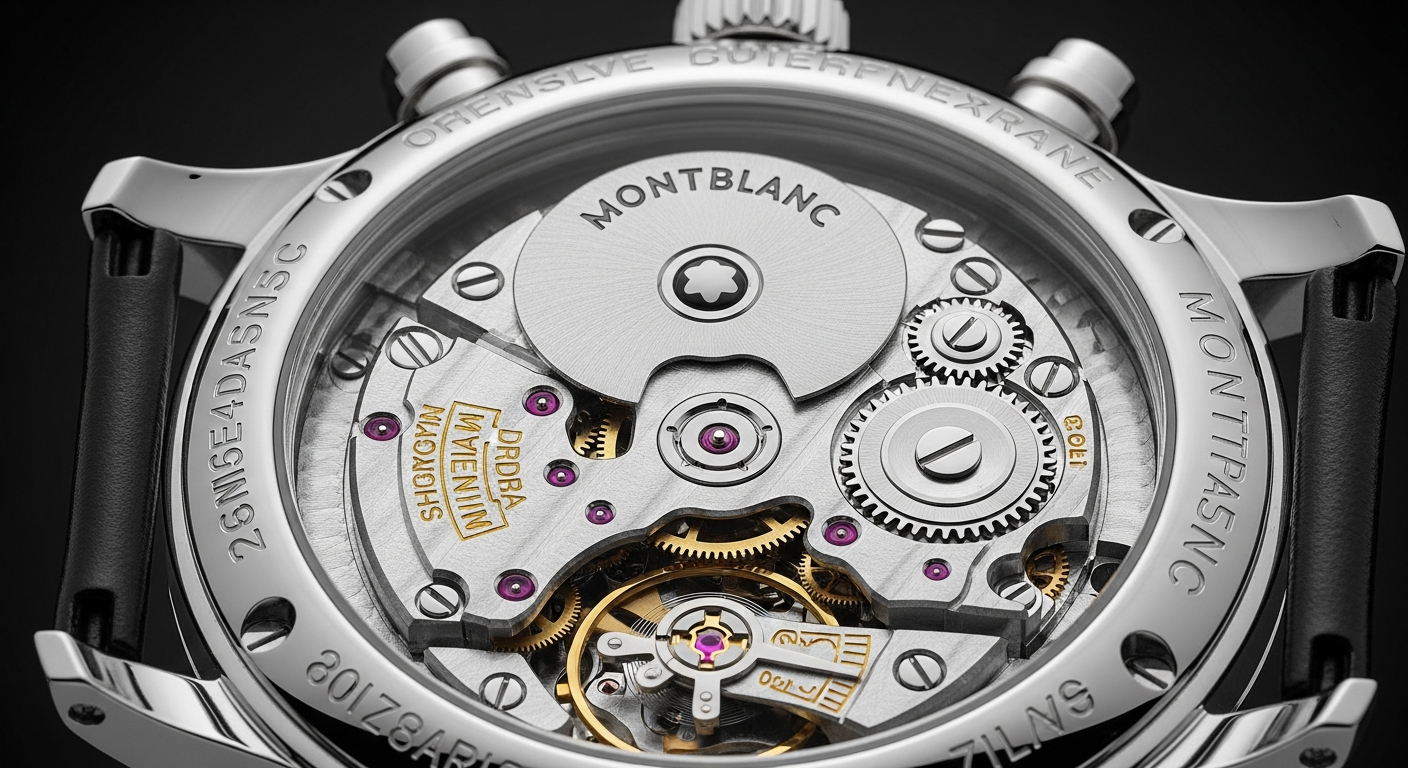
There’s also something quietly radical about a brand known for writing instruments embracing the visibility of mechanical work. Writing is often solitary; the best writing happens out of view. Watchmaking, at its most celebrated, is displayed—through transparent casebacks, through macro photography, through the shared language of finishes and bevels. Montblanc Minerva stands at that intersection: the private ritual of writing and the public admiration of mechanics. It offers an object that can be used in solitude yet appreciated as an artifact of shared standards.
If you follow the arc far enough, the title “From Writing Instruments to Mechanical Mastery” stops sounding like a pivot and starts sounding like a return. Montblanc has always been in the business of precision. A nib that writes consistently relies on tolerances and geometry as surely as a chronograph does. Montblanc has always traded in heritage, not as nostalgia, but as continuity. The difference is that Minerva adds a kind of transparency to that continuity. With a pen, you trust the craft because of how it performs on paper. With a Minerva-informed movement, you can also see the craft in metal, frozen mid-performance, its surfaces finished as if time itself deserved an elegant frame.
In the end, Montblanc Minerva doesn’t ask you to choose between the romance of writing and the romance of mechanics. It suggests they were always related. Both are disciplines of control and expression: you master the tool so the result can feel effortless. Both reward patience and punish rushing. Both create objects that, when cared for, can outlast their era’s obsessions. You can write on a screen, and you can time an event with a phone, but neither act leaves behind the same kind of residue—no ink stain on the fingertips, no memory of a pusher’s click. Montblanc Minerva is for people who want that residue, who want their tools to remind them that the world can still be touched, wound, pressed, and made.
The white star on a cap once promised that your words mattered enough to be written well. With Minerva in the picture, that promise expands: your time matters enough to be measured beautifully, too. And maybe that is the most honest definition of mechanical mastery—not complexity for its own sake, but the decision to treat ordinary human moments as worthy of extraordinary care.