
Independent Horology · Perspectives
Perspectives
Structural analysis of horology — brand positioning, market cycles, and the craft–commerce tension.
The collection · 113 essays

Kudoke Watches: Hand-Engraved German Haute Horlogerie From a One-Man Atelier in Glashütte
In a market crowded with limited editions and borrowed nostalgia, Kudoke feels disarmingly personal: you’re not just buying a “brand,” you’re buying the…
Read the essay ↗
JUNGE Uhrmacher Prestige: Germany’s Quiet Luxury Watchmakers Redefining Independent Haute Horlogerie
In an era when watch desirability is often engineered by scarcity and social media heat, JUNGE Uhrmacher Prestige offers a different kind of…
Read the essay ↗
Franck Muller Explained: The Master of Curves, Complications, and Modern Watchmaking Excess
Franck Muller doesn’t ask to be quietly appreciated—it asks to be recognized. In an industry where discretion is often treated as virtue, the…
Read the essay ↗
Panerai in 2026: How a Navy-Born Icon Turned Size, Simplicity, and Italian Design Into Modern Luxury
Panerai doesn’t ask to be understood at arm’s length—it demands recognition in a single glance. Born from military necessity and refined into an…
Read the essay ↗
Andersen Genève: The Independent Watchmaker Turning Celestial Complications into Quiet Luxury
In a market where “independent” often means oversized design statements and viral waitlists, Andersen Genève operates in a different register: discreet dials, old-world…
Read the essay ↗
Hermès Watches: How a Leather Maison Quietly Built One of the Most Desirable Mechanical Identities in Luxury
Hermès doesn’t enter watchmaking the way most brands do—by shouting about calibres, chronometry, or heritage. It approaches the wrist like it approaches a…
Read the essay ↗
Raúl Pagès: The Independent Watchmaker Redefining Modern Classicism in Swiss Haute Horlogerie
In a landscape where independent watchmaking often competes for attention with ever-louder complications and viral aesthetics, Raúl Pagès stands out by doing the…
Read the essay ↗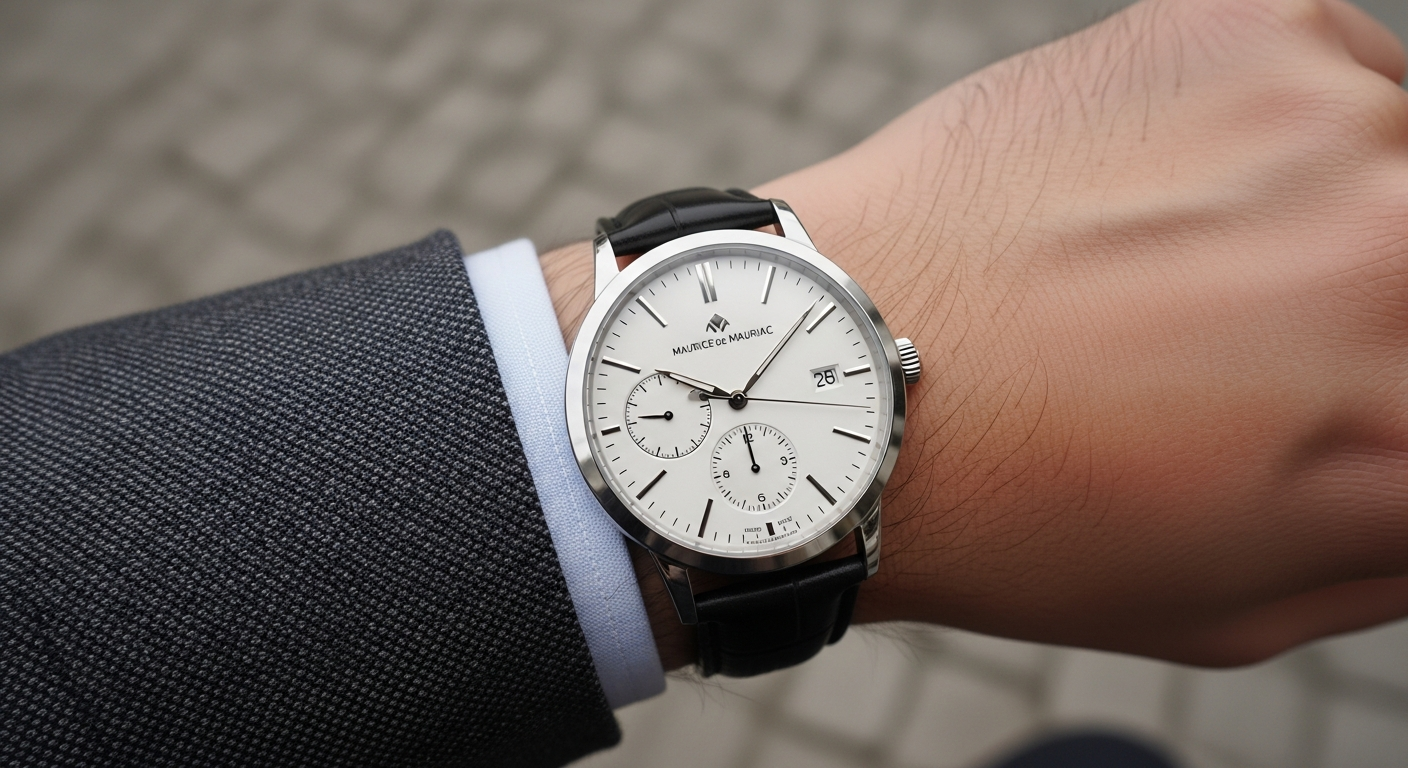
Maurice de Mauriac: Zurich’s Indie Watchmaker Turning Customization into Modern Swiss Luxury
Luxury watchmaking often sells you a legend; Maurice de Mauriac sells you proximity. From a Zurich atelier rather than a Vallée de Joux…
Read the essay ↗
Romaine Gauthier: The Independent Watchmaker Turning Micron-Level Finishing Into Modern Luxury
In a market that often sells mythology, Romaine Gauthier sells evidence: bevels that look carved by light, gears cut and finished in-house, and…
Read the essay ↗
Frédérique Constant: The Quiet Power of Accessible Swiss Haute Horlogerie in 2026
In a market where attention is traded like currency and waitlists have become status symbols, Frédérique Constant has built its proposition on a…
Read the essay ↗