
Independent Horology · Perspectives
Perspectives
Structural analysis of horology — brand positioning, market cycles, and the craft–commerce tension.
The collection · 113 essays

IWC Schaffhausen: The Quiet Power of Engineering-Led Luxury Watches
In a watch world often defined by glitter, scarcity, and louder-than-life icons, IWC Schaffhausen has built its authority in a different register: precision,…
Read the essay ↗
Montblanc Watches: How Minerva Heritage Turned a Writing-Instrument Icon into a Serious Watchmaker
For decades, Montblanc was shorthand for the executive fountain pen. Then came Minerva—a storied Villeret manufacture with deep chronograph expertise—and suddenly the brand’s…
Read the essay ↗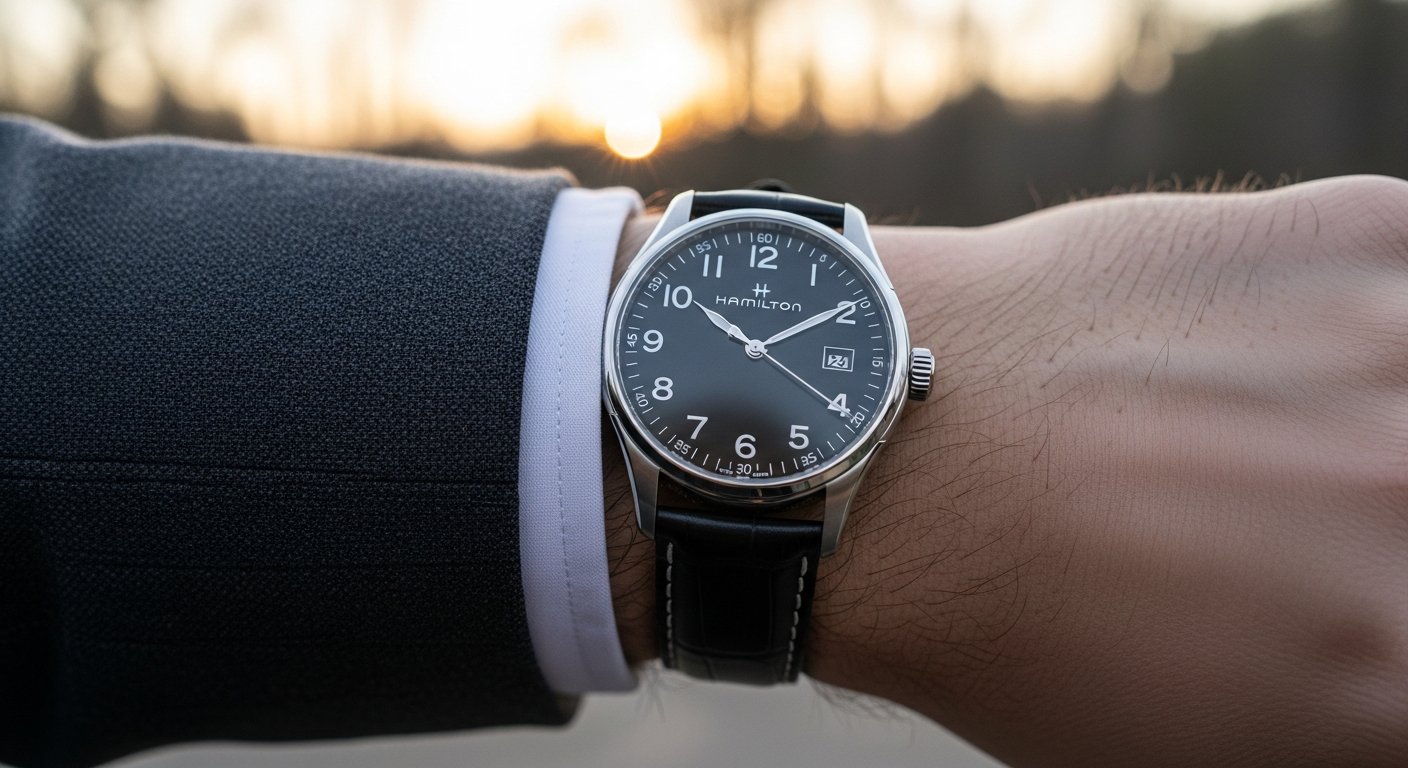
Hamilton Watches: How American Heritage and Swiss Precision Built the Ultimate Everyday Mechanical Watch Brand
Hamilton occupies a space few watch brands can claim: born on the American railroad, refined by Swiss watchmaking, battle-tested in military service, and…
Read the essay ↗
Jaeger-LeCoultre: Why the ‘Watchmaker’s Watchmaker’ Still Defines Modern Haute Horlogerie
In a market trained to chase loud icons and limited editions, Jaeger-LeCoultre sells something rarer: quiet authority. From supplying calibres to the great…
Read the essay ↗
Audemars Piguet in 2026: How the Royal Oak Became a Cultural Institution—and What Comes Next
Audemars Piguet didn’t merely create an iconic watch—it engineered a repeatable cultural mechanism. From the Royal Oak’s radical 1972 proposition to today’s tightly…
Read the essay ↗
MB&F (Maximilian Büsser & Friends): The Luxury Watch Brand That Turned Horology Into Kinetic Art—and Built a New Model of Independent Making
MB&F doesn’t sell timekeeping so much as permission: permission for high watchmaking to behave like contemporary art—signed, editioned, and unapologetically conceptual. By building…
Read the essay ↗
Breitling’s Modern Renaissance: How a Pilot’s Tool Watch Became Luxury’s Most Wearable Sport Chronograph
Breitling didn’t win the modern watch market by pretending to be something it isn’t—it won by polishing what it always was. The brand’s…
Read the essay ↗
Favre Leuba’s Modern Revival: Inside Switzerland’s Oldest Watch Brand and the Sea King Legacy
Switzerland’s second-oldest surviving watchmaker isn’t trying to outshout the giants—it’s trying to outlast them. Favre Leuba’s history was written in real-world utility: ocean-ready…
Read the essay ↗
Roger Dubuis: The Hyper-Horology Disruptor Redefining Geneva Seal Watchmaking for the Post-Luxury Era
Roger Dubuis doesn’t ask to be understood—it demands to be experienced. In a landscape where many brands use heritage as a soft-focus filter,…
Read the essay ↗
Garrick Watches: Britain’s Modern Mechanical Renaissance in Hand-Finished Timekeeping
In an industry where “heritage” is often a marketing shorthand, Garrick feels like the opposite: a young British maker behaving like an old-world…
Read the essay ↗