Tudor Black Bay Fifty-Eight Ref. 79030N: The 39mm Diver That Fixed the Black Bay
Tudor Black Bay Fifty-Eight Ref. 79030N: The 39mm Diver That Fixed the Black Bay
The Tudor Black Bay Fifty-Eight did not become important because it was nostalgic. It became important because it corrected, with unusual precision, the one weakness that had followed the modern Black Bay since 2012: the watch finally had the dimensions its design had always implied. Reference M79030N, launched at Baselworld 2018, took the Black Bay formula out of the overbuilt 41mm case and put it into a 39mm diver that felt historically coherent, mechanically current, and commercially timed to exploit a market beginning to tire of oversized retro watches.
Origin: a Modern Tudor Built Around 1958, Not Trapped by It
The “Fifty-Eight” name is specific. It refers to 1958, the year Tudor introduced the Oyster Prince Submariner reference 7924, the so-called “Big Crown”, rated to 200 metres. That reference matters because the Black Bay Fifty-Eight is also a 200-metre, crown-guard-free dive watch with a prominent screw-down crown. But Tudor did not make a reproduction of the 7924. The 79030N is a synthesis: the no-crown-guard case recalls early Tudor Submariners such as the 7922, 7923 and 7924; the angular “snowflake” handset comes from Tudor’s late-1960s Submariners, notably references 7016 and 7021 introduced in 1969; and the gilt-on-black dial language is deliberately earlier in tone than the hand design itself.
That mixture is the point. Tudor’s modern Black Bay line began in 2012 with the Heritage Black Bay reference 79220R, a 41mm ETA 2824-powered watch with a burgundy bezel and emphatic vintage cues. In 2016, the Black Bay transitioned to Tudor’s in-house calibre MT5602 in references such as 79230N, improving technical substance but increasing case thickness to roughly 14.8mm. The Fifty-Eight was the first Black Bay to feel like a watch rather than a platform. It was not merely smaller; it was proportionally re-engineered.
Case and Proportions: the Real Achievement
The headline numbers remain central to understanding the watch: 39mm case diameter, approximately 11.9mm thickness, about 47.7mm lug-to-lug, 20mm lug width, and 200 metres of water resistance. Those measurements put the 79030N in a narrow category. It is trimmer than the standard 41mm Black Bay, more wearable than most modern professional dive watches, and more substantial than many vintage-inspired watches using outsourced movements and lighter construction.
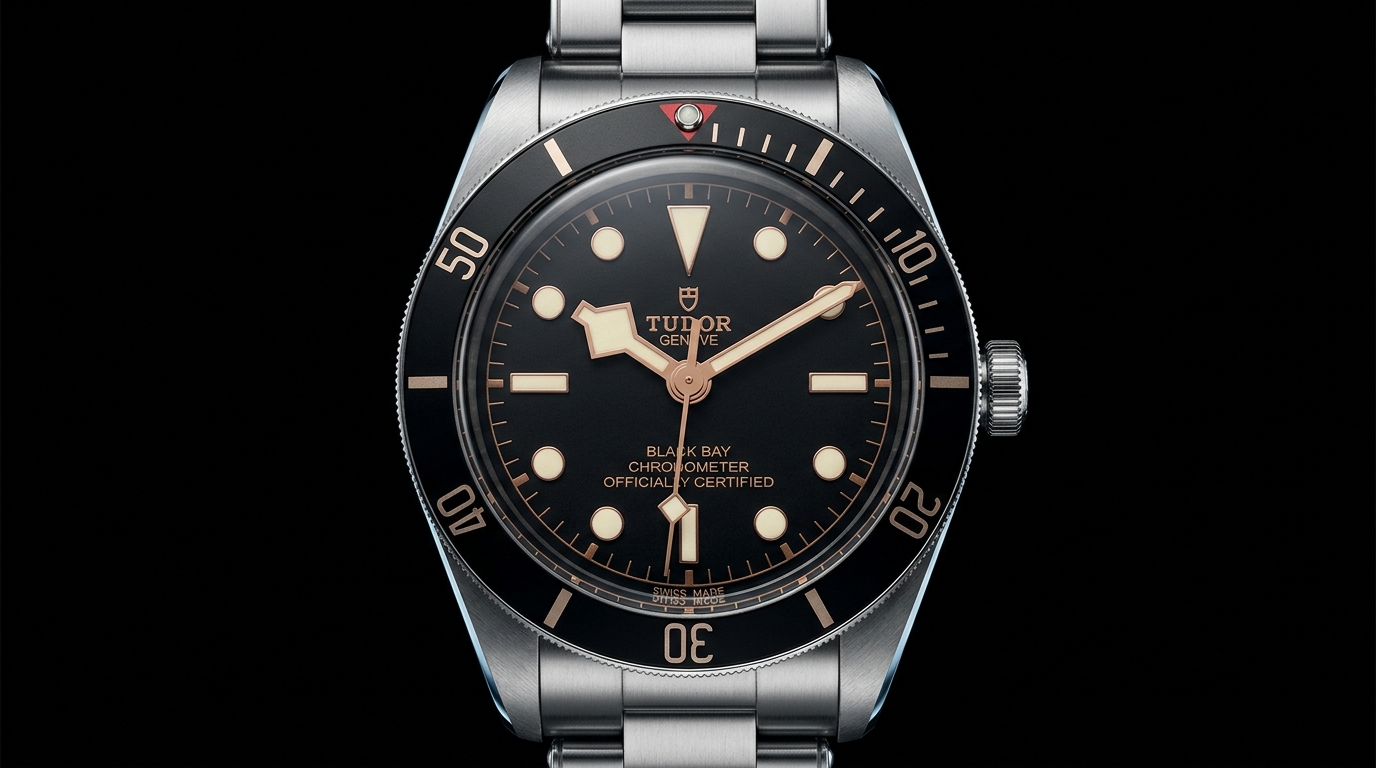
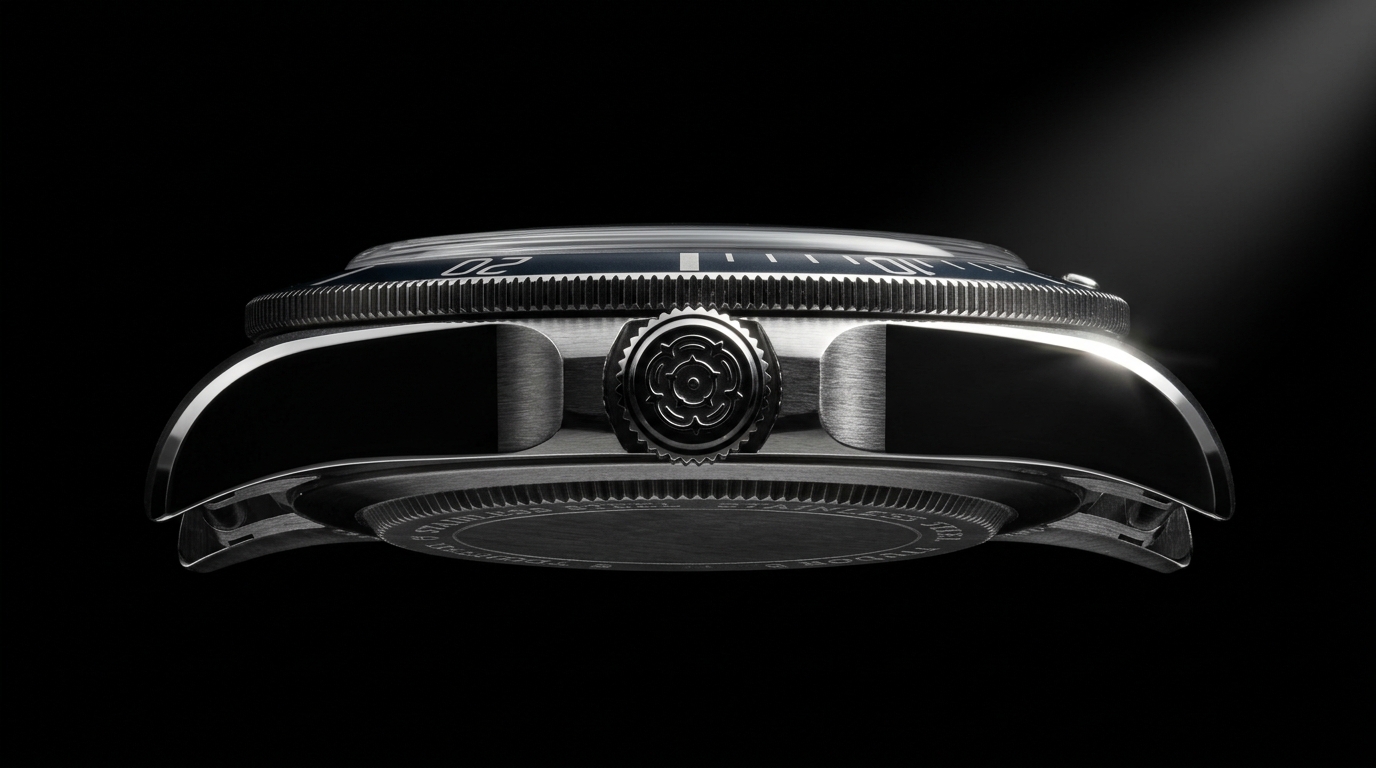
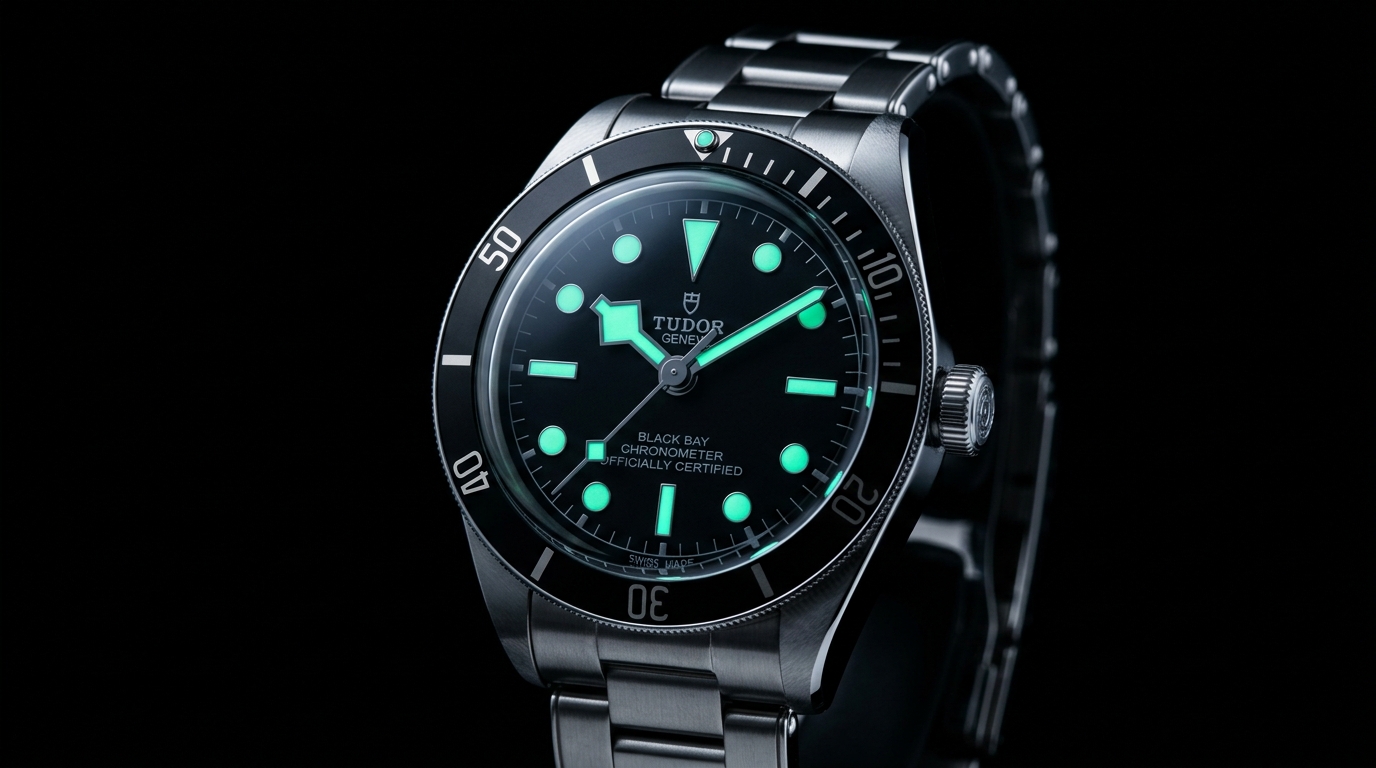
The case is stainless steel with polished flanks, brushed lug tops, a screw-down crown signed with the Tudor rose, and a screw-down caseback. The bezel is unidirectional with an aluminium insert, gilt markings, and a red triangle at 12 o’clock. The practical case for aluminium over ceramic is not strong on scratch resistance, but aesthetically it is correct for this model. A glossy ceramic insert would make the Fifty-Eight look like a miniature modern Submariner. The aluminium insert, combined with the domed sapphire crystal, keeps the watch closer to Tudor’s mid-century instruments without sacrificing everyday durability.
The important correction is thickness. Many vintage-styled divers fail because they copy old dials but retain tall modern cases. The 79030N avoids that. Its case sides are still somewhat slab-like, a family trait of the Black Bay line, but the reduced thickness and shorter span across the wrist make the slab acceptable rather than dominant. On a bracelet, the watch has enough mass to feel serious; on leather or fabric, it becomes noticeably more casual without feeling under-built.
Dial and Bezel: A Controlled Amount of Theatre
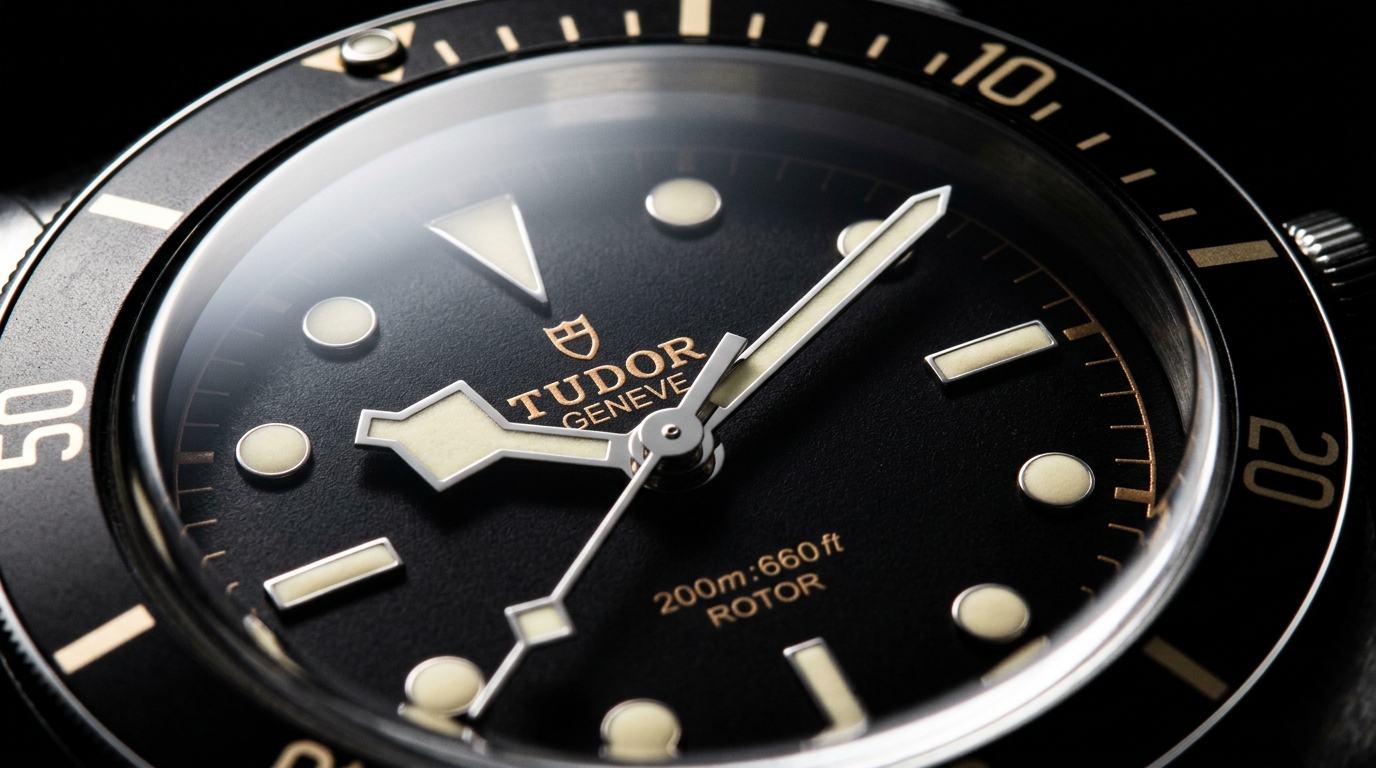
The Black Bay Fifty-Eight dial is not restrained in the purest sense. It uses gilt printing, gilt surrounds, cream-toned luminous material, a minute track, snowflake hands, applied markers, and a bezel with matching warm numerals. Yet the design works because the case is compact and the black dial absorbs much of the visual information. Tudor’s shield logo sits at 12 o’clock, while the lower dial carries the chronometer certification and water-resistance text. The absence of a date is not only cleaner; it is historically and proportionally sensible. A date window on this dial would disturb the one thing the watch does exceptionally well: balance.
The most contested choice is the faux-aged luminous colour. It is not patina; it is styling. That distinction matters. On a weaker watch, the cream tone would feel like costume. On the 79030N, it is just about justified because the whole watch is calibrated around an older visual temperature: gilt dial, aluminium bezel, domed crystal, and no crown guards. The criticism remains valid, but it is not fatal. The lume is legible, the handset is unmistakable, and the minute hand reaches the track properly. This is not vague vintage flavour; it is a disciplined execution of Tudor’s established design code.
Calibre MT5402: the Movement That Made the Size Possible
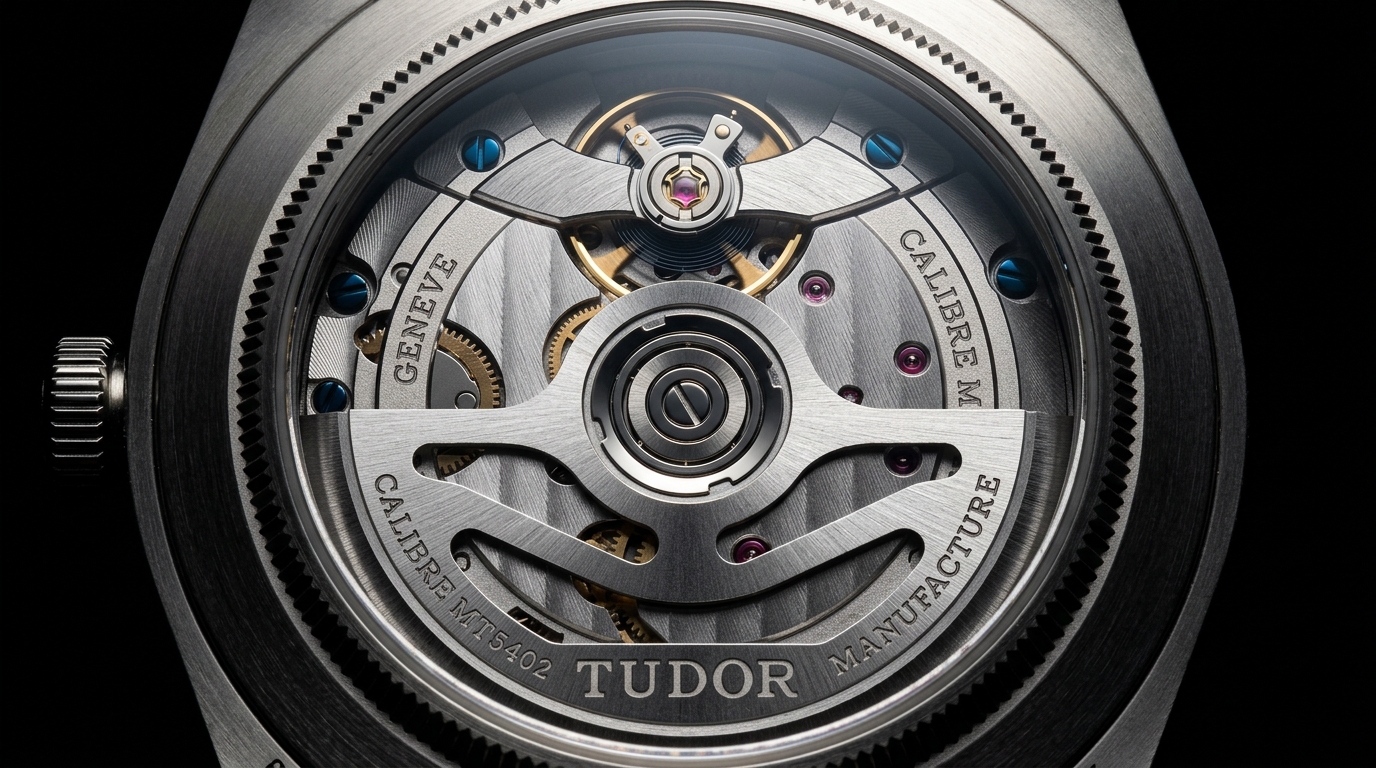
The Black Bay Fifty-Eight uses Tudor calibre MT5402, a self-winding manufacture movement developed for smaller cases than the MT5602 used in the 41mm Black Bay. The MT5402 measures 26mm in diameter and is approximately 4.99mm thick. It runs at 28,800 vibrations per hour, uses 27 jewels, offers a 70-hour power reserve, and is COSC-certified. It has a free-sprung balance with micro-adjustment screws and a silicon balance spring. Tudor states that its fully assembled watches are regulated to -2/+4 seconds per day, tighter than the COSC test range of -4/+6 seconds per day for the uncased movement.
This calibre is central to the model’s success. A smaller watch powered by an off-the-shelf ETA 2824 or Sellita SW200 could have been thinner, cheaper, and easier to service independently, but it would not have established the Fifty-Eight as the technical equal of Tudor’s larger models. Conversely, forcing the MT5602 into a smaller case would have compromised the dimensions. MT5402 was the strategic solution: modern performance, long autonomy, chronometer certification, and a case size that finally made sense.
The finishing is industrial rather than decorative, and the owner will not see it through the closed caseback. Tudor uses sand-blasted and polished surfaces, openworked elements, and a tungsten rotor, but this is not a movement sold on hand-finishing. That is appropriate. The Fifty-Eight is a sealed sports watch, not a display-back object. Its movement should be judged by architecture, autonomy, regulation, robustness, and service infrastructure. On those terms, MT5402 is one of the strongest calibres in its segment.
Bracelet, Straps, and Daily Wear
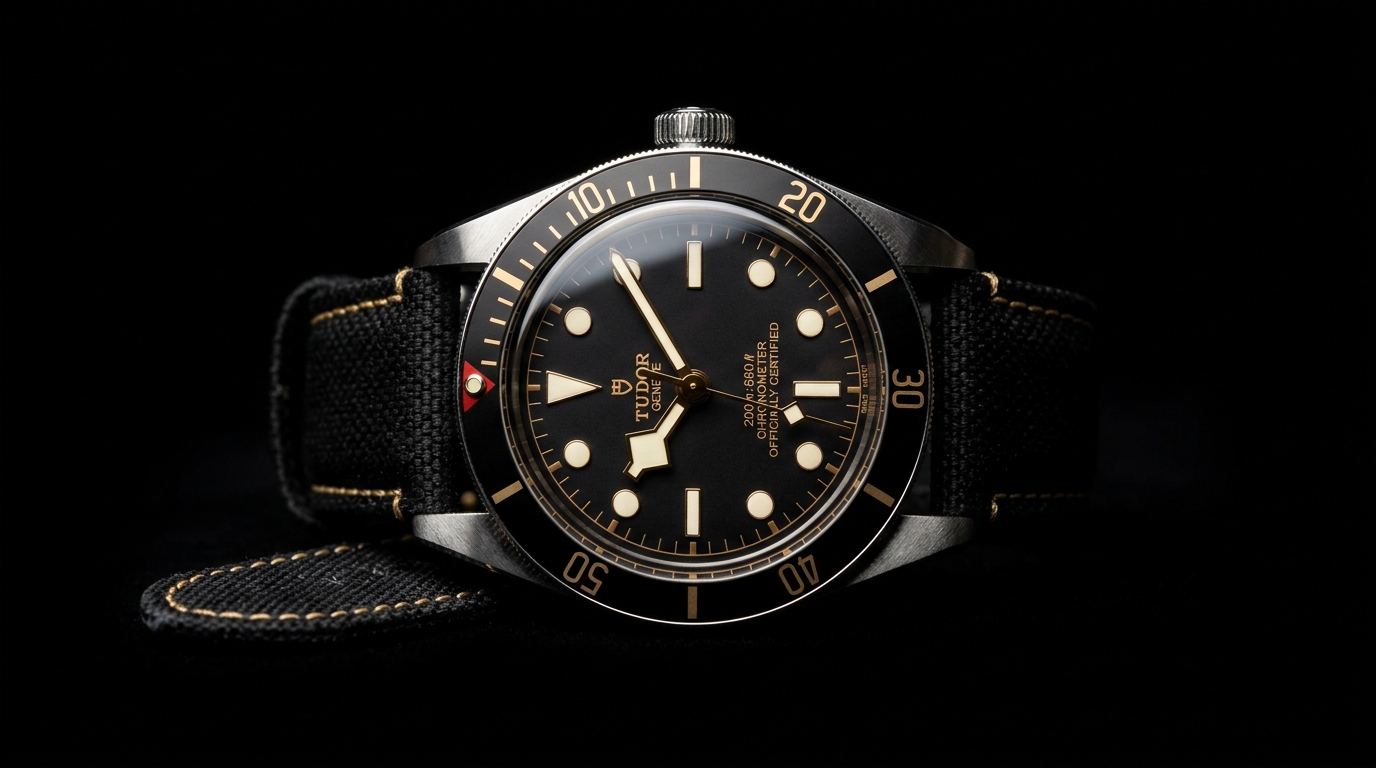
Reference M79030N was offered on a rivet-style steel bracelet, a brown leather strap, and a black fabric strap, with bracelet examples carrying the strongest collector demand. The bracelet is both one of the watch’s strengths and one of its compromises. Its taper and solid construction suit the case well, but the faux rivet heads on the flanks remain divisive. They are decorative, not structural, and they make the historical reference more explicit than it needs to be. More importantly, the original bracelet clasp lacks Tudor’s later T-Fit on-the-fly micro-adjustment system, which would have been particularly useful on a compact sports watch intended for year-round wear.
Even so, the Fifty-Eight wears better than its specification sheet predicts because the mass is controlled and the lug-to-lug distance is short enough for smaller wrists. The 39mm diameter is not simply a concession to fashion; it is the correct size for the design. The watch has enough bezel width to read as a diver, enough dial aperture to avoid looking cramped, and enough case height to feel modern without becoming top-heavy. On a 6.5-inch wrist it looks natural; on a 7.25-inch wrist it still avoids seeming undersized. That range is one reason the model has held attention outside the usual vintage-diver audience.
Market Position: the Watch Tudor Needed
At launch in 2018, the Black Bay Fifty-Eight was priced at approximately USD 3,575 on bracelet and USD 3,250 on leather or fabric strap. Those prices placed it below the Omega Seamaster Diver 300M and far below the Rolex Submariner, while significantly above entry-level vintage-inspired divers from Longines, Oris, and Sinn. The positioning was deliberate. Tudor was no longer trying to be merely a cheaper route into Rolex-adjacent styling; it was offering a technically credible, chronometer-certified diver with a distinct case size and design language.
The collector response was immediate. For several years after launch, bracelet examples were difficult to obtain at authorised dealers in many markets, and secondary prices frequently hovered around or above retail. That premium has since normalised. By 2024 and 2025, complete pre-owned bracelet examples commonly traded below current retail, often in the high-USD-2,000 to mid-USD-3,000 range depending on condition, age, accessories, and warranty status. That correction is healthy. The Fifty-Eight is a better watch when it is not treated as a speculative object.
Its competitive set has also changed. Tudor itself has complicated the picture with the Black Bay Fifty-Eight Navy Blue reference 79030B in 2020, the silver 925 reference 79010SG in 2021, the gold 79018V, and later smaller or more technically elaborate Black Bay models. Yet the original 79030N remains the reference point because it is the purest expression of the idea: black dial, black bezel, gilt accents, steel case, no date, chronometer movement, 39mm diameter. The variants may be interesting, but they orbit the original rather than replacing it.
Why the Black Bay Fifty-Eight Endures
The durability of the Tudor Black Bay Fifty-Eight is not accidental. It endures because it resolved a real product problem. Before 2018, the Black Bay line had the right visual identity but not quite the right physical form. The 79030N fixed that with a smaller case, a purpose-built calibre, and enough technical specification to avoid being dismissed as a style exercise. It also arrived at the right market moment, when collectors were reassessing size, thickness, and wearability after a long period of larger luxury sports watches.
The watch is not beyond criticism. The gilt accents are deliberately sentimental. The faux rivets are unnecessary. The clasp now feels dated next to Tudor’s T-Fit bracelets. The aluminium bezel will mark more easily than ceramic, and the closed caseback hides a calibre that is more interesting than its industrial finishing suggests. But these objections do not overturn the central judgement. The Fifty-Eight is one of the few modern vintage-inspired divers that is better understood as a piece of product strategy than as a piece of nostalgia.
In Tudor’s catalogue, reference M79030N is a hinge model. It connects the brand’s Submariner lineage to its modern manufacture-calibre era, but it does so without simply borrowing Rolex’s contemporary language. That separation is important. The Black Bay Fifty-Eight is not a substitute Submariner, and its best owners do not treat it as one. It is a modern Tudor diver that uses the brand’s own archive selectively, intelligently, and with unusual proportional discipline.
That is why the watch still matters after the initial waiting-list heat has cooled. The market has moved on, as markets always do, but the underlying design remains convincing. Measured against its origin, calibre, dimensions, and price, the Tudor Black Bay Fifty-Eight ref. M79030N is not merely the most successful Black Bay. It is the model that made the modern Black Bay format fully credible.