Patek Philippe Cubitus 5821/1A: The Steel Reference That Has to Justify a New Collection
Patek Philippe Cubitus 5821/1A: The Steel Reference That Has to Justify a New Collection
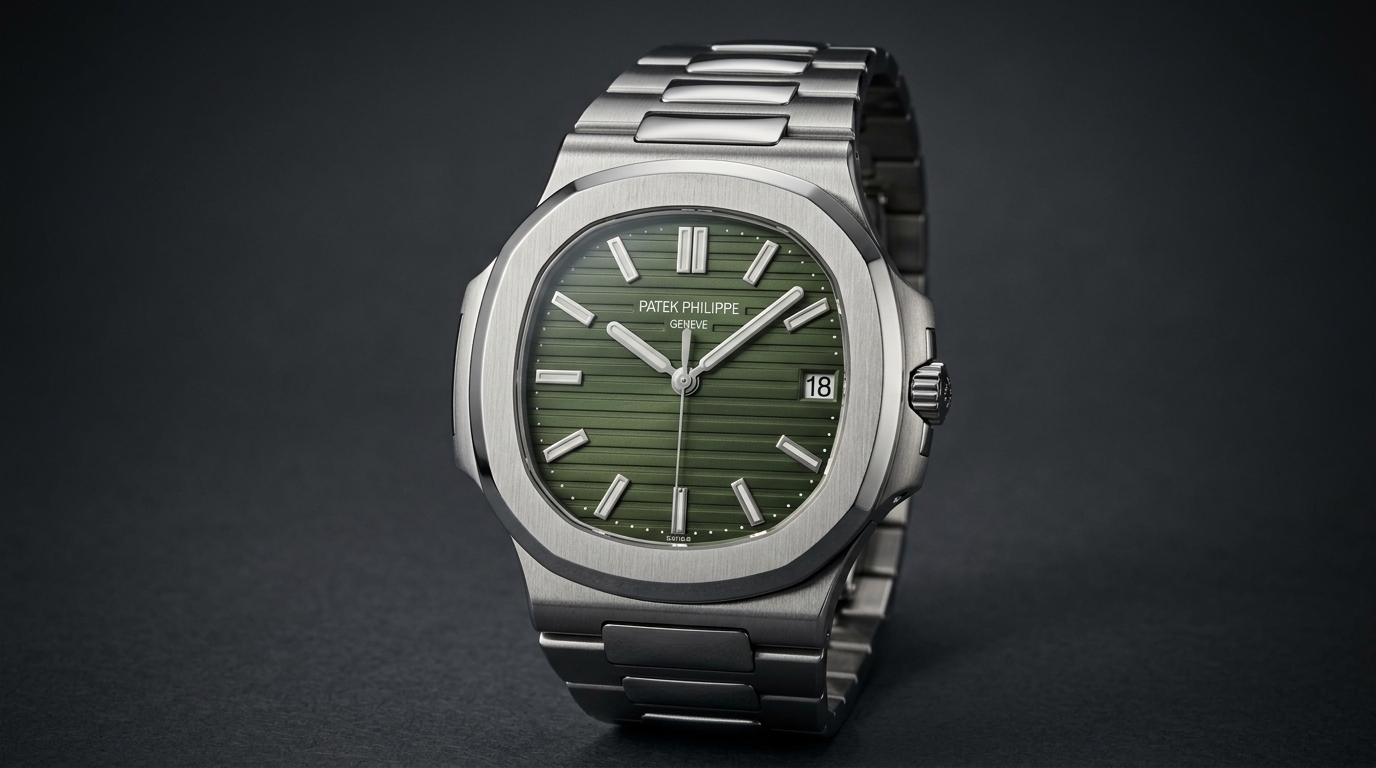
The Patek Philippe Cubitus 5821/1A is not a watch that can be understood by asking whether it is attractive in a photograph. Its importance is structural. Introduced in 2024 as part of Patek Philippe’s first new collection in roughly 25 years, the 5821/1A-001 is the simplest, most consequential Cubitus: stainless steel case, integrated steel bracelet, olive-green dial, automatic time-and-date calibre. It is the reference expected to carry the collection’s commercial and collector credibility, and it does so while standing uncomfortably close to the Nautilus lineage that made modern steel Patek collecting both lucrative and irrational.
Origin and Lineage
The Cubitus collection arrived in October 2024 under Thierry Stern, whose family has owned Patek Philippe since 1932. That matters because the 5821/1A was not a speculative offshoot from a conglomerate brand testing fashion cycles; it was a deliberate addition from a manufacture that rarely creates new pillars. Patek’s modern sports-watch history had already been defined by the Nautilus ref. 3700/1A of 1976 and the Aquanaut ref. 5060A of 1997. The Cubitus 5821/1A enters that same terrain but with a square case architecture, not as a complication-led proposition.
The timing is inseparable from the afterlife of the Nautilus 5711/1A. Patek discontinued the blue-dial 5711/1A-010 in 2021, briefly issued the olive-green 5711/1A-014, and then moved the successor Nautilus three-hander into white gold with the 5811/1G in 2022. That left a conspicuous gap: a simple, bracelet-mounted, steel Patek sports watch that was not an Aquanaut. The Cubitus 5821/1A fills that gap while also allowing Patek to avoid simply reviving the 5711 formula. The question is whether it avoids it enough.
Reference 5821/1A-001 launched alongside the two-tone steel and rose-gold 5821/1AR-001 and the platinum 5822P-001 with large date, day and moon-phase indications. Among those, the steel 5821/1A is the purest statement. It has no precious-metal distraction and no complication to shift attention away from the case and dial. If the Cubitus succeeds historically, this is likely to be the reference collectors treat as the baseline.
Case Architecture and Proportions
The 5821/1A uses a stainless steel rounded-square case measuring 45 mm across, with a notably slim height of 8.3 mm. The number sounds aggressive until placed in context: Patek measures unconventional sports cases differently from conventional round watches, and the integrated bracelet eliminates traditional lugs. Even so, this is not a small watch. It has a broad frontal presence, more planar than the Nautilus and more formal than the Aquanaut. The thinness is crucial; without it, the Cubitus would risk becoming a square block rather than a luxury sports watch.
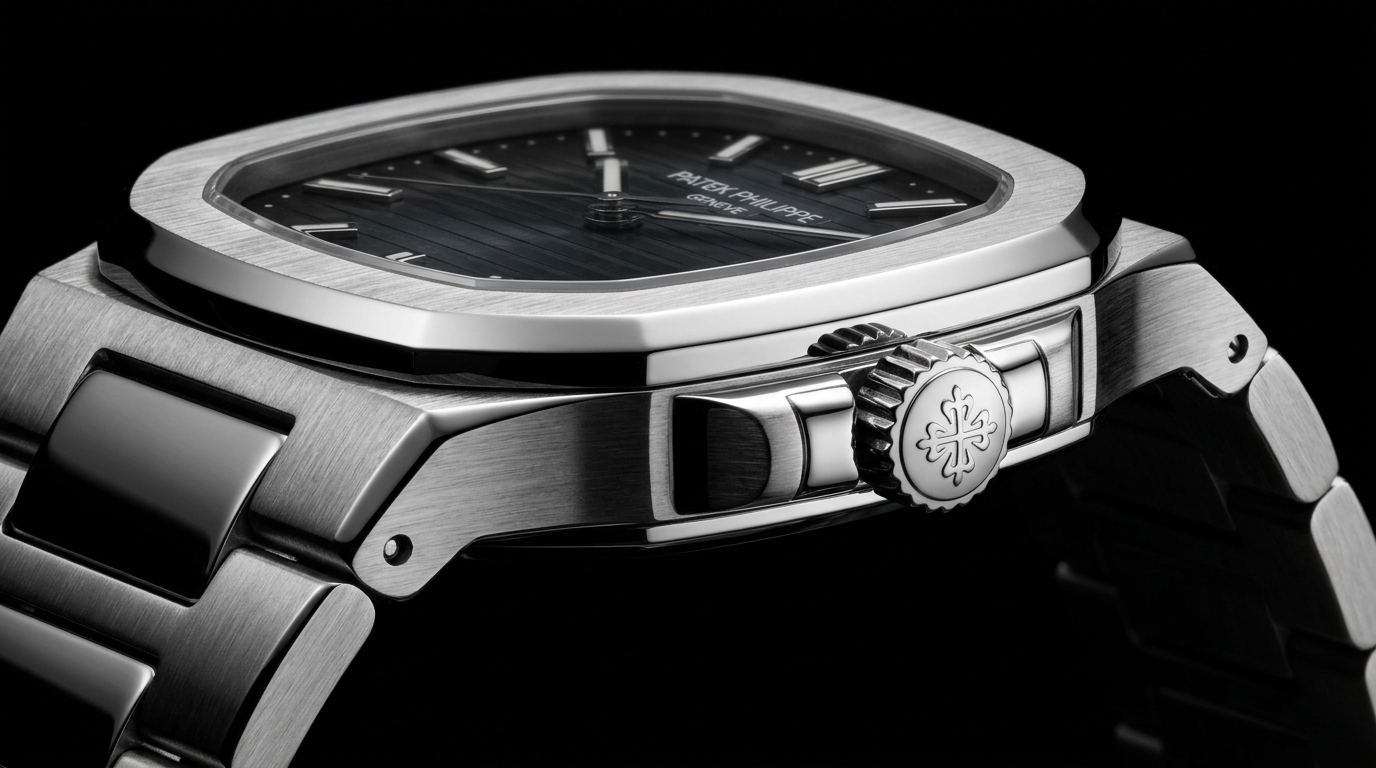
The design language is visibly related to the Nautilus, especially in the horizontal dial pattern, integrated bracelet, rounded bezel profile, and polished-satin alternation. Patek did not attempt to conceal the family relationship. The case has a large, soft-angled square bezel with rounded corners and lateral extensions that recall the Nautilus “ears,” though translated into a more geometric format. The finishing is conventional for modern Patek sports cases: vertical and horizontal satin brushing on larger surfaces, polished bevels and highlights to break up the mass. The execution is exact, but the intellectual leap is modest.
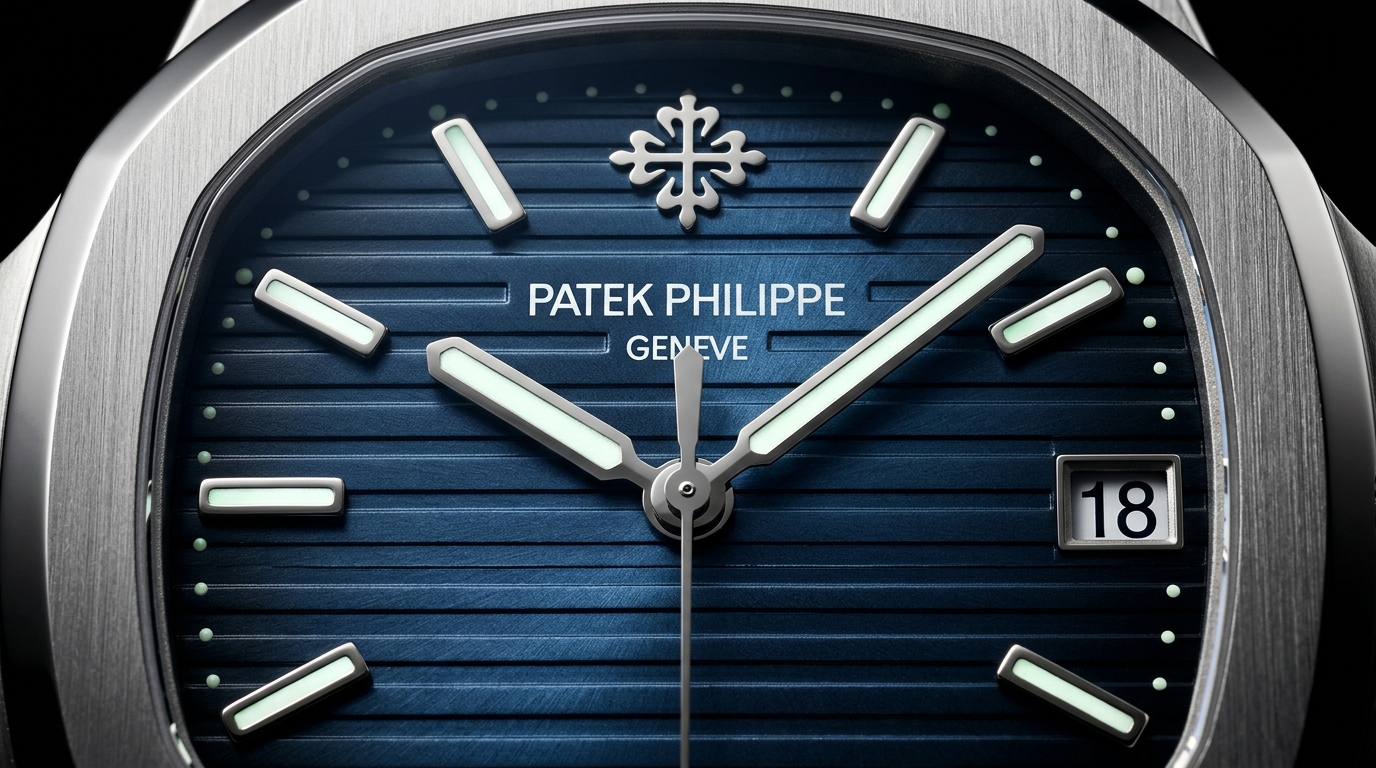
The olive-green dial is specific to the 5821/1A-001 at launch and is one of the reference’s stronger decisions. Patek had already used green to great commercial effect on the final steel Nautilus 5711/1A-014, but the Cubitus green is not merely a nostalgic callback. On the square dial, the horizontal embossed decoration creates a broader field, and the green sunburst finish gives the case’s hard geometry some needed warmth. White-gold applied baton markers and baton hands, both lume-filled, keep the dial within the practical sports-watch vocabulary. The date at 3 o’clock is expected rather than inspired, but it is less disruptive here than it was on some Nautilus dials because the Cubitus dial has more visual acreage.
The Calibre 26-330 S C Inside
The 5821/1A is powered by Patek Philippe’s automatic calibre 26-330 S C, visible through a sapphire crystal caseback. This movement is not new to the Cubitus; it is the same family of calibre that replaced the long-serving 324 S C and has appeared in modern Patek time-and-date references, including the Nautilus 5811/1G. Its presence in the 5821/1A is strategically conservative. Patek chose reliability, service familiarity and thinness over any attempt to create a new sports-watch movement for the collection.
The calibre measures 27 mm in diameter and 3.3 mm thick, runs at 28,800 vibrations per hour, and offers a stated power reserve of approximately 35 to 45 hours. It uses a 21k gold central rotor, Gyromax balance and Spiromax balance spring. The movement also includes hacking seconds, a practical feature that the older 324 S C lacked. Its date display is conventional, but the movement is technically more mature than Patek’s previous self-winding date calibre, with refinements aimed at reducing wear and improving winding efficiency.
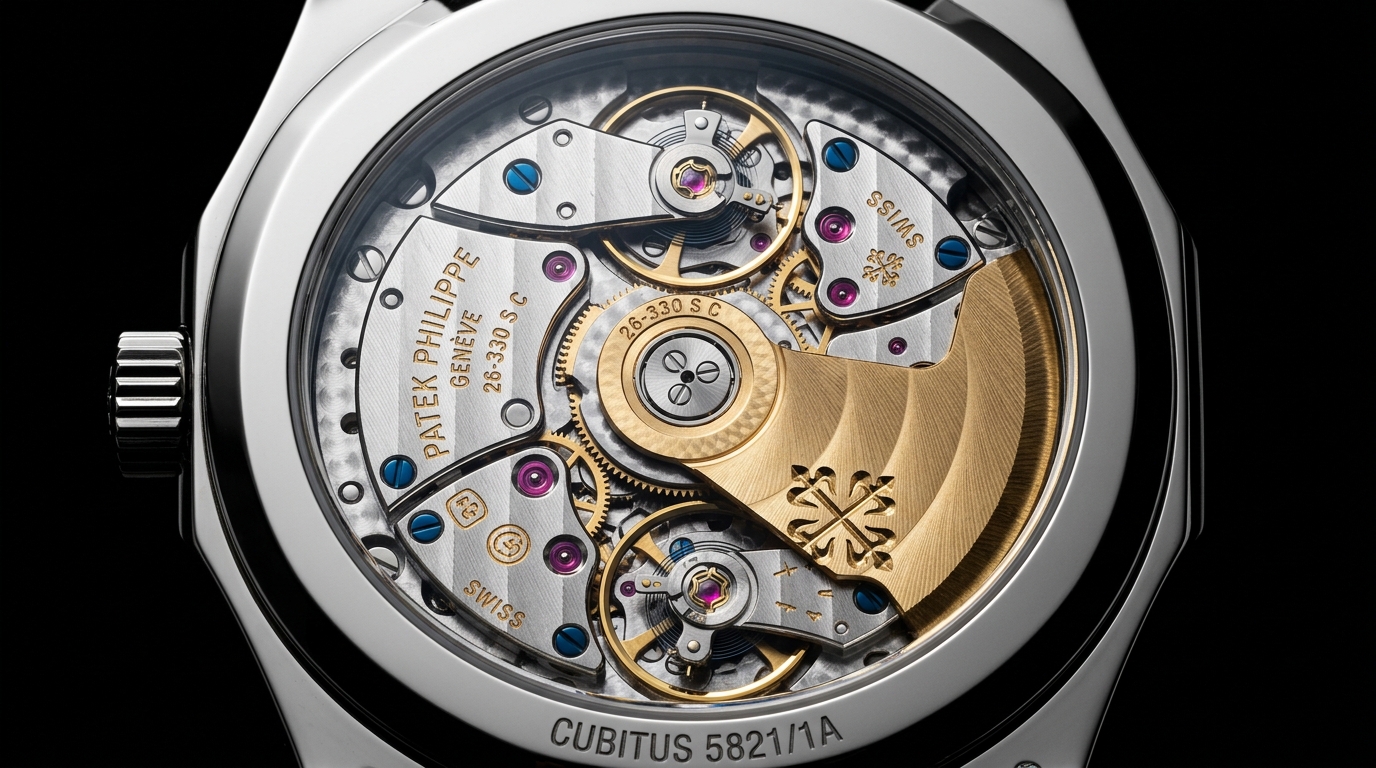
Finishing is governed by the Patek Philippe Seal rather than the Geneva Seal, which the manufacture abandoned for its own standard in 2009. That means a stated rate tolerance for cased watches with movements over 20 mm of -3/+2 seconds per day, alongside requirements for finishing and construction. The visible decoration is exactly what collectors expect at this level: Geneva striping on the bridges, circular graining on the mainplate, polished screw heads, bevelled bridge edges and the Calatrava cross on the rotor. It is not haute complication finishing, nor should it be assessed as such. The point of the 26-330 S C in the Cubitus is disciplined competence within a very thin automatic package.
How the 5821/1A Wears
The Cubitus 5821/1A wears flatter than its 45 mm figure suggests, but it does not disappear. The square format creates more corner-to-corner visual span than a round watch of comparable practical footprint. On a smaller wrist, the watch reads as intentionally broad; on a medium or larger wrist, the 8.3 mm thickness and integrated bracelet keep it controlled. Its wearing success depends less on the listed width than on the relationship between the case’s square mass and the wrist’s upper surface.
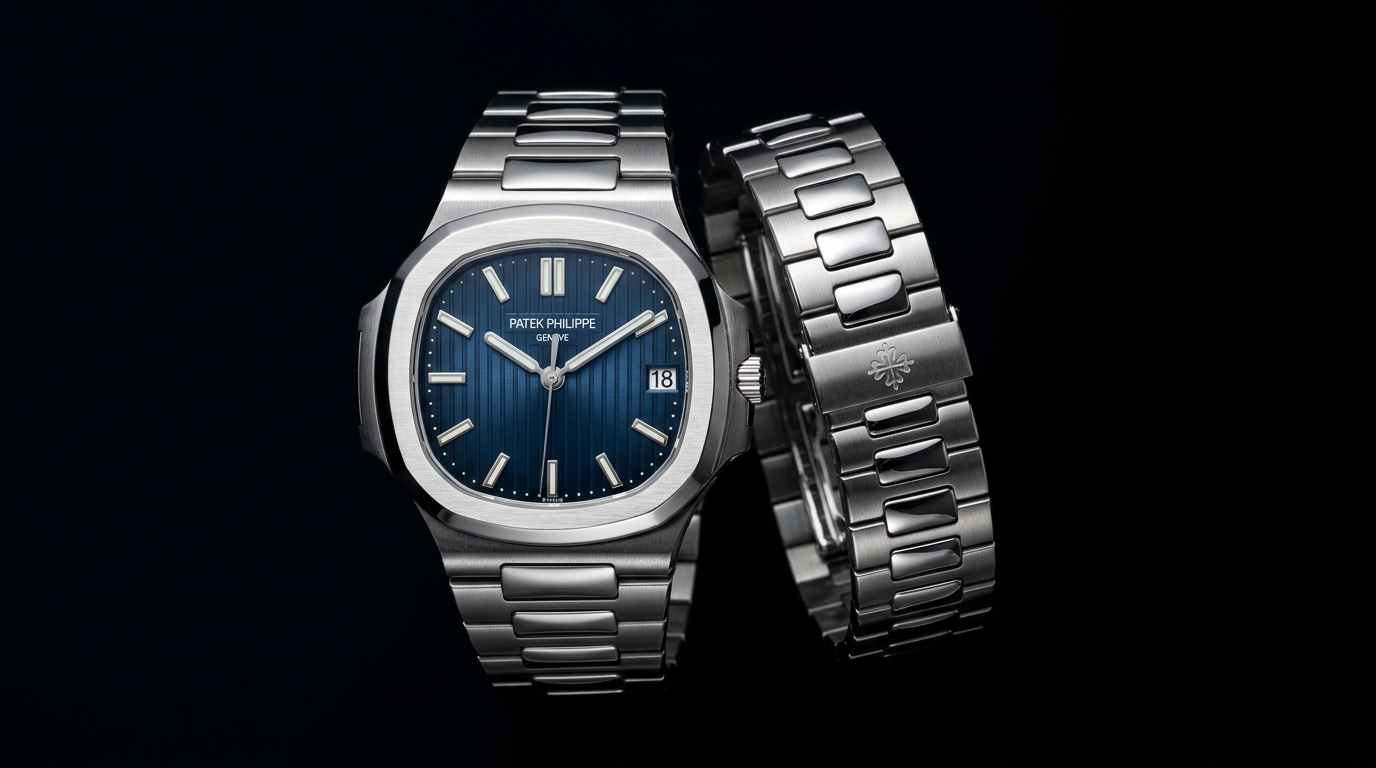
The bracelet is central to the watch’s identity. In steel, it continues the high-polish and satin-brushed vocabulary of Patek’s sports models, with a taper that prevents the watch from becoming visually top-heavy. The clasp system is modern Patek, including secure folding construction and micro-adjustment, an area where the manufacture has improved materially compared with older Nautilus bracelets. The bracelet makes the 5821/1A feel more expensive than an Aquanaut on rubber and more contemporary than many precious-metal dress references using the same movement family.
Water resistance is 30 metres, which is defensible as a luxury sports-watch specification only if one accepts Patek’s interpretation of the category. This is not a dive watch, and Patek does not pretend it is. Still, the market has moved. When Vacheron Constantin, Audemars Piguet and Rolex routinely condition buyers to expect more functional water resistance in expensive steel sports watches, 30 metres on a 2024 integrated-bracelet Patek leaves an opening for criticism. It will not matter to most owners, but specifications are part of credibility, and here the 5821/1A is adequate rather than strong.
Market Position and Collector Reception
At launch, the Patek Philippe Cubitus 5821/1A entered the market at a U.S. retail price in the low-$40,000 range, widely quoted at $41,243. That placed it above many high-end steel sports watches but below the precious-metal Nautilus 5811/1G. The commercial logic is clear: Patek created a steel integrated-bracelet watch expensive enough to protect brand positioning, scarce enough to support allocations, and familiar enough to attract buyers who wanted something adjacent to the discontinued steel Nautilus.
Collector reception was sharply divided, and the division was justified. The strongest criticism is that the 5821/1A looks less like a radical new Patek collection than a squared-off Nautilus. That is not an uninformed complaint. The horizontal dial, integrated bracelet, slim profile and case-side vocabulary all invite the comparison. But the better reading is more strategic: Patek did not set out to create an anti-Nautilus. It created a watch close enough to inherit demand without reopening the exact 5711 problem.
The 5821/1A also arrived into a different market climate than the 5711 frenzy of 2020 and 2021. Secondary-market premiums for steel sports watches were already normalising from pandemic highs by 2023 and 2024, and collectors had become more sceptical of allocation games. Early Cubitus supply was predictably limited, and early resale asking prices reflected scarcity more than settled consensus. The long-term test will not be whether the first examples traded above retail; nearly any new steel Patek sports reference can do that. The test is whether informed collectors still want the 5821/1A after the novelty and controversy fade.
Why This Specific Reference Matters
The 5821/1A matters because it is the first simple steel Cubitus, not because it is the most inventive watch Patek Philippe has made. That distinction is important. Historically, Patek’s most collectible sports references are often the straightforward ones: the original Nautilus 3700/1A, the later 5711/1A, and the early Aquanaut references gained power from clarity rather than complication. The 5821/1A follows that pattern. Steel case, bracelet, automatic movement, date, coloured dial. It is legible as a reference, which is why collectors will continue to track it.
Its weaknesses are part of the record. The design is heavily dependent on existing Patek sports codes. The water resistance is conservative. The calibre, while excellent, is not bespoke to the collection. None of these points should be softened. But none is fatal. Patek’s steel sports watches have rarely been about outperforming competitors on paper. They function as objects where wearability, production restraint, reference history and manufacture prestige compound over time. The 5821/1A has all four, even if it lacks the shock of true originality.
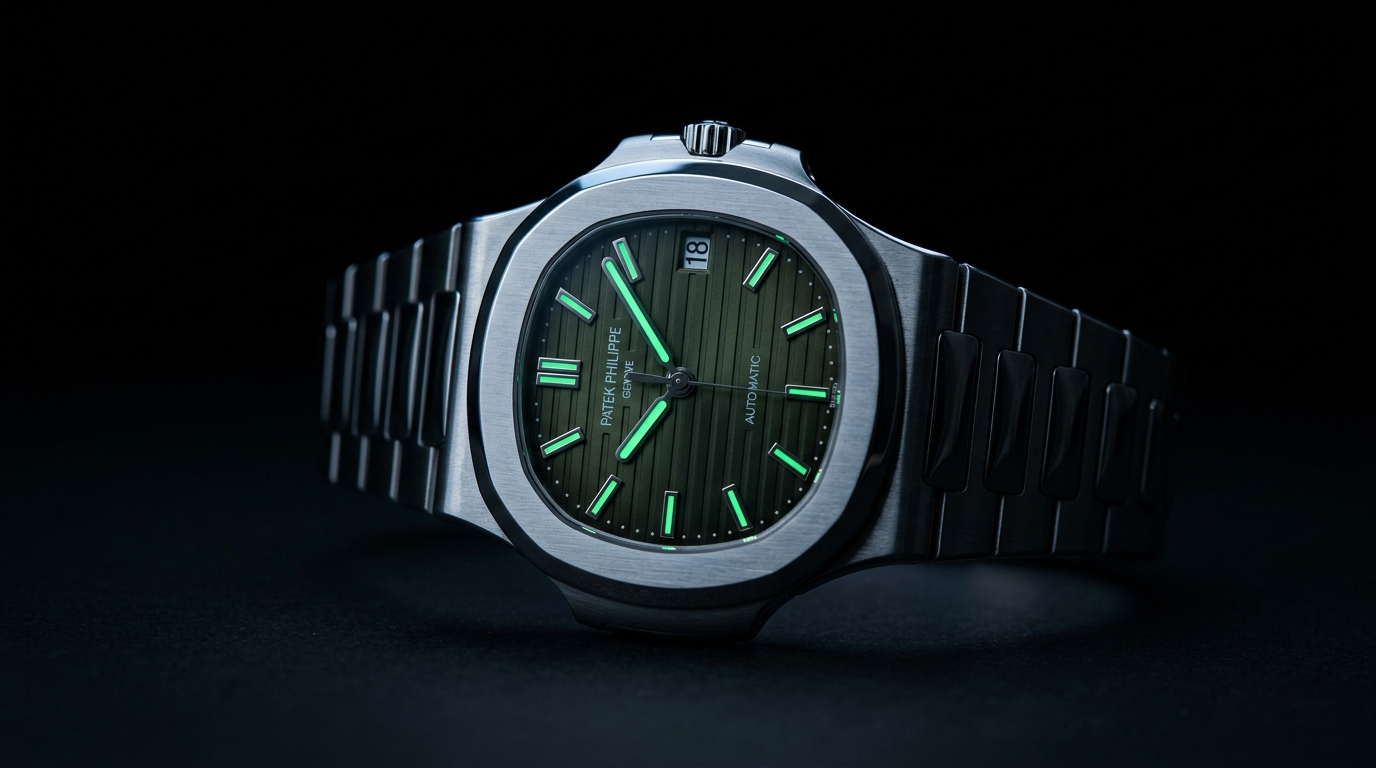
The most convincing argument for the 5821/1A is that it represents Patek Philippe’s current view of what a steel luxury sports watch can be after the Nautilus 5711. It is not the heir in a literal sense, because Patek has been careful not to position the Cubitus as a replacement. But in market function, the link is unavoidable. For the collector who wants the first-generation steel reference from Patek’s newest collection, the 5821/1A-001 is the watch. The two-tone model is more specific, the platinum 5822P more complicated, but the steel green-dial 5821 is the reference that will define whether Cubitus becomes a durable line or a controversial episode.
Editorial Verdict
The Patek Philippe Cubitus 5821/1A is a strategically important watch with a deliberately narrow margin for aesthetic debate. It is neither the design failure its harshest critics suggested nor the breakthrough that Patek’s scarcity machine can make it appear to be. It is a controlled, thin, well-finished, steel integrated-bracelet reference powered by the proven calibre 26-330 S C and framed by one of the most consequential launch contexts in modern Patek history.
Its endurance will not come from novelty. It will come from its status as the first simple steel Cubitus, its 2024 launch date, its 5821/1A reference identity, and its position in the post-5711 collecting landscape. The watch is derivative, but it is derivative in a way Patek can defend: technically mature, proportionally disciplined and commercially exact. For a model study, that is the decisive point. The 5821/1A is not merely a square Patek sports watch. It is Patek’s attempt to redirect steel-sports demand without surrendering control of its history, and that makes it one of the most important references the manufacture has released in years.