Tudor Watches: The Strategic Rise of Rolex’s Most Independent Shadow
Tudor Watches: The Strategic Rise of Rolex’s Most Independent Shadow
Tudor is no longer convincing collectors that it is more than “the affordable Rolex.” That argument has effectively been won. The more important question in 2026 is whether Tudor can remain strategically useful without becoming too close to the institution it was built to orbit. Its best watches now compete not merely on price, but on specification, restraint, distribution discipline and a coherent use of heritage. Its risk is just as clear: if Tudor becomes too polished, too expensive, or too dependent on retro cues, it loses the sharper role that made its modern revival credible.
Founded in 1926, registered by Hans Wilsdorf and later formalised under Montres Tudor SA in 1946, Tudor was conceived with a simple proposition: Rolex-adjacent reliability at a lower price. Wilsdorf’s logic was commercial rather than romantic. Tudor could use Rolex cases, crowns, bracelets and distribution confidence while avoiding the full cost of Rolex movements. For decades, this meant ETA-based calibres housed in robust Oyster cases, often with Rolex-signed crowns and casebacks. The proposition was unusually pragmatic: not a poor imitation, but a cheaper instrument carrying some of the same industrial advantages.
The Original Tudor Formula Was Not Inferiority, But Allocation
Vintage Tudor is frequently misread through the modern luxury hierarchy. A Tudor Submariner reference 7922 from 1954, the brand’s first diver, was not designed to flatter aspiration. It was a practical watch with a 100-metre case, rotating bezel and an automatic movement at a price below Rolex’s Submariner. Later references such as the 7924 “Big Crown” of 1958, rated to 200 metres, and the 7016/0 and 7021/0 introduced in 1969 with square hour markers and “snowflake” hands, show the point clearly. Tudor was not merely borrowing Rolex architecture; it was also developing a visual language of its own.
The French Marine Nationale connection gave Tudor’s tool-watch credibility unusually hard evidence. Tudor Submariners were supplied to the Marine Nationale from the 1950s, with references including 7016, 9401 and 94010 entering military use. These watches were not selected because they were luxury objects. They were selected because they worked, could be serviced, and were available in quantity. That distinction matters. The serious collector appeal of Tudor’s military divers rests less on nostalgia than procurement history, a more durable foundation than celebrity provenance or auction theatre.
The same applies to the chronographs. The 1970 Oysterdate Chronograph reference 7031/0 and 7032/0, powered by a manually wound Valjoux calibre 7734, established the brand’s sports-chronograph vocabulary long before modern Tudor leaned into revivalism. The later “Monte Carlo” references, including 7149/0, 7159/0 and 7169/0, were not Daytona substitutes in any meaningful design sense. Their dial architecture, colour and proportions formed a separate identity. That Tudor now mines these references is not opportunism by itself; the archive is genuinely strong. The question is how far a brand can mine before it starts strip-mining.
The Long Sleep Before the Black Bay
Tudor’s modern importance is easier to understand if one remembers how absent it once felt. By the early 2000s, the brand had retreated from several major markets, including the United States, where it effectively disappeared for years before returning in 2013. Its watches were competent but inconsistent in identity. Hydronaut models, Prince Date chronographs and various Classic lines still had merit, but they did not form a persuasive global strategy. Rolex, meanwhile, was becoming more controlled, more expensive and more culturally dominant. Tudor needed a reason to exist beyond proximity.
That reason arrived in stages. The Heritage Chrono of 2010 revived the 1970s chronograph codes with enough discipline to signal a new design direction. The Pelagos and Black Bay followed in 2012. Those two watches remain the foundation of Tudor’s contemporary business because they split the brand’s personality cleanly: the Pelagos as the modern instrument, the Black Bay as the commercially broader heritage diver.
The original Black Bay reference 79220R used an ETA 2824 movement, a 41mm case, no crown guards, gilt-accented dial text and a burgundy bezel. It was not technically revolutionary, but it solved a market problem. Collectors priced out of vintage Rolex and fatigued by oversized luxury divers found a watch that looked historically literate without being delicate. When Tudor introduced the in-house calibre MT5602 to the Black Bay line in 2016, the proposition changed from attractive nostalgia to serious industrial value. A COSC-certified automatic movement with a 70-hour power reserve, free-sprung balance and silicon hairspring was not typical at Tudor’s pricing level then, and remains competitive now.
Kenissi Changed Tudor More Than Any Bezel Colour
The crucial structural development in Tudor’s recent history is not the Black Bay’s popularity, but the movement strategy behind it. Tudor’s manufacture calibres are produced by Kenissi, the movement manufacturer in which Tudor is a major stakeholder. Kenissi also supplies movements to brands including Breitling, Norqain, Chanel-owned operations and others depending on calibre family and specification. The opening of Tudor and Kenissi’s new manufacture in Le Locle in 2023 gave a physical form to what had already become obvious: Tudor is not pretending to be a vertically integrated Rolex clone, but neither is it a generic assembler using off-the-shelf ETA calibres.
This distinction is central to understanding the brand. Rolex’s industrial mythology rests on extreme integration and obsessive internal control. Tudor’s modern model is more strategically flexible. It uses shared industrial development, high-volume reliability and selective certification to hit a price-performance band that many Swiss competitors struggle to match. The MT5602, MT5402, MT5813 chronograph calibre and MT5652 GMT calibre are not hand-finished objects for loupe-led admiration. They are robust, stable, modern engines designed to make mechanical credibility affordable by luxury standards.
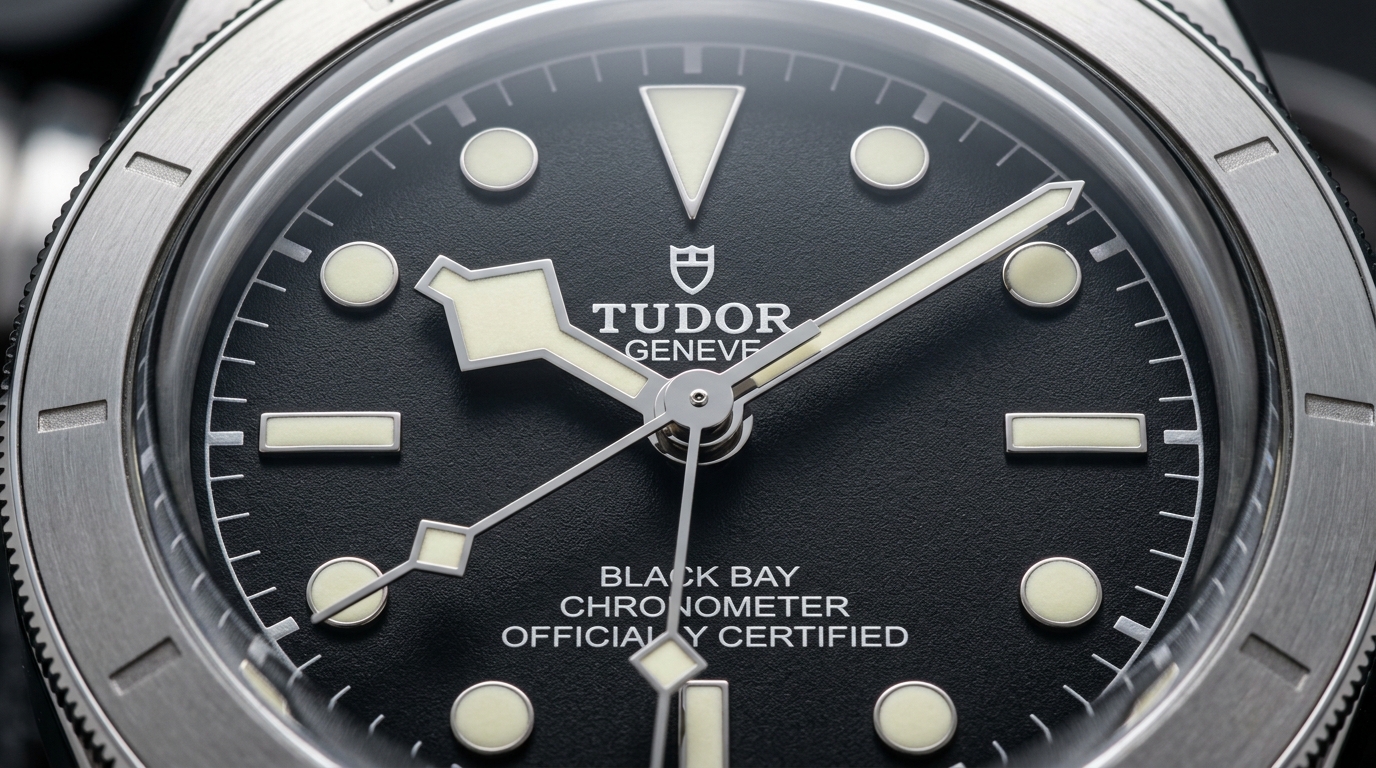
The MT5813, used in the Black Bay Chrono, is especially revealing. Based on Breitling’s B01 architecture, modified by Tudor with its own regulating organ and finishing standards, it shows that Tudor is comfortable with industrial partnership when the result serves the watch. Purists sometimes treat this as a weakness. In practice, it is one reason the Black Bay Chrono can offer a column-wheel, vertical-clutch chronograph with a 70-hour power reserve at a level well below many traditional Swiss rivals. The watch is thick, not elegant, and its screw-down pushers are a functional affectation for most owners. But as a value argument, it is difficult to dismiss honestly.
The Black Bay Is Tudor’s Asset and Its Burden
No modern Tudor discussion can avoid the Black Bay’s dominance. The line has expanded into divers, GMTs, chronographs, bronze cases, silver cases, ceramic METAS-certified models, 31/36/39/41mm everyday watches and more. It is commercially rational. The Black Bay name carries recognition, and Tudor has used it to create a broad ladder from entry mechanical pieces to technically ambitious variants. The danger is dilution. When a product family becomes too elastic, it stops explaining the brand and starts absorbing it.
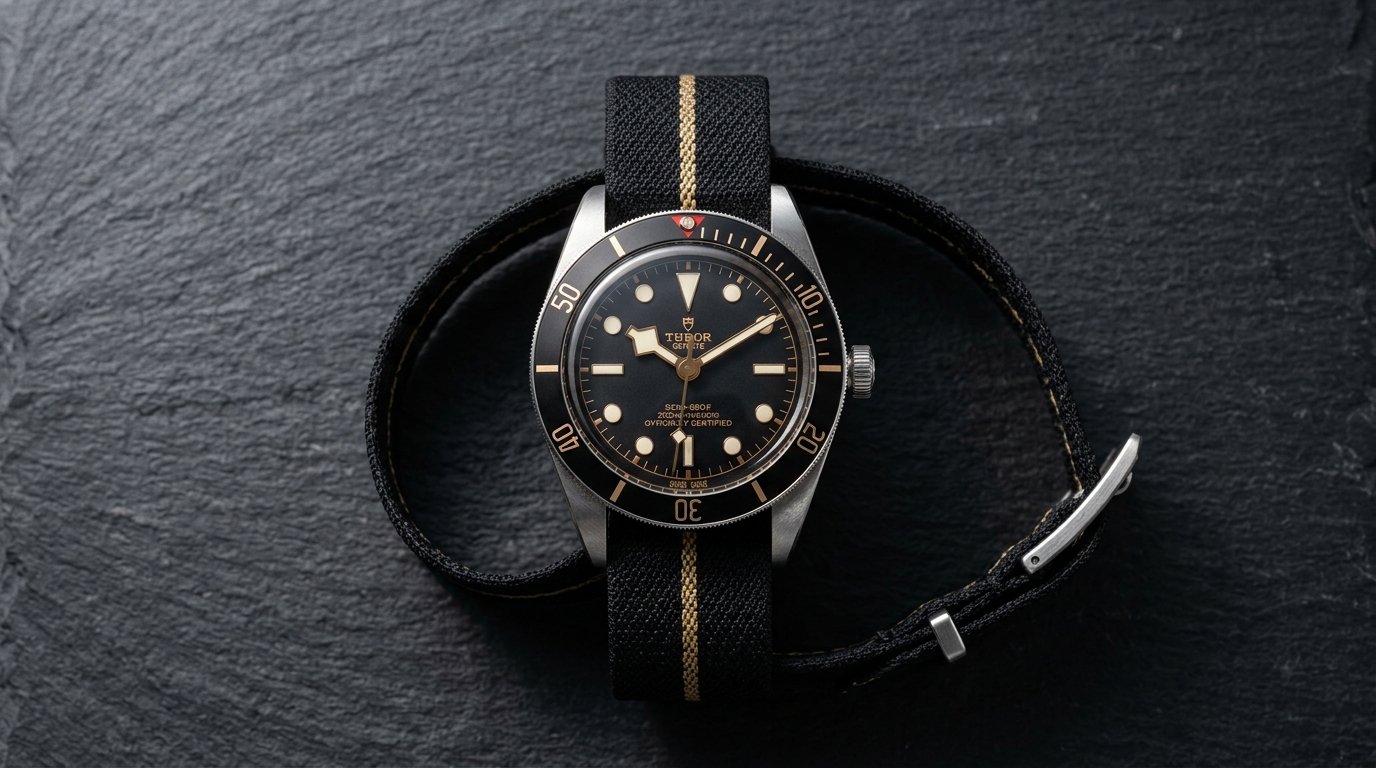
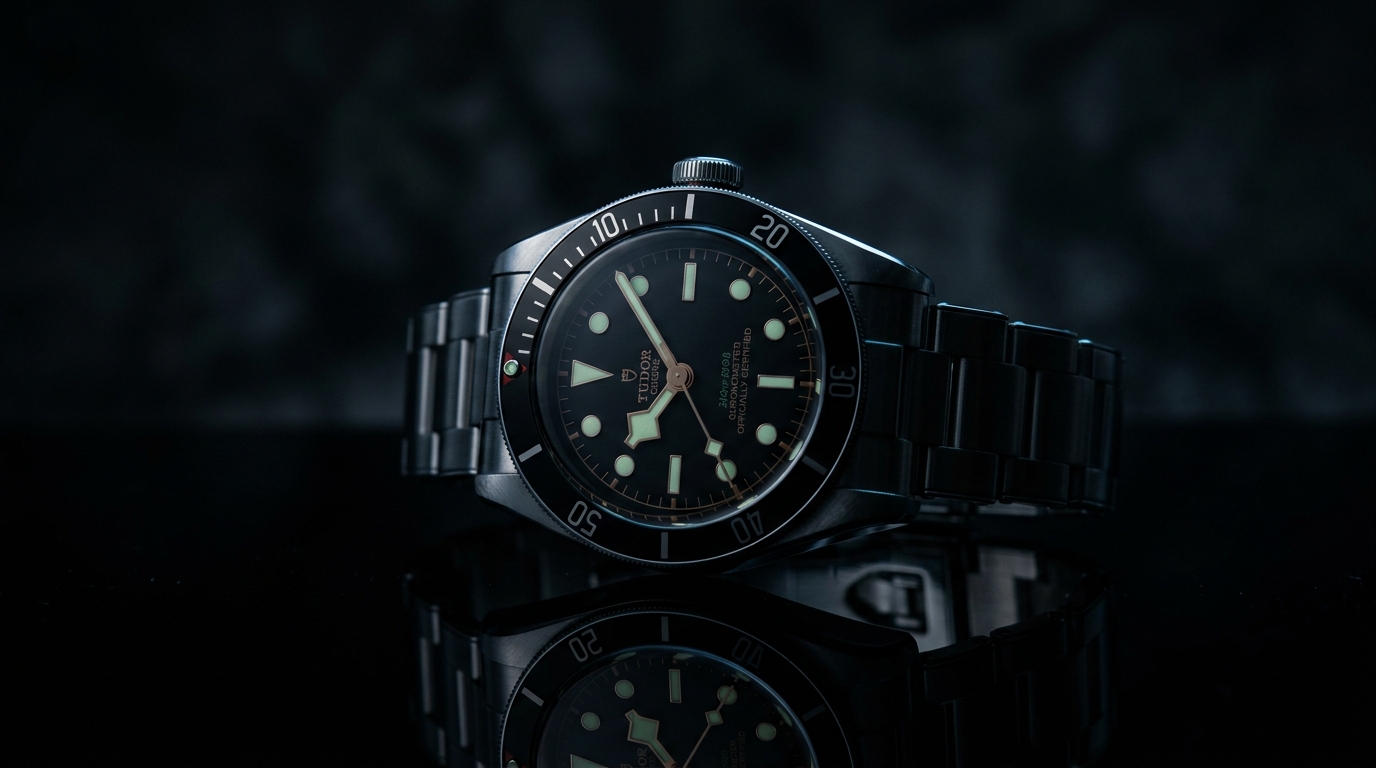
The best Black Bay references prove Tudor understands this. The Black Bay Fifty-Eight, introduced in 2018 as reference 79030N, remains the modern benchmark because it corrected the proportions of the original 41mm Black Bay. Its 39mm case, slimmer profile and calibre MT5402 made it feel less like a heritage-themed product and more like a genuinely wearable modern dive watch. The blue 79030B from 2020 added breadth without gimmick. The Black Bay 54 reference 79000N, released in 2023, went further by drawing from the 1954 Tudor Submariner 7922 and shrinking the case to 37mm. It is not for everyone, but it is one of the few recent vintage-inspired divers that understands restraint as a technical virtue.
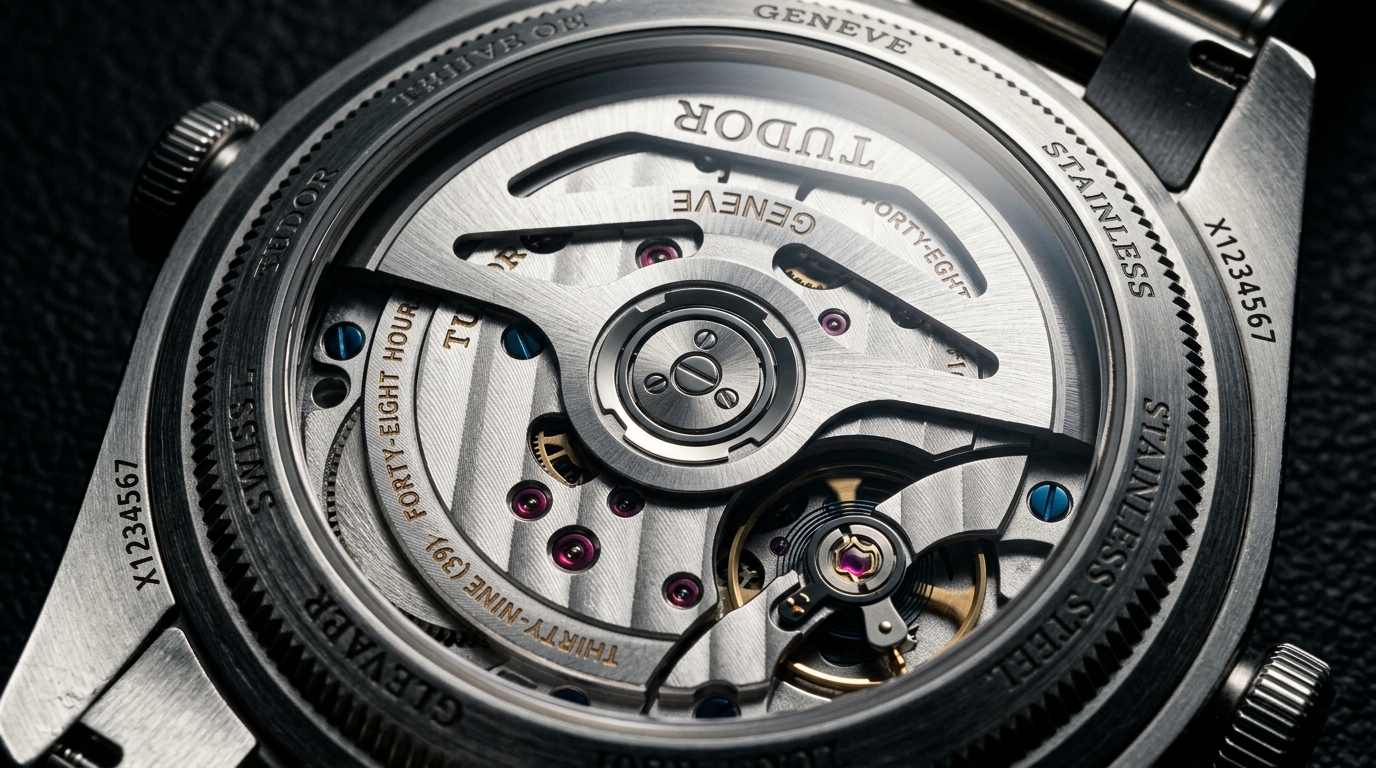
By contrast, not every Black Bay extension has equal force. Some boutique editions and material experiments feel more like range maintenance than strategic necessity. The silver-cased Black Bay Fifty-Eight 925 is interesting because silver is unusual in modern sports watches and develops surface character quickly, but it is a niche argument. The bronze models bring warmth and theatre, but their size and patina profile are polarising. Tudor is at its strongest when it edits; it is less convincing when it behaves like a brand afraid to leave a successful platform alone.
Pelagos Is the Truer Test of Tudor’s Independence
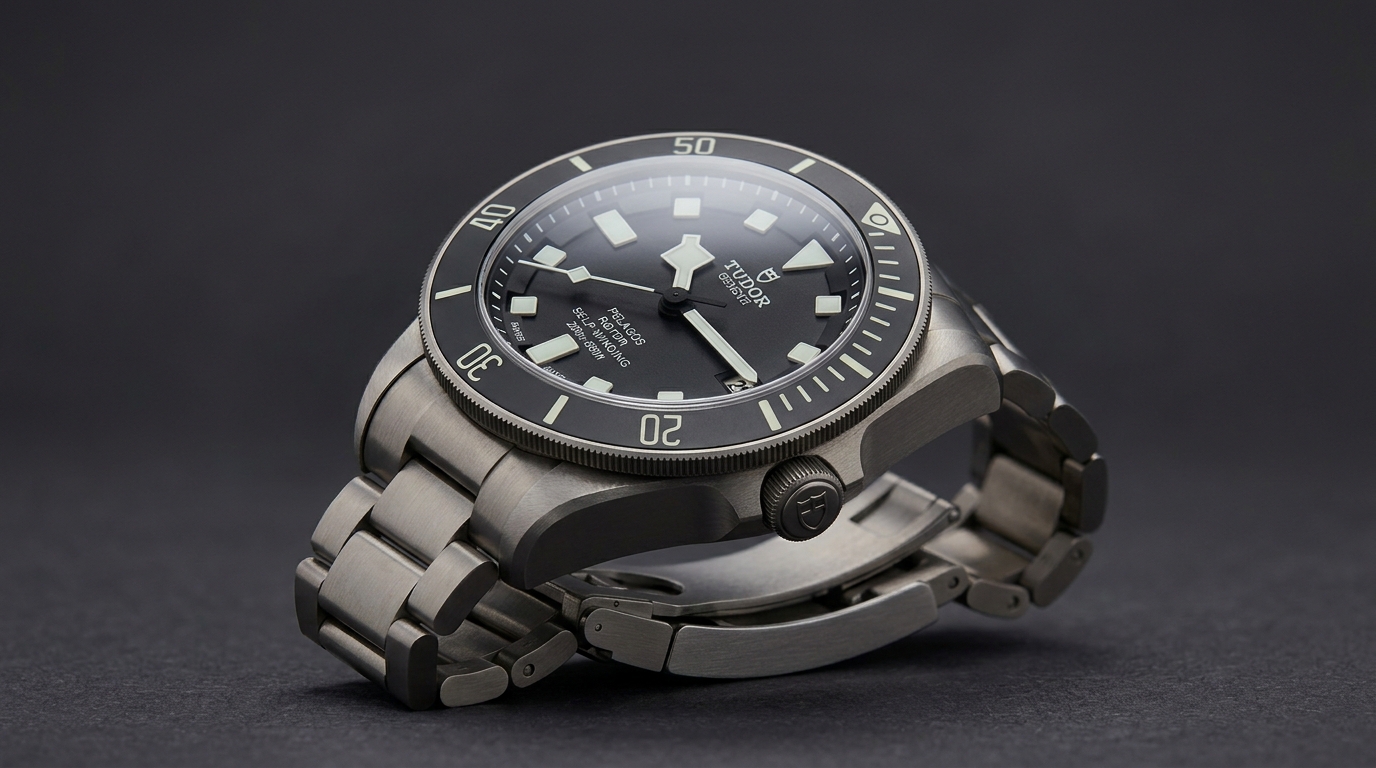
If the Black Bay sells the brand, the Pelagos defines its seriousness. The original Pelagos of 2012 arrived in titanium with a 500-metre rating, helium escape valve, ceramic bezel, luminous ceramic composite markers and one of the best bracelet adjustment systems in the segment. In 2015 it received Tudor’s manufacture movement and moved from ETA dependence to the MT5612. Unlike the Black Bay, the Pelagos did not rely heavily on vintage warmth. It was comparatively cold, functional and modern. That is precisely why it mattered.
The Pelagos FXD, introduced in 2021 and developed with the combat swimmers of the Marine Nationale, sharpened the argument. Its fixed lugs, 42mm titanium case, bidirectional countdown bezel and no-date layout were not crowd-pleasing choices but operational ones. The later black FXD and the 2024 Cycling Edition chronograph broadened the line, though not always with the same purity. The Pelagos 39, released in 2022, is perhaps the most commercially intelligent modern Tudor: titanium, 200 metres of water resistance, calibre MT5400, compact proportions and enough technical character to avoid being merely a Black Bay alternative.
The Pelagos line is where Tudor can most convincingly separate from Rolex. Rolex no longer makes utilitarian watches in the old sense; it makes luxury instruments with immense symbolic weight. Even the Submariner is now culturally closer to an allocation product than a diving tool. Tudor, particularly through Pelagos, can still build watches that feel permitted to be used hard. That may sound sentimental, but it has market consequences. Owners treat a Pelagos differently from a Submariner not because one is technically capable and the other is not, but because the replacement cost, social signal and availability psychology are different.
Pricing, Availability and the Post-Hype Correction
Tudor’s recent market position has been strengthened by the excesses around Rolex. When steel Rolex sports models became heavily waitlisted and traded at premiums during the 2020–2022 speculative period, Tudor benefited from buyers seeking an attainable alternative. But the relationship is not one-way. Secondary-market correction since 2022 has exposed which Tudor models have durable demand and which were carried by general enthusiasm. Black Bay Fifty-Eight models have remained relatively liquid, though usually below retail when unworn premiums are absent. More specialised pieces vary widely. Tudor is not immune to depreciation, and buyers should not pretend otherwise.
This is not necessarily a flaw. In fact, it may keep the brand healthier. A Tudor bought for use rather than speculation aligns with the product’s actual character. The brand’s retail pricing has climbed as movements, bracelets and finishing have improved, but it still occupies a defensible band against Omega, Longines, TAG Heuer, Oris and entry-level Grand Seiko. A Black Bay Fifty-Eight or Pelagos 39 is not cheap, yet it offers a coherent specification set at a level where many competitors ask buyers to accept either outsourced movements, weaker bracelets, less distinctive design or less disciplined case engineering.
Omega remains the more technically expressive rival, particularly with Co-Axial calibres and METAS certification across large parts of the catalogue. Longines has become increasingly aggressive under Swatch Group with strong heritage executions at lower prices, especially the Spirit and Legend Diver families. TAG Heuer has improved substantially under LVMH, particularly with the Glassbox Carrera. Tudor’s advantage is not that it beats all of them on every metric. Its advantage is strategic clarity: tool-derived design, modern industrial calibres, controlled distribution and institutional credibility through Rolex ownership without Rolex pricing.
METAS Certification and the Battle for Technical Credibility
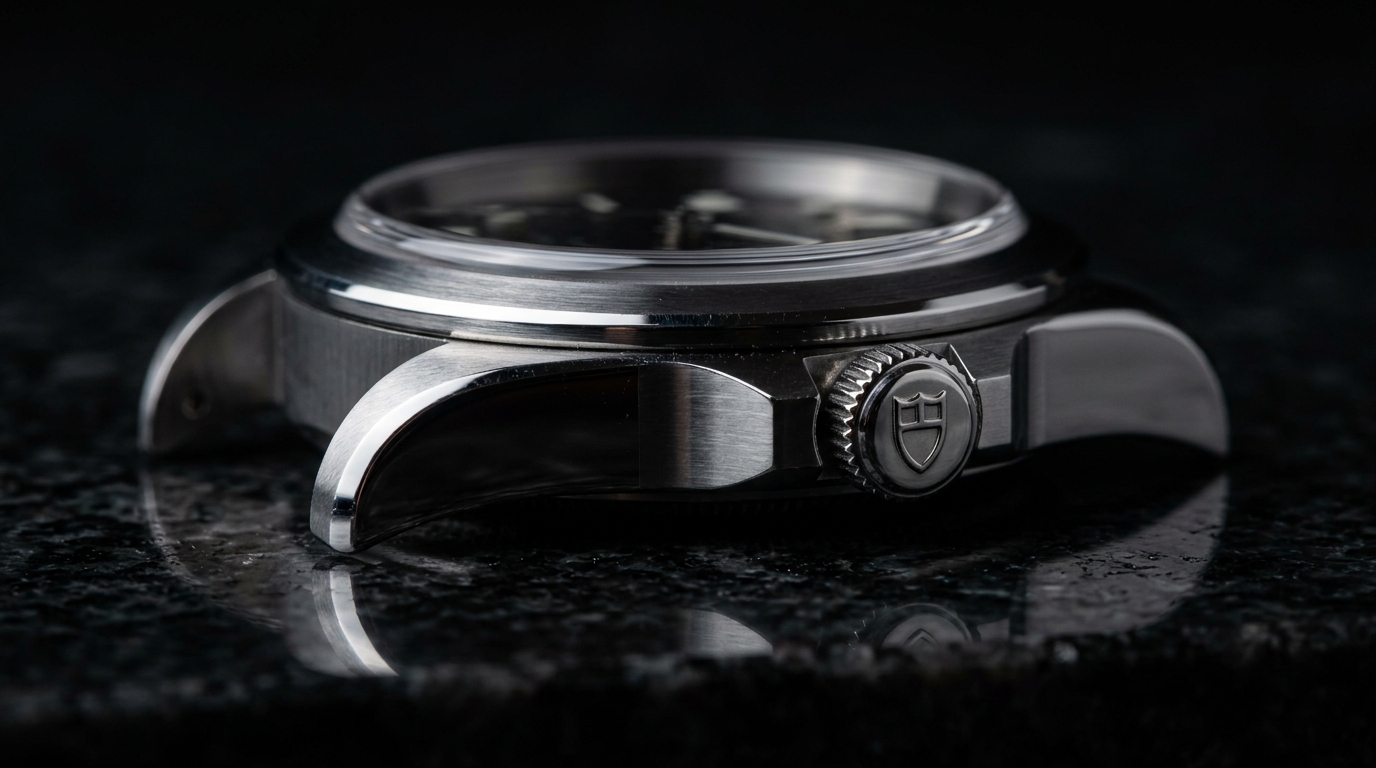
Tudor’s move toward METAS certification is strategically important because COSC alone no longer carries the same weight at the upper end of accessible luxury. The Black Bay Ceramic reference M79210CNU, introduced in 2021, brought Master Chronometer certification to Tudor, requiring the cased watch to meet criteria including resistance to magnetic fields up to 15,000 gauss, water resistance confirmation and precision within 0/+5 seconds per day. The 2023 Black Bay reference 7941A1A0RU with burgundy bezel continued that direction and paired METAS certification with a redesigned case and five-link bracelet option.
This matters because Tudor cannot rely indefinitely on “good for the money.” As prices rise, technical proof becomes more important. METAS gives Tudor a measurable claim, not a mood. It also puts pressure on rivals that still sell attractive watches with looser performance narratives. The editorial caveat is that certification should not become a substitute for proportion, legibility and product discipline. A certified watch that is too thick, too derivative or too crowded is still compromised. Tudor’s better recent releases suggest the brand understands this, but the catalogue is not free of repetition.
The Design Language Works Because It Is Controlled, Not Original
Tudor’s design intelligence lies in synthesis. Snowflake hands from 1969, gilt accents, coin-edge or notched bezels, shield logos, rivet-style bracelets and oversized crowns all recur across modern references. None of these elements guarantee success. What matters is how Tudor edits them. The Black Bay Fifty-Eight succeeds because its historical cues are subordinated to the case. The Black Bay GMT succeeds as a travel watch with calibre MT5652 and true local-jumping hour hand, though its thickness has been a persistent complaint. The latest slimmer directions suggest Tudor has heard that criticism.
The brand’s use of bracelets also deserves more serious attention than it usually receives. Rolex’s bracelet engineering casts a long shadow, but Tudor has built real competence here. The T-fit micro-adjustment clasp, now appearing across key lines, is one of the most practical upgrades in modern watch ownership. It changes daily usability more than many movement refinements. Tudor’s five-link bracelets give certain Black Bay models a dressier profile without pretending to be Jubilee bracelets, though the association is unavoidable. The rivet-style bracelet remains visually divisive; it references vintage construction without reproducing its actual necessity. It is one of Tudor’s weaker affectations.
Where Tudor Should Go Next
Tudor’s strongest future is not in becoming more like Rolex. It is in occupying the space Rolex has vacated: durable mechanical watches with serious specifications, moderate preciousness and enough design memory to matter. That means continuing to refine thickness, expanding METAS certification where appropriate, resisting limited-edition noise and keeping the Pelagos line technically honest. It also means being careful with price. Tudor can move upward only if the watches become materially better, not merely more desired.
The brand also needs non-diver strength. The Ranger, revived in 2022 in 39mm with calibre MT5402, is a credible field watch, but it has not yet achieved the emotional traction of the Black Bay Fifty-Eight or Pelagos. Its restraint is admirable, perhaps too quiet for a market trained to reward instant recognisability. The Royal line gives Tudor an integrated-bracelet presence, but it sits awkwardly within the broader strategy and lacks the conviction of the tool-watch families. The 1926 collection offers accessible classic watchmaking, though it functions more as entry point than identity carrier. Tudor’s next major test is whether it can build a compelling everyday non-diver that is not simply a softened heritage exercise.
For collectors, Tudor now deserves to be judged directly rather than relationally. The lazy comparison to Rolex obscures the decisions that have made the brand interesting: the use of Kenissi, the revival of historical references with commercial restraint, the development of Pelagos as a true modern platform, and the growing adoption of performance certification. Tudor is not haute horlogerie, and it is not trying to be. Its finishing is industrial, its movements are engineered for serviceability and performance rather than visual seduction, and its design language is deliberately familiar. Those are not apologies. They are the terms of the proposition.
The best Tudor watches today are not substitutes for watches one cannot buy. They are what happens when a brand accepts its place in the market and then uses that place aggressively. A Black Bay 54, Pelagos 39 or FXD does not need to defeat a Submariner in status, because status is the wrong test. The better question is whether the watch has a clear reason to exist, a specification that supports its price, and a design that will outlast the current market cycle. On those terms, Tudor has built one of the strongest modern catalogues in Swiss watchmaking. Its challenge now is discipline: to remain useful, not merely successful.