Tudor Watches: The Rolex-Owned Brand That Became Its Own Strategic Problem
Tudor Watches: The Rolex-Owned Brand That Became Its Own Strategic Problem
Tudor is no longer meaningfully explained as the “affordable Rolex.” That phrase was useful when the brand sold Oyster-cased watches with outsourced movements and Rolex-signed crowns; it is now too lazy for a company producing METAS-certified calibres, titanium dive watches for military units, and chronographs powered by a Breitling-derived architecture. The more interesting question is not whether Tudor offers value beneath Rolex. It is whether Tudor has become so competent that its owner must manage it carefully to avoid blurring the hierarchy that made both brands successful.
That tension defines modern Tudor. It is owned by the Hans Wilsdorf Foundation, the same private entity that controls Rolex. It has the industrial advantages of proximity to the most powerful watch group in the world, but it cannot be allowed to behave like Rolex. Its watches must be technically serious, historically literate, widely available, and priced below the crown. That makes Tudor one of the most strategically disciplined brands in Swiss watchmaking: free enough to innovate, constrained enough to know its place.
The Wilsdorf Logic: Prestige Above, Utility Below
Tudor’s origin was not romantic; it was commercial. Hans Wilsdorf registered “The Tudor” in 1926, and Montres Tudor SA was formally established in 1946. The purpose was explicit: build watches that could benefit from Rolex’s reputation for robust cases and distribution while using less expensive movements. Early Tudor advertising did not hide this arrangement. The pitch was reliability backed by Rolex standards, not independent horological glamour.
The 1952 Tudor Oyster Prince established the formula. It used Rolex Oyster case architecture and automatic winding, but its movements came from suppliers rather than from Rolex. For decades, this was not a weakness. It was the business model. Tudor could sell practical tool watches to customers and institutions that wanted durability without paying Rolex prices. In the 1950s and 1960s, when the mechanical wristwatch was still equipment rather than luxury signalling, that distinction mattered.
The brand’s early credibility came from use, not museum language. The Tudor Submariner reference 7922 appeared in 1954, followed by references such as the 7924 “Big Crown” and later 7016 and 9401. These watches were often close in function and appearance to Rolex Submariners, but the movement strategy kept them commercially distinct. The French Marine Nationale relationship, particularly through the 1970s and 1980s with blue-dial Submariners such as the 9401/0, gave Tudor a genuine military record that modern marketing still draws upon. The current Pelagos FXD is not invented heritage; it is a contemporary attempt to reconnect with a documented institutional past.
The Long Middle: Useful Watches, Weak Identity
Tudor’s problem through much of the late twentieth century was not quality. It was identity. The watches were competent, and many were handsome, but the brand lived too heavily in Rolex’s shadow. Oyster cases, Rolex crowns, Rolex casebacks, and familiar dive-watch silhouettes made Tudor easy to understand and difficult to emotionally separate. For collectors today, that era is fascinating precisely because of the overlap. For the market then, it created ambiguity.
The chronographs were an exception. Tudor’s Oysterdate chronographs, beginning in 1970 with references 7031 and 7032, used the manually wound Valjoux 7734 and developed a visual language that Rolex never fully adopted: bolder colours, more experimental dials, and distinctive cases. The later “Monte Carlo” references, including 7149, 7159, and 7169, remain important because they showed Tudor could be more adventurous than Rolex without becoming unserious. That lesson would become central to the brand’s revival decades later.
By the 1990s and early 2000s, however, Tudor was uneven. Prince Date chronographs, Hydronaut models, and dress pieces were solid but commercially indistinct. The brand withdrew from the United States market in the early 2000s, a telling admission that inherited Rolex association was no longer enough. It returned to the U.S. in 2013 with a very different proposition: not as a cheaper Rolex alternative, but as a heritage-led sports-watch maker with its own design codes and an aggressive price-to-specification ratio.
The 2010 Revival: Heritage as a Business Strategy
The modern Tudor era began in earnest with the 2010 Heritage Chrono, a deliberate reinterpretation of the 1970s Oysterdate chronographs. It was not technically radical, using an ETA base with a chronograph module, but it established a crucial idea: Tudor could mine its archive selectively and with less conservatism than Rolex. In 2012, the Black Bay turned that idea into a scalable product family.
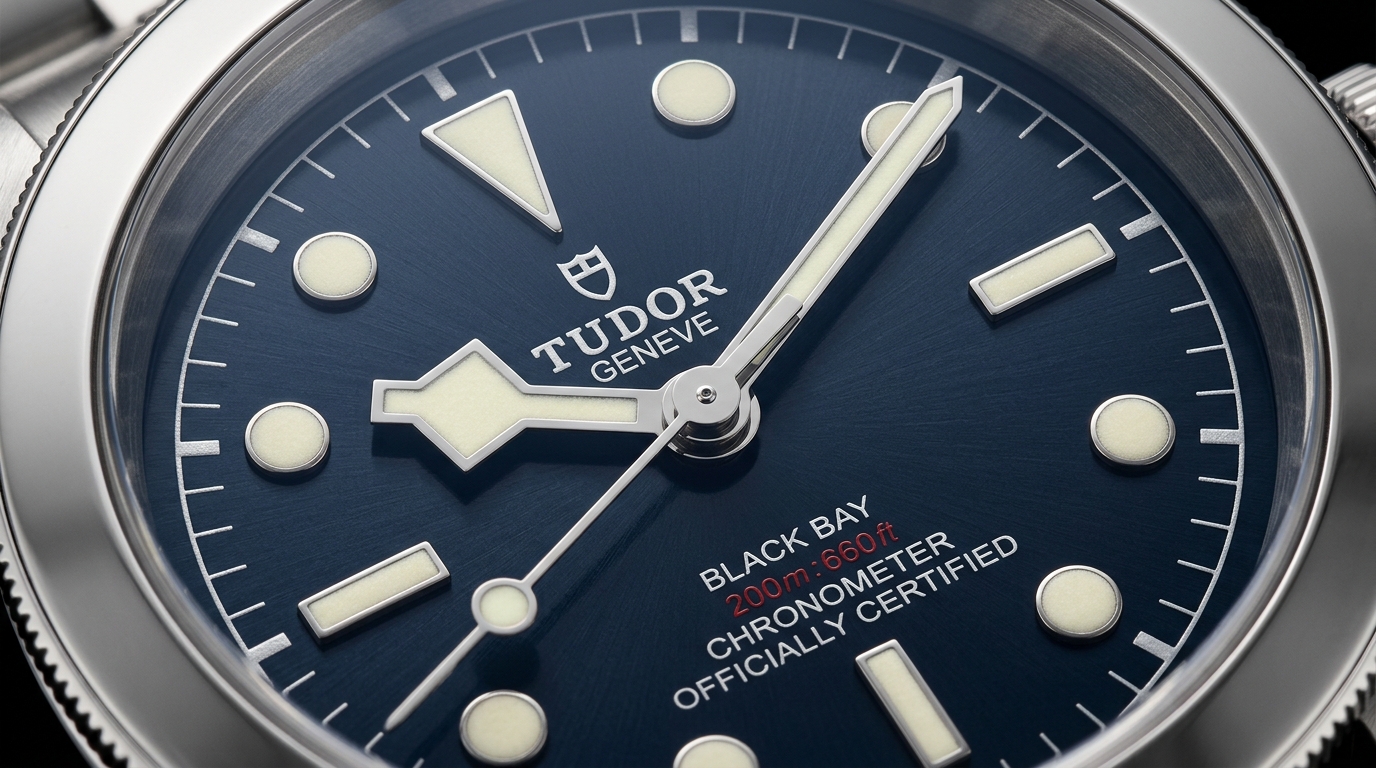
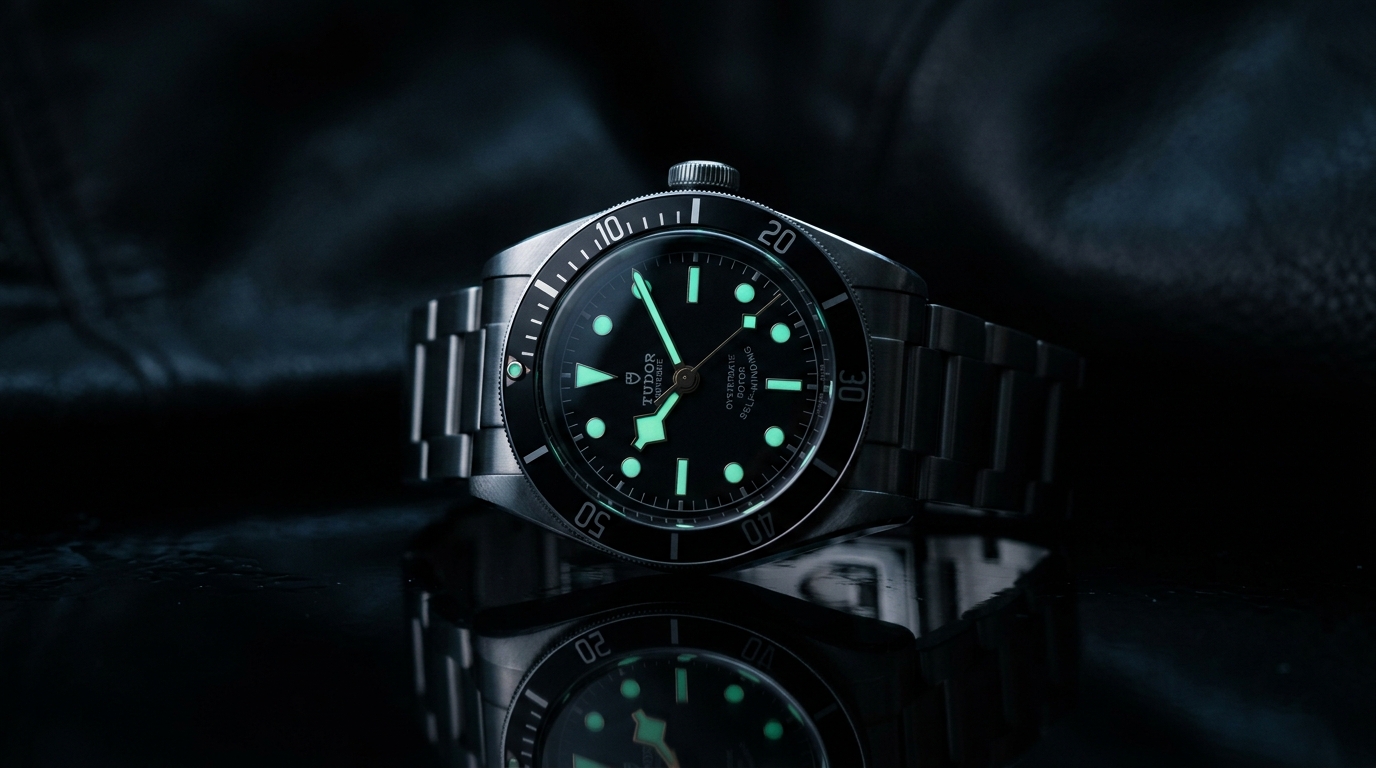
The first Black Bay reference 79220R used an ETA 2824 movement and combined elements from different vintage Tudor Submariners: a large crown associated with the 7924, snowflake hands linked to late-1960s and 1970s references, and a gilt-accented dial that nodded to earlier dive watches. Purists complained that it was a composite rather than a one-to-one reissue. Commercially, that was the point. Tudor was not selling archaeology; it was building a modern platform from recognisable historical parts.
The Black Bay became to Tudor what the Submariner is to Rolex: the central grammar of the brand. That has produced both success and fatigue. The line now includes 41 mm, 39 mm, 37 mm, 36 mm, GMT, chronograph, bronze, ceramic, silver, and two-tone executions. Tudor has occasionally overextended the design language, but the platform’s strength is undeniable. It lets the brand cover multiple price points and wrist sizes while retaining instant recognition. Few Swiss companies outside Rolex and Omega have a sports-watch architecture this commercially durable.
Manufacture Credibility: From ETA Dependence to Kenissi Scale
The decisive shift came in 2015 with the North Flag and the calibre MT5621, Tudor’s first widely presented in-house automatic movement. The North Flag itself was polarising, almost deliberately lacking the vintage warmth that made the Black Bay successful. But strategically it mattered more than its sales performance. It announced that Tudor’s future would not depend on ETA supply or on nostalgia alone.
The MT56 family changed the collector conversation. Calibres such as the MT5612 and MT5602 brought 70-hour power reserves, free-sprung balances, full balance bridges, and COSC certification into watches priced well below comparable Rolex models. Later, the smaller MT5402 allowed the Black Bay Fifty-Eight, launched in 2018, to achieve its 39 mm case and thinner proportions. That model was a turning point: it corrected the bulk of earlier Black Bays and became the watch that persuaded many collectors Tudor could make not just good watches for the price, but good watches full stop.
The industrial story is Kenissi. Tudor’s movement manufacturing partner, based in Le Locle, has become one of the most consequential suppliers in the modern Swiss mid-luxury segment. Chanel acquired a minority stake in Kenissi in 2018, and Breitling’s 2017 movement exchange with Tudor further signalled credibility: Breitling supplied its B01 chronograph architecture, while Tudor supplied automatic three-hand movements. The Black Bay Chronograph’s MT5813 is derived from the Breitling B01, with column wheel, vertical clutch, and 70-hour reserve. That is not decorative specification; it is a serious chronograph engine in a watch retailing far below most integrated Swiss chronographs with comparable architecture.
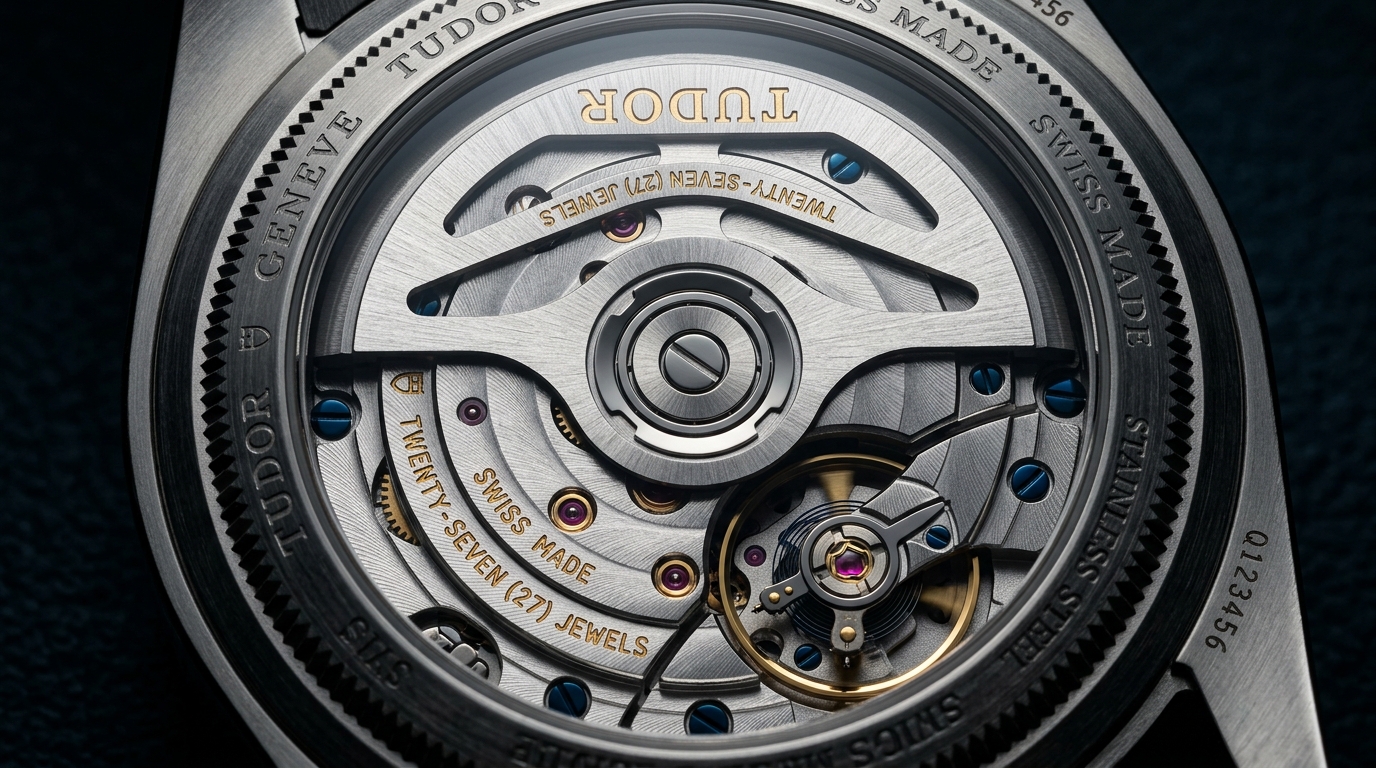
Tudor’s new Le Locle manufacture, opened in 2023, sharpened the message. This is no longer merely a Rolex-adjacent brand assembling outsourced movements into sturdy cases. It is part of a broader industrial ecosystem capable of producing modern calibres at scale. Tudor does not finish movements to haute horlogerie standards, and it should not pretend otherwise. The bridges are industrial, the decoration restrained, and the priorities are chronometry, robustness, and unit economics. That is exactly what the brand needs to be.
METAS, Pelagos, and the Technical Case for Tudor
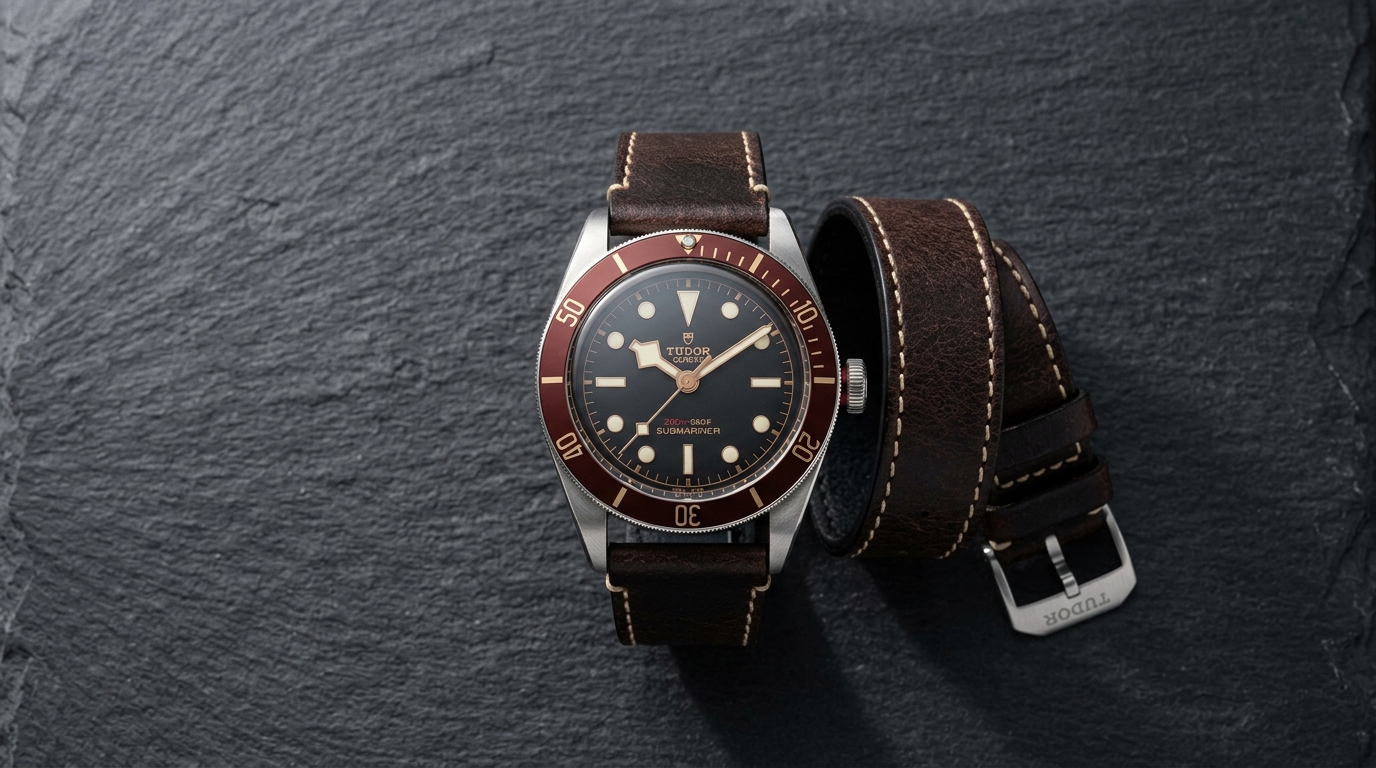
The strongest evidence that Tudor has moved beyond heritage packaging is its recent technical positioning. The Black Bay Ceramic, introduced in 2021, used the MT5602-1U and became Tudor’s first Master Chronometer certified by METAS. That certification requires the complete watch, not just the uncased movement, to meet standards for precision, magnetic resistance to 15,000 gauss, power reserve, water resistance, and performance in multiple positions and temperatures. In 2023, Tudor extended Master Chronometer certification to the burgundy Black Bay reference 7941A1A0RU, a more commercially central model. This mattered because it moved METAS from novelty to strategy.
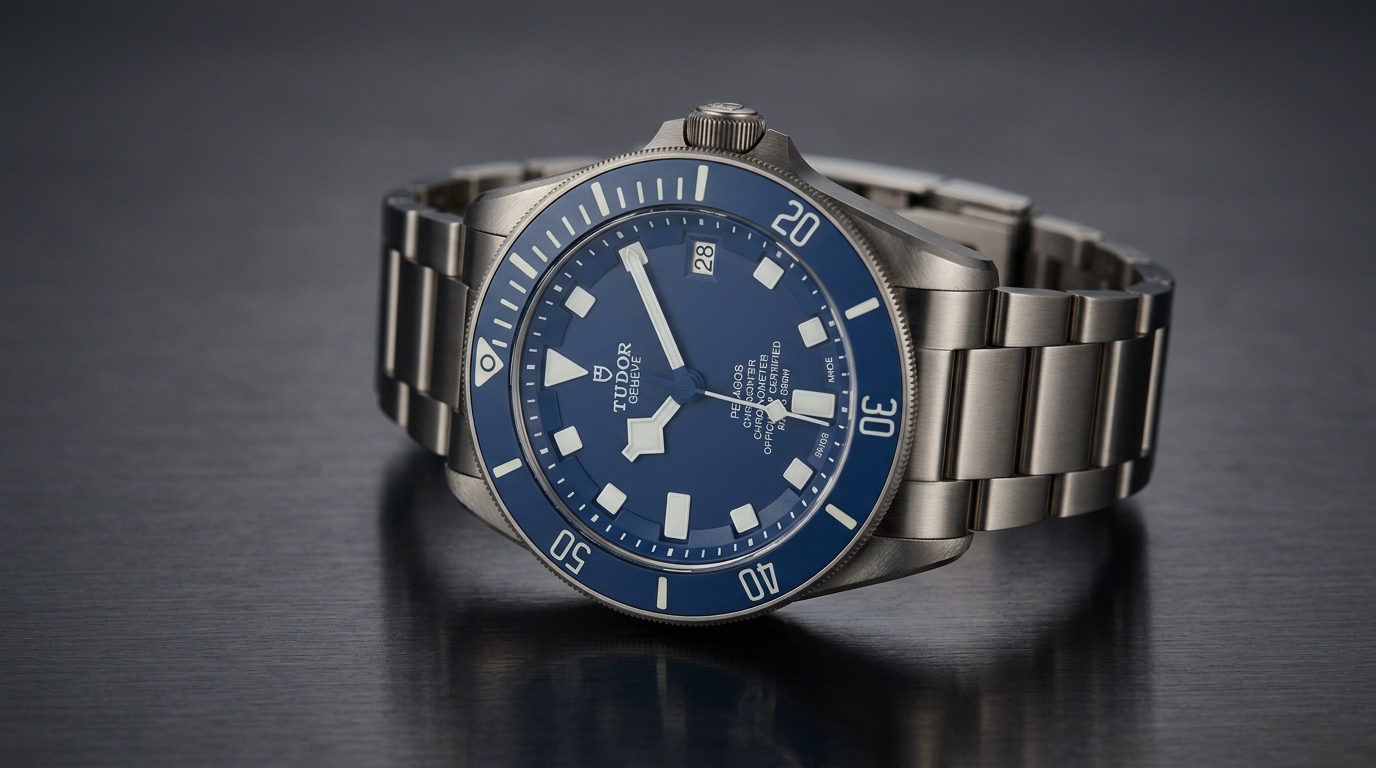
The Pelagos line offers the clearest alternative to Rolex within the same ownership structure. The original Pelagos of 2012 was a 42 mm titanium dive watch with a ceramic bezel, helium escape valve, and an excellent spring-loaded clasp. It did not look like a Submariner understudy. It looked like a modern instrument. The 2015 update added the in-house MT5612. The Pelagos FXD, introduced in 2021 in collaboration with the Marine Nationale, went further by using fixed strap bars, a bidirectional countdown bezel, and a slimmer case rated to 200 meters rather than chasing conventional dive-watch excess.
The Pelagos 39 of 2022 then exposed Tudor’s discipline and its limitations. At 39 mm in titanium, with the MT5400 calibre and a clean black dial, it became one of the brand’s most wearable modern sports watches. But it omitted features found on the larger Pelagos, such as the spring-loaded clasp mechanism and date. That was not accidental. Tudor often withholds something. It may be a date, a bracelet refinement, a thinner case, or a higher level of finishing. The watches are compelling partly because of what they offer, and partly because Rolex cannot allow them to offer everything.
The Rolex Ceiling and the Tudor Opportunity
Tudor’s greatest asset is also its clearest constraint: Rolex ownership. The association brings manufacturing discipline, distribution strength, after-sales confidence, and a halo that independent rivals cannot buy. It also places a ceiling on how luxurious, thin, refined, or symbolically powerful Tudor can become. Rolex must remain the aspirational endpoint. Tudor can be better value; it cannot be more desirable in the same way.
This explains much of the product strategy. Tudor experiments with materials and formats Rolex avoids: bronze Black Bays, silver cases, ceramic Master Chronometers, titanium Pelagos models, fabric straps, left-hand crowns, and military-specific configurations. Rolex protects continuity; Tudor absorbs variation. That makes Tudor the group’s pressure valve. It can test collector appetite for smaller cases, vintage cues, colour, and technical certification without disturbing Rolex’s carefully managed evolutionary pace.
The market has understood this. Tudor occupies the increasingly important space between approximately $3,000 and $6,000, where buyers cross-shop Longines, Oris, TAG Heuer, Sinn, Grand Seiko, and entry-level Omega. Unlike Rolex, serious Tudor models are generally obtainable at retail, and most trade on the secondary market with rational depreciation after launch demand settles. The Black Bay Fifty-Eight briefly behaved like a scarcity object after 2018, but the market eventually normalised. That is healthy. Tudor should not become another allocation theatre.
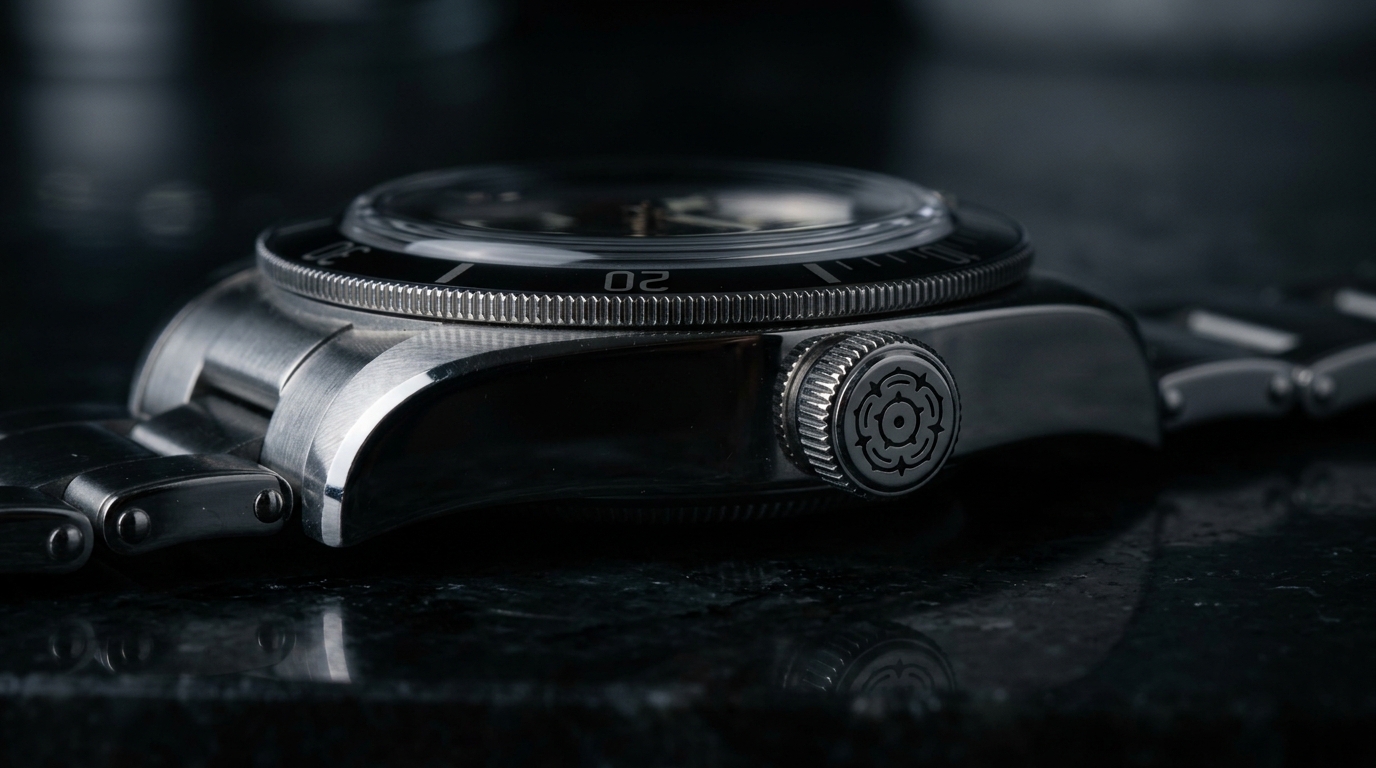
There are weaknesses. Tudor cases can still be thicker than ideal, especially in earlier Black Bay GMT and chronograph models. Bracelet refinement has improved with T-fit clasps, but the tactile experience remains below Rolex’s Oyster and Jubilee bracelets. Dial printing, hand finishing, and case transitions are industrially clean rather than luxurious. These are not fatal criticisms; they define the price band. The danger comes only when enthusiasts pretend Tudor has no compromises. It does, and the best models succeed because those compromises are intelligently chosen.
The Models That Define the Brand
The Black Bay Fifty-Eight remains the benchmark modern Tudor because it solved a real ergonomic problem. Its 39 mm case, 11.9 mm approximate thickness depending on variant, and MT5402 movement produced a vintage-influenced diver that wears properly rather than merely photographs well. The original black-and-gilt version is still the most coherent, while the navy blue version broadened the appeal without leaning too hard on faux ageing.
The Pelagos FXD is arguably the purer watch. It is not trying to be a luxury object first. Its fixed lugs impose strap use, its bezel is mission-specific, and its Marine Nationale connection has substance rather than invented romance. For collectors tired of the Black Bay formula, the FXD shows Tudor at its most strategically useful: technical, historically connected, and not overly deferential to Rolex visual codes.
The Black Bay Chronograph is the brand’s most compelling value argument on paper. The MT5813 calibre gives it a level of mechanical credibility that many competitors at the price cannot match. Yet the watch is still thick, and the dial’s mixture of dive-watch and racing-chronograph language divides opinion. It is a strong product, not a perfect one.
The Ranger, relaunched in 2022 for the British North Greenland Expedition anniversary, is more contentious. At 39 mm with the MT5402, it is mechanically sound and soberly priced. But its design austerity is close to blandness, and the historical link is thinner than Tudor’s dive-watch lineage. It is a good watch for a buyer who wants underplayed utility; it is not the soul of the brand.
Where Tudor Goes Next
Tudor’s next challenge is not legitimacy. That argument is largely over. The brand has credible calibres, serious certifications, documented military relationships, and a catalogue with genuine commercial depth. The challenge is refinement without hierarchy violation. If Tudor improves case thickness, bracelet quality, clasp consistency, and dial execution too aggressively, it narrows the experiential gap to Rolex. If it does too little, Grand Seiko, Omega, and a strengthening Longines will pressure it from different directions.
The most likely path is controlled advancement: more METAS-certified calibres, broader use of T-fit clasps, further development of the Pelagos family, and incremental thinning where movement architecture permits. Tudor may also continue using heritage as a design foundation while pushing technical credibility underneath. That formula works because it addresses two collector instincts at once: the desire for historical continuity and the demand for measurable specification.
The brand should be careful with the Black Bay. It is commercially essential, but overproduction of variations risks making Tudor feel narrower than it is. The strongest future probably lies in a two-pillar structure: Black Bay as the accessible heritage platform, Pelagos as the modern technical platform. Around those, chronographs and field watches can add range, but they should not distract from what Tudor now does best.
Tudor’s achievement is not that it became a cheaper Rolex. It is that it turned a historically dependent position into a coherent industrial identity. The brand understands that value in mechanical watchmaking is not simply a lower price for familiar shapes; it is the alignment of specification, history, manufacturing confidence, and restraint. Tudor is still constrained by the crown above it, and that will not change. But within that ceiling, it has become one of the most strategically important Swiss watch brands of the last fifteen years. For collectors, that makes Tudor worth taking seriously not as an alternative to Rolex, but as the sharper expression of what Rolex ownership can produce when prestige is not the only objective.