TAG Heuer: The Strategic Rehabilitation of Swiss Watchmaking’s Most Misunderstood Sports Brand
TAG Heuer: The Strategic Rehabilitation of Swiss Watchmaking’s Most Misunderstood Sports Brand
TAG Heuer is strongest when it stops trying to look like a miniature version of the high-watchmaking houses and remembers what made Heuer important in the first place: timing, legibility, toughness and a direct line to speed. The brand’s current task is not to invent a new identity, but to edit a complicated one. Few Swiss names have such a clear historical mandate, and few have spent so much of the modern era obscuring it with uneven product strategy, excessive line proliferation and intermittent technical grandstanding.
That tension is what makes TAG Heuer worth studying. Under LVMH ownership since 1999, the company has moved through several identities: accessible luxury chronograph specialist, fashion-adjacent sports watch maker, smartwatch pioneer, avant-garde complication laboratory and, more recently, archive-conscious motorsport brand. The last of these is the most convincing. TAG Heuer does not need to compete with Patek Philippe, Audemars Piguet or even Zenith on movement romance. Its durable territory is closer to the racetrack, the pit wall, the dashboard timer and the steel chronograph that can be worn without ceremony.
From Heuer to TAG Heuer: A Brand Built on Timing, Not Ornament
Heuer was founded in 1860 by Edouard Heuer in Saint-Imier, and its early credibility came from technical timing instruments rather than decorative wristwatches. The 1887 patent for the oscillating pinion remains one of the company’s most important contributions to chronograph architecture; it offered a simpler, robust way to engage and disengage the chronograph mechanism, and it still informs industrial chronograph design today. In 1916, Heuer introduced the Mikrograph stopwatch capable of measuring 1/100th of a second, an achievement that placed the company squarely in the world of competitive sport timing rather than salon horology.
That distinction matters. The most coherent Heuer products have always been tools translated into watches. The Autavia began in 1933 as a dashboard instrument for automobiles and aviation before becoming a wrist chronograph in 1962. The Carrera arrived in 1963 under Jack Heuer, named after the Carrera Panamericana road race, and succeeded because it was clean, readable and proportionate. Early Carrera references such as the 2447 and 3647 were not ornate luxury objects; they were disciplined chronographs with sharp dials, faceted lugs and enough restraint to age better than many of their louder contemporaries.
The Monaco, launched in 1969, complicates that narrative in the best possible way. Its square case, blue dial and left-hand crown made it visually radical, while its Calibre 11 automatic chronograph movement placed it at the centre of one of the great technical races of the late 1960s. The Chronomatic consortium of Heuer, Breitling, Büren and Dubois-Depraz introduced the Calibre 11 in the same year Zenith launched the El Primero and Seiko released the 6139. The Monaco ref. 1133B gained its mythology through Steve McQueen in Le Mans, but the watch was historically interesting before Hollywood sharpened the image.
The TAG Years: Commercial Success, Collector Ambivalence
The acquisition of Heuer by Techniques d’Avant Garde in 1985 created TAG Heuer, and with it a different kind of brand. The timing was not gentle. The quartz crisis had already damaged Swiss mechanical watchmaking, and Heuer had struggled financially. TAG’s ownership gave the company capital and a more assertive marketing posture. The 1986 Formula 1 collection, with its fibreglass cases, bright colours and quartz movements, was commercially important precisely because it did not behave like traditional Swiss watchmaking. It was accessible, sporty and global.
Collectors often look back on this period with suspicion, but the judgement requires nuance. The Formula 1, S/el and later Link lines diluted the purity of the old Heuer chronograph language, yet they also kept the brand visible at a time when many mechanical specialists were either shrinking or disappearing. TAG Heuer became a household luxury watch name not because it satisfied vintage purists, but because it understood department-store aspiration, motorsport sponsorship and the power of a watch that looked fast even when it contained a quartz calibre.
The problem is that commercial visibility can become a burden. By the 2000s, TAG Heuer existed in an awkward middle space: too expensive to be treated as merely accessible, too inconsistent to be regarded as profoundly collectible, and too reliant on modified ETA and Sellita movements to win movement purists. Calibre 5 was typically based on ETA 2824-2 or Sellita SW200 architecture; Calibre 16 relied on the Valjoux 7750 family. These are reliable engines, but they do not automatically justify premium pricing when competitors such as Tudor began making a stronger case around Kenissi-manufactured automatic movements and tighter collection discipline.
LVMH and the Long Correction
LVMH acquired TAG Heuer in 1999, bringing the brand into the same luxury group that now includes Zenith, Hublot and Bulgari watchmaking. The ownership structure matters because TAG Heuer’s strengths and weaknesses are partly strategic rather than purely horological. LVMH has generally understood that TAG Heuer should be the group’s volume sports-watch brand, sitting below Zenith’s movement heritage and Hublot’s material-led maximalism. The question has been execution.
The Jean-Claude Biver period, beginning in 2014, pushed TAG Heuer aggressively toward younger buyers, connected watches and sharper entry pricing. The TAG Heuer Connected, launched in 2015 in partnership with Intel and Google, was not a collector’s object, but it was strategically logical. A brand with a modern sports identity and strong retail visibility had more permission to enter smartwatches than most Swiss competitors. The risk was that mechanical credibility would continue to fray if the core chronograph collections did not improve.
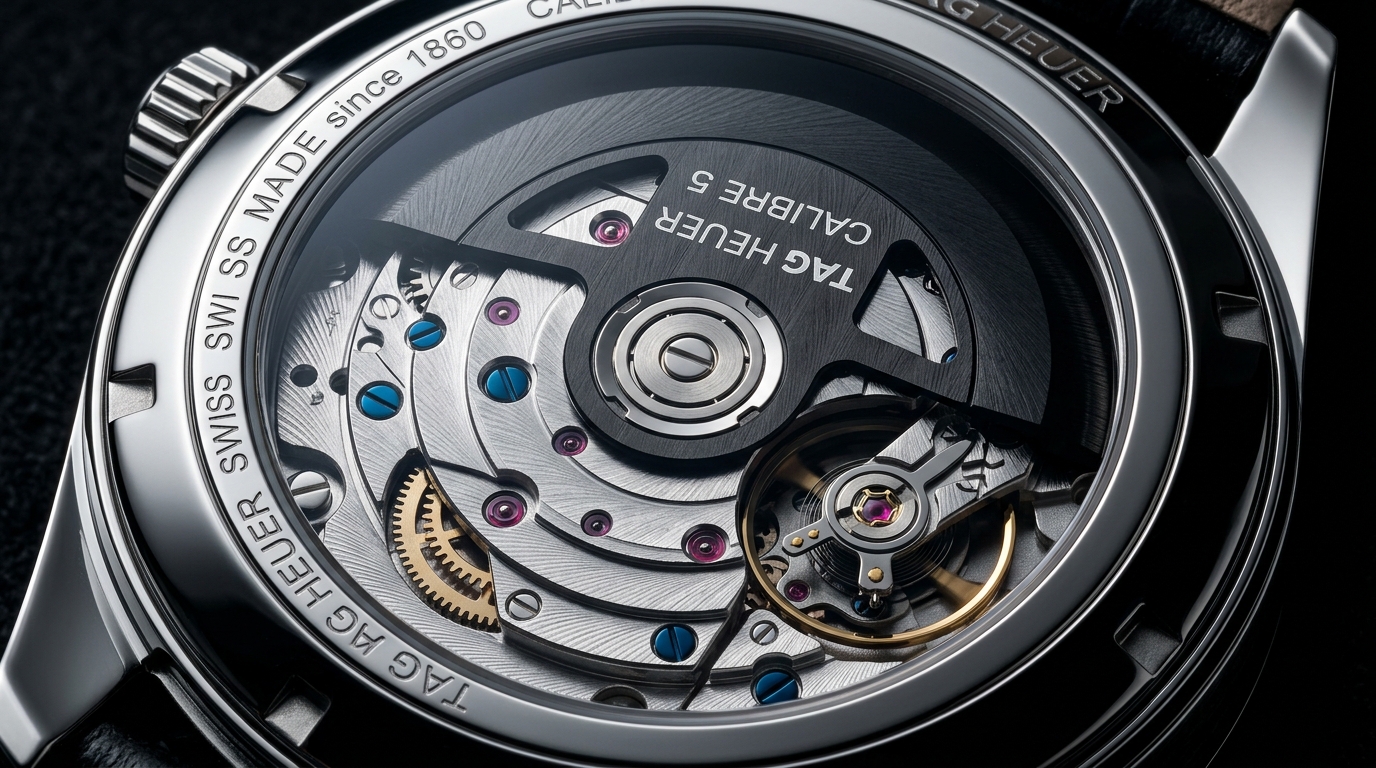
The more significant correction came through the revival and maturation of the in-house chronograph platform. The CH80 project, announced in 2014 and quickly withdrawn, was an early sign of ambition without product discipline. Its architecture eventually fed into the Heuer 02, an integrated automatic chronograph with column wheel, vertical clutch and approximately 80 hours of power reserve. Once TAG Heuer placed this movement into Carreras, Monacos and Autavias, the brand finally had a technical foundation capable of supporting higher prices with a straight face.
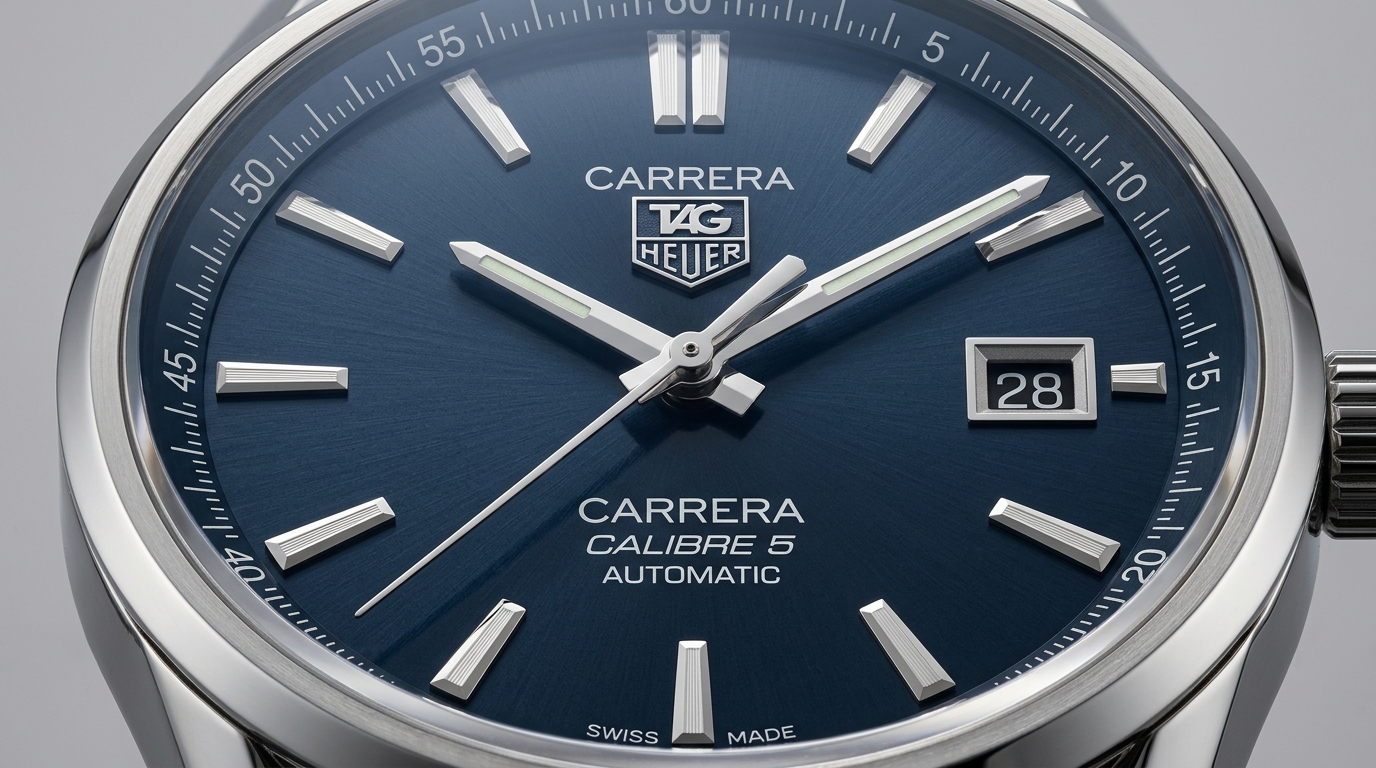
The later TH20-00 evolution, used in the modern Carrera chronographs, improved the proposition with bidirectional winding while retaining the 80-hour reserve. This may not thrill haute horlogerie devotees, but it is exactly the type of engineering TAG Heuer needed: industrially produced, modern, practical and credible. The brand is not at its best when chasing Geneva Seal theatrics. It is at its best when offering a commercially robust sports chronograph calibre that feels appropriate to the watch on the wrist.
The Carrera Glassbox: The Best Recent Argument for TAG Heuer
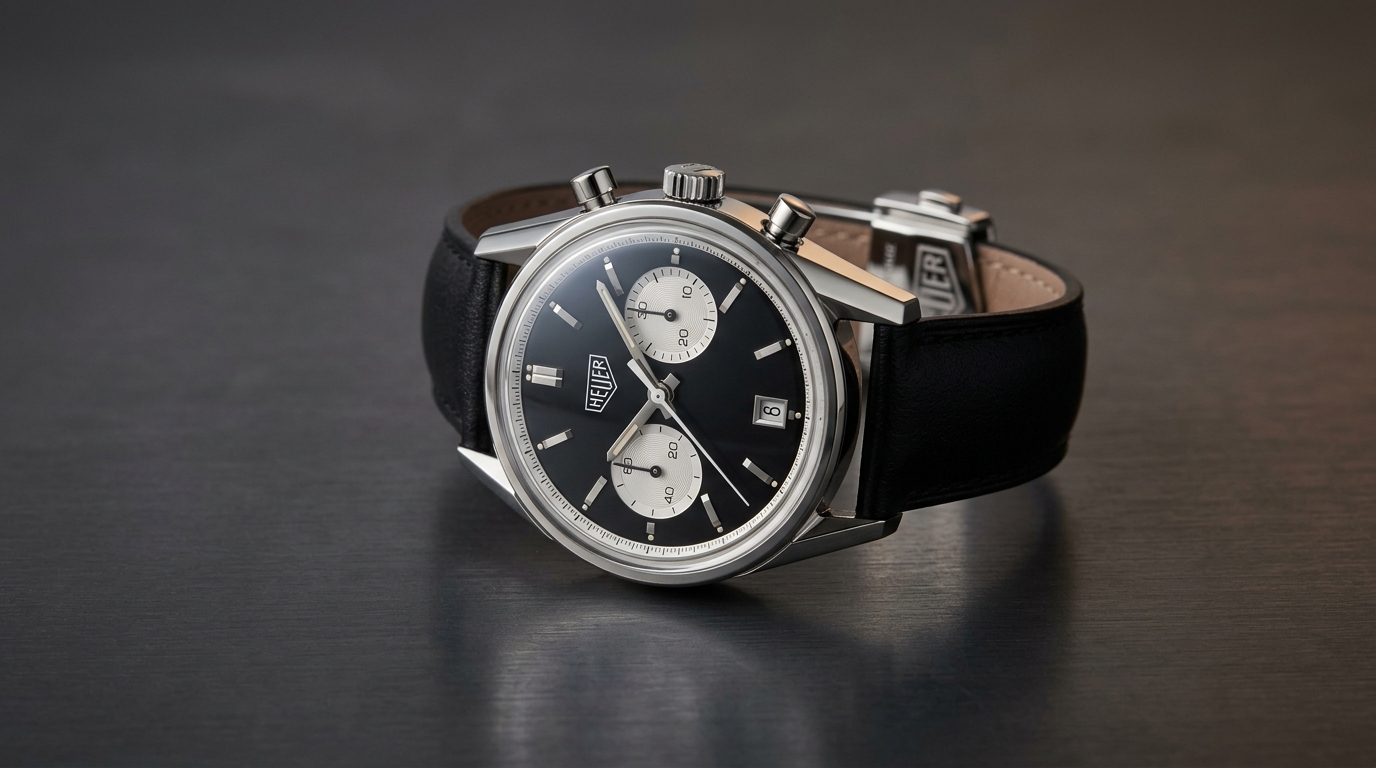
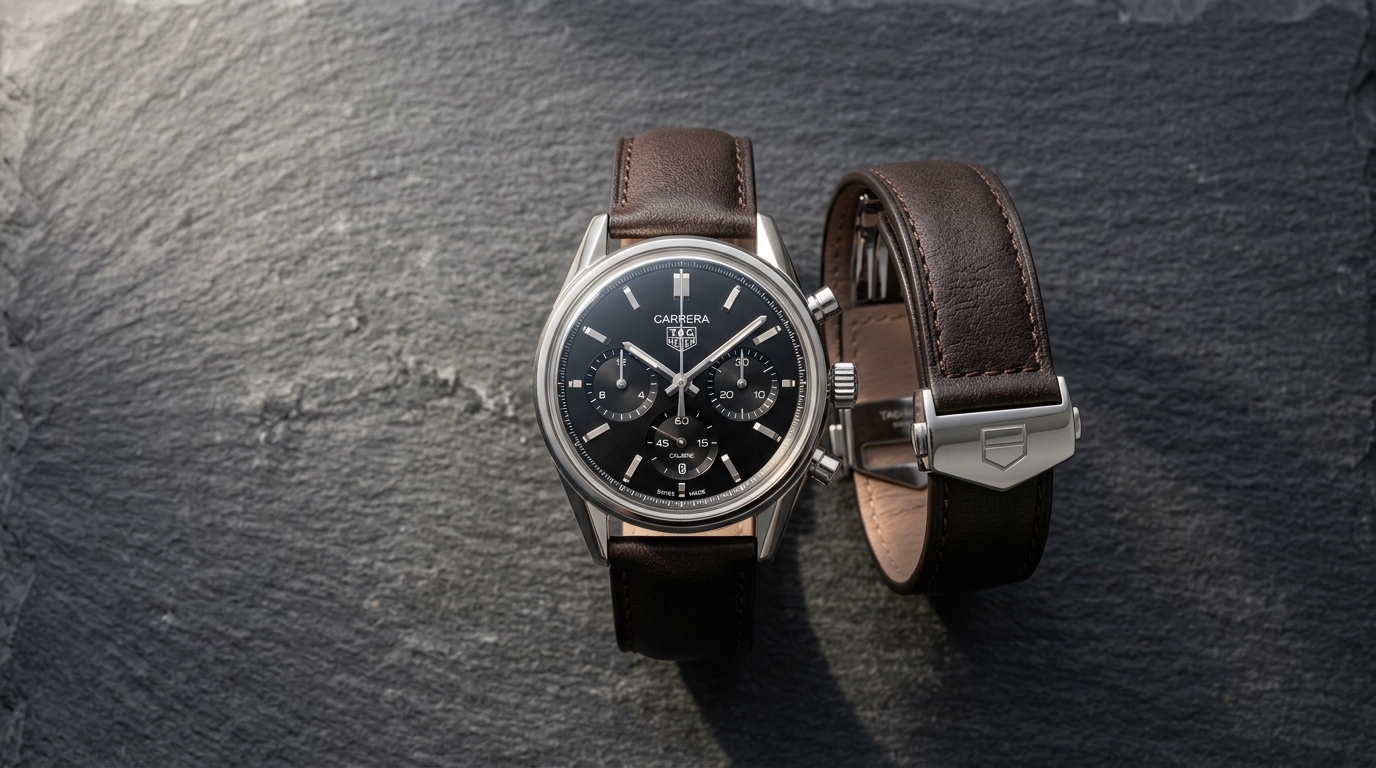
The 2023 Carrera Chronograph Glassbox is the clearest evidence that TAG Heuer has rediscovered editorial discipline. The 39 mm case, domed sapphire crystal, curved dial flange and restrained vintage references are not random nostalgia. They solve a modern problem: how to make the Carrera feel historically connected without becoming a costume piece. The blue CBS2210.FC6534 and reverse-panda variants showed a more mature design language than many of the oversized Carreras of the previous decade.
The Glassbox succeeds because it respects the original Carrera’s logic. The early Jack Heuer Carreras were compact, precise and uncluttered. The modern Glassbox is thicker and more technically complex, but the watch at least understands that the Carrera is not supposed to be a loud object. TAG Heuer’s decision to anchor the line around the TH20-00 calibre gives the model a stronger commercial spine than the old Calibre 16 Carreras, which often felt like attractive cases wrapped around familiar outsourced mechanics.
Pricing remains delicate. TAG Heuer now operates in a zone where Tudor, Longines, Oris, Breitling and Omega all apply pressure from different angles. A modern Carrera chronograph priced in the mid-to-high four-figure range must persuade a buyer who may also be considering a Tudor Black Bay Chrono with a Kenissi-based MT5813, a Breitling Navitimer or a pre-owned Omega Speedmaster. TAG Heuer’s answer cannot be finishing superiority. It must be design specificity and brand relevance. The Glassbox, more than most recent TAG Heuer watches, provides both.
Monaco, Autavia and the Archive Problem
The Monaco remains TAG Heuer’s most recognisable watch, but it is strategically difficult. Its identity is too strong to modernise casually and too famous to abandon. The 39 mm square case, blue dial and Calibre 11 left-crown layout are essential to the myth. Yet TAG Heuer has sometimes overused the Monaco as a canvas for anniversary editions, Gulf colours, skeleton dials and high-priced experiments. Some are successful; others feel like brand management by limited edition.
The most interesting modern Monaco development is not another McQueen-adjacent dial, but the 2024 Monaco Split-Seconds Chronograph using the TH81-00 calibre, developed with Vaucher. In titanium and sapphire-cased executions, it pushed TAG Heuer into six-figure territory, around a level closer to independent complications than normal TAG Heuer retail. Technically, the watch is serious: an automatic split-seconds chronograph is a demanding complication. Strategically, it is less straightforward. It proves capability, but it does not define the brand’s centre of gravity. TAG Heuer should make such watches sparingly. The halo is useful only if the core range remains believable.
The Autavia presents the opposite problem. Historically, it is one of Heuer’s richest names, from the ref. 2446 screw-back chronographs to the later 1163 automatic models. Yet the modern Autavia has lacked a stable identity, moving between pilot-style three-handers, heritage chronographs and broader adventure-watch cues. TAG Heuer has not yet made the Autavia as commercially coherent as the Carrera or as culturally fixed as the Monaco. That is a missed opportunity. A disciplined Autavia chronograph line, sized under 41 mm and priced carefully, could be one of the strongest products in the catalogue.
Aquaracer and Formula 1: The Volume Engines
The Aquaracer is often dismissed by collectors because it does not carry the romantic burden of the Carrera or Monaco. That dismissal is too easy. The modern Aquaracer Professional 300, refreshed in 2021, is one of TAG Heuer’s most commercially important watches because it gives the brand a credible steel sports-diver in a category where buyers still want robustness, water resistance and recognisable design. Its twelve-sided bezel and horizontal dial texture may not please minimalists, but they give it an identity in a crowded segment dominated by the Tudor Black Bay, Oris Aquis and Longines HydroConquest.
The 2022 Aquaracer Professional 200 Solargraph was strategically sharper than many mechanical purists admitted. A solar quartz TAG Heuer is not a compromise if the brief is a low-maintenance sports watch with real daily usability. The original Solargraph movement was supplied by La Joux-Perret, and the concept aligned with the brand’s post-quartz history better than a forced mechanical purist narrative would have. TAG Heuer has always had one foot in instrument watchmaking; accurate, resilient, light-powered quartz belongs in that story.
The Formula 1 line is even more important now that TAG Heuer returns as Formula 1’s official timekeeper from 2025 through LVMH’s ten-year global partnership with the sport. Rolex had held the visible F1 timing association from 2013, so the shift is more than logo placement. For TAG Heuer, Formula 1 is not borrowed relevance; it is home terrain. The brand timed Ferrari in the 1970s, worked with McLaren for decades, and built much of its late twentieth-century global image around motorsport. The challenge will be avoiding souvenir-watch excess. The opportunity is to rebuild the Formula 1 collection into a sharper entry point rather than a nostalgic nameplate.
What Collectors Should Buy, Avoid and Watch
For collectors, TAG Heuer is not a single market. Vintage Heuer and modern TAG Heuer behave differently. Good early Carreras, Autavias, Skippers and Monacos remain condition-sensitive and increasingly specialised. Correct dials, hands, bezels and cases matter enormously; service parts can materially affect value. The market already understands the best references, particularly the Carrera 2447, Autavia 2446, Monaco 1133B and various military or co-branded pieces such as the Bundeswehr 1550 SG and Abercrombie & Fitch Seafarer. Bargains are less common than they were a decade ago.
Modern TAG Heuer is a more tactical proposition. Retail buyers should be selective because depreciation is real outside the most desirable limited editions. Pre-owned Carreras with the Heuer 02 or TH20-family movements can be intelligent purchases when priced below retail, especially if the case size and dial execution are restrained. The Carrera Glassbox deserves consideration at retail more than most modern TAG Heuers because it represents a genuine design reset rather than a cosmetic update.
The Monaco is worth buying if the square case is central to the appeal, not because one expects easy value retention. The classic blue Calibre 11-style versions remain the most legible expression of the model. Skeletonised or highly themed editions are riskier because their appeal is narrower. Aquaracers are best treated as daily sports watches rather than investment objects, and that is not criticism. A watch can be successful without becoming an auction thesis.
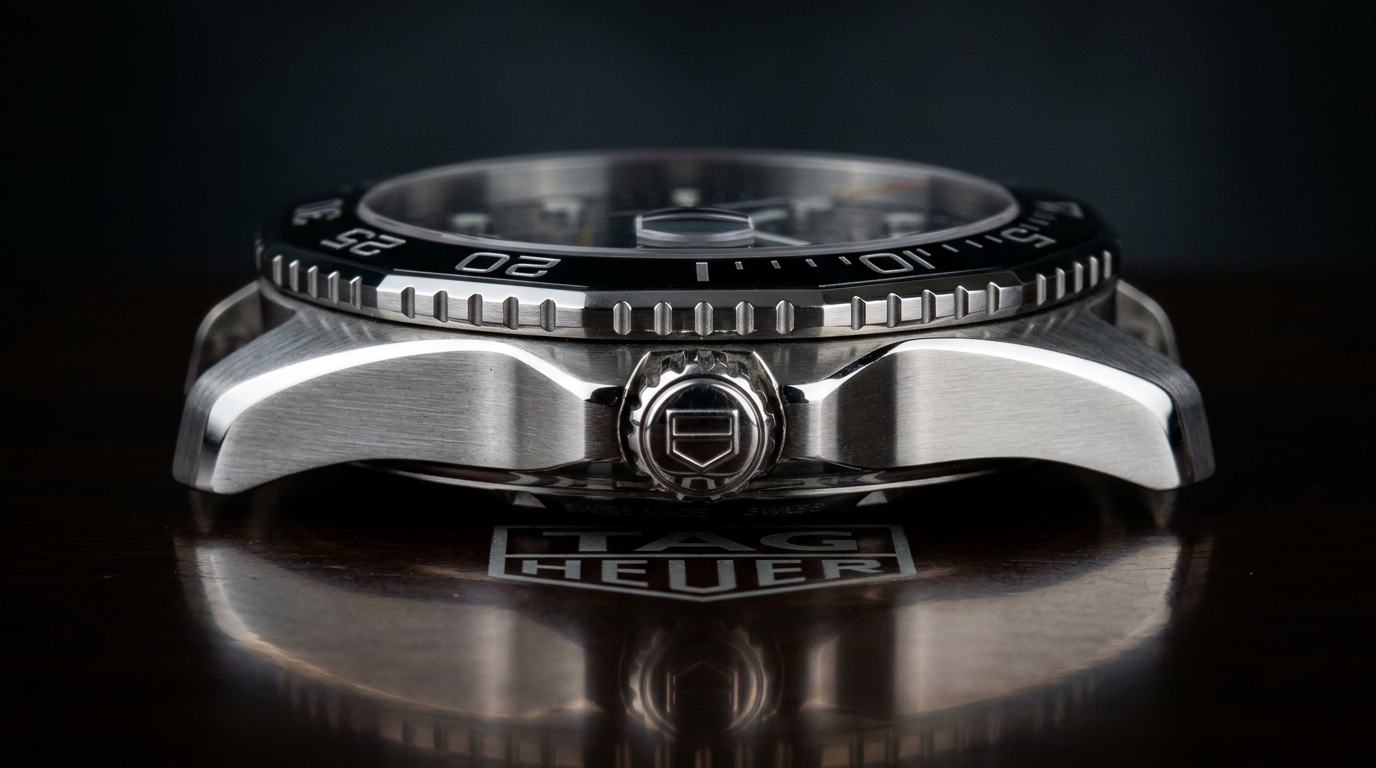
The Strategic Verdict
TAG Heuer’s future depends on holding a line. The brand has enough history to justify confidence, but not enough collector goodwill to excuse incoherence. Its archive is powerful, yet over-mining it can turn serious watches into merchandise. Its technical capacity has improved, especially through the Heuer 02 and TH20 platforms, but movement sophistication alone will not win the market against Tudor, Omega or Breitling. Its motorsport legitimacy is unmatched at its price level, but sponsorship only matters when the product connected to it is persuasive.
The most convincing TAG Heuer is not the most expensive TAG Heuer. It is the watch that connects the old Heuer virtues to modern manufacturing: a properly sized Carrera chronograph with an integrated automatic movement, a Monaco that respects the original geometry, an Aquaracer that accepts its role as a hard-wearing sports watch, or a Formula 1 that becomes a genuinely credible gateway rather than a lifestyle accessory. That is where the brand has room to win.
LVMH’s recent leadership changes underline the strategic importance of the name. Frédéric Arnault’s tenure from 2020 to 2024 pushed TAG Heuer toward a younger, more connected and more design-conscious position; his elevation to oversee LVMH Watches was followed by Julien Tornare’s brief move from Zenith to TAG Heuer and Antoine Pin’s appointment as chief executive in 2024. The management reshuffle matters less than the mandate: TAG Heuer must grow without losing the sharper product discipline it has only recently recovered.
Collectors should be neither dismissive nor credulous. TAG Heuer has made forgettable watches, overextended lines and priced some models ahead of their substance. It has also produced some of the most culturally durable sports chronographs in Swiss watchmaking. The Carrera, Monaco and Autavia are not marketing inventions; they are real historical assets. The task now is to treat them with restraint.
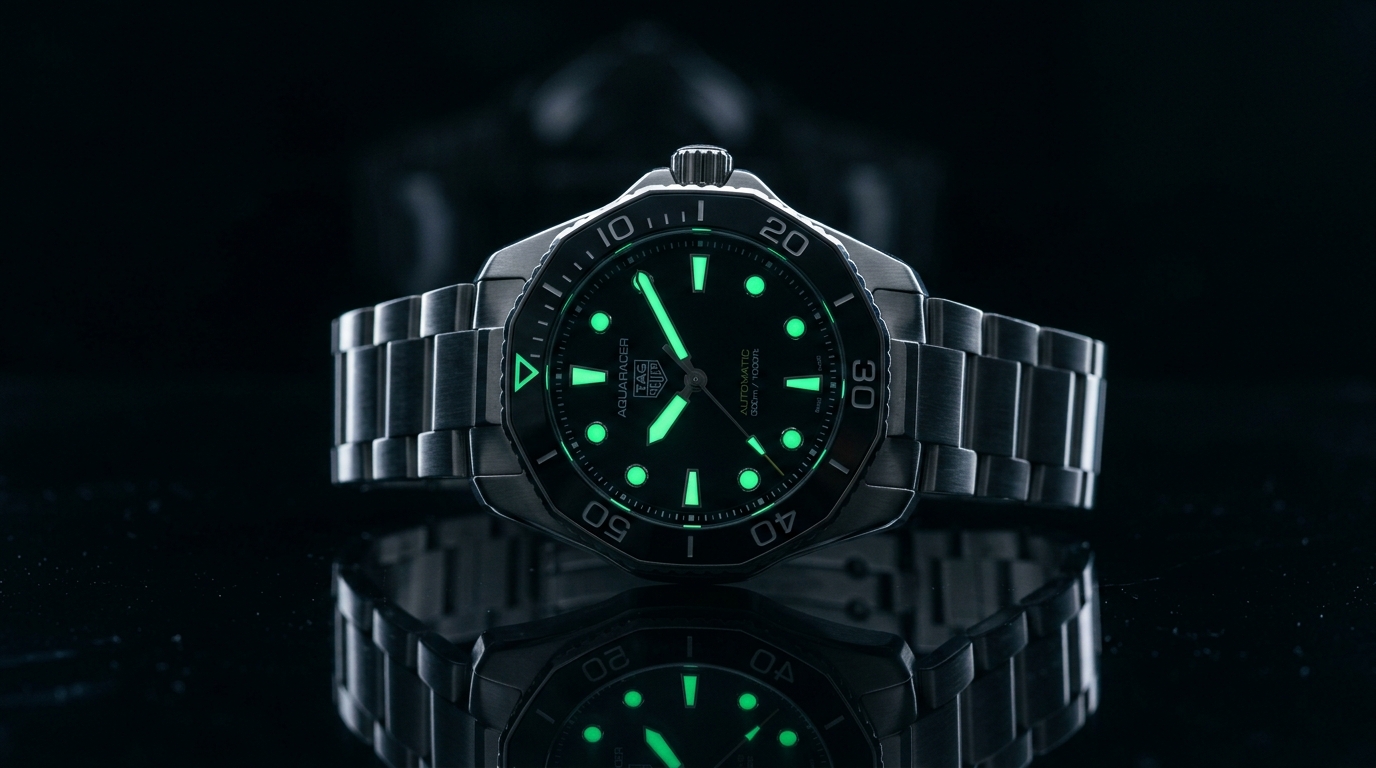
In that sense, TAG Heuer is not merely a brand trying to move upmarket. It is a brand trying to become more itself. The distinction is critical. When TAG Heuer chases prestige for its own sake, the result can feel strained. When it builds precise, modern sports watches from the logic of Heuer’s timing instruments and racing chronographs, the proposition becomes much harder to dismiss. The rehabilitation is not complete, but the direction is clearer than it has been in years.