Seiko: The Great Vertical Watchmaker at a Strategic Crossroads
Seiko: The Great Vertical Watchmaker at a Strategic Crossroads
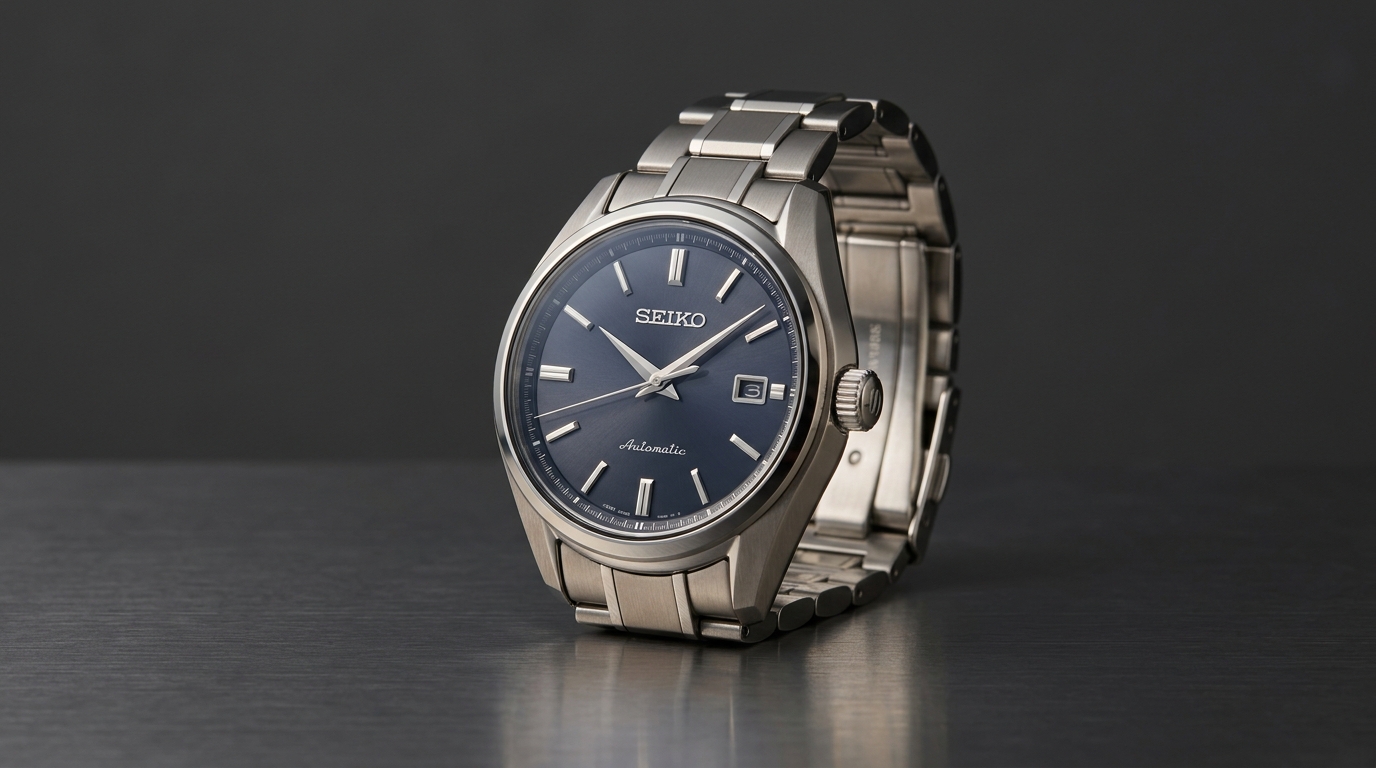
Seiko is the rare watch company whose cheapest credible mechanical watch and most technically sophisticated luxury watches can be discussed in the same breath without irony. That is its power. It is also its strategic problem. Few brands have done more to democratise mechanical watchmaking, industrialise precision, and preserve genuinely Japanese horological identity. Fewer still have made it so difficult for collectors to explain, in one clean sentence, what the brand is today.
For more than a century, Seiko has operated less like a conventional watch marque and more like a vertically integrated watch civilisation. It has produced pocket watches, railway watches, chronometers, dive watches, quartz instruments, Spring Drive movements, high-beat Grand Seikos, and affordable automatics that became gateways into collecting. The same corporate ecosystem that built the 1969 Quartz Astron 35SQ also built the 6139 automatic chronograph, the 6159 professional diver, the 7S26-powered SKX007, and the modern 9R Spring Drive calibres. That breadth is not branding; it is industrial capacity.
The question for collectors in 2026 is not whether Seiko matters. That case was settled decades ago. The better question is whether Seiko can continue to charge more while preserving the technical and cultural credibility that made it so persuasive in the first place.
From Hattori’s Shop to Industrial Watchmaking
Seiko’s origin story is unusually useful because it explains the company’s later behaviour. Kintaro Hattori opened his watch and jewellery shop in Tokyo in 1881, founded the Seikosha factory in 1892, and introduced Japan’s first domestically produced wristwatch, the Laurel, in 1913. This was not a maison narrative in the Swiss sense; it was an industrial modernisation project. Seiko’s strongest historical instinct has always been manufacturing control.
That instinct sharpened after the Second World War. By the late 1950s and 1960s, Seiko was not merely assembling competent watches for a domestic audience. It was competing directly with Switzerland in observatory trials, moving toward higher precision and better production discipline. The first Grand Seiko of 1960, reference J14070 with calibre 3180, was explicitly created to prove that a Japanese wristwatch could meet international standards of accuracy, finishing, and reliability. It was not nostalgic; it was oppositional.
This is crucial to understanding Seiko’s collector appeal. The brand’s history is not built on aristocratic continuity or inherited status. It is built on engineering escalation. In the 1960s, that meant chronometer-grade hand-wound movements, the King Seiko rivalry between Daini Seikosha and Suwa Seikosha, and eventually high-beat calibres such as the 45GS and 61GS families. Seiko developed through internal competition, not carefully managed scarcity.
The 1969 Problem: Seiko Won Too Well
The most important Seiko watch ever made was also the one that destabilised the industry it helped redefine. On 25 December 1969, Seiko introduced the Quartz Astron 35SQ, the world’s first commercially available quartz wristwatch. It was expensive, produced in small numbers, and technologically radical. Its calibre 35A delivered a level of accuracy that mechanical watches could not approach at scale.
The Swiss industry still tends to frame the quartz crisis as an external catastrophe. From Seiko’s perspective, it was the logical conclusion of precision watchmaking. If the purpose of a watch is accurate portable timekeeping, quartz was not a betrayal. It was progress. That intellectual honesty remains one of Seiko’s defining traits, and it explains why the company never treated mechanical watchmaking as the only legitimate path. Seiko built serious quartz, serious mechanical, and later Spring Drive with equal conviction.
The other 1969 achievement is equally important for enthusiasts: the Seiko 6139 automatic chronograph. Alongside Zenith’s El Primero and the Chronomatic consortium’s Calibre 11, the 6139 belongs in any serious discussion of the first automatic chronographs. The famous 6139-600x “Pogue,” associated with Colonel William Pogue’s 1973 Skylab 4 mission, gave Seiko a chronograph mythology grounded not in celebrity sponsorship but in actual use. Again, the pattern is clear: Seiko’s credibility comes when technical substance precedes narrative.
Divers: Where Seiko Became a Tool-Watch Authority
If Grand Seiko represents Seiko’s pursuit of precision, the dive watches represent its practical authority. The 1965 reference 6217-8000/8001, known as the 62MAS, established the foundation: 150 metres of water resistance, automatic calibre 6217, and a utilitarian case design that now anchors an entire vintage and reissue economy. The 1968 reference 6159-7001 moved the category forward with a monobloc-style case profile, 300 metres of resistance, and the high-beat calibre 6159 running at 36,000 vibrations per hour.
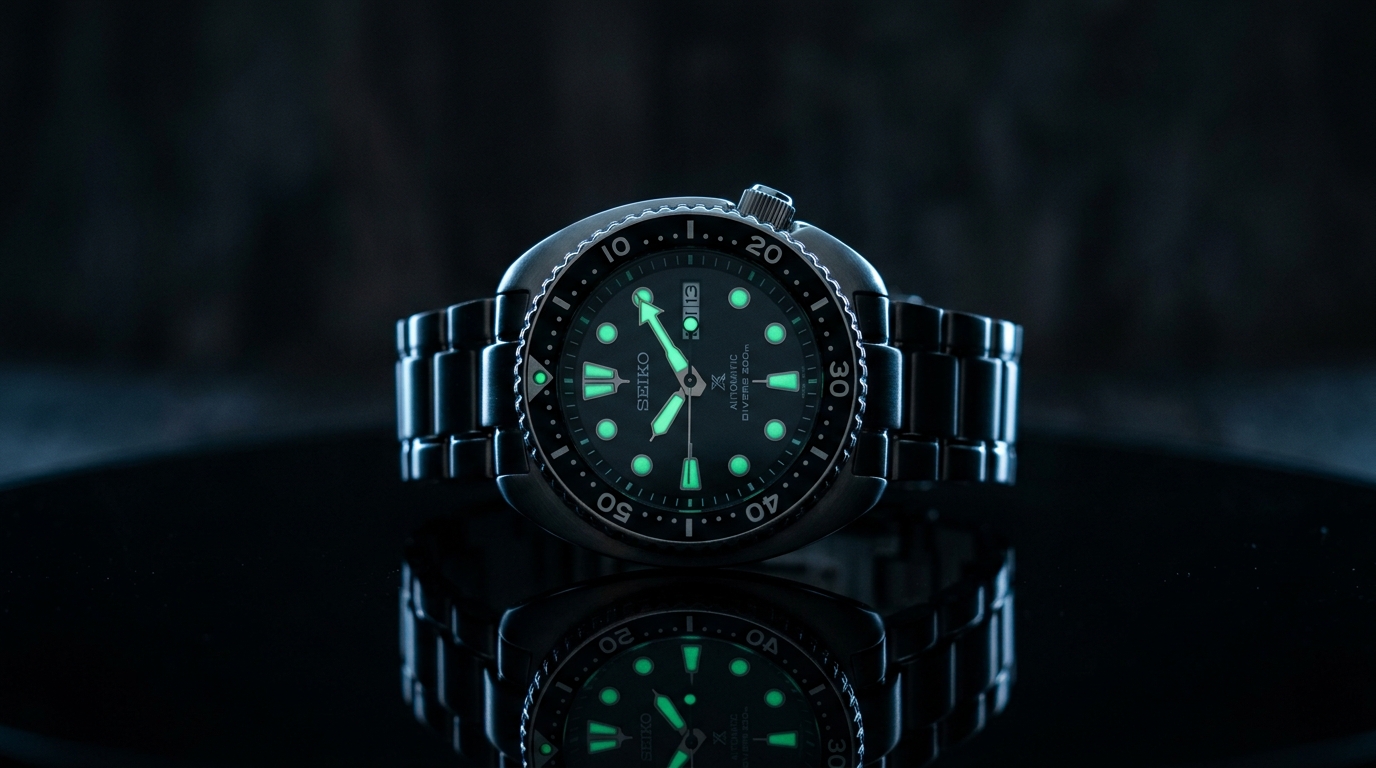
Seiko’s professional dive-watch development was not aesthetic theatre. The 1975 6159-7010 “Tuna,” with its shrouded titanium case and L-shaped gasket system, was a direct response to saturation-diving demands. It was large, strange, and function-led. The later 6306 and 6309 cushion-case divers, followed by the 7002 and then the SKX generation, translated that credibility into accessible watches worn by actual divers, military personnel, travellers, and students who wanted a mechanical watch that could be abused without ceremony.
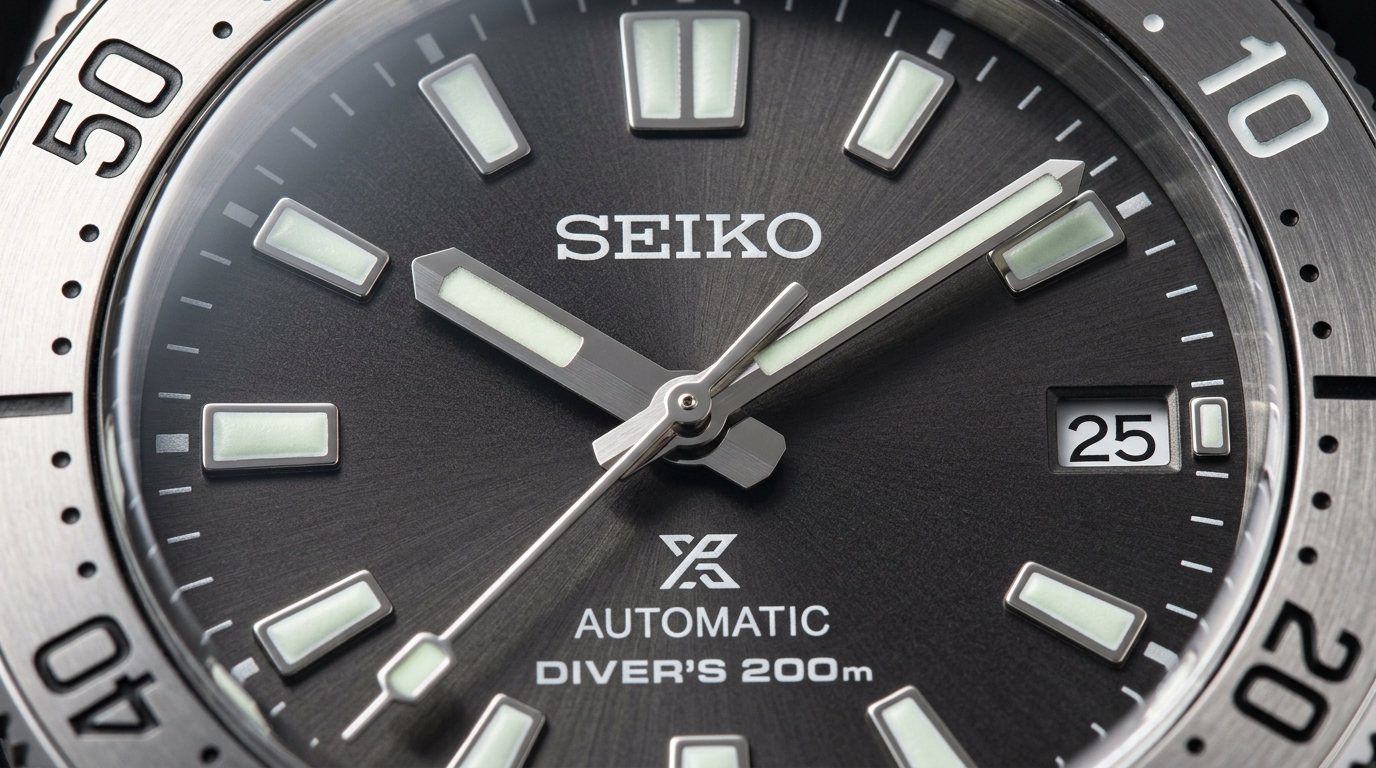
The SKX007 and SKX009, powered by the 7S26 automatic calibre, are now discontinued and increasingly sentimentalised. They were never refined watches. They had no hacking seconds, no hand-winding, indifferent bracelets, and wildly variable alignment. But they were ISO-rated, robust, legible, and inexpensive. In the 2000s and early 2010s, they functioned as the mechanical watch world’s low-friction entry point. Their disappearance left Seiko with a harder task: selling successors such as the 5 Sports SRPD line and Prospex divers at higher prices without the same purity of proposition.
The Movement Ladder: 7S, 4R, 6R, 8L, 9S, 9R
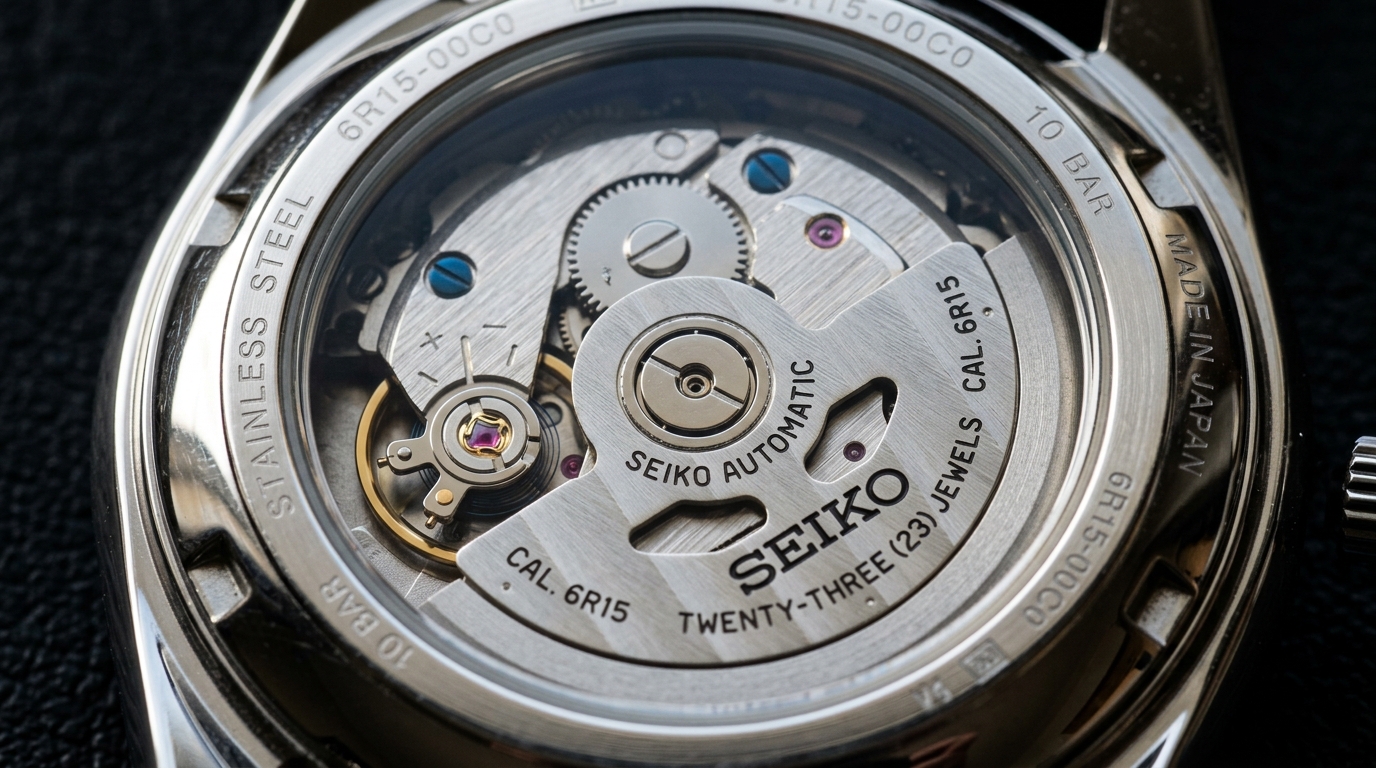
Seiko’s movement hierarchy is the clearest evidence of its vertical reach. At the lower end, the 7S26 defined decades of affordable automatic ownership. The 4R family improved usability with hacking and hand-winding, making calibres such as the 4R35 and 4R36 central to Seiko 5 and entry Prospex models. The 6R series, including the 6R15 and newer 6R35 with approximately 70 hours of power reserve, occupies the enthusiast middle ground, though real-world accuracy can be less consistent than buyers expect at current prices.
Above that sits the 8L family, used in higher Prospex models and derived from Grand Seiko architecture. The 8L35, for example, is closely related to the Grand Seiko 9S55 but finished and regulated differently. This matters because Seiko can produce watches such as the Marinemaster lineage with genuine high-grade mechanical DNA while keeping them outside Grand Seiko’s luxury framework.
At the top of the mechanical range, Grand Seiko’s 9S calibres remain among the strongest arguments for Japanese high-end watchmaking. The 9S85 high-beat automatic, the 9S64 hand-wound, and the more recent 9SA5 with dual impulse escapement and 80-hour power reserve demonstrate that Grand Seiko is not merely finishing ordinary movements attractively. It is investing in architecture. Spring Drive, developed by Seiko Epson and commercialised in 1999, complicates the picture further. The 9R65, 9R86 GMT chronograph, and newer 9RA series combine a mechanical gear train and mainspring with an electromagnetic regulator, producing a seconds hand whose motion is not decorative smoothness but the visible signature of a different regulating philosophy.
Grand Seiko’s Separation Changed the Centre of Gravity
When Grand Seiko became an independent brand in 2017, with its own dial signature rather than the previous Seiko/Grand Seiko dual branding, the separation made strategic sense. Grand Seiko needed distance from Seiko 5 and Prospex if it was to compete against Rolex, Omega, Cartier, and high-grade independents in global luxury markets. The move clarified the top end, particularly outside Japan.
It also created a problem for Seiko proper. Historically, Seiko’s halo was internal: buy a modest Seiko and you were still buying from the company that made Grand Seiko, Credor, and Spring Drive. That remains true corporately, within the broader Seiko Group structure, but brand perception has shifted. Grand Seiko now captures much of the prestige. Seiko must justify price increases with Prospex, Presage, Astron, and King Seiko, but without leaning too heavily on a sibling that has deliberately moved upstairs.
This is why modern Seiko feels strategically uneven. A Prospex SPB143, inspired by the 62MAS and powered by the 6R35, can be a compelling watch, but its price places it near strong Swiss and microbrand competition. A King Seiko reissue can be handsome, but when fitted with a 6R movement at a premium price, it invites scrutiny. Presage enamel, porcelain, and Sharp Edged models show real dial-making strength, yet they often fight case thickness, movement expectations, or bracelet quality. Seiko has substance, but it no longer has the luxury of being judged only as value.
The Alignment Issue Is Not a Meme; It Is a Trust Issue
Collectors sometimes overstate Seiko’s quality-control issues, but they are not imaginary. Misaligned bezels and chapter rings became a persistent talking point across SKX, Turtle, Samurai, and even more expensive Prospex models. At low prices, buyers treated these flaws as part of the bargain. At four-figure prices, tolerance diminishes. A brand cannot ask to be compared upward while relying on the forgiveness it earned downward.
This is where Seiko’s industrial identity cuts both ways. The company produces at enormous scale across multiple tiers, and its price range is unusually wide. That breadth makes occasional inconsistency statistically unsurprising. But collector trust is not statistical. It is experiential. When a buyer pays for a Prospex diver and receives a bezel that does not align cleanly at twelve, the issue becomes symbolic: Seiko’s technical history is being taxed to cover present execution.
Grand Seiko largely avoids this criticism because its finishing, regulation, and inspection are in another category. Zaratsu polishing, sharply executed cases, and movements adjusted to stated standards create a clearer value proposition. Seiko proper must be more disciplined because it occupies a more crowded battlefield. Christopher Ward, Formex, Longines, Mido, Hamilton, Citizen, and an increasingly capable microbrand sector all offer credible alternatives in the £700 to £2,000 range.
Presage, Prospex, Astron: Three Seikos, Three Audiences
Modern Seiko is best understood through three pillars. Prospex carries the professional tool-watch legacy, especially divers and field-oriented models. Presage serves the dress and craft narrative, often using Japanese materials and dial techniques as differentiation. Astron, revived in 2012 as a GPS solar line, continues Seiko’s quartz innovation story in a contemporary form. Each pillar is legitimate. The difficulty lies in coherence.
Prospex is the strongest because it draws from the deepest archive. Reinterpretations of the 62MAS, Willard-style 6105 cases, Tuna designs, and Marinemaster references have a direct historical line. Presage is more uneven but occasionally excellent, especially when the dial work is allowed to justify the watch rather than compensate for ordinary specifications. Astron is perhaps the most under-discussed among mechanical-focused collectors, but strategically it is important: Seiko has never abandoned the idea that accuracy, autonomy, and convenience are serious horological values.
The enthusiast market, however, is increasingly mechanical and increasingly narrative-driven. That favours Prospex and Grand Seiko more than Astron. It also pushes Seiko toward limited editions, heritage colours, regional releases, and anniversary models. Some are well judged. Others feel like catalogue inflation. Seiko’s archive is so rich that the temptation to mine it constantly is obvious, but repetition dulls significance. Not every 1960s reference needs a modern reinterpretation, and not every dial colour needs a limited run.
Seiko 5 and the Loss of the Old Bargain
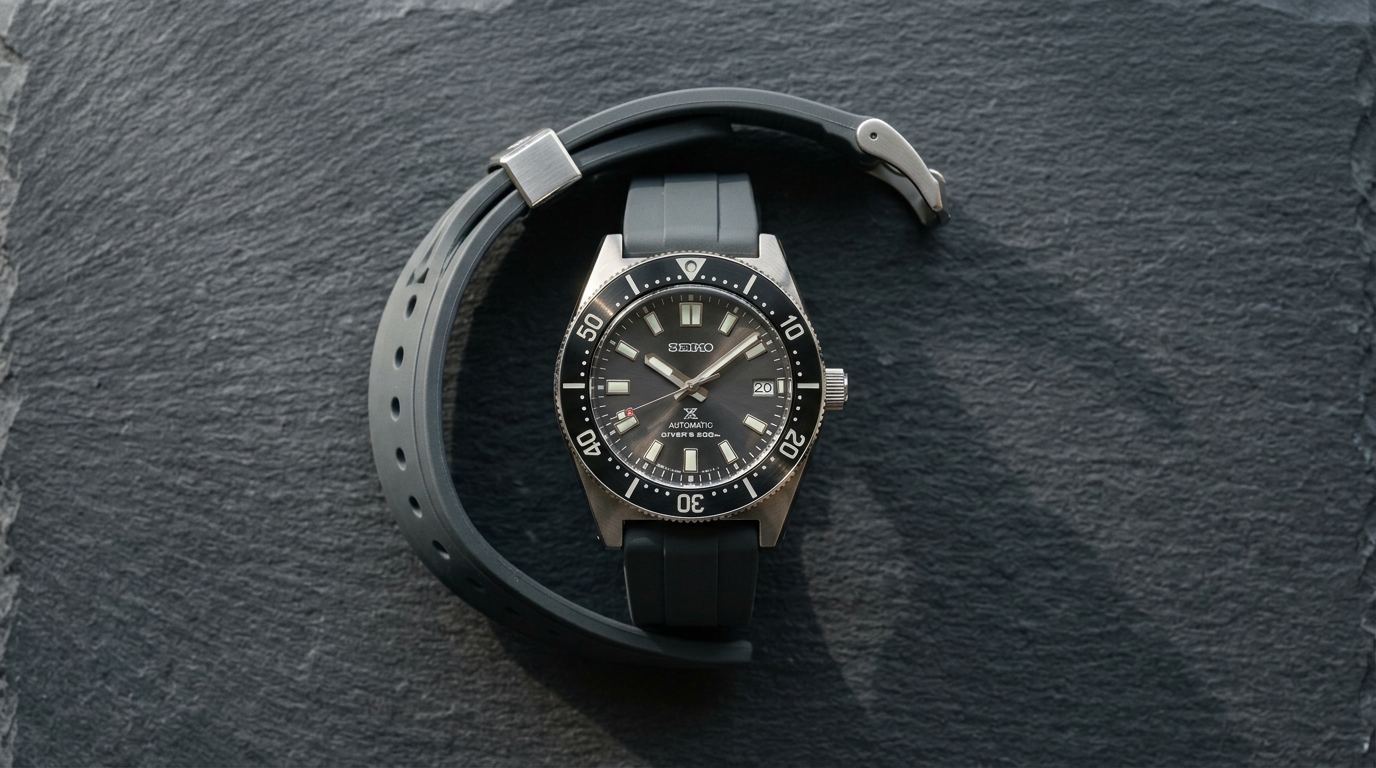
The Seiko 5 line remains essential to the brand’s identity, but it no longer occupies the same cultural position it held when inexpensive automatic references could be bought casually and worn hard. The 2019 relaunch brought clearer branding, better global structure, and the 4R36 movement with hacking and hand-winding. It also moved the line away from the utilitarian magic of the old Seiko 5 ecosystem, where obscure references, small cases, and low prices created collector affection through abundance.
The SRPD “5KX” models are better everyday watches than the SKX in some respects, but they are not ISO-rated divers and they inherited a visual language associated with one. That decision made commercial sense and purist trouble. The newer field models, GMT variants using the 4R34, and compact sports references are more convincing because they are not pretending to replace the SKX. They show Seiko 5’s real future: affordable mechanical watches with honest specifications, not diluted icons.
Seiko should protect this level carefully. Entry-level ownership is not merely a revenue category; it is recruitment. Many Grand Seiko buyers began with a Seiko 5, SKX, Monster, Turtle, or SARB. The discontinued SARB033 and SARB035 are instructive here. Powered by the 6R15, modestly sized, versatile, and attractively priced, they became cult watches because they offered proportion and restraint without excessive narrative. Their secondary-market premiums reveal what Seiko sometimes underestimates: collectors value disciplined normality as much as heritage spectacle.
The Japanese Alternative to Swiss Luxury
Seiko’s most important long-term advantage is that it does not need to imitate Switzerland. Its best watches come from Japanese industrial culture, not borrowed European codes. Grand Seiko’s snow, birch, lake, and seasonal dials can be over-romanticised in marketing, but the underlying design language—flat planes, sharp transitions, legibility, texture, and controlled asymmetry—is distinct. Credor, particularly in watches such as the Eichi II with Spring Drive calibre 7R14, shows a quieter, craft-led extreme that Switzerland does not quite duplicate.
For Seiko proper, the opportunity is similar but must be handled at lower price points. The brand should lean into Japanese specificity where it is materially present: case construction, dial production, robust movement manufacturing, and real professional-use heritage. It should avoid dressing ordinary watches in excessive prose. The market has become too informed for that. Collectors know the difference between a 4R35 and a 6R35, between a stamped clasp and a milled one, between a commemorative colourway and a meaningful technical update.
This does not mean Seiko must become austere. It means the brand should price with discipline and specify with respect. A £1,000-plus Seiko diver should have alignment, bracelet, clasp, regulation, and finishing standards that reflect that price. A King Seiko should feel like more than nostalgia with a mid-tier calibre. A Presage should not rely on dial beauty while ignoring case thickness. Seiko has earned the right to move upmarket, but not the right to be graded on memory.
What Collectors Should Buy
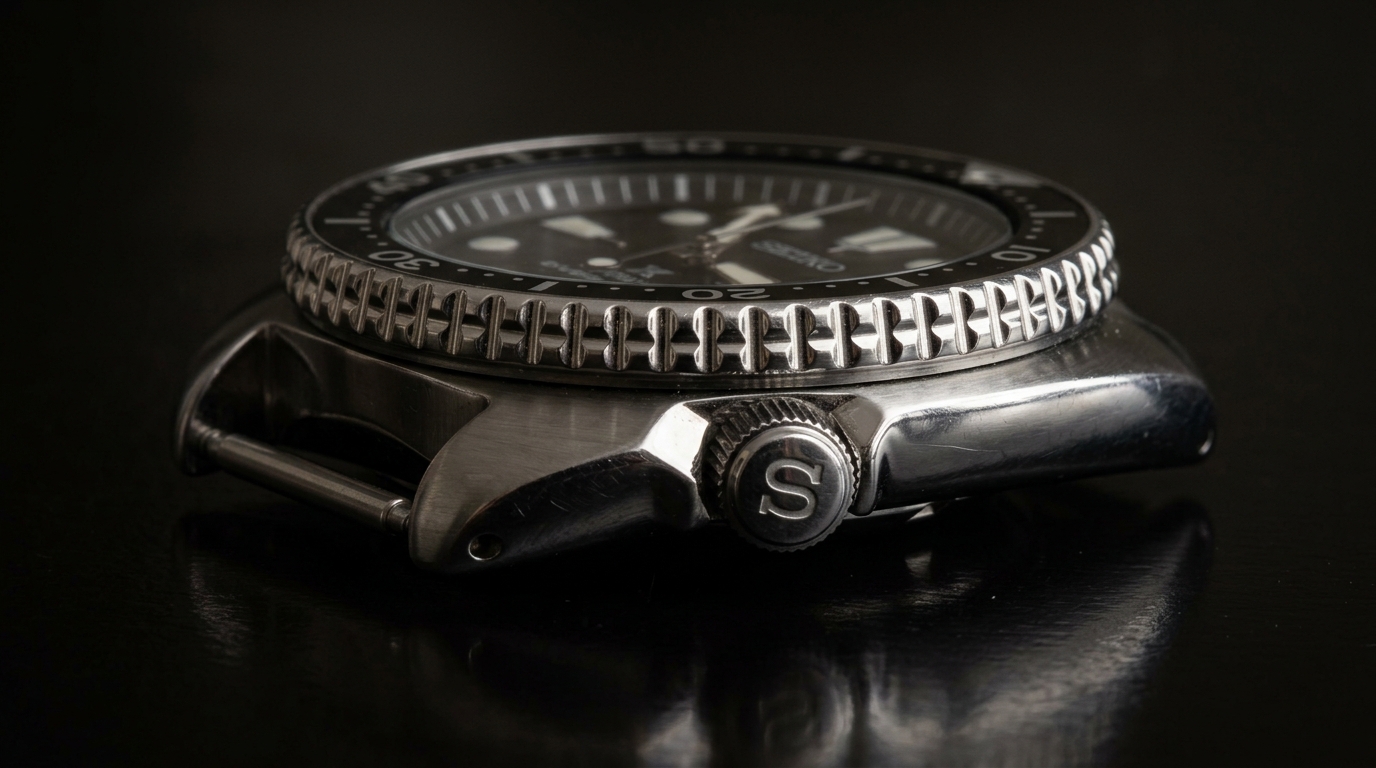
The strongest modern Seiko purchases are those where history, specification, and price still meet cleanly. In Prospex, the 62MAS-inspired SPB14x family remains important, though buyers should inspect alignment and consider competition carefully. The Turtle-derived models offer better ergonomic character and stronger tool-watch identity, especially when priced sensibly. Higher up, 8L-powered divers are where Seiko’s professional mechanical credibility becomes more serious, although they now compete in a market where Tudor, Oris, Longines, and Sinn are formidable.
In Seiko 5, the GMT models using the 4R34 are strategically significant because they deliver a complication with real everyday use at an accessible price. They are not luxury watches and should not be judged as such. In Presage, the best choices are usually the ones where the dial technique is the point and the case does not overwhelm the wrist. Vintage and neo-vintage Seiko remain rich territory, but condition, originality, and parts availability matter. A 6139 chronograph, 6105 diver, 62MAS, or early Grand Seiko can be rewarding; it can also be a minefield of polished cases, replaced hands, aftermarket bezels, and tired movements.
Grand Seiko technically sits outside Seiko now as a separate brand, but any assessment of Seiko’s ecosystem must acknowledge it. For collectors seeking the company’s highest expression, 9S mechanical and 9R Spring Drive models remain the most persuasive modern Japanese alternatives to Swiss luxury. The best examples are not necessarily the loudest limited editions, but the watches where case geometry, movement choice, dial restraint, and wearability align.
The Verdict: Seiko’s Strength Is Still Real, but the Margin for Error Has Narrowed
Seiko’s greatness is not sentimental. It rests on documented achievements: the Laurel in 1913, Grand Seiko in 1960, Japan’s first dive watch in 1965, the 6159 professional diver in 1968, the Quartz Astron and 6139 chronograph in 1969, Spring Drive’s commercial arrival in 1999, and Grand Seiko’s global separation in 2017. Very few watch companies can claim that range of consequence across mechanical, quartz, professional, and luxury categories.
But the market has changed. Seiko is no longer the underpriced secret of informed collectors. It is a global brand asking higher prices in a more transparent environment. That requires sharper execution, clearer product hierarchy, and less dependence on archive mining. The company’s vertical integration remains formidable. Its design heritage is deep. Its movement portfolio is broader than almost any competitor’s. What it needs now is not more history, but more discipline.
The editorial position is straightforward: Seiko is still one of the most important watchmakers in the world, but it should be judged more strictly, not less, because of that importance. When Seiko gets the equation right, few brands can match its mix of engineering, culture, and accessibility. When it gets lazy with specifications, finishing, or pricing, collectors should say so. Respecting Seiko means refusing to treat it as a nostalgia machine. It is better than that, and its next decade will depend on acting like it.