Omega Watches: The Strategic Power of Being Second to None
Omega Watches: The Strategic Power of Being Second to None
Omega is often discussed through the wrong lens. Treating it as Rolex’s permanent understudy misses the more interesting reality: no other modern Swiss watchmaker has built such a broad, technically credible, culturally embedded position across sport, space, cinema, Olympic timing and industrial-scale chronometer production. Omega’s problem is not legitimacy. It has too much of it, spread across too many pillars. The brand’s challenge is strategic discipline.
That tension defines Omega today. It is one of the few watch houses capable of selling a £6,000 Seamaster Diver 300M to a first serious buyer, a ceramic Dark Side of the Moon to a design-led collector, a £12,000-plus gold Speedmaster to a mature enthusiast, and a £50,000 Central Tourbillon or high jewellery Constellation into the upper end of the Swatch Group ecosystem. The issue is that breadth magnifies inconsistency. Omega can be brilliant, occasionally overextended, and sometimes insufficiently ruthless about editing its own catalogue.
Yet beneath the quantity of references, the strategic case for Omega is stronger than the secondary-market conversation usually suggests. The brand’s modern advantage is not scarcity. It is industrial confidence: Master Chronometer certification, anti-magnetism, Co-Axial escapements, robust distribution, recognisable design families, and a history that does not need to be manufactured by a marketing department.
A Brand Built on Institutional Credibility
Omega’s archive is unusually deep because it is unusually institutional. Founded in 1848 by Louis Brandt in La Chaux-de-Fonds and later developed in Biel/Bienne, the company became Omega after the success of the 19-ligne “Omega” calibre in 1894. That movement was not merely a naming exercise; it reflected a move toward industrial interchangeability and precision manufacturing at a time when Swiss watchmaking was still negotiating the relationship between craft and scale.
The 20th century gave Omega credentials that most brands can only imitate. It became official timekeeper of the Olympic Games in 1932, beginning a long relationship with sports timing that now stretches across photo-finish cameras, starting blocks, touchpads and electronic timing systems. The Speedmaster Professional was qualified by NASA in 1965 after surviving tests involving temperature extremes, shock, vibration, vacuum and acceleration. It was worn on Apollo 11 in 1969, and the calibre 321-powered references CK2998, 105.003, 105.012 and 145.012 are now among the most studied sports chronographs in the market.
The Seamaster, introduced in 1948, was not born as a cinematic dive watch. It began as a robust water-resistant line influenced by military experience during the Second World War. The professional dive identity developed later through models such as the Seamaster 300 reference CK2913 in 1957, launched in the same landmark year as the Speedmaster CK2915 and Railmaster CK2914. That trilogy remains central to Omega’s collector architecture because it shows the brand at its most coherent: tool watches with purpose, legibility and mechanical seriousness.
The Swatch Group Advantage, and Its Constraints
Omega’s modern form cannot be separated from ownership. Since the formation of SMH in 1983, later renamed Swatch Group in 1998, Omega has operated within the world’s most vertically integrated Swiss watchmaking structure. That matters. Through ETA, Nivarox-FAR, Comadur, Simon Et Membrez and other industrial assets, Swatch Group gives Omega access to movement production, regulating organs, cases, dials, ceramics and large-scale quality control in a way that many independent maisons cannot match.
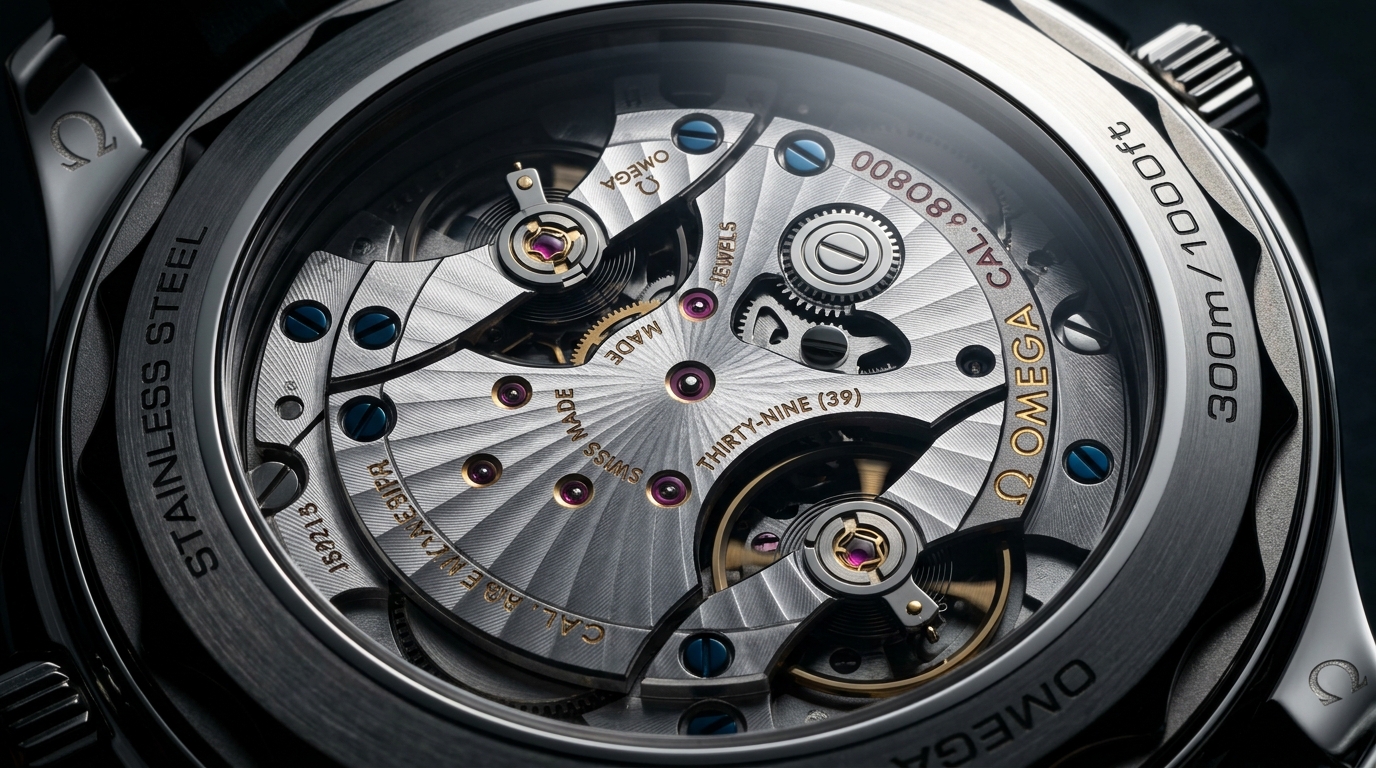
This is not romantic watchmaking, but it is strategically powerful. Omega’s use of the Co-Axial escapement, acquired through George Daniels’ invention and industrialised in serial production from 1999 with calibre 2500, is the clearest example. The early calibre 2500 iterations had documented teething problems, particularly around beat rate and lubrication behaviour, but Omega persisted and eventually built entire movement families around the architecture. The 8500 series, launched in 2007, marked the point at which Co-Axial became native rather than adapted. Later calibres such as 8900, 8800, 9900 and 3861 placed the escapement inside a broader technical framework: free-sprung balance, silicon hairspring, twin barrels in many executions, and high magnetic resistance.
The 2015 introduction of METAS Master Chronometer certification was strategically important because it changed the conversation from decorative prestige to measurable performance. A Master Chronometer watch is tested as a complete cased watch, not only as a movement, and must perform within 0/+5 seconds per day while resisting magnetic fields of 15,000 gauss. The Globemaster was the first Omega to carry the certification, and the standard has since spread across the Seamaster, Speedmaster, De Ville and Constellation lines. This gives Omega a technical claim stronger than a conventional COSC label, though the brand does not always communicate it with sufficient restraint.
Speedmaster: The Asset Omega Must Protect
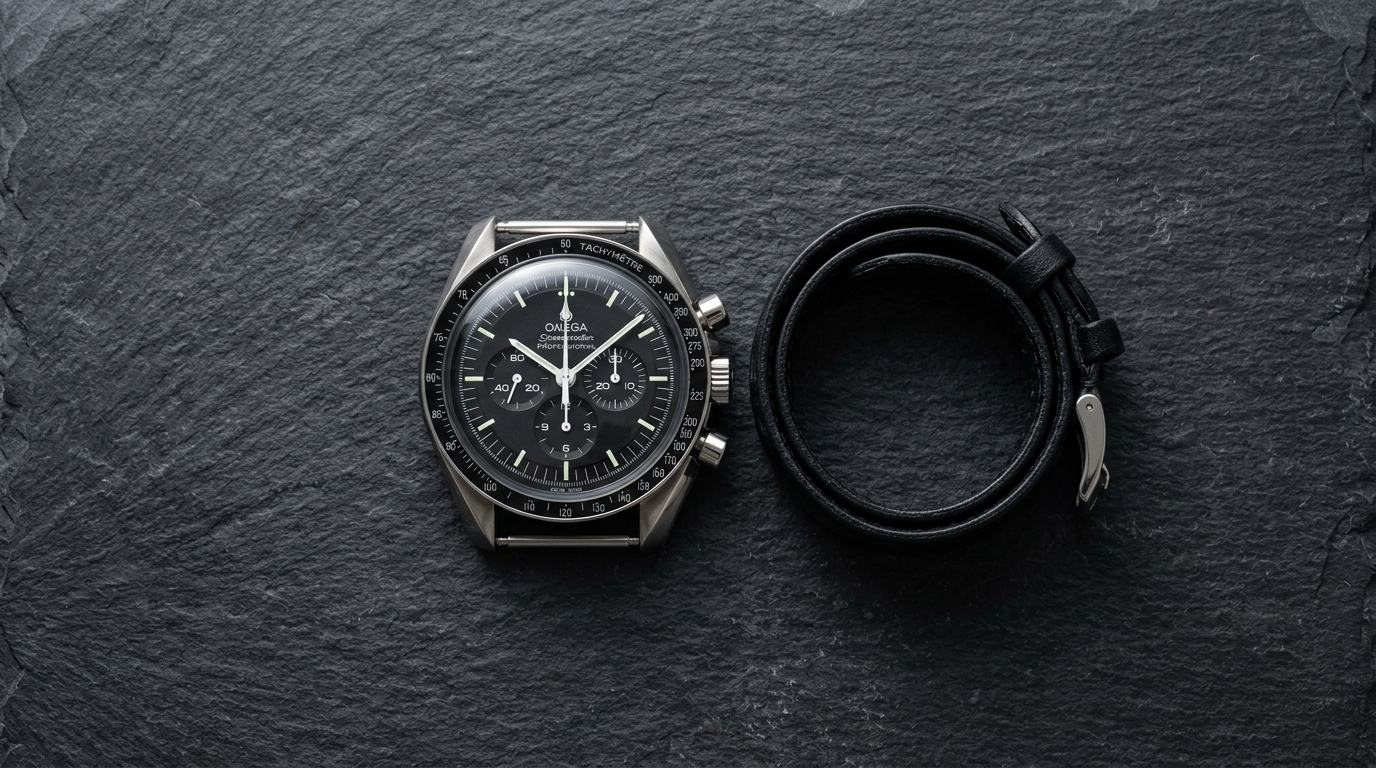
The Speedmaster is Omega’s most valuable watch family because it combines design continuity, historical evidence and collecting depth. The current Moonwatch, launched in 2021 with calibre 3861, was a meaningful update rather than a cosmetic refresh. Omega moved from the calibre 1861, itself descended from the Lemania-based 861 introduced in 1968, to a Co-Axial Master Chronometer movement with hacking seconds, improved finishing and anti-magnetic performance. The case returned to a more historically sympathetic profile with stepped dial, dot-over-ninety bezel and bracelet architecture influenced by late-1960s references.
Omega handled that update well. The Hesalite reference 310.30.42.50.01.001 remains the intellectually cleaner Moonwatch, while the sapphire sandwich reference 310.30.42.50.01.001.002 appeals to buyers who want a displayed movement and a more contemporary ownership experience. Both watches occupy a price band where the Speedmaster’s core proposition remains rational: a manually wound chronograph with one of the strongest documented histories in watchmaking, produced at scale but not cheapened by it.
The risk sits around the perimeter. Omega has repeatedly expanded the Speedmaster universe through limited editions, anniversary pieces, ceramic cases, precious metals and regional variants. Some are excellent: the 2019 Apollo 11 50th Anniversary in Moonshine Gold, the “Ed White” calibre 321 reference 311.30.40.30.01.001 introduced in 2020, and the modern Canopus Gold executions are technically and aesthetically serious. Others have contributed to fatigue. The lesson is simple: the Speedmaster does not need artificial scarcity or constant commemoration. Its authority comes from continuity.
Seamaster: Omega’s Commercial Engine
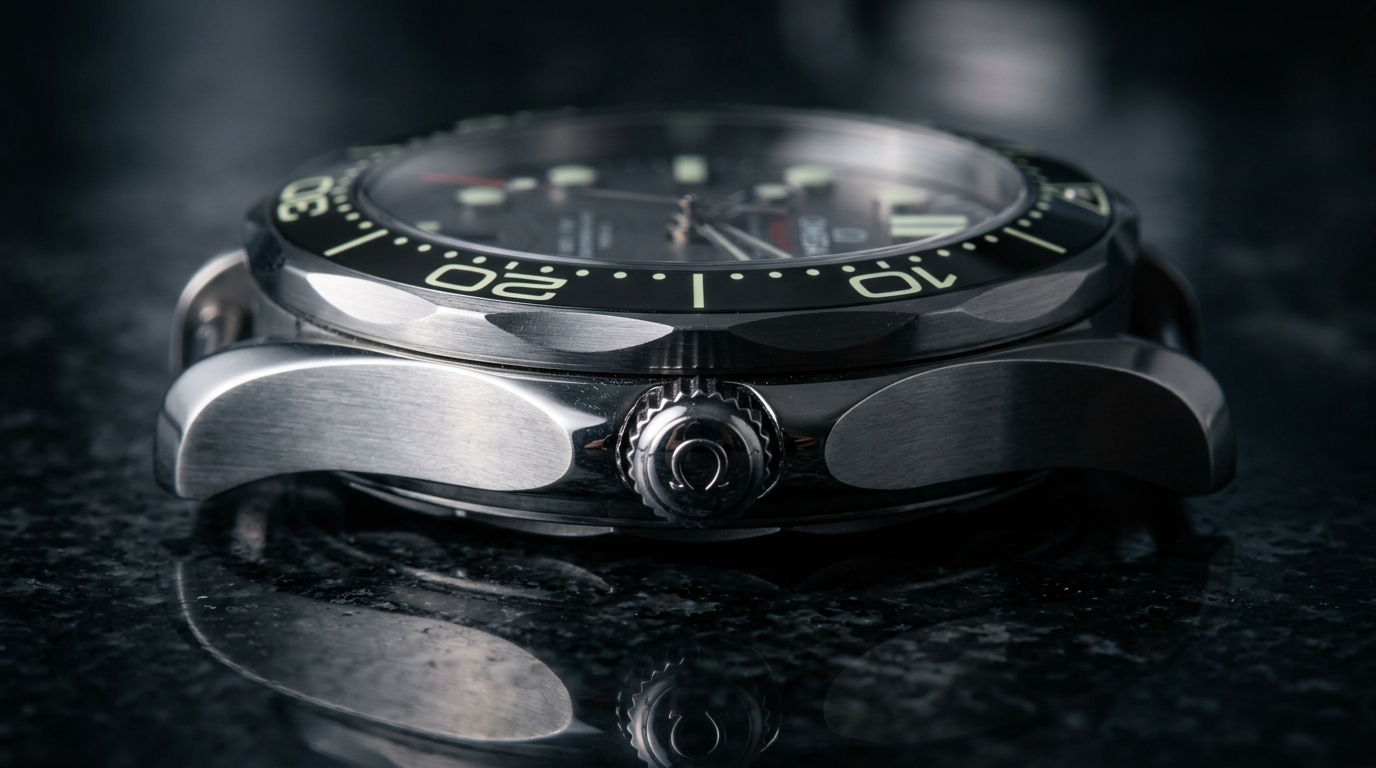
If the Speedmaster is Omega’s intellectual anchor, the Seamaster is the commercial machine. The modern Seamaster Diver 300M owes much of its visibility to the 1995 James Bond film “GoldenEye,” where Pierce Brosnan wore the quartz reference 2541.80.00. The automatic reference 2531.80.00 followed as the emblematic Bond-era Seamaster, with blue wave dial, skeleton hands, helium escape valve and scalloped bezel. Collectors still debate the helium valve’s visual merit, but commercially it became one of Omega’s most recognisable signatures.
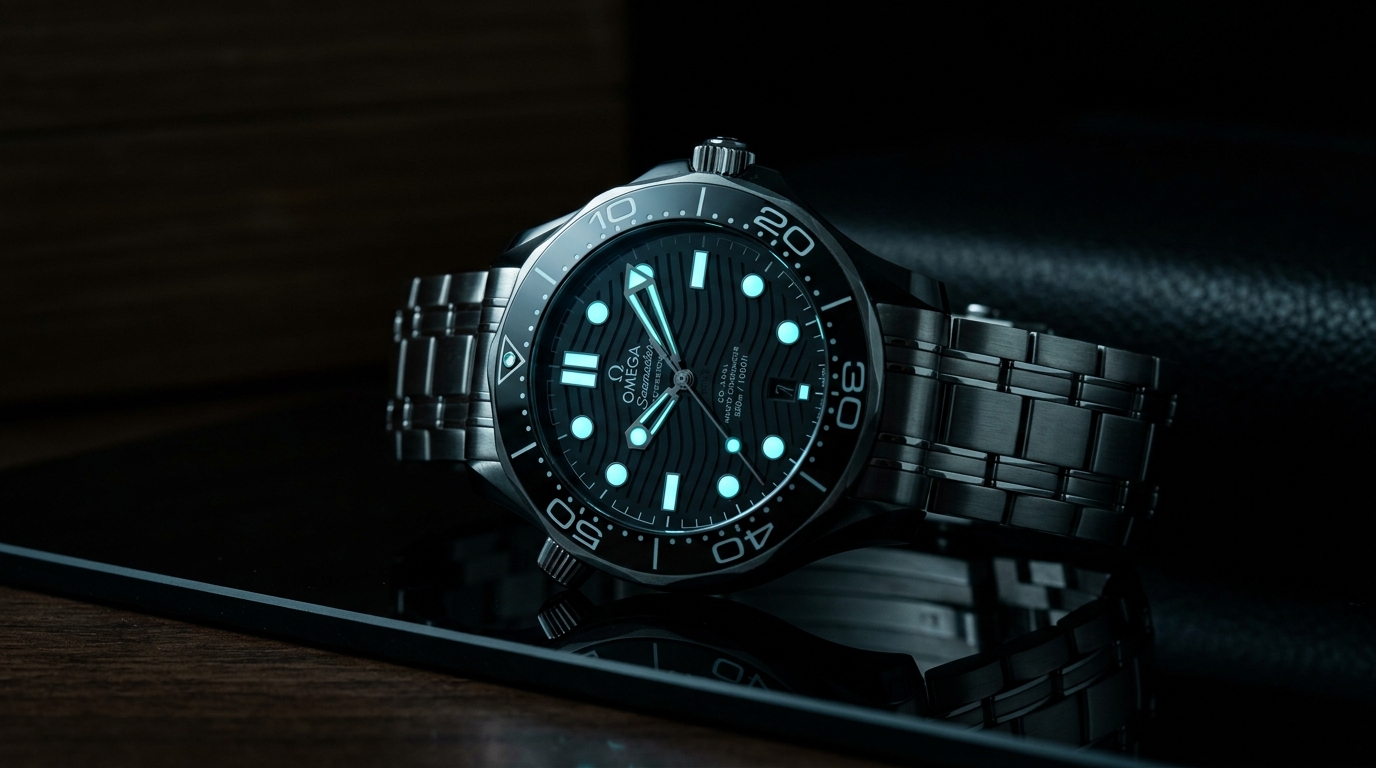
The current Diver 300M, updated in 2018 for the model’s 25th anniversary, is powered in steel by calibre 8800 and carries Master Chronometer certification. At 42mm, with ceramic bezel and laser-engraved wave dial, it is technically far stronger than its 1990s predecessor. It is also visually busier. Here Omega’s instinct for specification sometimes outruns its instinct for restraint. The watch is excellent as a product, but not all variants improve the design. The no-date “No Time To Die” titanium Seamaster, reference 210.90.42.20.01.001, is arguably the most compelling modern Diver 300M because it edits back the formula: matte dial, titanium case, mesh bracelet, no ceramic gloss, no date window.
Above it, the Planet Ocean line introduced in 2005 has become Omega’s heavier professional diver proposition. Powered today by movements such as calibres 8900 and 9900 depending on reference, it offers serious depth ratings and strong engineering, though case thickness remains a limiting factor for some collectors. The Ultra Deep, commercialised after Omega’s 2019 Five Deeps Expedition association and rated to 6,000 metres, is technically impressive but strategically niche. It demonstrates capability more than daily desirability.
Constellation and De Ville: Underused Strengths
Omega’s dress and integrated-bracelet histories are richer than the market gives them credit for. The Constellation, introduced in 1952, was once Omega’s flagship chronometer line. Pie-pan dials, dog-leg lugs and observatory medallions from the 1950s and 1960s remain core vintage Omega collecting territory. References such as the 2852 and 14381 show the brand at its most elegant and technically assured, often housing chronometer-rated calibres from the 500 and 700 families.
The modern Constellation Manhattan design, first launched in 1982 with its claws and integrated bracelet, is more polarising. It sells well in many international markets, especially in two-tone, diamond-set and smaller case sizes, but it has never carried the same collector energy as the Speedmaster or Seamaster. Omega has tried to refine it with slimmer profiles and Master Chronometer movements, including calibre 8900 in larger models and 8800 in smaller automatic pieces. The challenge is not quality; it is cultural positioning. In a market dominated by the Royal Oak, Nautilus, Overseas and integrated-bracelet sports watches at higher price points, the Constellation could be more assertively framed as Omega’s integrated design asset rather than treated as a parallel lifestyle line.
De Ville is similarly underleveraged. The line has hosted important technical developments, including Co-Axial introductions and the Central Tourbillon, but it lacks a single design language as recognisable as the Moonwatch or Diver 300M. The Trésor models are clean, thin and often handsome, particularly in precious metal manual-wind versions, yet they sit in a difficult market where buyers often default to Cartier, Jaeger-LeCoultre, Patek Philippe or Vacheron Constantin for dress watches. Omega has the movement credibility; it needs sharper design conviction.
Vintage Omega: Still Rational, but No Longer Obvious
Vintage Omega used to be one of the most underpriced categories in Swiss watches. That is less true now. Early Speedmasters, especially calibre 321 references, have been thoroughly absorbed into the global collector market. Straight-lug CK2915 and CK2998 examples are often traded with forensic attention to bezels, hands, pushers, case condition and dial ageing. The 105.003 “Ed White” and 145.012 remain more attainable than the earliest references, but good examples are no longer casual purchases.
Vintage Seamasters and Constellations still offer value relative to equivalent Rolex and Patek models, but condition is everything. Many mid-century Omega watches have been redialled, over-polished or fitted with incorrect crowns and hands. The abundance of production is both blessing and trap: parts availability and variety are strong, but the market contains a high volume of compromised watches. Collectors should pay particular attention to dial printing, case lines, movement serial ranges and reference-correct details. Omega’s own Extract from the Archives service, when available for a given watch, can provide useful production information, though it is not a substitute for condition analysis.
Pricing, Discounts and the Secondary Market
Omega’s market behaviour differs sharply from Rolex. Retail availability is generally better, authorised dealer discounts have historically existed depending on model and region, and secondary prices often sit below list. Some collectors treat this as weakness. That is too simplistic. Omega’s production scale and distribution model are designed for accessibility at the upper-middle luxury level. The brand is not built around waiting lists as a theatre of desirability.
That said, Omega has pushed prices upward materially. The Moonwatch that once felt like an almost unassailable value proposition now competes in a different psychological bracket. The Seamaster Diver 300M remains competitive against the Tudor Black Bay, Breitling Superocean, IWC Aquatimer and TAG Heuer Aquaracer at various price points, but the buyer must weigh Omega’s superior movement technology and certification against design complexity and depreciation. On pure specification, Omega usually wins. On residual value, Rolex usually wins. On availability and choice, Omega is the more practical luxury watch brand.
The MoonSwatch collaboration with Swatch in 2022 deserves sober treatment. It generated enormous traffic, introduced younger buyers to the Speedmaster silhouette, and created short-term resale absurdity around a bioceramic quartz product priced far below mechanical Omega. It did not cheapen the Moonwatch in any measurable long-term sense. If anything, it confirmed that the Speedmaster shape has mass recognition beyond traditional collectors. The risk is not brand dilution from the MoonSwatch; it is Omega overestimating how often such cultural lightning can be repeated.
Where Omega Is Strongest Today
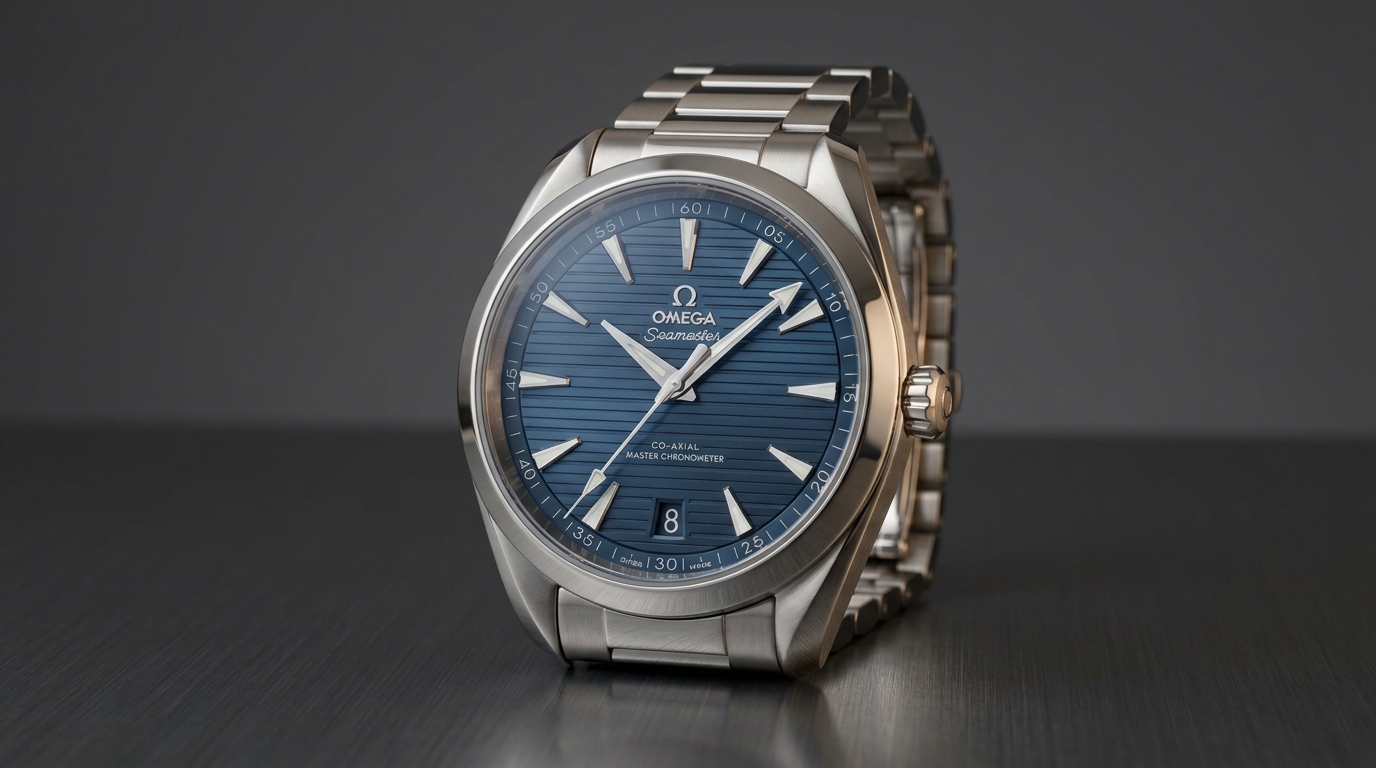
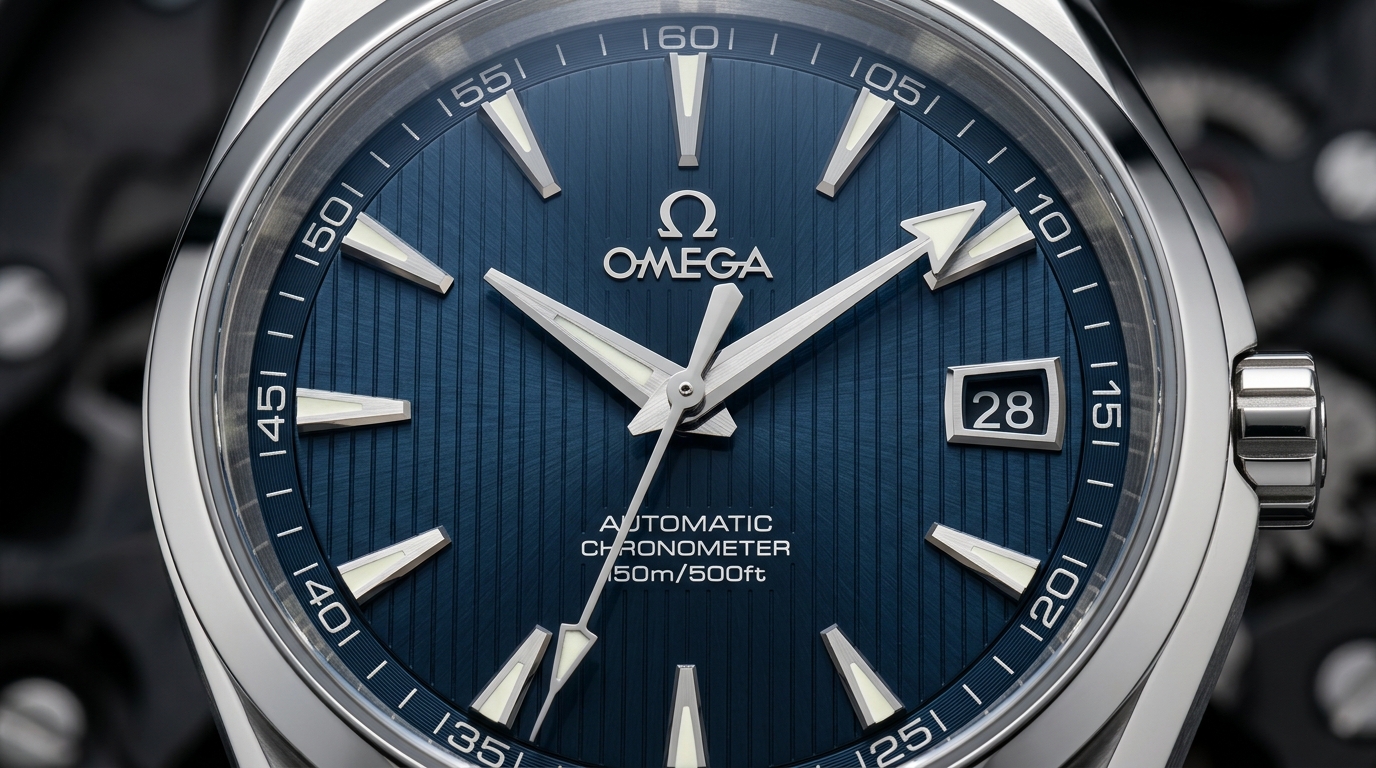
Omega is strongest when it behaves like a serious industrial watchmaker with historical memory. The best current watches are those where technical competence supports, rather than overwhelms, the design. The Speedmaster Professional calibre 3861 is the prime example. The Aqua Terra 150M, particularly in cleaner dial executions, may be Omega’s most versatile modern watch: water-resistant, anti-magnetic, Master Chronometer certified, and less burdened by heritage theatre than the Moonwatch or Diver 300M. The Seamaster 300 heritage models, especially recent versions with calibre 8912, show that Omega can execute vintage-informed design without falling into pure reproduction.
The calibre 321 revival also matters strategically. By reconstructing the historic column-wheel chronograph movement using tomographic scanning of vintage examples, Omega demonstrated that it understands high-end collectors want more than broad industrial competence. The modern calibre 321 is produced in a dedicated workshop with one watchmaker assembling each movement, a deliberate contrast to Omega’s mainstream scale. It is expensive, but it gives the brand a credible bridge between mass luxury and connoisseur production.
Where Omega Needs More Discipline
Omega’s weakness is not technical. It is editorial. The catalogue contains too many case sizes, dial treatments, commemorative variants and precious-metal experiments that compete for attention without always strengthening the core identity. Rolex’s great strategic advantage is not merely scarcity; it is ruthless consistency. Omega, by contrast, often seems willing to answer every possible customer preference. That is commercially understandable, especially within the Swatch Group’s global retail network, but it can blur collector focus.
The brand would benefit from fewer Seamaster Diver 300M variants, a clearer Constellation strategy, a more decisive De Ville dress-watch identity, and stricter restraint around Speedmaster anniversaries. Omega does not need to mimic Rolex. It should not. Its competitive advantage is different: technical transparency, deeper product variety, and a more democratic relationship with availability. But variety needs hierarchy. Without hierarchy, abundance begins to look like indecision.
The Collector’s Verdict on Omega
Omega occupies a rare position in modern watchmaking. It is large enough to industrialise serious technology, old enough to possess authentic history, and culturally visible enough to speak beyond the collector niche. Its watches are not always the safest financial assets, and they are not always the most restrained objects in their category. But judged as mechanical instruments rather than allocation trophies, Omega remains one of the most defensible Swiss brands to buy and wear.
The strongest Omega purchases today are the ones closest to the brand’s durable truths: the Speedmaster Professional with calibre 3861, the Seamaster Diver 300M in its more disciplined configurations, the Aqua Terra as a technically mature daily watch, selected Seamaster 300 heritage models, and carefully vetted vintage Constellations or Seamasters with original dials and sharp cases. At the higher end, the calibre 321 Speedmaster is the modern collector’s Omega, not because it is scarce by accident, but because it is deliberate by design.
Omega does not need to be positioned as a substitute for anything else. Its strategic strength is that it can stand on documented achievement: Olympic timing since 1932, NASA qualification in 1965, the Moon landing in 1969, Co-Axial serial production from 1999, and METAS Master Chronometer certification from 2015. Few brands can match that sequence. The next phase depends on whether Omega can edit its abundance into sharper authority. If it can, the brand’s best years as a collector proposition may still be ahead rather than behind.