Hublot Watches: The Strategy, Movements and Market Reality Behind the Big Bang
Hublot Watches: The Strategy, Movements and Market Reality Behind the Big Bang
Hublot is the watch industry’s most useful irritant. Collectors often treat the brand as shorthand for excess, celebrity marketing and secondary-market softness, yet that dismissal misses the harder point: Hublot understood the post-2000 luxury watch economy earlier than many older maisons. It recognised that modern watchmaking would not be sold only through finishing, lineage and calibre architecture, but through recognisable form, material experimentation, controlled provocation and global cultural placement. That does not make every Hublot a good buy. It does make the brand impossible to analyse honestly with the usual heritage-first vocabulary.
The central question is not whether Hublot has the historical legitimacy of Patek Philippe, Audemars Piguet or Vacheron Constantin. It plainly does not. The better question is whether Hublot built a coherent luxury proposition from a weak historical base, and whether the watches themselves justify attention once the billboards, football sponsorships and limited editions are stripped away. The answer is uncomfortable for both its critics and its clients: Hublot is strategically brilliant, technically uneven, sometimes genuinely inventive, and often priced as if market liquidity were not part of ownership.
The Original Hublot Was Already a Disruption
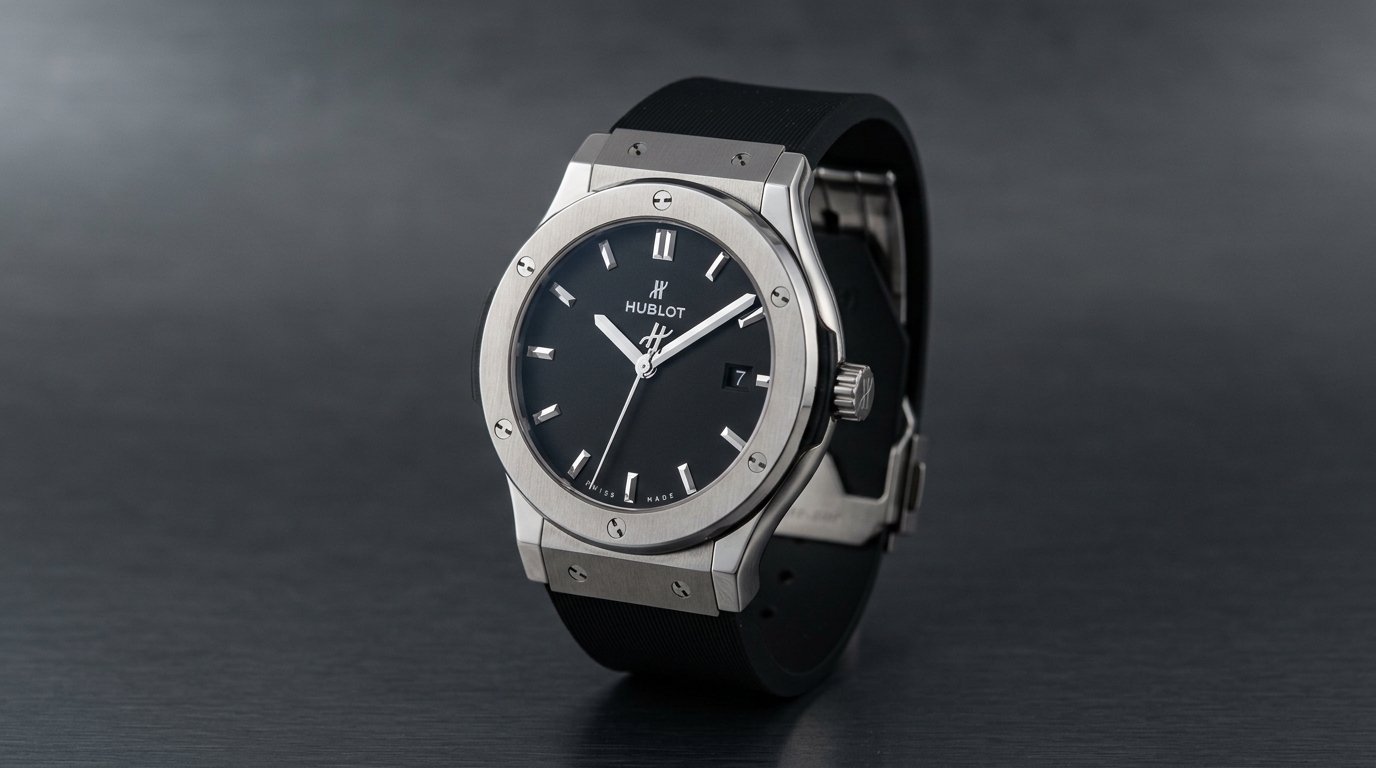
Hublot was founded in 1980 by Carlo Crocco, an Italian entrepreneur from the Binda watch family, and its first important idea was not the Big Bang. It was the original porthole-shaped gold watch with a black rubber strap, signed MDM Genève. At the time, combining an 18-carat gold case with rubber was a serious breach of Swiss luxury convention. Gold belonged on gold bracelets, leather or at most exotic skins; rubber was utilitarian, associated with diving equipment rather than formal luxury.
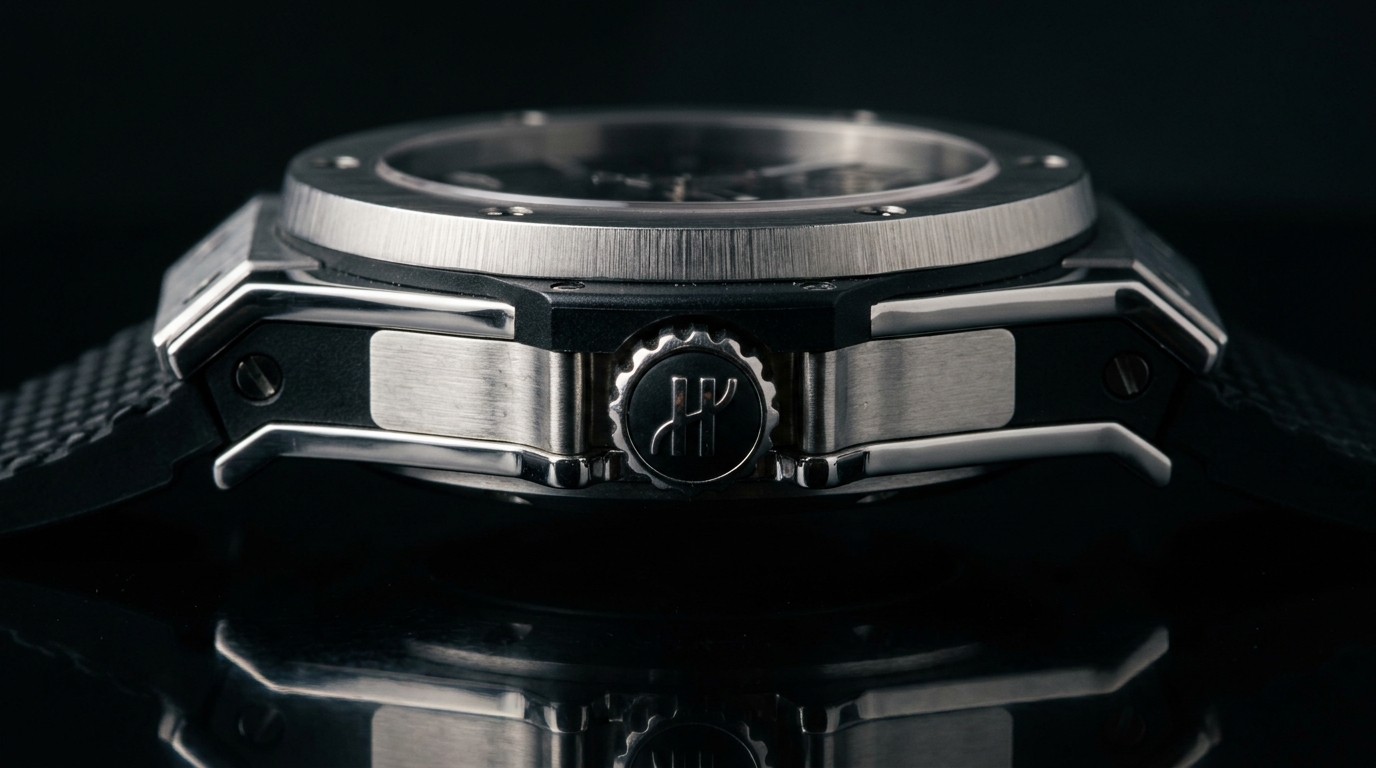
The design vocabulary was clear from the start: a round bezel with visible screws, a case inspired by a ship’s porthole, and a strap fully integrated into the case profile. The word “Hublot” itself means porthole in French. This was not haute horlogerie in the movement sense. Early models commonly used quartz or outsourced mechanical calibres, and the appeal was case architecture and material contrast. That distinction matters because Hublot’s later “Art of Fusion” slogan was not invented from nothing. It was a codification of the original product strategy.
By the early 2000s, however, Hublot had become marginal. The original concept had aged, production was limited, and the brand lacked the institutional credibility and retail momentum of larger Swiss houses. The turning point came in 2004 when Jean-Claude Biver became chief executive. Biver had already shown at Blancpain in the 1980s and Omega in the 1990s that narrative and distribution could be as decisive as escapements. At Hublot, he applied that playbook more aggressively.
The Big Bang Was Not Subtle, and That Was the Point
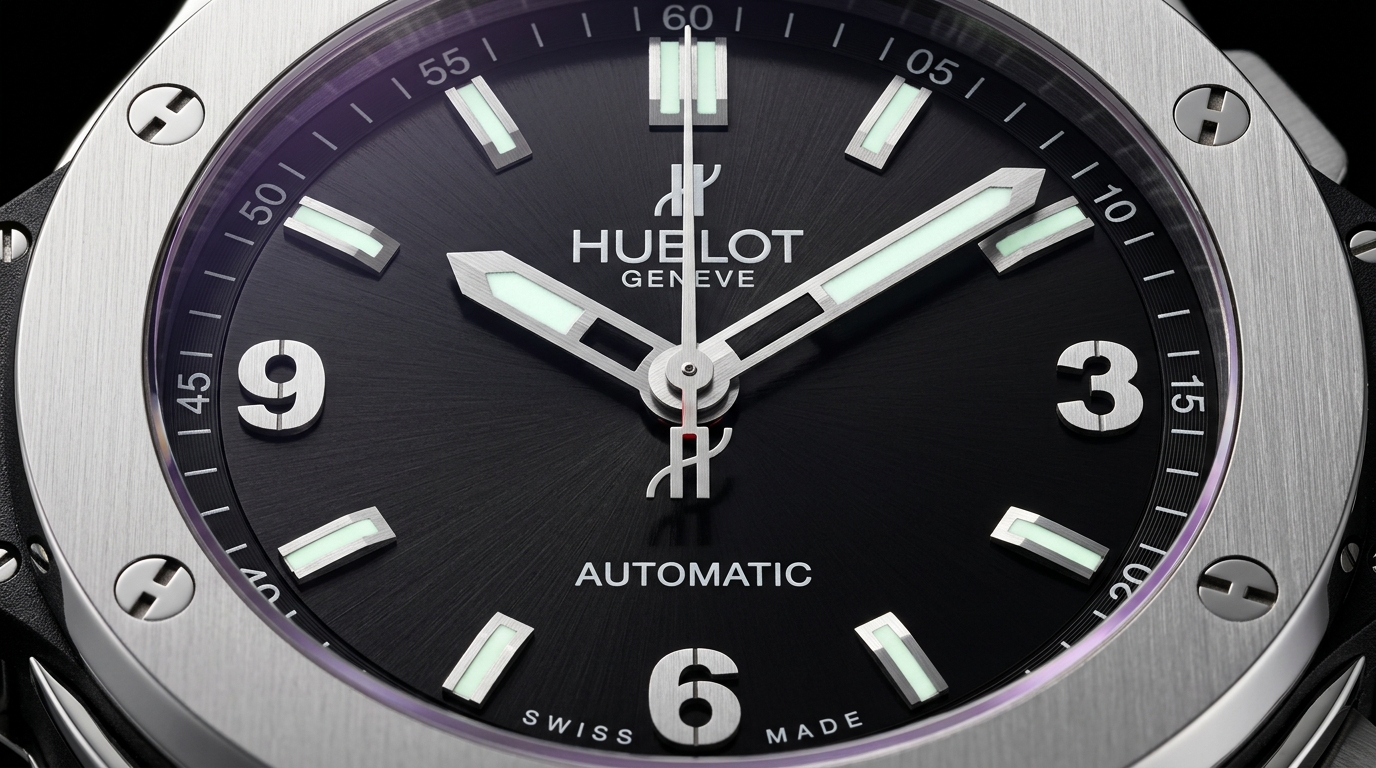
The Big Bang, launched in 2005, remains Hublot’s defining product. The early reference 301.SB.131.RX, with a 44 mm steel case, black ceramic bezel, rubber strap and HUB4100 automatic chronograph calibre based on the Valjoux 7750 architecture, established the formula. It was layered, industrial, expensive-looking and instantly legible from across a room. The screws, resin inserts, ceramic, rubber and contrasting case components were not incidental decoration; they were the brand identity.
Purists objected for predictable reasons. The movement was not an in-house chronograph. The case was large. The design was assertive to the edge of aggression. Yet commercially, the Big Bang was exactly timed. The mid-2000s were the era of oversized sports watches, pre-crisis finance, emerging-market luxury consumption and a collector culture increasingly comfortable with watches as status architecture. Panerai had already proved that proportions and community could remake desirability. Audemars Piguet’s Royal Oak Offshore had shown that exaggerating an icon could create a younger, more muscular category. Hublot, without a true archive icon, simply engineered one.
The result was immediate. The Big Bang won the Design Prize at the Grand Prix d’Horlogerie de Genève in 2005, and Hublot’s revenue accelerated sharply. In 2008, LVMH acquired Hublot, adding it to a watches portfolio that would include TAG Heuer, Zenith and later Bulgari within the broader group structure. That acquisition is important: Hublot was not bought as a sleepy heritage maison. It was bought as a high-growth contemporary luxury brand with a distinctive product code and a CEO who understood spectacle.
Movements: The Weakness Hublot Could Not Ignore
The most persistent criticism of Hublot is that prices rose faster than horological substance. There is truth in that, especially for early Big Bang chronographs using outsourced or heavily modified base calibres. A steel or gold chronograph priced against established watchmakers invites scrutiny, and the HUB4100 did not offer the intellectual satisfaction of a Rolex 4130, Zenith El Primero or Jaeger-LeCoultre chronograph calibre. Hublot’s defence was never that it offered the most refined movement finishing in its segment. The defence was design, construction, material and brand energy.
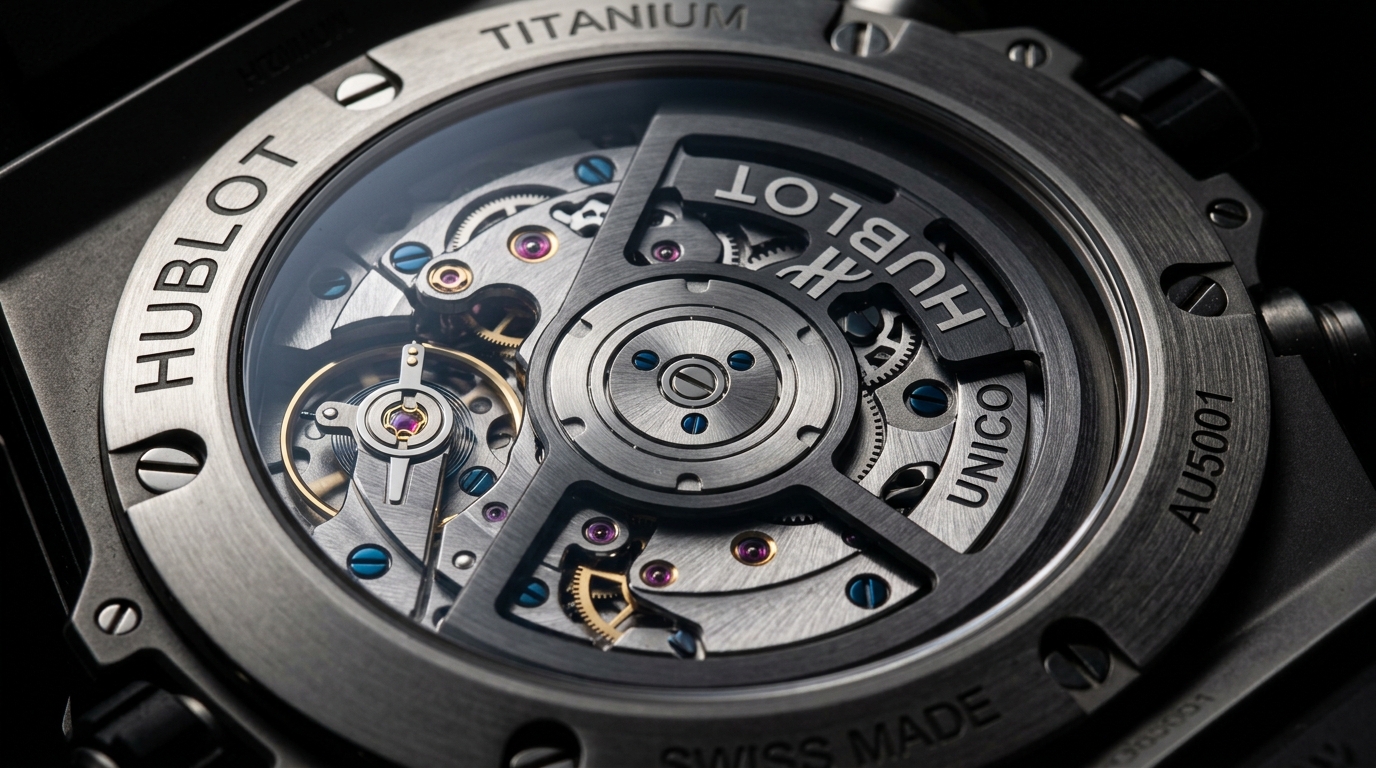
Still, the company recognised the ceiling. In 2009, Hublot presented the Unico movement platform, and the Big Bang Unico collection became the brand’s main technical reset in the following years. The Unico HUB1242 is an automatic flyback chronograph with a column wheel visible on the dial side, a 72-hour power reserve and a modular architecture suited to the brand’s openworked aesthetic. In a 42 mm Big Bang Unico Titanium, such as reference 441.NX.1170.RX, the movement finally aligns better with the price and visual language of the watch. It is not traditionally beautiful in the Geneva sense, but it is mechanically relevant to Hublot’s case design.
Hublot further broadened its in-house credibility with calibres such as the HUB1201 in the Meca-10, a manual-wind skeletonised movement with a 10-day power reserve introduced in 2016. The Meca-10 is one of the brand’s more persuasive non-chronograph propositions because it does not pretend to be classical. Its rack-and-gear power reserve display, industrial bridges and long autonomy are consistent with the Hublot vocabulary. This is where the brand works best: when the movement looks conceived for the watch rather than inserted to complete a price point.
Materials Are Hublot’s Strongest Technical Argument
If Hublot has a legitimate claim to modern watchmaking contribution, it is in materials rather than movement finishing. The brand’s Nyon manufacture has invested heavily in ceramics, sapphire cases, carbon composites and proprietary alloys. Magic Gold, developed with the Swiss Federal Institute of Technology Lausanne and introduced around 2011, is an 18-carat gold and ceramic composite rated at roughly 1,000 Vickers, making it far more scratch-resistant than conventional gold alloys. That is not a gimmick; precious metals are mechanically poor materials for daily-wear sports watches, and Hublot addressed that weakness directly.
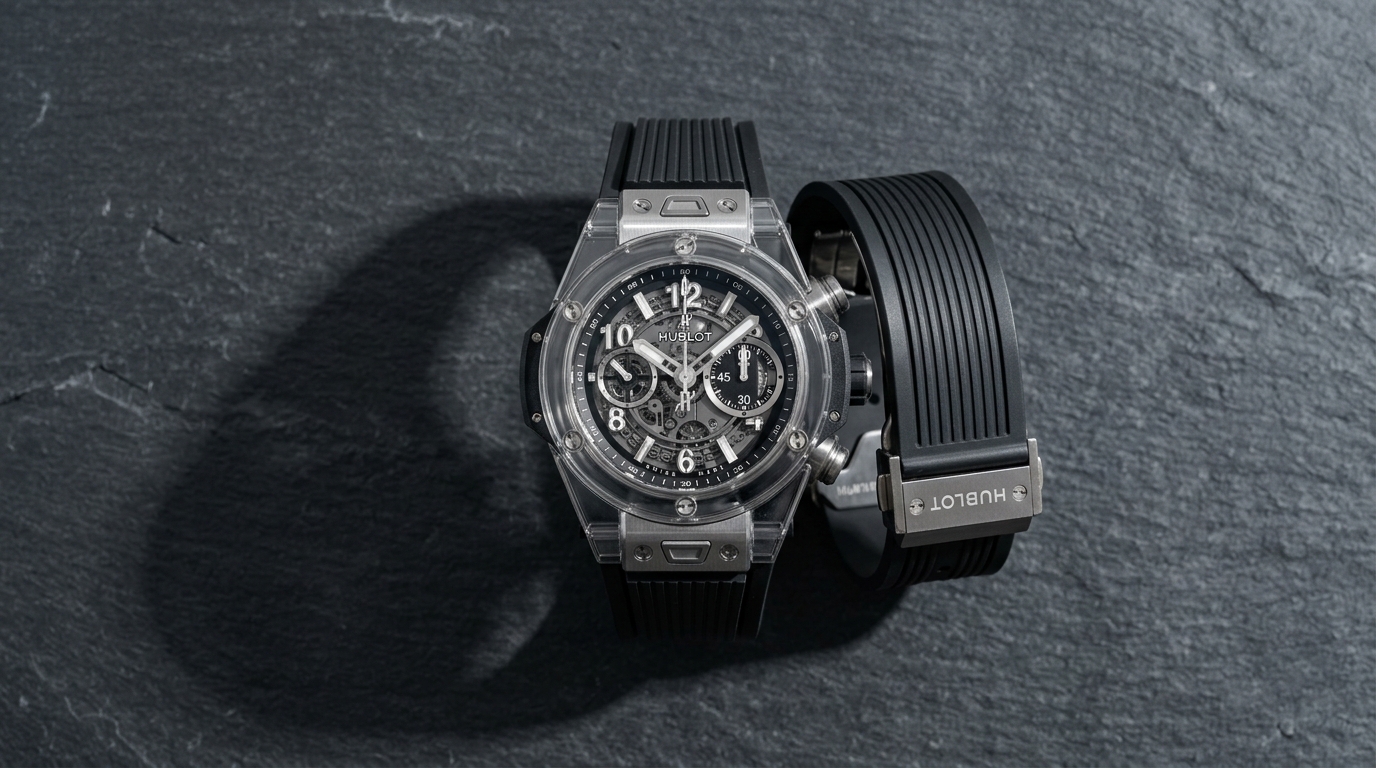
The brand also pushed coloured sapphire cases earlier and more visibly than most large Swiss competitors. Sapphire-cased watches are difficult to machine, costly to finish and unforgiving during assembly. Hublot’s Big Bang Unico Sapphire models, Spirit of Big Bang Sapphire pieces and later coloured sapphire executions in red, blue, yellow and orange played to a genuine manufacturing capability. Whether every colour will age with dignity is another question, but the technical commitment is real.
Carbon is more complicated. Hublot’s carbon and Texalium cases are visually distinctive and light, but the watch market has become crowded with carbon composites from Richard Mille, Panerai, Roger Dubuis and even more affordable independents. Hublot’s comparative advantage is not that it alone uses advanced materials, but that it integrates them into a design system already built around visible assembly. A ceramic bezel or sapphire mid-case on a conservative dress watch can feel like a novelty. On a Big Bang, it feels inevitable.
Classic Fusion: The Commercial Watch Collectors Underrate
The Classic Fusion is often treated as the quiet Hublot, which is both accurate and slightly misleading. Introduced in its modern form under Biver, it pares back the Big Bang architecture into a thinner, cleaner watch closer to the 1980 original. References such as the Classic Fusion Titanium 42 mm, 542.NX.1171.RX, usually powered by the HUB1110 automatic calibre based on the Sellita SW300 architecture, are not movement-led propositions. They are luxury design watches with good case finishing, strong ergonomics and a recognisable silhouette.
At retail, the problem is value. A time-and-date Classic Fusion in titanium sits in a difficult zone, above many technically stronger watches from Grand Seiko, Omega and Jaeger-LeCoultre, while lacking the resale support of Rolex or Cartier. On the secondary market, however, the equation changes. Pre-owned Classic Fusion models often trade materially below retail, sometimes in the mid-four-thousand-dollar range for clean titanium examples depending on size, year and condition. At that level, the watch becomes more defensible, provided the buyer wants Hublot’s design and not a disguised investment thesis.
This is the broader collector lesson with Hublot: retail and intrinsic desirability are not always aligned. The brand’s boutiques sell experience, exclusivity language and immediate recognition. The secondary market prices durability of demand. Those are different mechanisms, and Hublot is one of the clearest examples in modern Swiss watchmaking of the gap between them.
Partnerships, Visibility and the Charge of Overexposure
Hublot’s marketing has been both its engine and its liability. The brand became the official timekeeper of FIFA World Cup tournaments beginning with South Africa 2010, placing its name on substitution boards and stadium timing assets in front of billions of viewers. It partnered with Ferrari in 2011, producing watches such as the Big Bang Ferrari and later Techframe Ferrari Tourbillon Chronograph before Ferrari moved into a different watch partnership structure with Richard Mille in 2021. Hublot also built relationships across UEFA, Formula 1 for a period, artists, athletes and musicians.
Collectors often see this as noise, and sometimes it is. Limited editions attached to clubs, events or celebrities can dilute the seriousness of a catalogue when they arrive too frequently. The issue is not collaboration itself; Audemars Piguet, Omega and TAG Heuer all use cultural partnerships. The issue is discipline. Hublot has at times behaved as if visibility were the same as equity. It is not. Equity compounds when a partnership reinforces the core product. Visibility decays when it merely adds another logo to a dial or caseback.
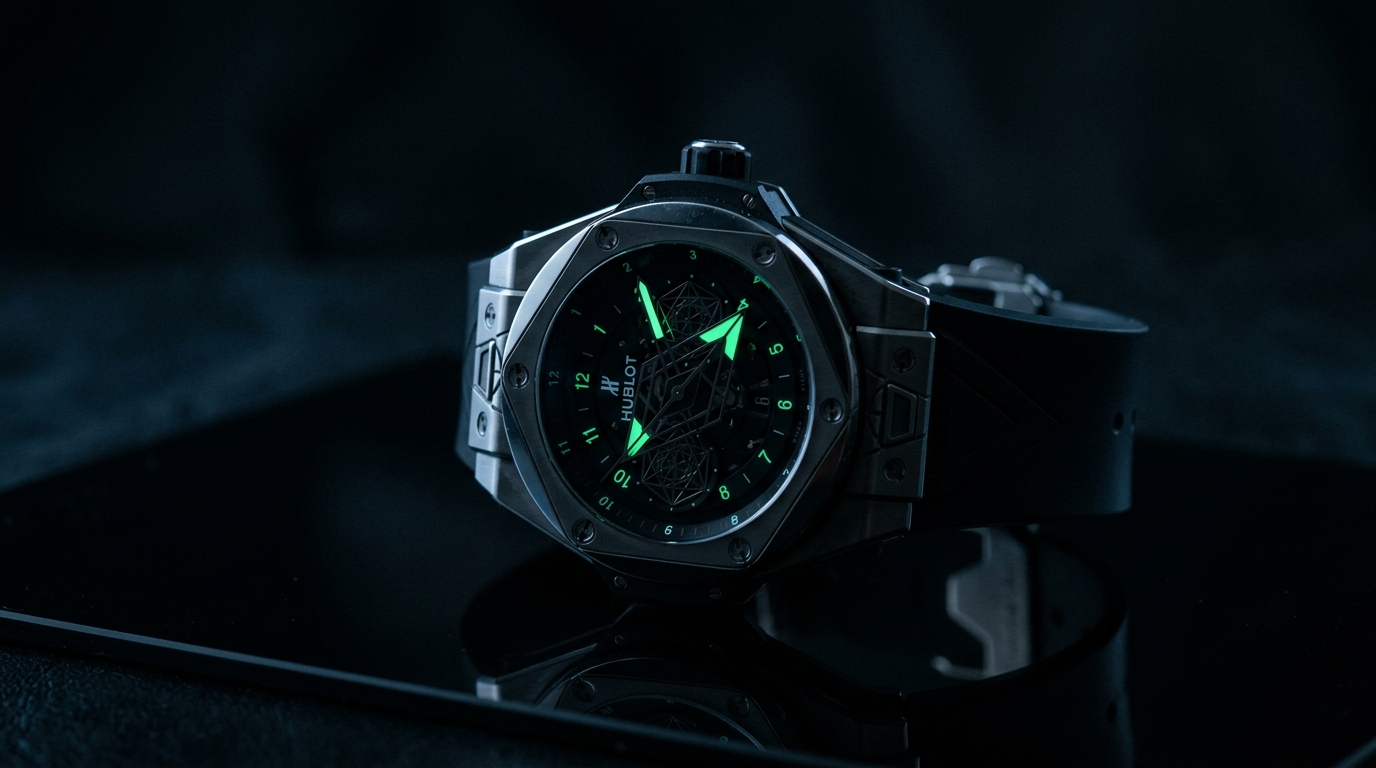
There are exceptions. The Sang Bleu collaborations with tattoo artist Maxime Plescia-Büchi altered the geometry of the Big Bang rather than simply decorating it. The Orlinski pieces translated faceted sculpture into case architecture with more coherence than most artist editions in the industry. These work because the collaborator changes the watch in a way that feels structural. The weaker editions are those where Hublot’s case becomes a billboard.
The Secondary Market Is the Reality Check
No serious buying guide to Hublot can ignore depreciation. Mainstream Big Bang, Classic Fusion and Spirit of Big Bang models often trade below retail by margins that would alarm buyers accustomed to Rolex sports models or certain Patek Philippe and Audemars Piguet references. A Big Bang Unico Titanium 42 mm around an $18,000 to $20,000 retail bracket may appear pre-owned in the low-to-mid teens, and sometimes lower depending on condition, age and completeness. Classic Fusion three-hand models can fall more sharply in percentage terms. Precious-metal, gem-set and heavily specialised limited editions can be even harder to price because the buyer pool narrows quickly.
This does not mean Hublot is categorically a bad purchase. It means the purchase must be structured differently. Bought new from a boutique, a Hublot should be treated as a consumption decision: the buyer is paying for selection, warranty, certainty and the full retail experience. Bought pre-owned, the same watch can become an interesting design object with much of the first-owner depreciation removed. The worst Hublot purchase is the one made under the illusion that scarcity language automatically translates into exit value.
There are also practical ownership considerations. Hublot cases are complex, straps are model-specific, and service through official channels is not inexpensive. Rubber straps wear, deployants vary by generation, and polished ceramic or sapphire components are not repaired like steel. Condition matters more than some buyers assume because replacing external parts can alter the economics of an apparently discounted watch.
Leadership After Biver and the LVMH Question
Jean-Claude Biver stepped down as Hublot chief executive in 2012, with Ricardo Guadalupe taking over after years inside the business. Guadalupe’s tenure professionalised the manufacture, expanded the Unico range and maintained the brand’s global profile. In 2024, LVMH appointed Julien Tornare, formerly of Zenith, as chief executive of Hublot, while Frédéric Arnault took a broader role overseeing LVMH Watches. That leadership change matters because Hublot now faces a different market from the one that made the Big Bang explode.
The easy growth years of large, logo-forward luxury watches are over. Since 2022, the watch market has cooled from pandemic-era highs, secondary prices have corrected across the top brands, and buyers have become more selective. Hublot’s challenge is not awareness; it has plenty. The challenge is credibility at price points where clients can compare a Big Bang Unico against a Rolex Daytona at retail, a pre-owned Royal Oak Offshore, a Zenith Defy Extreme, or even independent-adjacent offerings with stronger movement narratives.
Tornare’s experience at Zenith is relevant because Zenith’s revival depended on clarifying product families and leaning into genuine movement assets, especially the El Primero. Hublot cannot copy that strategy because it does not have a 1969 chronograph legend in reserve. Its path must be stricter: fewer weak limited editions, clearer segmentation between Classic Fusion and Big Bang, continued investment in proprietary calibres, and material innovation that is more than colour variation.
How to Judge Hublot Without Prejudice
Hublot should not be judged as a failed Patek Philippe or an insufficiently restrained Rolex. That category error has distorted discussion of the brand for two decades. Hublot is a design-led, material-led luxury watchmaker born in 1980, reinvented in 2005 and scaled under LVMH. Its strongest watches are those where case, material, movement display and strap integration form a single argument: Big Bang Unico, Meca-10, certain sapphire models, Magic Gold executions and the more architectural collaborations. Its weakest watches are those that rely on branding intensity while offering generic mechanics or superficial edition logic.
For collectors, the strategic approach is straightforward. Avoid buying the story at full price unless the exact configuration matters and the boutique relationship has value. Be disciplined about size; many 44 mm Hublots wear large even by sports-watch standards, while 42 mm Unico references are often more usable. Prioritise in-house Unico or Meca-10 movements when paying serious money. Treat quartz and outsourced-calibre pieces as design purchases, not horological milestones. Demand full sets and inspect straps, bezels, screws and case edges carefully.
Hublot’s achievement is that it made itself unavoidable without borrowing centuries of legitimacy. Its flaw is that it sometimes mistakes unavoidable for unassailable. The brand has earned a permanent place in the study of modern watch strategy, and selected watches deserve more technical respect than they receive. But the market is right to impose a discount when visibility outruns substance. The best Hublot is not the loudest one. It is the one where the brand’s original porthole idea, Biver-era audacity, LVMH manufacturing investment and contemporary material science converge into a watch that could not plausibly have come from anyone else.