Grand Seiko’s Real Luxury Problem Is Not Quality. It Is Discipline.
Grand Seiko’s Real Luxury Problem Is Not Quality. It Is Discipline.
Grand Seiko is no longer a connoisseur’s secret, and that is precisely why the brand has become more interesting to judge. The old collector argument was easy: here was Japanese finishing, serious chronometry and unusually thoughtful case design sold below the Swiss establishment. That argument worked when a Snowflake could be framed as an insider’s alternative to an Omega Aqua Terra or a Rolex Datejust. It is less sufficient now that Grand Seiko has boutiques in major luxury districts, prices routinely above $6,000, complicated references well beyond $10,000, and a global brand identity separated from Seiko since 2017. The question is no longer whether Grand Seiko makes excellent watches. It plainly does. The more important question is whether Grand Seiko has the strategic discipline to turn technical credibility into lasting luxury authority.
From Seiko Flagship to Independent Luxury Brand
Grand Seiko began in 1960 with a watch that was explicit in purpose: to build the best possible Japanese wristwatch. The first Grand Seiko, produced by Suwa Seikosha and powered by the manually wound calibre 3180, was a chronometer-grade dress watch in a restrained case, with “Grand Seiko” on the dial and a lion medallion on the back. It was not positioned as design theatre. It was a precision instrument competing with Swiss observatory culture on Japanese terms.
The brand’s early development was unusually serious. In 1964, Seiko entered the Neuchâtel Observatory trials; by the late 1960s, Grand Seiko and King Seiko were part of an internal rivalry between Suwa and Daini Seikosha that produced some of the most consequential Japanese movements of the period. The 1967 44GS established the visual grammar now called the “Grammar of Design”, associated with designer Taro Tanaka: flat planes, broad polished surfaces, sharp ridges, distortion-controlled reflections and substantial hands and markers. The 1968 61GS introduced automatic hi-beat mechanical performance at 36,000 vibrations per hour, while the 45GS from Daini pursued thin, manually wound high-frequency precision. This matters because Grand Seiko’s current legitimacy does not rest on a recent marketing retrofit. Its best modern watches are credible because they continue arguments that began before the quartz crisis.
The quartz era complicates the story, but not in the simplistic way sometimes told by mechanical purists. Seiko did not merely survive quartz; it created the world’s first commercial quartz wristwatch, the Astron, in 1969. Grand Seiko’s own quartz line returned in 1988 with the 95GS, rated to approximately ±10 seconds per year, and in 1993 the 9F calibre created a lasting quartz architecture worthy of the name. The 9F was not a generic battery movement. It used an instant date change, backlash auto-adjust mechanism to reduce seconds-hand flutter, high-torque twin-pulse motor for heavier hands, sealed cabin construction for the gear train, and thermocompensation. Grand Seiko’s argument has always been broader than “mechanical romance”. It is about precision expressed through craft.
The Three Movement Families Define the Brand
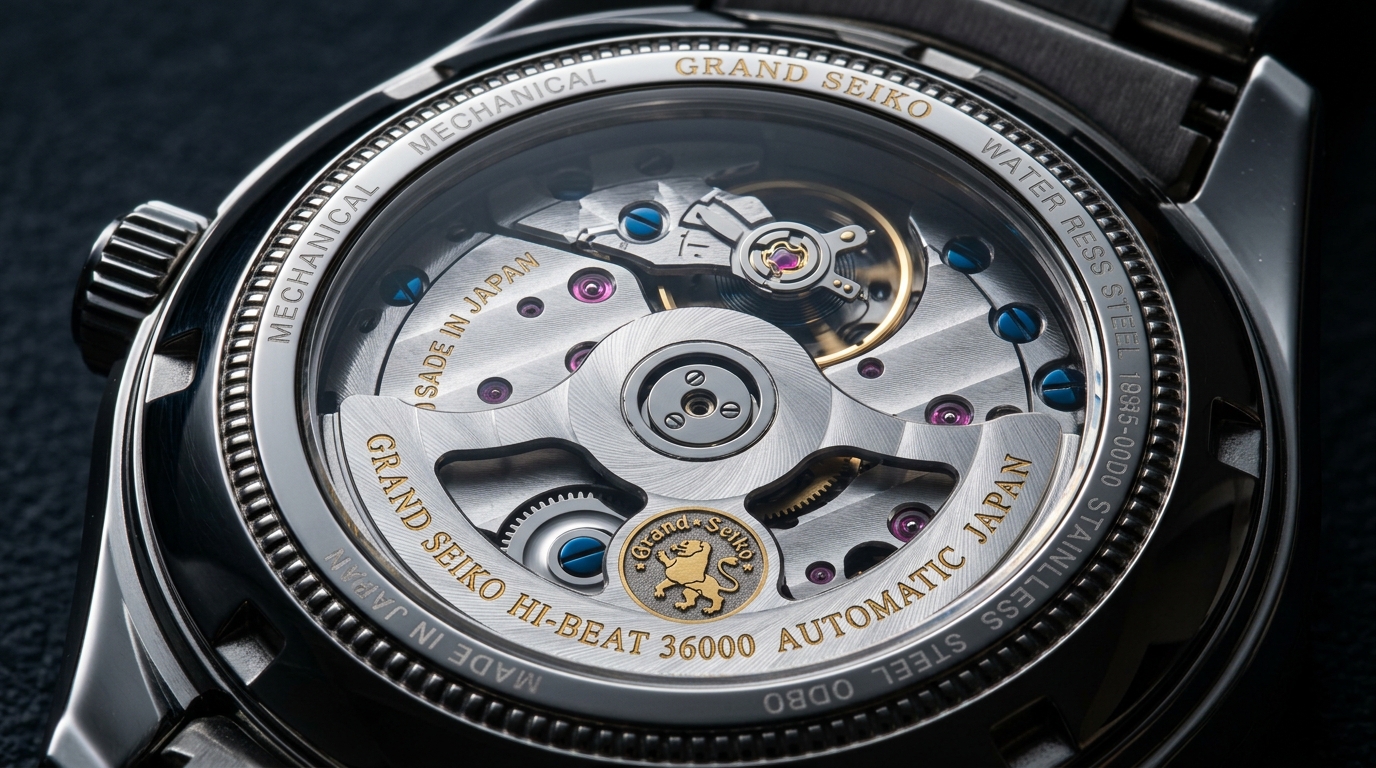
Modern Grand Seiko is best understood through its three movement pillars: 9S mechanical, 9F quartz and 9R Spring Drive. The renewed mechanical era began in 1998 with the 9S family, not as a nostalgic exercise but as a wholesale rebuild of Grand Seiko mechanical watchmaking after years of quartz dominance. Calibres such as the 9S55 and later 9S65 gave the brand a robust automatic base with a 72-hour power reserve in many executions. The 9S85 hi-beat, running at 36,000 vibrations per hour, revived a frequency historically associated with Grand Seiko’s late-1960s ambitions.
The current high point is the 9SA5, introduced in 2020. It is not just a prettier 9S calibre. It incorporates a Dual Impulse Escapement, a free-sprung balance, a horizontal gear train, twin barrels and an 80-hour power reserve while remaining comparatively thin at about 5.18 mm. The SLGH005 “White Birch” brought that movement into the mainstream collector conversation in 2021, though the technical story is more important than the dial texture. The point of the 9SA5 is that Grand Seiko did not answer Swiss luxury with decoration alone. It invested in an escapement architecture and movement layout that signalled genuine manufacture ambition.
Spring Drive remains the brand’s most distinctive contribution. Developed by Yoshikazu Akahane after decades of work and commercialised by Seiko in 1999, Spring Drive uses a mainspring like a mechanical watch but regulates the glide wheel through an electromagnetic brake governed by a quartz oscillator and integrated circuit. In 2004, Spring Drive entered Grand Seiko with the 9R65. The result is neither conventional mechanical nor ordinary quartz. The seconds hand moves with continuous smoothness because there is no escapement dividing time into discrete beats. Accuracy is typically specified around ±15 seconds per month for many 9R movements, with newer 9RA5 calibres rated to ±10 seconds per month and offering a five-day power reserve.
Spring Drive is polarising because it undermines old Swiss categories. That is also why it is strategically important. A collector can buy many fine Swiss automatics; nobody else sells Spring Drive at scale with Grand Seiko’s finishing and service infrastructure. The SBGA211 “Snowflake”, with its titanium case, textured white dial and 9R65 movement, became the reference that globalised the idea. Later models such as the SBGA413 “Shunbun” in the U.S.-developed Seasons collection showed how dial work, case ergonomics and Spring Drive could form a coherent identity rather than a technical novelty.
Finishing Is the Advantage, But It Is Also Misunderstood
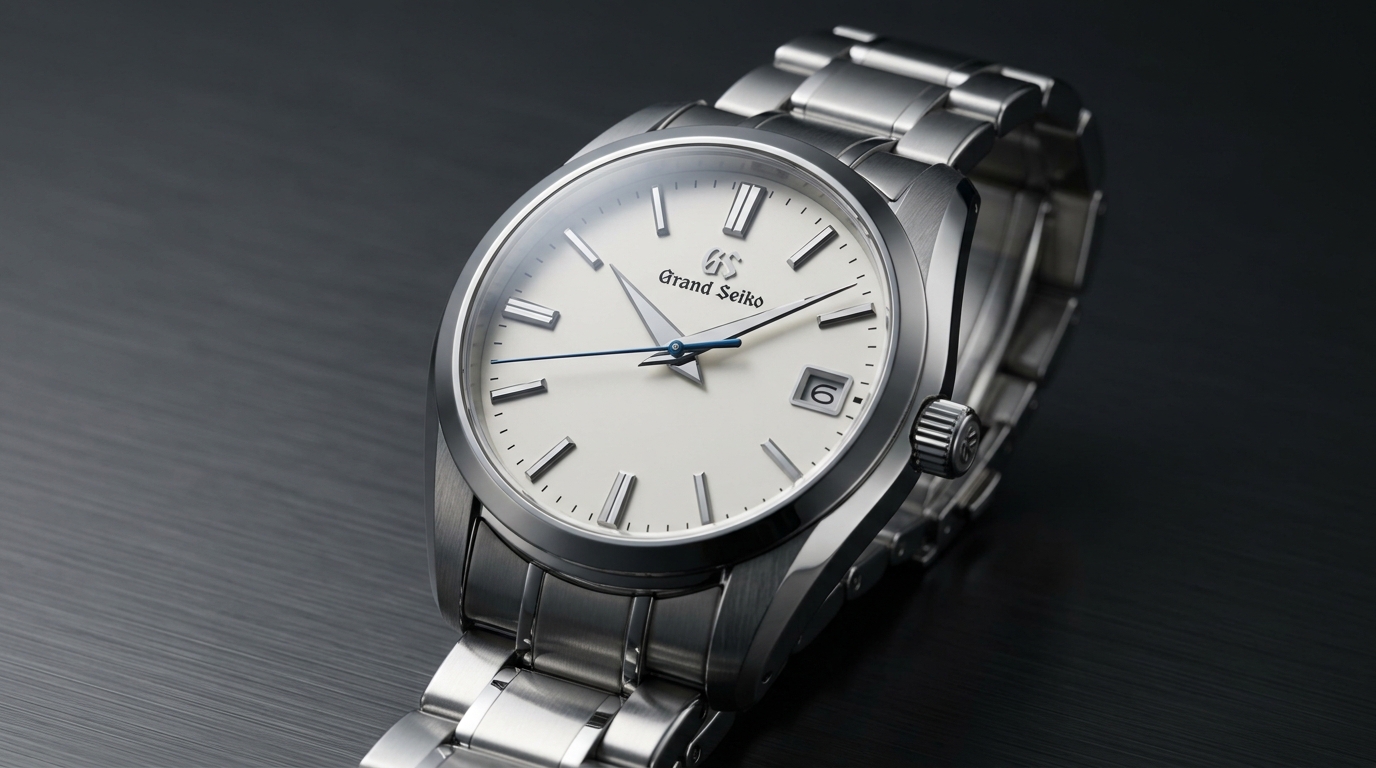
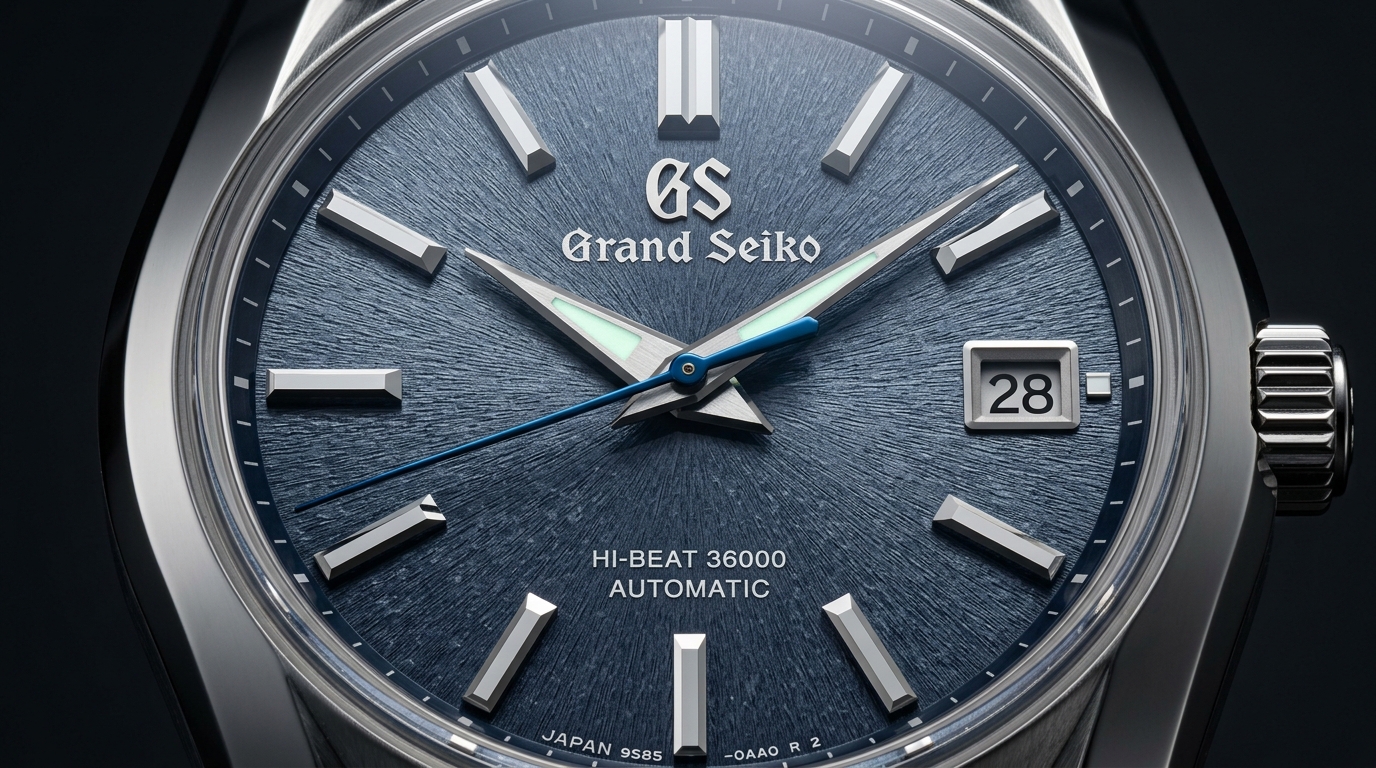
Grand Seiko finishing is often reduced to the word “Zaratsu”, which is unhelpful when used as a slogan. The term refers to distortion-free polishing using the side of a rotating polishing wheel, derived from the German Sallaz machine name. The result, when well executed, is a mirror plane that terminates against brushed surfaces with unusually crisp transitions for the price. On references such as the SBGH201, SBGJ201 and SBGA373, case sides and bezels can hold reflections with a severity more common in watches costing substantially more.
But the more important finishing is on the dial furniture. Grand Seiko’s hands and indexes are not merely bright; they are engineered for legibility. Broad, faceted markers catch very small amounts of light, and the minute hands often reach the track with a precision that many Swiss watches at similar prices still fail to match. This is where the brand’s design philosophy is most convincing. It is not decorative extravagance. It is optical control.
The criticism is equally specific. Grand Seiko cases can be thick, especially in automatic Spring Drive and GMT configurations. The SBGE line, for example, offers excellent travel functionality but often wears taller than its diameter suggests. Some bracelets, particularly older three-link designs, have lagged behind the case and dial quality, with clasp architecture that feels conservative next to Rolex’s Oysterclasp or Omega’s modern adjustable systems. Grand Seiko has improved, especially with Evolution 9 models, but the brand still loses points in tactile ergonomics. For a company that gets hands, markers and case planes so right, clasp refinement should not remain an afterthought.
Grand Seiko’s Design Problem: Too Many Dials, Not Enough Editing
The brand’s most visible recent strategy has been nature-led dial storytelling: snow, birch bark, cherry blossom, frost, lake surfaces, morning light, winter grasses. This strategy has produced genuinely strong watches. The SBGA413, with its pale pink dial inspired by spring cherry blossoms and its lightweight 62GS-style titanium case, is one of the most successful modern Grand Seiko references because the concept, colour, finishing and movement reinforce one another. The SLGA009 “White Birch” with calibre 9RA2 and the SLGH005 with 9SA5 show how the same aesthetic idea can support different technical propositions.
Yet Grand Seiko risks turning one of its strengths into a habit. Too many regional exclusives, boutique editions and seasonal variants blur the hierarchy of the catalogue. A collector can follow Rolex references with relative clarity: Submariner, Daytona, GMT-Master II, Datejust. Omega, despite its own proliferation, still has Speedmaster, Seamaster and Constellation poles. Grand Seiko’s catalogue is harder to parse. Heritage, Elegance, Sport, Evolution 9 and Masterpiece are logical internally, but the market often remembers nicknames rather than families. Snowflake, Shunbun, White Birch and Lake Suwa have more traction than SBGA211, SBGA413, SLGH005 or SLGA007. Nicknames help discovery, but they can also weaken archival seriousness if every dial becomes an event.
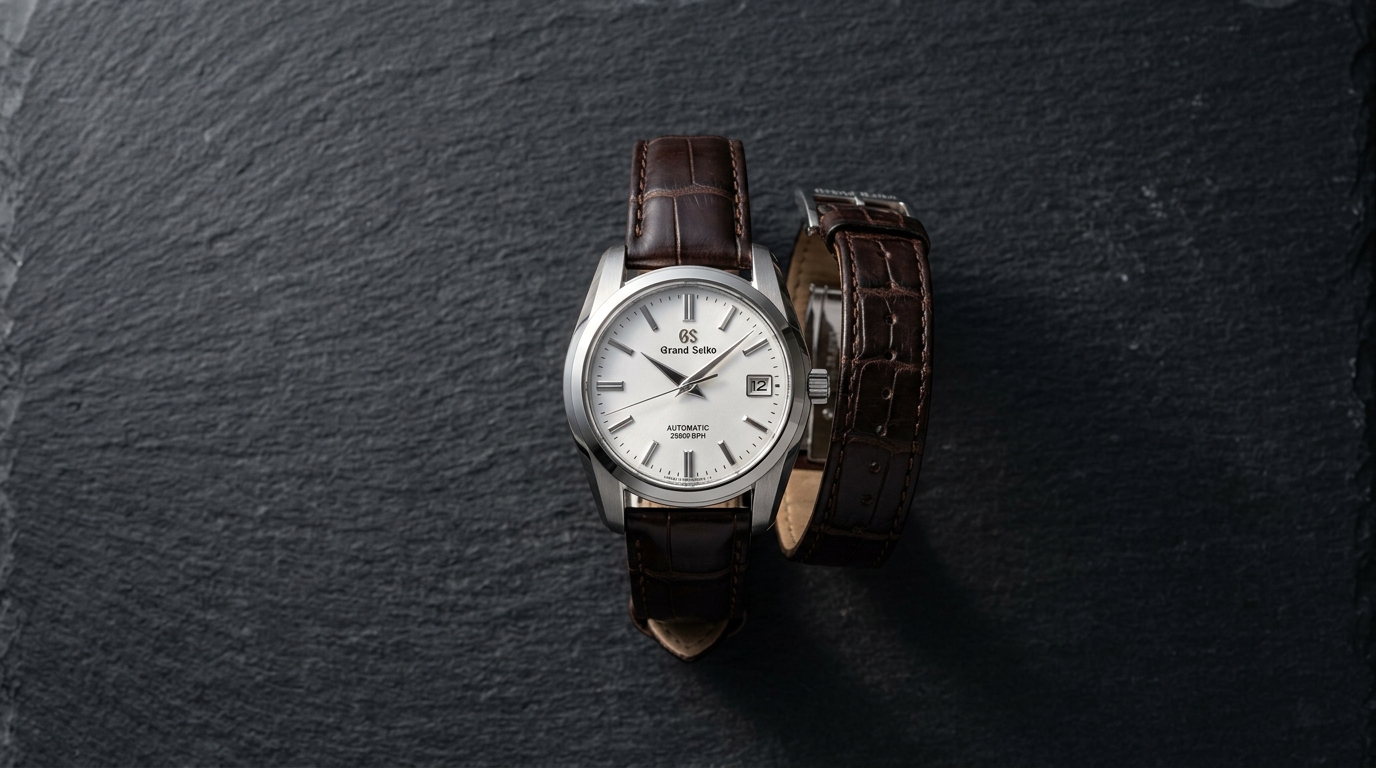
The strongest Grand Seiko references tend to have restraint. The SBGW231, a manually wound 37.3 mm dress watch with calibre 9S64, succeeds because it does little and does it precisely. The SBGM221, with its 39.5 mm case, ivory dial and 9S66 automatic GMT, remains one of the brand’s most convincing everyday complications. The SBGX261, a 37 mm steel quartz watch with calibre 9F62, may be the purest modern expression of Grand Seiko’s original value proposition: precise, discreet, beautifully finished and proportionally correct. These watches do not require a seasonal essay to justify themselves.
The Market Has Caught Up With Grand Seiko
Grand Seiko’s pricing evolution is central to any serious assessment. When the brand was sold largely under the Seiko umbrella in international markets, it benefited from understatement and relative underpricing. After the 2017 separation of Grand Seiko as its own dial signature and broader independent positioning, followed by the establishment of Grand Seiko Corporation of America in 2018, the brand moved decisively upmarket. Boutique networks expanded, global campaigns became more assertive, and references such as the Kodo Constant-force Tourbillon SLGT003 in 2022 made clear that Grand Seiko wanted a seat at the high horology table.
This repositioning is rational. A company that makes 9SA5 mechanical movements, 9RA5 Spring Drive calibres, hand-finished dials and cases, and Micro Artist Studio pieces such as the SBGD201 8-Day Spring Drive cannot indefinitely price itself like a clever alternative. But the secondary market introduces a harder reality. Many Grand Seiko models depreciate more visibly than core Rolex sports watches and certain Omega Speedmasters. Limited editions can hold attention briefly, but the sheer volume of special dials prevents scarcity from doing as much work as the word “limited” implies. For collectors, this creates opportunity; for the brand, it creates a discipline problem.
Grand Seiko is owned within the Seiko Group ecosystem, with Seiko Watch Corporation responsible for watch operations. That corporate scale is an advantage in manufacturing depth, research and vertical integration. It is also a challenge for luxury perception. Swiss maisons have spent decades cultivating scarcity, continuity and controlled model evolution. Grand Seiko’s engineering culture sometimes appears more comfortable solving product problems than managing desire over a decade. The watches are often better than their market behaviour suggests, but luxury brands are judged partly by market behaviour.
Where Grand Seiko Beats Switzerland
Grand Seiko is at its best when it refuses to imitate Swiss luxury codes. A Spring Drive seconds hand crossing a textured dial is not a substitute for a Swiss lever escapement; it is a different philosophy of timekeeping. A 9F quartz SBGX or SBGV model is not “lesser” because it contains a battery. It belongs to a different lineage of precision, one that only a company with Seiko’s history can claim without embarrassment. The 9SA5 is not persuasive because it looks like a decorated ETA replacement; it is persuasive because it shows a Japanese manufacture developing its own high-beat solution for the contemporary era.
The brand also offers case and dial execution that remains highly competitive in the $3,000 to $10,000 segment. A Rolex Datejust has stronger bracelet engineering, greater recognisability and far better resale stability. An Omega Aqua Terra offers co-axial Master Chronometer certification, anti-magnetic performance and a more mature global service identity. But Grand Seiko often surpasses both in hand finishing, dial furniture sharpness and reflective case architecture. It is the difference between industrial luxury and optical craftsmanship. That distinction is real, and collectors notice it under a loupe and on the wrist.
Where Grand Seiko Still Needs to Mature
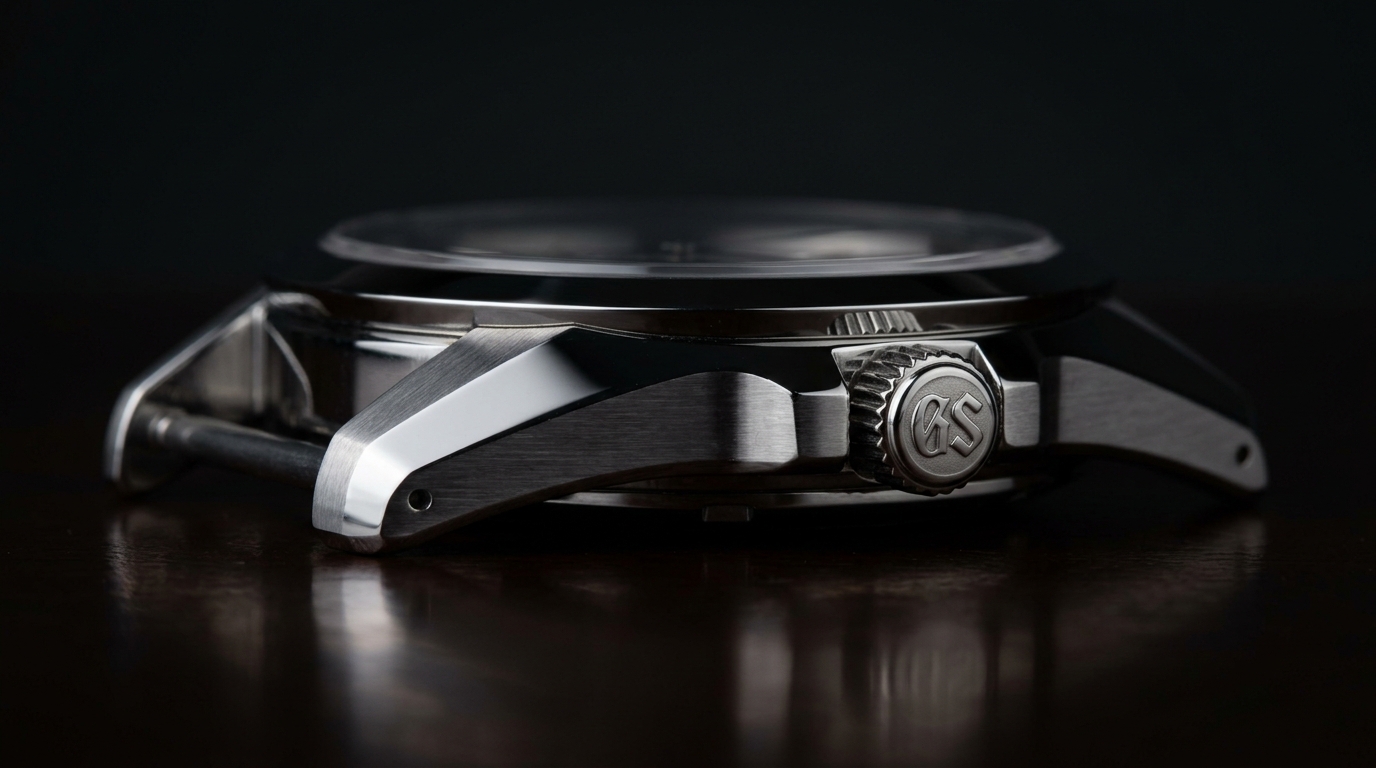
The brand’s weaknesses are not fatal, but they are persistent. First, thickness control remains uneven. The Evolution 9 case language has improved wearability through lower centres of gravity, broader lugs and better bracelets, but too many references still ask the wrist to accept height that the dial diameter does not fully justify. Second, bracelet and clasp execution must become as distinctive as the hands and indexes. Grand Seiko cannot keep competing at rising prices while asking collectors to excuse conventional clasps on otherwise exceptional watches.
Third, the catalogue needs stronger editing. Grand Seiko should protect its icons rather than constantly multiplying near-icons. The SBGA211, SBGA413, SBGW231, SBGM221, SLGH005 and SLGA009 each represent identifiable pillars: Spring Drive classic, seasonal titanium, manual dress, mechanical GMT, new-generation hi-beat and advanced Spring Drive. These should be treated as long-term architecture, not merely successful products among many. The brand would gain authority by making fewer new dial stories and giving its strongest references longer periods of uninterrupted cultural oxygen.
Finally, Grand Seiko should be more explicit about movement hierarchy. Collectors understand Rolex calibres 3230 and 3285, Omega’s 8800 and 9900 families, and Jaeger-LeCoultre’s broad manufacture catalogue because the brands repeat the structure clearly. Grand Seiko has a richer technical story than many competitors, but it too often lets dial names lead the conversation. The path forward is not less poetry; it is better order. A buyer should immediately understand why 9F, 9S, 9R, 9SA5 and 9RA5 occupy different places in the collection.
The Collector’s Verdict
Grand Seiko deserves its position among the serious alternatives to Swiss luxury, but not for the easy reasons. It is not simply “better value”, and as prices rise, that argument becomes weaker. It is not merely a finishing specialist, because finishing without strategic clarity becomes decorative competence. Its real importance is that it offers a coherent non-Swiss theory of high-end watchmaking: precision first, light as a design material, movements developed from Japanese industrial depth, and craftsmanship deployed for legibility rather than ornament.
The best buys depend on temperament. For a first Grand Seiko, the SBGA211 remains the obvious Spring Drive benchmark, though the SBGA413 is arguably more wearable and more emotionally specific. For a purist dress watch, the SBGW231 is hard to fault at its size and price. For a practical mechanical complication, the SBGM221 remains one of the most charming GMT watches under the Swiss prestige tier. For a technically advanced modern statement, the SLGH005 and SLGA009 show where Grand Seiko is heading, though buyers should weigh thickness, bracelet preference and resale carefully. For the collector who values precision over romance, a 9F quartz reference such as the SBGX261 may be the most honest Grand Seiko of all.
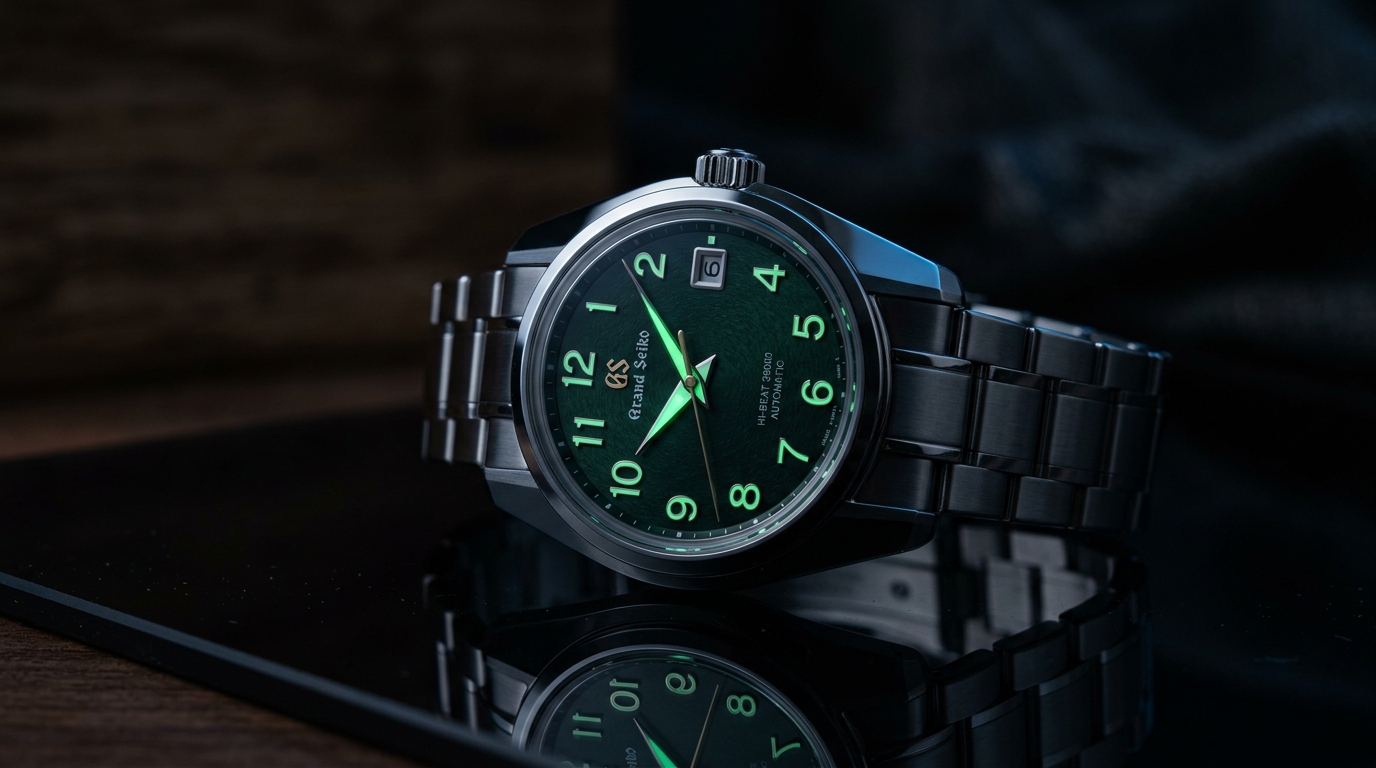
Grand Seiko’s challenge over the next decade is not to prove that Japan can make luxury watches. That argument ended years ago. The challenge is to decide what should be permanent, what should be seasonal, and what should never have left the design room. If the brand edits itself with the same severity it applies to a polished case flank or beveled hand, it can become more than the thinking collector’s alternative. It can become one of the few modern watchmakers with a genuinely independent definition of excellence.