Glashütte Original: the Saxon Manufacture Hiding in Plain Sight

Glashütte Original: the Saxon Manufacture Hiding in Plain Sight
Glashütte Original has the awkward advantage of being too substantial for fashion and not theatrical enough for hype. It is a vertically integrated Saxon manufacture owned by the Swatch Group, with legitimate continuity to the state-owned Glashütter Uhrenbetriebe era, modern calibres built in-house, and a catalogue that includes some of the most technically coherent German watches below A. Lange & Söhne pricing. Yet the market often treats it as a learned alternative rather than a primary object of desire. That gap between horological substance and collector heat is precisely why the brand deserves closer attention.
The brand’s position is unusual. It is not a newly revived name built around archive-mining, nor a boutique independent dependent on scarcity rhetoric. It is the post-reunification successor to a complicated industrial history in Glashütte: the Saxon town whose watchmaking identity began in 1845 with Ferdinand Adolph Lange, but whose twentieth century was shaped by war, expropriation, Soviet administration, and the consolidation of local firms into VEB Glashütter Uhrenbetriebe, better known as GUB, in 1951. After German reunification, the enterprise was privatized; Glashütter Uhrenbetrieb GmbH was formed in 1994, and the company has operated under the Glashütte Original name since then. Swatch Group acquired it in 2000. That corporate ownership may blunt romance, but it has also funded industrial depth that many more fashionable brands cannot match.
The Strategic Problem: Too Much Manufacture, Too Little Myth
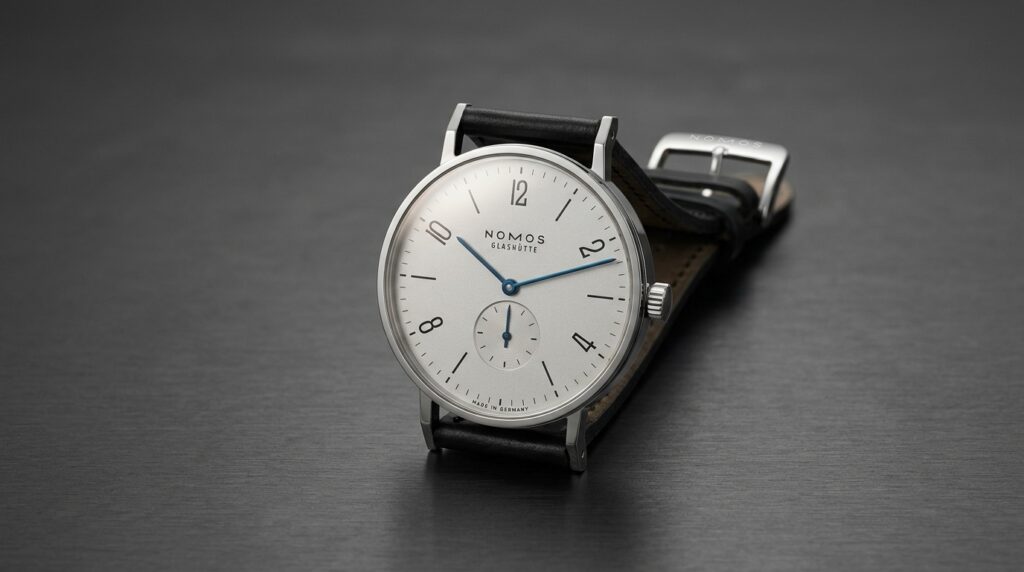
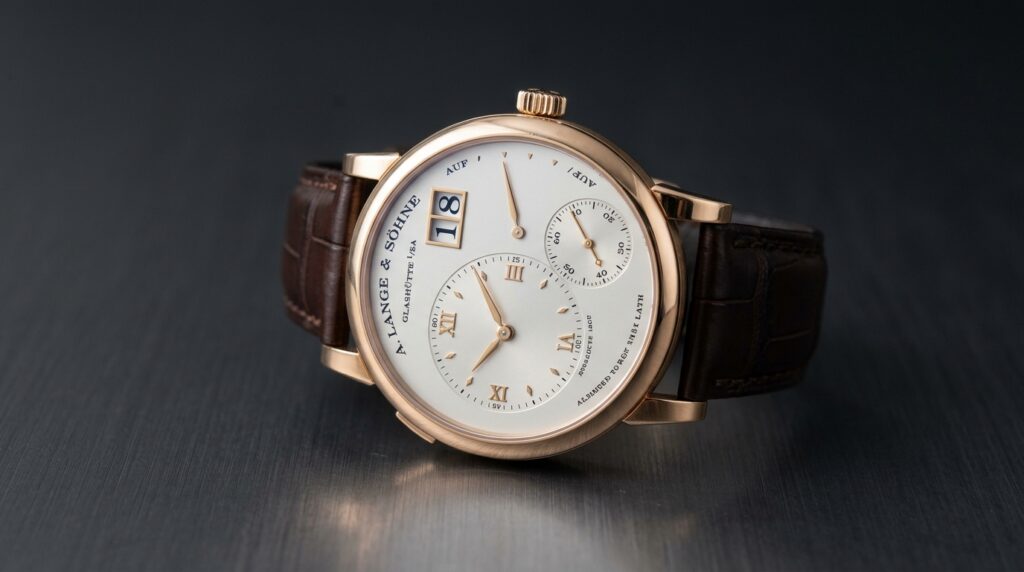
Glashütte Original’s collector challenge is not product weakness. It is narrative imbalance. A. Lange & Söhne owns the aristocratic resurrection story: Walter Lange and Günter Blümlein relaunching the marque in 1994 with the Lange 1, a watch that immediately established a new post-reunification German high horology language. Nomos owns modernist clarity and accessible Bauhaus-adjacent design. Moritz Grossmann owns artisanal small-scale seriousness. Glashütte Original, by contrast, carries the industrial continuity of the GDR period, including movements and production culture that collectors have historically found less romantic than family patrimony or independent scarcity.
That is a narrow reading. The GUB inheritance is not a liability if examined honestly. The company preserved watchmaking employment, technical training, tooling habits, and manufacturing competence in Glashütte through decades when a purely luxury-focused interpretation of Saxon watchmaking was impossible. Today’s Glashütte Original manufacture on Altenberger Strasse benefits from that continuity while operating at a level far removed from late socialist-era utility production. Its dials are made in Pforzheim at its own dial facility, acquired in 2006; its movements show the expected Saxon signatures, including three-quarter plates, hand-engraved balance cocks on higher-grade pieces, screwed gold chatons where appropriate, and Glashütte ribbing. The point is not that finishing equals Lange. It generally does not. The point is that the brand offers authentic Saxon construction and substantial in-house engineering at prices that remain relatively rational.
History Without Cosmetic Amnesia
The most convincing way to understand Glashütte Original is to resist cleaning up its history. Glashütte’s watch industry did not simply pause after the Second World War and resume in luxury form in the 1990s. In 1945, several Glashütte factories were damaged by bombing; after the war, Soviet occupation led to expropriation and machinery removals. By 1951, regional firms including Lange Uhren GmbH were consolidated into VEB Glashütter Uhrenbetriebe. GUB produced wristwatches, marine chronometers, timing instruments, and practical mechanical movements for Eastern Bloc markets. It was not haute horlogerie as collectors use the term today, but it was watchmaking at scale under difficult constraints.
The post-1994 company did not inherit a blank slate. It inherited the difficult legitimacy of being the continuing industrial body of Glashütte rather than the restored trademark of a single family. This matters because the modern brand’s best products are not nostalgic replicas. They are structured around a particular German interpretation of usefulness: panoramic date architecture, asymmetric dial balance, restrained complications, robust automatics, and movements designed to be serviced rather than merely admired under glass.
Swatch Group ownership is often treated as a soft mark against the brand, especially by collectors who prefer independence. That judgment is too simple. Swatch Group also owns Breguet, Blancpain, Omega, Longines, and Harry Winston; it understands tiering, industrialization, and aftersales infrastructure. For Glashütte Original, the more relevant question is whether corporate scale has diluted product identity. The answer is mixed, but broadly favorable. The brand can lapse into conservative dial variations and case sizes that feel one update behind the market, yet its core calibres and signature models remain distinctive enough to avoid becoming a German Omega in dress shoes.

The Pano Line: The Brand’s Strongest Design Argument
The Pano collection is where Glashütte Original is most recognizably itself. The PanoMaticLunar, typically powered by the automatic calibre 90-02, is the clearest example: off-centre hours and minutes, small seconds, moon phase, and the large Panorama Date arranged with a logic that owes more to German design discipline than decorative eccentricity. The calibre 90-02 runs at 28,800 vibrations per hour, offers approximately 42 hours of power reserve, and uses a 21k gold oscillating weight mounted within a skeletonized rotor. It is not an ultra-thin movement, and that is part of the watch’s character. It has presence without pretending to be a wafer-like formal watch.
The Panorama Date deserves specific credit. Many large-date displays use two discs mounted at different heights, leaving an unattractive step or broad separator between digits. Glashütte Original’s system places the two date discs concentrically on the same plane, allowing a clean two-digit display without a central bar. Lange’s outsize date is more famous and historically anchored to the 1994 Lange 1; Glashütte Original’s execution is not a copy so much as a parallel Saxon preoccupation with legibility, implemented with its own engineering language.
The PanoInverse is more controversial but strategically important. Introduced in 2008, it exposed the duplex swan-neck fine adjustment and balance-side architecture on the dial side, using the movement as the face of the watch rather than hiding it as a caseback reward. In an era when many brands used openworking as a shortcut to drama, the PanoInverse made a more technical argument: the visible mechanism was not random skeletonization but a display of the regulating organ and adjustment structure. It remains one of the few semi-open German watches that feels mechanically motivated rather than cosmetically excavated.

Senator Excellence and the Case for Practical German Chronometry
The Senator line is less immediately charismatic than the Pano family, but it is where Glashütte Original makes its most practical claim as a daily high-end watchmaker. The calibre 36, introduced in 2016 in the Senator Excellence, was a necessary modern platform: automatic winding, 100-hour power reserve from a single spring barrel, silicon balance spring, 4Hz frequency, and a bayonet mounting system for the movement. It was not merely a new calibre for press release purposes; it addressed real owner concerns around autonomy, stability, and serviceability.
The Senator Excellence watches are also tested under a 24-day in-house certification regime that evaluates rate performance, power reserve, water resistance, visual inspection, and functional stability in multiple positions and temperatures. This is not the same as METAS certification at Omega, nor should it be conflated with COSC. It is brand-specific, and independent verification would make it stronger. Still, the existence of a defined testing programme is preferable to the common luxury-watch habit of implying precision through price.
The Senator Chronometer is a different proposition. Powered by the manual-wind calibre 58-01, it carries official chronometer certification from the German Calibration Service and presents a more classical marine-chronometer language: power-reserve display at 12, subsidiary seconds at 6, Panorama Date, and a stop-seconds/reset mechanism that returns the seconds hand to zero when setting the time. That zero-reset feature is not a party trick; it makes exact synchronization easier, and it reflects the brand’s strongest instinct: complication in service of function.

Chronographs: Underdiscussed and Technically Serious
Glashütte Original’s chronographs have never achieved the market recognition of the Zenith El Primero, Rolex Daytona, or Omega Speedmaster, but the manufacture has built legitimate chronograph movements. The calibre 37, used in the Seventies Chronograph Panorama Date, is an integrated automatic flyback chronograph with column wheel, vertical clutch, Panorama Date, 70-hour power reserve, and a 12-hour chronograph counter. In a market still crowded with modular chronographs at luxury prices, that specification deserves more attention than it receives.
The Seventies Chronograph itself is not subtle. Its rounded-square case, integrated bracelet option, and dial architecture draw from 1970s sports-watch geometry without becoming another Gerald Genta derivative. That distinction matters. Collectors have spent the last decade overpaying for integrated-bracelet familiarity, often collapsing originality into a checklist of bezel shape, bracelet taper, and blue dial. The Seventies line offers a different German reading of the same broad period. It is not as liquid on the secondary market as an Audemars Piguet Royal Oak or Patek Philippe Nautilus, obviously, but it is also not priced as social currency first and watchmaking second.
The PanoGraph, relaunched in modern form with calibre 61-03, is even more idiosyncratic. Its chronograph display uses a sector-style 30-minute counter rather than conventional subdials, preserving the asymmetric Pano layout while adding mechanical interest. This is exactly where Glashütte Original is at its best: not chasing universal desirability, but solving display problems in a way that strengthens the brand’s own grammar.
Dive Watches and the SeaQ Question
The SeaQ is the most commercially understandable modern Glashütte Original, and also the one most likely to divide purists. Launched in 2019 as part of the Spezialist collection, it draws on the Spezimatic Type RP TS 200, a GUB dive watch from 1969. That reference gives the model legitimate archive footing, though the current SeaQ is unmistakably a luxury product rather than a tool watch in the historical sense.
Technically, the line is credible. The standard SeaQ has been offered with calibre 39-11, a proven automatic movement with approximately 40 hours of power reserve, while the larger SeaQ Panorama Date uses calibre 36-13, bringing the 100-hour platform and Panorama Date into a dive-watch format. Water resistance is generally 200 metres for the standard SeaQ and 300 metres for the Panorama Date variants, with DIN and ISO testing depending on model. The execution is high-grade: ceramic bezel inserts on many versions, substantial bracelet engineering, and crisp dial printing.
The question is strategic. Does Glashütte Original need a luxury diver? In market terms, yes. Every serious brand benefits from a watch that can be worn daily without the social stiffness of a dress piece. But the SeaQ also risks pulling attention from the Pano and Senator families, where the brand’s design intelligence is more distinctive. As a watch, the SeaQ is strong. As a brand statement, it is less singular. It competes in a field dominated by the Rolex Submariner, Omega Seamaster, Blancpain Fifty Fathoms, and Tudor Black Bay, where historical legitimacy alone is not enough. Its best argument is not that it beats those watches at their own game, but that it offers a Saxon-manufacture alternative with better movement differentiation than many Swiss competitors at comparable retail prices.

Finishing, Value, and the Secondary Market Reality
Glashütte Original sits in a difficult pricing band. It is too expensive to be an easy enthusiast recommendation and too underrecognized to reassure status-driven buyers. Retail prices for core steel models often land in the high four figures to low five figures, while gold complications and limited editions move substantially higher. On the secondary market, depreciation can be meaningful, particularly for less iconic references. This is bad for the first buyer and useful for the patient collector.
The market’s skepticism is not irrational. Case thickness can be an issue, especially in automatic complications. Some dials veer toward period styling that photographs better than it ages on the wrist. The brand’s communication has at times struggled to explain why its watches matter beyond “German manufacture” and “handcrafted quality,” neither of which is sufficient in a crowded market. But the underlying value proposition remains strong when judged by movement architecture, finishing, originality of display, and factory integration.
Compared with Lange, Glashütte Original is less obsessively finished and less culturally powerful. Compared with Nomos, it is more mechanically elaborate and more traditionally Saxon. Compared with many Swiss brands at similar prices, it offers more in-house substance and less dependence on borrowed prestige. That does not make every model a buy. It does make the brand one of the more obvious places to look when collector pricing becomes detached from horological content.
What Glashütte Original Should Protect
The brand’s future should not be built around chasing the integrated-bracelet sports-watch market or inflating limited editions. Its strongest assets are already clear: the Pano design language, the calibre 36 platform, the Panorama Date, German chronometer credibility, and a manufacture story that includes uncomfortable historical continuity rather than sanitized nostalgia. Glashütte Original should lean harder into those specifics.
There is room for sharper case sizing. A thinner PanoMaticLunar, if technically feasible without compromising the architecture, would broaden its appeal. The Senator Excellence line would benefit from more disciplined dial typography and fewer variants that feel like catalogue maintenance. The SeaQ should remain, but it should not become the centre of gravity. The brand’s identity is not underwater heritage; it is Saxon mechanical clarity.
Education is another underused advantage. Glashütte Original supports watchmaking training through the Alfred Helwig School of Watchmaking, named after the Glashütte master watchmaker who developed the flying tourbillon in 1920. It is also closely linked to the German Watch Museum Glashütte, which opened in 2008 in the restored former watchmaking school building. These are not decorative institutions; they anchor the brand in the town’s technical culture. In a market crowded with invented heritage cues, that infrastructure is meaningful.

The Collector’s Verdict
Glashütte Original is not an alternative to Lange in the simplistic sense. It does not offer Lange finishing at half the price, and pretending otherwise helps no one. Its real case is different: it is a mature manufacture with a coherent Saxon identity, serious in-house calibres, distinctive asymmetry, useful complications, and a market profile that remains less inflated than its technical content might justify.
The best entry points are not difficult to identify. The PanoMaticLunar is the modern signature and still the reference by which the brand should be judged. The Senator Chronometer is the connoisseur’s functional dress watch, particularly for collectors who value setting precision and certified chronometry over social recognition. The Seventies Chronograph Panorama Date is the underappreciated technical play, especially for those tired of derivative sports-watch design. The SeaQ Panorama Date is the pragmatic daily option, though less essential to the brand’s soul.
Glashütte Original’s weakness is that it asks the buyer to care about substance without offering the easy external validation that now dominates much of the watch market. Its strength is that, once the validation game is set aside, the watches hold up. The brand is not hidden because it lacks merit. It is hidden because its merit is specific, technical, and historically complicated. For serious collectors, that is not a problem. It is the opportunity.