F.P. Journe: How a Modern Independent Turned Watchmaker Authorship Into a Collectible Asset
F.P. Journe: How a Modern Independent Turned Watchmaker Authorship Into a Collectible Asset
The most important thing F.P. Journe sells is not rarity, finishing, or even complication. It sells authorship. In a market crowded with revived names, licensed histories, and corporate “manufactures,” François-Paul Journe built one of the few contemporary watch companies where the intellectual source of the watch is still legible on the dial, in the calibre architecture, and in the commercial structure behind the brand. That is the real reason collectors treat F.P. Journe differently from most independents founded in the same era.
Montres Journe SA was founded in Geneva in 1999, but the story begins earlier and more narrowly: with a watchmaker trained in restoration, not brand management. Journe’s first pocket watch tourbillon, completed in 1983, was not a product launch; it was an assertion of technical lineage, made after studying the work of Breguet and the great chronometer makers. That matters because the later wristwatches were not designed as nostalgic replicas. They were compact arguments about rate stability, constant force, resonance and long-duration automatic winding, expressed in a modern case language that became recognizable without becoming theatrical.
The strategic achievement of F.P. Journe is that it converted a watchmaker’s personal technical obsessions into a scalable luxury business without completely dissolving them into branding. This is a narrower achievement than “being independent,” a term now stretched beyond usefulness. The company has boutiques, controlled distribution, a Geneva manufacture, an associated dial and case-making ecosystem, and, since 2018, a minority investment from Chanel, widely reported at 20 percent. Journe retained control. The Chanel stake was not a takeover; it was a succession and stability instrument. In a category where founder risk is real, that distinction is material.
The Invention Was the Business Model
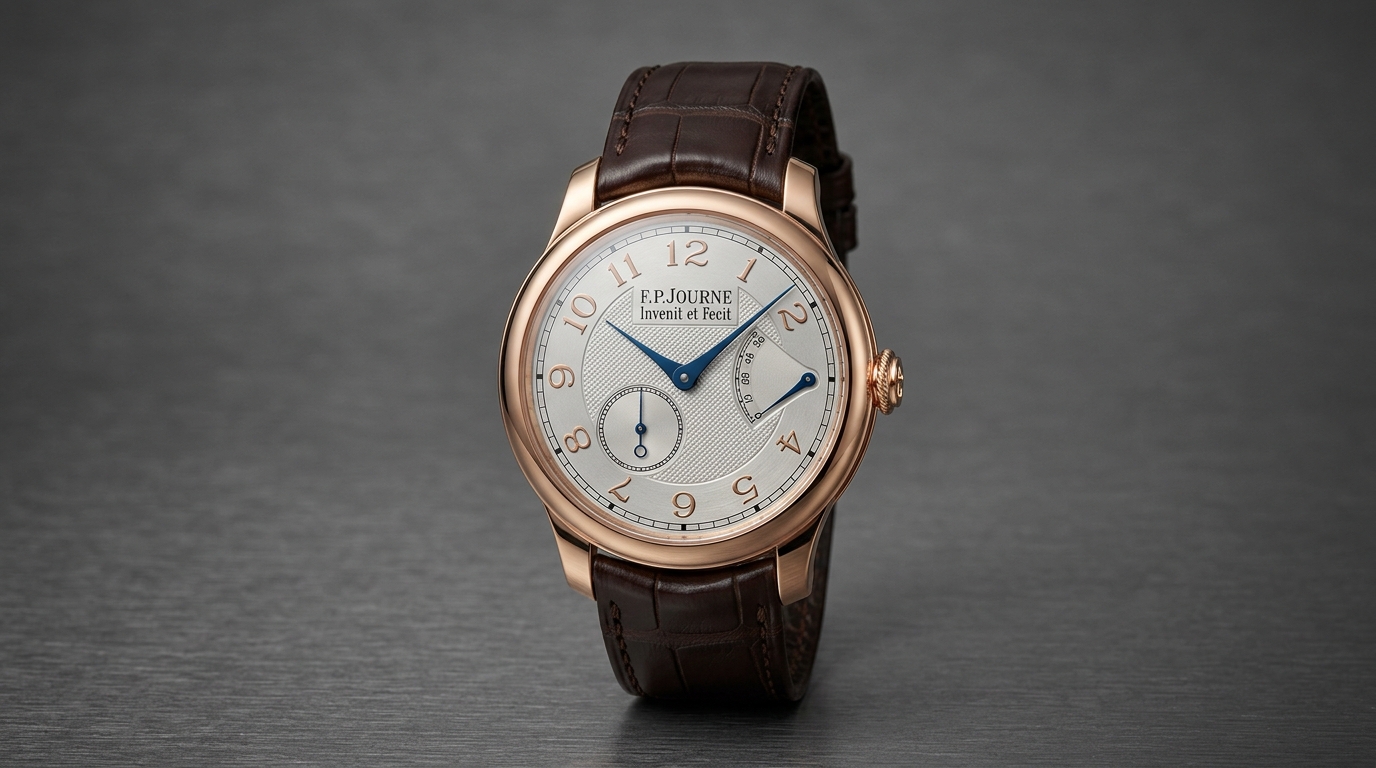
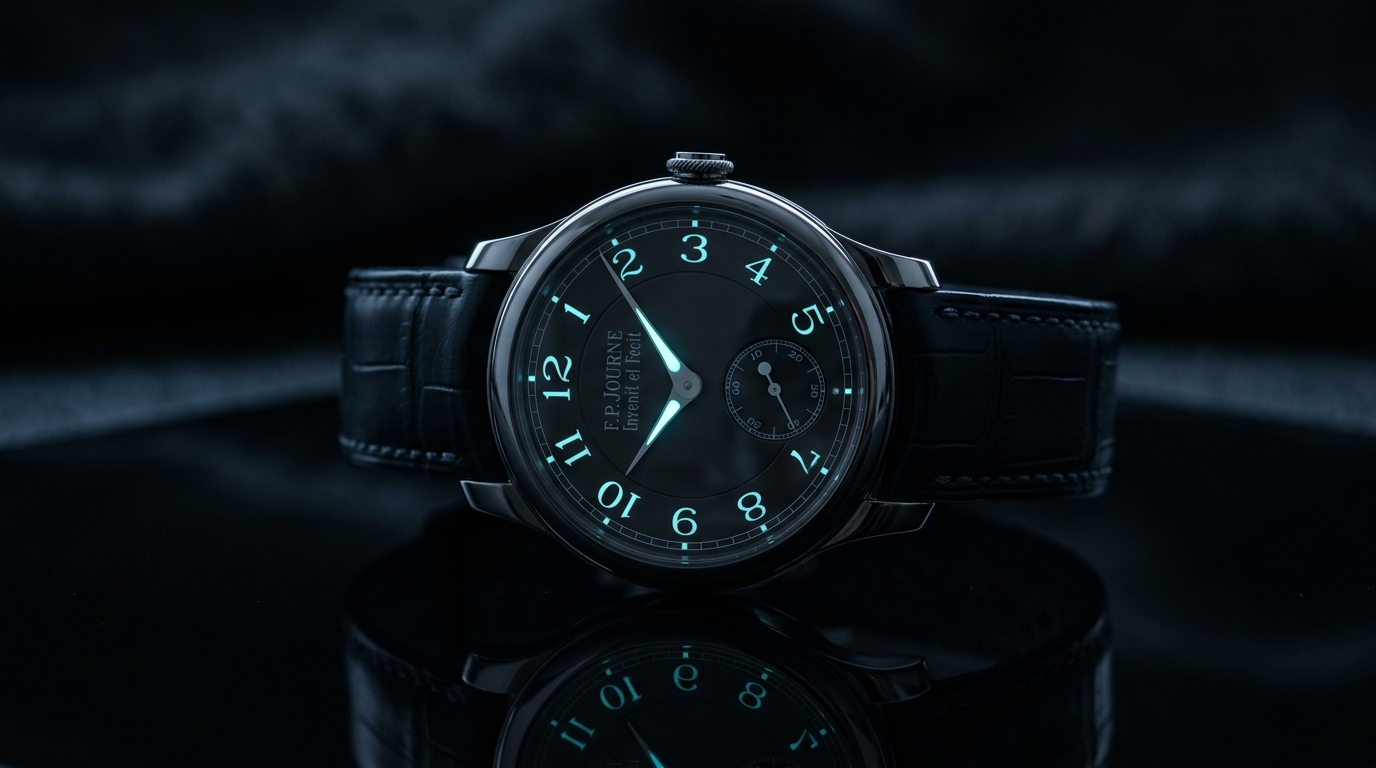
“Invenit et Fecit” is printed on F.P. Journe dials because the brand’s legitimacy rests on invention and execution by the same named watchmaker. The phrase would be intolerable if the watches were conventional. They are not. The early commercial triad established the brand’s seriousness: the Tourbillon Souverain à Remontoir d’Égalité in 1999, the Chronomètre à Résonance in 2000, and the Octa automatic calibre in 2001. Each addressed timekeeping through mechanics rather than decoration.
The Tourbillon Souverain was not merely another tourbillon during the late-1990s revival of the complication. Its remontoir d’égalité delivered constant force to the escapement, and the later deadbeat seconds display made the mechanism visible as a chronometric proposition rather than a rotating ornament. The Chronomètre à Résonance was more ambitious still: two independent balances mounted close enough to influence each other, with the aim of improving stability through resonance. Whether one regards wristwatch resonance as practically decisive or aesthetically intellectual, Journe made it commercially credible at a time when most high-end complicated watches were still relying on inherited formulas.
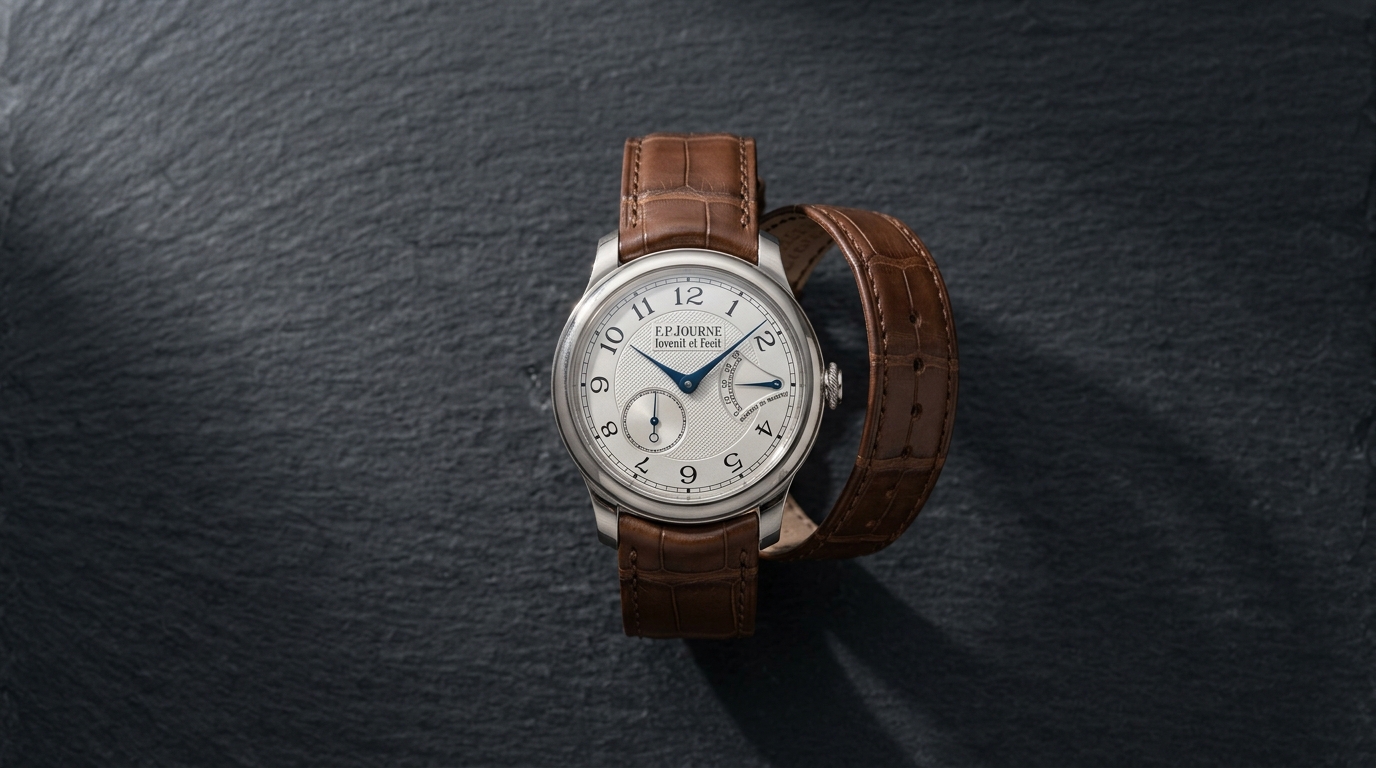
The Octa was perhaps the shrewdest product. Introduced in 2001, its automatic calibre 1300 offered a long power reserve of approximately five days and was designed as a platform for multiple indications without changing the fundamental movement dimensions. That decision made the company viable. The Octa Réserve de Marche, Octa Calendrier, Octa Lune and later Octa variants gave Journe a repeatable mechanical base while preserving a clear technical identity. Many independents produce brilliant watches and poor businesses. The Octa line helped F.P. Journe avoid that fate.
Brass Movements, Gold Movements, and the Collector Hierarchy
No serious reading of F.P. Journe can avoid the pre-2004 brass movements. Early Journe wristwatches used rhodium-plated brass calibres before the brand transitioned to 18-carat rose gold movements in 2004. From a purely material standpoint, the later gold calibres are more luxurious. From a collector standpoint, the brass period is more important because it represents the fragile beginning: lower production, early typography, smaller dials, and the moment before the company’s codes hardened into institutional design.
This is why the market assigns a premium to early Tourbillon Souverain and Chronomètre à Résonance examples, especially souscription pieces and early numbered watches with documented provenance. The Chronomètre Bleu may be more publicly visible today, but the brass Resonance and early Tourbillon are the foundation stones. They carry the same kind of first-period significance that collectors assign to early Roger W. Smith Series watches or Philippe Dufour Simplicity examples, though the Journe market is broader and more liquid.
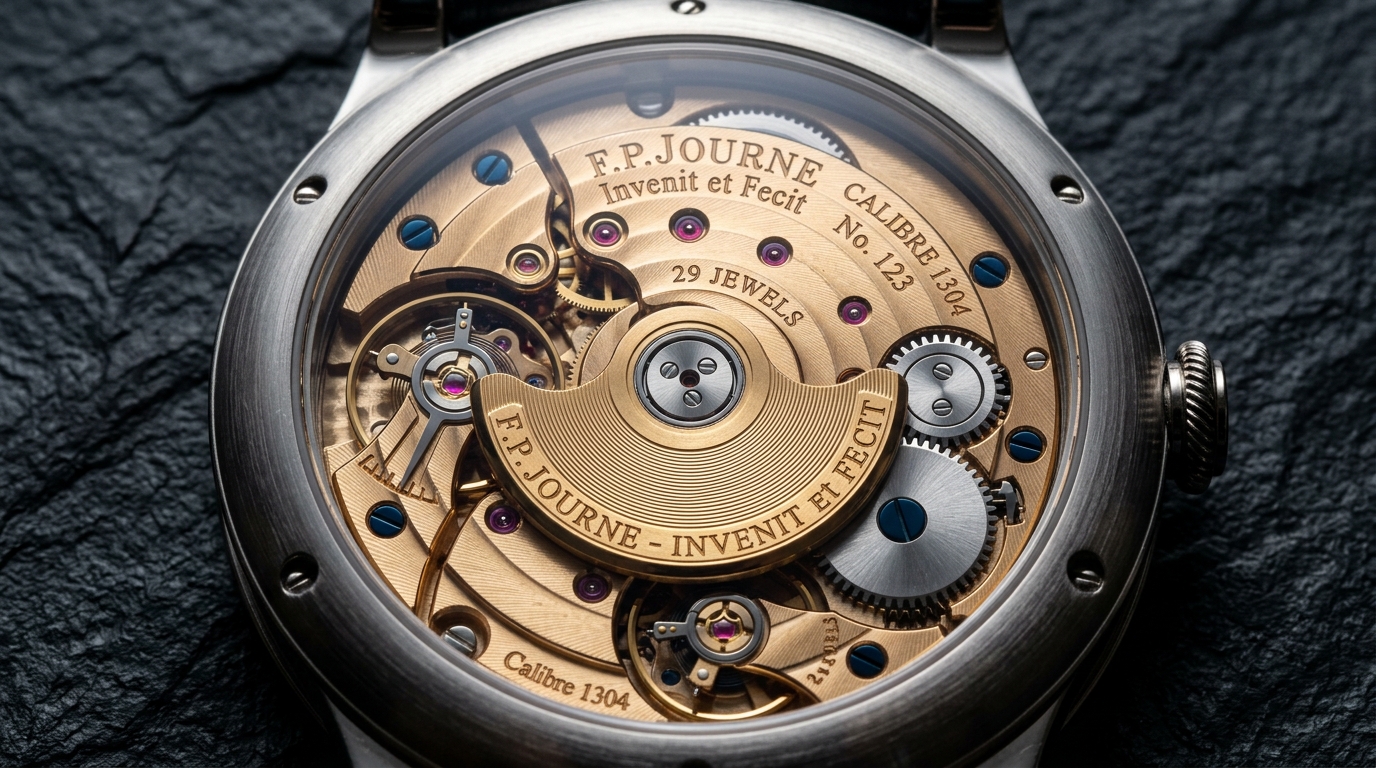
The 2004 move to 18-carat rose gold movements also changed the brand’s character. It asserted that the movement itself was part of the precious object, not merely a hidden engine. The finishing remained more architectural than flamboyant: côtes, perlage, polished screw heads and chamfers, but not the obsessive black-polished theatre of some German and Swiss rivals. That is not a defect. Journe watches are most convincing when judged as chronometric instruments with high-grade execution, not as finishing demonstrations assembled around a movement bridge.
The Design Language: Asymmetry With Discipline
F.P. Journe’s design is sometimes described as eccentric, but that understates its discipline. The cases are generally compact by modern standards, many historically at 38 mm or 40 mm, with flat bezels, short lugs and restrained profiles. The dials often use offset indications, exposed screws, sub-dials and warm metallic tones, but they rarely become incoherent. The asymmetry has a technical logic: twin displays on the Resonance, power reserve and date structures across the Octa family, and instrument-style registers on the Centigraphe Souverain.
The Centigraphe, introduced in 2007 and powered by calibre 1506, remains one of the brand’s most original complicated watches. Its chronograph can time events down to one-hundredth of a second, using a system that avoids the usual central chronograph layout. The pusher system integrated into the case at 2 o’clock is visually and mechanically distinct. The watch later became a pillar of the LineSport collection, but the original precious-metal Centigraphe Souverain better captures the tension that makes Journe interesting: experimental mechanics housed in a sober case.
The Sonnerie Souveraine, launched in 2006, sits in another category. Grand and petite sonnerie wristwatches are among the most difficult objects in horology because they require energy management, acoustic tuning and user safety. Journe’s sonnerie incorporated mechanisms to prevent mishandling, including protections against setting the time while the striking mechanism is active. It demonstrated that the brand could operate beyond chronometry and into the highest complication arena. Commercially, however, it was never the volume engine. Its role was reputational: proof of capability.
The Chronomètre Bleu Problem
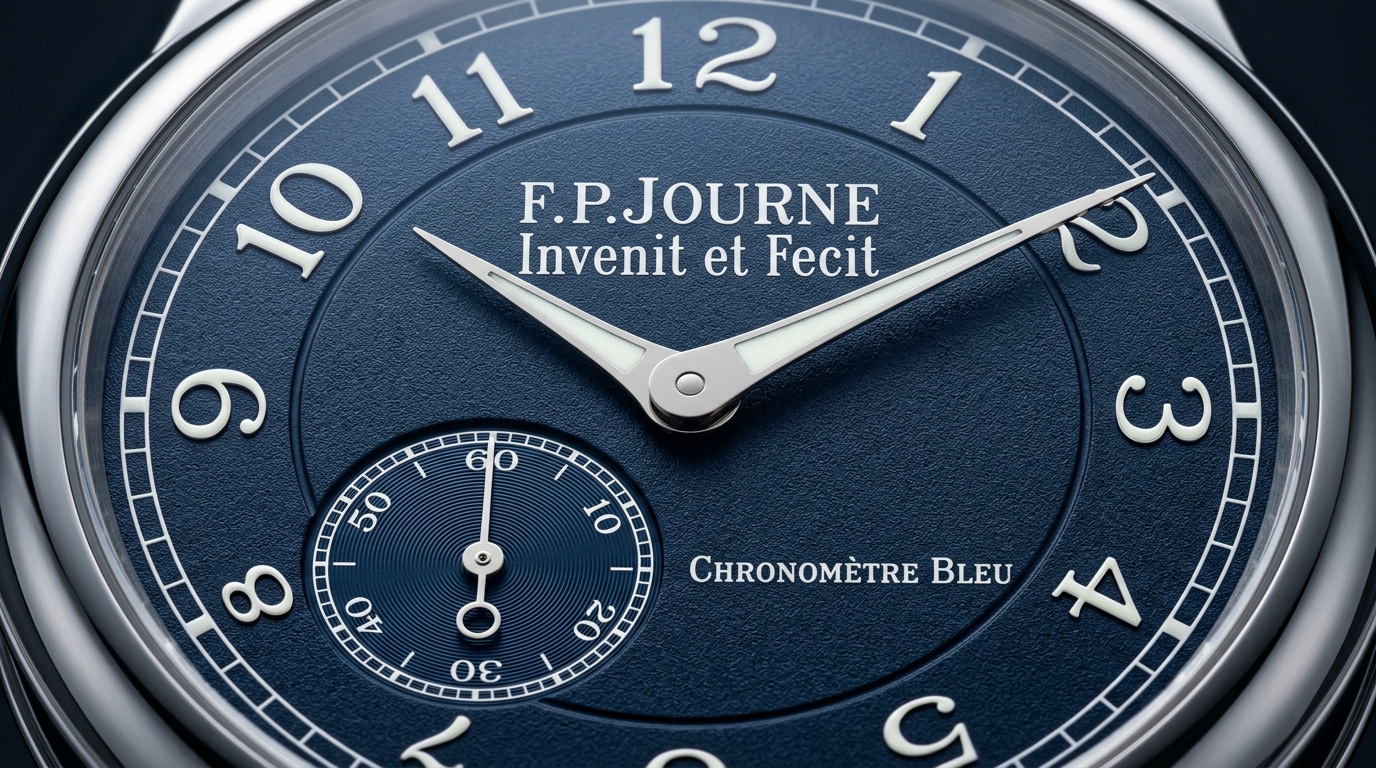
The Chronomètre Bleu, introduced in 2009, is both one of F.P. Journe’s most important watches and one of the most distorting forces around the brand. Its 39 mm tantalum case, blue lacquer dial and calibre 1304 made it unusually pure for Journe: time-only, manually wound, immediately identifiable. It also became the entry point for many collectors who wanted the signature without confronting the price or complexity of a Resonance, Octa or Tourbillon.
That entry point no longer functions in a normal way. The Chronomètre Bleu moved from an accessible independent-watch proposition to a scarcity-driven market object. Secondary prices surged during the 2020–2022 independent watch boom, at times trading at several multiples of retail, before softening with the broader correction in speculative watch assets. Even after that reset, it remains priced as an allocation watch rather than a simple three-hand chronometer. The result is awkward: the watch is genuinely excellent, but its market fame now risks overshadowing more technically significant Journe references.
An editorial view is necessary here. The Chronomètre Bleu is not the best F.P. Journe; it is the most legible F.P. Journe. Its importance lies in how efficiently it packages the brand’s codes: precious but unusual metal, chromatic restraint, gold movement, independent authorship and scarce supply. Collectors who stop there miss the deeper argument. Journe’s greatness is not reducible to a blue dial in tantalum.
Scarcity, Allocation and the Independent Watch Boom
F.P. Journe’s production has long been understood to sit around the low thousands annually, and often cited closer to roughly 900 to 1,000 watches per year depending on period and mix. The exact number is less important than the structure: production is limited, distribution is tightly managed, and boutiques matter. This places Journe in a different market position from both mass luxury brands and micro-independents. It is large enough to sustain global recognition and service infrastructure, but small enough that access remains difficult.
The 2018 Chanel minority investment strengthened that position. Chanel has shown a pattern of strategic watchmaking investments, including stakes in Romain Gauthier and movement or supplier-related assets, but it does not appear to have imposed a corporate design language on Journe. For collectors, that is crucial. The fear with any independent is that capital will dilute authorship. So far, the Journe-Chanel arrangement has done the opposite: it has provided institutional ballast while leaving the product vocabulary intact.
The market context is also important. Between roughly 2019 and 2022, independent watchmaking moved from collector subculture to financialized category. Philippe Dufour, De Bethune, Roger W. Smith, Kari Voutilainen and F.P. Journe all benefited, though in different ways. Journe had the advantage of broader model diversity and greater brand infrastructure. Auction houses and dealers could tell the story cleanly: early brass movements, souscription pieces, discontinued references, boutique editions, rare case metals. That narrative created liquidity, and liquidity created more demand.
The correction that followed exposed the difference between durable collecting and momentum buying. F.P. Journe did not collapse into irrelevance because the core objects remained intellectually strong. But the hierarchy became clearer. Early brass Resonance, original Tourbillon Souverain, unusual Octa variants, Sonnerie Souveraine, Centigraphe Souverain and limited historical pieces still have substance. Generic enthusiasm around any Journe dial has become less persuasive.
Where the Brand Is Strongest
F.P. Journe is strongest when it lets mechanics dictate form. The Chronomètre à Résonance is the clearest example. Over its life, the model evolved through brass movements, rose-gold movements, 40 mm and 38 mm cases, different dial arrangements, and later redesigns including the updated 2020 generation with a remontoir d’égalité architecture. The watch is not static nostalgia; it is Journe returning to the same problem with revised means. That continuity is rare in modern watch branding, where models are often refreshed for novelty rather than technical refinement.
The Chronomètre Optimum, introduced in the 2010s and powered by calibre 1510, is another under-discussed high point. It combines a remontoir d’égalité, a bi-axial high-performance escapement concept, and a visible deadbeat seconds display on the back. It is less socially famous than the Chronomètre Bleu and less theatrical than the Tourbillon, but as a statement of chronometric intent it is central to understanding Journe. If the market eventually becomes more technically literate, the Optimum deserves a stronger place in the collecting hierarchy.
The Octa line also deserves more respect than it sometimes receives. Platform calibres are often dismissed because collectors prefer singularity, but the Octa’s achievement was to create an automatic architecture robust enough to support real variation without becoming anonymous. The Octa Calendrier, with its annual calendar display, and the Octa Lune, with moon phase and power reserve, are not secondary Journes. They are evidence that the brand understood usability as part of horological seriousness.
Where the Brand Is Vulnerable
F.P. Journe’s vulnerability is not design exhaustion or lack of credibility. It is succession. The brand is inseparable from François-Paul Journe’s name, judgement and technical mythology. That is an asset while the founder remains active; it becomes a strategic question over time. Chanel’s minority position may help preserve the manufacture, but it cannot manufacture authorship. The next phase will depend on whether the company can distinguish between preserving Journe’s language and merely repeating it.
There is also a risk in over-managing scarcity. Controlled allocation protects brand equity, but it can alienate serious collectors when access appears driven by purchase history rather than horological commitment. This is not unique to F.P. Journe; Patek Philippe, Rolex, Audemars Piguet and Richard Mille have all faced versions of the same problem. For an independent whose legitimacy is tied to intellectual intimacy, however, the optics are more sensitive. The brand cannot afford to feel like a tokenized luxury asset first and a watchmaker’s project second.
The Élégante illustrates both courage and tension. Introduced in 2014, it uses an electromechanical quartz movement with a motion detector that allows the watch to enter standby and preserve energy. It is technically clever and commercially successful, especially in titanium and gem-set configurations, but it sits uncomfortably in the minds of collectors who came to Journe through resonance, remontoirs and chronometry. The correct view is neither dismissal nor exaggeration. The Élégante proves Journe is willing to solve timekeeping problems outside mechanical orthodoxy, but it should not become the interpretive center of the brand.
The Final Assessment
F.P. Journe matters because it is one of the few modern watch brands that made a founder’s technical handwriting commercially durable. It is not an old maison revived by corporate capital, nor a one-watch atelier dependent on artisanal scarcity. It occupies the difficult middle ground: independent in authorship, professional in structure, limited in production, global in demand. That combination explains why the brand commands both collector respect and speculative attention.
The best way to understand F.P. Journe is to separate fame from importance. The Chronomètre Bleu is famous. The brass Tourbillon Souverain and Chronomètre à Résonance are historically important. The Octa calibre made the company viable. The Sonnerie Souveraine proved range. The Chronomètre Optimum shows the continuing seriousness of the chronometric project. The Élégante shows commercial flexibility, whether one likes it or not.
Among contemporary independents, F.P. Journe has built the most complete bridge between watchmaker authorship and brand institution. That bridge is valuable, but not indestructible. Its future depends on resisting the easy path: producing scarcity as a product in itself. Journe is at its best when scarcity is the consequence of difficult watchmaking, not the argument for it. Collectors should apply the same standard. Buy the idea expressed in the calibre, not merely the name printed on the dial.