Cartier Watches: The Strategic Power of Shape Over Specification
Cartier Watches: The Strategic Power of Shape Over Specification
Cartier is the watch brand collectors often underestimate for exactly the reason the market has learned to reward it: its best watches do not need to look like watches from anyone else. In a category still inclined to rank seriousness by movement architecture, depth rating or stainless-steel scarcity, Cartier has built one of the most defensible positions in modern watchmaking by owning form. The Tank, Santos, Tortue, Crash, Baignoire and Panthère are not variations on a generic case template. They are commercial assets with legal, cultural and aesthetic memory attached.
That makes Cartier unusually difficult to assess by the usual enthusiast metrics. Its history is not the linear story of a manufacture moving from pocket watches to chronographs and dive watches. It is the story of a Parisian jeweller that understood wristwatches earlier than most, outsourced intelligently when that was the rational high-end model, absorbed the damage of the quartz era, then rebuilt mechanical credibility without allowing calibres to become the brand’s centre of gravity. The result is a maison that, under Richemont ownership, now sits near the top of the Swiss watch business while still making watches whose primary argument is line, proportion and cultural continuity.
From Paris Jeweller to Wristwatch Authority
Cartier was founded in Paris in 1847 by Louis-François Cartier, but the watch story becomes strategically important under his grandsons: Louis in Paris, Pierre in New York and Jacques in London. This three-city structure gave Cartier access to aristocratic, financial and artistic clients before wristwatches became a mass category. It also created regional design identities that still matter. The London workshop would later produce the Crash in 1967; Paris gave the world the Tank in 1917; New York helped embed Cartier into American wealth during the interwar period.
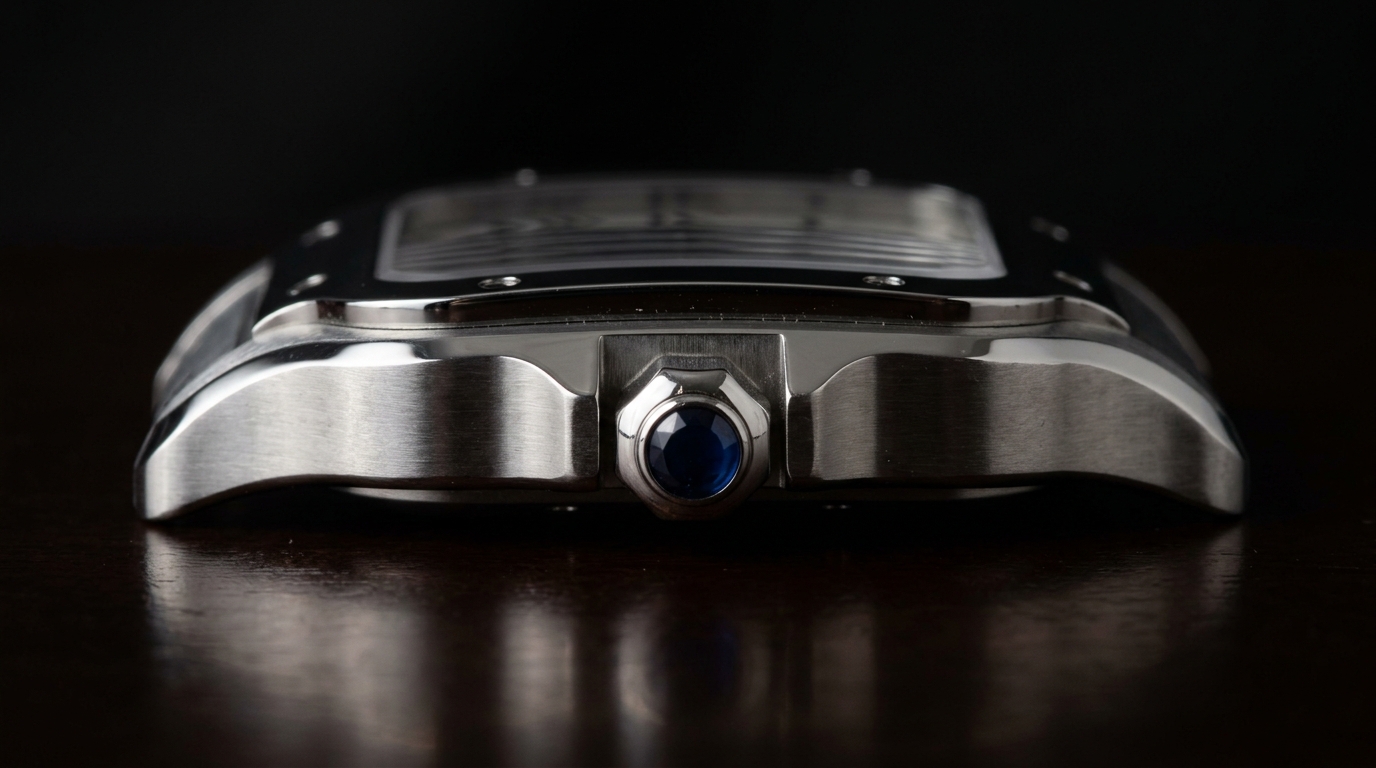
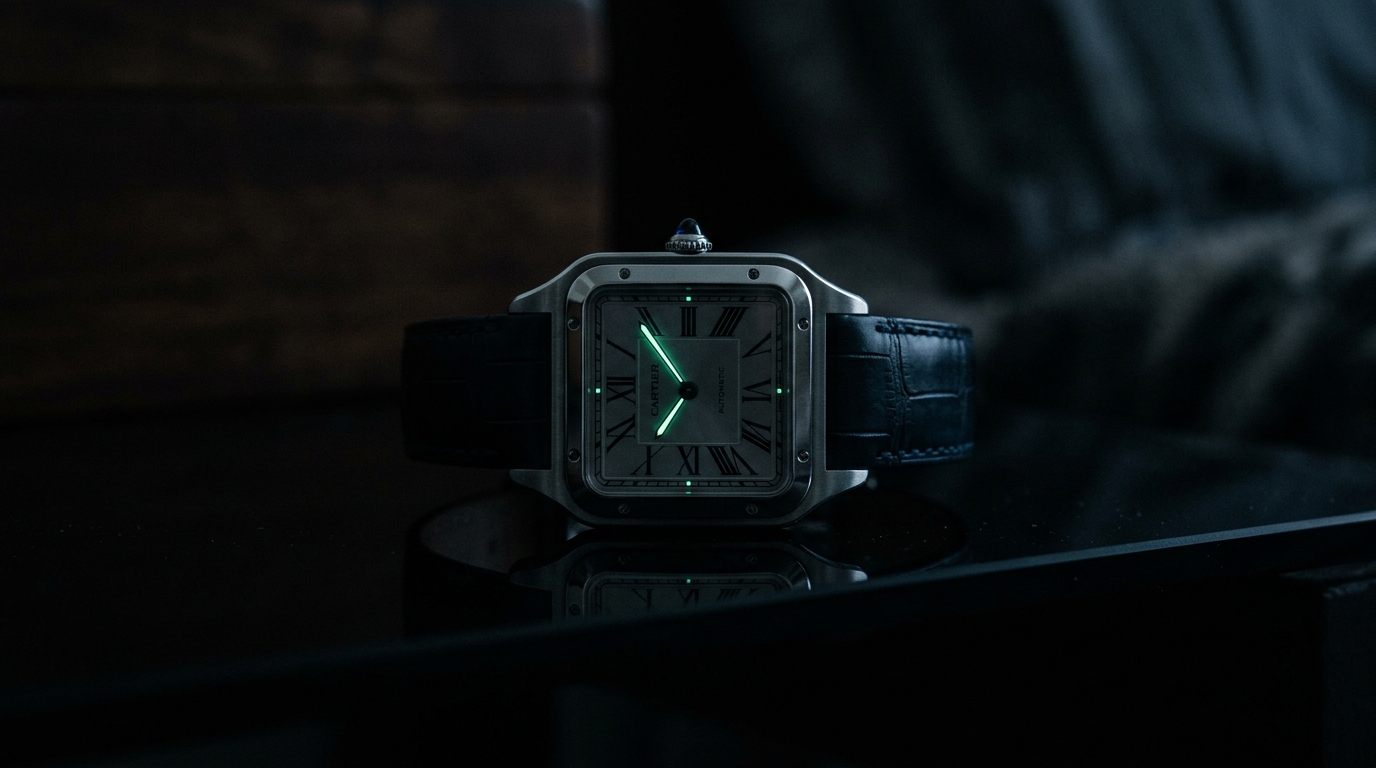
The Santos is the essential early proof. Designed in 1904 for Brazilian aviator Alberto Santos-Dumont and commercialised from 1911, it was not merely an early men’s wristwatch; it was a rectangular, visible, urban object at a time when the pocket watch remained socially dominant. Its exposed screws, square bezel and integrated strap architecture made the watch legible as a designed instrument rather than a miniaturised pocket watch strapped to the wrist. That distinction is still commercially relevant. The modern Santos, relaunched in 2018 with the QuickSwitch strap system and SmartLink bracelet adjustment, succeeds because Cartier did not have to invent a new sports watch. It had a legitimate one in its archive.
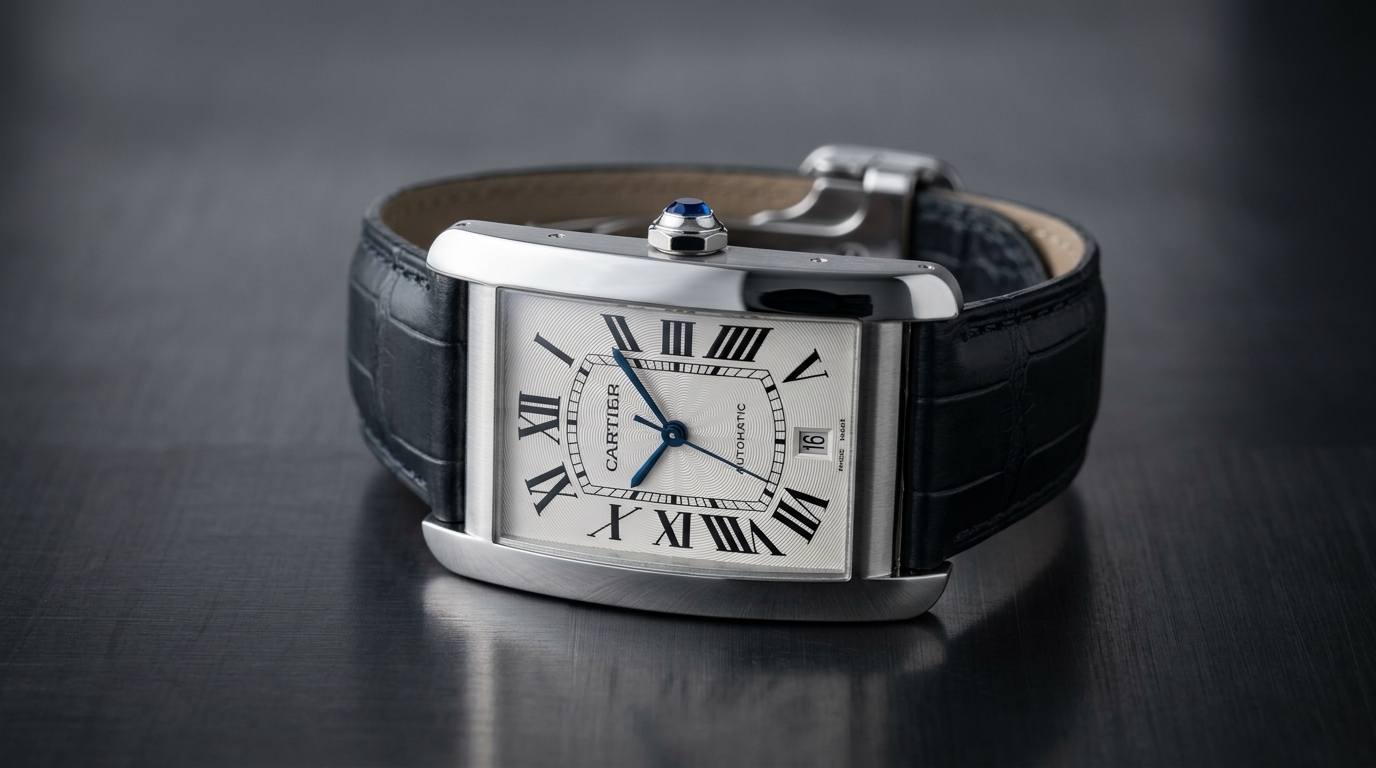
The Tank followed in 1917, with the first examples sold in 1919. Its design is famously associated with the plan view of Renault tanks from the First World War, but the more important point is architectural: the brancards are the case. Cartier did not decorate a round watch; it erased the boundary between case and strap. The Tank Louis Cartier, formalised in 1922, remains the purest expression, while the Tank Cintrée of 1921 and Tank Américaine of 1989 show how much variation the basic idea can tolerate without collapsing into pastiche.
The Misread: Cartier Is Not Weak Because It Used Other People’s Movements
Many collectors still treat Cartier’s historical reliance on external ébauches as a deficiency. That is an anachronistic reading of high-end watchmaking. For much of the twentieth century, the luxury watch industry was built on specialist suppliers. Cartier used movements from firms including Jaeger, LeCoultre, Audemars Piguet, Piaget, Frédéric Piguet and others, often through arrangements such as the European Watch and Clock Company. The maison concentrated on design, casework, dial architecture and client culture. This was not laziness; it was the prevailing system of excellence before vertical integration became a marketing weapon.
The point is especially clear in the vintage market. A London Crash from 1967 does not command exceptional auction results because its movement competes with a Patek Philippe perpetual calendar. It matters because the case is a radical object from the Cartier London era, produced in tiny numbers, with a design language that no other major maison can credibly claim. When a 1967 London Crash sold through Loupe This in 2022 for more than 1.6 million dollars, the result was not a referendum on calibre finishing. It was a market judgement on originality, provenance, scarcity and shape.
This does not mean movements are irrelevant. Rather, Cartier’s hierarchy of value is different. A manually wound Tank Louis with an ultra-thin Piaget-based calibre, a CPCP Tortue monopoussoir with the THA-developed calibre 045MC, or a modern Privé Tank Cintrée are compelling because the movement supports the object rather than hijacking it. Cartier is at its weakest when it forgets this and tries to compete in specification-first categories where other brands have stronger legitimacy. It is at its strongest when the calibre is appropriate, the case is unmistakable and the watch feels inevitable.
Quartz, Must de Cartier and the Discipline of Survival
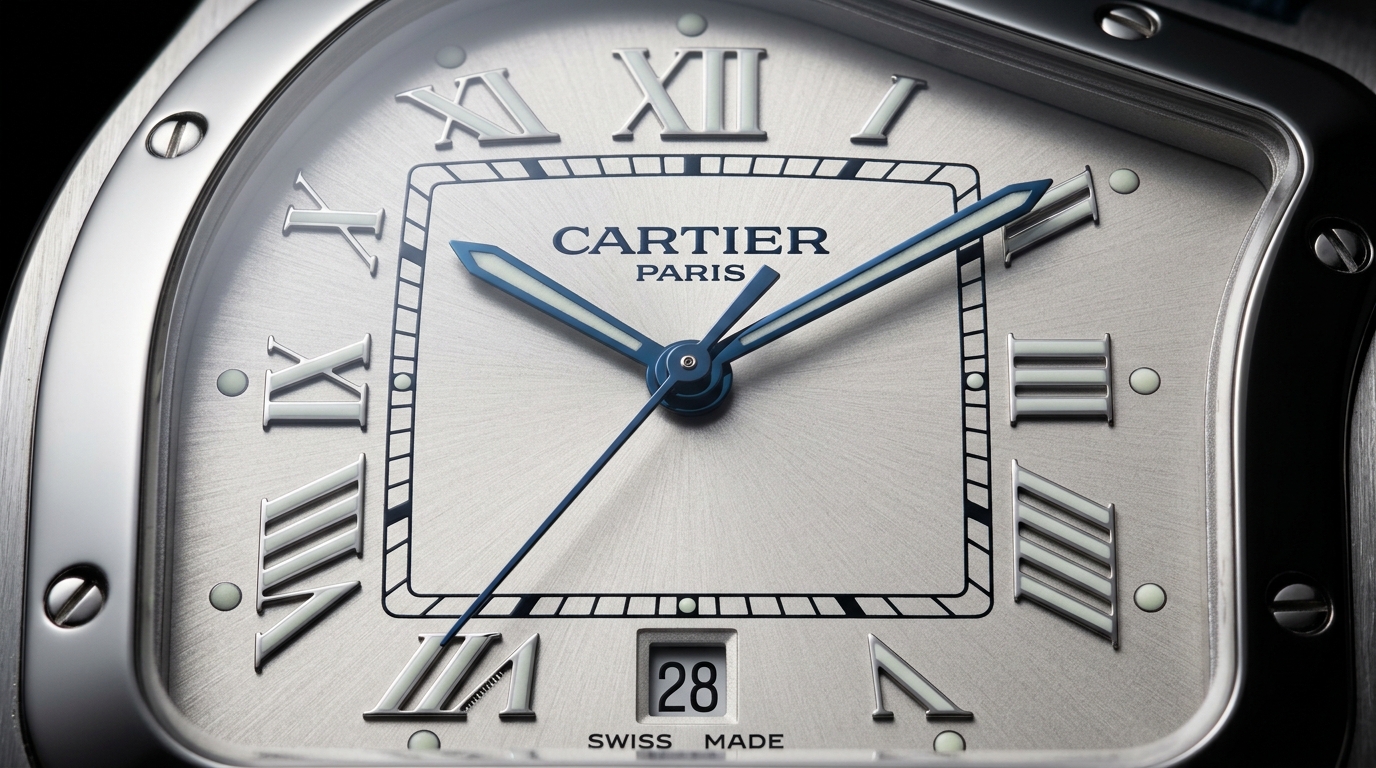
The 1970s could have damaged Cartier more permanently than it did. The maison’s pre-war glamour did not automatically translate into the quartz crisis, and the Cartier branches had been separated by geography and ownership. The reunification process during the 1970s, associated with investors including Robert Hocq and later Alain-Dominique Perrin’s commercial leadership, was critical. Les Must de Cartier, launched in the 1970s, is sometimes dismissed because it broadened access through vermeil cases, quartz movements and licensed luxury goods. That dismissal misses the strategy.
Must de Cartier preserved the recognisability of Cartier design during a period when Swiss mechanical watchmaking was losing industrial confidence. The vermeil Tank Must, often with minimalist lacquer dials, was not haute horlogerie, but it kept the Tank visible on wrists that mattered culturally. It also established an entry architecture that Cartier continues to use, with greater discipline, today. The modern Tank Must, reintroduced in 2021 with quartz, mechanical and SolarBeat variants, is a direct descendant of that survival strategy. It is not the collector’s endpoint, but it is one of the reasons Cartier can recruit younger buyers without distorting the Tank Louis Cartier above it.
Richemont’s eventual role is central. Compagnie Financière Richemont, founded by Johann Rupert in 1988, developed into the parent group of Cartier, Van Cleef & Arpels, IWC, Jaeger-LeCoultre, Panerai, Vacheron Constantin and others. Within that portfolio, Cartier is not simply another watch brand. It is the group’s most powerful hard-luxury engine, combining jewellery, watches and accessories at a scale most pure watchmakers cannot approach. Morgan Stanley and LuxeConsult estimates have placed Cartier as the second-largest Swiss watch brand by turnover behind Rolex, with estimated watch sales around the CHF 3 billion range in recent years. Exact figures are not disclosed, but the direction is unambiguous: Cartier is not a niche design house. It is one of the industry’s largest watch businesses.
CPCP, Fine Watchmaking and the Manufacture Question
The most important modern correction to the “Cartier is not a real watchmaker” argument came in stages. The Collection Privée Cartier Paris, usually abbreviated CPCP, ran from 1998 to 2008 and remains one of the most collector-relevant Cartier programmes. It reissued historic forms such as the Tank à Vis, Tortue, Tank Cintrée, Santos-Dumont and Tonneau with mechanical calibres and restrained Paris-signed dials. The best CPCP watches now look less like nostalgic exercises than a blueprint for how Cartier should treat its archive: limited enough to matter, mechanically credible enough to satisfy, and visually faithful without becoming museum replicas.
After CPCP, Cartier pushed harder into high horology. Its La Chaux-de-Fonds manufacture, opened in the early 2000s, gave the maison industrial depth, and the Fine Watchmaking collection produced serious technical pieces: the Ballon Bleu Flying Tourbillon with Geneva Seal calibre 9452 MC, the Astrotourbillon calibre 9451 MC introduced in 2010, and the Rotonde de Cartier Mysterious Double Tourbillon calibre 9454 MC. These watches proved capability, but not all proved strategic necessity. They were technically legitimate, yet sometimes too eager to answer questions collectors were not asking of Cartier.
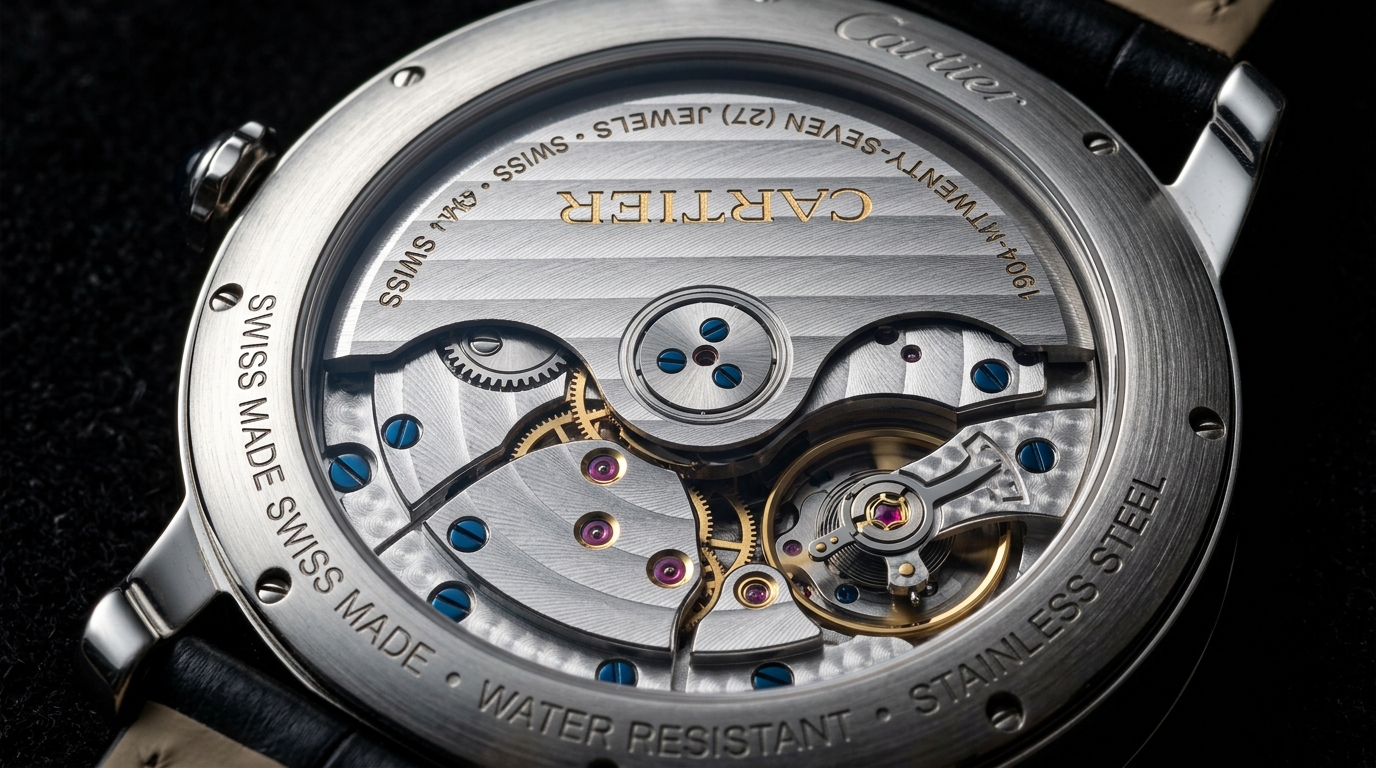
The more consequential calibres were simpler. The 1904 MC automatic, launched in the Calibre de Cartier in 2010, provided a robust in-house base movement with twin barrels and a conventional architecture suitable for broader production. The 1847 MC, introduced later in the Clé de Cartier in 2015, became another workhorse. Neither is romantic in the way a shaped vintage movement can be, but both allowed Cartier to reduce dependence on external supply at a time when Swatch Group’s ETA restrictions and broader industry verticalisation made movement security a strategic priority. Cartier did not need to become Jaeger-LeCoultre. It needed enough autonomy to protect volume, pricing and product planning.
The Modern Portfolio: Where Cartier Is Strongest
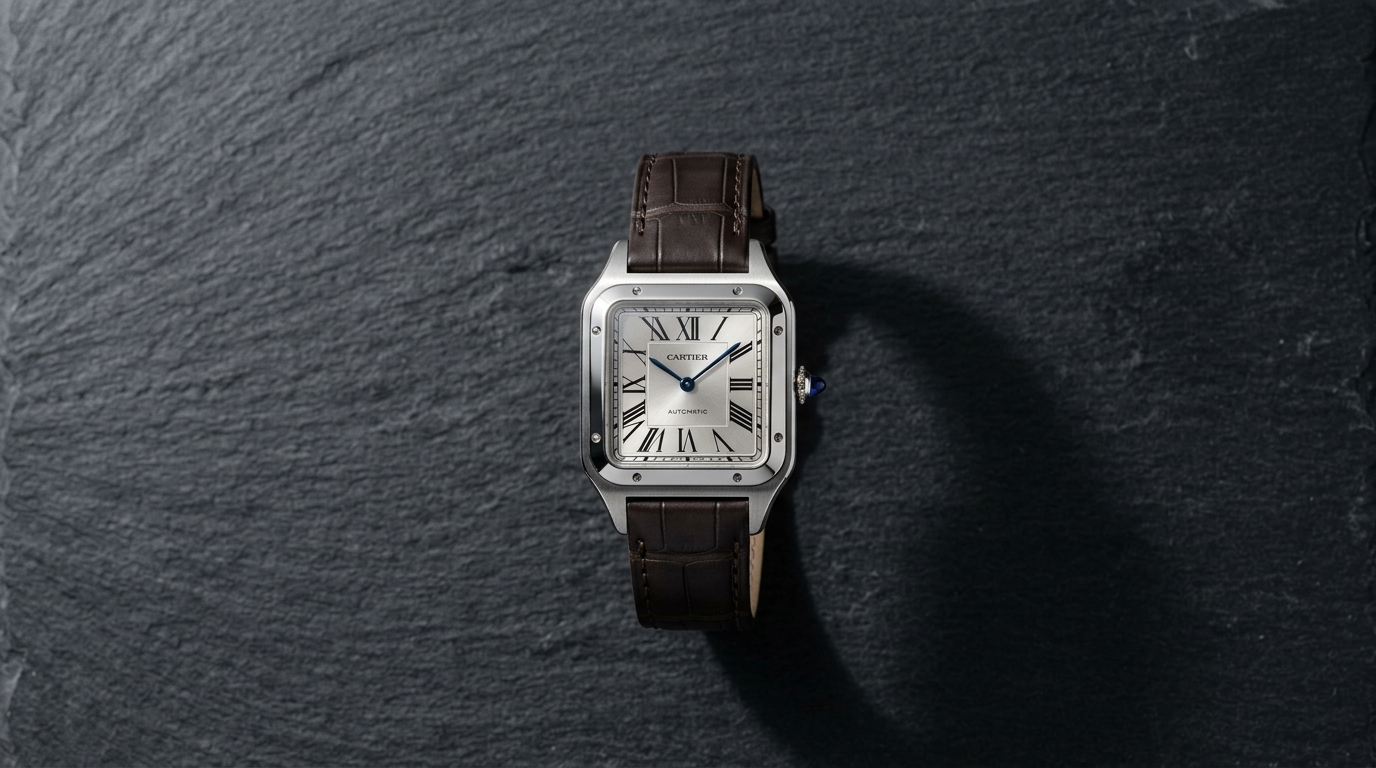
Cartier’s current strength lies in a portfolio that is more coherent than it was fifteen years ago. The Santos line gives the brand a steel bracelet watch with authentic history, not a 1970s integrated-bracelet imitation. The Tank family covers the formal segment from accessible Must models to precious-metal Tank Louis Cartier references with hand-wound calibres. The Panthère, relaunched in 2017, operates as a jewellery-watch hybrid and has been commercially astute precisely because Cartier did not over-mechanise it. The Ballon Bleu, launched in 2007, remains a major volume product, though it is less intellectually interesting than the archival shapes. The Baignoire, particularly the mini and bangle-like executions, has recently shown Cartier’s advantage in women’s watch design, where most Swiss competitors still offer scaled-down versions of men’s watches.
The Privé programme is the collector-facing instrument. By revisiting models such as the Crash, Tank Cintrée, Tonneau, Cloche, Tank Asymétrique and Tank Normale in controlled numbers, Cartier has built a modern scarcity framework without relying on artificial sports-watch waiting-list theatre. The best pieces are not cheap, and some allocations are clearly relationship-driven, but the logic is sound. Cartier has an archive deep enough to support annual shaped-watch revivals, and unlike many heritage reissues, these watches do not require elaborate justification. A Tank Cintrée in yellow gold or platinum is not a retro novelty. It is a continuation of a design from 1921 that still wears more daringly than most contemporary complications.
There are weaknesses. Cartier’s catalogue can still be too broad, and some high-complication pieces feel isolated from the watches that made the brand important. Case sizes have improved after the excesses of the 2000s, but not every line has fully recovered proportional discipline. The brand also benefits from a jewellery clientele less price-sensitive than the core mechanical enthusiast, which can create watches whose pricing feels ambitious relative to movement content. Yet this criticism has limits. A collector who judges a Tank Louis Cartier only by comparing its calibre to a similarly priced independent watch has misunderstood the asset being bought. The value is not only inside the case.
The Secondary Market Has Changed the Conversation
For years Cartier was treated as a safe, elegant purchase rather than a serious collecting field. That is no longer accurate. Vintage London, Paris and New York-signed pieces have drawn sustained attention, especially rare Crash, Pebble, Maxi Oval, Bamboo, Cristallor and early Tank variants. The Cartier Cheich, created for the Paris-Dakar Rally and awarded to winners who achieved a specific consecutive victory condition, sold at Sotheby’s Paris in 2022 for just over €1 million. That result was not about broad brand heat; it was about an object with a story, extreme scarcity and a design language that could only be Cartier.
Modern Cartier has also benefited from a wider correction in collector taste. The market spent much of the 2016–2021 cycle overpaying for steel sports watches from a narrow set of brands. As that trade cooled, shaped dress watches, smaller cases, precious metals and design-led collecting gained credibility. Cartier was positioned perfectly. It offered recognisable icons, strong retail distribution, high cultural visibility and enough auction evidence to make collectors take the category seriously. The fact that Cartier appeals beyond the male enthusiast echo chamber is not a weakness; it is a structural advantage.
Still, selectivity matters. Not every Cartier will become collectible because not every Cartier is scarce, well-proportioned or historically resonant. The strongest long-term candidates tend to fall into clear groups: historically important shapes in precious metals; CPCP references with distinctive dial signatures and mechanical calibres; limited Privé models with faithful proportions; and original vintage pieces from London, Paris or New York with documented provenance and unpolished cases. Mass-production quartz models can be excellent style objects, but they should not be confused with investment-grade Cartier. The brand is powerful, but discrimination remains necessary.
Cartier’s Real Advantage
Cartier’s enduring advantage is that it does not need to win the same argument as Rolex, Patek Philippe, Audemars Piguet or Omega. Rolex owns industrial consistency and the modern professional watch. Patek owns dynastic complicated watchmaking. Audemars Piguet owns the Royal Oak to a degree that is both enviable and strategically risky. Omega owns technical breadth and institutional associations. Cartier owns shaped elegance at scale, with more than a century of evidence behind it.
That position is difficult to copy. A competitor can make a rectangular watch, but it cannot make a Tank from 1917. It can make a surreal case, but it cannot make the London Crash of 1967. It can make a jewellery watch, but it cannot reproduce Cartier’s history with Jeanne Toussaint, the Panthère motif, royal commissions and Place Vendôme culture. The moat is not one feature. It is the accumulation of design authorship, client memory, archival depth, retail power and Richemont-backed execution.
The best way to understand Cartier is not as a jeweller that also makes watches, nor as a manufacture trying to prove it belongs. It is a watchmaker whose most important complications are proportion, recognisability and restraint. When Cartier respects those disciplines, it produces watches with a permanence many technically impressive competitors never achieve. When it strays into specification theatre, it becomes less convincing. The strategic lesson is clear: Cartier’s authority comes from knowing that in watchmaking, shape can be as proprietary as a movement, and in Cartier’s case, often more valuable.