Citizen Watches: Why Japan’s Most Industrial Watchmaker Is Still Misread by Collectors
Citizen Watches: Why Japan’s Most Industrial Watchmaker Is Still Misread by Collectors
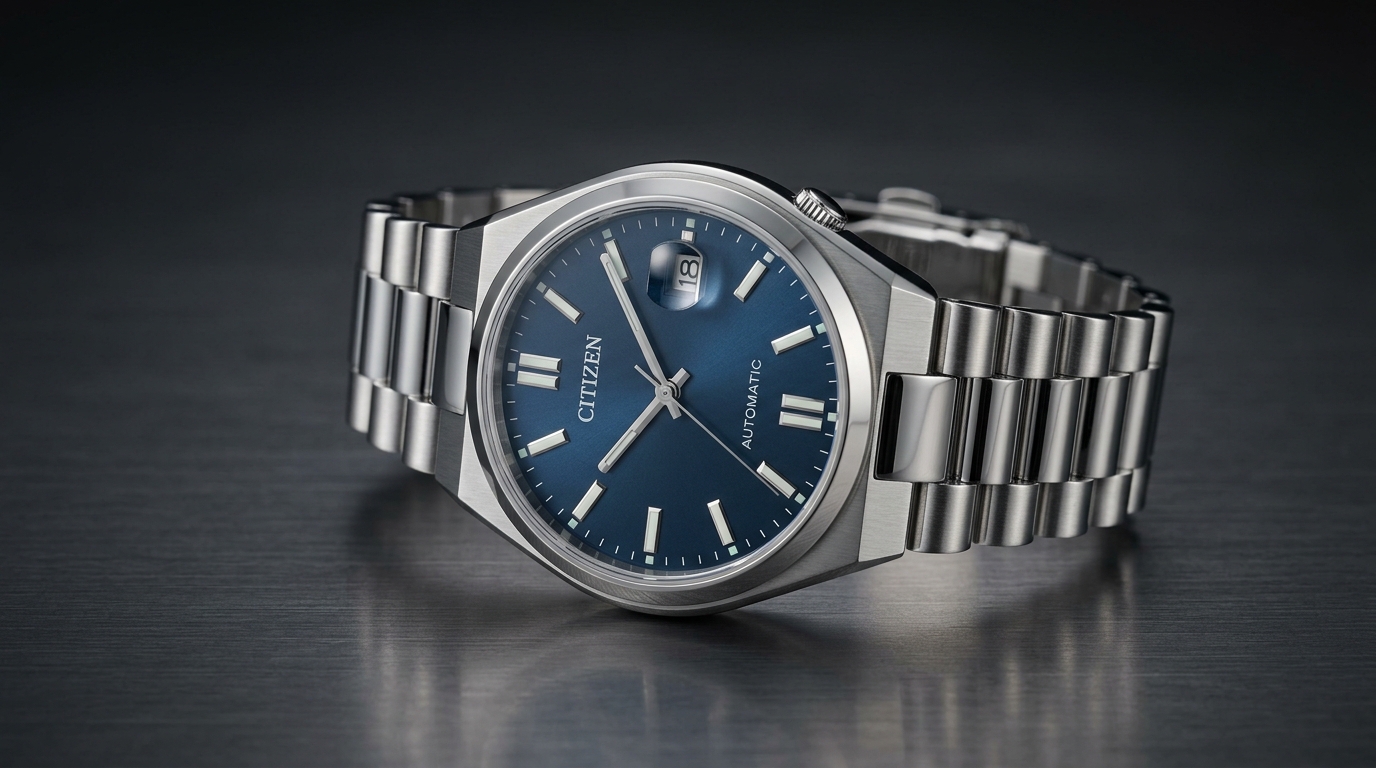
Citizen is not difficult to understand because its watches are obscure. It is difficult to understand because the company has spent a century making itself too useful. The same name appears on inexpensive department-store Eco-Drive models, radio-controlled world timers, professional dive watches, high-accuracy quartz pieces, Miyota movements inside microbrands, Swiss mechanical brands owned through acquisitions, and, increasingly, serious Japanese-made luxury watches. That breadth has made Citizen commercially formidable and editorially inconvenient.
Collectors tend to reward coherence. Rolex has the Oyster case and controlled scarcity. Omega has space, sports timing, and Swatch Group industrial depth. Seiko has Grand Seiko as a clean ladder into high-end Japanese watchmaking. Citizen has something less romantic but arguably more strategically important: a vertically integrated competence in power generation, quartz regulation, mass production, and movement supply. The result is a brand whose best watches are often better than its public image, and whose public image is weakened by the sheer volume of products carrying the same logo.
The central point is this: Citizen is not merely Seiko’s quieter rival. It is a different kind of watch company, one that has repeatedly treated the wristwatch as an energy, precision, and manufacturing problem before treating it as a luxury object. That instinct explains both its greatest achievements and its most persistent weaknesses.
From Tokyo Pocket Watch To Industrial Watch Group
The Citizen story begins before the modern company existed. In 1924, the Shokosha Watch Research Institute produced a pocket watch named “Citizen,” reportedly with the encouragement of Tokyo mayor Shinpei Goto, who wanted a watch accessible to ordinary citizens rather than an imported luxury. Citizen Watch Co. was formally established in 1930, and the name has always carried that democratic implication. It is not an aristocratic brand name, and Citizen has rarely behaved like one.
By the post-war decades, Citizen became one of Japan’s core watch manufacturers alongside Seiko and Orient. It developed domestic manufacturing capacity, exported aggressively, and competed in the same technological arms race that turned Japanese watchmaking from a Swiss imitator into a global force. In 1956 Citizen introduced the Parashock, its shock-resistant watch, and in 1959 the Parawater, one of Japan’s early water-resistant wristwatches. These were not marketing flourishes; they were signs of a company building credibility through functional engineering at scale.
The decisive shift came with electronics. Citizen launched the Crystron quartz watch in 1973, entering the quartz era at a moment when Swiss mechanical watchmaking was being structurally undermined. But Citizen’s more distinctive contribution came in 1976 with the Crystron Solar Cell, an early light-powered analog quartz watch. That was the foundation of Eco-Drive, the technology that would become Citizen’s defining platform after the name was introduced in the 1990s. Where much of the industry treated quartz as cheaper timekeeping, Citizen treated it as a system: energy capture, energy storage, accuracy, and low-maintenance ownership.
Eco-Drive Is Citizen’s Core Asset, Not A Feature
Eco-Drive is too often described as “solar,” which understates the achievement. The system converts light through a photovoltaic cell under the dial, stores energy in a rechargeable cell, and can run for months in darkness depending on the calibre. Citizen has used it across simple three-hand watches, perpetual calendars, satellite-wave models, professional divers, and high-accuracy quartz references. The strategic value is obvious: it removes the most common consumer complaint about quartz watches, the battery change, without asking the customer to accept the rate variation and servicing costs of a mechanical movement.
This is where Citizen’s positioning becomes unusual. A Rolex Submariner is a luxury object first and a timing instrument second. A Citizen Promaster Eco-Drive diver is much closer to an appliance in the best sense: robust, legible, relatively inexpensive to run, and designed to function without ritual. Enthusiasts sometimes treat that as a limitation. In the broader watch market, it is a strength.
Citizen’s Eco-Drive catalogue is admittedly uneven. Many models have crowded dials, oversized cases, and reference naming that seems designed for inventory systems rather than collectors. Yet the underlying technology remains one of the most rational platforms in modern watchmaking. It also gives Citizen a more defensible identity than brands selling generic automatic watches with outsourced calibres while leaning on heritage they barely own.
The Promaster Line Shows Citizen At Its Most Honest
If there is a single collection where Citizen’s virtues are easiest to see, it is Promaster. The Promaster name dates to 1989, but its roots include the 1985 Aqualand, reference C0023, the first watch with an electronic depth gauge. That model, recognizable by its left-side sensor module, was not elegant and did not pretend to be. It was a professional diving instrument at a time when digital and analog technologies were converging in practical tools.
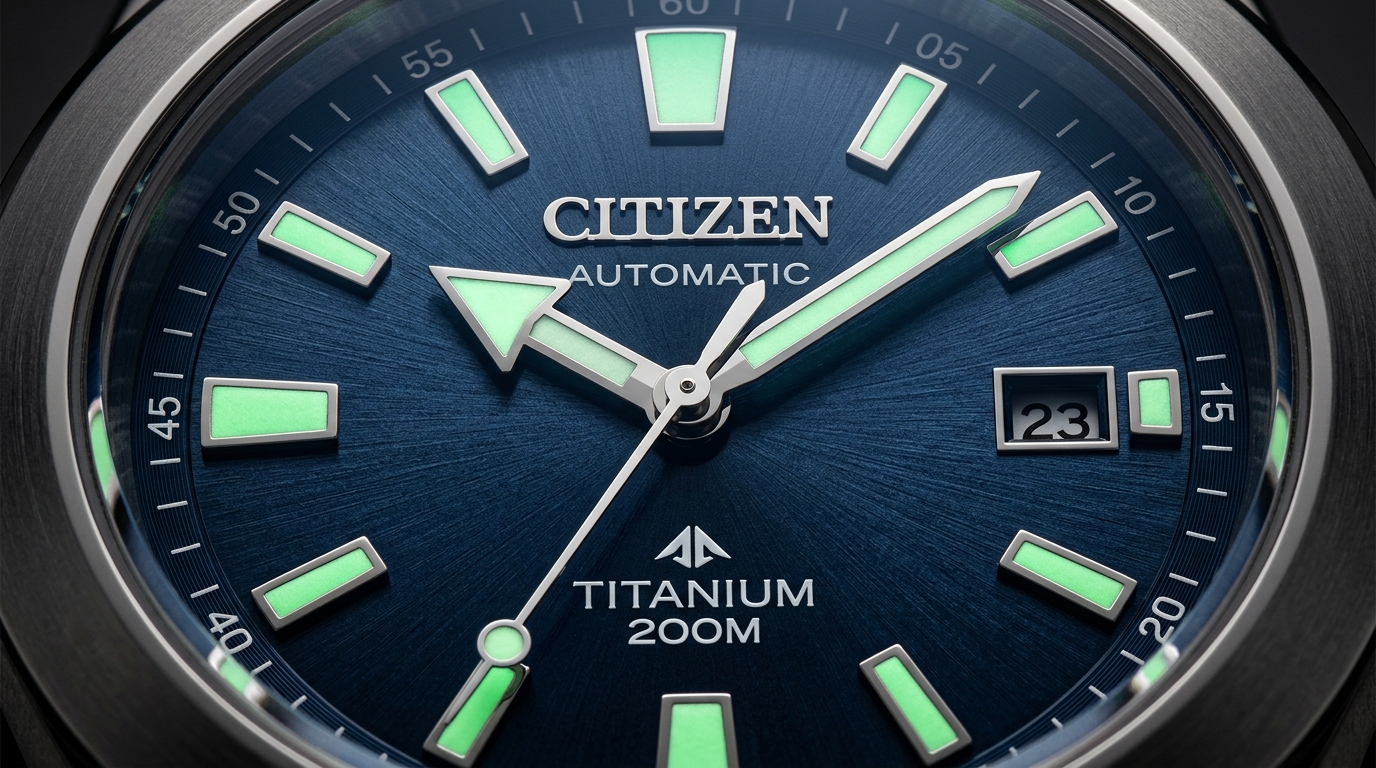
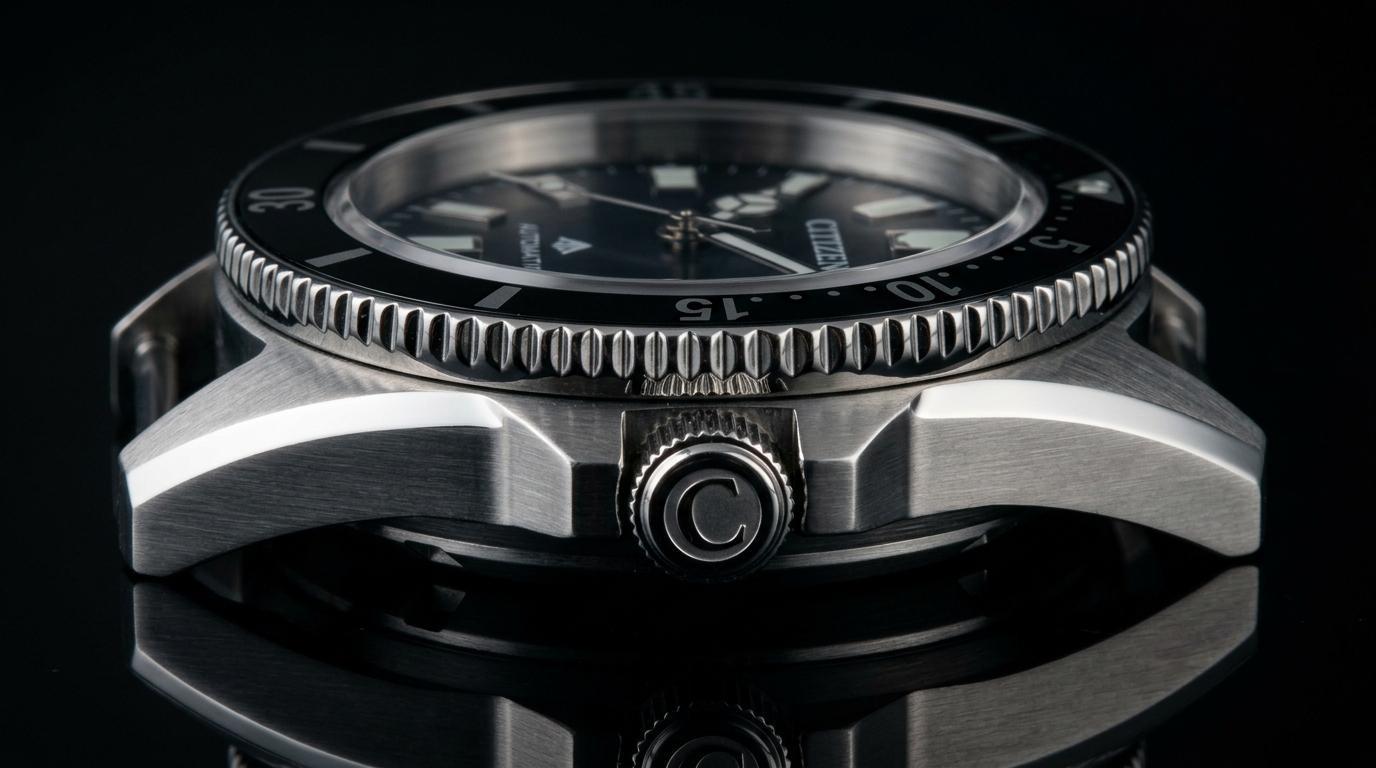
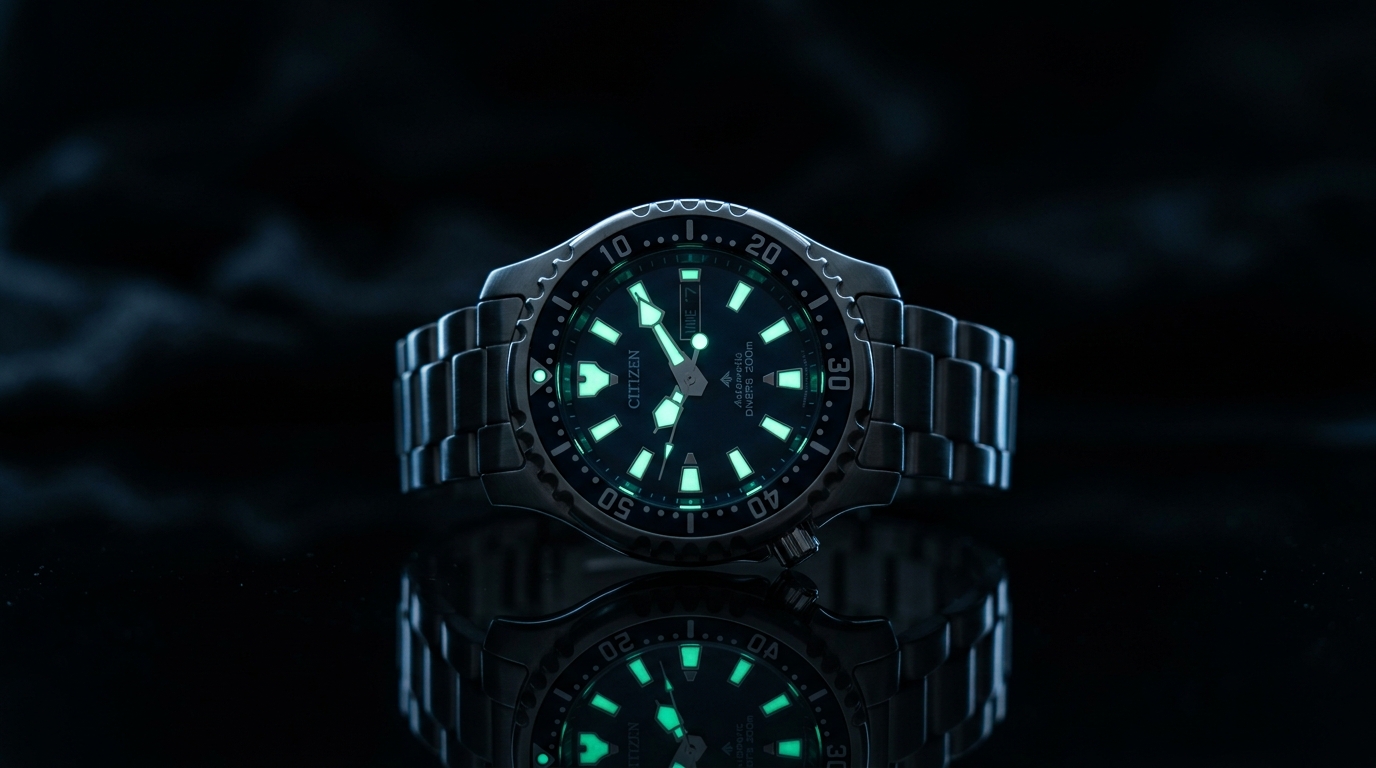
Modern Promaster models continue that logic. The BN0150 and BN0151 Eco-Drive divers, for example, are ISO-compliant 200-metre watches powered by the E168 calibre. They are not finely finished objects, but they are capable, affordable, and unusually low-maintenance. The “Fugu” automatic divers, associated with the NY004 series originally introduced in the late 1990s, occupy the mechanical side of the same argument: asymmetric crown at 8 o’clock, strong lume, accessible pricing, and a design with a legitimate following rather than a fabricated backstory.
Citizen’s professional credibility is strongest when it resists luxury mimicry. A Promaster Skyhawk or Navihawk with radio control, world time, chronograph functions, and Eco-Drive power can be visually excessive, but the excess is usually functional rather than decorative. The brand’s problem is not capability. It is restraint. Citizen frequently has the technology to make a watch more convincing than the design department allows.
The Citizen And The Problem Of Invisible Excellence
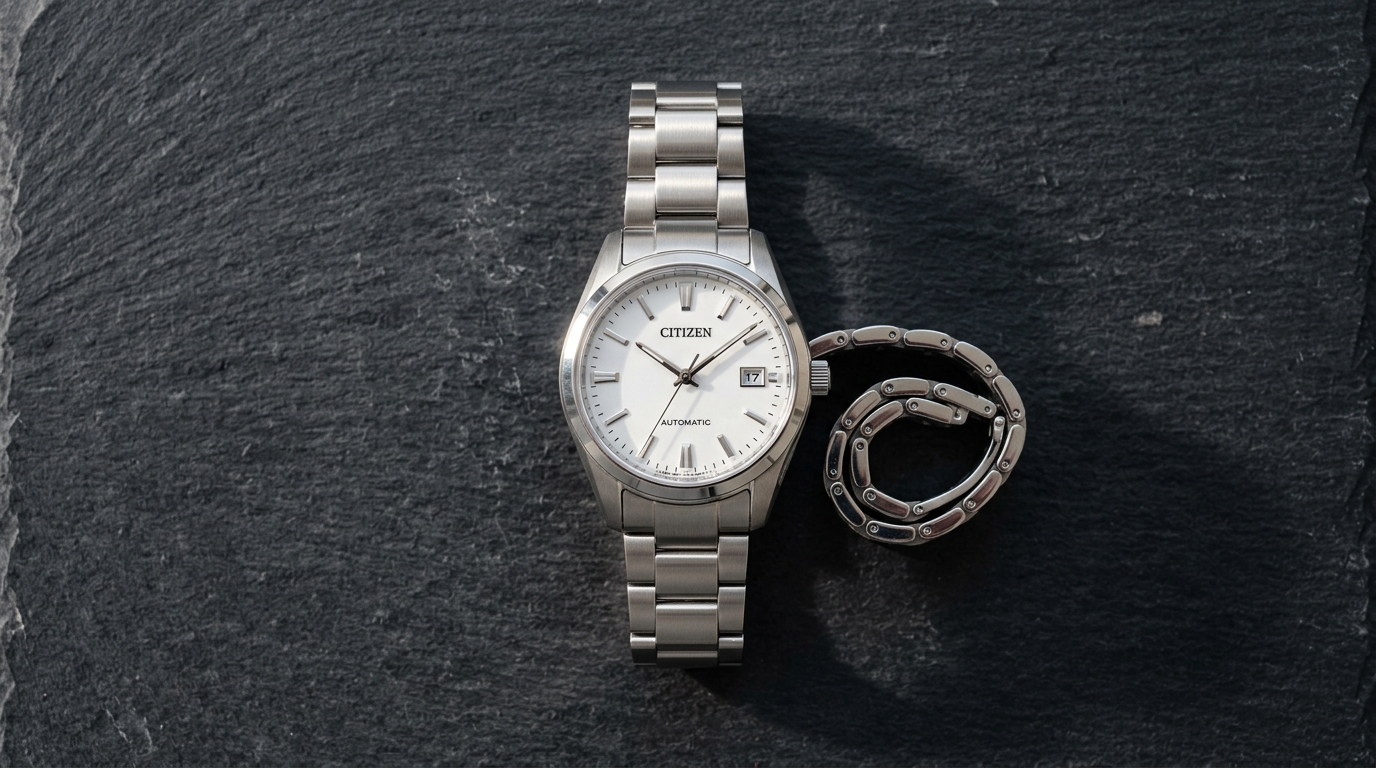
The most important Citizen watches for collectors are not necessarily the most visible ones. In Japan, “The Citizen” has long represented the company’s upper tier, particularly in high-accuracy quartz and refined daily watches. Calibre A060, used in models such as the AQ4020 and AQ4091 families, is rated to ±5 seconds per year, includes a perpetual calendar, and is typically paired with excellent case and dial finishing. These watches are often made in titanium with Citizen’s Duratect surface hardening, a genuinely useful treatment in daily wear.
The difficulty is that Citizen has never made this tier globally intelligible in the way Seiko did with Grand Seiko. Grand Seiko became a separate brand in 2017, with a clear narrative around finishing, Spring Drive, high-beat mechanical movements, and Japanese aesthetics. Citizen has “The Citizen,” Campanola, Series 8, and limited high-accuracy pieces, but the architecture is less legible. The watches can be excellent; the hierarchy is harder to read.
Calibre 0100 demonstrates both the brilliance and the communication problem. Introduced in 2019, the Eco-Drive Calibre 0100 was rated to ±1 second per year without relying on radio or satellite correction. That specification is not a novelty. It is one of the most significant accuracy achievements in a commercially produced wristwatch. The movement uses an AT-cut quartz oscillator vibrating at 8.4 MHz, far higher than the common 32,768 Hz tuning-fork quartz standard. Yet outside specialist circles, the Calibre 0100 did not alter Citizen’s reputation in proportion to its technical importance.
That is the Citizen paradox in one watch: a stronger technical claim than many luxury brands can make, attached to a name the market still associates with accessible retail.
Miyota: The Movement Business Collectors Underestimate
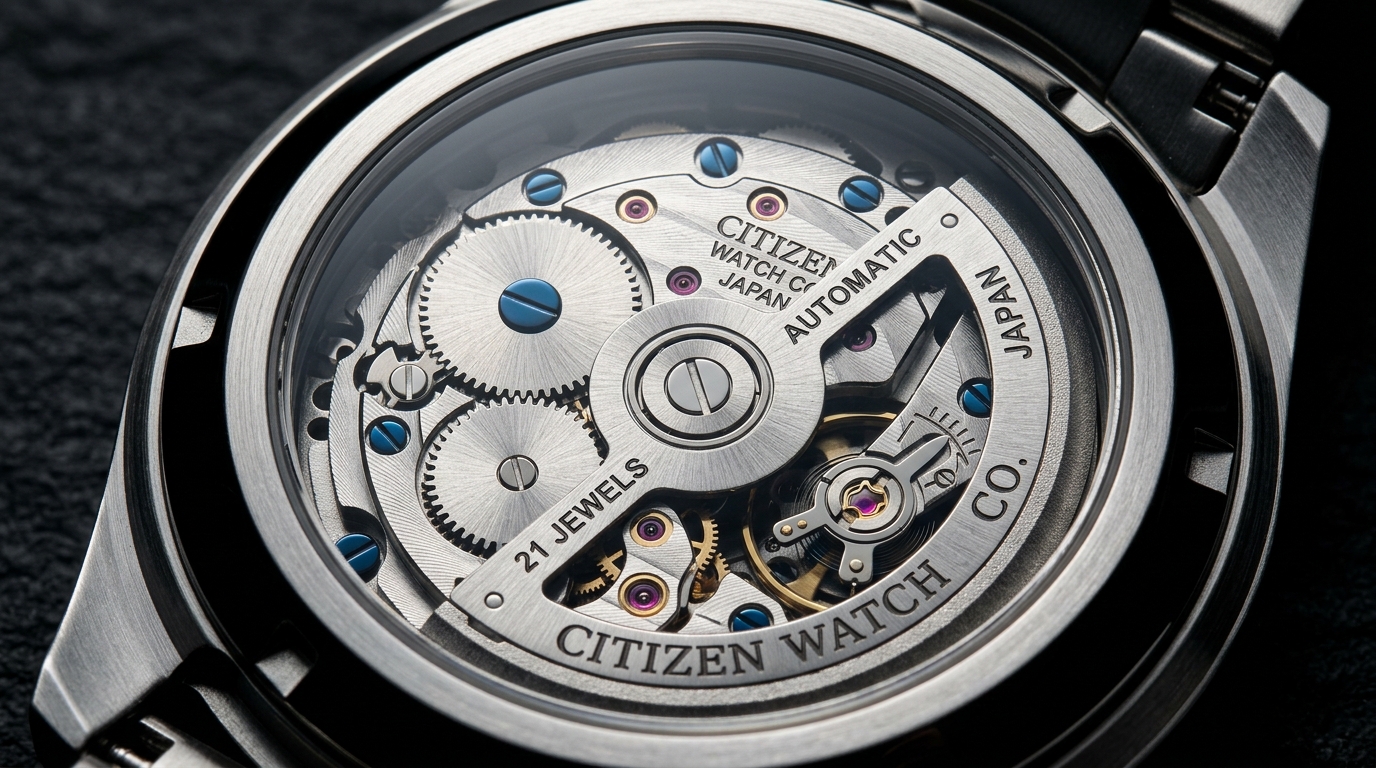
No serious analysis of Citizen can ignore Miyota. Citizen established Miyota as its movement-manufacturing arm, and Miyota calibres have become fundamental to the independent and microbrand segments. The calibre 8215, introduced in 1977, is a durable 21-jewel automatic movement that powered countless affordable mechanical watches, including many outside Citizen’s own catalogue. Its older versions lacked hacking seconds and could feel agricultural compared with Swiss alternatives, but its importance lies in reliability, availability, and cost control.
The more consequential modern movement is the Miyota 9015, launched in 2009. With 28,800 vibrations per hour, hacking, hand-winding, and a thin profile of roughly 3.9 mm, it gave smaller brands an alternative to ETA’s 2824 architecture at a time when Swatch Group was restricting external movement supply. The 9015 is not as refined in winding feel as higher-grade Swiss movements, and its unidirectional rotor can be audibly active, but it helped reshape the entry-level mechanical market.
Citizen’s influence therefore extends beyond watches signed Citizen. Many enthusiasts who think they do not own a Citizen product may own one at the movement level. This matters strategically. Rolex controls prestige through scarcity and vertical integration. Citizen controls relevance through component supply and industrial reach. Those are different forms of power, and the latter is easier to overlook because it rarely appears in auction headlines.
Swiss Acquisitions And Mechanical Ambition
Citizen’s mechanical ambitions became more complex through acquisition. In 2008, Citizen acquired Bulova, gaining a historically American brand with strong name recognition and technological assets, including the Precisionist high-frequency quartz platform. In 2012, Citizen acquired Prothor Holding, which included Manufacture La Joux-Perret and Arnold & Son. In 2016, it acquired the Frédérique Constant Group, including Frédérique Constant, Alpina, and Ateliers deMonaco.
These purchases make Citizen one of the more interesting hybrid groups in watchmaking: Japanese quartz and mass-manufacturing depth on one side, Swiss mechanical and brand assets on the other. The strategic logic is clear. Citizen could participate in the Swiss mechanical market without forcing the Citizen name alone to carry that burden. Frédérique Constant gave the group accessible Swiss luxury and in-house movement legitimacy; Alpina gave it sport-watch heritage; La Joux-Perret brought movement development and production capability.
The relationship became visible inside Citizen-branded watches with Calibre 0200, introduced in 2021. Developed with La Joux-Perret, the automatic movement runs at 28,800 vibrations per hour, has 26 jewels, a free-sprung balance, and a stated accuracy of -3/+5 seconds per day. It appeared in the Series 8 and related higher-end Citizen mechanical pieces, signalling that Citizen no longer intended to leave serious mechanical watchmaking entirely to its Swiss subsidiaries.
That said, Citizen’s challenge in mechanical watches is not competence but justification. A high-end quartz Citizen has a clear reason to exist. A mechanical Citizen must explain why it should be chosen over Grand Seiko, Tudor, Longines, Oris, or even Citizen-owned Frédérique Constant. Calibre 0200 is credible, but credibility is only the entry ticket. The product line needs sharper identity and fewer half-measures.
Design: The Brand’s Most Persistent Weakness
Citizen’s recurring weakness is not movement technology. It is visual discipline. The company has produced strong designs: the Aqualand, the NY004 diver, certain Promaster Tough models, the AQ4091 washi-dial “The Citizen” references, and the Calibre 0100 pieces all have legitimate character. But across the broader catalogue, Citizen often confuses feature density with value. Some world timers and chronographs carry so much text, subdial information, and case detailing that the technical achievement becomes harder to appreciate.
This is partly a mass-market problem. Citizen sells globally across department stores, jewellers, online platforms, and regional catalogues. A watch that looks overdesigned to a collector may read as feature-rich to a casual buyer. Still, the strategy has costs. Seiko also suffers from catalogue sprawl, but it benefits from clearer enthusiast signposts: Prospex, Presage, Astron, and Grand Seiko each communicate a reasonably distinct proposition. Citizen’s collection architecture is less settled, and its best watches are too often hidden among models that dilute the message.
The brand has made progress. Series 8, revived as a contemporary mechanical line, shows more confidence in integrated-bracelet sports-watch design without simply copying the Royal Oak or Nautilus template. The best “The Citizen” references show restraint, especially in titanium cases with textured dials and high-accuracy Eco-Drive calibres. But Citizen still needs stronger global curation. The watches are there. The editorial line is not always visible.
Citizen Versus Seiko: The Wrong Comparison, But An Unavoidable One
Citizen will always be compared with Seiko because both are Japanese, both are vertically integrated, both make watches from entry-level to high-end, and both helped reshape global watchmaking through quartz. Yet the comparison can obscure more than it reveals. Seiko is a culture of calibres and cases, with romantic gravity around mechanical watchmaking, Grand Seiko finishing, and historical references such as the 62MAS, the 6139 chronograph, and the 44GS grammar of design. Citizen is a culture of systems: light power, radio control, satellite synchronization, high-accuracy quartz, and industrial movement supply.
That distinction explains why Citizen is less celebrated by mechanical purists. Its major achievements are often invisible during ownership. A watch that stays accurate to seconds per year, charges from ambient light, and avoids servicing drama does not create the same emotional ritual as winding a hand-finished movement. But from an engineering and consumer-value perspective, that invisibility is precisely the point.
The market has rewarded Seiko’s storytelling more effectively. Grand Seiko’s global separation gave collectors a premium destination. Citizen has not yet created an equivalent bridge between its accessible watches and its best horology. The result is an undervaluation at the top end and a lack of aspiration in the middle. This is not fatal, but it is the main strategic gap.
What Collectors Should Actually Buy
The smartest Citizen purchases depend on intent. For a practical daily watch, a Promaster Eco-Drive diver such as the BN0150 or BN0151 remains difficult to argue against. It offers proper specification, credible dive-watch lineage, and minimal ownership friction. For mechanical interest at accessible pricing, an NY004-series automatic diver is more characterful than many generic entry-level alternatives, particularly because its crown placement and long production history give it an identity of its own.
For a higher-level Citizen, “The Citizen” models with Calibre A060 deserve serious attention. References vary by market, but the formula is consistent: high-accuracy Eco-Drive quartz, perpetual calendar, strong finishing, and often hardened titanium. These are not substitutes for mechanical luxury watches; they are better understood as precision instruments with luxury-grade execution. That makes them more intellectually coherent than many automatic watches sold at similar prices.
The Calibre 0100 watches are collector pieces for a narrower audience. Their ±1 second per year performance is historically significant, but prices and styling limit mainstream appeal. Still, if the collector’s interest is horological achievement rather than social recognition, Calibre 0100 belongs in the conversation with the most important quartz wristwatches ever commercialized.
Series 8 is the line to watch rather than the line to buy indiscriminately. The design language is improving, and calibres such as 0950 and 9051 give Citizen a modern automatic platform in integrated and sporty cases. But the competition is severe in that price band, and Citizen must continue refining proportions, bracelets, and finishing if it wants to defeat established mechanical rivals rather than merely undercut them.
The Verdict: Citizen’s Future Depends On Editing, Not Engineering
Citizen already has the engineering. It has Eco-Drive, high-accuracy quartz, proven divers, Miyota movement scale, Swiss subsidiaries, and credible mechanical development through La Joux-Perret. Few watch groups can claim that combination. The weakness is not capability but hierarchy: too many products, too many messages, and too little global clarity around the watches that prove what Citizen can really do.
The brand’s opportunity is unusually clear. Citizen should lean harder into precision, autonomy, and Japanese industrial craft rather than chasing generic luxury codes. It should make “The Citizen” easier to understand globally, protect Promaster from unnecessary visual clutter, and give Series 8 a more disciplined mechanical identity. It does not need to become Grand Seiko. In fact, it should not try. Citizen’s strongest argument is different: modern watchmaking as durable, accurate, self-sufficient technology.
That may not satisfy collectors who equate legitimacy with mechanical nostalgia. But the watch industry is larger than nostalgia, and Citizen has spent decades proving it. Its best watches are not charming because they are old-fashioned. They are important because they solve real problems with unusual consistency. In a market often preoccupied with scarcity, celebrity, and inherited prestige, Citizen remains one of the few major brands whose deepest value is still found in the machinery of usefulness.