Longines: The Most Important Watch Brand That Still Refuses to Behave Like a Luxury Brand
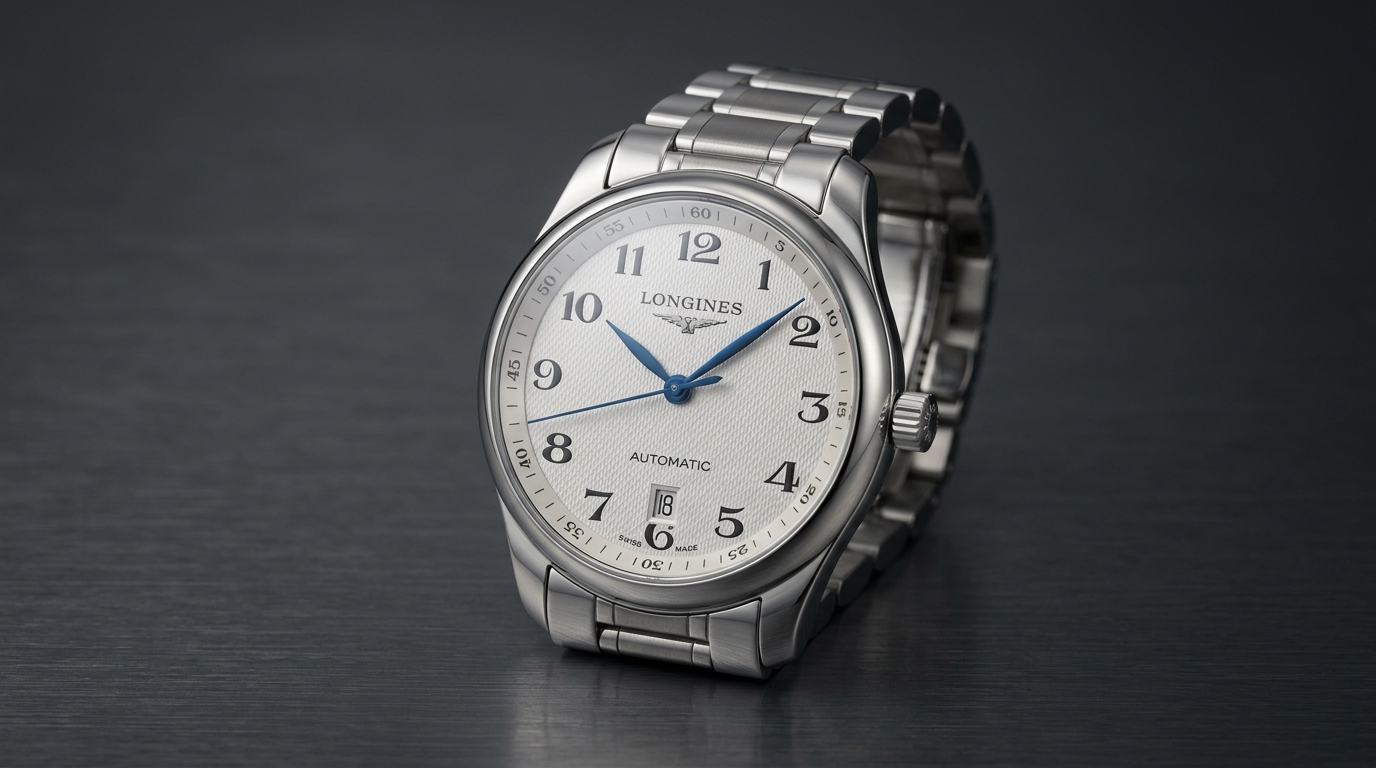
Longines: The Most Important Watch Brand That Still Refuses to Behave Like a Luxury Brand
Longines occupies one of the strangest positions in modern watchmaking: it has more authentic history than many brands priced far above it, better industrial discipline than most independents can dream of, and a catalogue dense enough to satisfy first-time buyers and experienced collectors alike. Yet it is not treated as a prestige acquisition in the way Rolex, Omega, Cartier, or even Tudor are. That is not an accident. It is the result of strategy, ownership, and a deliberate ceiling imposed by Swatch Group. Longines is not trying to beat Omega. It is designed to make almost everything below Omega look underdeveloped.
That makes Longines especially interesting. The brand’s best watches are not merely “good for the money”; they are evidence of how effectively a major group can convert archives, industrial scale, ETA movement access, and restrained pricing into an unusually persuasive proposition. The problem is that Longines also carries the burden of breadth. Its catalogue is too large, its naming can be uneven, and its modern identity is sometimes diluted by watches that feel engineered for retail coverage rather than conviction. But when Longines is right — the Spirit Zulu Time, the Legend Diver, the Heritage Classic Sector, the Ultra-Chron, the more focused Conquest models — it is one of the few Swiss brands whose substance still outruns its status.
The Archive Is Not a Costume Department
Longines was founded in Saint-Imier in 1832 by Auguste Agassiz, and industrialised under Ernest Francillon, who opened the Longines factory in 1867. The winged hourglass trademark, registered in 1889, remains one of the oldest active watch trademarks still in use. These facts matter because Longines is not borrowing legitimacy from a recently constructed backstory. It actually made the things modern enthusiasts now associate with serious watchmaking: observatory chronometers, aviation instruments, high-frequency movements, and important chronographs.
The vintage record is unusually deep. The calibre 13.33Z, introduced in 1913, was one of the earliest wristwatch chronograph movements. The 13ZN, launched in 1936, remains one of the most admired manually wound chronograph calibres ever produced, particularly in flyback form. The 30CH followed in 1947 and continued Longines’ reputation for technically sophisticated chronographs. In aviation, the Hour Angle watch developed after Charles Lindbergh’s 1927 transatlantic flight, with roots in the navigational work of Philip Van Horn Weems, gave the brand a functional aviation story that is far stronger than most contemporary pilot-watch theatre. In 1967, Longines launched the Ultra-Chron, using a 36,000 vibrations-per-hour high-beat movement, including the calibre 431 family, at a time when precision was not just a marketing word but a competitive engineering objective.
This is why Longines’ heritage watches tend to feel more convincing than most retro exercises. The brand does not need to invent old military contracts or overstate obscure prototypes. It has an archive with measurable weight. The question is not whether Longines has history. The question is how selectively it should use it.
The Swatch Group Ceiling
Any serious reading of modern Longines must start with ownership. Longines sits within Swatch Group, whose contemporary structure emerged from the rescue and consolidation of Swiss watchmaking in the 1980s, after the merger of ASUAG and SSIH into SMH in 1983 and the later renaming to Swatch Group in 1998. Within that hierarchy, Longines has a defined role: above Tissot, Mido, Hamilton, Certina, and Rado in broad prestige and retail price, but below Omega in technology messaging, status, and margin. That position is both a privilege and a constraint.
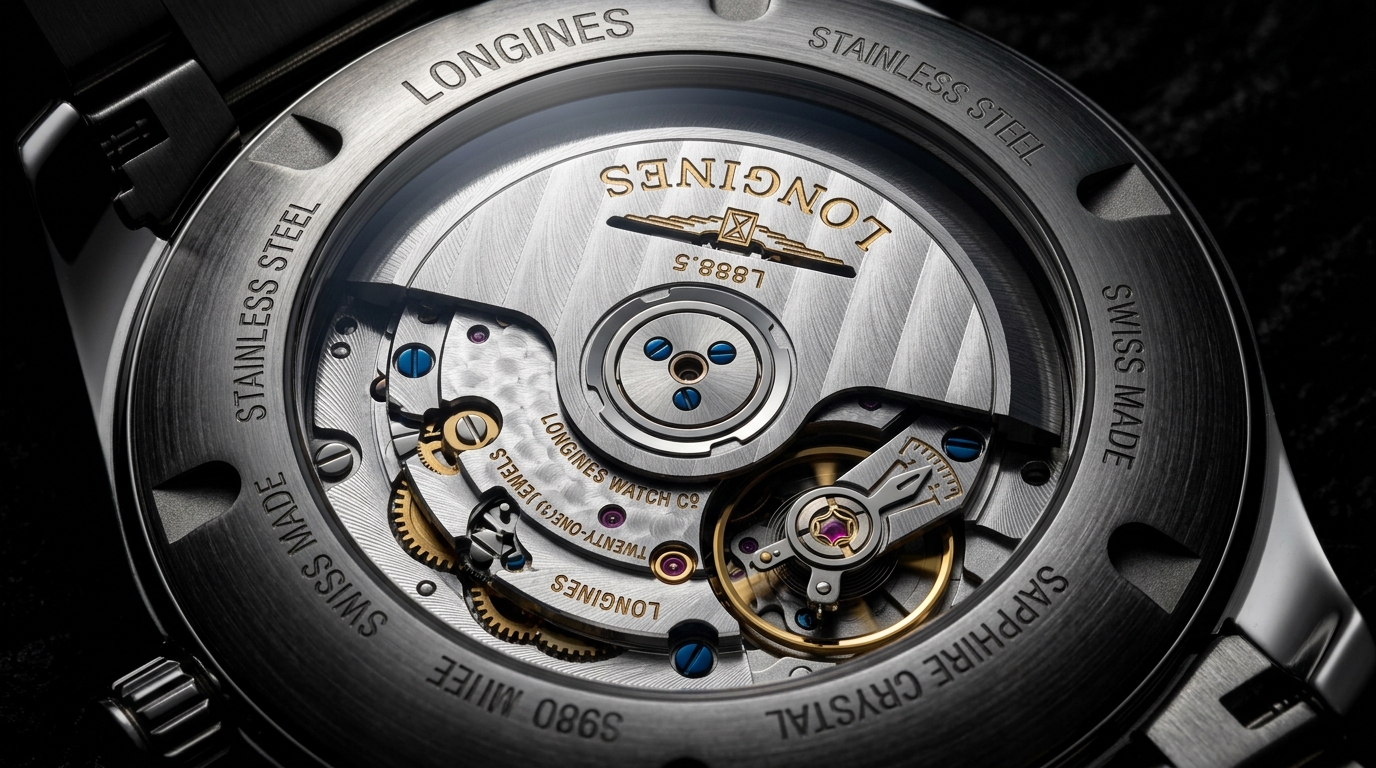
The privilege is obvious. Longines receives access to movements from ETA that outside brands cannot easily replicate at the same cost or scale. Its modern calibres are not generic off-the-shelf afterthoughts. The L888, based on ETA’s A31 family and derived from the 2892 architecture, typically runs at 25,200 vibrations per hour and offers around 72 hours of power reserve. The L688 column-wheel chronograph movement, derived from ETA’s A08.L01 platform, gives Longines a technically credible chronograph at prices where many competitors still rely on unmodified cam-actuated Sellita or Valjoux-style solutions. The L844 GMT calibre in the Spirit Zulu Time family brings COSC certification, silicon balance spring technology, and practical travel functionality into a market segment where “in-house” is often either inflated or absent.
The constraint is just as important. Longines cannot be allowed to move too far upward, because Omega occupies that oxygen. Omega sells Co-Axial escapements, METAS Master Chronometer certification, ceramic cases, brand-controlled prestige, and a far more aggressive association with NASA, James Bond, and Olympic timing. Longines offers a quieter proposition: high competence, legitimate archives, and comparatively calm pricing. It is the Swatch Group’s great pressure valve. If Tudor becomes too expensive, if TAG Heuer feels too uneven, if entry-level luxury brands overreach, Longines is there with a watch that often makes more sense.
The Spirit Collection: Longines Learns Modern Discipline
The Spirit line, introduced in 2020, was one of the most important Longines launches of the last decade because it did not depend on a one-to-one vintage reissue. Instead, it translated the brand’s aviation associations into modern watches with applied numerals, diamond hour markers on the dial, COSC-certified movements, and cases that were contemporary without being anonymous. Early 40 mm and 42 mm models were slightly earnest, and the five-star dial motif divided opinion, but the execution was too coherent to dismiss.
The strongest expression arrived with the Spirit Zulu Time in 2022. The first models, including references such as the 42 mm L3.812.4.63.6 with green bezel and gilt-tone dial accents, used the L844.4 calibre with a true local-jumping hour hand, 72-hour power reserve, silicon balance spring, and COSC certification. That is not decorative specification. It places the watch directly into a travel-watch category where many Swiss competitors ask more money for less functional calibres. The later 39 mm Spirit Zulu Time corrected the case-size issue and became one of the clearest examples of Longines at its best: archive-derived name, practical modern movement, restrained design, and pricing that remains rational in a sector addicted to escalation.
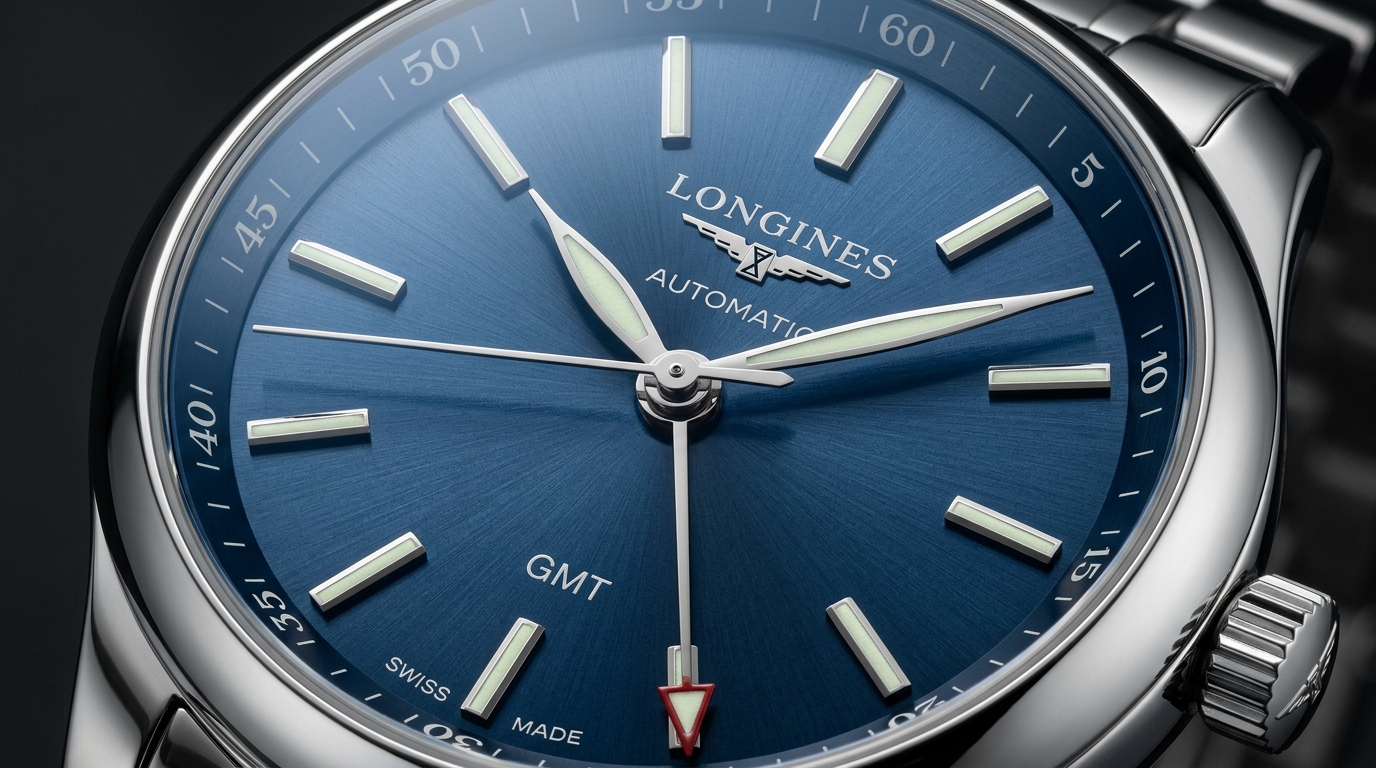
The Spirit Zulu Time also reveals Longines’ strategic opportunity. The brand does not need to chase hype scarcity or artificial waiting lists. It can win by being the grown-up alternative: available, well-finished for the price, mechanically specific, and historically credible without becoming theatrical. This is a more sustainable luxury strategy than pretending every steel watch is rare.
Heritage Reissues: Where Longines Is Strongest and Most Vulnerable
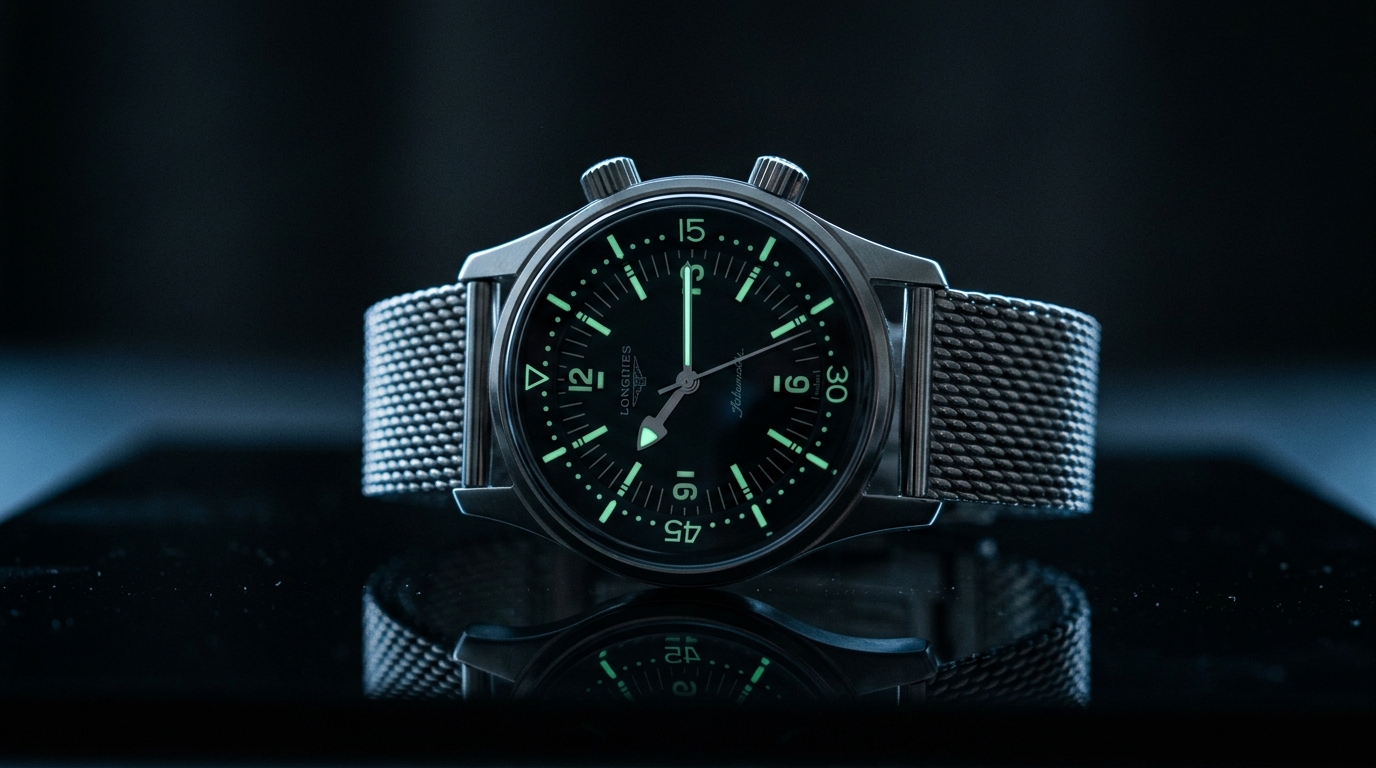
Longines’ Heritage collection has produced some of the most collector-relevant watches in its price class. The Heritage Classic Sector, reference L2.828.4.73.2, distilled a late-1930s sector-dial vocabulary into a 38.5 mm steel case with a clean manual-adjacent aesthetic, even though it used the automatic L893 calibre rather than a hand-wound movement. The Avigation BigEye, based on a 1930s pilot chronograph acquired by Longines’ museum rather than a widely known production icon, offered a column-wheel automatic chronograph with the L688 family movement and unusually strong dial balance. The Legend Diver, originally revived in 2007 from a 1959 Super Compressor-style reference, became a long-running success because its twin-crown internal-bezel format gave Longines a recognisable dive-watch identity distinct from Submariner imitation.
But this is also where Longines must be careful. Heritage can become an easy reflex. Faux patina, boxed crystals, vintage typography, and archival case shapes are useful only when proportion, movement, and pricing align. Longines has sometimes overproduced variations, weakening the impact of individual models. The brand’s best heritage watches feel edited; its weaker ones feel catalogued. The 39 mm Legend Diver, introduced as a more wearable correction to the larger versions, shows the right instinct: reduce the diameter, preserve the distinctive case architecture, improve everyday viability, and avoid turning the watch into a costume piece.
Collectors often reward restraint more than novelty. Longines should understand this better than almost anyone, because its historical archive is broad enough that it does not need to exaggerate. The discipline is in choosing fewer references and allowing them to mature.
The Ultra-Chron: A Technical Story That Deserves More Confidence
The modern Ultra-Chron revival is one of Longines’ most intellectually interesting products. The original Ultra-Chron was launched in 1967, during the final golden years of mechanical precision competition before quartz technology changed the industry. Its appeal was not decorative. A 36,000 vibrations-per-hour movement offered theoretical gains in rate stability, and Longines used the Ultra-Chron name to signal high-frequency mechanical performance.
The modern Ultra-Chron, powered by the L836.6 automatic movement, revives the 36,000 vph frequency with a silicon balance spring and approximately 52 hours of power reserve. Longines also submitted the watch head, rather than merely the uncased movement, for testing by TIMELAB under the “ultra chronometer” certification standard, with tolerances more demanding than conventional COSC chronometer testing. That decision deserves more attention than it has received, because it gives Longines a technical narrative not dependent on borrowed prestige.
The weakness is not the watch itself so much as the communication around it. In a market where Omega has made METAS certification widely understood and Rolex has turned “Superlative Chronometer” into a recognised phrase, Longines has an opportunity to educate buyers around high-beat accuracy. The Ultra-Chron should be more than a niche retro diver. It should be the foundation of a technical pillar within the brand. Longines has the historical right to make that argument; it simply needs to make it with more force.
Master Collection and Conquest: The Commercial Backbone
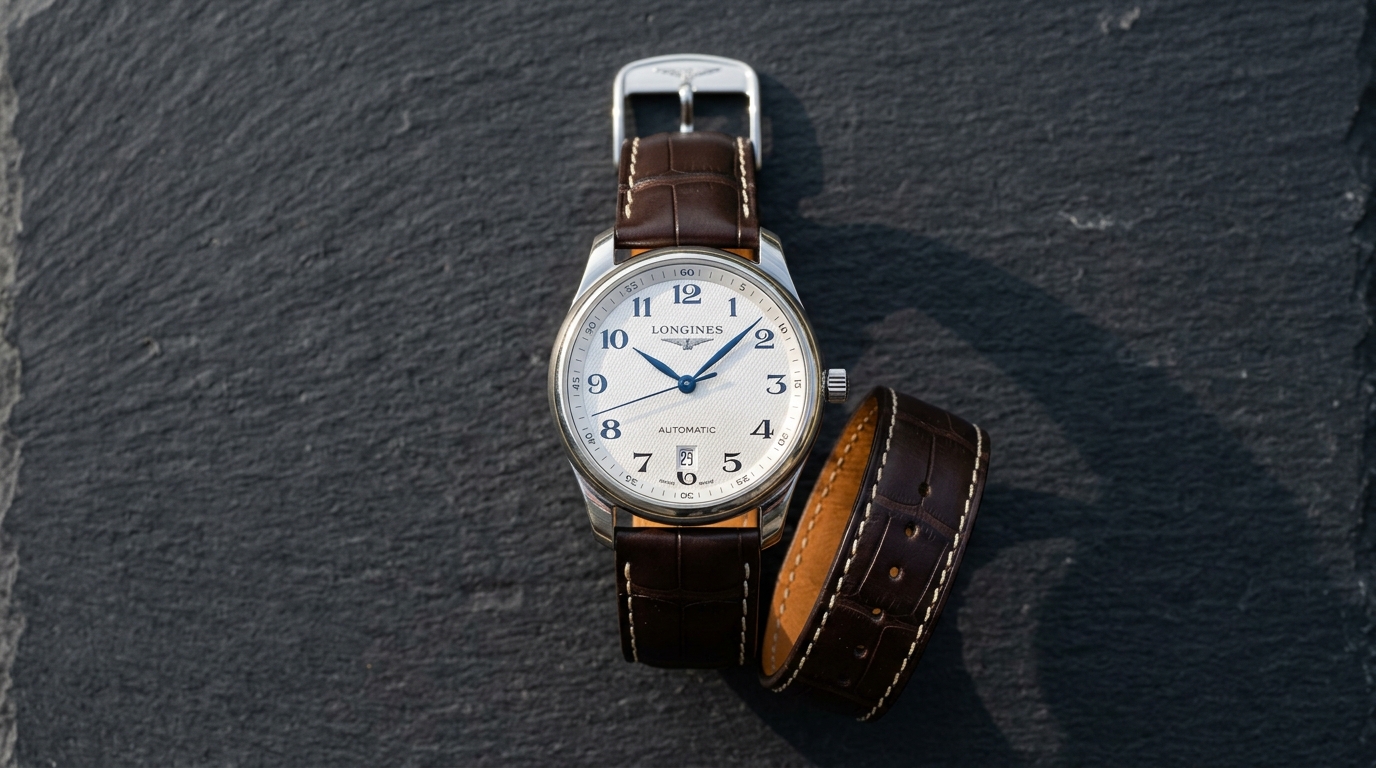
Collectors tend to focus on Spirit, Heritage, and Legend Diver, but Longines’ volume is also built on less romantic lines such as the Master Collection, Conquest, HydroConquest, and La Grande Classique. The Master Collection, launched in 2005, has become the brand’s broad dress-complication platform: moonphases, annual calendars, chronographs, power reserves, and classical dials in steel cases at accessible luxury prices. It is not always exciting, and some references are too polished and too large, but it performs a vital role. It gives retail clients visible mechanical complexity without pretending to be haute horlogerie.
The Conquest line is more strategically important than it first appears. The refreshed Conquest models have moved toward sharper case lines, applied markers, improved bracelet integration, and a more contemporary sports-watch stance. This matters because the mainstream Swiss steel sports watch has become brutally competitive. Tudor dominates enthusiast attention with the Black Bay and Pelagos families. TAG Heuer has been rebuilding credibility through the Carrera Glassbox, Aquaracer Professional, and Monaco, while Oris continues to offer independent-brand character through the Aquis and Big Crown lines. Longines cannot win this category on swagger. It has to win on balance.
The HydroConquest GMT, introduced in 2023 with the L844.5 movement, is a good example of that balance. It gives buyers a modern dive-watch format with practical GMT utility and a strong power reserve, without entering the symbolic pricing zone occupied by Tudor’s Black Bay GMT or Omega’s Seamaster Planet Ocean GMT. It is not a purist’s dive instrument, nor does it need to be. It is a rational everyday travel sports watch from a brand with enough substance to make the purchase feel serious.
The Market Position: Longines Versus Tudor, TAG Heuer, Oris and Baume & Mercier
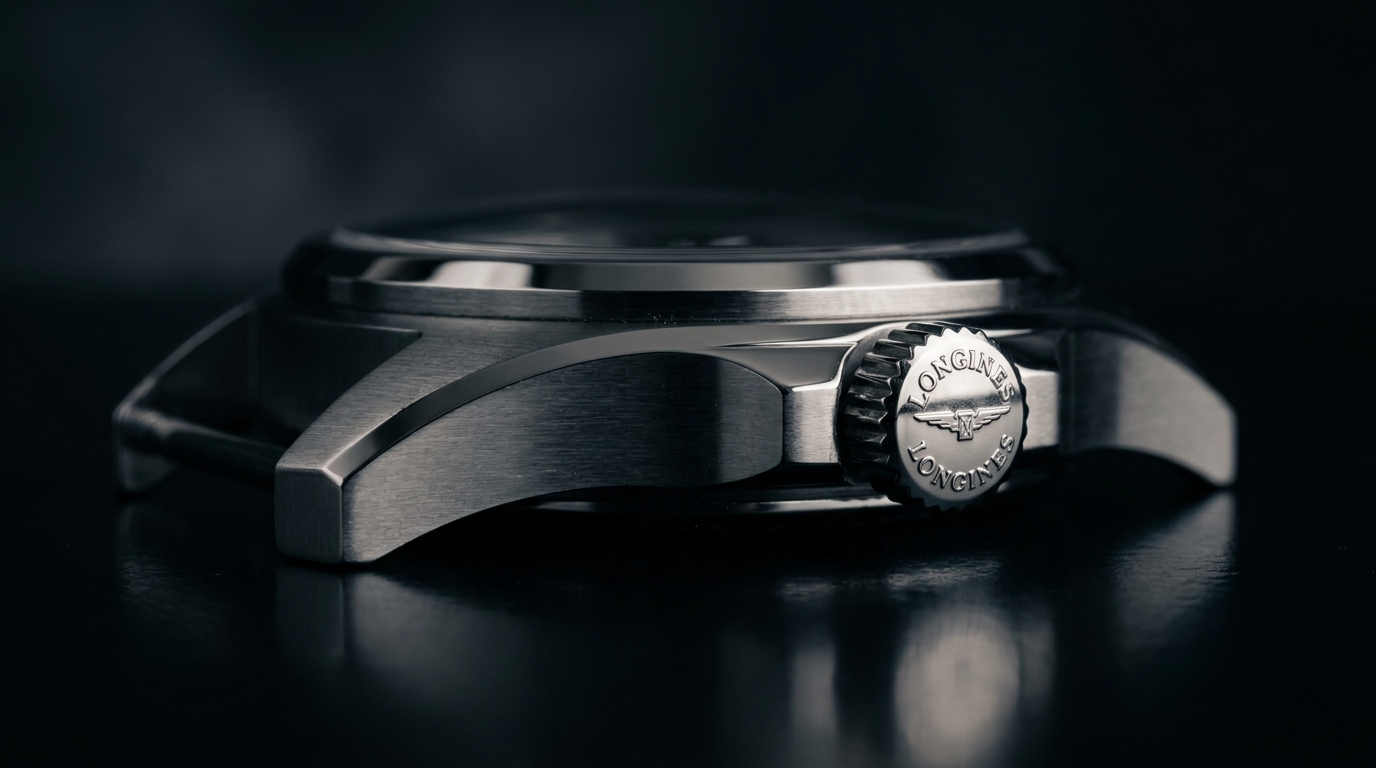
Longines’ most direct modern competitor is not Omega. It is Tudor. Both brands use group strength, historical cues, and robust movements to create high-volume mechanical watches with enthusiast credibility. Tudor, backed by Rolex, has become more assertive technically through Kenissi-manufactured movements, METAS certification in models such as the Black Bay Ceramic and Black Bay Master Chronometer references, and a clearer identity built around tool-watch toughness. Longines does not match that singularity. Its catalogue is broader and less disciplined. But Longines often counters with better dress options, stronger aviation legitimacy, and more aggressive pricing.
TAG Heuer remains the more famous brand in many markets, particularly through motorsport and the Carrera, but its catalogue has historically suffered from uneven movement hierarchy and pricing confidence that sometimes ran ahead of the product. Recent Carreras have improved the equation, especially the Glassbox chronographs, yet Longines still offers a calmer value proposition in many automatic three-hand and GMT categories. Oris brings independence and character, but lacks Longines’ archive depth and group movement access. Baume & Mercier offers some appealing Clifton and Riviera models, including Baumatic calibres with strong power reserves, but its brand energy is weaker and its collector pull narrower.
This is where Longines becomes difficult to dismiss. It is not the most exciting name in any single category, but it is frequently the most rational. That sounds faint, but in today’s market it is a serious advantage. Mechanical watches have become vulnerable to speculative pricing, artificial tiering, and excessive claims of exclusivity. Longines still sells watches primarily on the strength of proportion, movement, history, and availability. For many buyers, that is enough. For more experienced collectors, it can be refreshing.
What Longines Gets Wrong
The brand’s greatest weakness is excess choice. Longines maintains a catalogue that tries to serve dress buyers, sports buyers, heritage collectors, entry-luxury customers, quartz customers, ladies’ jewellery-watch buyers, equestrian markets, aviation enthusiasts, and mainstream department-store clients simultaneously. The commercial logic is clear; the brand sells globally and benefits from breadth. But editorially, the sprawl obscures the strongest watches. A collector should not have to dig through so many references to find the models that define the brand.
Case thickness is another recurring issue. The use of robust automatic movements, water resistance requirements, boxed sapphire crystals, and complicated calibres has left certain Longines models wearing larger than their nominal diameters suggest. The brand has improved, particularly with 39 mm Spirit Zulu Time and 39 mm Legend Diver references, but proportion remains the difference between a good watch and a memorable one.
There is also a prestige ceiling that Longines cannot fully control. Because Swatch Group must protect Omega, Longines is unlikely to receive the full technological theatre available higher up the group. That does not make Longines inferior in ordinary ownership terms, but it does limit the brand’s symbolic ascent. A Longines will often be the smarter purchase than a more expensive watch; it will not always be the purchase that satisfies status appetite. The brand’s identity depends on accepting that distinction rather than fighting it.
The Longines Verdict
Longines is at its best when it behaves like the most serious value proposition in Swiss watchmaking rather than the cheapest version of luxury. The winning formula is clear: authentic archive, well-sized case, ETA-derived calibre with meaningful specification, restrained dial work, and pricing that respects the intelligence of the buyer. The Spirit Zulu Time, Legend Diver 39 mm, Heritage Classic Sector, Ultra-Chron, Avigation BigEye, and selected Master Collection models all prove that Longines can deliver collector-grade substance without collector-grade theatrics.
The brand does not need to become more exclusive. It needs to become more selective. Fewer references, clearer technical pillars, stronger communication around high-beat and chronometer-calibre movements, and continued attention to case proportion would do more for Longines than any attempt to imitate the scarcity tactics of brands above it. Longines’ power lies in the fact that it can sell an informed buyer a mechanically credible Swiss watch with a real past and a sensible present.
That is not faint praise. In the current market, where too many brands confuse price increases with progress, Longines remains one of the few large Swiss names whose best watches still feel underpriced relative to their historical and technical content. It is not the most glamorous answer. It is often the more intelligent one.