Swatch: The Plastic Watch That Still Controls Swiss Watchmaking
Swatch: The Plastic Watch That Still Controls Swiss Watchmaking
Swatch is usually described as the watch that saved Switzerland. That is true, but too small. More than four decades after its 1983 launch, Swatch remains the most strategically important mass-market brand in Swiss watchmaking because it does something most luxury maisons cannot: it converts attention into footfall, footfall into volume, and volume into leverage for the wider Swatch Group. The plastic case was never the whole story. Swatch’s real invention was industrial discipline packaged as pop culture.
The mistake collectors often make is to treat Swatch as peripheral to “serious” horology. In corporate terms, the opposite is closer to the truth. Swatch sits inside the same group as Omega, Breguet, Blancpain, Longines, Tissot, Hamilton, Mido, Rado, Glashütte Original, Jaquet Droz and Harry Winston. It is the Group’s lowest-priced global watch brand, but it has repeatedly acted as its most agile commercial laboratory. When Swatch changes a distribution tactic, tests a material, or borrows equity from a prestige name, the consequences reach far beyond a CHF 100 quartz watch.
The Crisis Product That Became a Business Model
Swatch was born from failure, not nostalgia. By the late 1970s, Swiss watch exports had been crushed by Japanese quartz competition from Seiko, Citizen and Casio. Employment in the Swiss watch industry fell from roughly 90,000 people in 1970 to near 30,000 by the early 1980s. The fractured Swiss structure of movement makers, assemblers and brands was no longer viable against vertically integrated Asian competitors producing accurate, inexpensive quartz watches at scale.
The institutional response was the 1983 merger of ASUAG and SSIH into SMH, the Société de Microélectronique et d’Horlogerie, engineered with bank pressure and later reshaped under Nicolas G. Hayek. But Swatch’s technical foundations came earlier from ETA and the team around Ernst Thomke, with key development work associated with Elmar Mock and Jacques Müller. The premise was blunt: reduce parts, automate assembly, seal the case, and make the watch cheap enough to compete while still being Swiss-made.
The first Swatch references launched in 1983, including the now-important GB100 and GB101 families, translated that industrial brief into a product with a strong visual identity. Instead of hiding cheapness, Swatch made plastic deliberate. The welded case was not intended for repair in the traditional watchmaker’s sense. The movement became part of a sealed consumer object. That offended the old culture of servicing and heirloom ownership, but it solved the problem Switzerland actually had: cost.
The Swatch name itself has often been read as “Swiss watch,” though “second watch” is just as important as a concept. The brand persuaded buyers that a watch did not need to be singular, conservative, or permanent. That was a commercial breakthrough. Swiss watchmaking had spent generations selling durability and status; Swatch sold repeat purchase. For a country whose factories needed volume, that was revolutionary.
Design as Inventory Discipline
Swatch’s early design language worked because it had constraints. The cases were standardized. The straps were integral to the visual proposition. The dials were the arena. This gave Swatch a production advantage and a marketing advantage at the same time: the company could manufacture efficiently while presenting constant novelty. The watch became a canvas without requiring the industrial complexity of a new case architecture every season.
By the mid-1980s, models such as the transparent Jelly Fish, reference GK100 from 1985, proved that novelty could become collectability. The Watch did not need precious metal, hand finishing, or a complicated calibre to create scarcity. It needed a distinctive idea, controlled production, and a community alert enough to notice. This was a very modern form of collecting, closer to sneakers and vinyl than to Geneva seal finishing.
The artist collaborations that followed hardened the formula. Keith Haring’s 1986 Swatch designs, Kiki Picasso’s 1985 model, and later work with designers and cultural institutions showed that Swatch understood permission: it could enter art, fashion and youth culture without pretending to be a luxury house. That difference matters. Many luxury watch collaborations feel defensive, as if a heritage brand is trying to borrow relevance. Swatch’s collaborations were foundational to its identity from the beginning.
For collectors, early Swatch is not all equal. Condition is decisive because the watches were inexpensive and often heavily worn. Original straps, boxes and paperwork materially affect value. Early 1983 production, transparent models, Pop Swatch variants, Art Specials, prototypes and low-volume regional editions occupy a more serious niche than generic 1990s stock. Auction prices rarely resemble vintage Rolex economics, but that is not the point. The Swatch collector market is broad, fragmented and historically revealing rather than uniformly financialized.
The Mechanical Question: Sistem51 and the Limits of Anti-Horology
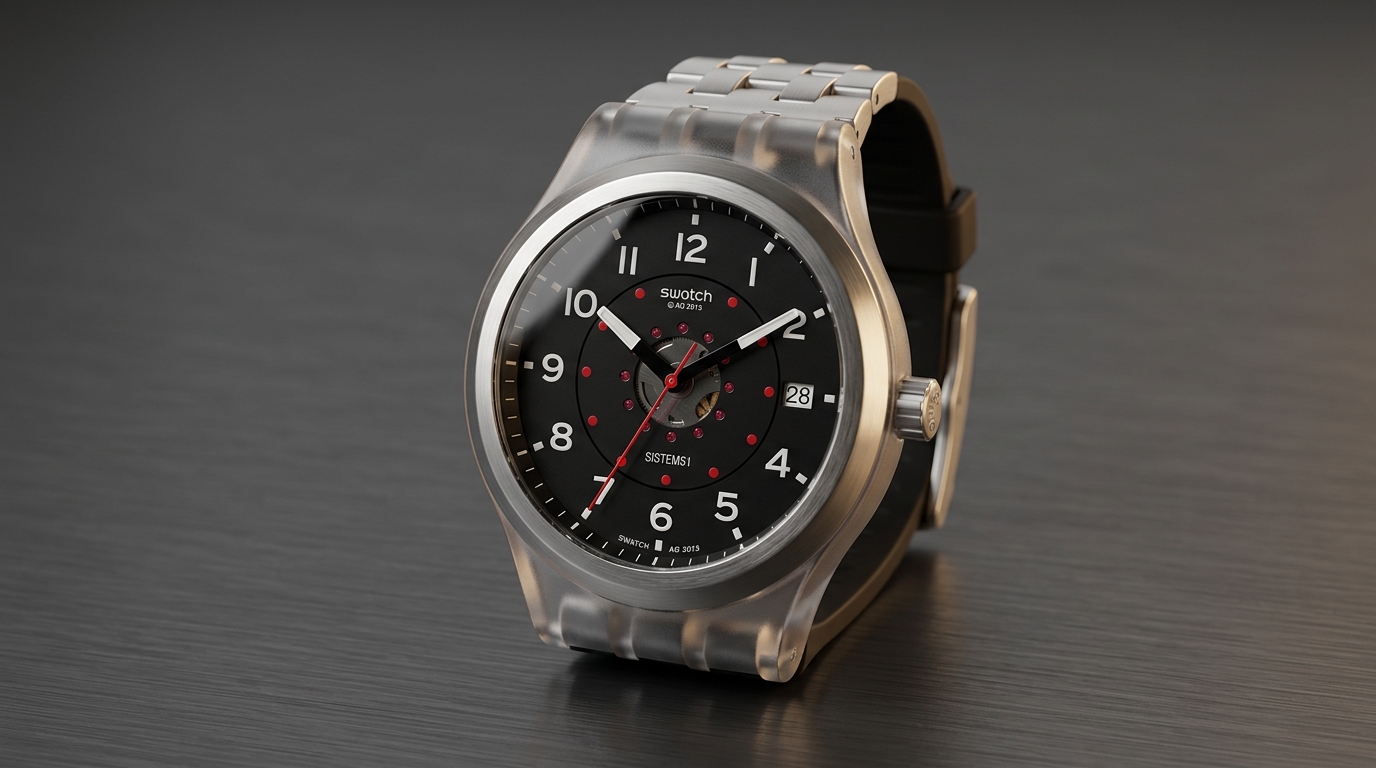
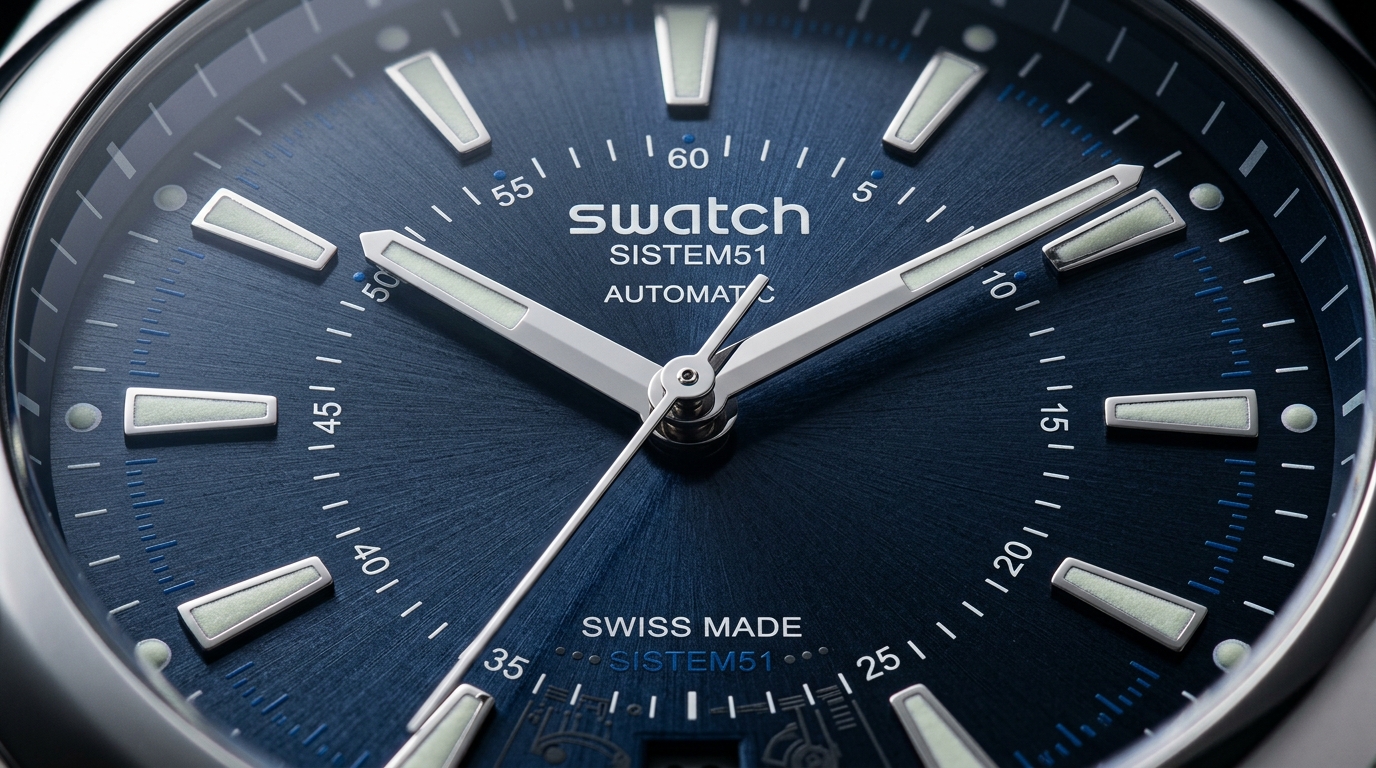
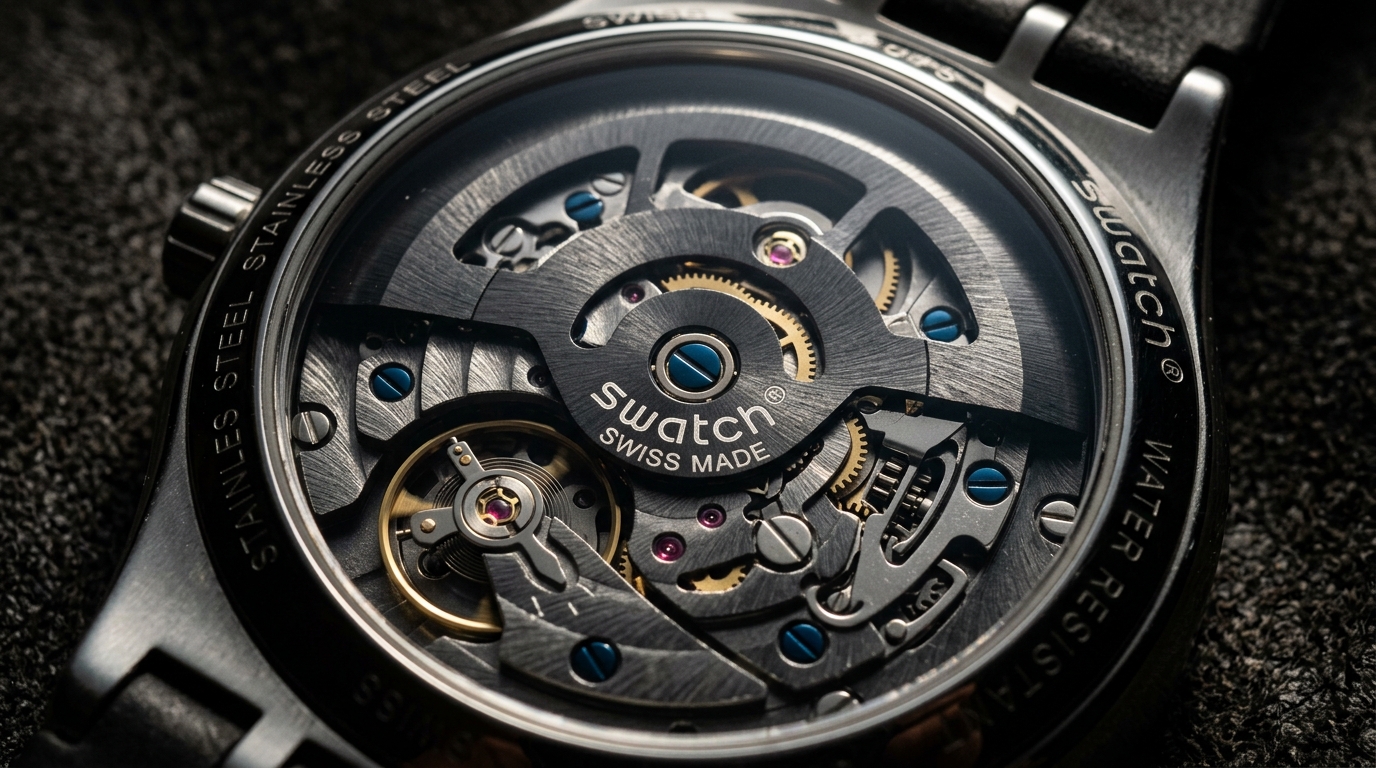
Swatch’s relationship with mechanical watchmaking is more nuanced than the plastic-quartz caricature suggests. The brand’s most important mechanical intervention came in 2013 with the Sistem51, launched publicly as an automatic movement assembled by machine, made from 51 components and fixed by a single central screw. It offered a 90-hour power reserve and used an anti-magnetic Nivachron hairspring in later executions, depending on generation and reference. The movement was sealed and laser-regulated rather than traditionally serviceable.
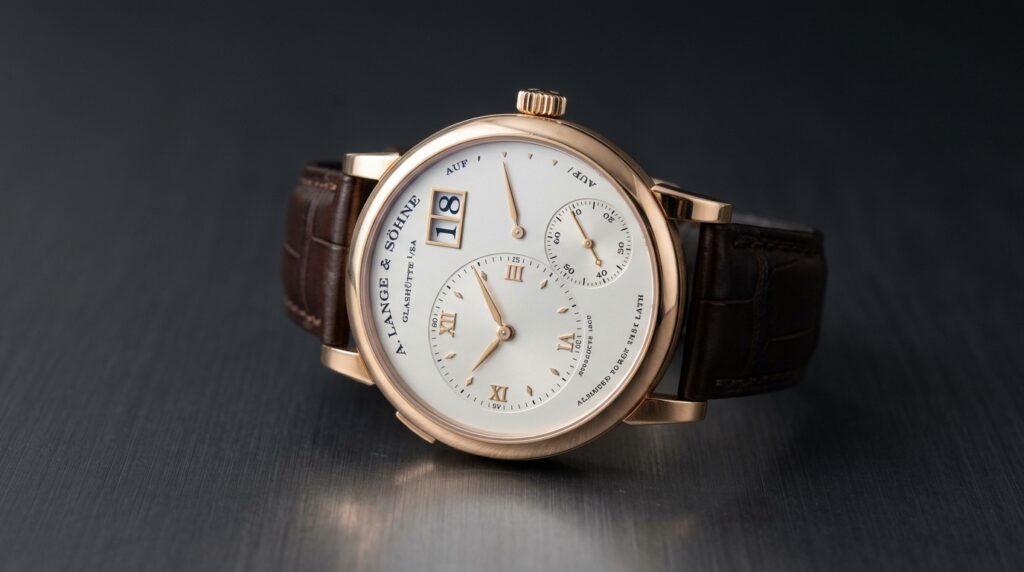
The Sistem51 was intellectually consistent with the original Swatch. It took a category associated with labour, adjustment and service, then redesigned it around automated production. The result was not a miniature Lange calibre and should not be judged as one. It was more interesting than that: a mechanical movement treated as an industrial product rather than a craft object. At launch, it also challenged the predictable collector assumption that mechanical equals artisanal.
There are trade-offs. A sealed Sistem51 is not built for the long ownership cycle of an ETA 2824-2, a Sellita SW200, or a manually finished high-end calibre. Its repair logic is closer to replacement than restoration. Accuracy can be respectable but variable, and the rotor noise and case construction are not pretending to be premium. Yet at its price and scale, the movement deserves more serious consideration than it usually receives. It showed that Swatch could still intervene technically, not merely graphically.
The irony is that Sistem51 also exposed Swatch’s ceiling. A buyer interested in the romance of mechanical watchmaking often wants access to the mechanism, a service narrative, or at least the belief that the watch can age with dignity. Sistem51 deliberately resists that romance. It is a mechanical watch for the post-service economy. That is strategically coherent, but emotionally limiting.
MoonSwatch: The Most Important Omega Launch That Was Not an Omega
The 2022 Bioceramic MoonSwatch collaboration with Omega was the most consequential Swatch release in decades. The collection borrowed the Speedmaster Professional’s case silhouette, tachymeter bezel language and NASA-adjacent cultural vocabulary, then translated them into Swatch’s quartz-powered, Bioceramic format. References such as Mission to the Moon, reference SO33M100, and Mission to Mars, reference SO33R100, became instant retail phenomena. Queues formed worldwide on 26 March 2022, with some Swatch boutiques overwhelmed by demand.
The collector debate was predictable and often poorly framed. The MoonSwatch was not a threat to the Omega Speedmaster Professional Moonwatch, which remained a METAS-certified, manually wound mechanical chronograph in steel, powered in contemporary form by calibre 3861. Nor was it simply a toy. It was a funnel. It placed the Speedmaster design language on wrists that might never have entered an Omega boutique. It made the Speedmaster visible on TikTok, Instagram and city streets at a scale traditional luxury advertising cannot buy efficiently.
The commercial evidence was hard to ignore. Swatch Group reported strong results after the launch period, and Omega boutiques benefited from heightened Speedmaster conversation rather than dilution alone. The MoonSwatch did not make an Omega cheaper; it made Omega more culturally legible. The discomfort came from a different source: it reminded collectors that design equity can be separated from mechanical substance and monetized at lower price points.
Bioceramic, Swatch’s composite of ceramic powder and bio-sourced plastic derived from castor oil, was central to the positioning. It gave the product a material claim beyond ordinary plastic, while remaining recognizably Swatch rather than pretending to be steel. The quartz chronograph movement kept cost and volume manageable. The retail-only distribution strategy, initially without e-commerce, created scarcity through access rather than production impossibility. Strategically, that was the real calibre inside the MoonSwatch.
Blancpain x Swatch: A Riskier Borrowing of Prestige
If MoonSwatch was clever because the Speedmaster already had global mass recognition, the 2023 Blancpain x Swatch Scuba Fifty Fathoms was more ambitious and less clean. Blancpain’s Fifty Fathoms, launched in 1953, is one of the foundational modern diving watches, developed in the context of French combat divers and professional underwater requirements. Translating that heritage into a Swatch case was always going to test the boundary between democratization and brand dilution.
The Scuba Fifty Fathoms used the Sistem51 automatic movement rather than a quartz calibre, which was thematically appropriate given Blancpain’s long-standing marketing line that it has never made a quartz watch. The collection referenced ocean basins rather than planets, used colourful Bioceramic cases, and added a printed depiction of nudibranchs on the rotor. It was more horologically aligned than the MoonSwatch, but less culturally explosive.
That distinction matters. Omega’s Speedmaster is already a mainstream icon; Blancpain is a quieter high-end manufacture owned by the same Group, with far lower public awareness. The collaboration gave Blancpain oxygen outside specialist circles, but it also exposed how dependent many heritage narratives are on controlled environments. In a boutique window, a Fifty Fathoms can speak of military diving, Jean-Jacques Fiechter, depth ratings and high-end finishing. In a Swatch queue, the message becomes simpler: here is the colourful version of an expensive dive watch.
Still, the strategic logic was defensible. Swatch Group owns both the prestige asset and the access brand. Unlike a licensing arrangement between unrelated companies, the value stayed inside the same corporate structure. The Group could sacrifice some purity in exchange for awareness, data and younger traffic. For Blancpain, a brand that cannot rely on the universal recognition enjoyed by Rolex Submariner or Omega Speedmaster, that may be a rational trade.
Distribution: Swatch’s Real Movement
Swatch’s most underappreciated asset is not its case material, its design archive, or even its collaborations. It is distribution. The brand operates through high-visibility monobrand stores, airport retail, tourist corridors and city-centre locations that luxury watch brands often use for image but cannot operate with the same transactional velocity. Swatch can sell a watch in minutes to a customer who did not plan to buy one that morning.
This retail machinery explains much of the MoonSwatch strategy. By restricting early sales to physical Swatch stores, the Group turned low-priced watches into store traffic. That traffic then became media. Media then became resale premiums, sometimes irrationally high in the first months after launch. The resale market eventually normalized, as it usually does when production continues, but the point had already been made: Swatch could create a global watch event without relying on Geneva watch fair convention, authorized-dealer allocation games, or celebrity ambassadors.
The same mechanism also reveals the brand’s vulnerabilities. Swatch’s dependence on novelty can turn old inventory into visual noise. Not every limited edition deserves attention, and not every collaboration produces collecting depth. The brand must constantly balance abundance against focus. Too much availability kills urgency; too much artificial scarcity irritates the mass customer Swatch was built to serve. The MoonSwatch launch walked that line effectively at first, though uneven boutique execution and early crowd-control issues damaged the experience in some markets.
For the wider Swatch Group, however, the calculus remains compelling. Swatch gives the Group first-party access to customers at entry-level price points while supporting industrial scale at ETA, Nivarox and associated suppliers. Even as ETA restricted movement supply to third parties over the 2010s, culminating in a more vertically controlled Swiss movement landscape, the Group’s internal brand ladder became more important. Swatch is the bottom rung, but it is not disposable. It feeds the ecosystem.
What Swatch Means for Collectors Now
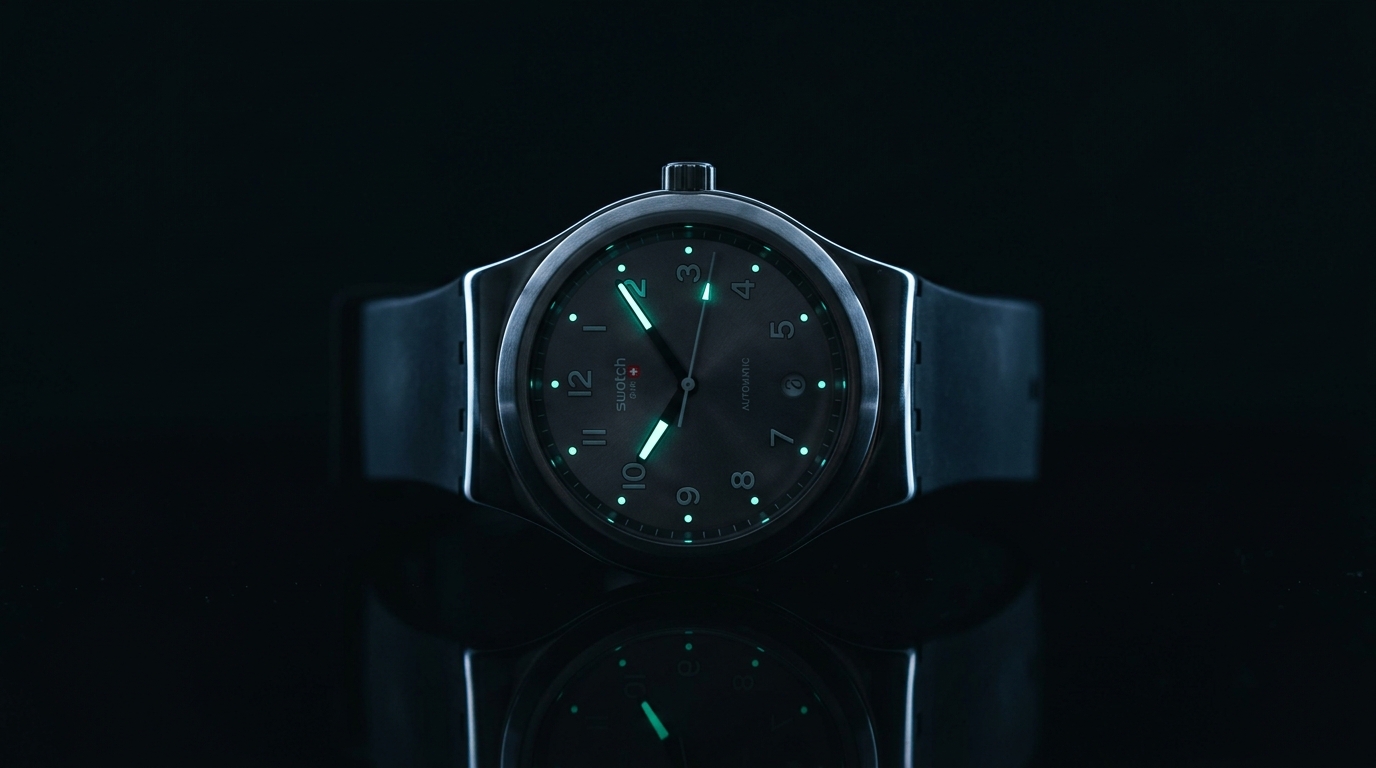
For serious collectors, Swatch requires a different framework. The question is not whether a plastic quartz watch can compete with a vintage Submariner, a Royal Oak Jumbo, or a Patek perpetual calendar. It cannot, and it does not need to. The more useful question is which Swatches record meaningful moments in watch culture. On that standard, the brand has a substantial canon: early 1983 references, Jelly Fish GK100, major Art Specials, historically important prototypes, Sistem51 launch pieces, MoonSwatch first-wave models, and the Blancpain collaboration as a marker of Group strategy.
Condition and provenance are more important than many casual buyers understand. Yellowed plastics, cracked straps, missing packaging and battery leakage can destroy value. Conversely, unworn examples from the 1980s with correct boxes and documentation can be surprisingly difficult to source. The market is still inefficient because Swatch collecting sits between toy collecting, design collecting and horology. That inefficiency is part of the appeal, but it also demands discipline. Buying every colourful release is not collecting; it is accumulation.
The brand’s future will depend on whether it can continue to make low-cost watches feel contemporary without exhausting its own formulas. More prestige collaborations are likely, but they should be used sparingly. A Swatch x Omega worked because the Speedmaster has a graphic silhouette strong enough to survive translation. A Swatch x Blancpain worked as a strategic experiment, not as a design inevitability. If every Group icon receives the same treatment, the mechanism will become predictable and the borrowed equity will depreciate.
Swatch’s enduring importance is that it understands something the Swiss industry periodically forgets: watches are not only instruments, status objects, or heirlooms. They are also products that live in retail windows, on wrists, in pop culture and in monthly discretionary budgets. The brand saved Swiss watchmaking once by accepting that uncomfortable truth. Today it continues to pressure the industry from below, reminding even the most exalted maisons that relevance is manufactured, distributed and renewed — not inherited indefinitely.
That is why Swatch still matters. Not because it is precious, and not because every release deserves collector attention. It matters because it is the rare Swiss watch brand that can treat price, design, production and distribution as one system. In an industry often trapped between heritage theatre and scarcity management, Swatch remains strategically lucid. The plastic watch was never an accident of crisis. It was a control mechanism, and the Swiss industry is still living inside it.