Rolex Is Not a Watch Brand. It Is the Most Disciplined Market System in Horology.
Rolex Is Not a Watch Brand. It Is the Most Disciplined Market System in Horology.
Rolex is often discussed as if its dominance were a matter of fame, advertising, or conservative design. That misses the more interesting point. Rolex’s real power is structural: it controls product evolution, retail access, secondary-market confidence, servicing norms, certification language, and brand memory with a degree of discipline no other Swiss watchmaker has matched at scale. The result is not simply a catalogue of desirable watches. It is a self-reinforcing market system in which a Submariner, Daytona, GMT-Master II, or Datejust carries unusually legible value before it is even worn.
This is why Rolex can be simultaneously overexposed and under-supplied, mainstream and collector-grade, technically conservative and commercially unmatched. The company’s watches are not always the most inventive in their categories. A Grand Seiko can offer finer visible movement finishing at a lower price. Omega has pushed co-axial escapements and METAS certification more publicly. Patek Philippe and Audemars Piguet operate at higher haute horlogerie altitude. Yet none has built a broader, more resilient ownership proposition around steel sports watches, daily-wear chronometers, and intergenerational continuity than Rolex.
The Foundation: Wilsdorf’s Commercial Instinct
Rolex began not as a manufacture but as a distribution idea. Hans Wilsdorf founded Wilsdorf & Davis in London in 1905 with Alfred Davis, importing Swiss movements and casing them for the British market. The Rolex name was registered in 1908, and the business moved its operations to Geneva in 1919, partly in response to post-war British import duties. That origin matters. Rolex was never a romantic atelier built around artisanal complication making. It was created by a marketer-engineer with an unusually sharp sense for reliability, legibility, and public proof.
The early milestones were not ornamental; they were arguments. In 1910, a Rolex wristwatch received a Swiss Certificate of Chronometric Precision from the Official Watch Rating Centre in Bienne. In 1914, Kew Observatory in England awarded a Rolex wristwatch a Class A precision certificate, a standard associated with marine chronometers. In 1926 came the Oyster case, with a screwed caseback, bezel, and crown. In 1927, when Mercedes Gleitze swam the English Channel wearing a Rolex Oyster, Wilsdorf took out a front-page advertisement in the Daily Mail. The watch was not merely waterproof. It had been staged as waterproof in a way the public could understand.
The 1931 self-winding “Perpetual” rotor system completed the central Rolex formula: a sealed, automatic, accurate wristwatch intended for daily use rather than occasional admiration. The brand’s most important innovation was not a single complication. It was the packaging of utility into a repeatable luxury proposition.
Rolex’s ownership structure is central to its behavior. Since Hans Wilsdorf’s death in 1960, Rolex has been owned by the Hans Wilsdorf Foundation. It is private, does not report the way Richemont, Swatch Group, LVMH, or publicly traded independents must, and is not forced to flatter quarterly markets with novelty. This does not make Rolex charitable in its product strategy or soft in its pricing. It makes Rolex patient.
That patience is visible in the model cycles. The Submariner reference 5513 ran from the early 1960s to 1989. The Explorer 1016 had a similarly long life, from 1963 to 1989. The Sea-Dweller 16600 lasted from 1988 to 2008. Even in the modern era, Rolex changes slowly: ceramic bezels, improved bracelets, revised case proportions, and upgraded calibres arrive incrementally rather than as theatrical reinvention. Collectors sometimes complain that Rolex is predictable. They are correct. They should also admit that predictability is one of the reasons the watches retain trust.
The contrast with much of the industry is stark. Brands that must generate attention often rotate limited editions, dial treatments, collaborations, and anniversary pieces at a pace that weakens the long-term identity of core references. Rolex does the opposite. It withholds. It trims. It retires references sparingly. Even discontinuations become market events because the catalogue is not diluted by constant improvisation.
The Product Architecture: Evolution Without Confession
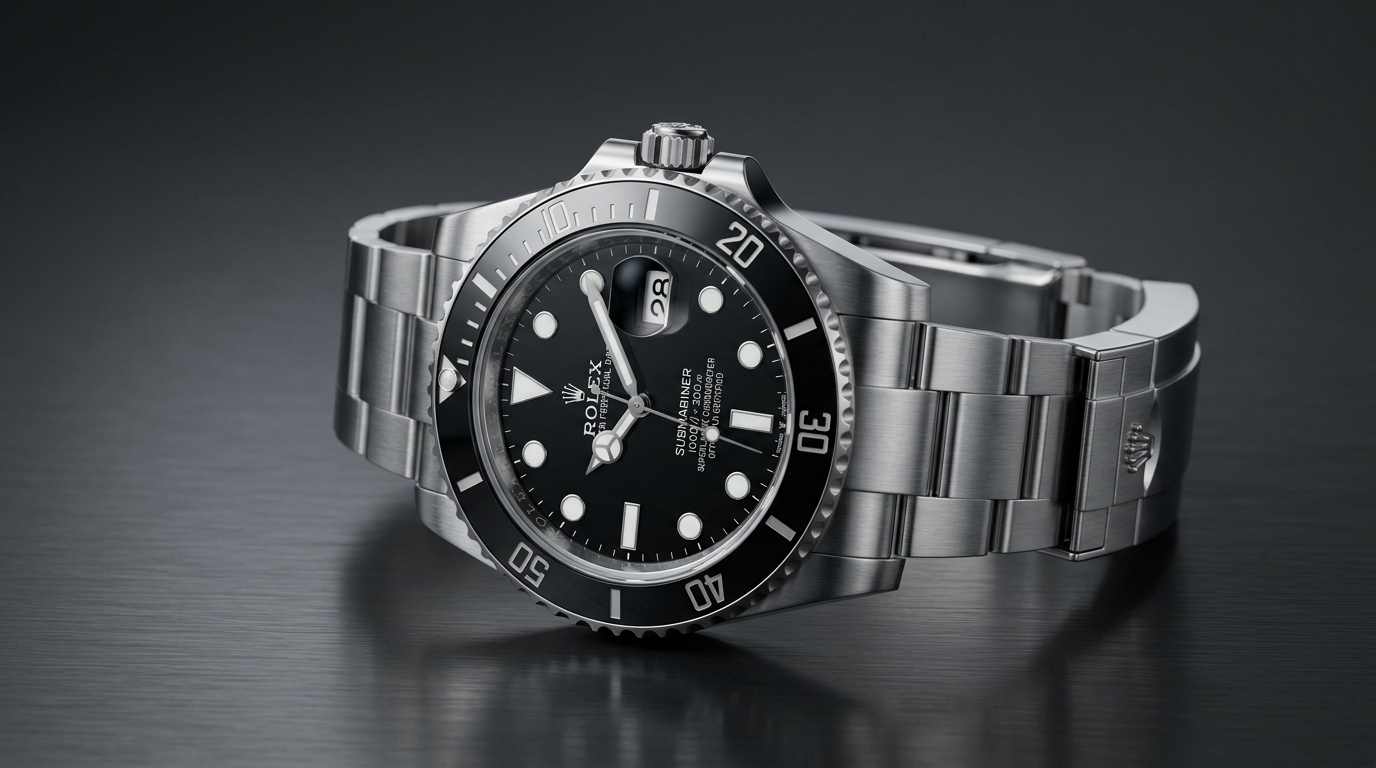
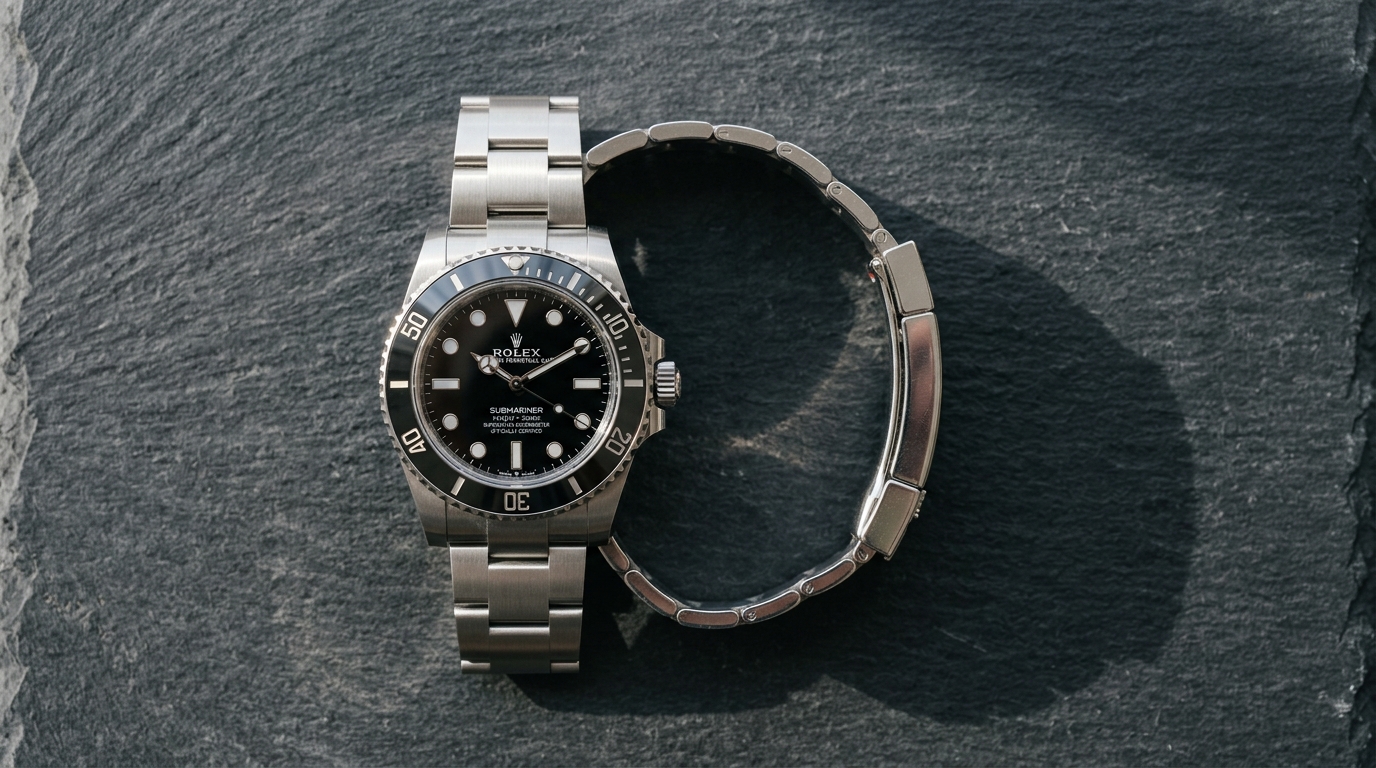
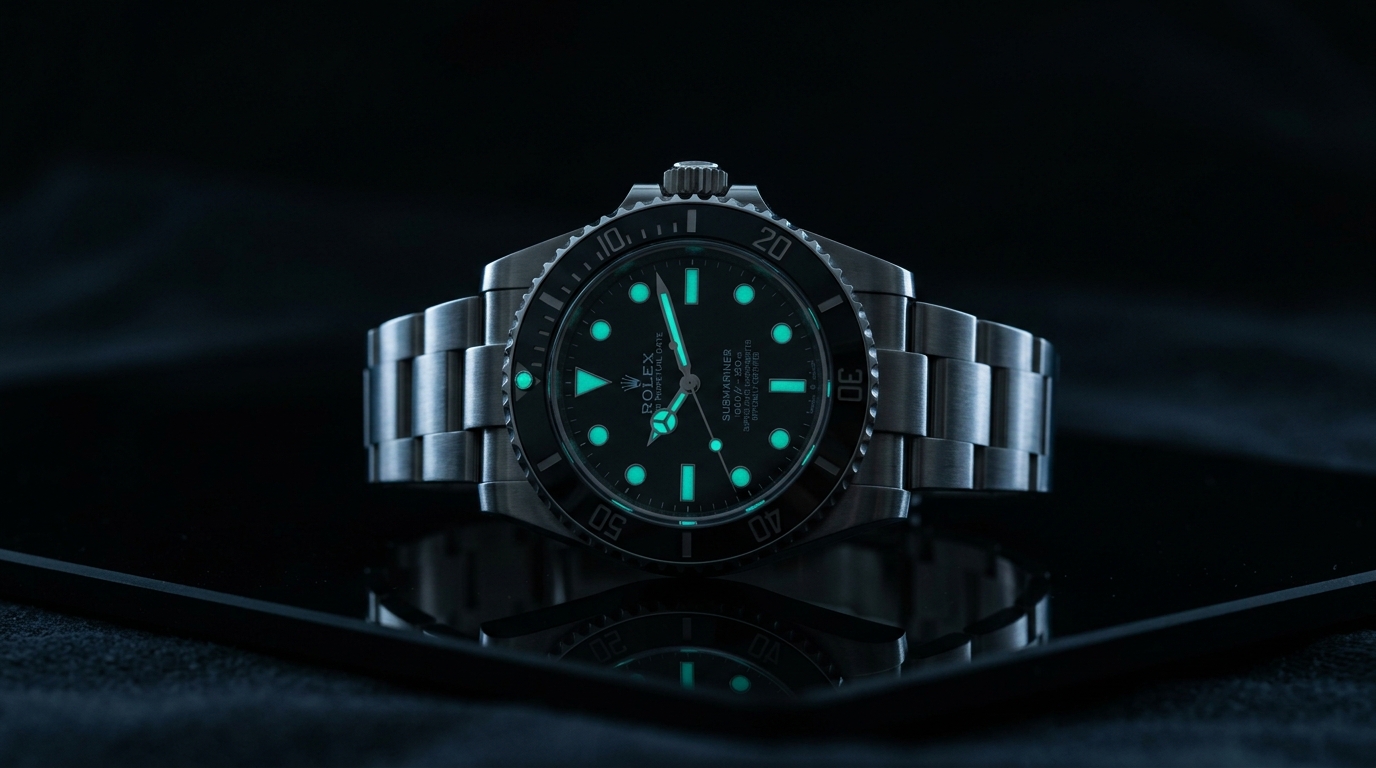
Rolex rarely admits error; it simply changes the watch. The Submariner is the cleanest example. The reference 6204 of 1953 established the format. The 5512 and 5513 refined the crown guards and professional-diver identity. The 1680 introduced a date in the late 1960s. The 16610, launched in 1988, became the modern aluminium-bezel Date Submariner archetype, powered by calibre 3135. The 116610LN of 2010 brought the Cerachrom ceramic bezel and “maxi” case. The 126610LN of 2020 moved the diameter nominally to 41 mm while softening the proportions and introducing calibre 3235.
This is not dramatic watchmaking, but it is very effective industrial design. Rolex’s genius lies in making meaningful technical updates look inevitable rather than disruptive. Ceramic bezels resist fading and scratching; Chromalight improves legibility; solid-link bracelets and milled clasps corrected weaknesses of earlier bracelets; the Glidelock extension on the Submariner clasp is genuinely useful even for wearers who never dive. These upgrades are not poetic. They are practical, and Rolex has always been strongest when practicality is made expensive.
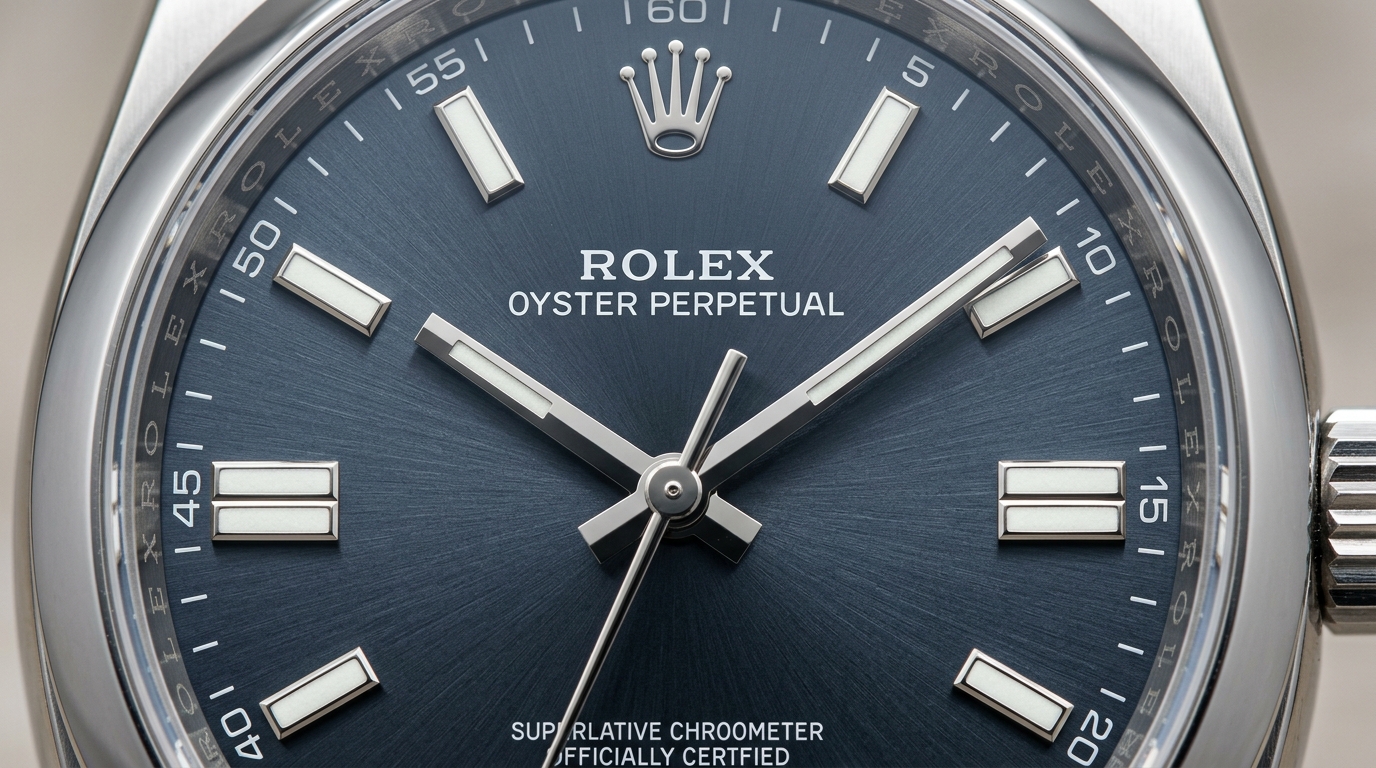
The GMT-Master follows the same logic. Created in 1955 for Pan American World Airways pilots, the original GMT-Master evolved through icons such as the 1675, produced for roughly two decades, and the sapphire-crystal 16700 and 16710. The GMT-Master II, beginning with the 16760 in 1982, added an independently adjustable local-hour hand. The modern 126710BLRO, with its red-and-blue ceramic bezel and calibre 3285, is technically superior to vintage references in every measurable ownership sense. Yet the emotional value of the line still rests on continuity with the Pan Am-era instrument. Rolex sells the present by preserving the outline of the past.
Movements: Conservative, Not Crude
The habitual criticism is that Rolex movements are utilitarian rather than beautiful. That is largely fair. A calibre 3135 or 3235 is not finished to the Geneva Seal aesthetic tradition, and Rolex does not invite owners to admire black-polished chronograph levers under sapphire backs. But it would be a mistake to confuse invisibility with indifference. Rolex movements are engineered for robustness, automatic winding efficiency, serviceability, and chronometric stability at large production volumes.
Calibre 3135, introduced in 1988, became one of the defining automatic movements of the late twentieth century. It powered the Datejust, Submariner Date, Sea-Dweller, and Yacht-Master, among others, and earned its reputation through durability rather than novelty. The 31xx generation was not thin, not decorative, and not conceptually radical. It was dependable. In the actual life of a mechanical watch — shocks, magnetism, moisture, irregular servicing, desk diving, airport trays, and decades of wear — that counts for more than movement photography.
The newer 32xx family, introduced with calibre 3255 in the Day-Date 40 in 2015 and calibre 3235 in the Datejust and Sea-Dweller lines thereafter, increased the power reserve to approximately 70 hours through the Chronergy escapement and barrel architecture. Rolex states a Superlative Chronometer standard of -2/+2 seconds per day after casing, stricter than the COSC uncased movement test. The 3285 in the GMT-Master II and Explorer II extends that architecture to travel watches. The calibre 4130, introduced in 2000 in the Daytona reference 116520, was a major strategic moment: Rolex replaced the modified Zenith El Primero of the 16520 era with its own automatic chronograph movement. The 2023 calibre 4131 in the latest Daytona generation refined rather than revolutionised it.
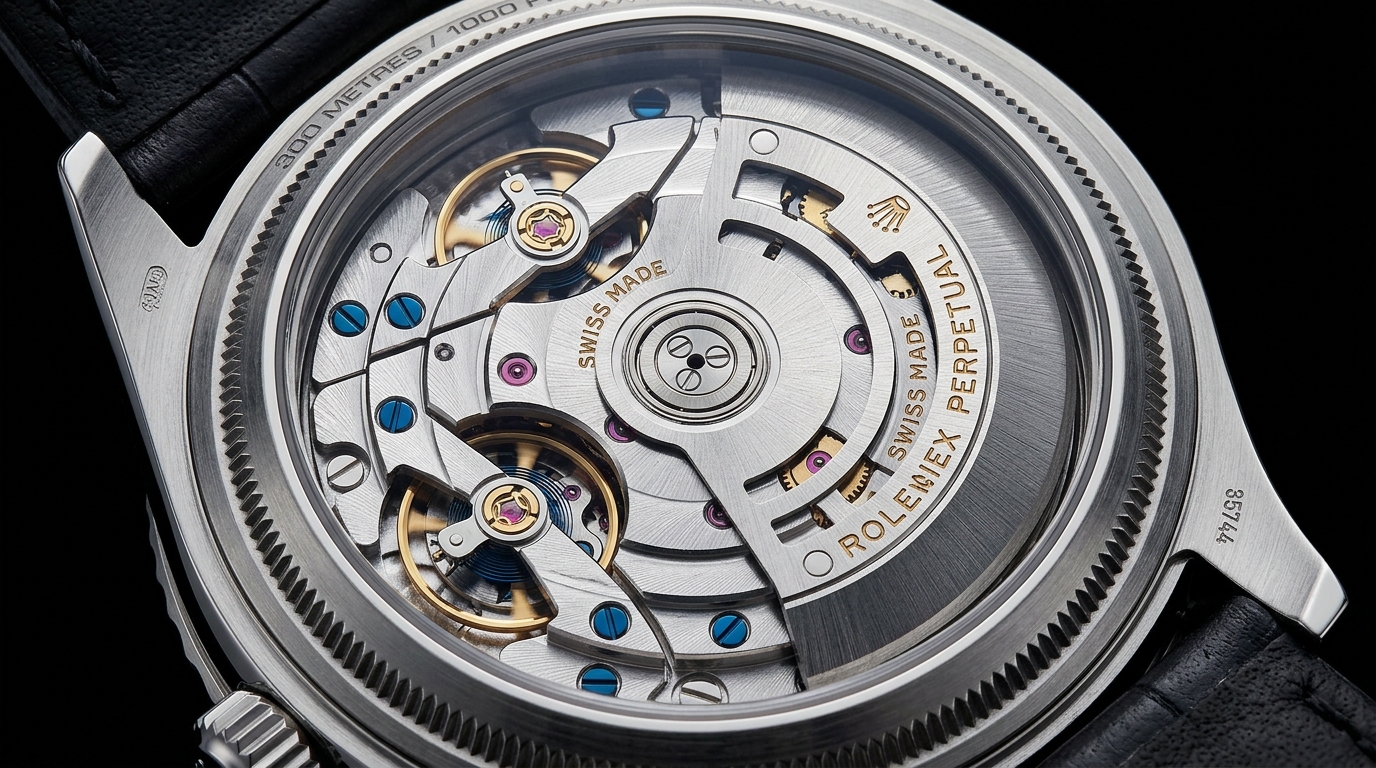
One can reasonably argue that Rolex should do more to make its movement engineering visible, especially at today’s prices. The counterargument is that Rolex’s clientele has already rendered judgment: the absence of a display back has not restrained demand. Rolex treats the movement as infrastructure. Collectors may want theatre; Rolex sells confidence.
The Bracelet and Case Are Not Secondary
Much of Rolex’s advantage sits outside the calibre. The Oyster case is central to the brand’s identity, but the bracelet may be just as important to modern ownership. Earlier folded and hollow-link bracelets, charming as they are on vintage pieces, feel fragile by contemporary standards. The move to solid end links, solid centre links on many models, improved Oysterlock and Crownclasp systems, Easylink comfort extensions, and Glidelock dive adjustment transformed the tactile experience of modern Rolex watches.
This matters because Rolex dominates the daily-wear luxury category. A Datejust 36 reference 126234, an Explorer 124270, or a Submariner 124060 is not acquired to sit in a safe as a high complication might be. It is meant to be worn often, and the bracelet is the most constant point of contact. Rolex understood earlier than many rivals that perceived quality is not only dial printing or movement decoration. It is clasp action, bezel click, crown feel, winding smoothness, and tolerance consistency.
The company’s vertical integration supports that consistency. Rolex acquired bracelet maker Gay Frères in 1998, dial maker Beyeler in 2000, and crown specialist Boninchi in 2001. It operates major sites in Geneva, Plan-les-Ouates, Chêne-Bourg, and Bienne, with movement production historically centred in Bienne. This is not just corporate trivia. It explains why Rolex can maintain such uniformity across large volumes while making controlled material shifts, from 904L-family Oystersteel to proprietary Everose gold and Cerachrom ceramic bezels.
Scarcity Is Managed, But Not Simple
No serious analysis of Rolex can avoid allocation. By the late 2010s, authorised dealer cases in major markets were visibly depleted of steel Professional models. The Daytona 116500LN, launched in 2016 with a ceramic bezel, became the emblem of the waiting-list era, but the dynamic spread across the GMT-Master II, Submariner, Explorer, and even certain Oyster Perpetual dials after the 2020 coloured-dial releases. Secondary-market prices accelerated sharply through 2020 and 2021 before correcting in 2022 and 2023 as interest rates rose, speculative capital retreated, and watch-trading platforms marked inventory closer to reality.
Rolex did not create modern speculative behaviour alone, but it benefited from it and then moved to contain it. The launch of the Rolex Certified Pre-Owned programme in December 2022, initially through Bucherer in several European markets, was a pivotal signal. Rolex was acknowledging the secondary market without surrendering it to grey dealers. In August 2023, Rolex announced the acquisition of Bucherer, a retailer founded in 1888 and long one of the most important authorised dealers in Europe. Rolex stated that Bucherer would continue to operate independently and that other authorised dealers would not be affected. Formally, that may be correct. Strategically, it still gives Rolex a direct window into retail and pre-owned behaviour at a scale it previously lacked.
The waiting-list problem has damaged some goodwill. Too many buyers have been told to build “relationships” before being offered watches that are, in theory, serially produced catalogue models. This has made the Rolex purchase experience less dignified than the product deserves. Yet from a market-structure perspective, scarcity has reinforced residual values, intensified brand attention, and reduced discounting. Rolex has paid a reputational price, but not enough to weaken demand meaningfully.
Vintage Rolex: The Archive Became an Asset Class
The vintage market is not a side story; it is one of the pillars supporting modern Rolex confidence. A collector who sees the long-term performance of a gilt-dial Submariner 5512, a “Paul Newman” Daytona 6239, a red Submariner 1680, or a GMT-Master 1675 with a correct faded bezel also sees a brand whose old watches remain culturally and financially legible. That legibility is rare.
Vintage Rolex scholarship has become exceptionally granular. Dial variants, case numbers, bracelet codes, bezel fonts, luminous material, service parts, and provenance can transform valuations. The 2017 sale of Paul Newman’s own Daytona reference 6239 for $17.75 million at Phillips did not make every Daytona museum-grade, but it confirmed that Rolex could occupy the very top tier of public watch-market attention. Importantly, the result fed back into contemporary Daytona demand. Rolex’s past does not sit in a separate collector universe; it actively underwrites the present catalogue.
There is a caution here. Vintage Rolex has also been one of the most treacherous areas of collecting, with relumed dials, polished cases, assembled watches, and aggressive storytelling. The stronger the brand, the greater the incentive to manipulate originality. Rolex itself offers limited archival transparency compared with brands that issue detailed extracts. That opacity has preserved mystique, but it has also left collectors dependent on community scholarship, auction records, and specialist dealers. The brand benefits from vintage value while bearing little responsibility for vintage verification.
The Catalogue: Narrower Than It Looks
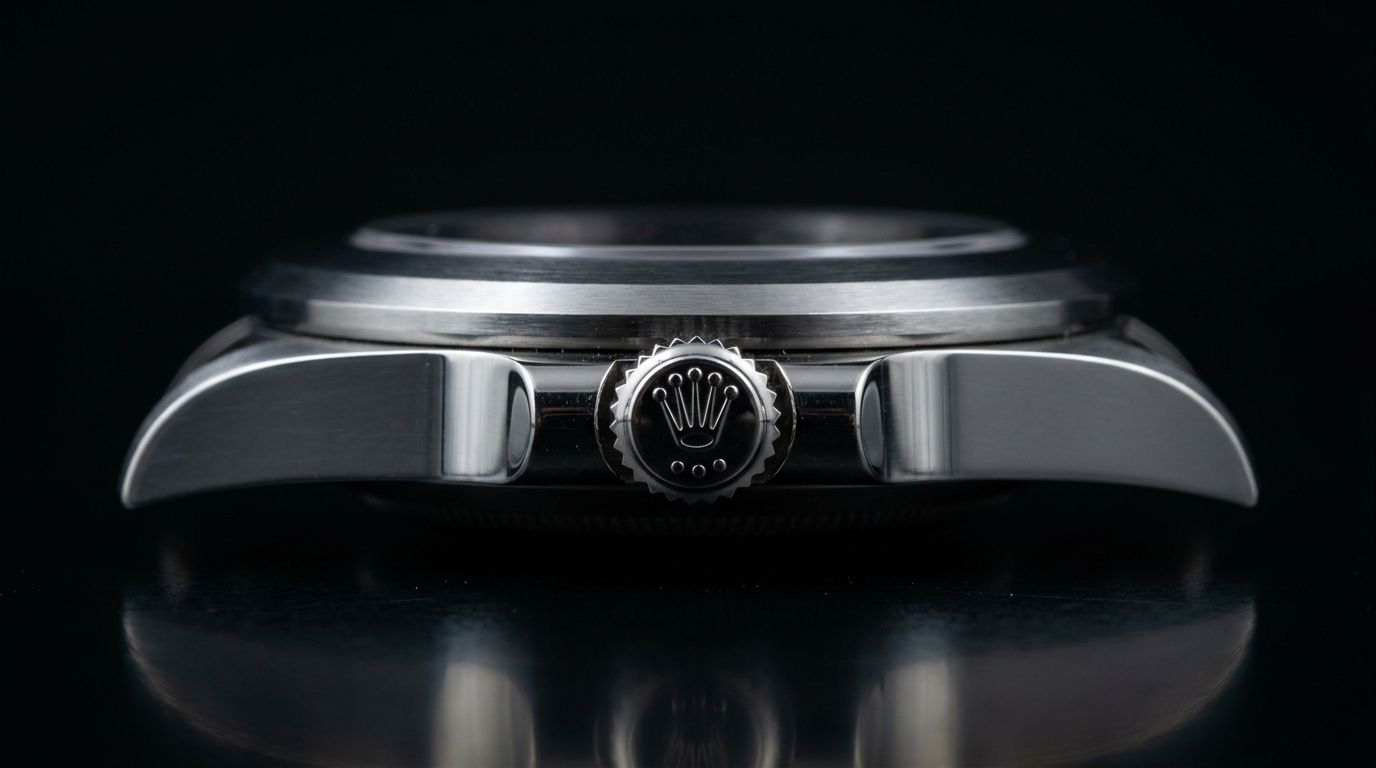
Rolex’s range appears broad — Oyster Perpetual, Datejust, Day-Date, Explorer, Submariner, Sea-Dweller, GMT-Master II, Daytona, Yacht-Master, Sky-Dweller, 1908 — but strategically it is narrow. Most models are variations on automatic, water-resistant, time-and-date or time-only watches with carefully managed complications. The Sky-Dweller, introduced in 2012, is the outlier: an annual calendar with dual time zone and Ring Command bezel interface, powered by calibre 9001 and later 9002. It is arguably the most technically ambitious modern Rolex, yet it remains less central to the brand’s identity than the Submariner or Daytona.
The Cellini line, long the awkward formal limb of the catalogue, never resolved Rolex’s dress-watch problem. The 1908 collection, introduced in 2023 after the Cellini’s discontinuation, is a cleaner attempt: precious metal, slim profile, calibre 7140, small seconds, transparent caseback. It is competent and overdue. But Rolex is not Patek Philippe in evening wear, and pretending otherwise would be a mistake. The brand’s authority comes from sport-luxury durability, not ultra-thin refinement or hand-finished complication craft.
The Day-Date, introduced in 1956, remains the exception that proves the rule. It is a status watch, but also a structurally disciplined one: precious metal only, President bracelet, day and date apertures, unmistakable case architecture. References from the 1803 to the modern 228238 show how Rolex can preserve social symbolism without changing the grammar too much. The Datejust, introduced in 1945, is even more important commercially. In 36 mm or 41 mm, steel, Rolesor, fluted or smooth bezel, Jubilee or Oyster bracelet, it is the great modular Rolex — not the watch enthusiasts shout about most, but likely the one that best explains the company’s scale.
The Competitive Reality
Rolex’s nearest competitors each attack one portion of its territory. Omega contests technical credibility and sports-watch history through the Speedmaster, Seamaster, co-axial movements, and Master Chronometer certification. Cartier rivals it in design recognition with the Tank and Santos, though on different mechanical terms. Audemars Piguet owns the high-luxury integrated-bracelet conversation through the Royal Oak but is far more concentrated. Patek Philippe commands greater prestige at the top end, yet the Nautilus allocation dynamic is narrower and more fragile. Tudor, owned by the Hans Wilsdorf Foundation and relaunched internationally with force in the 2010s, absorbs some of the tool-watch demand Rolex no longer chooses to satisfy at accessible prices.
The crucial difference is that Rolex does not need any single model to carry the company. If Daytona demand cools, the Submariner remains. If the coloured Oyster Perpetual moment fades, the Datejust continues. If collectors argue about 40 mm versus 41 mm, the GMT-Master II still has structural appeal. The portfolio is diversified within a very coherent design language. That is hard to build and even harder to maintain without becoming dull.
The Editorial Verdict
Rolex is not the most romantic watchmaker, not the most transparent, not the most artisanal, and not the most daring. It is, however, the most strategically complete luxury watch company in the world. Its strength lies in the alignment of industrial quality, conservative design, private ownership, controlled distribution, residual-value confidence, and a century of public proof. Few brands have made fewer mistakes at scale.
The criticism that Rolex is too safe is valid only if one judges watchmaking primarily by novelty. Judged by ownership outcomes, cultural durability, and mechanical dependability, safety is the point. A Submariner 124060, GMT-Master II 126710BLRO, Explorer 124270, Datejust 126234, or Daytona 126500LN is not compelling because it is surprising. It is compelling because almost every part of the system around it — the design history, the service network, the market liquidity, the calibre architecture, the bracelet quality, the brand memory — reinforces the decision long after purchase.
That system can be frustrating. It can make buyers feel managed rather than served. It can encourage speculation, dealer games, and an unhealthy fixation on allocation. Rolex should not be excused for the coldness of the modern retail experience. But the deeper truth remains: the watches still justify much of their authority when separated from the noise around them. Rolex has built the rarest thing in mechanical watchmaking: not scarcity, but trust at enormous scale.
For collectors, the sensible position is neither blind devotion nor reflexive backlash. Rolex deserves scrutiny precisely because it matters. Its modern watches are expensive, highly controlled, and often difficult to buy at retail. They are also among the most resolved mechanical objects in regular production. In a market where many brands confuse attention with value, Rolex continues to do something more powerful. It turns continuity into capital.