F.P. Journe: The Independent Watchmaker That Turned Scarcity Into Strategy
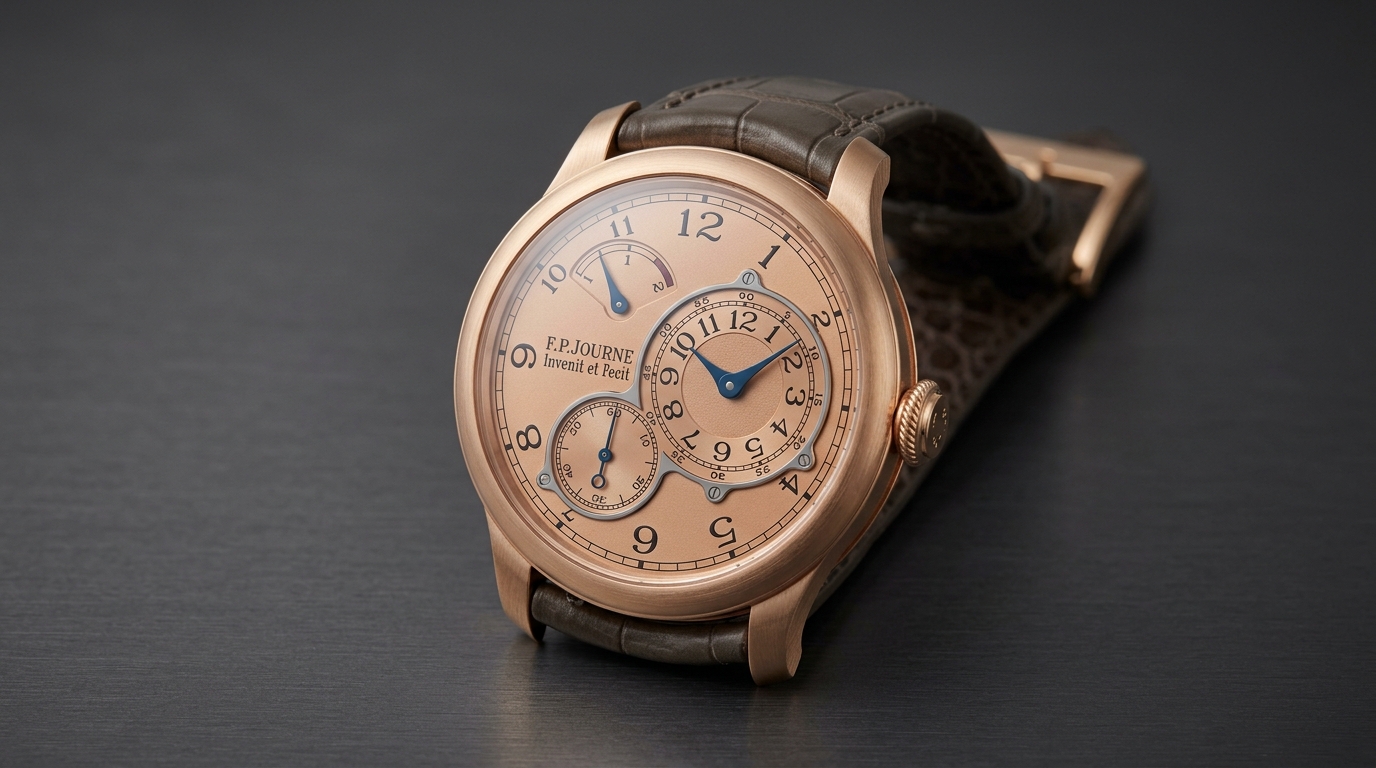
F.P. Journe: The Independent Watchmaker That Turned Scarcity Into Strategy
F.P. Journe is no longer a small secret exchanged between collectors at auction previews; it is a modern power brand that happens to produce fewer watches in a year than Rolex can make before lunch. That tension is the central reason the marque matters. François-Paul Journe built his reputation on intellectually serious watchmaking, but the company’s current strength rests just as much on distribution discipline, production restraint, and a founder-led mythology that has proved unusually durable in the secondary market.
The result is a brand that demands more careful analysis than the usual adjectives allow. F.P. Journe is not interesting because it is “independent” in the abstract. It is interesting because, since 1999, Montres Journe SA has built a coherent commercial system around a narrow set of mechanical ideas: resonance, remontoir d’égalité, long-power-reserve automatics, chronometric displays, and complications framed as engineering arguments rather than decoration. The best Journe watches are not merely rare. They are rare for reasons embedded in the company’s architecture.
The Founder as Technical Asset
François-Paul Journe, born in Marseille in 1957, belongs to the generation of watchmakers who came of age before independent horology became a capital market category. He studied in Paris and worked restoring important historical clocks and watches, an apprenticeship that matters because it explains the brand’s vocabulary. Journe’s references are not generic Swiss luxury cues; they are Antide Janvier, Abraham-Louis Breguet, marine chronometry, constant force, and the problem of stable timekeeping under changing conditions.
His first completed tourbillon pocket watch, finished in 1983, established the template: old horological problems, contemporary execution, and a visible claim of authorship. When Montres Journe SA was formally launched in Geneva in 1999, the company adopted the motto “Invenit et Fecit” — invented and made. In an industry where many brands buy movements, cases, dials, and increasingly narratives, that phrase is unusually specific. It is also a burden. Journe watches must justify themselves mechanically.
The brand’s early production was funded partly through subscription-style sales to collectors, a model with deep historical precedent and modern strategic value. The early Tourbillon Souverain Souscription pieces and Chronomètre à Résonance Souscription pieces were not simply first editions; they created a client class emotionally and financially aligned with the maker. Those watches now sit at the foundation of the F.P. Journe market, particularly the brass-movement era pieces produced before the transition to 18k rose gold movements in 2004.
Why the Early Brass Era Matters
The most important dividing line in F.P. Journe collecting is not case metal, dial colour, or even complication. It is movement architecture and period. Early Journe movements used brass plates and bridges, before the manufacture moved to 18k rose gold for movement construction from 2004 onward. The brass pieces are not automatically better watches; in some cases, later gold-movement versions are more refined, more stable in production quality, and more representative of the mature manufacture. But the brass era carries historical primacy, and markets pay for origin stories when the origin is small, documented, and technically consequential.
The Tourbillon Souverain Remontoir d’Égalité is the decisive example. Introduced at the birth of the brand, it combined a tourbillon with a remontoir d’égalité, a constant-force mechanism designed to deliver more even energy to the escapement. In wristwatch terms, the concept was not a decorative tourbillon for the post-1990s luxury boom; it was an argument that the tourbillon still had chronometric relevance if paired with energy regulation. Later versions added deadbeat seconds, broadening the technical signature and making the dial more legible as a mechanism.
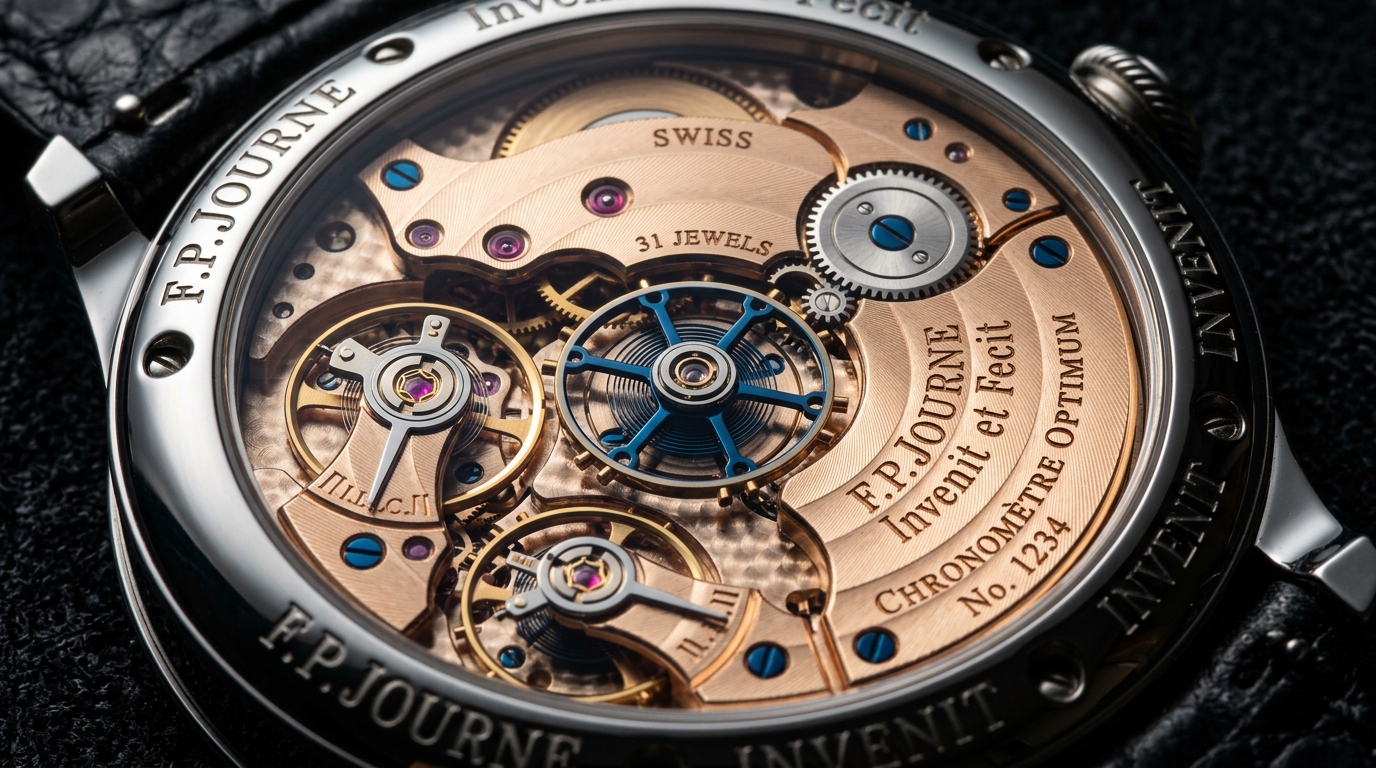
The Chronomètre à Résonance, launched in 2000, may be even more central to the brand’s identity. Its calibre 1499 and later variations use two independent escapements placed close enough for resonance effects to influence rate stability. The idea descends from Janvier and Breguet but remains difficult to execute convincingly in a wristwatch. Journe’s solution was not a historical copy; it was a modern wristwatch proposition that made resonance visible through two time displays and, in earlier generations, through a symmetrical dial layout that has become one of the most recognisable signatures in independent watchmaking.
Production Restraint as Brand Architecture
F.P. Journe’s annual production is generally cited at roughly 900 to 1,000 watches, though the company does not operate like a publicly reporting industrial group. That scale is sufficiently small to preserve scarcity but large enough to sustain boutiques, service infrastructure, and a global collector base. This is one of the reasons the brand has separated itself from many independents: it is not a one-man atelier in commercial terms, but neither is it a volume manufacturer constrained by shareholder pressure to broaden the catalogue beyond coherence.
The boutique strategy is critical. F.P. Journe opened its Tokyo boutique in 2003, unusually early for an independent watchmaker, and subsequently expanded into key collector cities. Direct retail changed the power balance. Instead of relying entirely on multi-brand retailers, the manufacture gained greater control over allocation, pricing discipline, and client data. That control became especially important during the 2020–2022 secondary-market surge, when pieces such as the Chronomètre Bleu and Élégante rose far beyond their original retail positioning.
The 2018 acquisition of a 20 percent minority stake by Chanel also deserves a sober reading. It did not turn F.P. Journe into a fashion-owned brand, nor did it erase the founder’s control. Chanel has made similar strategic investments in independent or high-craft watchmaking assets, including Romain Gauthier and Bell & Ross, and its involvement is best understood as patient capital rather than operational takeover. For Journe, the investment provided continuity and stability without the reputational damage that would likely follow a full sale to a conglomerate.
The Octa: Commercial Intelligence in Mechanical Form
The Octa line, introduced in 2001, is the most commercially important technical platform in the brand’s history. Its automatic calibre 1300 was designed around an unusually practical objective: a 120-hour power reserve, automatic winding, and enough architectural flexibility to support multiple indications. The Octa Réserve de Marche, Octa Calendrier, Octa Lune, and related models allowed Journe to build a family of watches without diluting the brand into unrelated movement projects.
That matters because many independent brands fail not from lack of craft, but from lack of platform discipline. A manufacture cannot survive indefinitely on heroic complications alone. The Octa gave F.P. Journe a recurring base calibre that was both technically distinctive and commercially rational. Its off-centre displays, large date configurations, and asymmetrical dial grammar made the watches recognisably Journe while avoiding the derivative minimalism that weakened many early-2000s independents.
The Octa also demonstrates where Journe can be more pragmatic than purists admit. The brand’s identity is often framed around chronometric purity, yet the Octa is as much about ownership convenience as theoretical performance. Five days of reserve in an automatic watch is not romantic; it is useful. In that sense, the Octa may be the clearest evidence that Journe’s best work joins intellectual watchmaking with lived practicality.
Chronomètre Souverain and the Discipline of Simplicity
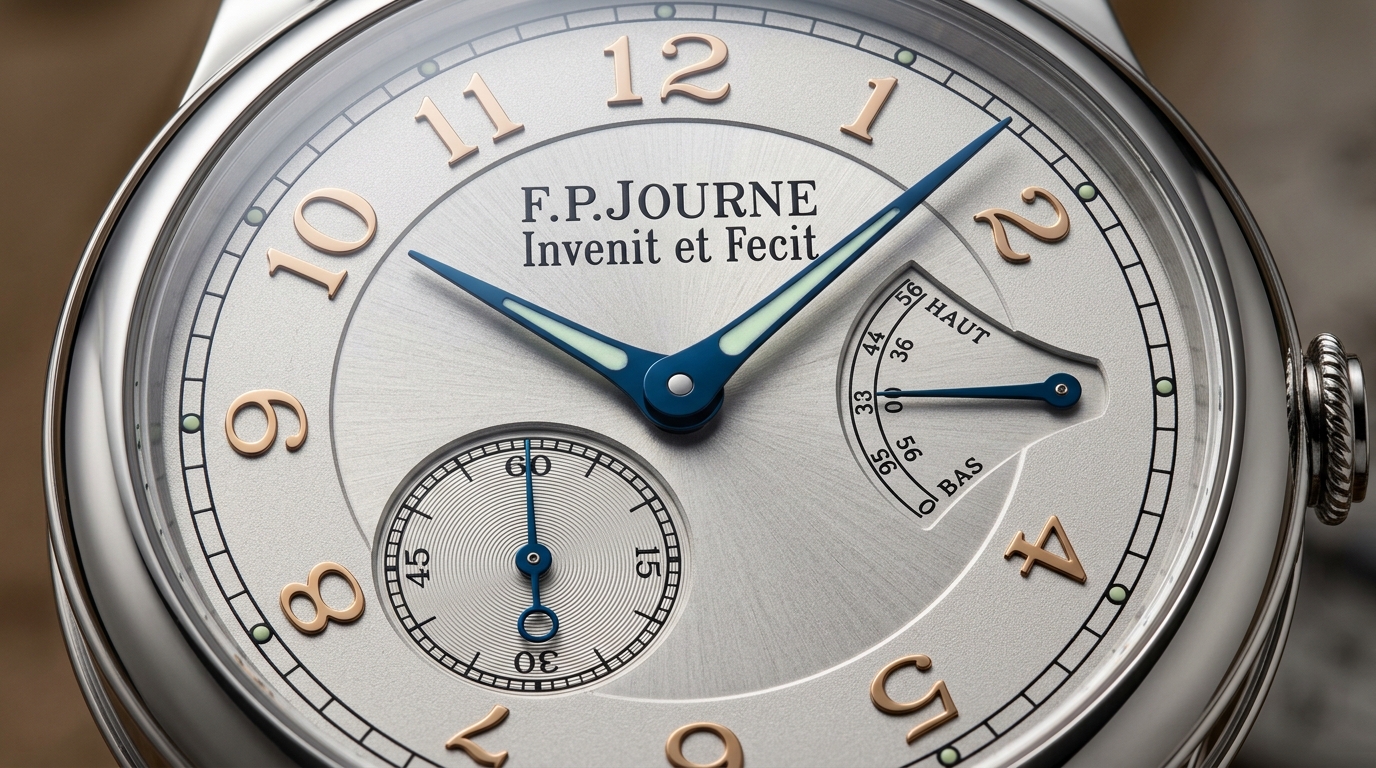
The Chronomètre Souverain, introduced in the mid-2000s, is the watch that reveals whether one understands F.P. Journe beyond the headline complications. Powered by the hand-wound calibre 1304 in 18k rose gold, with twin barrels and a traditional chronometer layout, it is not simple because it lacks ideas. It is simple because the idea has been reduced to rate stability, dial balance, and restraint.
In collector terms, the Chronomètre Souverain functions as the brand’s intellectual baseline. It lacks the automatic convenience of the Octa, the theatre of the Tourbillon, and the conceptual force of the Résonance. Yet it may be the purest daily expression of Journe’s watchmaking language: offset sub-seconds, power reserve indication, slim case proportions, and a movement finished in a manner that is attractive without becoming ornamental excess.
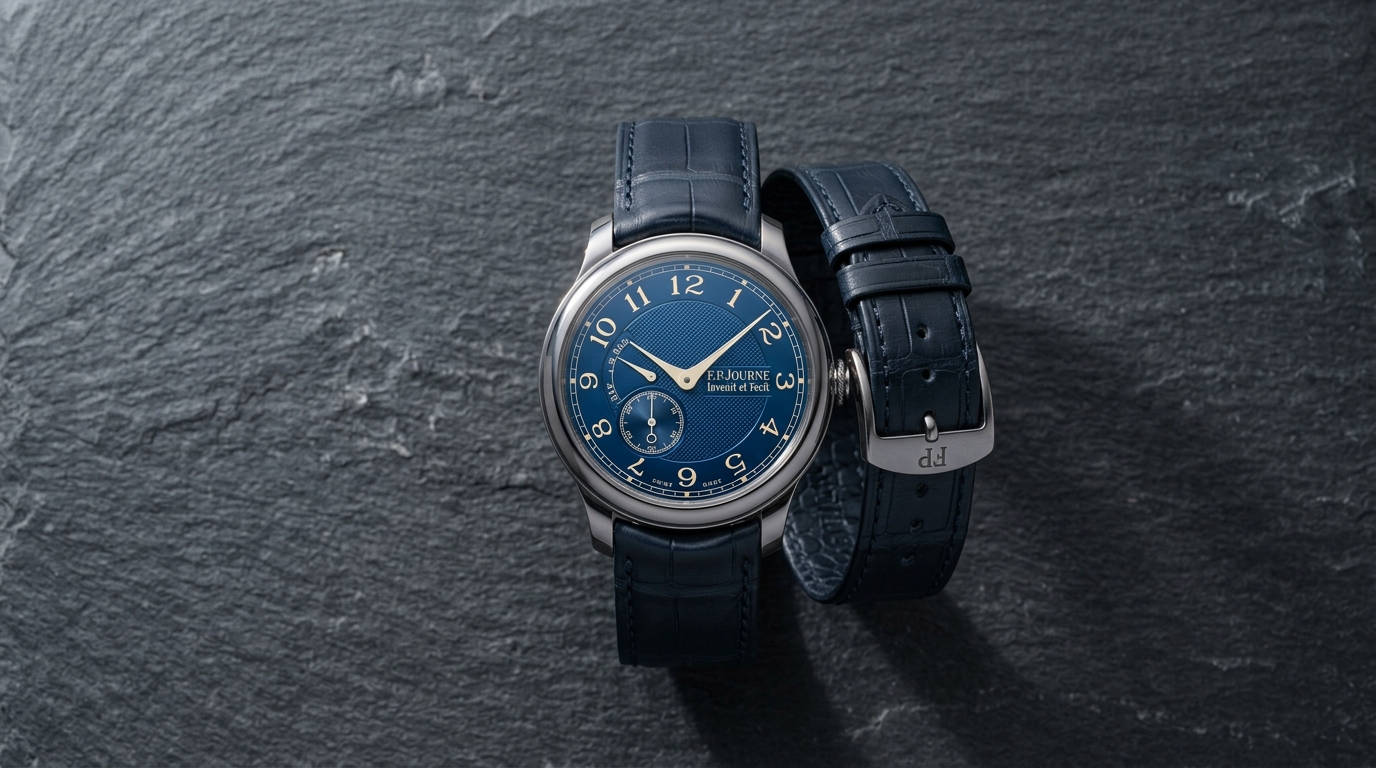
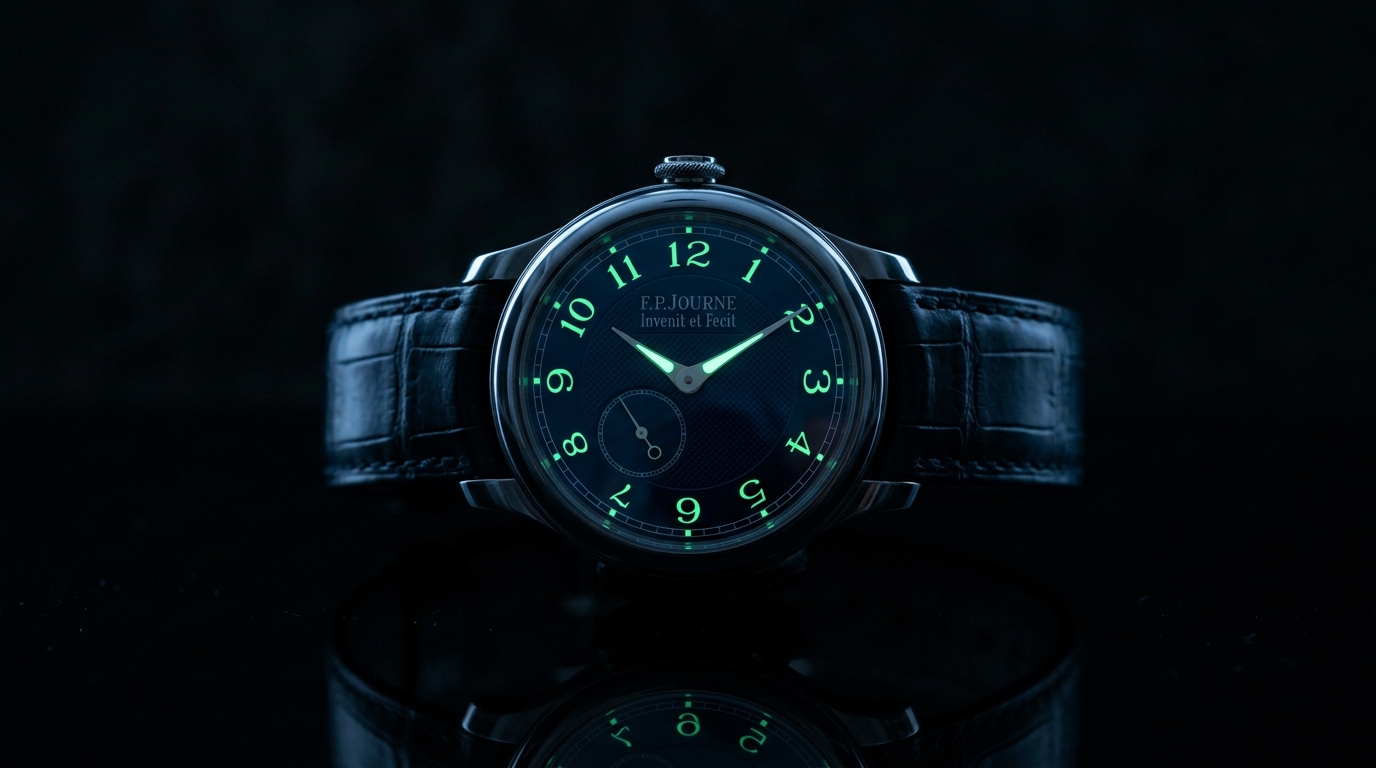
The related Chronomètre Bleu, launched in 2009 in a tantalum case with a blue dial and calibre 1304, became a market phenomenon for reasons both legitimate and uncomfortable. It was once understood as an accessible entry into Journe; by the early 2020s it had become one of the most aggressively repriced modern independents. The watch is excellent, but the market premium has often reflected access and social signalling more than horological complexity. A collector paying a large multiple for a Chronomètre Bleu should be honest about what is being bought: design, scarcity, and brand position, not mechanical superiority over every other Souverain reference.
Complication Without Theatrics
F.P. Journe’s major complications are strongest when they solve specific horological problems rather than merely inventory complications. The Sonnerie Souveraine, introduced in 2006, is a serious example. Grand and petite sonnerie wristwatches are among the most difficult mechanisms to make reliably because they must manage energy, striking sequences, wearer safety, and acoustic performance. Journe’s use of a steel case was not an aesthetic contrivance; steel can improve resonance and sound transmission compared with precious metals. The watch reportedly involved multiple patents and remains one of the more important chiming wristwatches of the modern independent era.
The Centigraphe Souverain, launched in 2007, is more controversial and more interesting than a standard chronograph. Its display architecture indicates elapsed times across scales including one second, 20 seconds, and 10 minutes, with a claimed ability to read fractions down to one-hundredth of a second. The mechanical interpretation has been debated, but the relevant point is that Journe did not produce a conventional lateral-clutch chronograph in finer clothing. He made a chronograph that forced a discussion about what a mechanical display can meaningfully show.
The Astronomic Souveraine, presented in the late 2010s, pushed the manufacture toward maximal complication: tourbillon, minute repeater, equation of time, sidereal time, second time zone, annual calendar, and astronomical indications. It is technically commanding, but it also reveals the edge of the Journe proposition. The brand is most convincing when complexity feels inevitable. When complication density becomes the argument, Journe risks entering a field where Patek Philippe, Vacheron Constantin, and Audemars Piguet have multi-generational institutional advantages.
The Élégante and the Quartz Problem
The Élégante, introduced in 2014, remains one of the most revealing products F.P. Journe has made. Its electromechanical calibre, with a motion detector that allows the watch to enter standby and preserve battery life, was aimed initially at women but later became a broader collector object. The watch challenges the lazy assumption that independent horology must be mechanical to be legitimate.
Mechanically minded collectors were slow to accept it, then the market overcorrected. By 2021 and 2022, Élégante prices in some configurations had moved with the same speculative energy affecting steel sports watches and hyped independents. The underlying product is clever: an independently conceived quartz watch with genuine ergonomic and technical thought. But the mania around it proved that F.P. Journe had moved from connoisseur brand to allocation brand. That shift brings pricing power, but also reputational risk if enthusiasm becomes detached from substance.
Market Context: Strengths and Fault Lines
The secondary market for F.P. Journe is stratified with unusual clarity. At the top sit historically important early pieces: Souscription Tourbillon, early brass Chronomètre à Résonance, early Tourbillon Souverain examples, rare dial variants with strong documentation, and institutionally recognised complications. Below them are mature gold-movement pieces that often offer better wearing and ownership value than their market narratives suggest. Then come access-driven references, including the Chronomètre Bleu and certain Élégante executions, where price can be more sensitive to fashion cycles.
The 2020–2022 boom pulled F.P. Journe into the same liquidity environment that lifted Philippe Dufour, De Bethune, early Richard Mille, and selected high-grade Patek Philippe references. Since then, more selective pricing has returned. That is healthy. A market in which every Journe is treated as equally scarce is analytically weak. A brass Résonance with strong provenance and a common later automatic Octa should not be discussed with the same valuation logic, even if both carry the same signature on the dial.
Condition and service history are especially important. F.P. Journe watches are modern, but they are not commodity products with infinite parts availability at every local watchmaker. Early brass movements, resonance systems, sonnerie mechanisms, and complicated calibres require specialist care. The manufacture’s service capacity is part of the ownership equation. A watch bought purely as an asset without consideration for service pathway is not a sophisticated purchase; it is inventory speculation.
Design Language: Recognisable Because It Is Functional
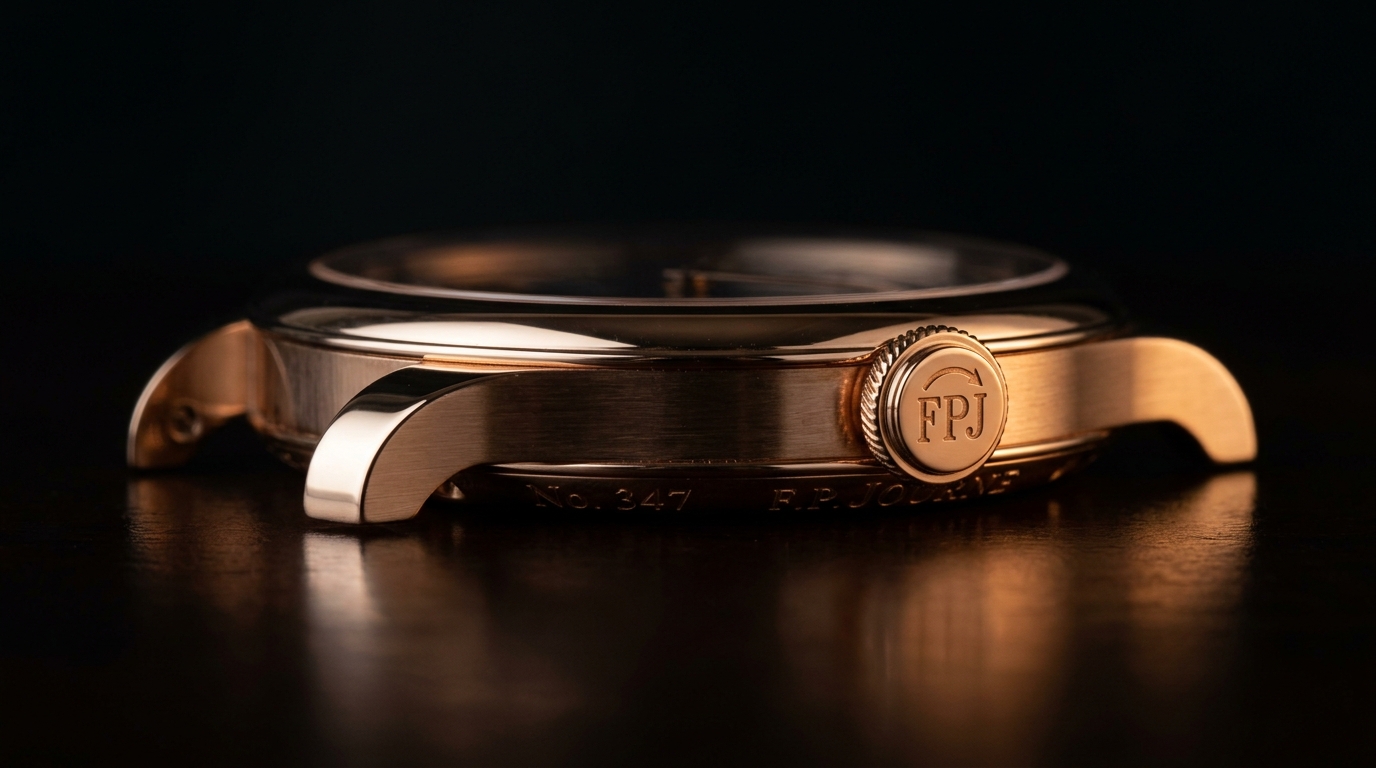
Journe’s design is sometimes described as quirky, but that understates its discipline. The offset dials, exposed screws, flat bezels, knurled crowns, and asymmetric indications are not random eccentricities. They arise from mechanical layouts and an insistence that the display declare the movement’s logic. This is why the watches have aged better than many independent designs from the same period. They do not look like generic luxury watches with unusual movements inside.
The cases are typically restrained in diameter, especially compared with the oversized independents of the 2000s. The 38mm and 40mm Journe cases have become distinct collecting categories, with 38mm pieces often carrying added appeal because they connect more directly to the brand’s early proportions. Again, nuance matters. Smaller is not always better, but in Journe’s case the compact case often intensifies the technical density of the object.
Dial materials and finishing also matter, particularly because Journe has used colour strategically without becoming a colour brand. The blue of the Chronomètre Bleu, the ruthenium dials of limited series, boutique-specific Black Label configurations available to existing clients, and the distinctive silver guilloché or grained finishes across Souverain and Octa references each occupy different places in the hierarchy. The strongest dials support the complication. The weakest market behaviour occurs when dial scarcity becomes the entire thesis.
Where F.P. Journe Stands Now
F.P. Journe occupies a rare position in contemporary watchmaking: independent enough to carry founder authority, established enough to maintain global retail and service infrastructure, and scarce enough to remain structurally difficult to obtain. The Chanel minority stake adds a layer of succession logic without currently diluting the brand’s identity. That combination is powerful, but it is not invulnerable.
The long-term challenge is succession of authorship. Brands such as Patek Philippe and Vacheron Constantin are institutions; their legitimacy survives individual designers and watchmakers. F.P. Journe is still deeply tied to François-Paul Journe himself. That is a strength as long as the founder’s judgement defines the product. It becomes a strategic question as the brand matures beyond its first generation.
For collectors, the editorial position is clear: F.P. Journe deserves its status, but not every F.P. Journe deserves the same premium. The landmark watches are genuinely important to modern horology: the Tourbillon Souverain Remontoir d’Égalité, Chronomètre à Résonance, Octa platform, Chronomètre Souverain, Sonnerie Souveraine, and selected later complications. The brand’s greatest achievement is that these watches form a connected argument rather than a catalogue of unrelated novelties.
That is why F.P. Journe remains the most strategically complete independent watch brand of the modern era. It turned chronometric ideas into products, products into a controlled retail network, and scarcity into a durable market position. The best examples will likely remain important because they are not merely rare; they are specific, authored, and mechanically legible. In a market often distracted by allocation and colour, that specificity is the real asset.