TAG Heuer: The Chronograph Brand Trying to Reconcile Heritage, Volume and Credibility
TAG Heuer: The Chronograph Brand Trying to Reconcile Heritage, Volume and Credibility
TAG Heuer’s central problem is not that it lacks history. It has more usable history than most brands competing between Tudor, Longines, Breitling and Omega. The problem is that TAG Heuer has often treated that history as inventory rather than as discipline. When the brand is sharp, it makes watches that feel inseparable from timing, racing and industrial precision. When it is loose, it becomes a logo stretched across too many cases, quartz models, smartwatches and celebrity associations. The current TAG Heuer story is therefore not a simple comeback narrative. It is a test of whether one of Swiss watchmaking’s most commercially visible names can convert genuine chronograph legitimacy into sustained collector trust.
The Heuer Foundation Still Matters
Before TAG, before LVMH, before Formula 1 sponsorships and connected watches, there was Heuer: founded in 1860 by Edouard Heuer in Saint-Imier. The company’s early importance was technical rather than decorative. Heuer patented the oscillating pinion in 1887, a compact chronograph coupling system that remains widely used in modern chronograph calibres, including movements far beyond TAG Heuer’s own catalogue. That single invention matters because it places Heuer inside the mechanics of the chronograph, not merely alongside its mythology.
The first half of the twentieth century deepened that timer identity. Heuer produced dashboard instruments for automobiles and aircraft, including the Autavia name first used in 1933 as a contraction of automobile and aviation. In 1916, the Mikrograph stopwatch measured to 1/100th of a second, giving Heuer a legitimate claim in precision sports timing long before such terms became marketing copy. The company served Olympic timing roles in the 1920s and built a practical business around stopwatches, rally timers and chronographs. This is why TAG Heuer’s best modern watches still make most sense when they look like instruments rather than jewellery.
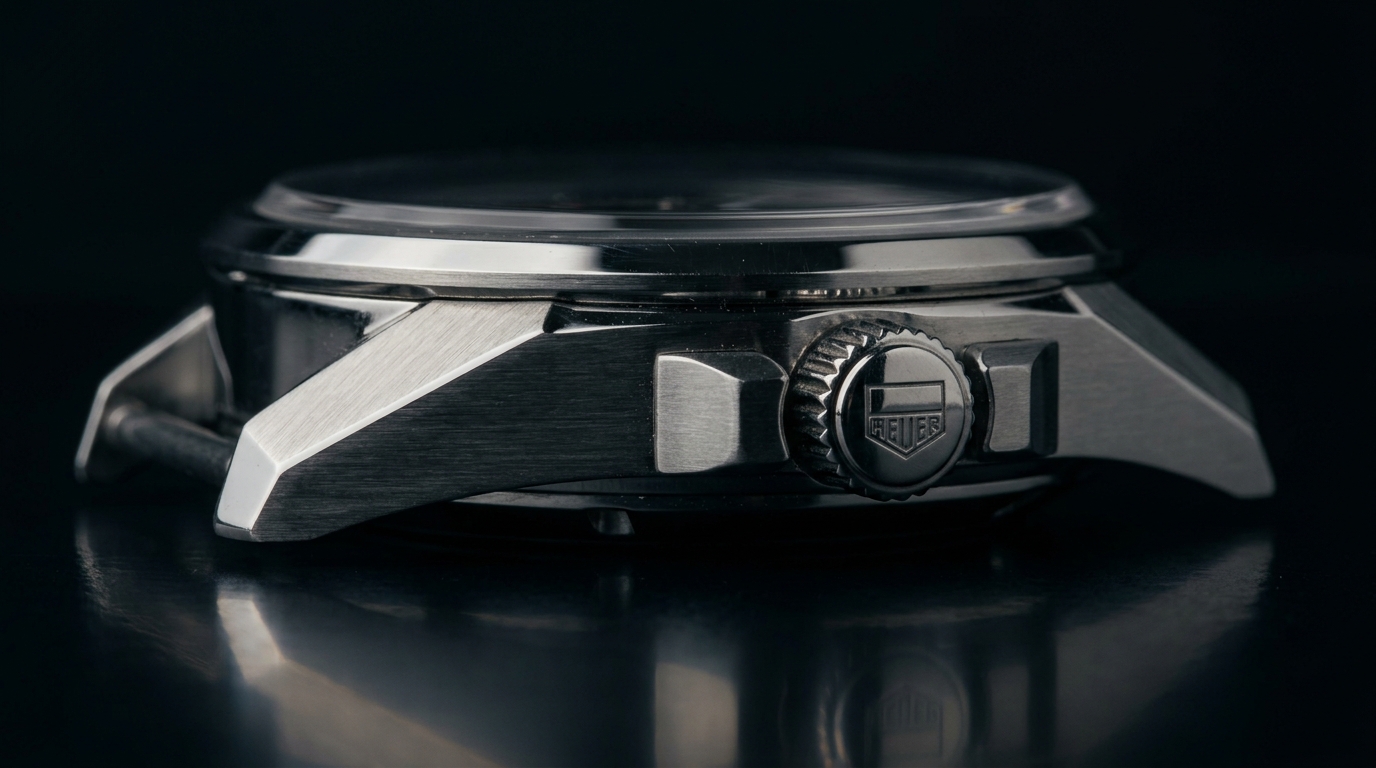
Jack Heuer’s tenure gave the brand its collector canon. The Carrera arrived in 1963, named after the Carrera Panamericana road race, and early references such as the 2447 carried clean dials, faceted lugs and strong legibility without the over-styling that later decades would impose. The Autavia 2446, with its rotating bezel and muscular case, gave Heuer a credible motorsport and tool-watch platform. The Monaco, launched in 1969 as reference 1133, added the square case and automatic chronograph movement that made it visually and mechanically distinct. These watches are not important because they are old; they are important because their specifications, proportions and use cases remain coherent.
1969: Calibre 11 and the Useful Complication of Myth
TAG Heuer’s modern identity leans heavily on 1969, and for good reason. That year, Heuer, Breitling, Hamilton-Buren and Dubois-Depraz introduced the Calibre 11 automatic chronograph project, competing historically with Zenith’s El Primero and Seiko’s 6139. Heuer’s Calibre 11 powered the Monaco, Autavia and Carrera in different forms, and its left-side crown became one of the most recognisable layout signatures of the period. The technical architecture was not as elegant as Zenith’s integrated high-frequency El Primero; Calibre 11 was modular, using a Buren micro-rotor base with a Dubois-Depraz chronograph module. But commercial watch history is rarely won by purity alone. Heuer built a design language around the movement quickly and effectively.
The Monaco 1133B is the best example. Its association with Steve McQueen in the 1971 film “Le Mans” has been repeated so often that it risks obscuring the watch itself. Yet the watch deserved attention before the film connection: a square waterproof case by Piquerez, blue dial, red accents, horizontal markers and a shape that resisted the round-case conservatism of Swiss chronographs. Modern Monaco reissues vary in success, but the core design remains strong because it was never a generic racing watch. It was a specific object born from a specific moment in Swiss industrial design.
The TAG Years: Commercial Intelligence and Collector Damage
Techniques d’Avant Garde acquired Heuer in 1985, creating TAG Heuer, and the transaction was more than a name change. It moved the company decisively into a louder, more mass-market era. The 1980s and 1990s TAG Heuer watches, including the Formula 1 models launched in 1986 and the S/el line associated with Ayrton Senna, were commercially astute. They put the brand on wrists that were not buying hand-wound Carreras or vintage Autavias. Quartz was not a sin in that context; it was the market reality after the Swiss industry had been battered by Japanese competition.
The collector cost was subtler. The brand became associated with accessible aspirational watches, department-store visibility and sports sponsorships at enormous scale. That brought volume and recognition, but it also diluted the distinction between Heuer’s chronograph authority and TAG Heuer’s lifestyle positioning. Even today, some collectors separate “Heuer” from “TAG Heuer” with unnecessary rigidity, but the prejudice did not emerge from thin air. Too many modern references from the 1990s and 2000s were built around branding first and watchmaking second.
LVMH acquired TAG Heuer in 1999, placing it in the same group that later consolidated Zenith, Hublot and Bulgari. Under LVMH, the brand had capital, distribution and access to group-level industrial thinking. It also had the burden of justifying volume. TAG Heuer could not become a small connoisseur’s chronograph maker even if some enthusiasts wanted it to. Its strategic role inside LVMH has been to occupy the premium sports-watch tier: more visible and contemporary than Longines, less expensive than much of Omega, broader than Zenith, and more motorsport-coded than Tudor.
Movements: The Long Route to Credibility
Movement strategy has been TAG Heuer’s most revealing weakness and its most important area of repair. For years, the brand relied heavily on outsourced ETA and Sellita bases, often renamed under “Calibre” designations. That was normal across the industry, but TAG Heuer’s technical messaging sometimes ran ahead of the mechanical substance. The 2010 introduction of Calibre 1887 became controversial because the architecture derived from Seiko Instruments’ TC78 platform, acquired and industrialised by TAG Heuer. The brand was entitled to develop and manufacture from that base, but the original communication invited criticism by not being sufficiently direct about the calibre’s origins.
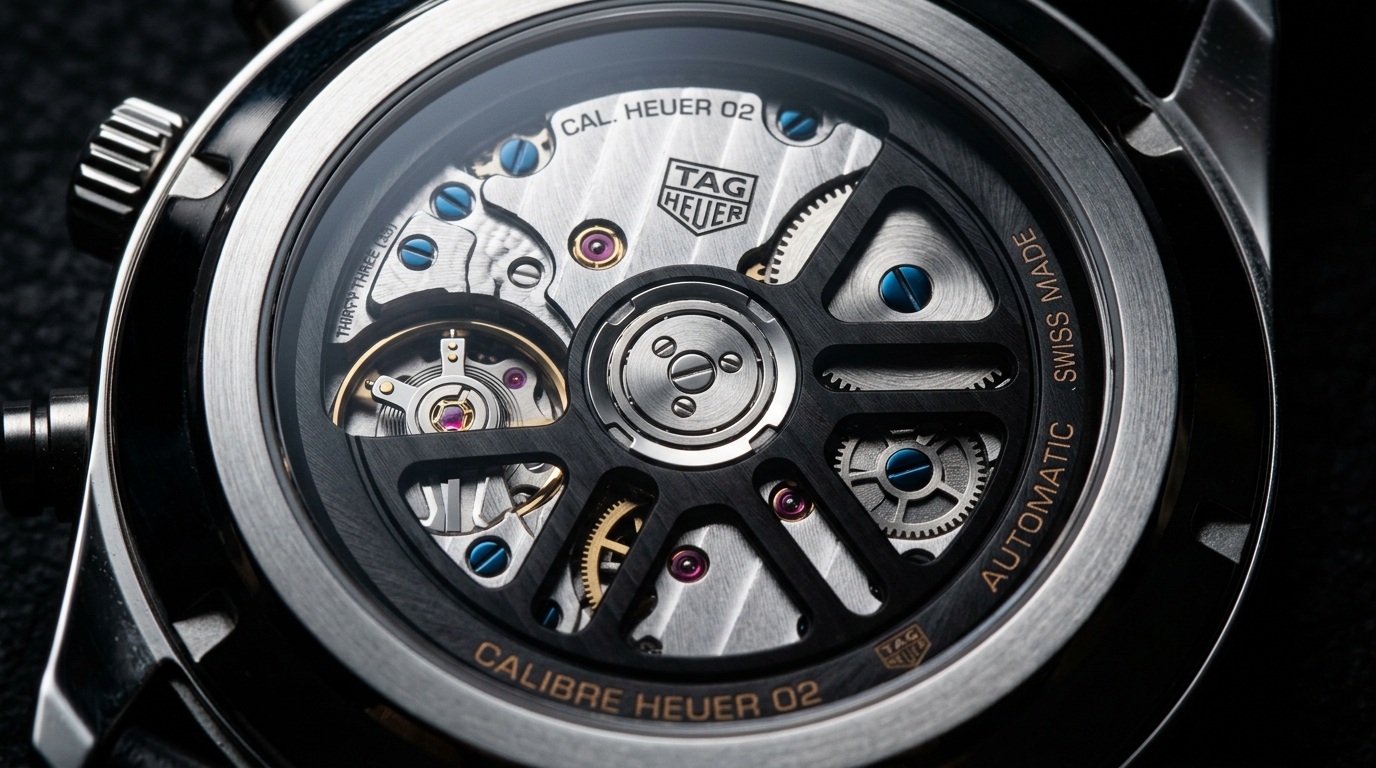
The later Heuer 01 and Heuer 02 families improved the picture. The Heuer 02, an integrated automatic chronograph with a column wheel, vertical clutch, approximately 80-hour power reserve and 4 Hz frequency, gave TAG Heuer a movement it could credibly place at the centre of its mechanical chronograph range. In 2023, TAG Heuer updated the movement as TH20-00, adding bidirectional winding and a five-year warranty in selected Carrera models. That matters because many buyers in the CHF 5,000 to CHF 7,000 range now compare specifications aggressively. Tudor offers manufacture movements and chronometer positioning; Breitling uses the B01 as a durable in-house argument; Longines competes on value through Swatch Group industrial scale. TAG Heuer cannot rely on case shape and nostalgia alone.
The brand’s experimental high-frequency work also deserves credit, though it has not always translated into mainstream collector affection. The Mikrograph 1/100th-second chronograph of 2011 and Mikrotimer 1/1000th-second concept showed that TAG Heuer could still think like a timing company. The problem was continuity. Conceptual brilliance does not automatically strengthen a retail case full of three-hand Aquaracers and quartz Formula 1s. The lesson is clear: TAG Heuer has the technical vocabulary, but it must apply it consistently where buyers actually engage.
Carrera: The Brand’s Most Important Test Case
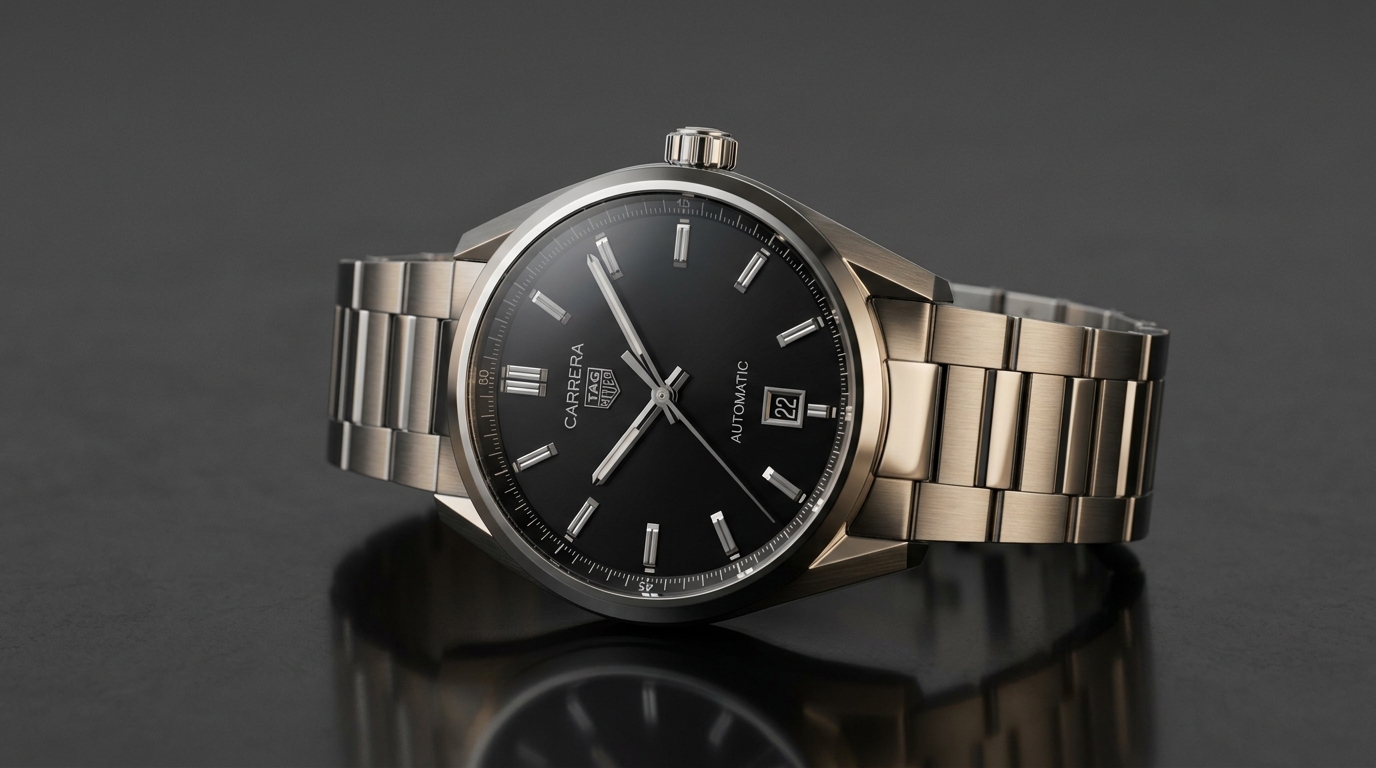
The Carrera is the line that best exposes TAG Heuer’s strengths and bad habits. In its purest form, the Carrera is one of the great chronograph designs: early 1960s clarity, thin bezels, tension-ring dial architecture and a refusal to over-decorate. Yet modern Carreras have often suffered from size inflation, openworked dials, aggressive lugs and tachymeter treatments that pushed the model toward generic performance styling. The Carrera name can carry almost anything commercially, which is exactly why it needs restraint.
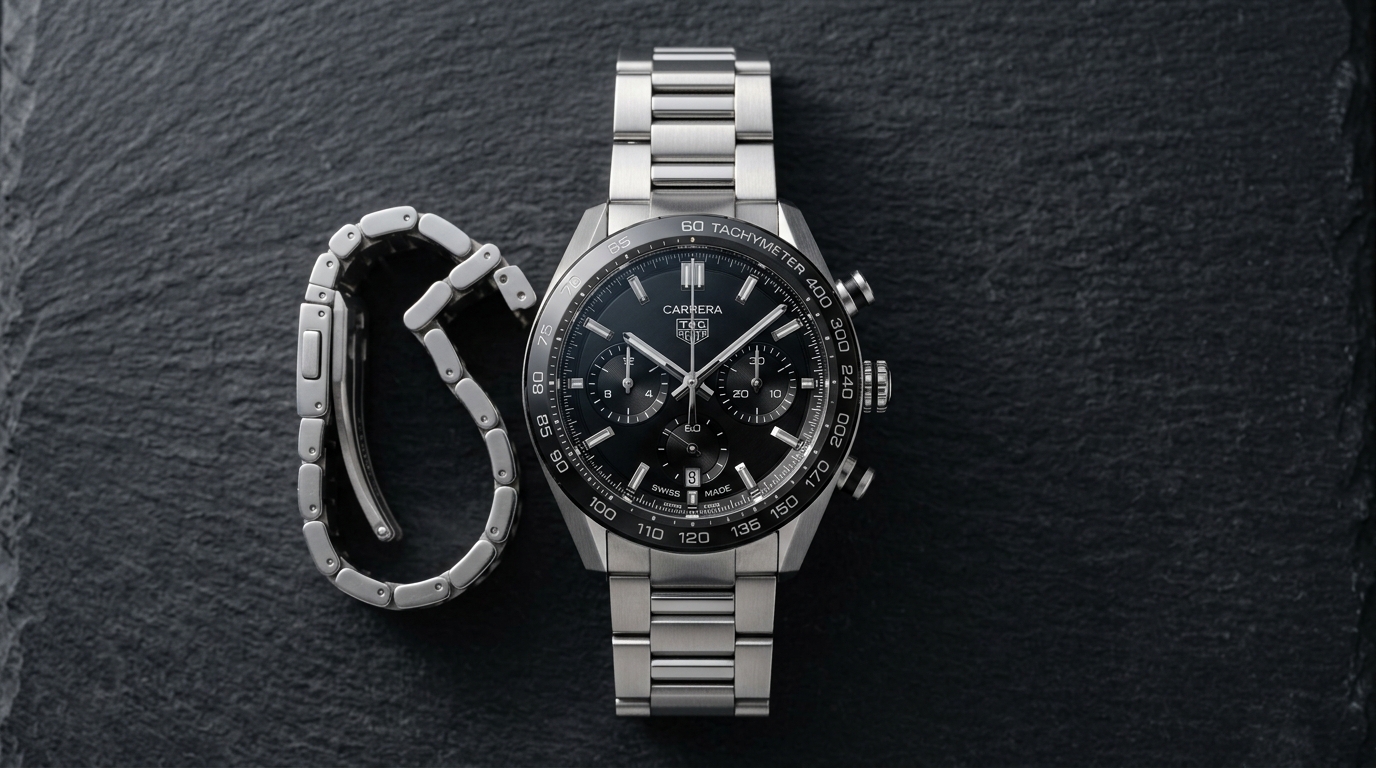
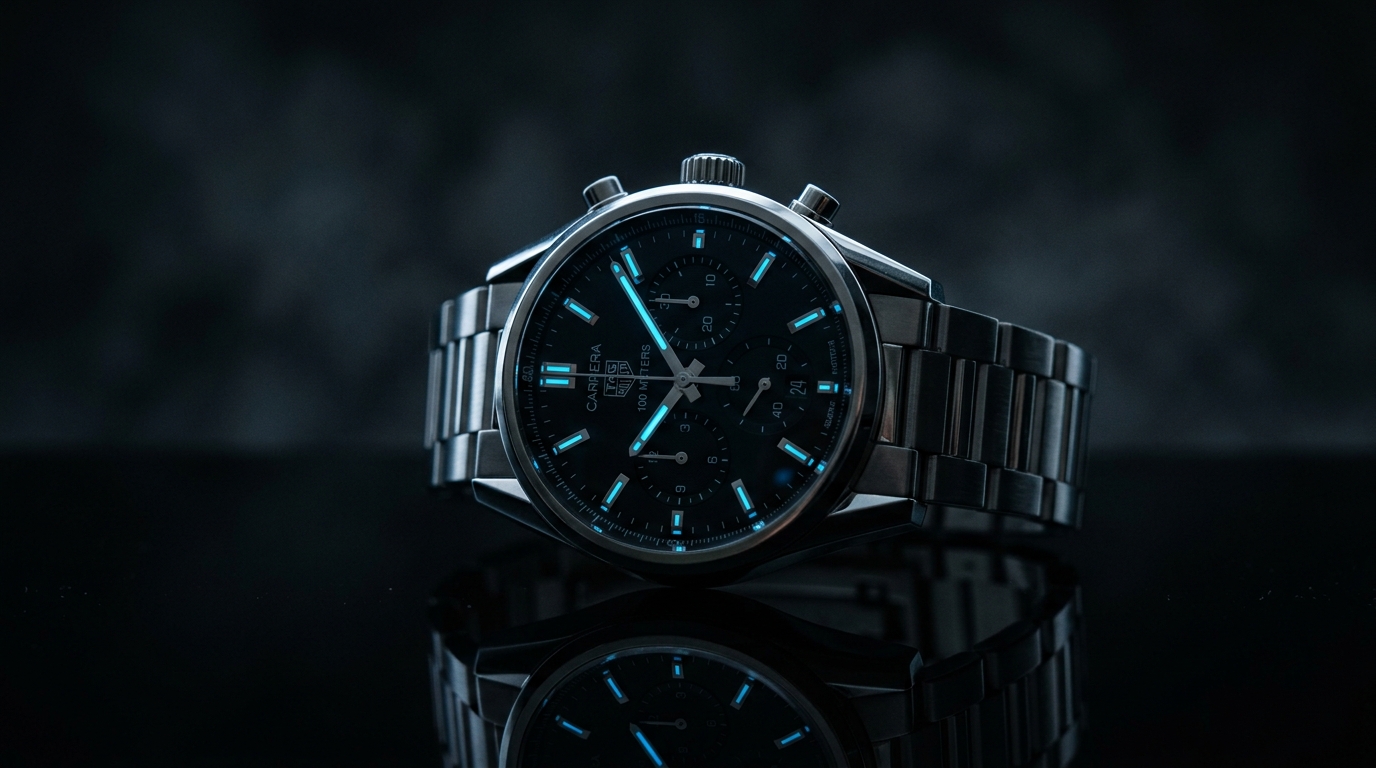
The recent “Glassbox” Carrera Chronograph, introduced for the model’s 60th anniversary in 2023, is one of the brand’s more convincing corrections. The 39 mm case, curved sapphire crystal, internal tension-style scale and TH20-00 movement show an understanding of the vintage Carrera without simply photocopying references such as the 2447. The black and blue dial versions, followed by models including the Carrera Skipper revival, work because the height, dial curvature and case diameter feel considered. They are not inexpensive, generally sitting around the mid-$6,000 range depending on market and strap or bracelet, but they finally give TAG Heuer a modern Carrera with a serious mechanical basis and proportions collectors can defend.
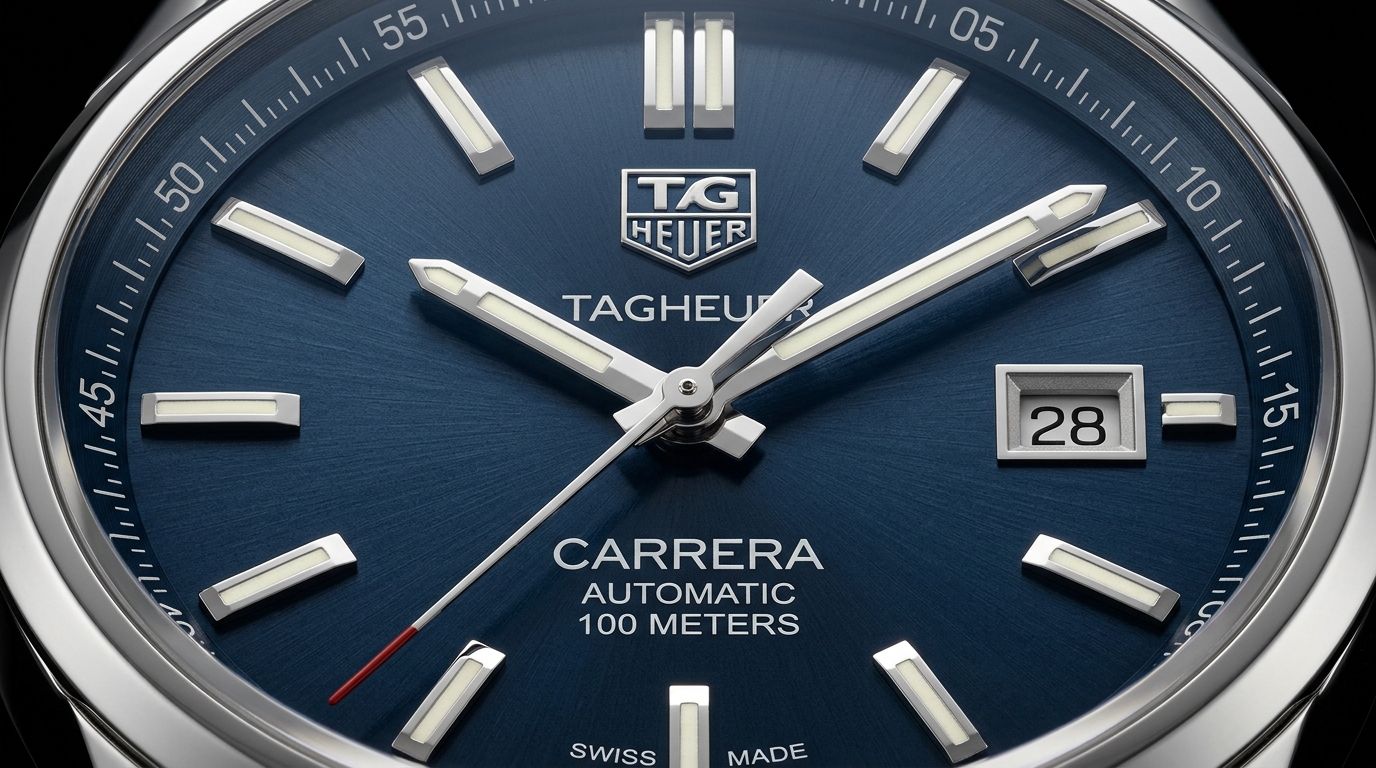
The Carrera Date and time-only models are more complicated strategically. They broaden the catalogue and serve buyers who want the name without the chronograph layout. That may be commercially necessary, but it is not where the Carrera’s authority lies. A three-hand Carrera can be attractive; it cannot carry the same historical weight as a chronograph tied to Jack Heuer’s 1963 brief. TAG Heuer should resist letting the Carrera become a catch-all dress-sport platform. The brand already has enough breadth. What it needs is sharper hierarchy.
Monaco and Autavia: Icons With Uneven Stewardship
The Monaco remains TAG Heuer’s most recognisable non-round watch and one of the few square chronographs with broad public awareness. Modern references such as the Monaco Calibre 11 preserved the left-side crown and McQueen-adjacent dial language, while newer Heuer 02-powered Monacos moved the crown to the conventional side and improved mechanical substance. The trade-off is obvious: one serves the icon; the other serves the movement architecture. Neither path is inherently wrong, but TAG Heuer has sometimes overproduced limited editions, anniversary colours and boutique variants to the point where scarcity becomes less convincing than the press release implies.
The Autavia has had a more troubled modern life. Vintage Autavias, especially compressor-case and bezel variants from the 1960s, are among the most compelling Heuer watches. The modern Autavia chronograph revival in 2017, selected through an enthusiast vote and powered by the Heuer 02, showed promise but did not become the stable pillar it could have been. Later Autavia Isograph three-hand models moved the name away from chronograph identity and into a pilot-adventure aesthetic. That decision may have made showroom sense, but it weakened the coherence of the line. Autavia is not an empty heritage word. It started as an instrument name and matured as a chronograph family. TAG Heuer should treat it accordingly.
Aquaracer, Formula 1 and the Reality of Volume
No serious analysis of TAG Heuer can focus only on Carreras and Monacos. Aquaracer and Formula 1 watches do much of the commercial work. The Aquaracer Professional 300 and later Professional 200 lines compete in the saturated dive and sports-watch category, often around the $2,500 to $4,000 range depending on movement, case material and size. The line has improved materially, with stronger bezel design, better bracelets and more controlled case finishing than older Aquaracers. Still, it occupies a difficult lane. Tudor’s Black Bay and Pelagos families bring stronger enthusiast credibility; Longines offers aggressive pricing with the HydroConquest and Spirit lines; Oris brings independent charm. Aquaracer’s advantage is brand recognition and retail reach, not category leadership.
Formula 1 is even more polarising. The original 1986 Formula 1 models, with fibreglass cases, bright colours and quartz movements, now have a period charm that was not obvious when they were merely inexpensive entry-level TAG Heuers. Contemporary Formula 1 watches remain important for access, gifting and brand recruitment. But they also reinforce the perception that TAG Heuer is a first luxury watch rather than a final collector decision. That is commercially useful and reputationally limiting. The company cannot abandon Formula 1; it can, however, keep the line honest, priced sensibly and visually distinct from the mechanical chronograph families that must carry collector credibility.
Smartwatches and the Awkward Logic of Connected
TAG Heuer entered smartwatches in 2015 with the Connected, developed with Intel and Google. Many traditionalists dismissed the project, but the decision was strategically rational. TAG Heuer had long sold sports-associated, contemporary watches to buyers who might not be movement purists. A connected watch at a premium price was less alien to TAG Heuer than it would have been to Patek Philippe or A. Lange & Söhne. The issue was not brand fit; it was depreciation and relevance cycle. A mechanical Carrera from 2023 can plausibly be serviced decades from now. A Connected model is tied to electronics, software support and battery life.
Still, the Connected line clarifies TAG Heuer’s broader position. This is not a monastic manufacture speaking only to collectors. It is a large luxury sports-watch brand operating across mechanical, quartz and digital products. That breadth will always irritate purists. The strategic question is whether the mechanical core remains strong enough that the digital perimeter does not define the whole company. Recent Carrera work suggests TAG Heuer understands the risk better than it did a decade ago.
Collectability: Vintage Strength, Modern Selectivity
The market treats TAG Heuer with a split personality. Vintage Heuer chronographs can command serious money, particularly clean Carreras, Autavias, Bundeswehr chronographs, Monacos and rare dial variants. Scholarship from collectors and specialists has made the vintage Heuer market more disciplined than it was twenty years ago, though condition sensitivity is severe. Polished cases, relumed hands, incorrect bezels and dial degradation can materially affect value. This is a market where reference knowledge matters: a Carrera 2447S is not interchangeable with a later automatic Carrera, and an Autavia 2446 “Jochen Rindt” carries a different collectability profile from a 1970s C-case model.
Modern TAG Heuer is more selective. Many contemporary models trade below retail on the secondary market, especially high-volume quartz and three-hand references. That is not unusual in the segment, but it matters for buyers who cross-shop Tudor, Omega or Breitling. The best modern TAG Heuers to buy are those where design, movement and historical logic align: the 39 mm Glassbox Carrera Chronographs, certain Monaco references, well-executed limited editions with real restraint, and historically grounded chronographs using TH20 architecture. The weaker buys are watches that depend mostly on the badge, oversized styling or thin limited-edition rationale.
Leadership and the Current Direction
TAG Heuer’s leadership changes help explain its shifting tone. Jean-Claude Biver, who became CEO in 2014, pushed visibility, disruption and entry pricing, including the Connected and aggressive Carrera Heuer 01 skeleton models. His approach made commercial sense in the social-media acceleration years, but not every product aged well. Frédéric Arnault, appointed CEO in 2020, brought a more controlled luxury strategy while maintaining digital and celebrity fluency. In 2024, Julien Tornare moved from Zenith to TAG Heuer as CEO, a notable shift because Zenith’s recent credibility has been built through clearer product focus around the El Primero, Chronomaster and Defy lines.
If Tornare applies similar discipline at TAG Heuer, the opportunity is substantial. The brand does not need reinvention. It needs editing. Fewer marginal variants, stronger commitment to chronograph identity, clearer separation between access models and collector-grade mechanical pieces, and continued investment in TH20-family movements would do more than another burst of brand partnerships. TAG Heuer’s sponsorship return to Formula 1 as official timekeeper from 2025, replacing Rolex in that role under LVMH’s broader F1 agreement, is commercially significant. But timing logos at Grand Prix weekends will only strengthen the watches if the watches themselves become more coherent.
The Verdict: TAG Heuer Is Strongest When It Stops Trying to Please Everyone
TAG Heuer occupies one of the most valuable and difficult positions in Swiss watchmaking. It has authentic chronograph history from 1860 onward, genuine twentieth-century motorsport credibility, broad consumer awareness, LVMH resources and a catalogue that reaches from quartz entry pieces to complicated mechanical chronographs. Those assets are unusually powerful. They are also the source of the brand’s instability. When every customer is addressed, the collector can feel ignored.
The editorial case for TAG Heuer today is cautiously positive but conditional. The best recent Carreras show that the brand can translate heritage into modern watches without surrendering to museum repetition. The TH20-00 movement gives its chronographs a stronger technical baseline. The Monaco remains distinctive. The Aquaracer is improving. Yet TAG Heuer still has too many products that feel designed to occupy price points rather than assert a point of view.
The way forward is not to pretend TAG Heuer is a niche manufacture or to erase the TAG era. Both would be dishonest. The stronger move is to accept the breadth while enforcing standards within it. Formula 1 can be accessible. Connected can be digital. Aquaracer can be mainstream. But Carrera, Monaco and Autavia must be protected as the mechanical core of the company. TAG Heuer’s future credibility will not be decided by whether it has history; that question was settled long ago. It will be decided by whether the brand has the discipline to use that history sparingly, precisely and with enough confidence to leave some watches unmade.