Vacheron Constantin: The Quiet Apex of Swiss Watchmaking—Heritage, High Complications, and Understated Prestige
In a market where hype cycles and waitlists often dictate desirability, Vacheron Constantin operates on a different frequency—less about being seen, more about being known. As the world’s oldest continually operating watch manufacture, it doesn’t need to chase relevance; it sets a standard for what enduring prestige looks like when craftsmanship, complication, and cultural memory are treated as a single discipline—and worn with deliberate understatement instead of spectacle. The question isn’t why Vacheron matters; it’s why so many collectors only realize it after they’ve “graduated” from the obvious names, and what that says about modern luxury itself.
There is a particular kind of credibility that cannot be engineered by marketing, limited editions, or celebrity adjacency. It is earned slowly, through continuity and an almost stubborn insistence on doing things the hard way: finishing where it isn’t strictly necessary, pursuing complications that barely fit any modern lifestyle, and cultivating a house style that resists the easy dopamine of recognition. Vacheron Constantin’s position in the market is often described as “one of the Holy Trinity,” but that framing can undersell what makes the brand distinct. The point isn’t that it belongs in good company; it’s that it has the institutional memory to define what “good company” should mean in watchmaking.
1755 as a Working Asset: Continuity That Actually Matters
“Vacheron Constantin history” is not just a timeline of old dates and famous clients. The foundational year—1755—matters because the manufacture’s continuity is not ceremonial. It is operational. Over centuries, Vacheron has persisted through revolutions, industrialization, quartz, and conglomerate ownership without dropping the thread of what it considers legitimate watchmaking. That uninterrupted existence becomes a working asset: it informs design decisions, calibrates finishing standards, and gives the brand a long view on what will still look correct in twenty years.
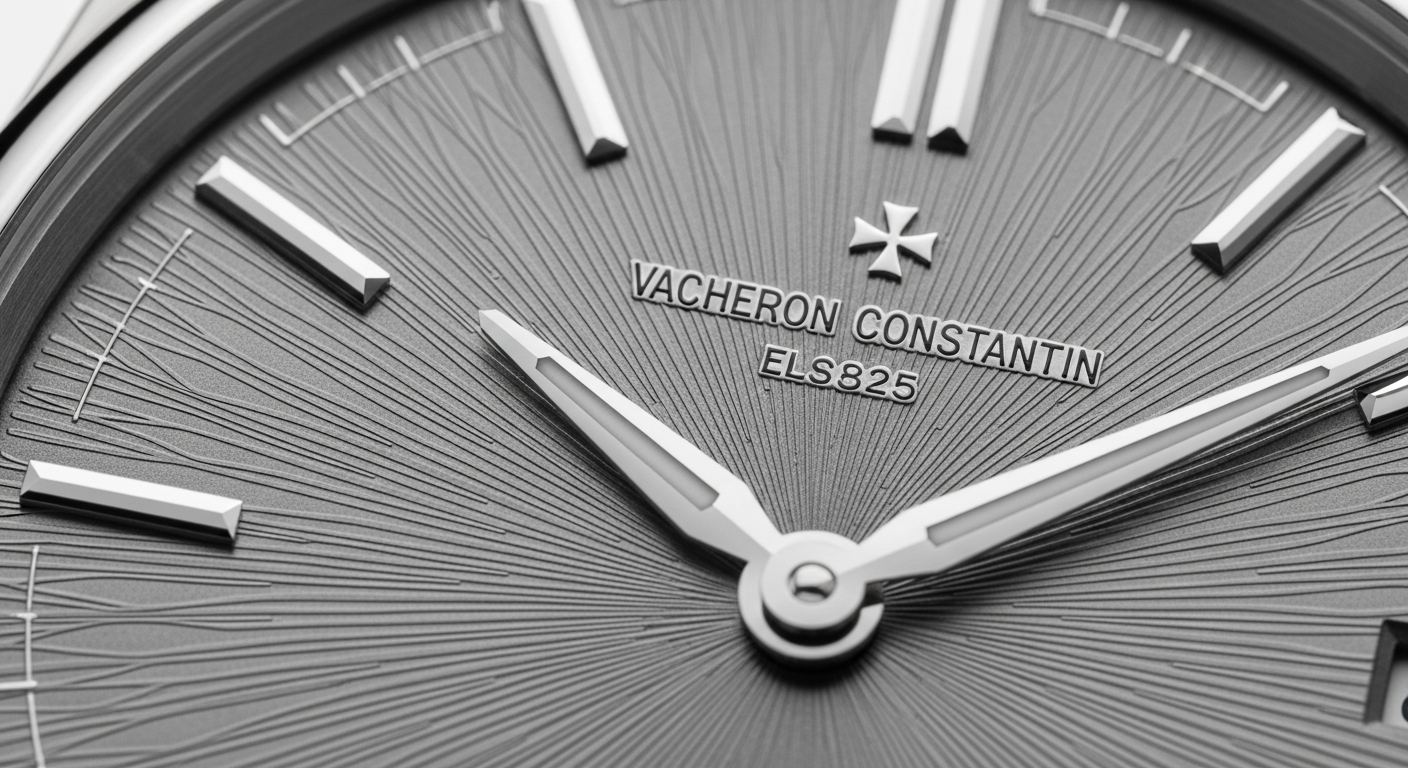
Collectors tend to talk about heritage as an aesthetic—coin-edge bezels, sector dials, vintage typography—when heritage is more usefully understood as a discipline. Vacheron’s discipline is visible in the way it treats proportion, restraint, and craft. Where other maisons often modernize by exaggeration, Vacheron modernizes by refinement: thinner case profiles, quieter dial furniture, cleaner typography, and complications integrated with a preference for legibility over theater. It is not allergic to drama; it simply insists that drama should be earned mechanically and finished by hand, not announced by branding.
That continuity also helps explain why Vacheron can afford to move differently. The brand doesn’t need to manufacture artificial scarcity to be credible. Its scarcity is structural: production remains relatively low, the finishing is time-intensive, and the high-complication work is inherently non-scalable. The result is a presence that feels less like a campaign and more like an institution—an important distinction for collectors who have grown tired of watches being treated as cultural tokens first and mechanical objects second.
Understated Prestige: The House Style of the Quiet Apex
What makes Vacheron Constantin the “quiet apex” is not simply that it is discreet. It is that discretion is built into the product. You see it in a Patrimony that never begs for attention, in an Overseas that carries its sport-luxury cues without turning them into logos, and in a Traditionnelle that reads like a thesis on formal balance. VC can do bold—especially in métiers d’art—but the baseline identity is architectural: thin bezels, rational dial layouts, and a finishing language that rewards proximity rather than distance.
This is where “why Vacheron Constantin is underrated” becomes an interesting question. Underrated by whom? In collector circles, the brand’s legitimacy is not disputed. What is debated is its visibility. Modern luxury has been trained to read status at a glance: recognizable silhouettes, dial codes, overt styling, and social media-proof wrist shots. Vacheron’s best work often refuses that game. Its beauty is slow. The best details appear when you stop trying to be impressed and simply look: sharp interior angles on bridges, black polishing where it doesn’t need to be black-polished, Geneva stripes that remain crisp at the edges, and cases finished with the kind of precision that makes light behave differently.
Finishing as Policy: Where VC Places Its Effort
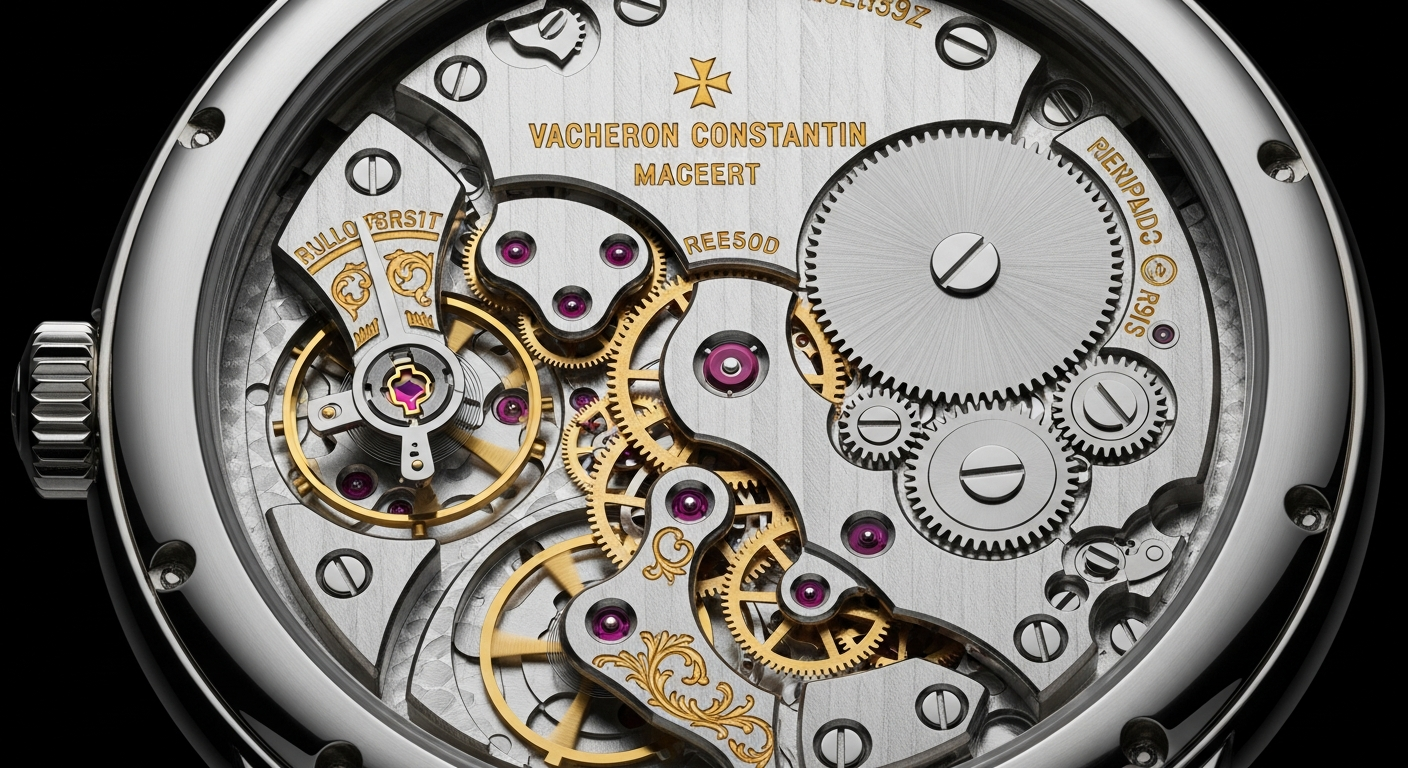
Vacheron does not win on a single headline metric; it wins on aggregate quality. The finishing is not an accessory to the movement; it is an operating principle. This matters because the high end of Swiss watchmaking has become crowded with claims. Everyone can say “hand-finished.” What separates a connoisseur brand is how consistently that philosophy survives across references and families—particularly when you move beyond halo pieces.
The use of the Hallmark of Geneva in many Vacheron models signals a threshold, but the brand’s finishing standards often read as more than compliance. The anglage is typically generous and clean, with attention to internal corners where the limitations of machine finishing become obvious. Screw heads are neatly finished; slots are crisp; surfaces alternate between brushed and polished with intention rather than habit. When you handle a Vacheron frequently, you start noticing that the cumulative effect is not flash but calm. It feels resolved.
That sense of resolution is strategic. VC’s restraint on the dial side puts pressure on the underlying work. There is less to distract you. If the lugs are clumsy, you will notice. If the hands are poorly proportioned, you will notice. If the movement is merely adequate, you will notice. Vacheron’s solution is to treat execution as the entire proposition. It is a conservative strategy in the best sense: reduce risk by being excellent everywhere, not loud anywhere.
High Complications Without Noise: Technical Audacity, Quietly Delivered
“Vacheron high complications” is where the manufacture’s personality becomes most legible. The brand is fully capable of technical spectacle—perpetual calendars, tourbillons, minute repeaters, split-seconds chronographs, and combinations that push watchmaking into the realm of miniature systems engineering. But the distinguishing trait is how rarely these complications are used as costume jewelry. Even when the case diameter is large, the aesthetic argument is usually coherent: balanced dial architecture, properly sized subdials, thoughtful negative space, and a refusal to crowd the watch with unnecessary text.
The Les Cabinotiers program sits at the far edge of this philosophy: one-off or small series creations where Vacheron can express complications, engraving, enameling, guilloché, and gem-setting with almost unlimited permission. It is tempting to treat these pieces as museum projects, but they serve a commercial purpose too: they keep the manufacture’s technical muscles active and signal to clients that VC is not merely preserving tradition—it is still able to invent within it.
At a more accessible level, Vacheron’s repeaters and calendars tend to feel like tools built for people who actually like watches, not people who like being seen liking watches. The joy is in the mechanism and the way it is finished, regulated, and packaged—the idea that a highly complex object can still be wearable, readable, and, above all, coherent.
The Overseas: A Modern Icon That Doesn’t Beg
No discussion of “best Vacheron Constantin watches” can avoid the Overseas. It is the brand’s most visible modern line and its closest thing to a mainstream status symbol. Yet even here, Vacheron’s instincts are different. The Overseas is a sport-luxury watch with real finishing, a thoughtful bracelet system, and a design that carries VC’s Maltese cross motif without turning it into a billboard. It is a watch that can compete in the most contested category in Swiss watchmaking without losing the brand’s house manners.
The Overseas wears differently than many of its peers. The case architecture tends to feel more sculptural than sporty; the finishing is more nuanced than the category requires; and the dial furniture—applied markers, hands, date integration—leans toward refinement rather than aggression. The quick-change strap system is not merely convenient; it is part of the watch’s modern utility argument, allowing the owner to move between bracelet, rubber, and leather without turning the watch into a different person.
The Overseas also reveals something about Vacheron’s relationship with demand. It has experienced its own spikes in attention, and certain references have behaved like market darlings at various moments. But VC rarely communicates like a brand chasing a single watch to carry the entire narrative. The Overseas is an anchor, not a crutch. That’s strategically important: the line’s success can expand the audience, but it doesn’t have to redefine the maison.
Overseas vs Competitors: The Case for the Connoisseur’s Sports Watch
“Overseas vs competitors” is often framed as a simple hierarchy of hype, resale, and recognizability. That is the wrong lens if you are trying to understand why Vacheron sits at the quiet apex. The more useful comparison is philosophical. Many of the category’s best-known options are designed to be instantly legible as status. The Overseas is designed to be legible as watchmaking.
On-wrist, the differences show up in finishing and intent. The bracelet is not just comfortable; it is made to be examined. The case alternates polished and brushed surfaces with a sophistication that holds up under harsh light. The movement finishing—especially on in-house calibers—invites inspection rather than merely meeting an expectation. The Overseas does not always shout “I got the one everyone wants.” It says, more quietly, “I bought the one I respect.”
This creates a different ownership experience. If you want a watch that validates you socially, there are louder choices. If you want a watch that keeps giving you reasons to admire it privately—when no one is watching—the Overseas makes a strong argument. That is the essence of Vacheron’s proposition applied to a modern category: the prestige is real, but it is not performative.
Patrimony and Traditionnelle: The Formal Core Still Leads
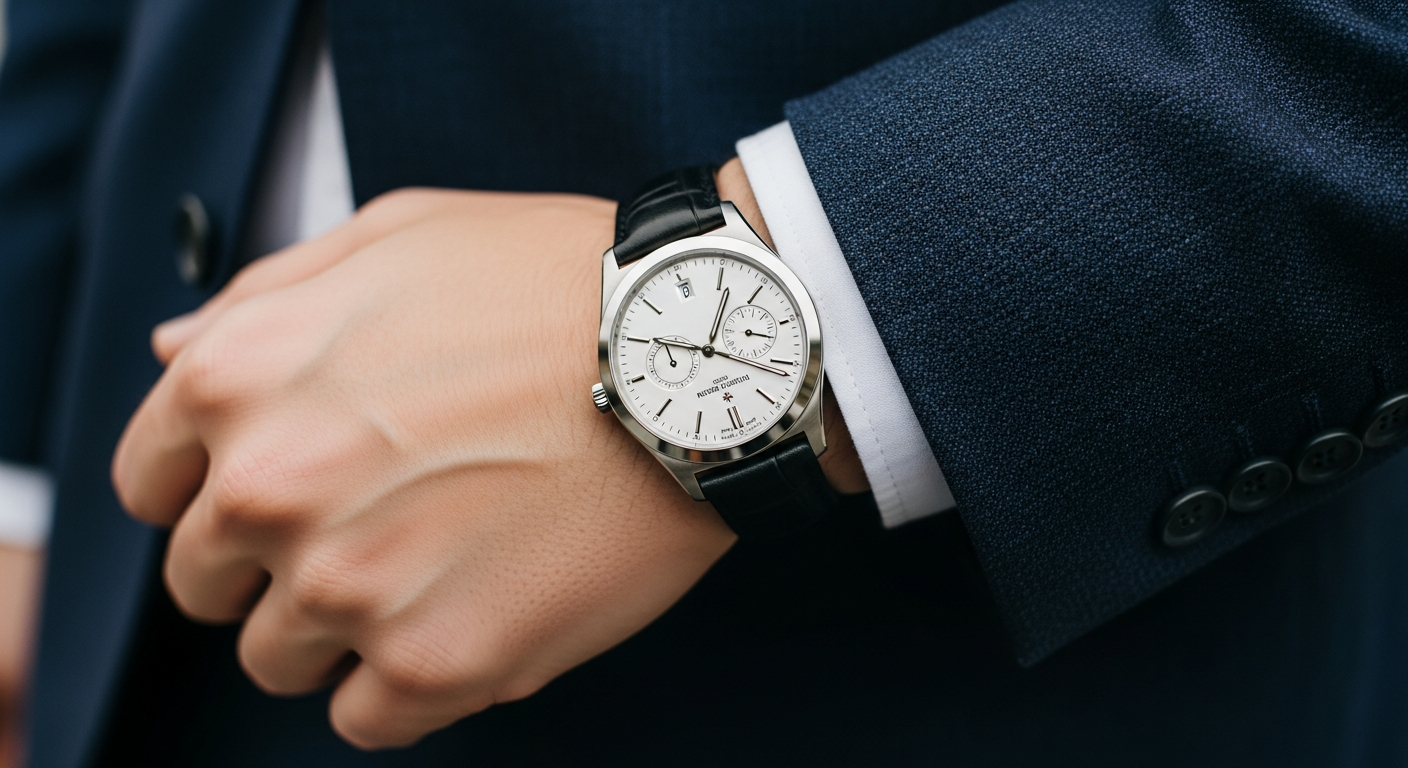
If the Overseas is Vacheron’s modern handshake, the Patrimony and Traditionnelle lines are the brand’s backbone. They are not trendy, and that is their advantage. Dress watches have become niche again, which has quietly restored their purity. Vacheron’s best formal pieces are not nostalgic; they are disciplined. The cases are typically thin, the dials spare, the proportions studied. In an era of visual noise, these watches can feel almost defiant.
The Patrimony, at its best, is about reduction. It proves that the absence of complication can still demand serious craft: the curve of the dial, the length of the hands, the placement of markers, and the overall tension of negative space. The Traditionnelle is slightly more classical in its architecture, often with more overt references to traditional watchmaking codes while still remaining contemporary in execution.
These collections matter strategically because they protect Vacheron’s identity from the gravitational pull of sports-watch monoculture. They remind the collector that the brand’s legitimacy does not depend on one category. VC can compete in the arena of integrated bracelets and steel desirability, but it is most itself when it is doing restrained elegance and quietly immense finishing work.
Why Many Collectors Arrive Late
Vacheron often becomes a destination brand rather than an entry point. Part of that is economic—these watches are expensive, and the brand’s complication work quickly enters serious territory. But the more revealing reason is psychological. Many collectors begin with watches that are culturally validated: models with obvious recognition, easy narratives, and a strong secondary-market story. Vacheron’s narrative is less transactional. It requires the collector to value things that are hard to post: interior angles, movement architecture, the coherence of a dial, the feel of a crown, the quality of a case edge.
This is why the brand can seem “underrated” to the broader market while remaining deeply respected among those who have handled enough watches to develop taste beyond trend. Vacheron does not teach you what to like through repetition. It waits for you to build the vocabulary to understand what it is doing.
There is also a cultural element. Modern luxury often rewards immediacy: the fast read, the obvious signature, the instant recognition. Vacheron rewards patience: the slow read, the subtle signature, the private recognition. In that sense, the brand is not merely selling watches. It is selling a way of relating to luxury that is increasingly rare—less as broadcast, more as stewardship.
The Strategic Take: Legitimacy as Value
Vacheron Constantin’s advantage is that it converts legitimacy into value without needing to convert value into noise. The manufacture’s continuity makes its claims believable. Its finishing makes its price coherent. Its complications remain anchored in real watchmaking rather than novelty. And its most recognizable modern line, the Overseas, manages to be competitive without collapsing into pure hype behavior.
The quiet apex is not a slogan; it is a market position. In a landscape shaped by perceived scarcity and social signaling, Vacheron offers something harder and ultimately more durable: an object that is culturally grounded, mechanically serious, and aesthetically restrained. For collectors who have moved beyond the obvious names—or who simply want to skip the obvious phase—Vacheron Constantin is less a flex than a conclusion.