Ulysse Nardin in 2026: How a Marine Chronometer Legacy Became High Horology’s Most Fearless Experimental Lab
Few maisons can claim their reputation was built not in salons but at sea—where timekeeping meant navigation, commerce, and survival. Ulysse Nardin’s modern intrigue lies in how it converts that hard-earned marine chronometer authority into permission to take risks other brands can’t: silicon where tradition insists on metal, architectural dials that expose the mechanism, and complications that feel engineered rather than ornamented. The result is a brand that uses history as a launchpad, not a restraint—making its boldest pieces feel oddly inevitable when you trace the line back to the deck of a ship and the demand for absolute precision in motion and salt air.
From deck instruments to brand DNA
Ulysse Nardin’s origin story is unusually functional. Marine chronometers were not romantic objects; they were instruments, judged by stability, legibility, and rate under adverse conditions. That lineage matters in 2026 because it gives the brand a credibility many competitors imitate but cannot replicate: precision as a service to navigation rather than a performance staged for collectors. When Ulysse Nardin speaks about accuracy, it is not borrowing the language of science for marketing effect—it is continuing a historically instrument-led identity.
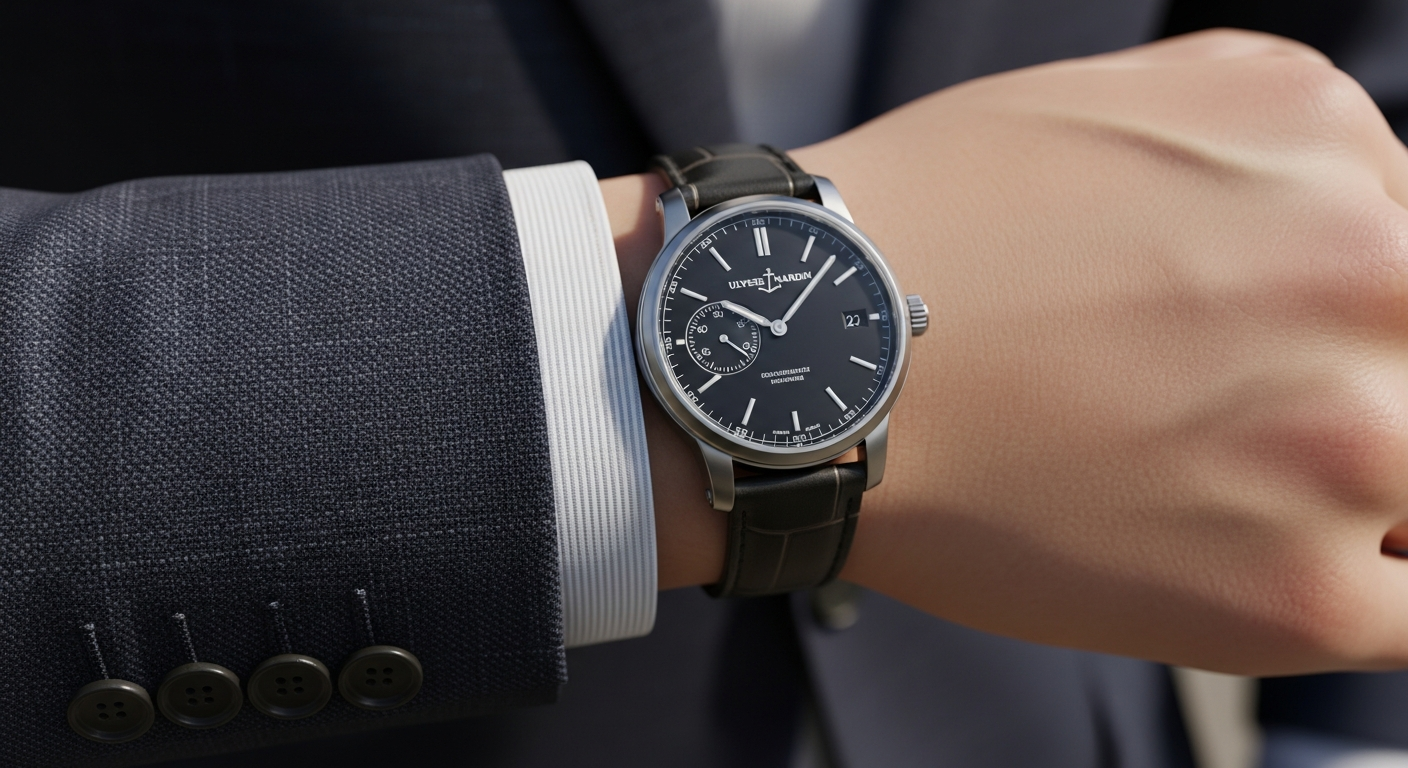
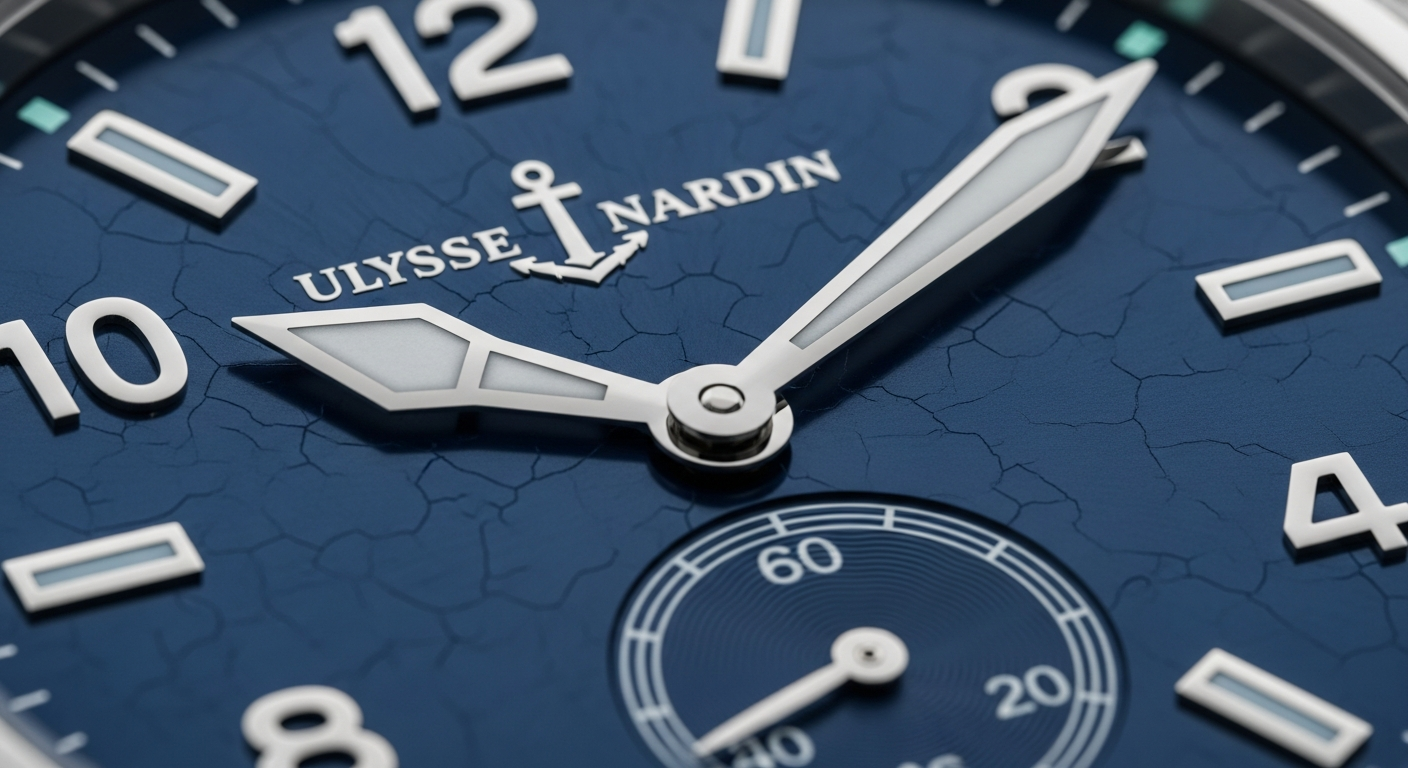
This is also why the brand’s “Marine” codes feel less like retro styling and more like a persistent design grammar. Roman numerals, power reserve at 12, small seconds at 6, and the chronometer-like dial hierarchy are not merely nostalgic. They function as continuity anchors, enabling Ulysse Nardin to push aggressively in mechanics and materials without losing the plot. In strategic terms, the Marine line is the brand’s stabilizing keel: it keeps the whole enterprise oriented while the bow cuts into experimental seas.
Many maisons treat heritage as a set of aesthetic constraints. Ulysse Nardin has increasingly treated it as permission—earned the hard way—to be direct, technical, and occasionally disruptive. The difference is subtle but important. Nostalgia sells comfort. Instrument heritage sells authority, and authority gives you room to change the rules.
Heritage as license, not costume
In 2026, Ulysse Nardin’s most persuasive narrative is not “we were there,” but “we had to be right.” The brand’s historical purpose was to keep time reliably in a context where failure had consequences. That legacy reframes modern innovation: silicon, non-traditional escapements, and unconventional display architectures are presented less as avant-garde gestures and more as the logical continuation of a technical mandate.
Collectors often underestimate how strategic that positioning is. The luxury watch market still contains an undercurrent of material conservatism: steel and brass feel “authentic,” while silicon can be painted as sterile or mass-industrial. Ulysse Nardin’s counterargument, when it is communicated well, is clean and compelling. Marine chronometers were not built to honor tradition; they were built to perform. If silicon improves stability, reduces friction, and supports long-term rate consistency, then silicon is not heresy—it is the modern instrument maker’s choice.
This is where the brand’s tone tends to land best: engineered rather than romantic. The most convincing Ulysse Nardin pieces do not plead for acceptance as high horology. They behave like high horology that happens to be unafraid of modernity.
The silicon thesis: modern materials with maritime logic
Ulysse Nardin’s early and sustained embrace of silicon is no longer a novelty; it is part of its identity. What matters now is the coherence of the thesis. Silicon’s advantages—low mass, reduced need for lubrication, excellent resistance to magnetism, and the ability to be micromachined into highly consistent geometries—map neatly onto the brand’s instrument heritage. At sea, stability is everything. In modern life, magnetism and shock are the new salt spray: omnipresent, underestimated, and capable of degrading performance in ways most owners only discover after the fact.
The brand’s best modern watches treat silicon not as a signature to be displayed, but as a quietly enabling technology. In practice, this means movements that can be regulated more predictably, maintain amplitude with less dependency on oils, and hold their timing under real-world conditions that increasingly involve laptops, speakers, and electromagnetic clutter. If the Marine chronometer legacy is about precision under duress, silicon is simply the contemporary toolset.
The strategic advantage here is differentiation that is not merely visual. When you look across the market, many brands compete on finishing, dial craft, and casework nuance. Ulysse Nardin competes there too, but its more defensible ground is engineering identity. It is difficult to copy a long-running, proven commitment to material science without looking opportunistic. Ulysse Nardin has been consistent enough that the story now reads as policy, not experiment.
Avant-garde mechanics that still feel “marine”
There is a risk in any experimental program: it can become stylistically unmoored. Ulysse Nardin’s stronger pieces avoid that by keeping a marine sensibility even when the mechanics become theatrical. The “marine” quality is not limited to anchors and waves; it is expressed through clarity of purpose, information hierarchy, and the sense that the watch is exposing function rather than performing art.
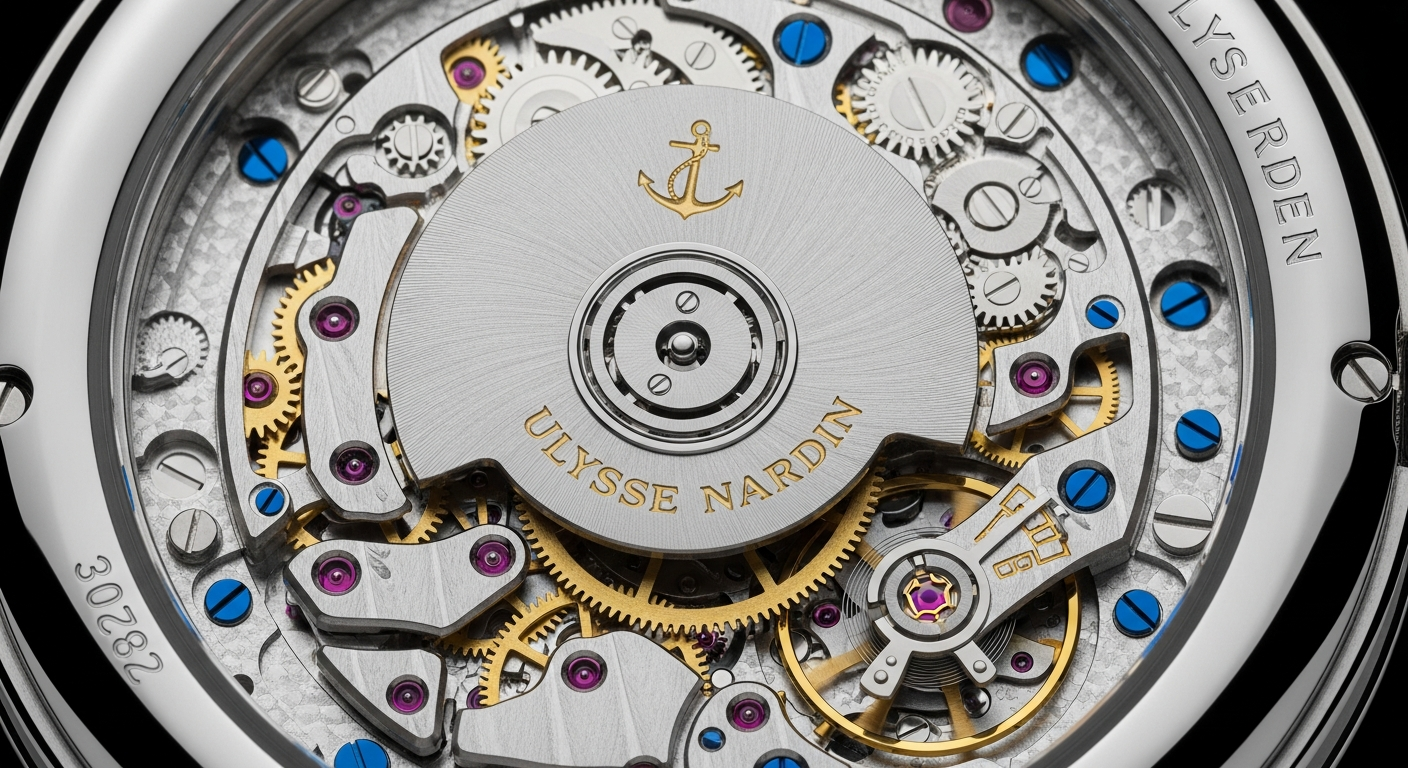
That is why the brand’s architectural dials often work better than they should. Skeletonization in the wider industry can veer into decorative voids and arbitrary bridges. Ulysse Nardin tends to treat architecture as a way to communicate mechanism. When the movement is visible, it is arranged like a machine you might service rather than a pattern you might admire. This is a subtle distinction, but it changes the emotional register: the watch feels like equipment elevated to luxury, not luxury pretending to be equipment.
Complications, too, are often framed as engineered solutions. Whether the display is unconventional, the energy management is emphasized, or the escapement is intentionally highlighted, the feeling is closer to technical demonstration than baroque ornament. In a market where complication can sometimes become a badge, Ulysse Nardin’s best work insists that complication is a system.
The Marine line as a strategic spine
For all the experimentation, Ulysse Nardin remains wise to keep the Marine collection as the brand’s narrative spine. It is the collection that makes the argument in one glance: this is a company that comes from chronometers. The design codes are direct, the layouts are functional, and the identity is legible at distance. That matters because experimental watches can generate attention but not always trust. The Marine line generates trust.
In 2026, the smartest role for the Marine collection is not to compete head-on with every other luxury sports watch; it is to be the baseline instrument statement that legitimizes everything above it. When a brand sells you a radical escapement or a disruptive display, it helps if it also sells you a conservative, durable chronometer-like watch that feels like it could have existed in another century. Ulysse Nardin has both, which makes its catalog feel less like a series of disconnected projects and more like a coherent range.
Collectors who dismiss the Marine line as “the classic side” miss how essential it is to the brand’s experimental credibility. Without Marine, the avant-garde references can look like design for design’s sake. With Marine, they look like a laboratory attached to an instrument maker.
Design disruption without loss of identity
Ulysse Nardin’s design strategy is most effective when it disrupts selectively. The brand tends to keep enough stable cues—marine-inspired typography, dial symmetry, a sense of navigational instrumentation—so that even bolder pieces still read as Ulysse Nardin rather than generic futurism. That is harder than it sounds. Many brands attempt modernity by erasing their past, which results in watches that could be from anyone.
Ulysse Nardin’s better approach is to keep the marine identity as a constant while altering the engineering canvas. The case may become sharper and more contemporary, the dial more open, the display more unconventional—but the watch still communicates a devotion to precision and clarity. The message is consistent: innovation exists to serve performance, not to decorate it.
There is also a pragmatic advantage to this approach. The market is saturated with loud designs competing for attention. Ulysse Nardin’s designs may be bold, but they tend to be purposeful rather than chaotic. That gives them a chance to age well. Collectors do not only buy for the first impression; they buy for the tenth year. Purpose-driven aesthetics typically have more staying power than spectacle.
Where Ulysse Nardin sits in high horology in 2026
Ulysse Nardin occupies a rare strategic position: it can argue precision heritage credibly, and it can argue modernity credibly. Most brands pick one, or they attempt both and end up sounding conflicted. Ulysse Nardin’s instrument lineage allows it to treat modern engineering as authenticity rather than betrayal. In a contemporary environment where “innovation” is often reduced to colorways and case sizes, the brand’s more substantive technical posture stands out.
This does not mean every experiment lands equally well, nor that collectors will universally prefer silicon-forward, architecture-revealing watches over traditional solutions. But the brand is not trying to win a purist referendum. Its strategy seems to be to own a specific idea of high horology: one that values materials, systems, and demonstrable mechanical thought as much as finishing or tradition. That is an identity with real defensibility, especially as the broader market continues to converge on similar silhouettes and similar narratives.
If there is a risk, it is one of communication discipline. The brand’s catalog can feel like a spectrum between classical Marine and experimental statements. The connective tissue must remain explicit: precision under duress, marine clarity, and engineering-first innovation. When that thread is emphasized, Ulysse Nardin’s experiments feel inevitable. When it is not, they can be mistaken for provocation.
The collector takeaway: why the lab matters
For collectors, the appeal of Ulysse Nardin in 2026 is not only product-led; it is philosophical. The brand offers an alternative to the prevailing notion that legitimacy comes from conservatism. Here, legitimacy comes from a historical job: keeping accurate time when it mattered. That job description naturally favors experimentation, because the objective is performance, not reverence.
Ulysse Nardin’s best watches—whether classically Marine or unapologetically avant-garde—share an underlying confidence: the sense that the brand is not asking permission to innovate. It is continuing a tradition of instrument-making under harsh conditions, translated into modern materials and modern mechanical architecture. That is why the maison’s most fearless pieces do not feel like departures. They feel like the next logical chapter of a story that started on a moving deck, with salt in the air and no tolerance for error.