Tissot’s Quiet Luxury Playbook: How a Swiss Powerhouse Makes Heritage, Innovation, and Value Feel Premium

Tissot doesn’t sell aspiration the way traditional luxury does—it sells permission: permission to enter Swiss watchmaking with confidence, to wear a mechanical name with heritage, and to feel the tactile credibility of a brand that’s everywhere yet rarely feels loud. The intrigue is how Tissot turns mass visibility into desirability, using heritage as a trust signal, innovation as a headline, and value as the final seduction—without breaking the codes of Swiss legitimacy that enthusiasts care about most.
The Gateway Brand That Doesn’t Apologize for Scale
Tissot’s most underrated asset is its comfort with being big. In a market where “luxury” is often performed through scarcity, Tissot takes the opposite route: it industrializes Swiss legitimacy and makes it widely available without letting the product feel disposable. That’s not a romantic story, but it is a strategically powerful one. Scale gives Tissot leverage in manufacturing, distribution, after-sales infrastructure, and iterative design—everything that makes ownership feel stable rather than experimental.
This is why Tissot functions as a gateway to Swiss legitimacy. A first Swiss mechanical watch is rarely about collecting ideology; it is about risk management. Buyers want a known name, a credible origin, and a product that will be serviceable in five, ten, fifteen years. Tissot’s global footprint answers those anxieties with quiet authority. The brand doesn’t need to shout because its reassurance is structural: you can find it, try it, buy it, service it, and sell it—almost anywhere.
Collectors sometimes penalize that accessibility, mistaking visibility for a lack of seriousness. Yet for many enthusiasts, the path into mechanical watches begins with a watch that feels “real” on the wrist and “safe” in the decision. Tissot wins that moment more often than it gets credit for, precisely because it has learned how to make mass-market availability feel premium rather than commoditized.
Heritage as a Trust Signal, Not a Costume
Tissot’s heritage is not niche, but it is deep enough to matter. The brand’s long-running integration into Swiss watchmaking culture gives it a legitimacy that isn’t dependent on reinvention every season. More importantly, Tissot tends to deploy heritage as a trust signal—subtle cues that the brand belongs in the conversation—rather than as a costume that overwhelms the watch.
The best examples are the models that borrow historical silhouettes without indulging in fragile vintage mannerisms. The appeal is not strict re-creation; it is continuity. The design language says: this is Swiss watchmaking with a memory, but also with present-day tolerances, durability, and usability. That combination is central to Tissot’s “permission” proposition: you can wear something that nods to tradition without feeling like you’re cosplaying a different era.
Heritage also functions as a stabilizer across the catalog. Tissot can introduce modern materials, novel escapement tech, or bolder integrated looks precisely because its baseline identity is secure. When a brand knows who it is, it can take measured risks without making the customer feel like a beta tester.
Design Discipline: How Tissot Avoids Looking Like a Bargain
Value brands often stumble on aesthetics. They chase features, add surface complexity, and over-style dials to compensate for price. Tissot’s premium feel is built on the opposite: design discipline. Case lines are typically coherent, proportions are generally conservative, and even sportier iterations tend to resist decorative chaos.
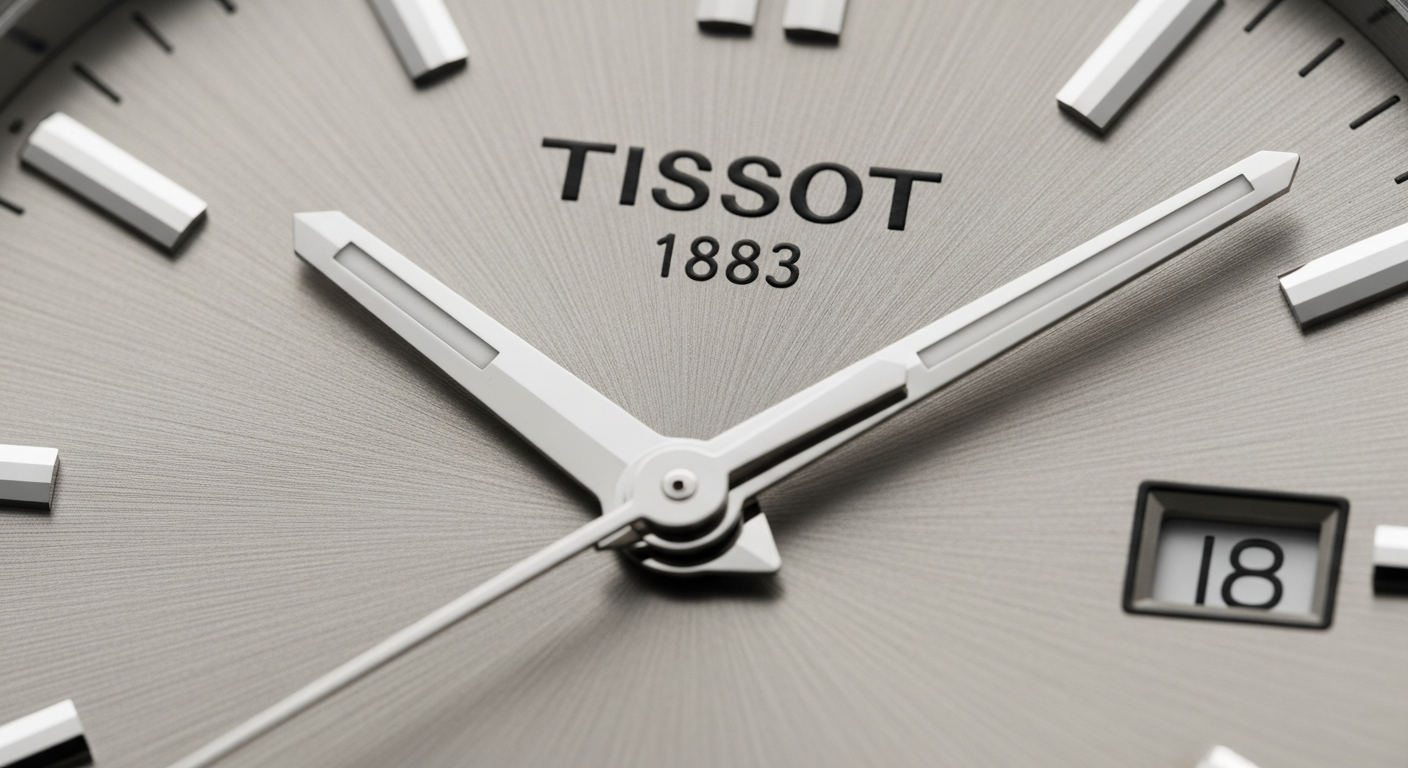
This discipline matters because perceived quality is often a function of restraint. Well-judged indices, sensible handset geometry, and balanced dial typography do more for “expensive” impression than a list of specifications. Tissot understands that the gateway customer is evaluating the watch as a total object, not a spreadsheet. The tactile cues—crisp printing, controlled polishing, predictable bezel action when present, and a bracelet that doesn’t feel like an afterthought—make the brand’s pricing feel like a favorable asymmetry rather than a compromise.
That’s where Tissot’s scale becomes an aesthetic advantage. Consistency is expensive. When a brand can standardize quality across large volumes, it can afford to keep designs clean because it doesn’t need to distract you. The watch doesn’t need to look complicated to look legitimate.
The Powermatic 80 Strategy: A Modern Commodity Done Well
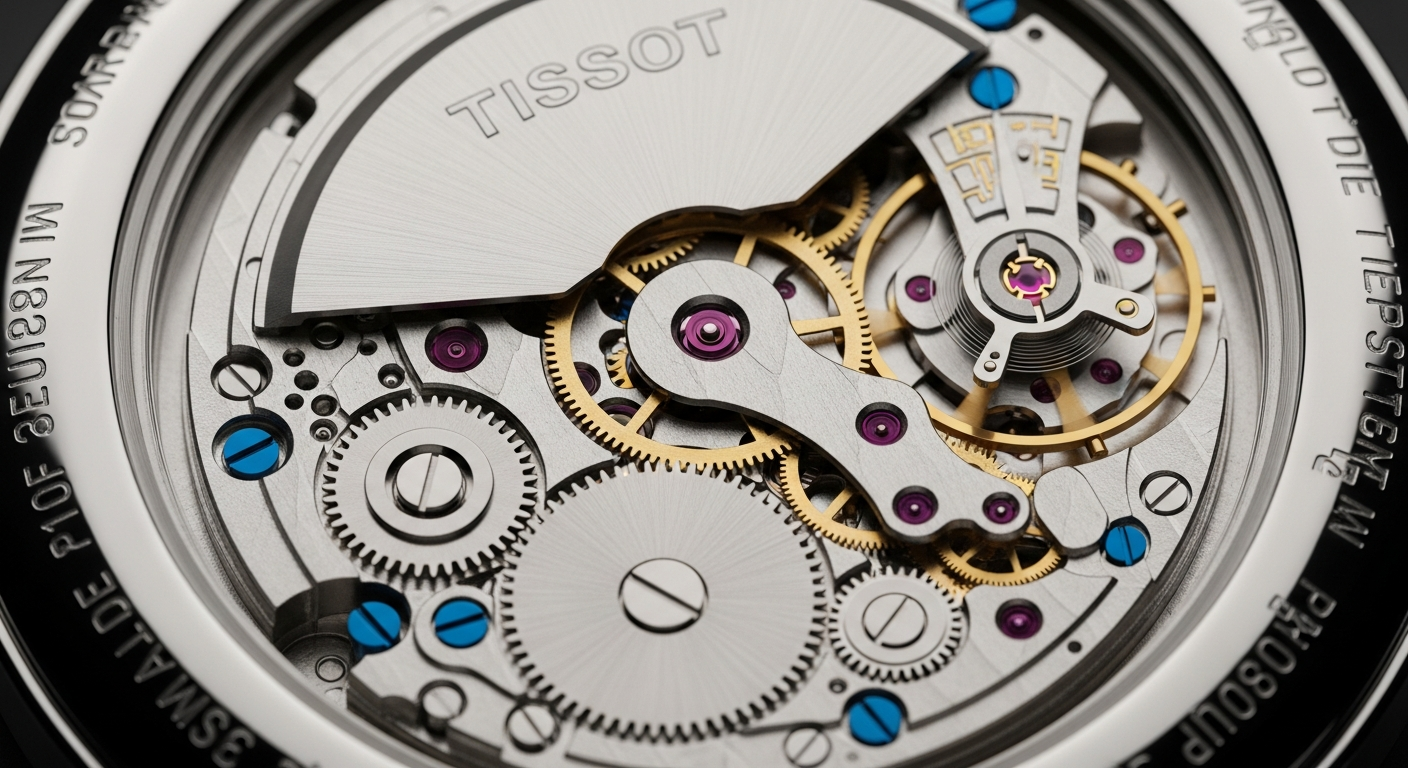
No conversation about Tissot’s gateway status is complete without the Powermatic 80 family. It is, strategically, one of the most effective tools in contemporary Swiss watchmaking: a clear, consumer-legible benefit that supports the brand’s premium narrative while remaining attainable. Extended power reserve isn’t just an enthusiast talking point; it is a daily-life feature that makes mechanical ownership feel easier. Put the watch down on Friday, pick it up on Monday, and it still runs. That convenience reduces friction for first-time mechanical buyers while still reading as legitimate watchmaking.
Collectors will debate the nuances—regulation philosophy, component choices, and the varying execution across references. But from a market standpoint, the Powermatic 80 does two critical things. First, it creates a “headline” that competes against both entry-level automatics and smartwatches in the same budget zone. Second, it positions Tissot as a brand that offers modern, practical engineering rather than nostalgia alone.
This is the quiet luxury playbook in action: the movement is not exotic, but it feels considered. It signals that you’re buying into a platform with support, parts availability, and a future. For a gateway brand, that’s more persuasive than an obscure in-house claim that might age poorly.
Targeted Innovation: When Tissot Chooses to Be Interesting
Tissot’s innovation works best when it is targeted rather than theatrical. The brand rarely tries to redefine haute horlogerie; instead it focuses on accessible technical differentiators that translate into ownership value. The right innovations add credibility without forcing the buyer into a niche identity.
Material experimentation is one lever. When Tissot uses modern materials, the goal is typically durability, wearability, or visual crispness—not performative futurism. The result is that newness feels like an upgrade rather than a gimmick. Another lever is the brand’s willingness to be early, but not reckless, with movement variations that can scale. It’s innovation designed to survive mass production, which is precisely what allows it to feel like the “normal” choice for someone entering Swiss watches.
This sits at the center of Tissot’s strategy: it doesn’t need to be the most avant-garde brand; it needs to be the most trustworthy modern brand at its price. Innovation is deployed as proof of vitality, not as a substitute for identity.
Collections as On-Ramps: PRX, Le Locle, Seastar, Gentleman
Tissot is often discussed model by model, but the more revealing lens is “on-ramps.” The catalog is built like a set of entry points into Swiss legitimacy, each one mapped to a different buyer psychology.
The PRX is the obvious contemporary success: an integrated-bracelet profile that reads as current, with disciplined finishing and a strong wrist presence. The key is that it lets a buyer participate in a broader design conversation without paying the toll of higher-end integrated icons. It is not trying to be rare; it is trying to be right—recognizable, wearable, and proportionally satisfying. That makes it a gateway not just to Tissot, but to design literacy in the modern enthusiast scene.
Le Locle acts as a more classical entry point: a dress-leaning expression of Swiss tradition that feels appropriate in formal contexts without requiring deep knowledge. It is a permission slip for someone who wants the impression of heritage without the burden of vintage pitfalls.
Seastar addresses sport utility: water resistance, robust cases, and the aesthetic confidence that comes with a diver’s posture. Importantly, it offers a form of legitimacy that is physical rather than symbolic. A buyer doesn’t need to understand watch history to understand why a capable sports watch feels premium.
The Gentleman sits in the middle, and that may be its most strategic role. It’s a daily-wear bridge between dress and sport, often with movement specs that reassure even skeptical buyers. In many ways, it is Tissot’s thesis distilled: sensible proportion, credible mechanics, and a premium experience without prestige pricing.
The Quiet Luxury Effect: Premium Without Performance
Quiet luxury is often misunderstood as minimalism or the absence of branding. In Tissot’s case, it is something more specific: premium without performance. The brand is visible, but it is rarely socially aggressive. It is worn by people who want a “real watch” rather than a status announcement. That distinction matters because the entry-level Swiss space is crowded with products that either overpromise luxury or underdeliver on legitimacy.
Tissot’s watches tend to communicate competence. The wearer isn’t trying to prove they know; they are trying to enjoy owning. That is why Tissot’s mainstream presence doesn’t necessarily erode desirability. Instead it normalizes mechanical ownership, making it feel like a rational choice rather than a hobbyist indulgence.
There is also a subtle collector benefit to this posture: Tissot can stay stable. It doesn’t need constant rebranding to chase attention. Stability can be boring, but it can also be reassuring—especially when paired with real product updates that improve the ownership experience.
Value as the Final Seduction: Where Tissot Wins the Decision
Tissot’s closing argument is value, but not the crude kind. It isn’t only about low pricing; it’s about the feeling that you are buying above your spend. That feeling is the essence of attainable premium. Finishing that exceeds expectation, movements with practical advantages, bracelets that feel engineered rather than improvised, and a brand name that carries Swiss credibility without needing explanation—these are the ingredients.
This is where Tissot’s industrialization becomes its quiet luxury engine. Because the brand can produce at scale, it can allocate budget to the parts of the watch that the owner actually touches and experiences. The result is a product that photographs well, wears better, and retains coherence over years rather than months. For many newcomers, this is the first time “Swiss made” feels like an actual step up rather than a label premium.
Value also protects the purchase emotionally. A buyer can wear the watch harder, travel with it, and make it part of daily life without the anxiety that often shadows more expensive luxury. That freedom—permission again—is a core part of Tissot’s premium effect.
Strategic Take: Tissot’s Role in the Swiss Ecosystem
Tissot is not trying to be the rarest brand in the room. It is trying to be the most credible first step into Swiss watchmaking, and arguably the most competent mass-market expression of it. The brand wins by making legitimacy repeatable: heritage that steadies the story, innovation that is practical and scalable, and value that feels like an advantage rather than a compromise.
For collectors, Tissot’s appeal is not only nostalgia or trend alignment; it is the clarity of its function. It is a gateway that doesn’t infantilize the buyer. It gives you a real mechanical platform, a recognizable design identity, and enough quality in the details to feel like you bought into the category properly.
Tissot’s quiet luxury playbook is simple, but not easy: be everywhere without feeling cheap, innovate without becoming gimmicky, and let heritage support the product rather than replace it. In a market that increasingly confuses loudness with status, Tissot’s permission-based approach may be the most durable form of premium it can offer.