The Sanity Hublot Brings to Watches.
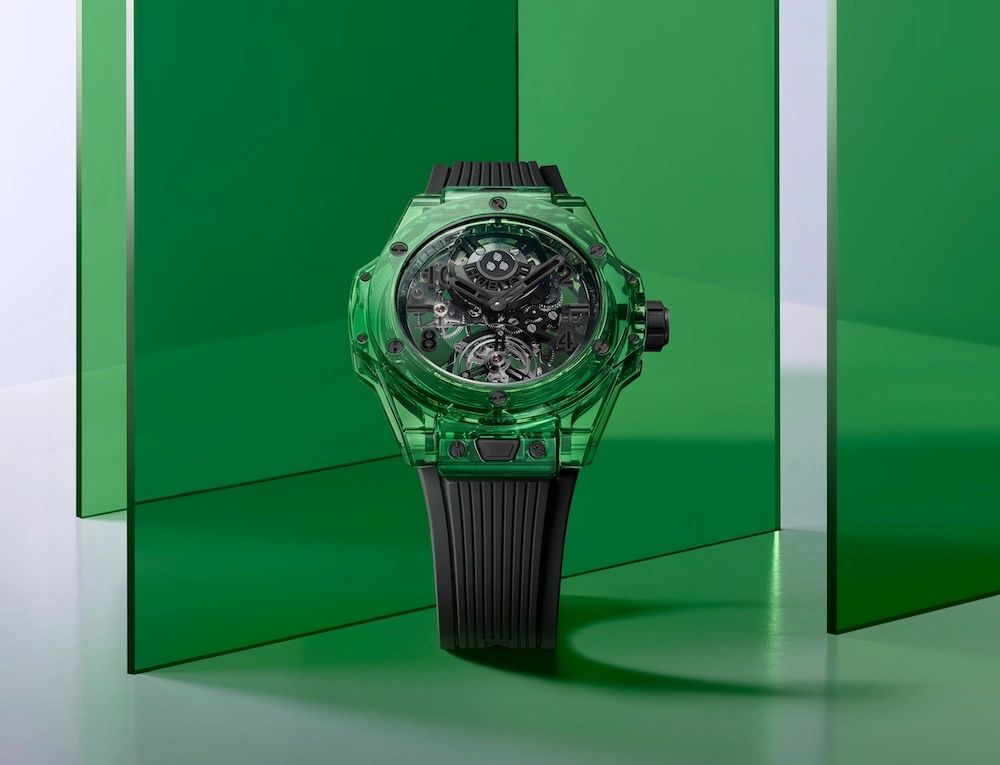
Few watch brands provoke reactions as instinctive as Hublot.
Admiration and dismissal arrive quickly, often without reflection. For some, Hublot represents everything modern watchmaking should resist: bold cases, visible materials, unapologetic presence. For others, it feels refreshingly honest in an industry that often hides behind nostalgia.
What is striking is how rarely Hublot is discussed calmly.
Yet when the noise fades, something interesting becomes visible. Hublot brings a form of sanity to modern watchmaking — not by preserving tradition, but by acknowledging reality. It does so by refusing to pretend that mechanical watches still live in the world that created them.
That refusal is not reckless. It is clarifying.
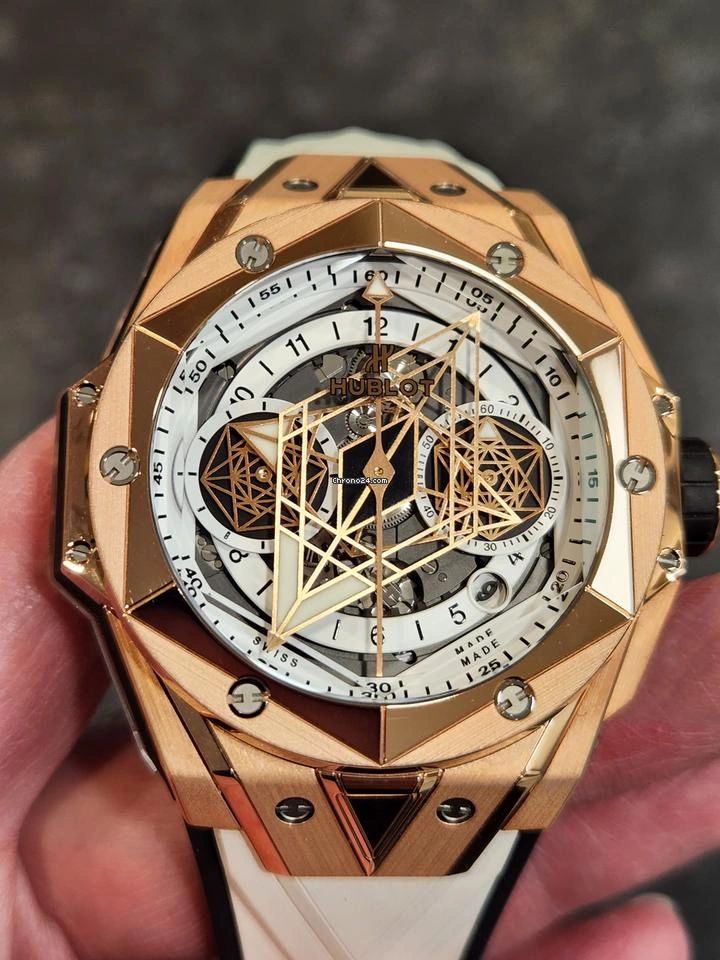
Mechanical watchmaking today exists in a contradiction.
We no longer need mechanical watches. Their survival depends entirely on choice — not utility. And yet, much of the industry continues to behave as though nothing fundamental has changed. The language of heritage dominates. Mid-century aesthetics are treated as moral anchors. Deviations are framed as indulgences rather than adaptations.
Hublot never accepted that premise.
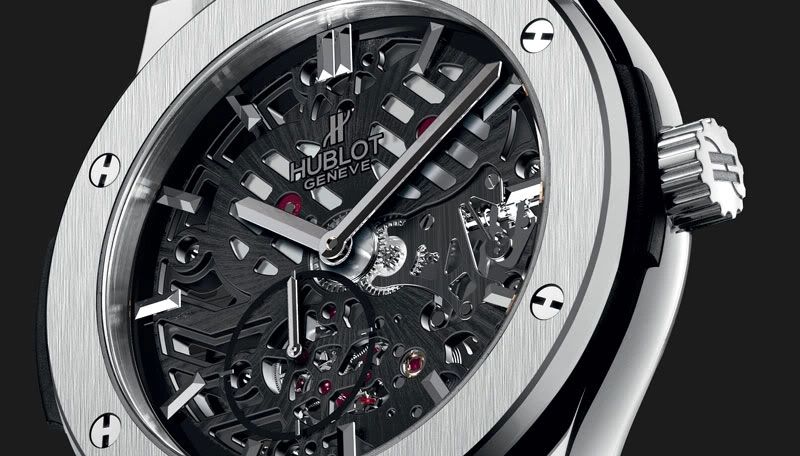
From its earliest expressions, the brand treated the mechanical watch as a contemporary object. Not a historical reenactment. Not a fragile heirloom. But something that could absorb modern materials, modern proportions, and modern cultural references without apology.
That honesty matters more than it is often credited for.
The sanity Hublot brings begins with a simple recognition: tradition is not the same as relevance.
Heritage explains where watchmaking came from. It does not automatically explain why it should matter now. Many brands treat history as insulation — a way to protect themselves from change. Hublot treated it differently, as a starting point rather than a boundary.
The idea of “fusion” was never just about mixing materials for shock value. It was an admission that the modern world does not run on steel and leather alone. We live with composites, ceramics, polymers, carbon structures — materials engineered for performance, not nostalgia.
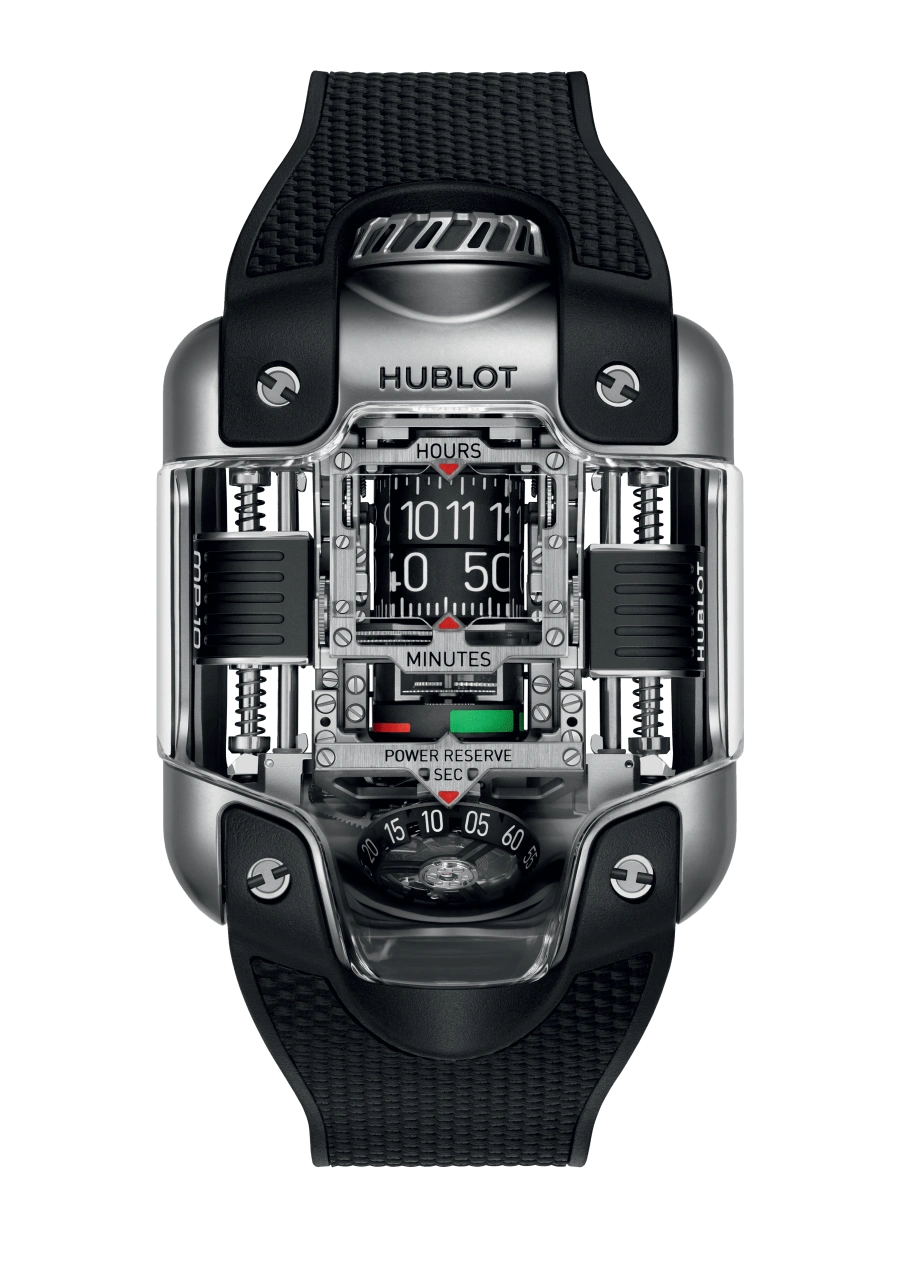
Expecting mechanical watches to ignore that reality is not respect for tradition. It is denial.
Hublot’s willingness to integrate modern materials openly — rubber, ceramic, carbon — introduced a kind of realism into watchmaking. A reminder that watches, if they are to remain relevant, must exist in the same material culture as everything else we use.
That clarity is sanity.
One of the most misunderstood aspects of Hublot is intentionality.
Hublot watches do not ask to be subtle. They do not aspire to invisibility. They are designed to be seen, discussed, reacted to. This is often framed as vulgarity or excess, but it is more accurately described as transparency.
Many watches are bold but pretend to be conservative. Others are derivative but marketed as timeless. Hublot avoids this contradiction. Its watches look exactly like what they are: modern mechanical objects with no interest in disguising themselves.
You may dislike the aesthetic. That is fair. But confusion is rare.
In an industry full of euphemism, that directness is grounding.
Criticism of Hublot often centers on “real watchmaking.”
The accusation is familiar: that materials and design are prioritized over horological substance. That spectacle replaces depth. That modernity dilutes seriousness.
But this critique assumes there is only one valid expression of seriousness.
Hublot never positioned itself as the custodian of classical restraint. It chose a different role — exploring how far mechanical watchmaking could stretch without breaking. In doing so, it exposed how rigid some of the industry’s aesthetic rules actually are.
Why must innovation remain invisible?
Why must modernity apologize?
Why is expressiveness acceptable in architecture, cars, and art — but suspect on the wrist?
By ignoring these inherited constraints, Hublot forced uncomfortable questions into the open.
That, too, is sanity.
There is also a cultural honesty in where Hublot belongs.
Its watches align naturally with contemporary sport, visible success, and modern confidence. They do not pretend to be scholarly or introspective. They are outward-facing by design. This makes many traditionalists uncomfortable — but discomfort is often a sign that boundaries are being tested.
Mechanical watches today are no longer tools. They are expressions. Pretending otherwise creates tension. Hublot resolves that tension by embracing expression directly, rather than disguising it as heritage.
It does not ask to be understood in the same way as a dress watch or a vintage reissue.
It exists in the present tense.