The Illusion of Innovation in Modern Watchmaking

Innovation is the most comfortable word in modern watchmaking.
It appears everywhere — in press releases, launch events, brand manifestos, and collector debates. New materials are introduced. New calibers are announced. New constructions are described as breakthroughs. The language is confident, urgent, and forward-looking.
And yet, for all this talk of progress, mechanical watchmaking today feels remarkably familiar.
Not stagnant. Not regressive. Just… unchanged in the ways that matter most.
This tension — between the promise of innovation and the reality of continuity — sits at the heart of modern watch culture. Understanding it requires stepping away from marketing narratives and looking instead at how mechanical watches actually evolve.
Mechanical watchmaking does not reward speed.
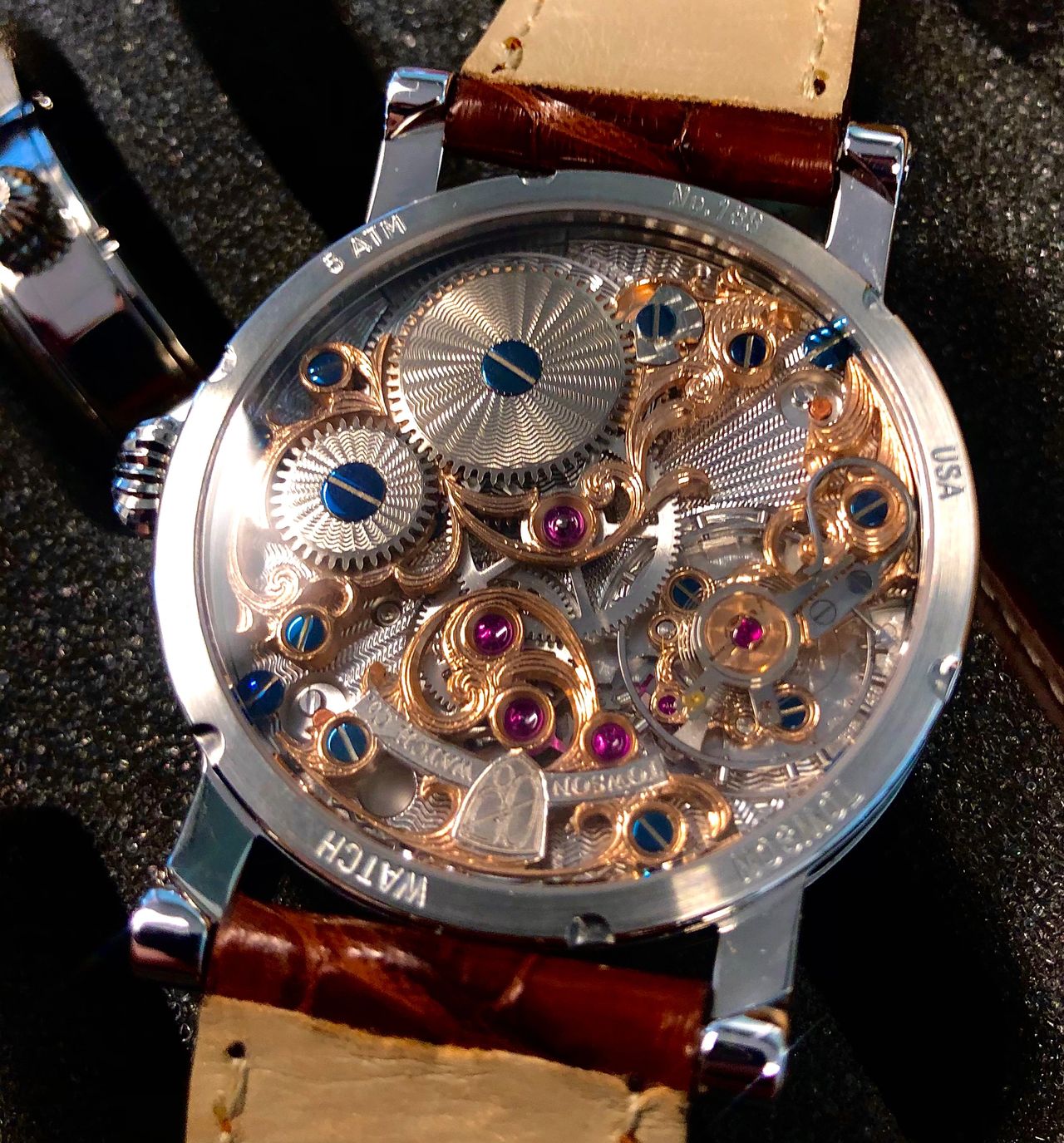
Unlike consumer technology, it cannot afford aggressive iteration. Every change introduces risk — not just to performance, but to longevity. Tolerances are physical. Materials behave unpredictably over decades. Lubrication degrades. Designs age.
What works brilliantly in theory may fail quietly ten years later.
As a result, true progress in watchmaking is cautious and cumulative. It happens in fractions: a reduced coefficient of friction here, a more stable amplitude there, a marginal improvement in shock resistance or service interval. These gains are real, but they are rarely dramatic.
And drama is what the modern marketplace demands.
Innovation is the most comfortable word in modern watchmaking.
It appears everywhere — in press releases, launch events, brand manifestos, and collector debates. New materials are introduced. New calibers are announced. New constructions are described as breakthroughs. The language is confident, urgent, and forward-looking.
And yet, for all this talk of progress, mechanical watchmaking today feels remarkably familiar.
Not stagnant. Not regressive. Just… unchanged in the ways that matter most.
This tension — between the promise of innovation and the reality of continuity — sits at the heart of modern watch culture. Understanding it requires stepping away from marketing narratives and looking instead at how mechanical watches actually evolve.
Mechanical watchmaking does not reward speed.
Unlike consumer technology, it cannot afford aggressive iteration. Every change introduces risk — not just to performance, but to longevity. Tolerances are physical. Materials behave unpredictably over decades. Lubrication degrades. Designs age.
What works brilliantly in theory may fail quietly ten years later.
As a result, true progress in watchmaking is cautious and cumulative. It happens in fractions: a reduced coefficient of friction here, a more stable amplitude there, a marginal improvement in shock resistance or service interval. These gains are real, but they are rarely dramatic.
And drama is what the modern marketplace demands.

Collectors and enthusiasts are not immune to this.
Debates around in-house versus outsourced movements, exotic materials, proprietary components, and first-ever claims dominate conversations. Innovation becomes something to argue about rather than something to live with.
Yet very few of these discussions address the questions that only time can answer:
- Does the watch remain stable after years of wear?
- Is it serviceable without complication or anxiety?
- Does the design age without regret?
- Does ownership become easier or harder over time?
These are not exciting questions. They do not fit into launch cycles or spec sheets. But they define whether a watch succeeds beyond its moment of release.
True innovation in watchmaking often looks boring when it happens.
It appears as restraint. As refusal to change what already works. As decisions made quietly on the workshop floor rather than loudly in marketing departments.
Some of the most significant advances in modern watchmaking — improved materials science, tighter production tolerances, more consistent assembly techniques — are invisible to the wearer. They do not announce themselves. They simply reduce problems.
A watch that requires less explanation, less adjustment, less worry is the product of innovation — even if it never claims to be.
Ironically, these are the improvements least likely to be celebrated publicly. They do not create excitement. They create reliability.
And reliability is difficult to sell as a story.

The illusion of innovation persists because patience is incompatible with modern attention spans.
We are conditioned to expect visible change. To believe that newer must be better. To assume that progress is linear and constant. Mechanical watches resist this expectation entirely.
Their greatest designs often remain relevant precisely because they do not change aggressively. Proportions that made sense decades ago still make sense today. Movements refined slowly retain their character. Familiarity becomes a feature rather than a flaw.
In this context, stability is not stagnation. It is discipline.
True innovation in watchmaking often looks boring when it happens.
It appears as restraint. As refusal to change what already works. As decisions made quietly on the workshop floor rather than loudly in marketing departments.
Some of the most significant advances in modern watchmaking — improved materials science, tighter production tolerances, more consistent assembly techniques — are invisible to the wearer. They do not announce themselves. They simply reduce problems.
A watch that requires less explanation, less adjustment, less worry is the product of innovation — even if it never claims to be.
Ironically, these are the improvements least likely to be celebrated publicly. They do not create excitement. They create reliability.
And reliability is difficult to sell as a story.
The illusion of innovation persists because patience is incompatible with modern attention spans.
We are conditioned to expect visible change. To believe that newer must be better. To assume that progress is linear and constant. Mechanical watches resist this expectation entirely.
Their greatest designs often remain relevant precisely because they do not change aggressively. Proportions that made sense decades ago still make sense today. Movements refined slowly retain their character. Familiarity becomes a feature rather than a flaw.
In this context, stability is not stagnation. It is discipline.