Rolex in 2026: The Quiet Engineering of Desire—How Scarcity, Standardization, and Service Made the Crown Untouchable
Rolex doesn’t win by shouting about innovation—it wins by making reliability feel like luxury and availability feel like privilege. Behind the familiar silhouettes and incremental updates is a disciplined industrial strategy that treats tolerance, testing, and service as the real complications, turning a mass-produced mechanical object into the market’s most credible store of confidence—and, by extension, desire. The question isn’t why people want a Rolex; it’s how the brand engineered wanting into the architecture of supply, proof, and permanence in the first place—without ever seeming to try at all.
The Crown as a systems brand
In 2026, it is more useful to think of Rolex less as a watchmaker competing on novelty and more as an industrial system competing on outcomes. The brand’s advantage is not a secret material, an exotic escapement, or a once-a-decade complication. It is the integration of manufacturing, certification, distribution, and after-sales service into a single operating model designed to produce trust at scale. Rolex does not merely sell a product; it sells a repeatable experience of predictability—before purchase, at purchase, and long after the honeymoon period ends.
That distinction matters because it explains the stubborn disconnect between what enthusiasts sometimes demand and what the market actually rewards. Collectors can debate dial proportions, lug thickness, and power reserve figures. Rolex appears to listen selectively, but it rarely reacts. Instead, the brand iterates in ways that preserve backward legibility while moving industrially toward fewer failures, tighter chronometry in real use, and higher immunities to the ways people actually wear watches. The result is a manufacture that treats engineering not as spectacle but as risk management.
Scarcity as architecture, not accident
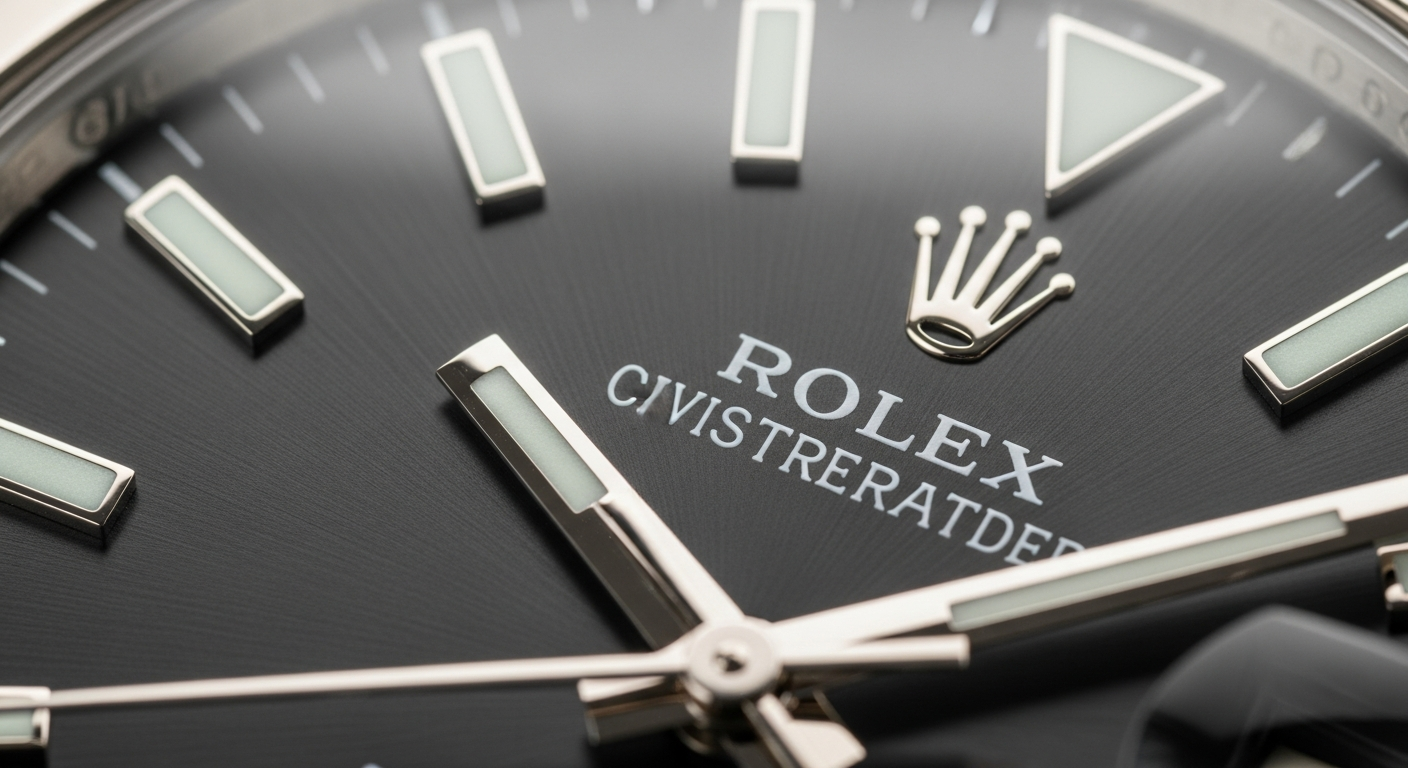
Rolex scarcity is often narrated as hype, conspiratorial withholding, or market manipulation. The more interesting interpretation is structural: Rolex produces in massive numbers, but it refuses to let volume dilute the perception of inevitability. Availability becomes a calibrated constraint—shaped by demand, retail cadence, regional allocations, and model mix—rather than a simple output number. That constraint turns the act of acquisition into a form of social proof. If a watch is hard to get, the owner is assumed to have been chosen by the system, or to have navigated it successfully.
Scarcity also protects standardization. When a brand is forced to chase demand too directly, it tends to fragment production, proliferate references, and compromise consistency. Rolex does the opposite. The catalog remains disciplined. Case families are recognizable. The product line evolves conservatively. This is not creative timidity; it is operational strategy. A controlled portfolio lets Rolex focus tooling, training, quality control, and parts stocking, which in turn improves the long-term ownership experience. Scarcity, then, is not merely a marketing effect; it is a buffer that allows Rolex to keep its system stable while demand fluctuates.
Importantly, Rolex scarcity is also time-based. The wait is part of the product. The brand has taught consumers to accept delay as normal for certain references, which quietly redefines what “premium” means. In most luxury categories, premium suggests immediate access. With Rolex, premium often suggests deferred access—an inversion that only works because the brand’s credibility makes the delay feel like validation rather than inconvenience.
Standardization is the invisible complication
Rolex’s most consequential “complication” is not displayed on the dial: it is standardization across an enormous output. The brand’s reputation is built on the expectation that two identical references, bought years apart, will behave similarly on the wrist and at the bench. This is difficult in mechanical watchmaking precisely because mechanical systems amplify small inconsistencies. Standardization requires tight control of tolerances, processes, lubrication regimes, supplier variability, and assembly training. Rolex has made that discipline the center of its manufacturing identity.
In enthusiast discourse, standardization is sometimes mistaken for blandness. But if you view a watch as a tool for timekeeping that must remain credible across climates, shocks, magnetism, and indifferent wear, then standardization becomes luxury. It converts uncertainty into confidence. The point is not that Rolex watches are perfect; it is that they are predictably good in the ways most owners can feel. The hands align. The crown action is consistent. The bracelets close the same way. The date flicks with authority. The watch comes back from service behaving like its siblings.
This is where Rolex’s incrementalism becomes strategic. By avoiding sudden leaps, the brand limits the number of new failure modes introduced per generation. Each update can be validated, industrialized, and supported globally. This is a conservative engineering philosophy, but it is also the reason Rolex can promise a coherent experience across millions of watches. In 2026, when more brands chase differentiation through novelty, Rolex differentiates through sameness—refined and defended.
Incremental engineering that changes outcomes
Rolex innovation is real; it is simply not theatrical. The architecture of contemporary Rolex movements emphasizes robustness, efficiency, and serviceability, with updates that often appear modest until you measure their consequences over years. Improvements in escapement efficiency, hairspring stability, and shock protection translate into better rate stability in daily life. Case and crown engineering remains focused on sealing integrity and abuse tolerance. Bracelet and clasp refinements aim at long-term wear, not showroom theatrics.
Rolex also understands that “accuracy” is not a spec sheet; it is a lived experience. The brand’s obsession with chronometric performance is less about beating rivals in a one-off contest and more about ensuring that the average owner, in the average week, rarely thinks about setting the time. That is an emotional outcome produced by engineering. When a watch stays close enough that the owner forgets it is mechanical, the product becomes quietly superior. Rolex has built an empire on that small daily impression.
Equally important is how Rolex chooses what not to do. There is restraint around thinness, extreme power reserves, and exotic materials that complicate finishing and service. The brand prioritizes the total system: the watch must be manufacturable at scale, testable in a standardized way, and maintainable across decades. Many creative ideas die in that filter. Rolex’s strength is that it is willing to let them die.
Certification as a trust engine
Rolex has long understood that in luxury, proof matters almost as much as performance. The brand’s certification regime functions as a narrative of discipline: not only is the watch accurate, it is verified as accurate under the brand’s own standard, after casing. This distinction is pivotal because it aligns the measurement with the owner’s reality. A movement performs differently inside a case than it does on a lab mount; Rolex’s method emphasizes the finished object.
Certification also scales trust. For a consumer who does not read forum threads or compare escapement geometries, the knowledge that Rolex applies a consistent standard to every watch is a shortcut to confidence. The brand turns metrology into an identity. It is not that other brands cannot achieve similar results; it is that Rolex has made the act of verification part of the mythology while keeping it grounded in process rather than storytelling.
In 2026, with authenticity anxiety still shaping the broader luxury landscape, this matters. Trust is increasingly procedural. Rolex’s certification, serial practices, and controlled retail environment work together as a credibility stack. The buyer is not only buying a watch; they are buying an audited pathway from factory to wrist.
Service as the real moat
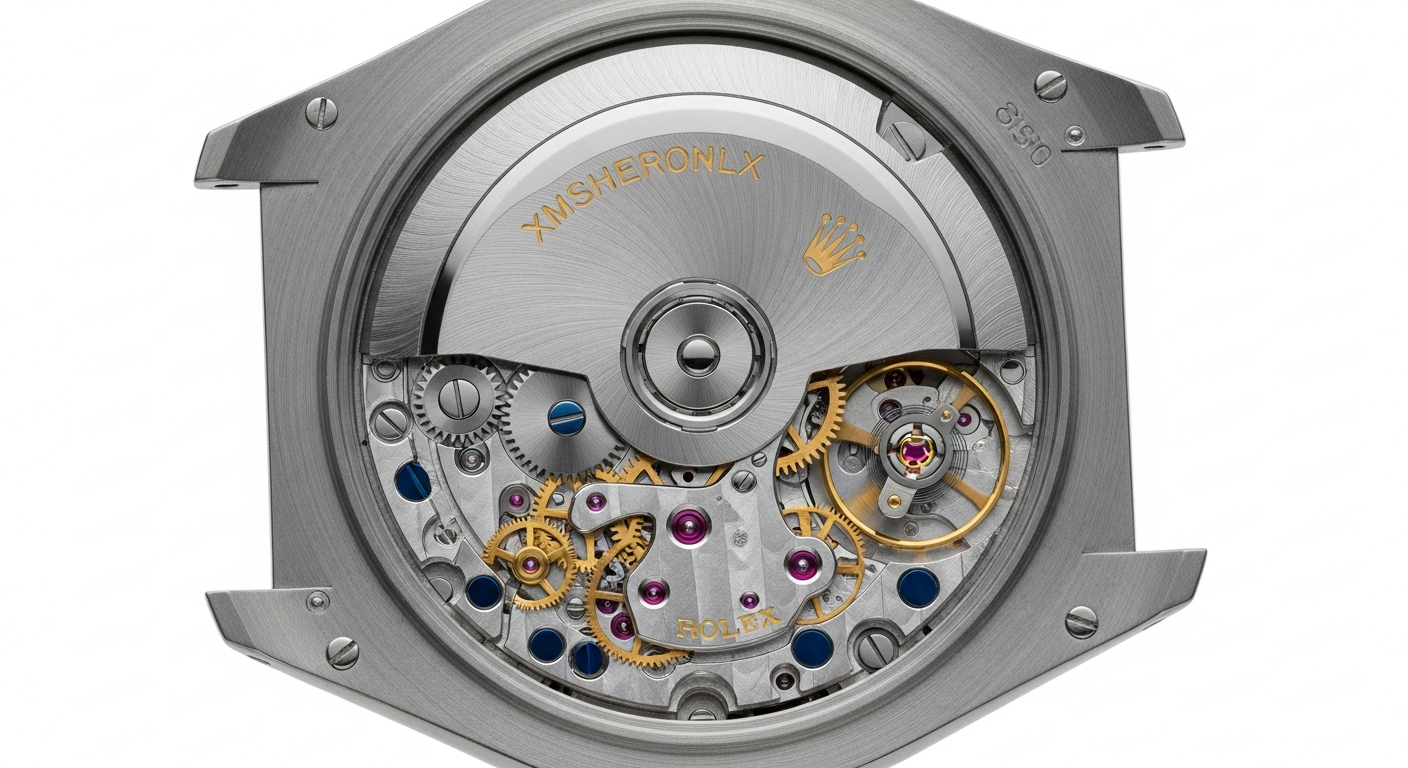
If Rolex has an unfair advantage, it is after-sales. A mechanical watch is not a single purchase; it is a long-term maintenance relationship. Rolex has invested in service infrastructure, training, parts logistics, and standardized procedures to an extent that most brands cannot match at scale. This is not glamorous, but it is decisive. A watch that can be restored predictably, with consistent parts quality and competent workmanship across regions, becomes a safer asset to own.
Service also reinforces standardization. When a platform remains stable, parts ecosystems remain rational. Technicians develop deep familiarity with families of calibers and cases. Turnaround times and cost structures become more predictable. Owners are more willing to wear the watch hard because they believe it can be put right. That confidence feeds the brand’s cultural positioning as the default “one good watch” solution—an archetype with enormous demand behind it.
There is a harder edge here: Rolex’s control of parts and service pathways also protects its market. It discourages the kind of fragmented, uncontrolled repair culture that can erode brand consistency. Collectors may debate the trade-offs, but strategically it supports Rolex’s core promise: long-term reliability delivered through a system, not an individual artisan’s luck.
Distribution, retail theater, and the discipline of the authorized channel
Rolex’s retail presence is often viewed as conservative, even predictable. That predictability is the point. The authorized dealer network is not merely a sales channel; it is the brand’s interface for managing allocation, customer education, and the choreography of obtaining a watch. In a market where many luxury purchases are impulsive, Rolex purchases are frequently planned, negotiated, and documented. The process itself trains buyers to treat the product as significant.
Rolex also benefits from retail asymmetry: the brand is stronger than most of its dealers. That gives the Crown leverage to enforce standards around presentation and, critically, pricing discipline. While the secondary market remains volatile, the primary channel remains stable, and stability is one of Rolex’s most valuable outputs. It keeps the brand’s public value proposition coherent even when external market dynamics fluctuate.
Another key element is that Rolex distribution does not simply respond to demand; it shapes demand. By making certain references perennially scarce, Rolex keeps attention concentrated on a small set of cultural signals. The catalog is broad enough to serve different customers, but the conversation remains focused on icons. That focus keeps the brand legible, which is rare at Rolex’s scale.
Why the design barely moves—and why that is the strategy
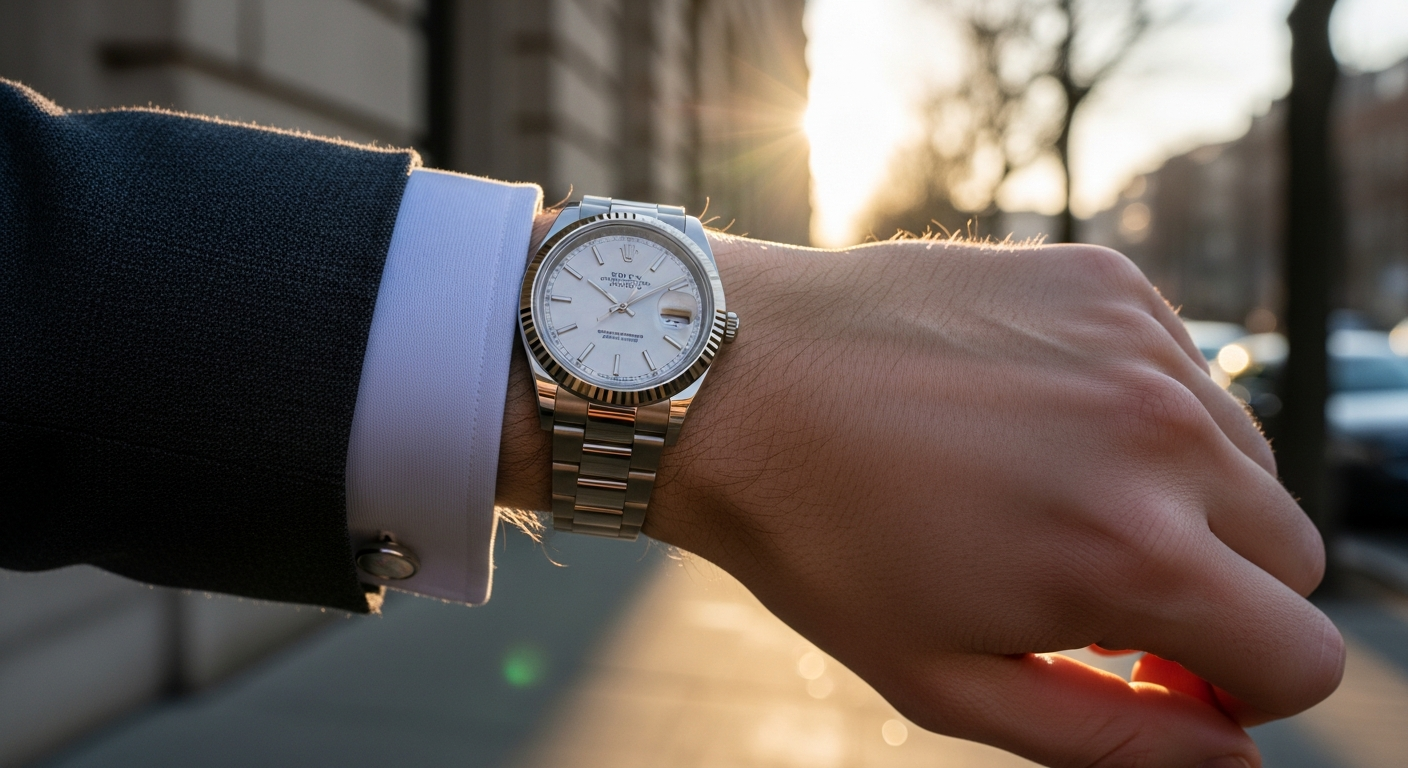
Rolex design changes slowly because its silhouettes are not just aesthetic; they are contracts. The Submariner, Daytona, Datejust, GMT-Master II, and Explorer families act as stable visual currencies. When a design becomes currency, frequent redesign is devaluation. Rolex can refine proportions, update materials, and improve ergonomics, but it will not easily disrupt the symbols that the market uses to identify value at a glance.
This is also where Rolex separates itself from trend cycles. A watch that looks “new” can look dated quickly. A watch that looks consistent can look timeless, even if it is merely familiar. Rolex has mastered familiarity as a premium attribute. The brand’s watches function like industrial design classics: they absorb minor updates without losing their identity. The owner can step in and out of fashion without the watch betraying the era of purchase.
There is a practical benefit too: stable design simplifies service and parts management, strengthens the pre-owned market, and reduces the risk of polarizing the customer base. Rolex is not interested in being loved passionately by a small group; it is interested in being trusted broadly by a large one. The design strategy follows that goal.
Rolex in 2026: desire engineered through permanence
By 2026, Rolex has become less a brand you compare and more a brand you assume. That assumption is the product of a system that turns industrial discipline into cultural permanence. Scarcity makes acquisition meaningful. Standardization makes ownership predictable. Certification makes performance believable. Service makes the long term manageable. Distribution makes the narrative coherent. None of these elements is exciting on its own. Together, they are powerful enough to make the Crown feel untouchable.
Rolex remains divisive among enthusiasts precisely because it refuses to play the enthusiast game. It does not need to persuade the informed minority with fireworks when it can reassure the much larger audience with consistency. The brilliance is that it has made consistency feel aspirational. Reliability becomes luxury. Restraint becomes status. And because the watches are engineered to be lived with, the desire they generate is reinforced every day the owner does not have to think about the watch at all.
The myth of Rolex is that it is a triumph of marketing. The reality is more consequential: it is a triumph of operations. Rolex engineered wanting into the practical architecture of supply, proof, and permanence. That is why the silhouettes barely change, the waiting lists persist, and the watches hold their place in the culture. The Crown does not need to shout about innovation. It simply keeps the system running—and lets the world interpret the silence as authority.