Richard Mille: How a $200,000+ Watch Brand Engineered Luxury Through Materials, Athletes, and Scarcity
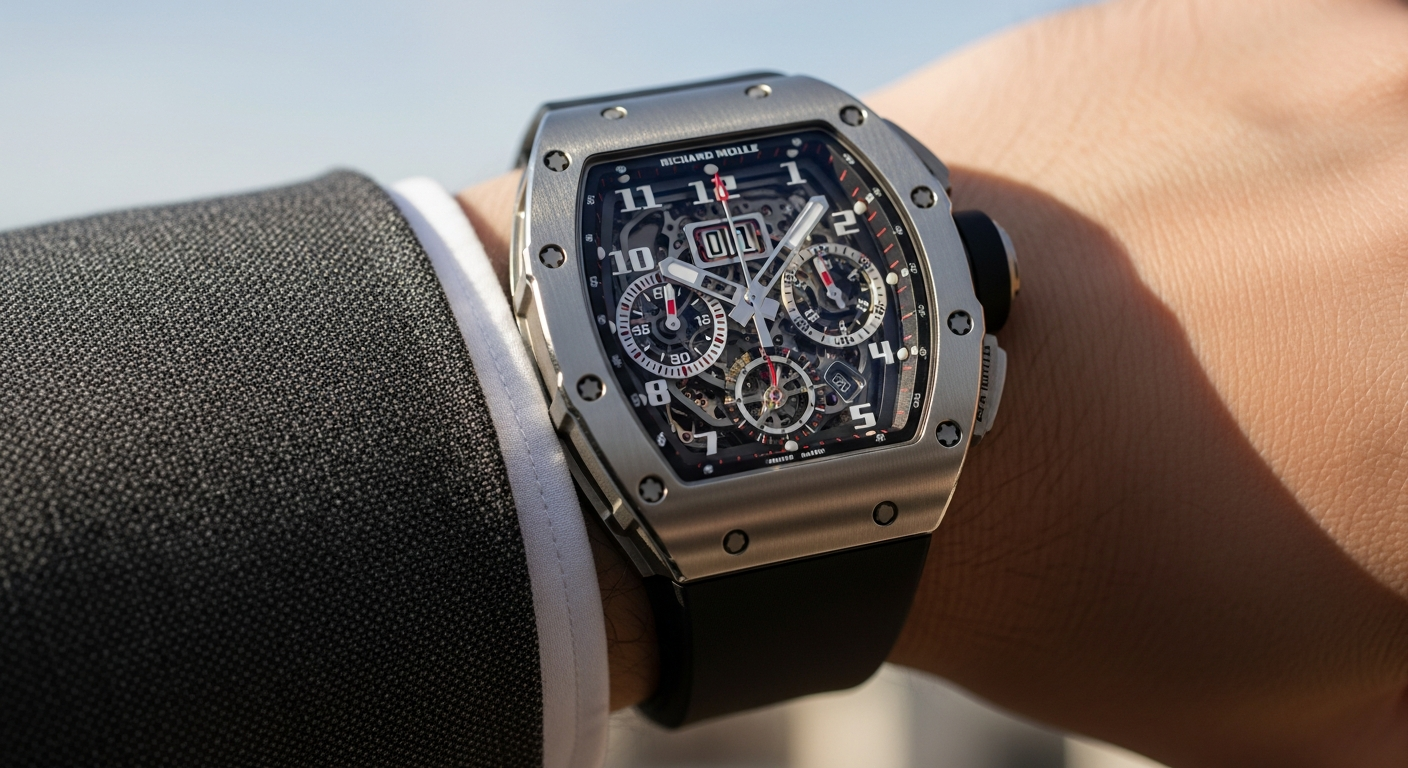
Richard Mille didn’t win the luxury watch game by sounding like the past—it won by borrowing the language of the future. In less than a generation, the brand transformed a radical, skeletonized tonneau into a globally legible status code, validated not by boardrooms but by tennis courts, F1 paddocks, and the physics of shock, torque, and weight. The question isn’t whether Richard Mille is worth it; it’s how the brand made that question feel inevitable—and profitable—at six and seven figures per wristwear object that looks like nothing else in the room (or on the track).
Not Heritage, Not Nostalgia: A Brand Built Like a Product Program
Most high-end watchmaking still competes in a heritage economy. The argument is continuity: founders, archives, vintage cues, and a slow-burn narrative that treats modernity as an accent rather than a core language. Richard Mille entered the market with a different premise: legitimacy could be engineered, not inherited.
That distinction matters. The visual system—tonneau case, exposed architecture, torque screws, and a deliberate “industrial” grammar—was not a styling exercise. It was the brand’s operating system. Where many maisons reserve skeletonization for limited series and connoisseur variants, Richard Mille made it default. There is no “dress RM” that retreats into discretion. This was strategic from day one: a watch that reads instantly at distance becomes a social object, not merely a mechanical one.
The result is a brand that behaves less like a traditional watchmaker and more like a performance-led product company. Iterations arrive as material programs, engineering briefs, and athlete use-cases. Even complicated references tend to feel like test articles that escaped the lab, which is precisely the point. When the product language is “prototype,” the price can be framed as R&D, not ornament.
Materials as Narrative: When Carbon and Quartz Become Luxury Inputs
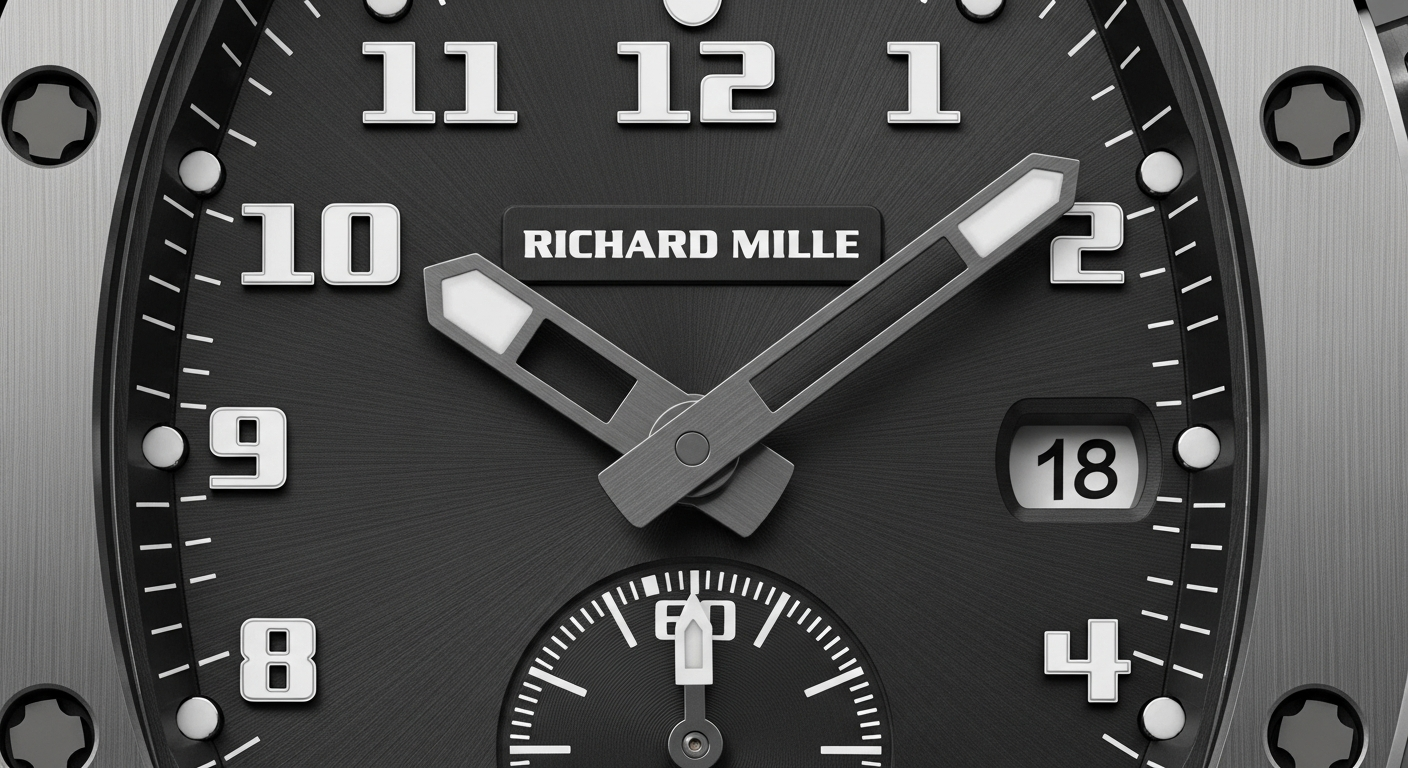
Richard Mille’s most effective move may be treating materials not as spec-sheet garnish but as the story itself. In conventional luxury, preciousness is often literal: gold, platinum, gemstones. Richard Mille redefined preciousness as difficulty—machining, stability, yield, and repeatability. The brand’s material choices repeatedly push the conversation away from traditional value cues and toward advanced manufacturing.
Carbon TPT is a useful case study. It’s not simply “carbon fiber,” a term that can be both broad and vaguely performative. The layered construction, the distinctive striated pattern, and the implied aerospace lineage give the owner something to point to that isn’t just price. The material looks technical because it is technical, and that visual truth supports the brand’s core claim: this is a performance object.
Then there’s Quartz TPT—arguably one of the most counterintuitive luxury propositions in modern watchmaking. Quartz is not precious in the gemological sense, and the word carries baggage from the quartz crisis. Richard Mille flips that baggage into a flex: the point is not the mineral but the transformation of it into a high-performance composite. The familiar becomes exotic through process.
Even when the brand uses precious metals, they are often deployed in ways that preserve the technical tone. The finishing and construction emphasize architecture over mass. Preciousness is present, but it doesn’t lead. This is critical: Richard Mille’s luxury is not about looking expensive in the classical way; it is about looking engineered in a way that implies expense.
The Case as Chassis: Architecture You Can Read Without Explaining
If the materials are the narrative fuel, the case construction is the delivery mechanism. Richard Mille cases often feel like multi-part assemblies because they are. The brand’s fixation on architecture—bezel, caseband, caseback, fastened together with visible screws—creates an immediate association with machinery. It reads closer to an F1 component than a jewelry object, which is exactly why the watches work on athletes: the design doesn’t look delicate, even when the price suggests it should be.
The tonneau shape is also a strategic decision, not a preference. A round watch competes with a century of icons. A tonneau, especially one with this particular set of proportions and skeletonized cues, competes with far fewer references. Distinct silhouette is a moat. It supports instant recognizability, and recognizability supports resale confidence, which supports demand.
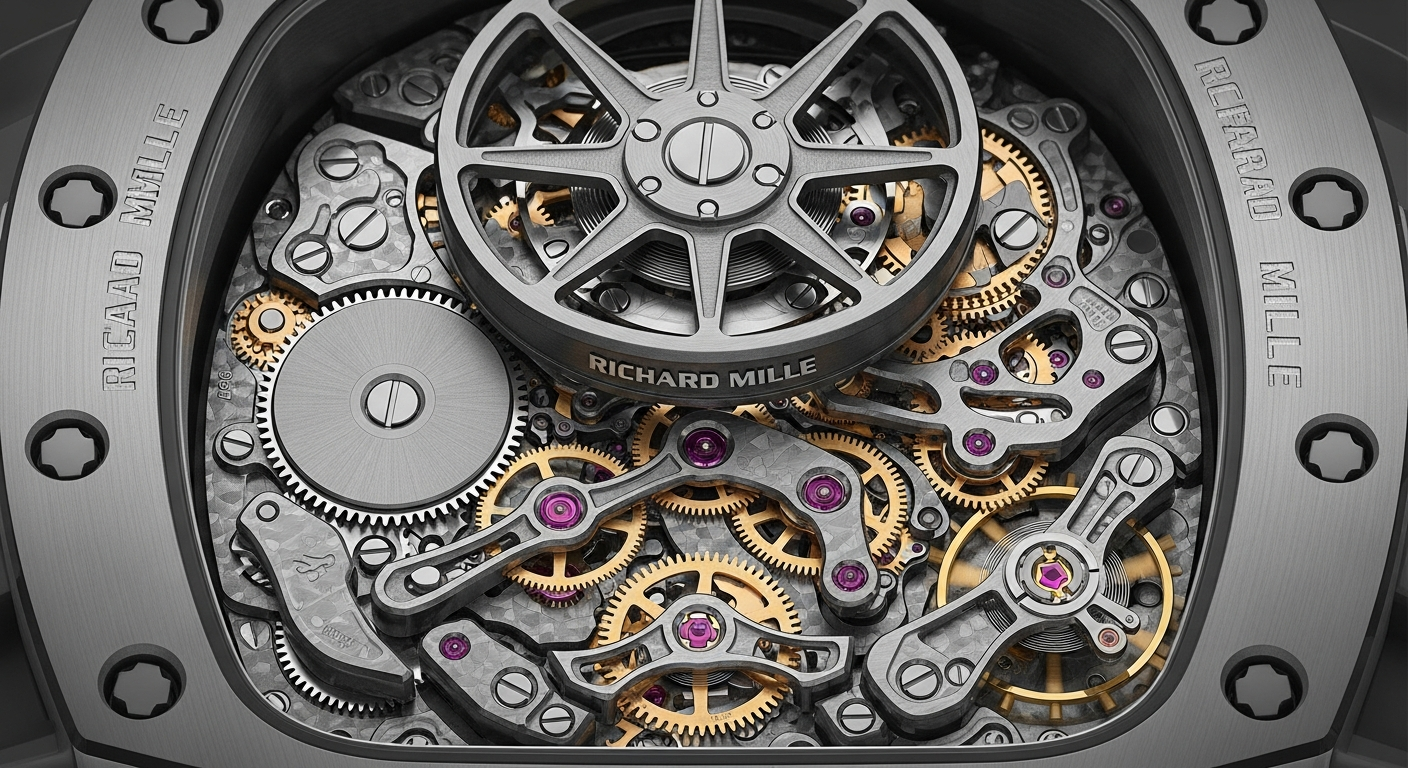
Equally important is the brand’s willingness to make the movement visible as a matter of identity rather than occasional transparency. The skeletonized look is not only a celebration of mechanics but a psychological signal: complexity is placed on display, making it harder for the uninitiated to dismiss the watch as merely a fashion statement. Even when the owner cannot explain the movement, the architecture implies complexity. In luxury, implication often carries more weight than comprehension.
Athletes as Proof, Not Endorsement: Wrist-Validation Under Load
Celebrity endorsement is common; athlete validation under real stress is rarer. Richard Mille’s advantage is that its watches can credibly enter environments where a mechanical watch feels out of place: tennis, sprinting, motorsport, and other domains that punish weight, shock, and vibration. The brand didn’t just place watches on famous wrists; it built a feedback loop where the setting became part of the product claim.
That is the subtle genius of the Nadal-era narrative. The visual of a large, skeletonized, ultra-expensive watch surviving professional tennis is a persuasive message even to people who don’t follow tennis. It compresses technical achievement into a single image: extreme activity plus intact luxury. It also reframes fragility, a common anxiety for owners of high complication watches. Richard Mille tells you the opposite story: you can live in this watch.
In Formula 1, the equation shifts from shock to instrumentation. The paddock is a theater of composites, precision, and obsessive marginal gains. Richard Mille’s material vocabulary belongs there. Again, the point is not that an F1 driver needs a tourbillon; the point is that the watch looks like it belongs next to carbon tubs and telemetry screens. The brand borrows legitimacy from the environment because the environment already speaks its language.
This kind of placement is more effective than traditional luxury signaling because it isn’t purely social. It’s quasi-technical. The watch becomes a visible claim about performance, and performance claims are harder to argue with than taste claims.
Scarcity as Governance: Controlled Visibility and the Economics of “Too Expensive”
Richard Mille’s pricing is not an outcome; it is a strategy. At $200,000 and above, the brand sits in a zone where the customer is not buying a watch so much as buying access—access to an object that functions as a portable credential. In that context, availability must be managed with discipline. Overexposure would collapse the signal.
Scarcity here is not merely low production. It is scarcity with visibility. The watches appear in high-impact arenas—sport, entertainment, elite social circles—yet remain rare enough that sightings feel consequential. This is controlled visibility, and it is far more valuable than mass recognition. Anyone can know what a Royal Oak is; fewer can reliably encounter a Richard Mille in the wild.
The brand’s limited references and constant variation create a market dynamic where the buyer feels pressure not only from desire but from timing. Richard Mille effectively turns product cycles into moments. When the product is framed as a program—material, athlete, technical concept—the collection becomes a series of “chapters.” Missing a chapter feels like losing a position in a narrative, not just losing a purchase opportunity.
There is also a calculated inversion at play: “too expensive” becomes the point. For certain buyers, the cost is not a barrier but evidence that the object has not been democratized. In modern luxury, exclusivity is increasingly threatened by visibility. Richard Mille resolves that tension by making the watch loudly visible while keeping it economically inaccessible. The result is a status object that doesn’t need subtlety because it uses price as the filter.
Mechanical Theater Done with Discipline: Why the Movements Matter Even When They’re Not the Main Story
It is easy to dismiss Richard Mille as pure marketing wrapped around a skeletonized dial. That critique misses the operational reality: the brand’s aesthetic depends on mechanical credibility. When you expose the movement so aggressively, you are inviting scrutiny. The architecture has to withstand close-up photography, boutique lighting, and collector inspection.
Many Richard Mille calibers emphasize rigidity, openworked bridges, and a three-dimensional layout that reads as structural, not decorative. The finishing is often clean and contemporary rather than romantic. This aligns with the brand’s future-facing language: you’re not supposed to think of pocket watches and Geneva salons; you’re supposed to think of load paths and tolerances.
Tourbillons and high complications appear frequently, but they function differently here than in classical maisons. In a traditional context, a tourbillon is a heritage-coded trophy. In Richard Mille’s context, it is part of the performance theater—an advanced mechanism placed inside a chassis built from exotic composites and validated in extreme contexts. The complication becomes less about historical legitimacy and more about engineering bravado.
This is why the brand’s watches can coexist with skepticism and still sell. Even critics concede the build is substantive. The debate shifts from whether it is well-made to whether the concept resonates. Richard Mille is comfortable operating in that debate because resonance, not consensus, is what drives modern luxury economics.
The Richard Mille Playbook: A Modern Luxury Case Study
Richard Mille’s rise offers a clear playbook for contemporary luxury: start with a distinct visual system, anchor it in advanced materials, validate it under extreme use, and govern visibility through scarcity. None of these elements alone would be sufficient. Together, they compound.
Distinctiveness ensures recognition. Materials provide intellectual cover for pricing. Athlete validation converts recognition into proof. Scarcity protects resale narratives and keeps the brand’s sightings meaningful. The skeletonized, technical look is not merely “bold”; it is functional brand design, optimized for the era of social media, high-resolution photography, and instant identification.
There is also a deeper strategic point: Richard Mille competes on contemporaneity. Where many brands fear looking too modern, Richard Mille treats modernity as the asset itself. The watches do not ask to be compared to the past; they ask to be compared to the future—composites, ergonomics, and engineered spectacle. That reframing is what allows Richard Mille to avoid the heavy gravitational pull of heritage giants while still commanding their level of attention.
Is It Worth It Is the Wrong Question, and That’s the Point
Richard Mille engineered a market where the “worth it” question becomes both unavoidable and self-perpetuating. The very act of questioning reinforces the brand’s position as an outlier, and outliers can demand outlier pricing. For the buyer who wants discretion, Richard Mille is almost an anti-solution. For the buyer who wants a watch to function as a technical talisman and a social marker, it is one of the most coherent propositions in modern horology.
Collectors can debate aesthetics and value, and they should. But strategically, Richard Mille’s achievement is hard to deny: it built a new luxury dialect—one spoken in composites, skeleton bridges, torque screws, and athlete wrists—and made it legible across cultures. In a category obsessed with time, Richard Mille’s real invention may be timing: arriving when modern visibility, performance culture, and engineered scarcity could fuse into a single, highly profitable signal.