Parmigiani Fleurier: The Quiet Power of Haute Horlogerie’s Best-Kept Secret
In a market that rewards loud signals—celebrity endorsements, waitlists, and instantly recognizable silhouettes—Parmigiani Fleurier plays a different game. Born from the discipline of restoring history, the maison builds modern watches with the restraint, finish, and mechanical seriousness collectors usually have to hunt for. The result is a rare kind of luxury: one that reads as discreet on the wrist, but reveals its depth to anyone who knows how to look—at the curve of a lug, the architecture of a movement, and the calm confidence of a brand that doesn’t need to shout to be heard.
To understand why Parmigiani Fleurier sits in a category of its own, it helps to invert the usual hierarchy of brand storytelling. Most maisons begin with a product idea and build a mythology around it. Parmigiani began with stewardship: Michel Parmigiani’s early reputation was forged not by selling new watches, but by conserving old ones—objects that carry the concentrated decisions of past makers. Restoration is not nostalgia; it is a discipline with rules. It teaches what can be changed, what must remain, and how far craftsmanship must go to be credible. That ethic still runs through the brand’s best work today, and it’s precisely why Parmigiani has become a connoisseur’s brand: not obscure for the sake of exclusivity, but quietly rigorous in a way that rewards educated attention.
The collector case for Parmigiani Fleurier is strategic rather than sentimental. It rests on three pillars: a restoration mindset that produces unusually coherent design and finishing; vertical integration that is deeper than the price tags suggest; and a modern identity—especially in the Tonda PF era—that deliberately avoids the “recognizable at twenty paces” playbook. In a market conditioned to chase signals, Parmigiani offers something harder to counterfeit: proportion, touch, and mechanical substance.
Origins in Restoration: How Michel Parmigiani’s Conservation Mindset Shapes Modern Design and Finishing
Restoration is often misunderstood as cosmetic revival. In practice, it is forensic work: reading wear patterns, matching historical techniques, and deciding when to intervene and when to preserve. Michel Parmigiani became known for exactly this type of high-stakes conservation, including complex automata and rare horological objects. That background matters because it trains a particular kind of taste—one that is sensitive to line, curvature, and layered finishing, and one that treats mechanical integrity as a moral issue rather than a marketing angle.
When that mindset is applied to contemporary watchmaking, it produces a distinctive restraint. Parmigiani’s design language rarely relies on overt signatures. Instead, it leans on decisions that are difficult to explain in a showroom and easy to recognize in hand: a lug that falls with a natural wrist-hugging arc; a case profile that balances thickness with visual lightness; a dial that uses texture and grain to create depth without graphics. These choices echo restoration logic: respect the object, avoid unnecessary noise, and let materials and geometry do the talking.
This is also where Parmigiani’s finishing culture starts to separate itself from the crowded field of “high-end adjacent” brands. Collector-grade finishing is not an isolated flourish on a bridge edge; it’s consistency across surfaces and components, including the ones most brands would rather you didn’t look at. Parmigiani’s work often shows an old-school refusal to draw a line between what is visible and what is important. Anglage is not simply present; it is controlled. Polished and brushed transitions are not just contrast; they are choreography. Even when the brand opts for a modern, calmer aesthetic, the underlying execution carries the fingerprint of someone who has spent decades studying what survives time.
That ethic also influences how Parmigiani treats heritage. The maison is not trying to recreate a single iconic reference. It is, in a sense, restoring the idea of classical watchmaking into a contemporary vocabulary. The result can seem understated in photos and surprisingly rich in person—an effect that aligns with the brand’s broader posture. Parmigiani does not depend on immediate recognition; it depends on sustained looking.
For collectors, this is more than aesthetic preference. It’s a hedge against the volatility of fashion-driven demand. Watches built around coherent design and finishing tend to age well, because their value does not rely on a trend’s shelf life. Parmigiani’s restoration DNA is quietly practical in that way: it produces objects designed to be lived with for decades, not merely acquired.
Vertical Integration as a Luxury Strategy: What Vaucher, dials, cases, and escapements mean for quality, coherence, and scarcity
Vertical integration is one of the most abused phrases in modern watch marketing. Many brands claim it while outsourcing key organs of the product. Parmigiani Fleurier is unusual because its ecosystem is both real and strategically meaningful. The brand’s relationship with Vaucher Manufacture Fleurier, alongside dial and case capabilities within the broader structure around the maison, creates a level of internal coherence that typically requires either far higher pricing or far louder storytelling.
Vaucher matters because it is not simply a movement supplier; it is a movement philosophy. The calibres associated with this ecosystem are known for thoughtful architecture, slim profiles, and finishing that sits comfortably in the haute horlogerie conversation without resorting to theatrical skeletonization as proof. The collector takeaway is twofold. First, the mechanical “base layer” is strong: stable, well-conceived, serviceable. Second, the movements tend to look like they were designed, not merely assembled—bridges align with the visual logic of the watch, and the overall layout supports both performance and aesthetics.
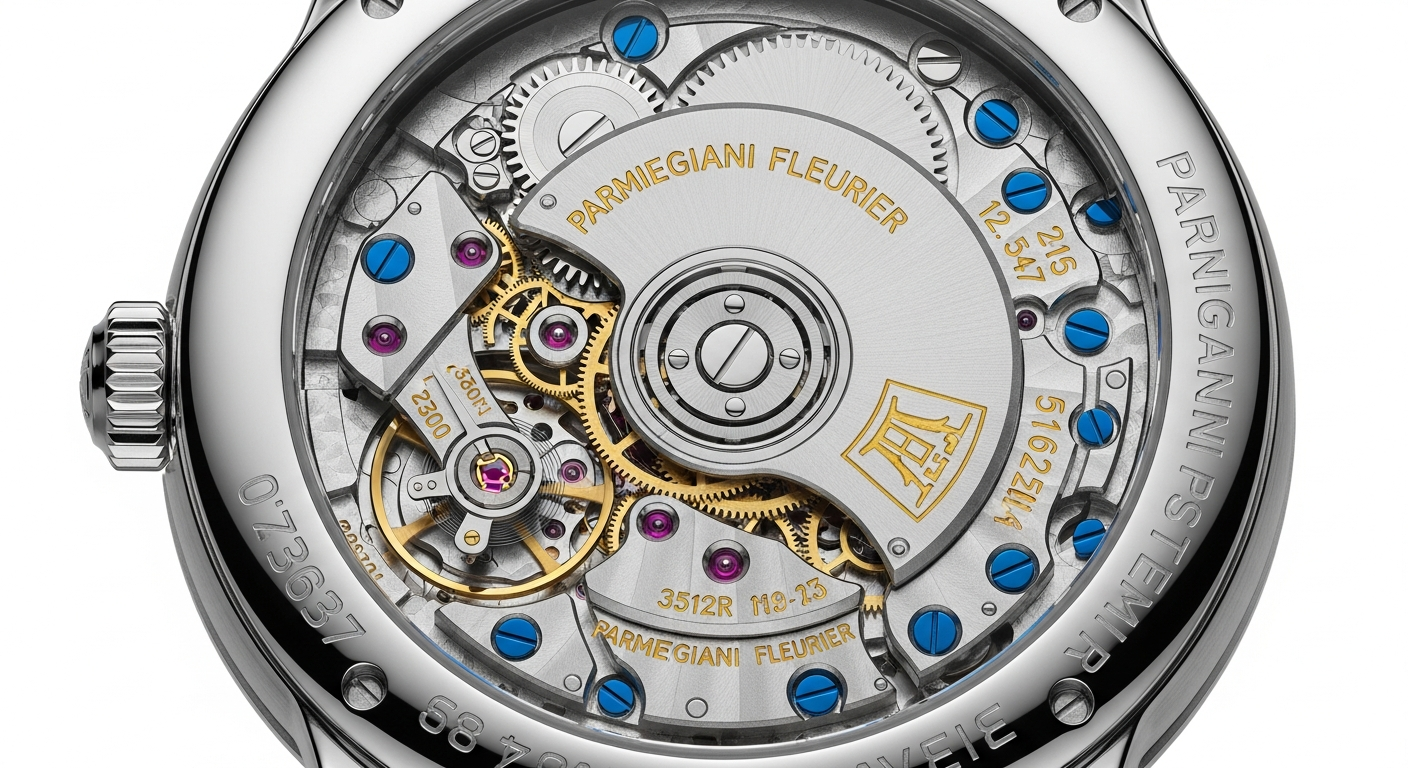
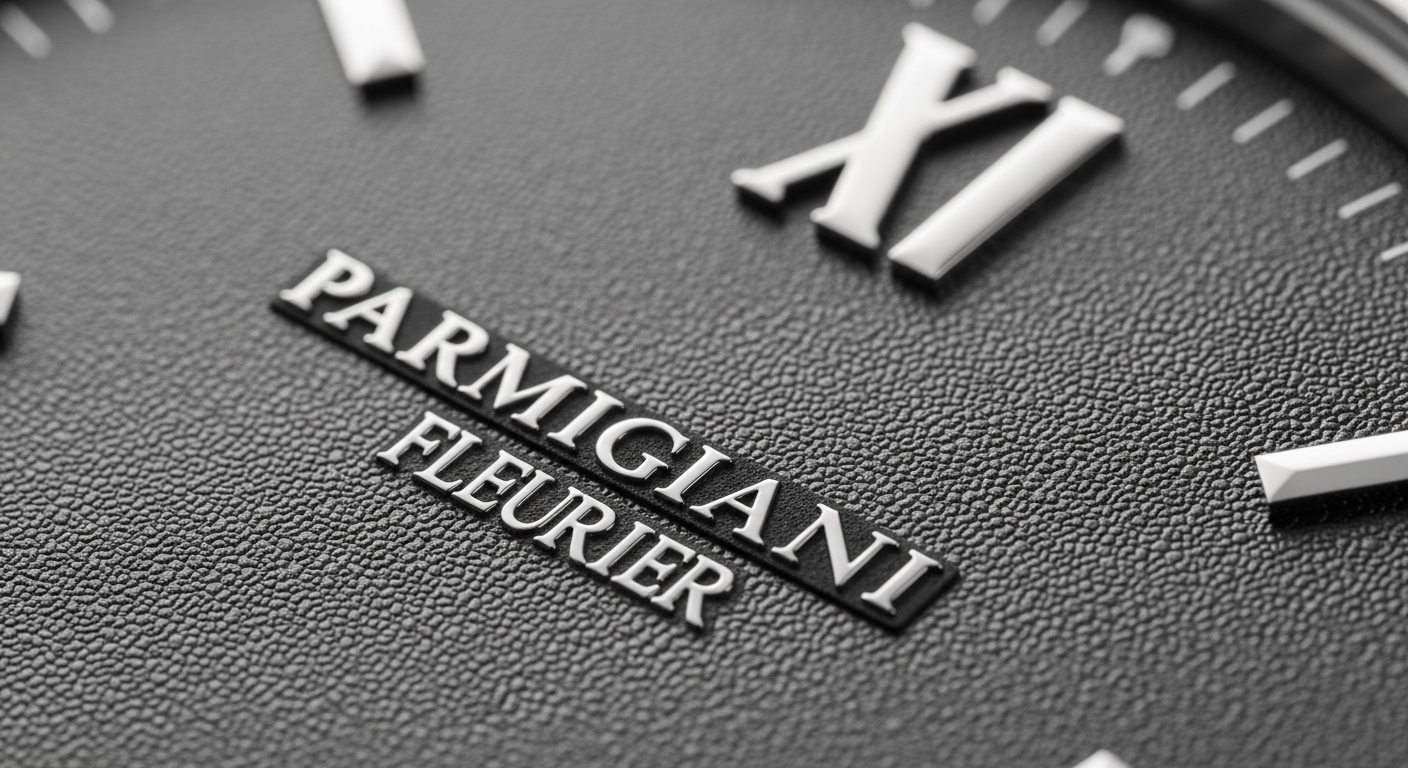
Dial making is the other half of the story, and arguably the more relevant one in an era where many “luxury” watches live and die by the quality of their surfaces. Parmigiani’s best dials use texture as the primary signal of expense: fine guilloché, granular finishing, and subtle tonal shifts that change under low light. This approach is strategically aligned with the brand’s connoisseur positioning. It avoids the obvious and instead leans on what collectors actually notice after the initial excitement fades: how the dial behaves on a cloudy afternoon, whether the hands catch light cleanly, whether the date window is integrated rather than apologetic.
Case work is equally telling. Parmigiani tends to pursue complexity through curvature and edge treatment rather than sheer mass. That requires precision. It also requires the discipline to reject easy “hero angles” in favor of wearability. The result is a kind of quiet ergonomics: watches that feel designed around wrists rather than around camera lenses. For long-term ownership, this is not a minor detail. The pieces you keep are usually the ones that disappear on the wrist while still rewarding you when you look down.
The strategic implication of this integration is scarcity of a particular kind. Not scarcity manufactured by limiting allocations, but scarcity created by capability. When a brand can produce so much internally—and insists on a certain level of finish and proportion—output is naturally constrained. This creates a different collector dynamic than hype brands. Parmigiani’s desirability is not enforced by social proof; it emerges slowly as the market notices the substance.
It also reduces the risk of incoherence. Many watches fail not because they are poorly made, but because their components feel like they come from different worlds: a great movement trapped inside a generic case, or a beautiful dial paired with indifferent hands. Parmigiani’s integrated approach makes it easier to deliver a unified object. The watch feels “of itself” rather than assembled from a catalog of premium parts. That unity is hard to quantify, but collectors sense it immediately.
The Modern Identity (Tonda PF and Beyond): Understated Codes, Real Complications, and Why Collectors Are Reappraising Parmigiani
The Tonda PF line marked a decisive turn toward modern minimalism, but it did not abandon the brand’s underlying seriousness. If anything, it sharpened it. The strategy is clear: remove obvious signals, refine the codes, and let finishing, proportion, and movement quality do the heavy lifting. In a landscape of integrated-bracelet sports watches that often compete on recognizability, Tonda PF competes on correctness.
Correctness shows up in the small decisions. Bezels are not merely knurled; they are finely fluted in a way that reads as jewelry-level work when you’re close and as calm texture when you’re not. Dials often rely on subtle grain that avoids the glossy, poster-like effect of many modern luxury watches. Branding is present but not dominant. The bracelet and case transitions are designed to feel inevitable, not attention-seeking. This is not anonymity; it is restraint with intent.
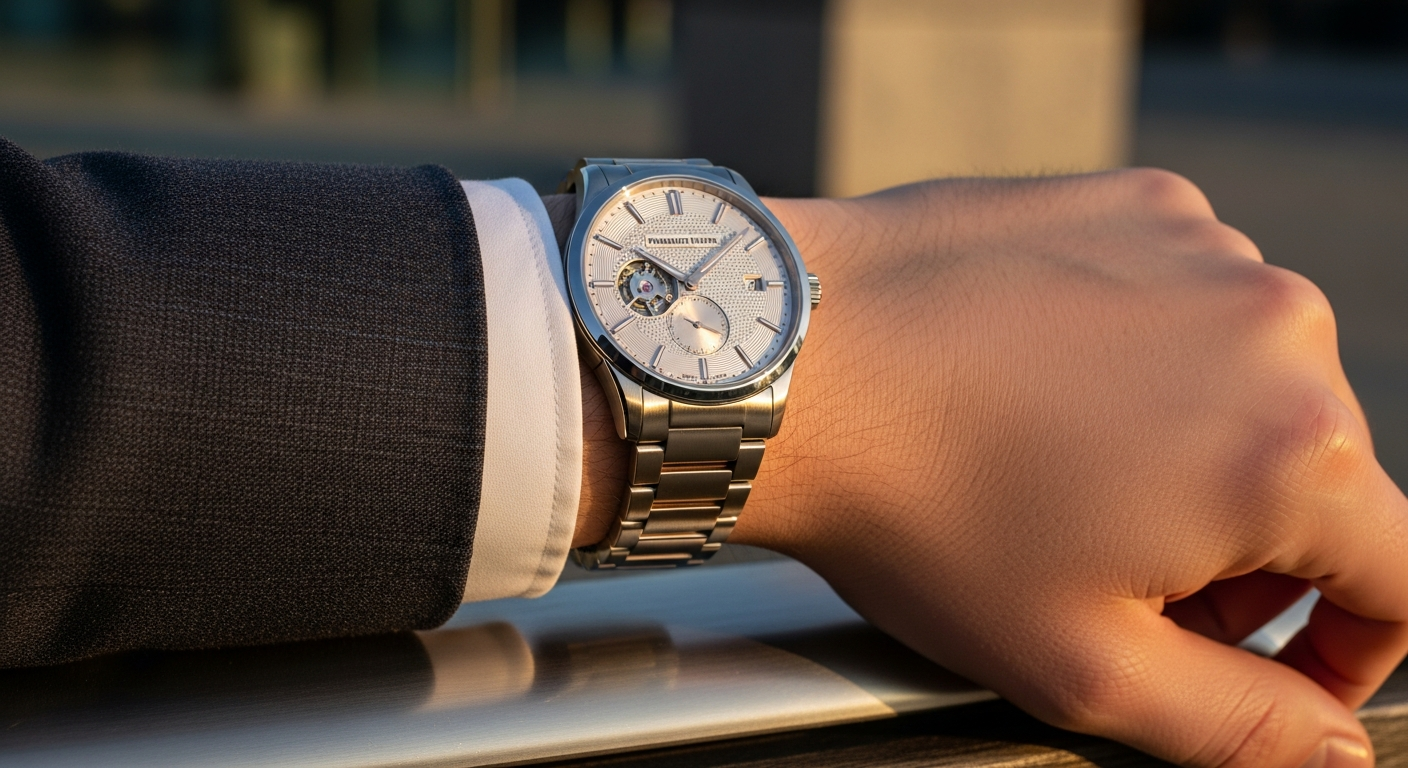
Collectors have begun to reappraise Parmigiani because this restraint happens to coincide with a broader fatigue in the market. The last decade rewarded spectacle: bright colors, inflated secondary prices, and a constant churn of limited editions engineered for online attention. That environment trained buyers to equate value with demand. Now the pendulum is swinging, and a different definition of value is re-emerging—one tied to making, longevity, and the satisfaction of ownership when nobody else is watching.
Parmigiani fits this shift because it offers legitimate complications without the need to turn them into mascots. When the brand executes calendar work, chronographs, or more elevated mechanical propositions, it tends to do so with a calmness that signals confidence. The complication is there to be used and appreciated, not to dominate the identity of the watch. This keeps the product from being trapped in a single moment of trend-driven excitement. It also makes the watches easier to wear, which is ultimately what sustains collector attachment.
Another reason the brand is gaining traction is that its design language resists rapid obsolescence. Many contemporary watches are designed around a temporary cultural mood; when the mood changes, the design looks dated. Parmigiani’s modern pieces are built around proportion, surface quality, and tactile experience—the kinds of attributes that remain relevant even as tastes shift. That makes them plausible long-term holds, and in a market that is slowly rediscovering patience, that matters.
There is also an element of contrarian intelligence at play. Owning a Parmigiani is not about rejecting mainstream brands; it’s about stepping beyond the default choices once you’ve learned what to look for. It’s a watch for the collector who notices the sharpness of a hand’s facet, the softness of a case edge, the way a movement bridge catches light, and the way a brand’s design decisions rhyme across a collection. In that sense, Parmigiani’s “best-kept secret” status is less a failure of marketing than a deliberate positioning choice. The maison is not chasing everyone. It is building for the few who care about the right things.
Quiet power is not the absence of ambition. It is ambition expressed through control. Parmigiani Fleurier’s control shows in its restoration-derived respect for craft, in the strategic advantage of genuine integration, and in a modern identity that refuses to beg for attention. For collectors looking past hype cycles—toward watches that will still feel intelligent and satisfying in ten years—Parmigiani is not merely an alternative. It is a benchmark for what discreet haute horlogerie can look like when it is designed to endure rather than to trend.