Louis Moinet Watches—When Chronographs Became Mechanical Theatre!
Some watches hide their complexity beneath the dial.
Others quietly reveal glimpses of their mechanics through casebacks or skeletonized openings.
Louis Moinet watches take a very different approach — they place the entire drama of timekeeping on the front stage.
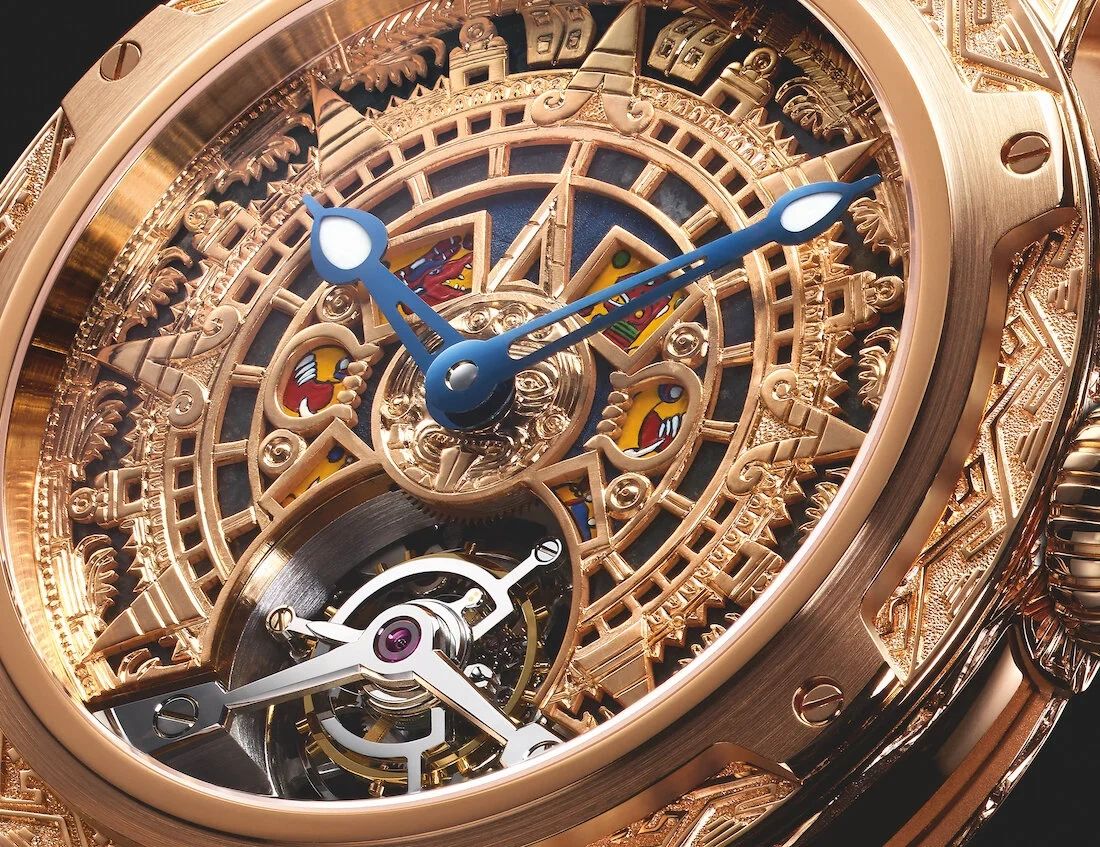
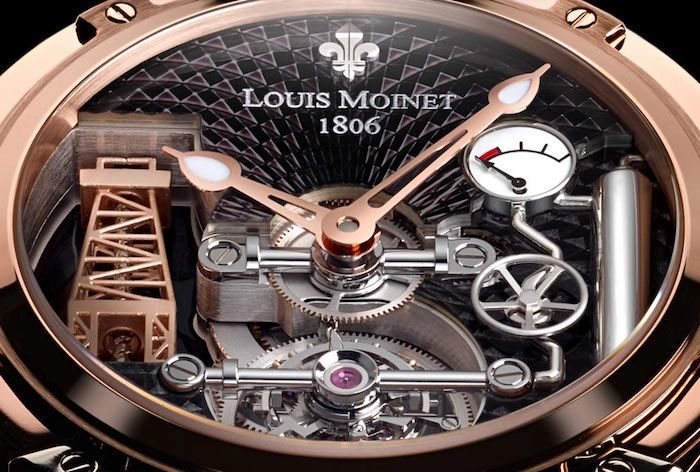
In a world where most chronographs remain visually conservative, Louis Moinet watches feel unusually architectural. Bridges, levers, wheels, and chronograph mechanisms are often positioned dial-side, allowing the wearer to observe the exact moment when time is captured, released, or reset. Instead of reading a chronograph as an abstract measurement, you witness the mechanical choreography that makes the measurement possible. The watch does not simply tell you that something has happened — it shows you how it happened.
This design philosophy creates an entirely different relationship between wearer and mechanism. Traditional watches emphasize legibility first and mechanical curiosity second. Louis Moinet reverses the hierarchy. The mechanism itself becomes the visual identity of the watch, transforming the chronograph from a functional complication into a form of kinetic architecture.
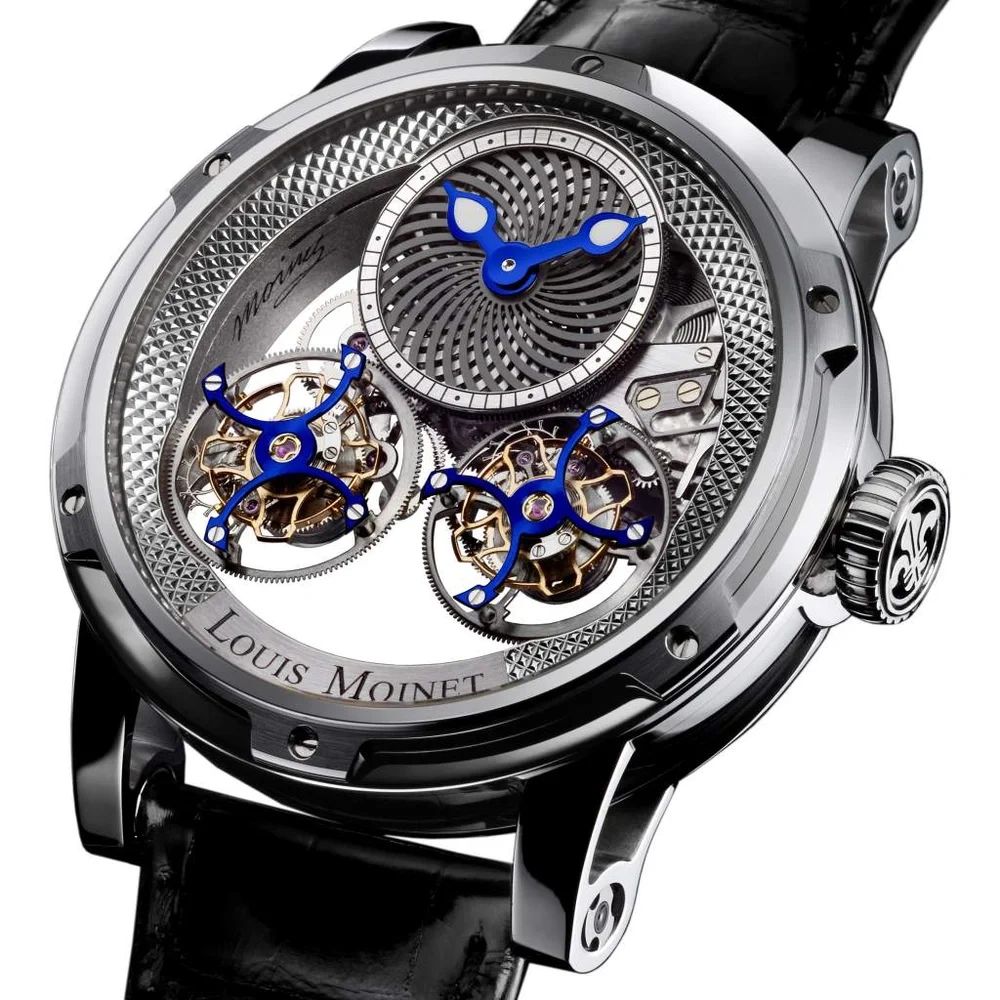
Wheels rotate where numerals might normally appear, levers engage visibly when pushers are pressed, and bridges form part of the dial’s aesthetic structure. The result is not merely a decorative skeletonization, but a deliberate decision to make engineering the primary visual language.
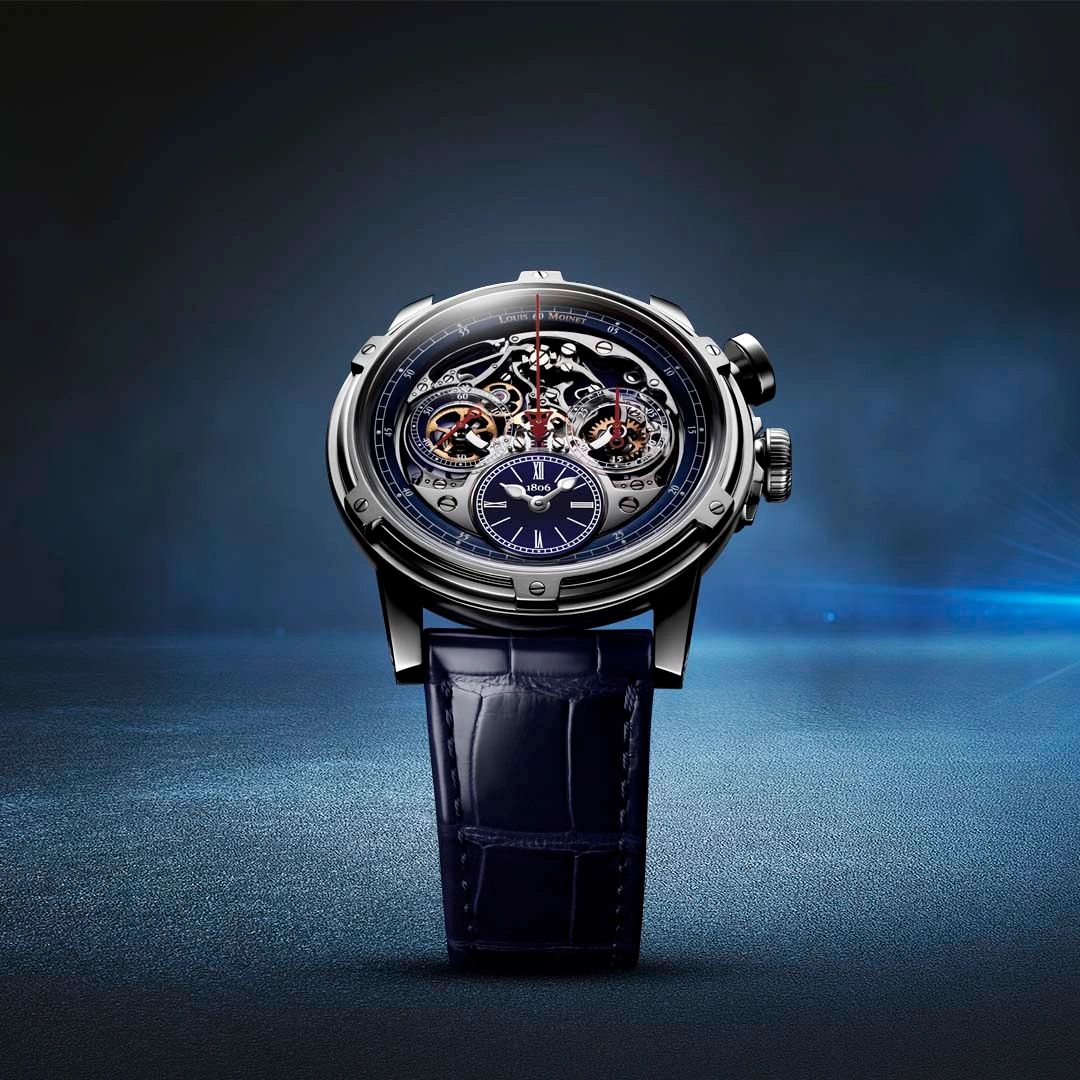
Chronographs play a central role in this identity. While many brands produce chronographs as part of broader collections, Louis Moinet treats them as the foundation of its modern design philosophy. Models such as the Memoris series place the entire chronograph mechanism on the dial side, allowing the wearer to observe each stage of operation — the clutch engagement, the activation of the chronograph seconds wheel, and the precise reset sequence. Pressing a pusher becomes an interactive mechanical experience rather than a purely functional action.
This approach changes how collectors perceive the complication. Instead of viewing the chronograph as a technical specification hidden within the watch, it becomes a visible performance. Each measurement of elapsed time is accompanied by a miniature mechanical event unfolding beneath the crystal. In an industry where many watches rely on subtlety and restraint, Louis Moinet chooses visibility and architectural presence, positioning its watches closer to mechanical sculpture than to conventional wrist instruments.
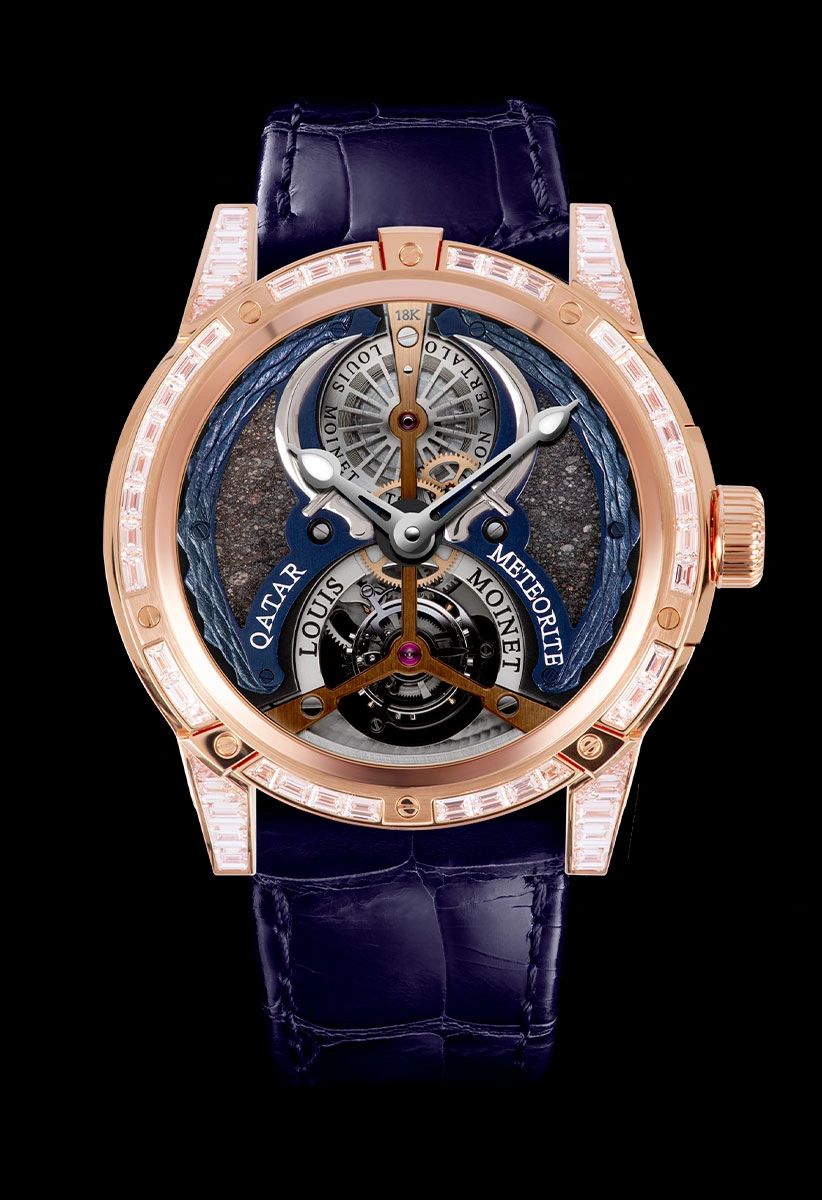
Beyond visual drama, the watches also emphasize structural depth. Multi-layered dials, suspended bridges, and three-dimensional movement construction create the impression that the watch is built outward rather than inward. Components are arranged not merely for compactness, but for spatial expression. This layered architecture reflects a design philosophy that treats the movement as both functional machinery and visual composition, where engineering precision and aesthetic structure are inseparable.
Materials and finishing reinforce this perspective. Polished bevels, brushed surfaces, and sharply defined edges highlight the geometry of the movement components. Instead of using finishing solely for decorative luxury, the finishing draws attention to the mechanical architecture, emphasizing how different parts interact. The watch becomes readable not only in terms of time, but in terms of mechanical logic — a miniature system whose function is visible at every glance.
Louis Moinet watches also stand apart in the broader chronograph landscape because they emphasize interaction. Many chronographs are admired visually but operated infrequently. In contrast, the dial-side chronograph mechanism invites repeated engagement. Owners are encouraged to activate the chronograph simply to observe the mechanical sequence unfold. This transforms the watch from a passive display into an object of continuous mechanical discovery, rewarding curiosity as much as ownership.
Despite their visual boldness, these watches remain deeply rooted in mechanical watchmaking traditions. Column-wheel chronograph architecture, precise engagement systems, and careful calibration ensure that the mechanical spectacle does not compromise functional performance. The watches demonstrate that visual openness does not require mechanical simplification; complexity can be both visible and precise simultaneously.
In the larger context of modern horology, Louis Moinet occupies a distinctive niche. While many high-end watchmakers focus on heritage-driven designs or incremental aesthetic evolution, Louis Moinet emphasizes architectural reinterpretation of classic complications. The brand’s watches do not attempt to replicate historical chronographs; they reinterpret the chronograph as a structural centerpiece, exploring how movement layout itself can define the identity of a watch.
This philosophy resonates particularly strongly with collectors who appreciate mechanical transparency — the ability to understand and observe the engineering that drives the watch. Instead of hiding craftsmanship behind closed dials, Louis Moinet treats craftsmanship as something meant to be experienced directly. The watches appeal to individuals who view mechanical horology not only as timekeeping, but as a study of motion, precision, and design structure.
In an era where many mechanical watches differentiate themselves through case materials, limited editions, or branding narratives, Louis Moinet watches distinguish themselves through mechanical visibility. They remind collectors that the most compelling element of a mechanical watch is not the surface that surrounds the movement, but the movement itself — the gears, springs, and regulating systems that transform stored energy into measured time.
Ultimately, Louis Moinet watches represent a particular philosophy of modern watchmaking: that complications should not merely exist inside the watch, they should shape its identity. By placing the chronograph mechanism at the center of both engineering and visual design, the brand transforms a traditional complication into a living mechanical display. The watches do more than measure elapsed seconds; they allow the wearer to witness the mechanical process that makes measurement possible, turning every activation of the chronograph into a small moment of horological theatre.