Longines Heritage: Vintage Soul in Modern Form
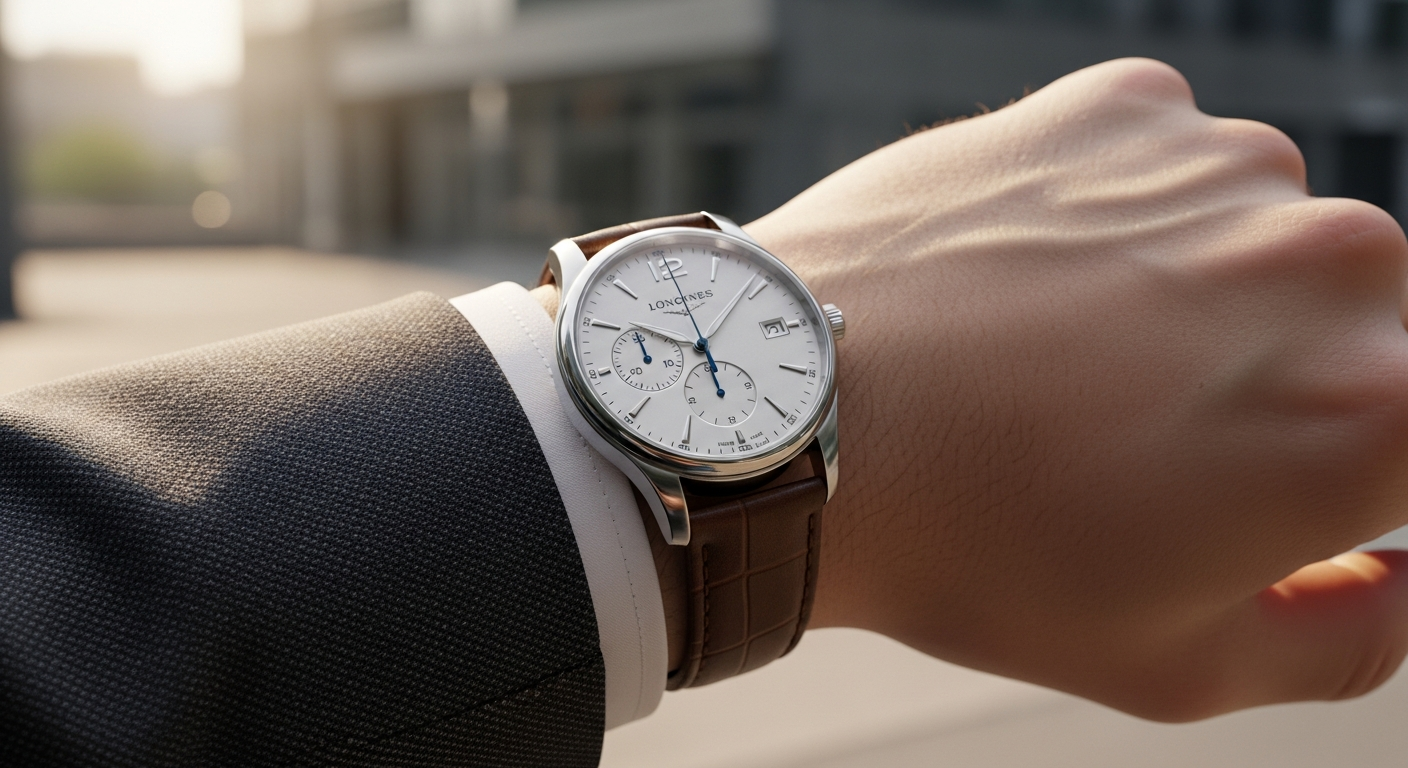
There’s a particular kind of quiet that settles over a room when a watch box clicks open. It isn’t silence exactly; it’s more like the world briefly agrees to speak softer. Light falls in a narrow spill across lacquered wood, microfiber, brushed steel, a dome of sapphire catching the ceiling like a small, contained sky. In that hush, you can almost hear the oldest trick in watchmaking: time made visible, time made wearable, time made personal. And with Longines’ Heritage line, that quiet has a distinct accent—vintage, yes, but not costume; nostalgic, certainly, but not stuck.
The first time I really understood what Longines Heritage is trying to do, it wasn’t at a launch party or in a glossy boutique with champagne and choreography. It was at a kitchen table, the kind that keeps the marks of ordinary life: a faint ring from a mug, a shallow scratch where a key once dragged, a corner slightly dulled by years of elbows. A friend had brought over an old Longines from his grandfather, not a showpiece, not a safe queen—just an honest watch that had been wound thousands of times by hands that had better things to do than admire it. The dial had aged into a soft cream, the numerals had the kind of typography you only get when designers still drew with rulers and conviction, and the hands had that gentle, purposeful geometry that seems to have gone missing in an era of aggressive angles.
Then he set next to it a modern Heritage reissue. New case, new movement, new crystal, better tolerances, better water resistance, luminous paint that doesn’t flake and crumble into myth. Yet the atmosphere was the same. It didn’t feel like a replica. It felt like a continuation—like a melody replayed on a cleaner sound system, the hiss removed but the emotion intact.
That’s the tightrope Longines walks with Heritage: how do you take a watch born in a world of telegrams and train schedules and make it live credibly in a world of push notifications and satellite time? The answer isn’t simply to copy old shapes. Anyone can do that. The answer is to preserve the old reasons—the original logic of the design—and then translate it into today’s materials and expectations without flattening the romance.
Longines has an advantage here that few brands can honestly claim without reaching for marketing fog. The archive is not a backdrop; it’s a deep reservoir. They have made watches for pilots and explorers, for timekeepers at sporting events, for people whose careers depended on accuracy and legibility. There’s a certain utilitarian elegance in that heritage—forms that look good not because they were styled to look good, but because they had to work. When a dial is designed to be read quickly in bad light, it tends to develop a clarity that later becomes beauty. When a case is built for a purpose, proportion follows function, and proportion ages well.
The Heritage line drinks from that reservoir and tries, again and again, to capture the sensation of an earlier era without trapping you in it. If you’ve ever handled an actual vintage watch, you know the bargain you make. You get charm, patina, and a feeling of wearing something with a biography. You also get compromises: acrylic crystals that scratch if you look at them too hard, cases that were never meant for water beyond a damp sleeve, lume that may no longer glow (and may not be something you’d want glowing), and movements that can be marvelously made yet fussy about parts and service. Vintage can feel like owning a classic car—rewarding, but you don’t always want to take it on the highway in the rain.
Modern watchmaking, on the other hand, can sometimes feel too perfect. Cases are crisp, dials are clinically clean, lume is bright enough to signal aircraft. The story can get lost in the specifications. This is where Heritage aims its compass: keep the story, keep the vibe, keep the personality, but relieve you of the anxiety. Let you wear the watch, not manage it.
Consider what it means to put “vintage soul” on the wrist without turning it into cosplay. The best Heritage pieces don’t shout “Look how retro I am.” They whisper it in the curve of a numeral, in the slight dome of a dial, in the way a minute track is printed with just enough delicacy to feel hand-drawn even when it’s not. They understand that old watches were not minimal; they were efficient. They carried information with confidence: Arabic numerals that didn’t apologize, sub-dials that weren’t afraid of being small cities of detail, syringe or leaf hands shaped for clarity, bezels designed to be touched and turned.
Longines often chooses references that were purposeful in their time: the kinds of watches that would have been on the wrists of working professionals, not just in the pockets of the wealthy. That adds an intangible steadiness. You can sense it in models like the Legend Diver, which translates a mid-century super compressor aesthetic into a modern, wearable diver that still feels like a secret handshake among enthusiasts. Or the Heritage Classic sector dials, whose concentric geometry feels like a distilled lesson in readability and order. Or the Spirit line, which isn’t a strict reissue but a modern distillation of aviation ancestry—broad numerals, strong lume, practical proportions—built with a contemporary appetite for robustness and certification.
But the emotional center of Heritage is not any single model. It’s the act of reissuing itself, done well. A reissue can be lazy—an old dial slapped into a new case size because the market demands something “bigger,” the proportions sacrificed, the charm inflated like a balloon until it squeaks. Or it can be reverent without being precious, attentive to the tiny choices that make a vintage watch feel like a vintage watch: the length of the hands relative to the minute track, the warmth of the lume color, the spacing of typography, the thickness of a bezel, the way a crystal distorts at the edge.
Longines tends to get these micro-decisions right more often than not, and that consistency is part of the brand’s quiet power. The Heritage watches rarely feel like they’re trying to win an argument. They’re trying to win a relationship—one wrist at a time, day after day.
I’ve watched people try on a Heritage piece and have their posture change. Not dramatically, not like a transformation montage, but subtly, like someone slipping into a well-cut coat. A good vintage-inspired watch can make the wearer feel anchored. It suggests a rhythm slower than the frantic present, a time when objects were bought with the intention of keeping them, when the idea of repair was normal rather than quaint. That sensation isn’t just nostalgia; it’s relief. It’s the comfort of something that doesn’t need updates, that won’t ask to be charged, that will keep moving as long as you participate in its small daily ritual.
A mechanical watch is, in the most literal sense, a collaboration. You wind it, you wear it, you set it. It responds. It keeps up. The Heritage line leans into that partnership with a kind of restrained romance. It doesn’t pretend the past was perfect. It doesn’t pretend a watch is necessary. It simply offers an alternative to disposable time: time as an object, time as a craft.
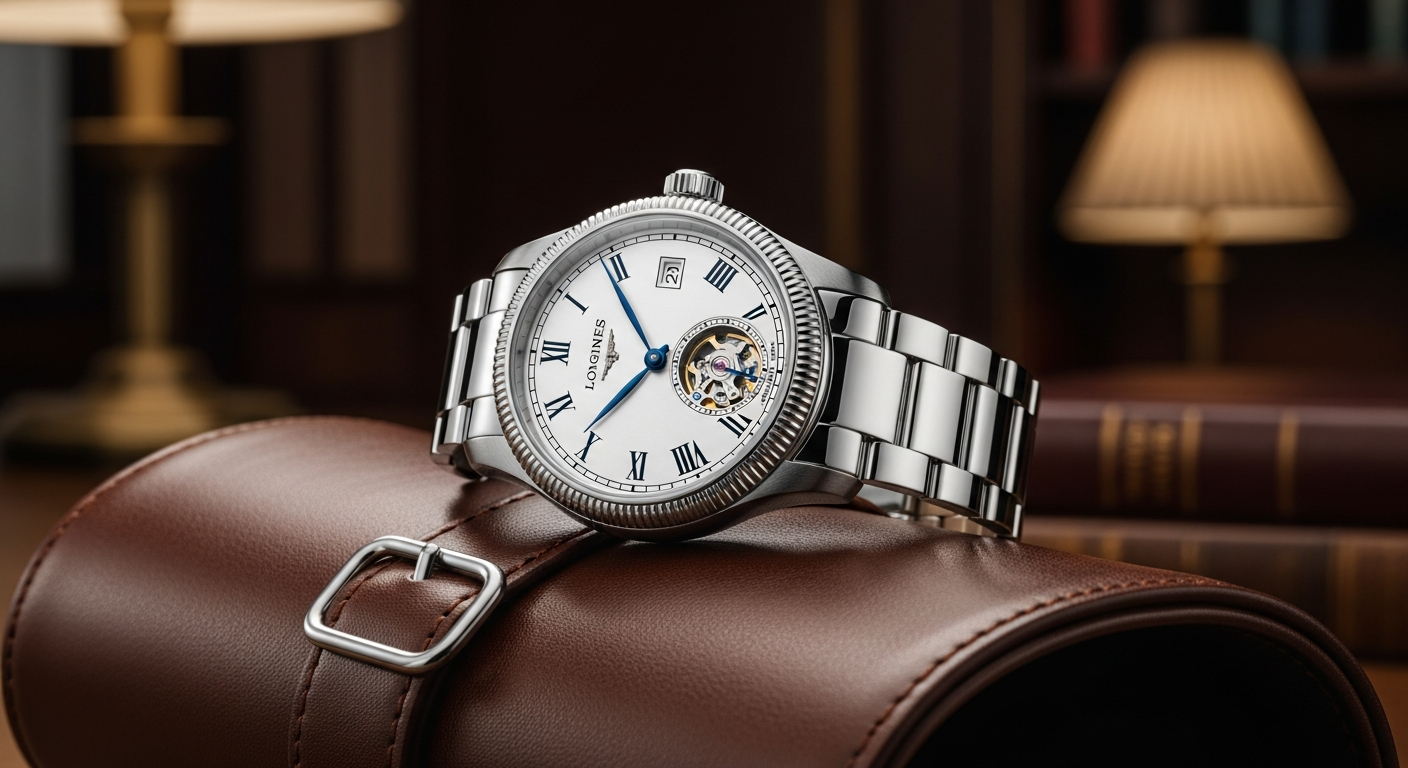
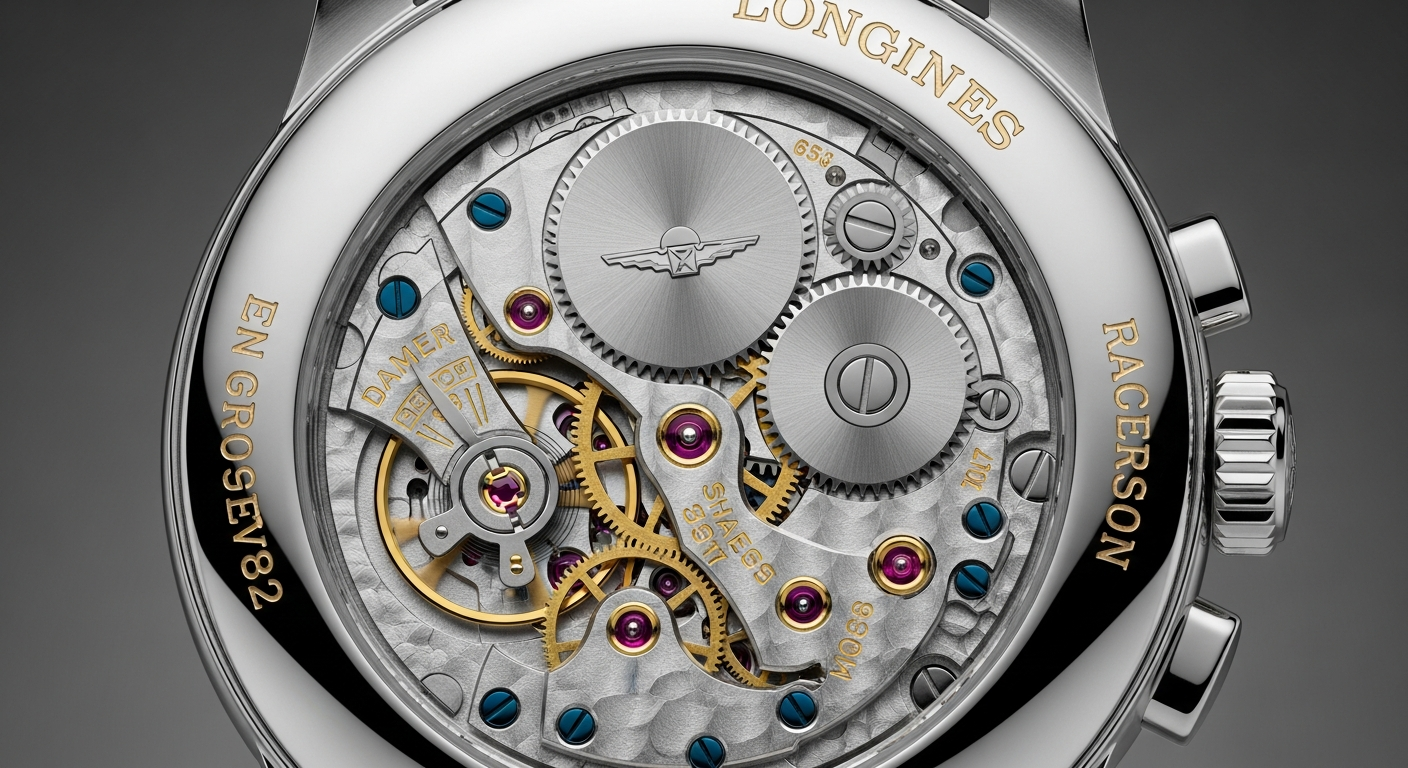
Of course, “modern form” is not only about materials; it’s about expectations. Today, we expect a watch to handle temperature swings, jolts, moisture, the careless bump against a doorframe. We expect a bracelet to articulate smoothly and not pinch. We expect a strap to survive sweat and sun. We expect the movement to be resilient, accurate, and serviceable without a scavenger hunt for parts. Longines knows this, and the Heritage collection often hides its modernity in the places you don’t photograph: improved gaskets, contemporary alloys, updated escapements, anti-magnetic considerations, regulated calibers based on proven architectures. The watch might look like it stepped out of 1959, but it behaves like it lives in 2026.
And yet, it’s the visible choices that carry the emotional weight. The slightly boxed sapphire that mimics acrylic’s warmth without its fragility. The way polished and brushed surfaces alternate to catch light like an old case that has been lovingly worn. The decision to keep a case size reasonable, resisting the temptation to turn every reissue into a wall clock. The color palette that avoids neon and embraces the earthy tones of age: matte blacks, silvery grays, eggshell whites, deep blues that feel like ink rather than LED.
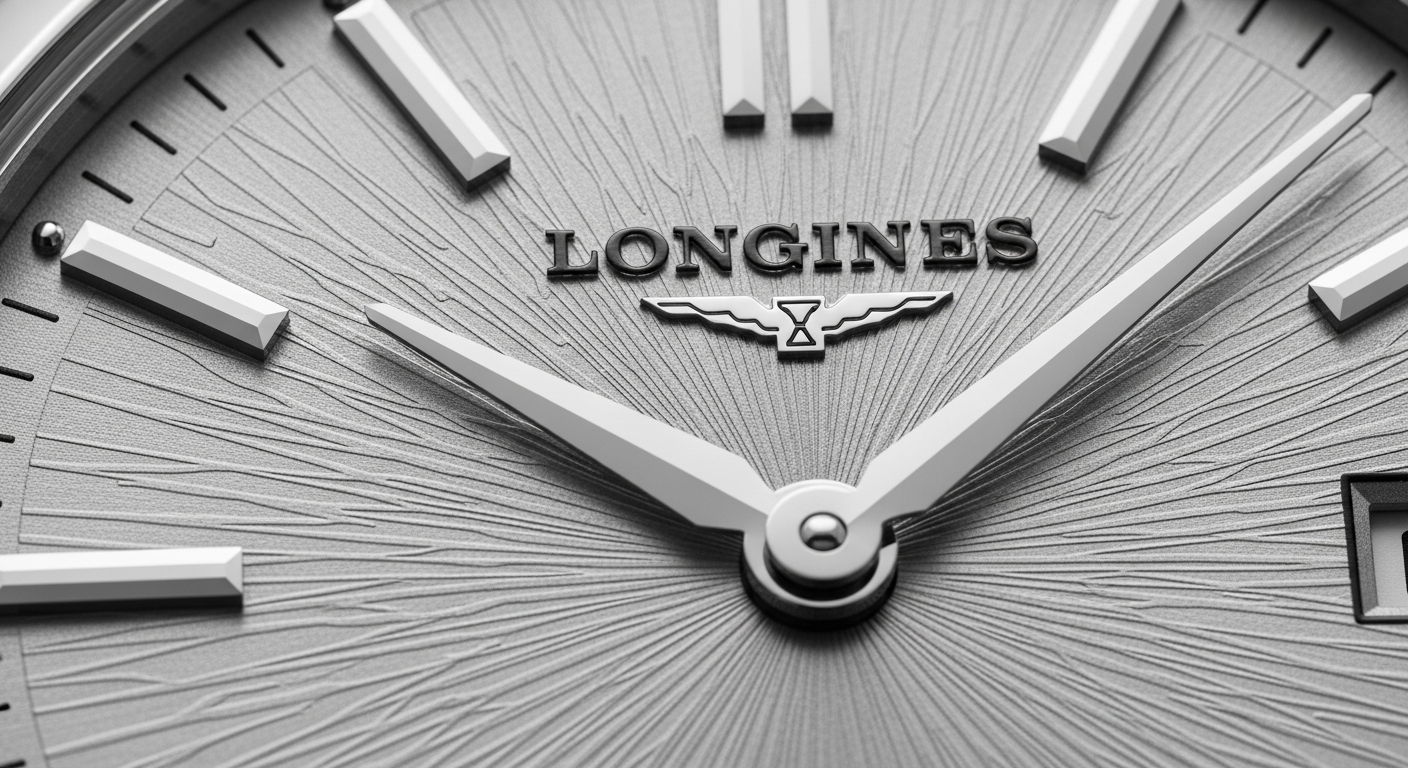
There’s also the matter of restraint in branding. Longines, for all its global presence, often lets the dial breathe. Many Heritage pieces have an old-school confidence: the name, the winged hourglass, maybe a model line, and then they stop. The rest is devoted to legibility and balance. It’s remarkable how luxurious that feels in a world where every surface competes to be seen.
What keeps pulling me back to the Heritage idea, though, is less about aesthetics and more about a question: what are we really buying when we buy a watch that looks backward? We’re not buying the past; the past is not for sale. We’re buying a feeling of continuity, a sense that the present doesn’t have to sever itself from everything that came before. We’re buying an object that carries the design DNA of another era and invites it into our own routines. It’s not time travel. It’s time conversation.
If you wear a Heritage watch on an ordinary day—commute, meetings, groceries, dinner—you start to notice how it changes the way you notice time. A phone tells you the time aggressively, like an interrupting colleague. A watch tells you quietly, like a friend leaning in. You glance, you absorb, you return to your life. The watch becomes background and companion at once. And when that watch has vintage cues, it adds a faint echo, as if every glance is also a nod to all the glances that came before.
That echo matters because modern life is allergic to permanence. We upgrade, we refresh, we replace. There’s efficiency in that, but there’s also fatigue. The Heritage line offers a different contract: this can be yours for a long time, and it can still feel relevant because it was never chasing relevance in the first place. It was chasing clarity, proportion, purpose. Those don’t expire.
Longines also occupies a compelling cultural middle ground. Heritage watches often feel like they belong to a wider audience than the most rarefied collector niches, but they don’t feel watered down. They’re approachable without being anonymous. That matters, because the idea of vintage-inspired design shouldn’t be reserved for people with deep pockets and deep forums. There’s something democratic about a well-made watch that nods to history without requiring you to become a historian to enjoy it. You can appreciate the sector dial for its geometry even if you don’t know what decade it references. You can love the internal rotating bezel because it’s cool and useful, even if you’ve never heard the term “super compressor.” You can wear an aviation-inspired piece because it reads well and feels sturdy, not because you own a leather jacket and a map of the Atlantic.
This is where Longines’ editorial voice—its taste—shows itself. The brand tends to pick designs that can survive outside the watch bubble. The Heritage watches look at home under a cuff, with a T-shirt, on a strap worn in. They don’t demand an audience. They reward one if it appears.
If there’s a risk in the Heritage approach, it’s the risk that nostalgia becomes a loop, that the past becomes a comfortable place to linger too long. But Longines generally avoids that trap by letting modernity do its work quietly. The designs may be rooted in history, but the execution is contemporary enough that you’re not handling a museum piece. You’re handling a watch meant to be lived with. The past is the inspiration, not the prison.
I think of a Heritage watch the way I think of an old photograph reprinted properly. Not filtered, not artificially distressed, not “vintage” for the sake of trend. Just restored with care—contrast adjusted, damage corrected, details preserved. The result doesn’t erase time’s passage; it makes it readable. It honors the original while making it easier to bring into the present.
And that, perhaps, is the real art here: making something that acknowledges that time changes everything, including our relationship to time itself. A watch that looks vintage reminds you that the future will someday look back on now the same way. It gently suggests that our current era—so obsessed with immediacy—will also age into an aesthetic. The Heritage line, in its best moments, makes that idea not intimidating but comforting. One day, your own watch will carry the marks of your days: a softened edge, a scratch that recalls a doorway, a strap crease that remembers your wrist. It will become, in its own small way, an heirloom in progress.
There’s a scene I return to often. A person stands by a window as late afternoon light turns everything gold. They lift their wrist, not to check messages, not to count steps, not to scroll. Just to see the time. The watch catches the light and throws it back, a small reflection that feels almost like a signal. Outside, the day continues. Inside, the moment feels held. That’s what a good Heritage piece gives you: not a louder life, but a slightly more textured one.
Longines Heritage is vintage soul in modern form, but the phrase only becomes meaningful when you wear it and realize the “soul” isn’t patina or sepia tone. It’s intent. It’s the seriousness of design made for use, carried forward with enough humility to admit that old ideas can still work. And the “modern form” isn’t a rejection of history; it’s the practical kindness of making that history livable.
In the end, a Heritage watch isn’t trying to convince you that yesterday was better. It’s offering you a way to bring a little of yesterday’s poise into today’s noise. It’s a small, steady object that asks you to participate in time rather than be chased by it. And when you close the watch box and the room returns to its usual sounds, something remains: the sense that time, for all its speed, can still be met with calm craftsmanship and a design that remembers where it came from.
(contains VID1, IMG1 IMG2 IMG3 IMG4)