Longines Heritage and the Quiet Power of Continuity
There are brands that announce themselves the way a trumpet does, bright and immediate, demanding your attention before you’ve even decided whether you want to listen. And then there are brands that arrive the way a familiar song does from a neighboring room, not loud, not insistent, but unmistakably present, threading itself through the day until you realize it has been with you all along. Longines belongs to the second kind. Its story, and especially the story of its Heritage line, is not one of sudden reinvention or high-volume disruption. It is a story about staying close to what matters, about continuity as a kind of quiet power, about design that doesn’t chase the moment so much as it keeps it company.
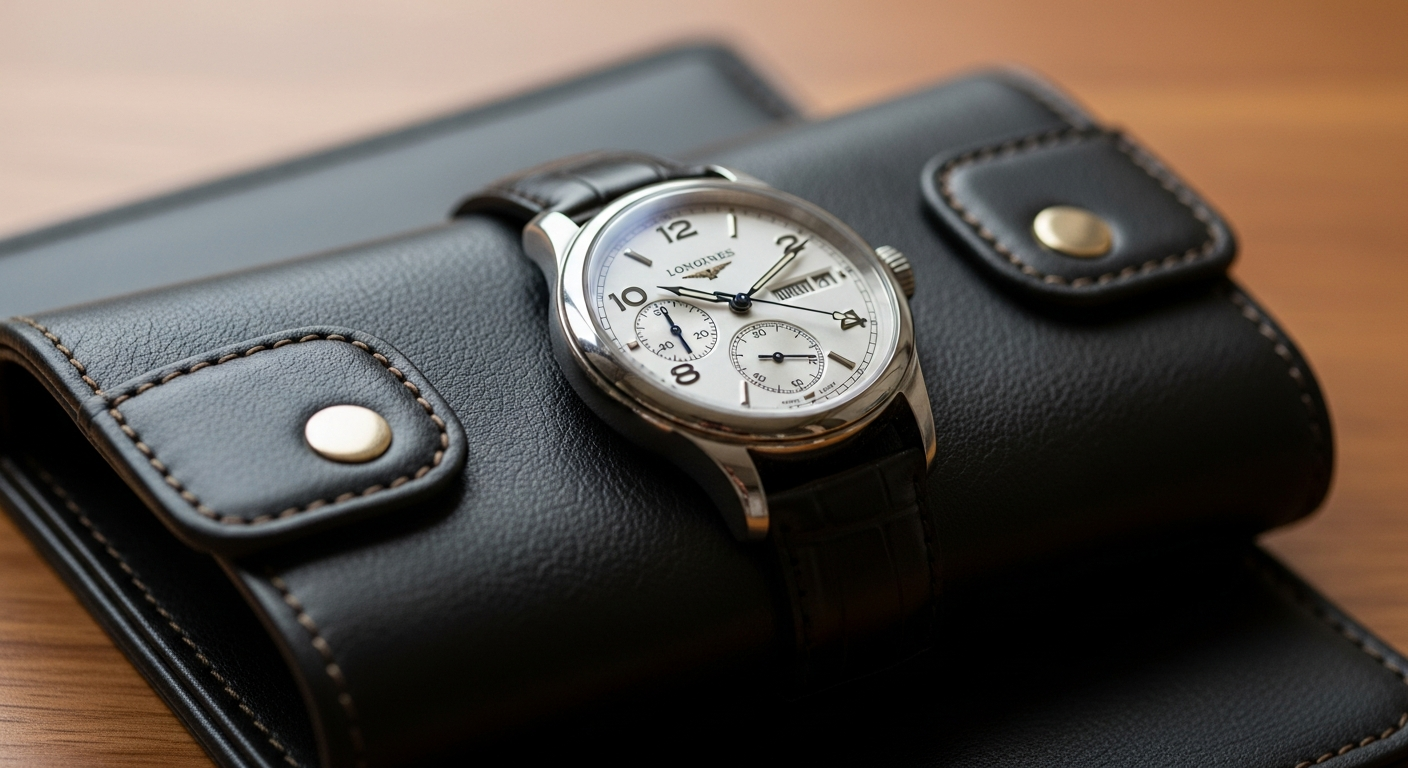
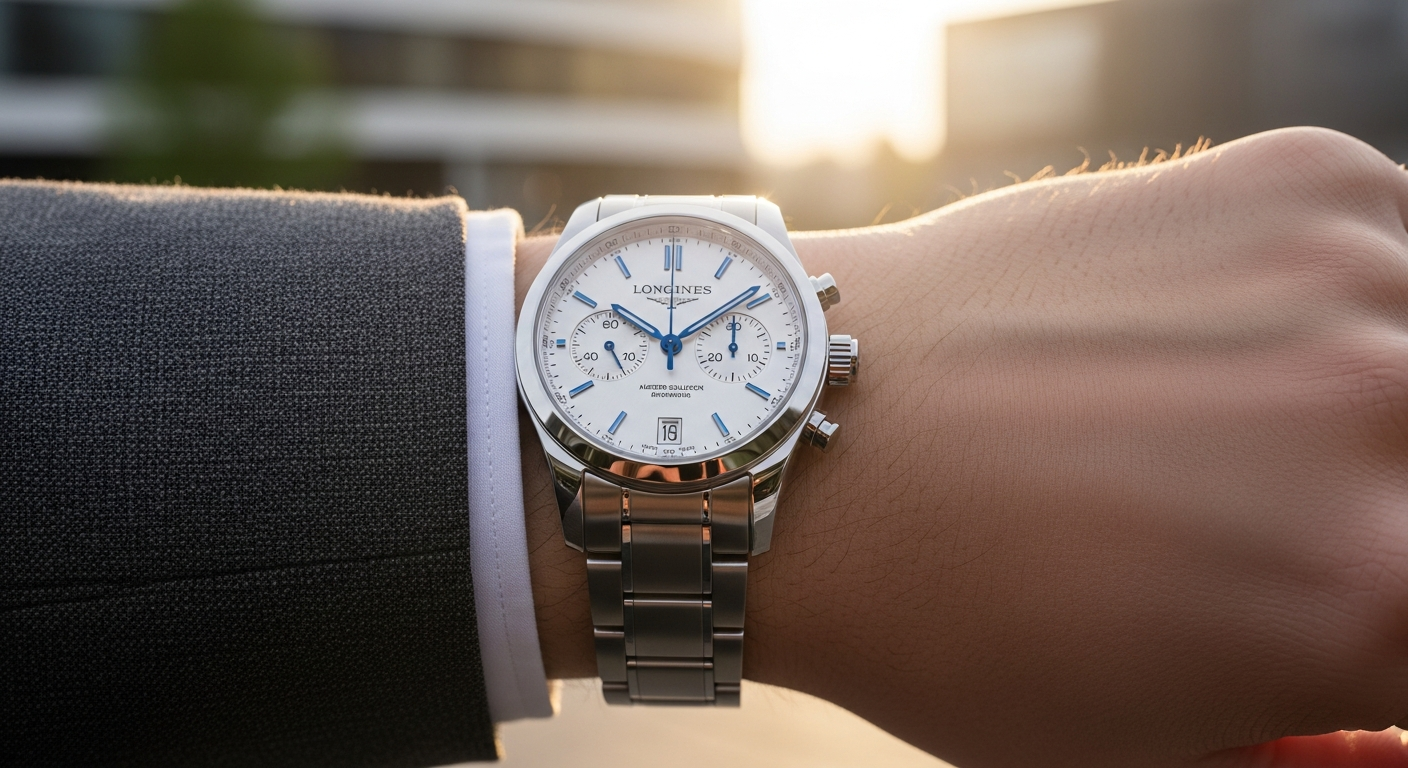
You can feel that difference most clearly when you handle a Heritage piece for the first time. Not in the way a spec sheet makes you feel—though there is always a spec sheet—but in the way proportions settle into your palm and the way the dial looks like it was drawn with a steady hand instead of a nervous one. The watch doesn’t ask you to believe in it. It behaves as if belief is beside the point. The thing is here, it says. It has been here.
There’s a particular scene that repeats itself across years and across countries, almost like a ritual: a watch is taken from a box, held up to a window, turned once to catch the light, and then, before the clasp is even closed, the person holding it tries to locate it on a map of their own life. Not where it was made or when it was released, but where it fits. What kind of days it belongs to. What kind of person it makes them feel like. Some watches try to answer those questions for you. They come prepackaged with a costume: the explorer, the racer, the deep-sea diver, the spacefarer. Longines, at its best, does something subtler. It gives you a thread—an unbroken one—and lets you tie it to your own story.
The temptation, when speaking about heritage, is to treat the past like a museum: velvet ropes, forbidding glass, the sense that to touch anything would be to cheapen it. But heritage isn’t supposed to be embalmed. In watchmaking, heritage only becomes meaningful when it can still do the job a watch was born to do: keep time in the presence of real life. Longines has understood this for a long time, and the Heritage collection reads like proof that revisiting history doesn’t have to mean reenacting it. It can mean restoring the intention behind it.
In the late hours of certain conversations—when the room has emptied and the surface talk is over—people will sometimes confess what they actually want from a watch. Not “value retention,” not “investment potential,” not even “accuracy,” although that matters. What they want is something that doesn’t make them feel like time is slipping through their hands. Something that answers the anxious buzzing of modern life with a steady, indifferent tick. Continuity is not the same as nostalgia. Nostalgia is a longing for what is gone; continuity is an insistence that not everything has to be. In that small difference sits much of Longines’ appeal.
You can trace that insistence back through the brand’s history and find a consistent posture: the pursuit of practical elegance. Longines has always had a relationship with timing that is more than decorative. It is a name tied to sports and aviation, to moments where seconds are not poetic but consequential. Yet the watches that come out of that lineage rarely look like instruments built only for the cockpit or the track. They look like instruments that have been allowed to remember beauty. That’s one of the reasons the Heritage line doesn’t feel like a marketing exercise. It feels like someone went into the archive not to pick costumes, but to retrieve ideas that still work.
There is a quiet confidence in reissuing a watch that doesn’t rely on shock. Many modern releases arrive with a kind of theatrical urgency: bigger case, brighter color, louder complication, a pledge to be unmistakable from across a room. The Heritage approach is different. It assumes you might be standing close enough to notice a bevel, to read the warmth of aged lume tones, to appreciate that a dial can be busy and still calm. It assumes you are willing to pay attention. In a world that trains you to glance, that assumption is almost radical.
The power of continuity is not just aesthetic; it is psychological. To wear a design that has survived decades is to step into a stream that was flowing long before you arrived. It doesn’t make you more important, but it can make you feel less alone. There is comfort in objects that have outlasted trends, because they suggest that the frantic churn is not the whole story. You begin to notice that the best designs do not win by shouting; they win by being hard to improve.
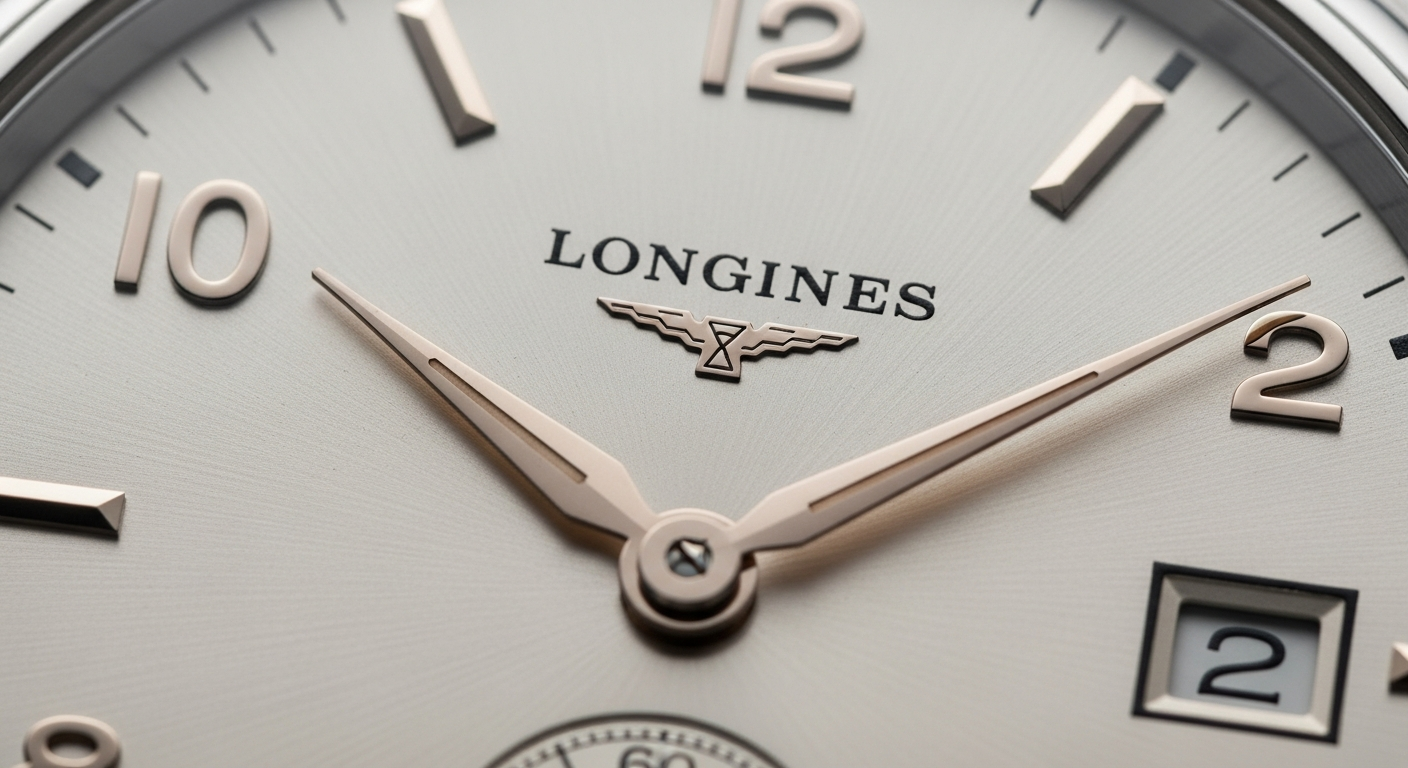
This is where Longines’ particular temperament shows itself. The Heritage watches often carry details that modern manufacturing could have discarded as inefficient, but that the human eye reads as intentionally human: a certain softness at the edge of a case, numerals that feel drawn rather than printed, hands that look like they belong to the same language as the dial. The nostalgia, if it appears, is not in the act of looking backward but in the decision to resist flattening everything into the same contemporary template. It’s a refusal to sand off the quirks that make an era legible.
And yet continuity cannot be a simple copy-and-paste. A true reissue has to answer a modern reality: wrists are different, expectations for reliability are higher, and nobody wants to baby a daily wearer as if it were fragile porcelain. The best Heritage pieces translate rather than replicate. They keep the silhouette and the spirit while accepting improvements that don’t betray the original intent. That’s the trick. Continuity isn’t rigid. It’s adaptive without being forgetful.
There is also the matter of taste, which for most of us is a kind of private geography. We like what we like, but we rarely know where it comes from. Put a Heritage watch on someone who has never cared about vintage, and you can watch taste being educated in real time. The person might not be able to name the decade a dial is referencing, but they will sense the balance. They will feel the difference between design that is trying to look “old” and design that simply comes from an older sensibility. The latter doesn’t wink at you. It doesn’t perform. It just is.
Sometimes I think the real luxury in modern life isn’t price or scarcity. It’s steadiness. It’s an object that doesn’t require you to keep up with it. Continuity, when executed well, becomes a kind of relief. Longines, with its measured cadence and its reliance on the archive as a living resource, offers that relief in wearable form. The watch is not telling you to be someone else. It is offering you a stable companion while you become whoever you are becoming.
Of course, continuity has its skeptics. There are those who hear “heritage” and think “repackaged,” as if the past were merely a convenient costume rack for brands that have run out of ideas. That critique is not without merit in a market crowded with lazy homages and sentimental cash-ins. But Longines’ Heritage story tends to escape that gravitational pull for a simple reason: the brand has never needed to pretend it appeared yesterday. Its past isn’t a borrowed aesthetic; it is the record of a company that has been doing the work, in public, for a long time. When you draw from that kind of archive, you’re not inventing a myth. You’re editing a manuscript.
And editing is an underappreciated art. To edit is to choose what to keep, what to remove, what to clarify. It requires restraint, and restraint is a form of confidence. In design, restraint often reads as maturity. In the Heritage line, you can see restraint in the absence of unnecessary complication, in the refusal to overload a dial with modern branding, in the way a case diameter is selected to preserve proportion rather than maximize presence. These are not decisions designed for an unboxing video’s first ten seconds. They are decisions designed for the tenth year.
When you live with a watch long enough, the relationship changes. The first week is about noticing. The first month is about integration. By the first year, the watch becomes part of the choreography of your day. You stop thinking about it as an object and begin thinking with it. This is where continuity matters most. Because an object you wear daily becomes a witness. It is there for mornings that begin with optimism and evenings that feel like compromise. It sits quietly through stress and celebration alike. A flashy watch might mirror a mood; a continuous one anchors it.
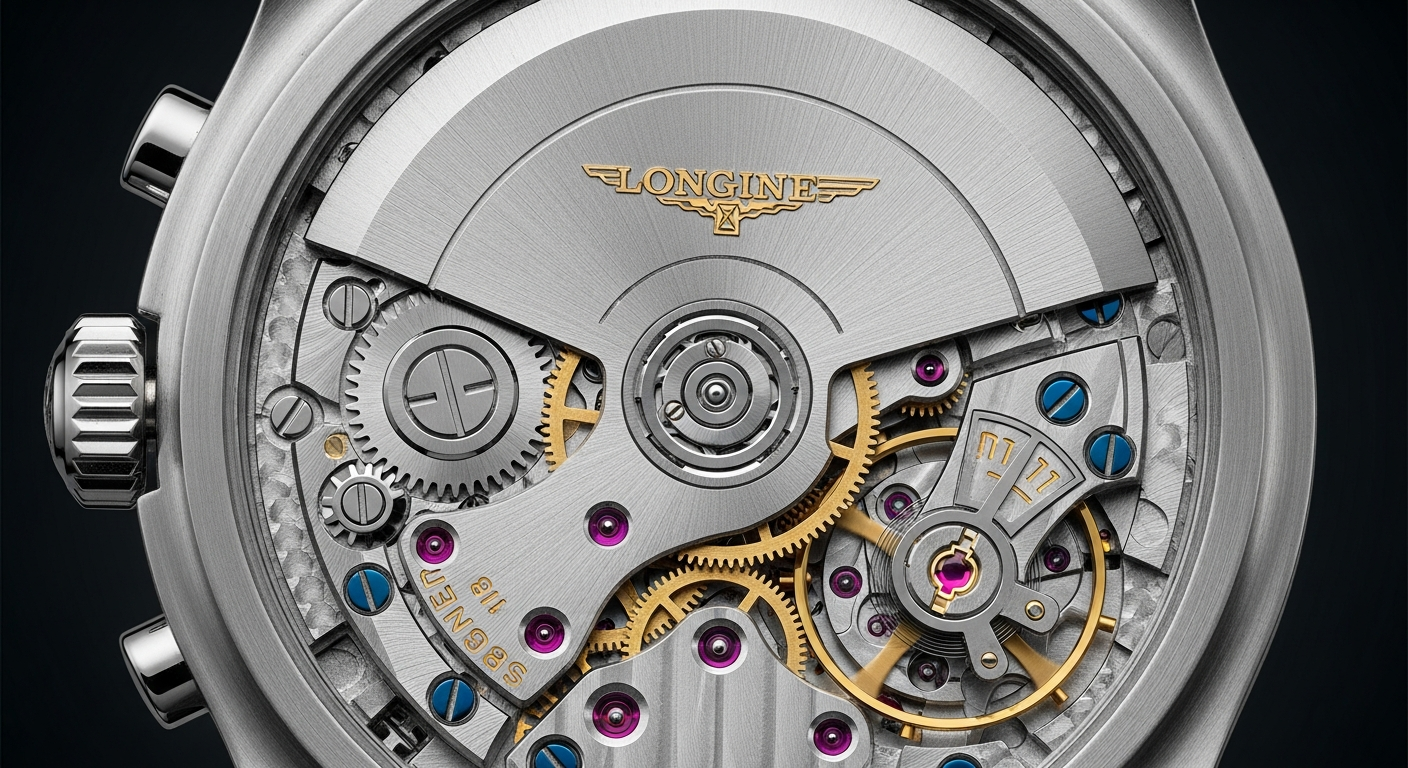
Longines is often described as elegant, but elegance is one of those words that can become thin with repetition. True elegance is not decoration; it is proportion and appropriateness. It is knowing when to stop. It is the ability to be noticed without demanding attention. The Heritage watches embody that kind of elegance, the kind that doesn’t need novelty because it has clarity. They remind you that timekeeping is already a miracle of coordination—springs, gears, oscillations, the whole miniature physics set—and that piling more meaning on top of that can be unnecessary. The watch does its job. The rest is yours.
There’s another aspect of continuity that is easy to overlook: continuity as trust. In a culture where institutions come and go, where software updates can make yesterday’s product feel obsolete, owning something that can be serviced, maintained, and kept in motion for decades is quietly radical. Mechanical watches are, in the most literal sense, repairable time. They are built on the assumption that the future will still contain hands, tools, and patience. Longines, as a brand that has remained legible across generations, benefits from that assumption. To buy into the Heritage line is to buy into an ecosystem of care, the belief that this object is not disposable.
And trust is contagious. When you trust your watch, you trust your own ability to choose well, to pick something that won’t embarrass you later, to commit to a design without fearing that it will feel silly when the trend cycle turns. That is a kind of adult pleasure: not the thrill of acquiring something new, but the calm of owning something right.
I have often thought about why certain watches become “forever” watches while others remain rotational curiosities. It isn’t always about price, and it isn’t always about rarity. Sometimes it is about how well a watch fits into the unremarkable parts of life. The grocery run. The meeting that could have been an email. The long walk where you finally decide, reluctantly, to call an old friend. A Heritage watch, with its understated legitimacy, tends to fit those moments. It doesn’t make them cinematic, but it doesn’t trivialize them either. It dignifies them by not competing with them.
If you take a longer view, you start to see that continuity is not just a design language; it is a philosophy. It is the willingness to let a brand’s identity unfold over time rather than being reintroduced every season like a new character in a series that has lost track of its plot. Longines has had its shifts, its experiments, its necessary accommodations to changing eras, but its center of gravity has remained remarkably stable: accessible refinement, purpose-informed design, and a respect for the idea that a watch should feel coherent. The Heritage line distills that gravity into pieces that make the past feel not distant, but adjacent.
It is easy to romanticize the past in watchmaking, to treat earlier decades as more authentic simply because they are further away from our current noise. But the point of continuity is not to declare one era superior. It is to recognize that certain values endure: legibility, balance, integrity of form, honest function. When you see those values carried forward, year after year, you begin to understand that the best brands are not those with the loudest story but those with the longest sentence—one that keeps going without losing its meaning.
There is a kind of humility in that. Longines doesn’t try to convince you that you are joining an elite club with a secret handshake. It offers you something more democratic and, in its own way, more profound: a connection to a line that has crossed generations without snapping. You don’t have to be an expert to feel it. You only have to be someone who notices that some things get better when they are not rushed.
At the end of the day, the Heritage collection doesn’t promise to change your life. It promises something smaller and sturdier. It promises that you can put a well-considered object on your wrist and trust it to keep moving, quietly, as you do. It promises that continuity is not boring. It is brave. It is the decision to keep showing up with the same steady heartbeat, even when the world tells you that only noise counts as presence.
And perhaps that is the real lesson Longines offers: that time itself is continuity, and that honoring it doesn’t require spectacle. It requires attention. It requires the patience to let meaning accumulate the way a watch measures minutes—one after another, unglamorous, unstoppable, and, when you finally look back, astonishing in what it has carried you through.