Longines and the Past That Won’t Sit Still
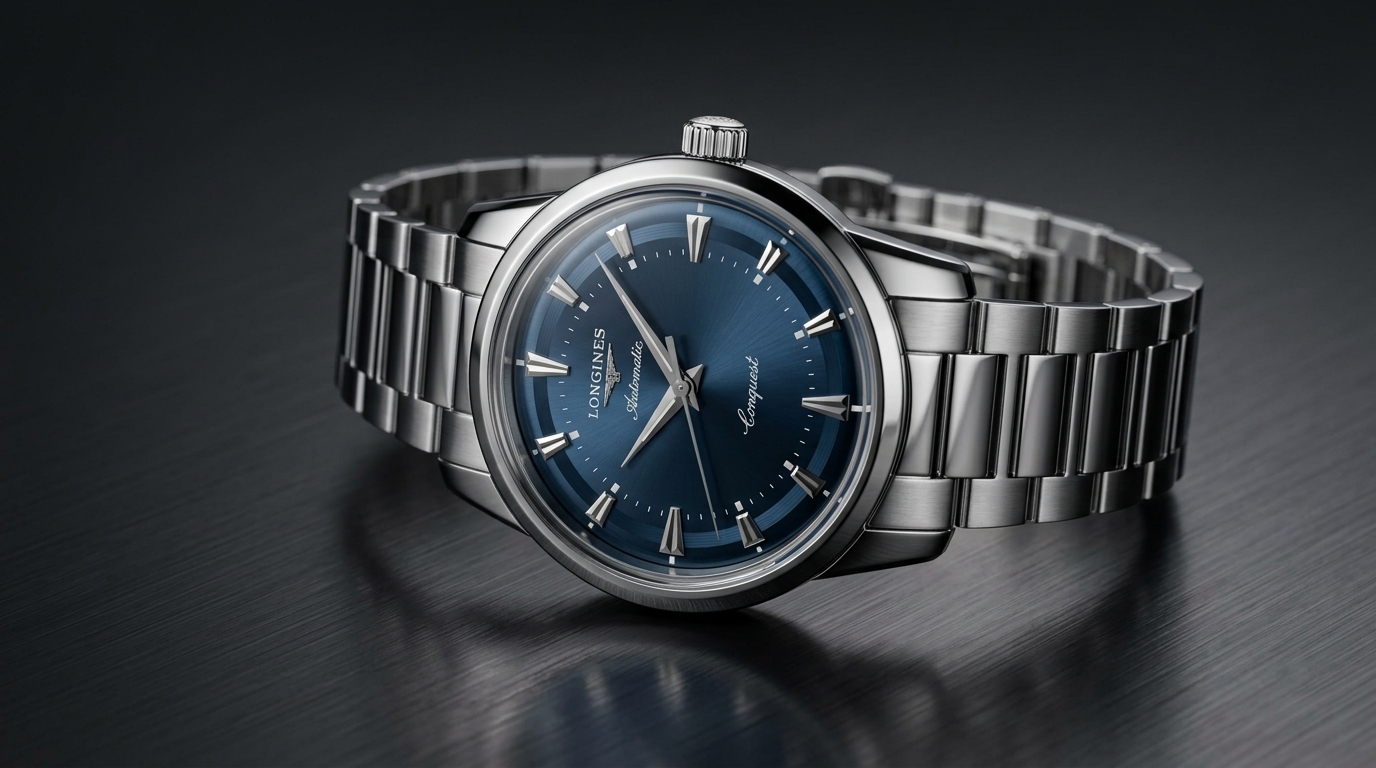
The gilt numerals sit under the crystal as if they have been lit from behind, though the light is only the dull wash of a winter window. Around them, the bezel carries twenty-four hours in two halves, the night side darkened, the day side pale, and a fourth hand makes its slow red-tipped journey beyond the ordinary twelve. On the dial is a word that once belonged to radio rooms, cockpits, and men calculating position against a sky they could not command: Zulu. On a modern Longines Spirit Zulu Time, the word is crisp, printed, domesticated. Yet it does not lie still. It pulls the watch backward into the era of navigation by signal and star, and forward into a world where crossing time zones has become routine enough to need a practical mechanism rather than a romance.
This is where Longines often lives now: in the uneasy corridor between archive and airport, between a catalogue of old instruments and the wrist of someone who will never use a sextant. The company has become unusually fluent in the grammar of return. Not nostalgia in its softest form, with all hard edges rubbed away, but a more complicated revival in which the past is not copied so much as negotiated with. The cases are seldom as small as their ancestors, the lume is no longer radium, the crystals are sapphire, and the movements are built to survive habits their predecessors did not imagine. Still, the old forms persist. A fluted crown appears where it once had a gloved purpose. A sector dial is redrawn with almost clerical discipline. A compressor-style diver returns with two crowns and an inner timing ring, even though the modern sea is full of dive computers.
Longines has the kind of past that can become a burden if displayed without discipline. Founded in Saint-Imier in 1832, made industrial under Ernest Francillon at the Les Longines factory from 1867 onward, the house registered its winged hourglass in 1889, a mark so old it has outlived empires, wars, and entire definitions of precision. The name appears across aviation records, observatory trials, military procurement, equestrian timing, polar expeditions, and the dry pages of movement history. For some brands, heritage is a room staged for visitors. For Longines, it is closer to an archive whose drawers will not remain closed.
The difficulty is that the archive contains not one Longines but many. There is the refined maker of 19th-century pocket chronometers. There is the technical Longines of the 13ZN, introduced in the 1930s with flyback chronograph capability when such a thing belonged to pilots and race officials rather than collectors. There is the manufacturer of the 30CH, the high-grade successor that carried chronograph craft into the postwar period. There is the Longines of Czech pilots’ watches, of Weems and Lindbergh navigation pieces, of high-frequency Ultra-Chron experiments, of skin divers and dress watches that used restraint not as a sales pitch but as proportion. To revive Longines is never simply to revive a look. It is to decide which Longines is being summoned, and what must be left behind for the object to breathe.
The Spirit Zulu Time shows that decision in motion. Its origin story reaches toward the brand’s ties to aviation and navigation, but its mechanism belongs firmly to the present. Inside is the calibre L844.4, an ETA-derived automatic made to Longines’ specification, with a true traveller’s GMT arrangement in which the local hour hand jumps independently. It runs at 25,200 vibrations per hour, stores roughly 72 hours of power, uses a silicon balance spring, and is certified by COSC. These details matter not because they decorate the watch with credentials, but because they change the nature of the old idea. The vintage traveller had to solve a dangerous problem: where am I, and what time is it elsewhere? The modern traveller has a different anxiety: how to move through systems of time without losing the thread of ordinary life. A jumping local hour hand is less poetic than a rotating radio bezel, but more useful at a border-control queue.
In the 39mm case, the Zulu Time becomes especially telling. The earlier 42mm version carried its instrument language broadly, with enough dial and bezel to make the idea plain from across a table. The smaller case tightens the expression. The lugs still have the muscular downturn of the Spirit family, but the proportions no longer feel obliged to announce themselves. A thickness near 13.5mm gives the watch substance without making it a caricature of utility. The five stars on the dial, a historical Longines emblem once associated with improved movement quality, are perhaps the most contentious part of the design. They risk sentiment. Yet they also disrupt the clean modern surface, reminding the observer that Longines has always trafficked in small symbols, medals, signatures, and marks of institutional approval. The brand’s past was not minimalist. It was documented.
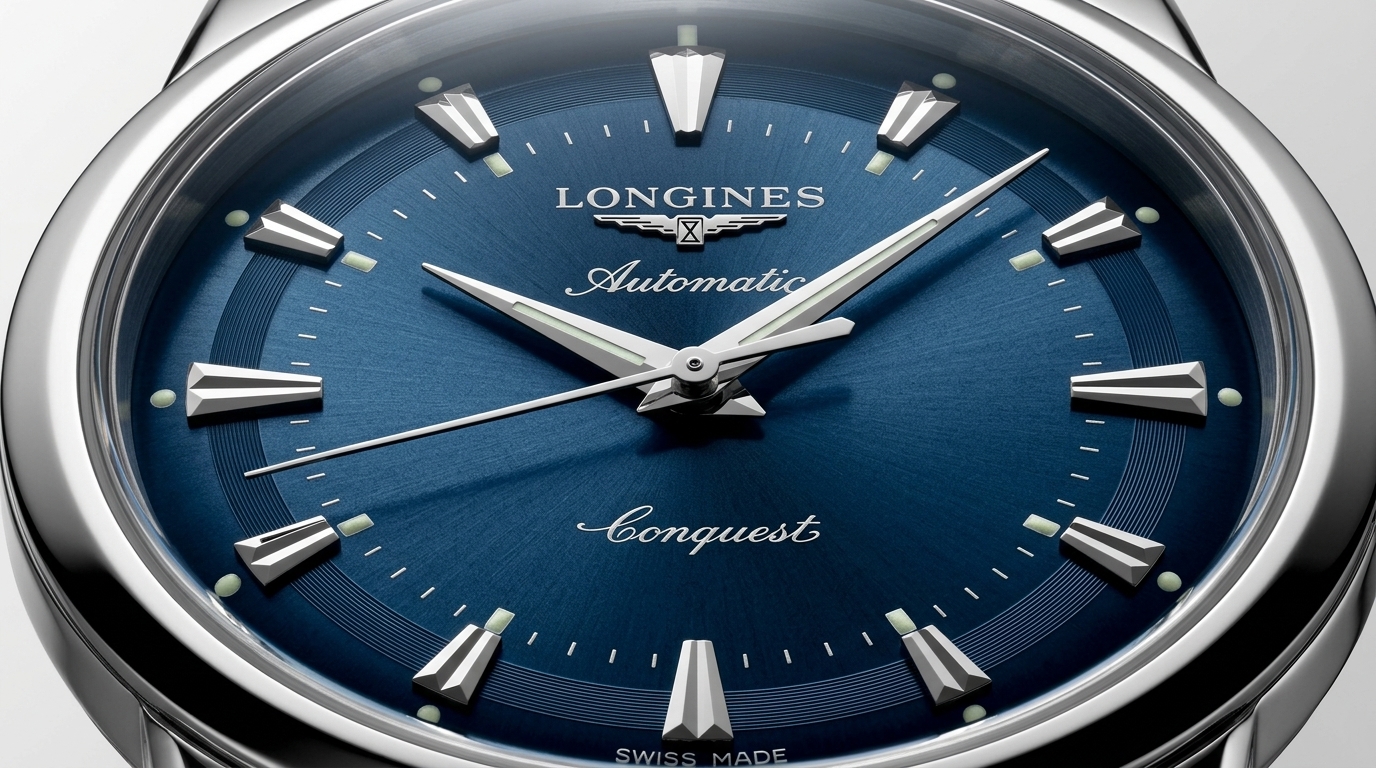
Another Longines revival speaks in a lower register. The Heritage Classic Sector, with its silvered dial divided into zones of time, looks at first like an exercise in restraint. But the restraint is active, almost architectural. The outer minute track, the central crosshair, the alternating brushed and grained areas of the dial, the blued hands: each element has a job, and the space between them is not emptiness but tension. The watch recalls 1930s sector dials without pretending to be one. At 38.5mm, it is larger than many of its ancestors, but not swollen. Its automatic calibre L893 works quietly behind the caseback, offering a long power reserve and modern reliability where the old pieces would have depended on hand-wound calibres and the tolerance of a different age.
In such a watch, Longines reveals a particular strength: it knows that the past is often carried by typography. A numeral too heavy, a minute track too clean, a logo too assertive, and the spell collapses. This is not because old watches were perfect. Many were not. Their appeal often lies in slight awkwardness, in dials that have aged unevenly, in cases polished by unknown hands, in crystals that distort the edge of a marker. A new watch cannot honestly reproduce that history. It can only recreate the conditions under which the eye begins to believe. Longines’ best heritage pieces understand the difference. They do not fake damage. They borrow structure.
The Legend Diver is a more theatrical case, though not a careless one. Its ancestor, the reference 7042 from 1959, belonged to the era of compressor-style cases, with twin crowns and an internal rotating bezel sealed under glass. The modern version keeps the two crowns at the right side of the case like small pieces of machinery awaiting instruction. One winds and sets the movement; the other turns the inner timing scale. The dial, with elongated markers and numerals at the compass points, has the slightly eerie clarity of equipment designed for poor visibility. In black, it can seem almost nocturnal. In more recent colours and sizes, it becomes less literal, more aware of its life above the surface.
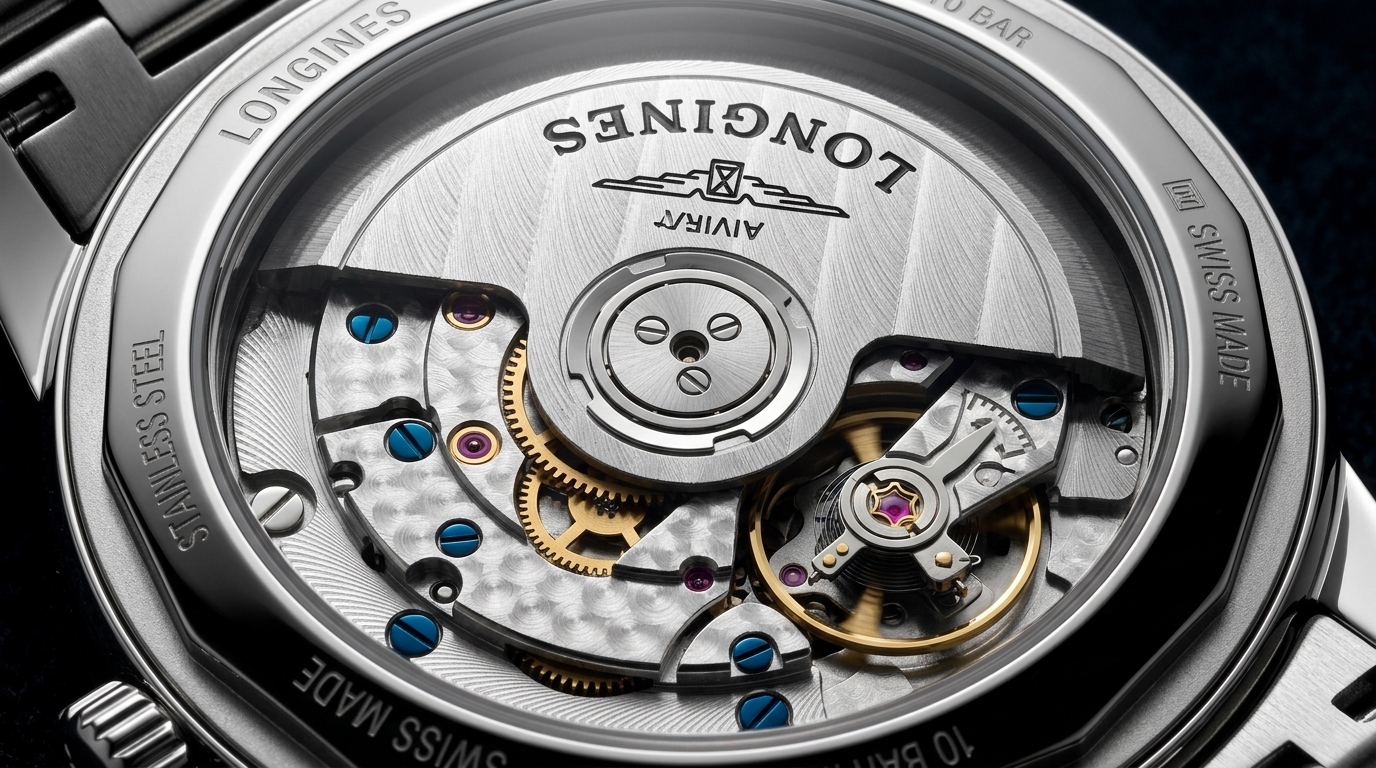
The modern Legend Diver’s movement, depending on the version, draws from the L888 family, with a long reserve and contemporary antimagnetic advantages through silicon. Its water resistance has been brought to modern expectations, often 300 metres, while the historical logic of the twin-crown layout remains. This is the paradox in miniature. The original form came from a technical need; the revived form survives because it still makes emotional and visual sense after the need has shifted. Nobody requires this arrangement in order to time a dive. Yet the action of turning the upper crown to move the internal bezel retains a kind of mechanical privacy. The scale remains beneath the crystal, inaccessible to accidental knocks, like a decision sealed inside the watch.
Longines’ archive is not only about dials and bezels. It is also about frequency, about the old obsession with the rate of the balance wheel. The Ultra-Chron name, born in the late 1960s, belonged to a series of high-frequency watches beating at 36,000 vibrations per hour, a technical answer to the hunger for accuracy before quartz changed the terms of the contest. The modern Ultra-Chron revival could easily have become an empty borrowing of a badge. Instead, Longines returned to the high-beat principle with the calibre L836.6, running at 5 Hz and tested to stringent chronometer standards by TIMELAB. The case design, with its cushion shape and broad planes, does not smooth away the period character. It allows a little strangeness to remain.
That strangeness is important. The 1970s were not always tasteful by later standards, and to revive them honestly requires resisting the urge to make every line polite. The Ultra-Chron’s tonneau-cushion body and dense dial furniture remember a moment when watch design was grappling with speed, industry, television screens, synthetic materials, and the threat of electronic timekeeping. Its high-beat movement is not visible in the way a tourbillon is visible, but it changes the seconds hand’s motion. The sweep tightens. Time appears less like a series of small steps and more like continuous pressure. It is a subtle effect, but it belongs to the watch’s argument: the past was once futuristic, and may become so again if restarted with care.
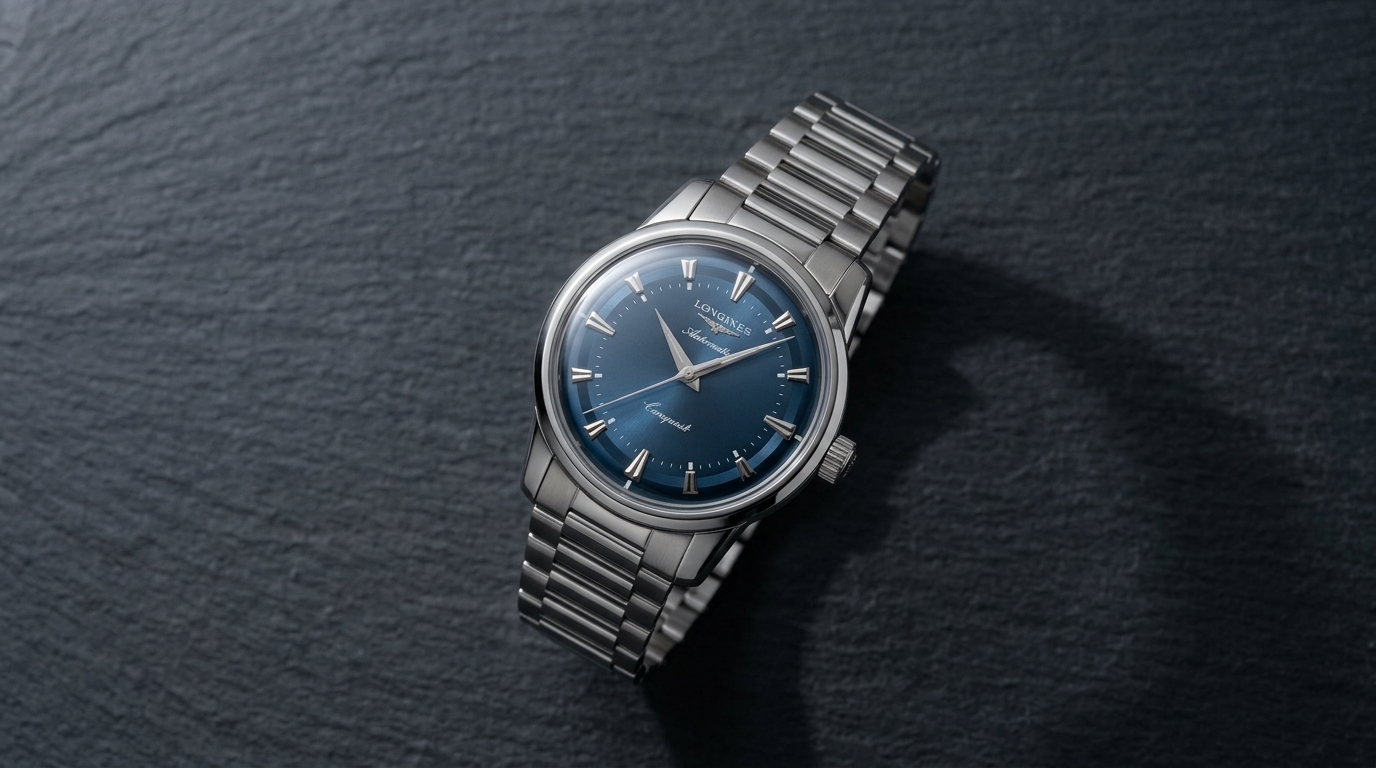
The Longines Pilot Majetek makes the past heavier. Its historical source lies in watches supplied to Czechoslovak military pilots in the 1930s, large wrist instruments with a rotating bezel system and a marker used for elapsed timing. The current model keeps the cushion case and the fluted bezel, now engineered with modern sealing and a small internal marker moving beneath the crystal. At roughly 43mm, it is not shy, nor should it be. A pilot’s watch of this lineage was never meant to disappear under a cuff. Its largeness has a reason rooted in legibility, gloves, cockpit light, and the practical theatre of military equipment.
Yet the modern Majetek avoids becoming a costume piece by accepting its own modern construction. The calibre L893.6 carries COSC certification, a silicon balance spring, and a power reserve around 72 hours. The case is precisely made in the way contemporary cases are precisely made, with tolerances the old suppliers could not have offered at scale. The dial’s numerals are clean and broad, the small seconds at six is composed, and the crown sits with the purposeful bulk expected of a tool. What remains from the old watch is not hardship, not war, not romance attached too easily to danger, but the geometry of use. Longines is at its best when it stops short of dramatizing the lives of those who once wore such things.
This restraint matters because heritage watchmaking can become morally lazy. A brand may invoke pilots without speaking of navigation, divers without speaking of pressure, soldiers without speaking of procurement, explorers without speaking of failure. Longines, with its wings and records and official timings, has ample opportunity to overstate. At times it does. No manufacture with a deep back catalogue is immune to the theatre of its own museum. But the watches themselves often pull the story back toward objects: cases, calibres, crowns, hands, scales. They ask to be read not as monuments but as instruments translated into civilian life.
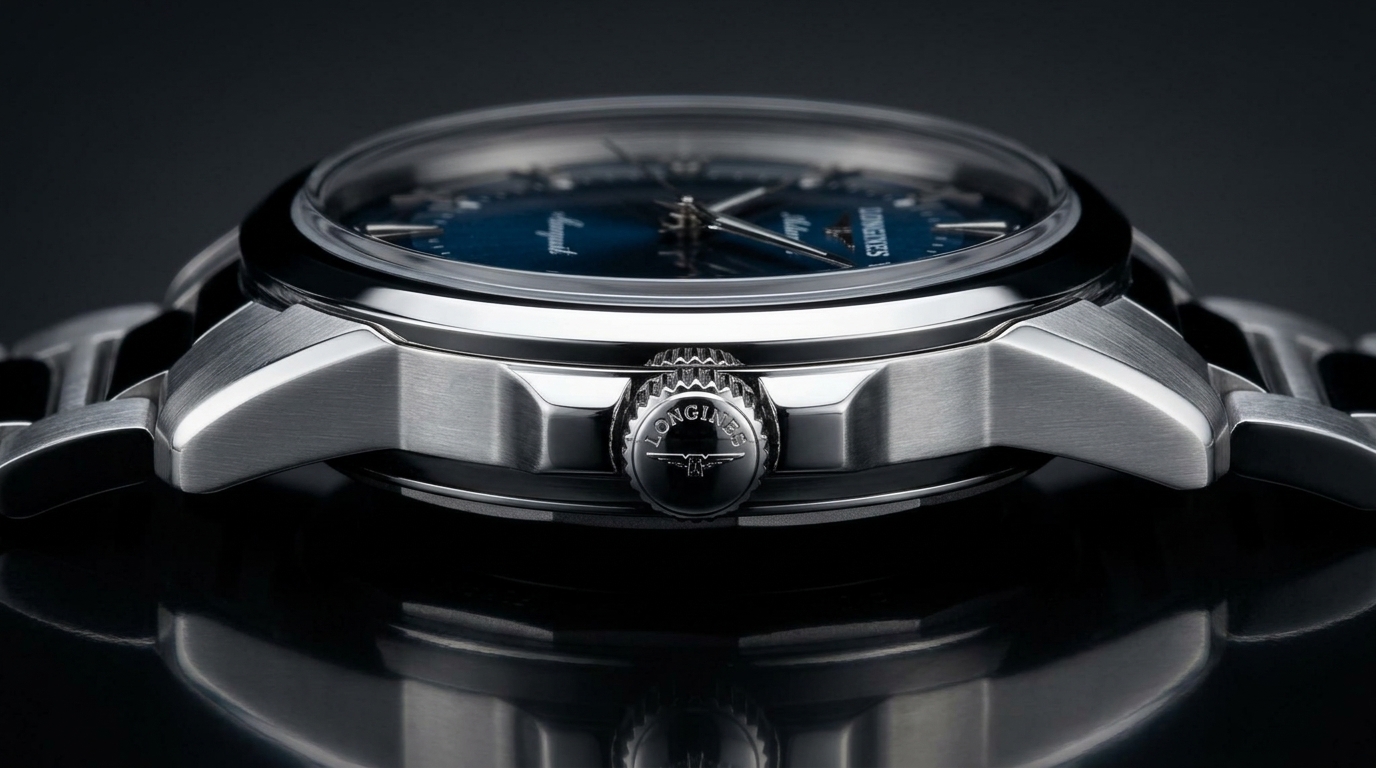
The translation is never exact. A Longines from 1937 was born into a different economy of time, one in which a wristwatch could still feel like a serious piece of equipment rather than one device among many. Accuracy was pursued mechanically because there was no satellite signal in the pocket. Water resistance was an engineering frontier. Luminous material was dangerous before it was regulated. Case sizes were shaped by movements, crystals, and habits of dress. To reproduce those watches exactly would be to reproduce their limitations, and perhaps their risks. So Longines changes them. Steel thickens. Sapphire replaces acrylic. Movements gain automatic winding, antimagnetic escapement components, longer reserves, standardized servicing pathways. The past is not preserved in amber; it is fitted with gaskets.
Collectors sometimes object to this, and not without reason. A date window can wound an otherwise faithful dial. Faux-aged lume can suggest theatre rather than memory. A case enlarged by a few millimetres can alter the entire emotional temperature of a design. Longines has made all of these compromises in one watch or another. Its heritage line is not sacred ground. It is a workshop, and workshops leave shavings on the floor. But the broader achievement lies in the willingness to keep returning to the problem, to revise proportions, to release smaller cases after larger ones, to let certain models settle into better shapes over time. The past will not sit still partly because the company keeps moving around it, looking for the angle that makes it viable again.
The most telling Longines watches are therefore not replicas. They are arguments conducted in steel. The Spirit Zulu Time argues that aviation history can be made useful through a flyer GMT rather than merely illustrated on a dial. The Sector argues that prewar design can survive without patina if the printing and proportions are disciplined. The Legend Diver argues that an obsolete case concept may still have tactile meaning. The Ultra-Chron argues that an old race for precision can be restarted without pretending quartz never happened. The Majetek argues that military legibility can be remembered without dressing the present in borrowed danger.
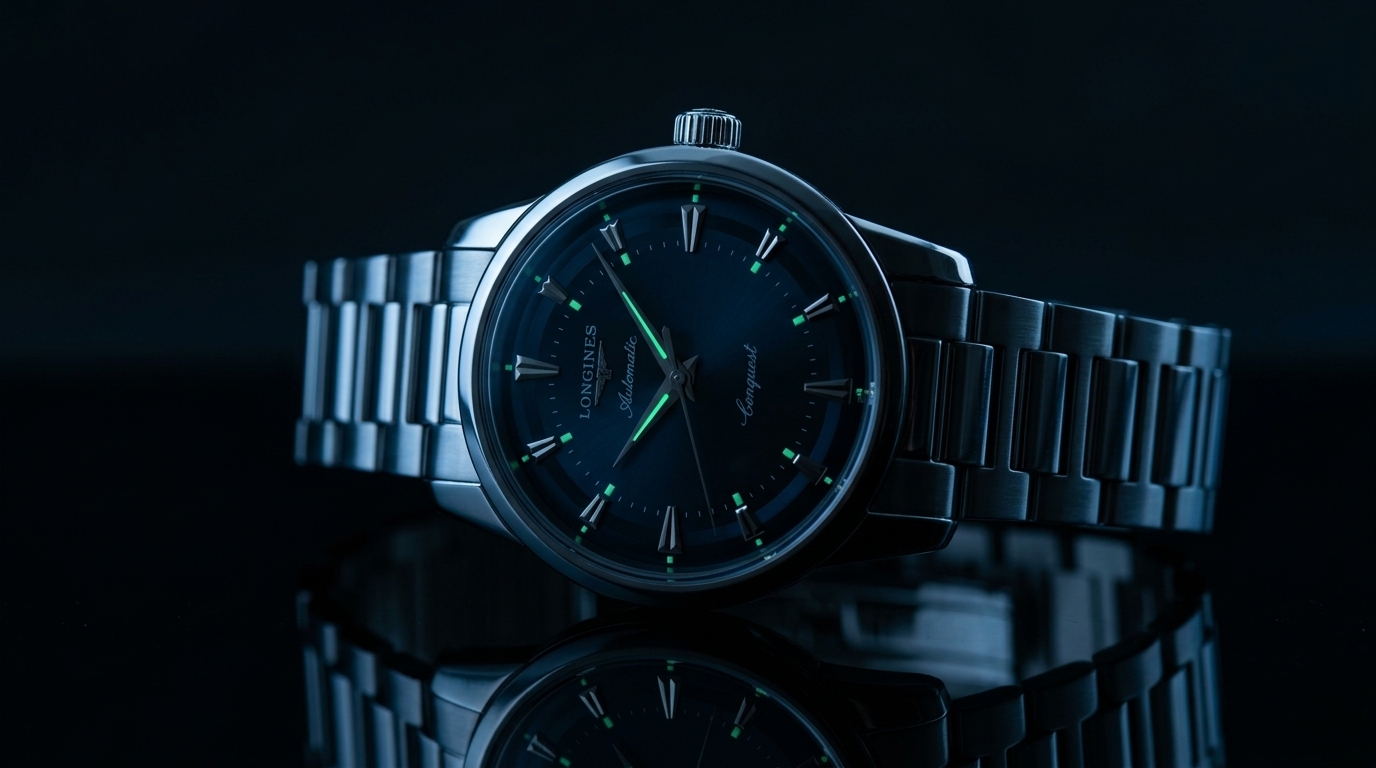
Behind all of this lies Longines’ awkward modern position, which may also be its advantage. It is not an independent atelier producing a handful of watches for clients who speak in reference numbers. It is not positioned as a grand complication house sealed behind precious metal. It belongs to the Swatch Group and benefits from industrial movement development, large-scale distribution, and pricing that often sits below the Swiss brands with louder luxury ambitions. This can make it easy to underestimate. It also gives Longines the capacity to make historically literate mechanical watches in numbers large enough to matter. The archive does not become a private language. It enters shop windows, airports, wrists, photographs, ordinary use.
There is something fitting in that. Longines’ history was never only aristocratic. It was official timing equipment, navigation aid, sports chronograph, military supply, jeweller’s dress watch, observatory machine, export product. Its past moved through systems. It was stamped, shipped, serviced, worn hard, replaced, rediscovered. A winged hourglass is a poetic symbol, but it is also a factory mark, a guarantee, a piece of commercial identity that managed to endure. The romance of Longines has always been entangled with administration: serial numbers, archives, timing sheets, contracts, calibres, reference codes. The poetry is in the paperwork as much as in the dial.
That may be why the brand’s revivals, at their strongest, feel less like resurrection than correspondence. A modern Longines seems to receive a message from an earlier watch, then replies in a different hand. The reply may be imperfect. It may be too large, too polished, too careful, too eager to remind the observer of its ancestry. But the conversation continues, and the persistence is rare. Many brands use the past as a fixed backdrop. Longines treats it more like weather: something that keeps changing the light on whatever is being made now.
On the Zulu Time, the red-tipped hand continues its separate round, indifferent to the hour hand’s local jumps. The bezel divides the day into darkness and light. The applied numerals hold their old aviation posture while the silicon balance spring works unseen beneath the dial. Nothing about it is truly old, and that is the point. The watch is not a relic. It is a machine built in the present that allows older forms of timekeeping to remain unsettled, active, and slightly troublesome.
Longines has learned that the past worth keeping is not the past that behaves. It is the one that resists being framed, that asks new movements to carry old names, that lets a diver’s crown, a pilot’s bezel, a sector line, or a high-beat escapement disturb the smooth surfaces of contemporary watchmaking. The house from Saint-Imier has more history than any modern catalogue can safely contain. So it lets the history move. It gives it cases, crystals, calibres, and wrists. The hourglass has wings, after all. It was never designed to stay in one place.