Longines and the Past That Won’t Sit Still
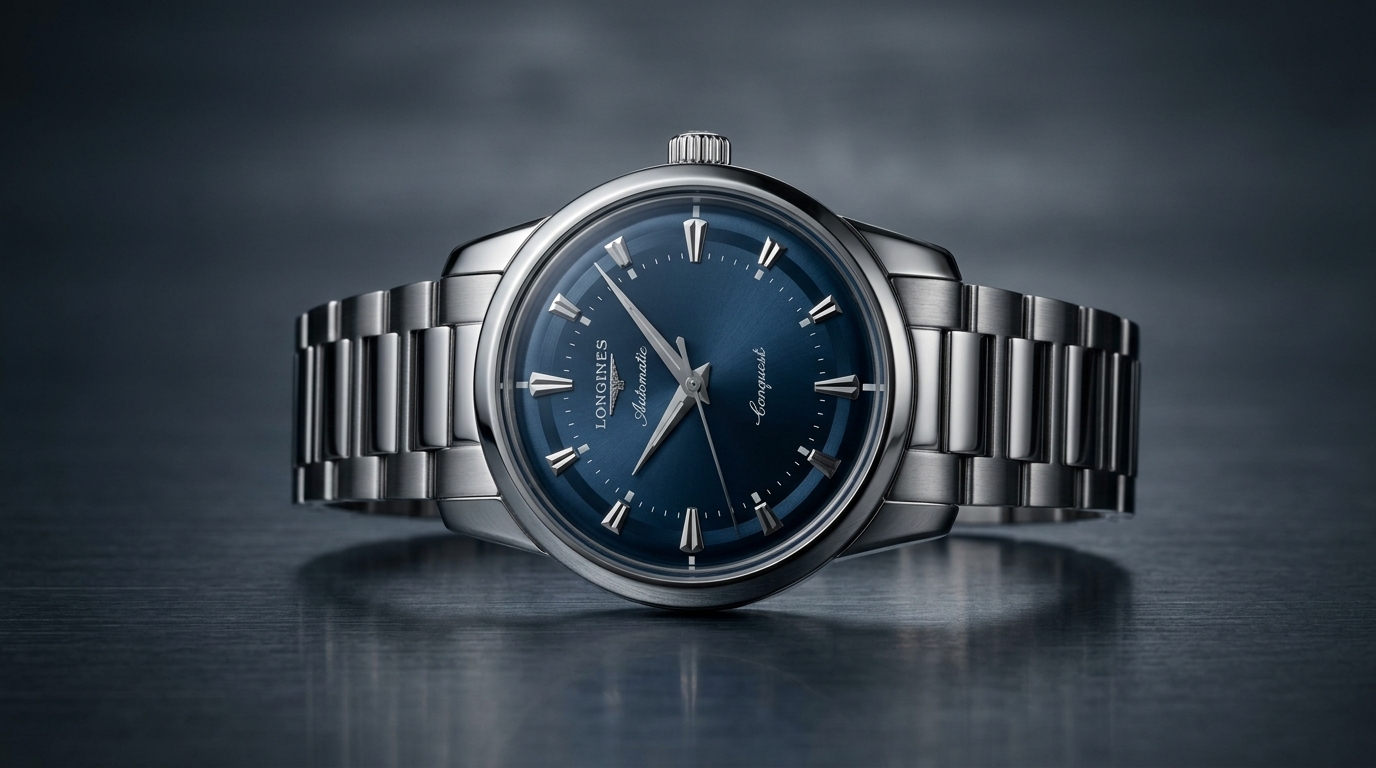
At ten past ten, the hands of a Longines Heritage Classic cut the dial into a small theatre of order: two dark batons leaning outward, a crosshair dividing the silvered surface, the subsidiary seconds turning below like a quiet argument against stillness. The design looks, at first glance, as if it has simply stepped out of a drawer from 1934. Then the deception begins to loosen. The case is cleaner than an old case could be, the crystal clearer, the movement more dependable, the proportions adjusted for wrists and habits shaped by another century. The watch does not bring the past back. It keeps it moving.
That is the peculiar force of Longines in the present. Few watch houses have such a deep archive, and fewer still seem so willing to disturb it. The brand’s history is not treated as a sealed room of relics but as a workshop, crowded with aviation instruments, observatory chronometers, military watches, dress pieces, divers, stopwatches and chronographs with scales drawn for men who timed horse races, flights, artillery bursts and pulses. Longines has never had to invent a mythology around itself. The difficulty has been choosing which part of the truth to reopen.
The winged hourglass, registered in 1889 and often described as the oldest active trademark in watchmaking, carries a strange burden. It must look backward without becoming trapped there. In Saint-Imier, where Longines established itself in the nineteenth century, industrial watchmaking was not a dream of romance but a discipline of production, precision and export. The company built movements, cases, instruments and reputations in parallel. It sent timekeepers to sports fields and expeditions. It placed cockpit watches before pilots. It made chronographs before chronographs had become a collector’s dialect. The past, in Longines, was never ornamental; it was practical, used hard, read quickly and often left with scratches.
That practicality still shows in the best of the modern heritage pieces. They do not succeed when they merely look old. They succeed when they remember what the original watch was for.
Consider the Legend Diver, one of the clearest examples of archival memory refusing to behave like nostalgia. Its ancestry lies in the Longines reference 7042, a compressor-style diver from the late 1950s and early 1960s, recognizable by its twin crowns and internal rotating bezel. On the original, that arrangement had a purpose. The bezel sat under the crystal, protected from accidental knocks, adjusted by a second crown. The case construction, associated with Ervin Piquerez S.A., belonged to a period when the dive watch had not yet settled into the single template of external bezel, crown guards and heavy shoulders. It was an age of experiments in pressure, legibility and trust.
The modern Legend Diver carries that silhouette forward: long clean lugs, two crowns placed with almost architectural symmetry, numerals that seem to glow from a dim instrument panel. Yet it is plainly a modern object. Its water resistance, sapphire crystal, Super-LumiNova and automatic calibre place it in a world where most dives are recreational and most desks are deeper than most wrists will ever go. The current thirty-nine millimetre version, powered by the L888 family with its long power reserve and silicon balance spring, corrects what time itself had inflated. Earlier modern versions wore larger, their long lugs stretching the mid-century design beyond its natural tension. At thirty-nine, the watch becomes less costume, more instrument again. The past has been edited, not embalmed.
Longines has often understood that editing is the soul of revival. The Heritage Classic Sector, with its stepped dial and radial divisions, comes from a genre rather than one universally worshipped reference. Sector dials of the 1930s belonged to an era in which clarity could look almost mathematical. Railway tracks, minute rings and contrasting zones helped the wristwatch assert itself as an instrument at a time when pocket-watch habits had not fully vanished. In the modern version, the silver disc is divided with black geometry, blued hands and a small seconds register at six. Inside is the automatic calibre L893, derived from the ETA A31 architecture, beating at 25,200 vibrations per hour and offering around 64 hours of reserve. The movement is not displayed, and that is fitting. The watch’s drama is all on the dial, where line and proportion do the work that engraving and spectacle often try to do elsewhere.
This is where Longines’ relationship with history differs from that of brands that charge heavily for scarcity. The company’s back catalogue includes objects that auction rooms now pronounce with reverence: the 13ZN flyback chronograph, introduced in the 1930s, with its column wheel and instant reset-and-restart function; the later 30CH; the tre tacche waterproof cases; the oversized military wristwatches with sober dials and purposeful hands. Original examples can now command sums that belong to another economic weather system. Longines itself, however, occupies a different part of the landscape. It makes watches that recall those forms without pretending to be those watches. The result, at its strongest, is not ownership of the past but access to its grammar.
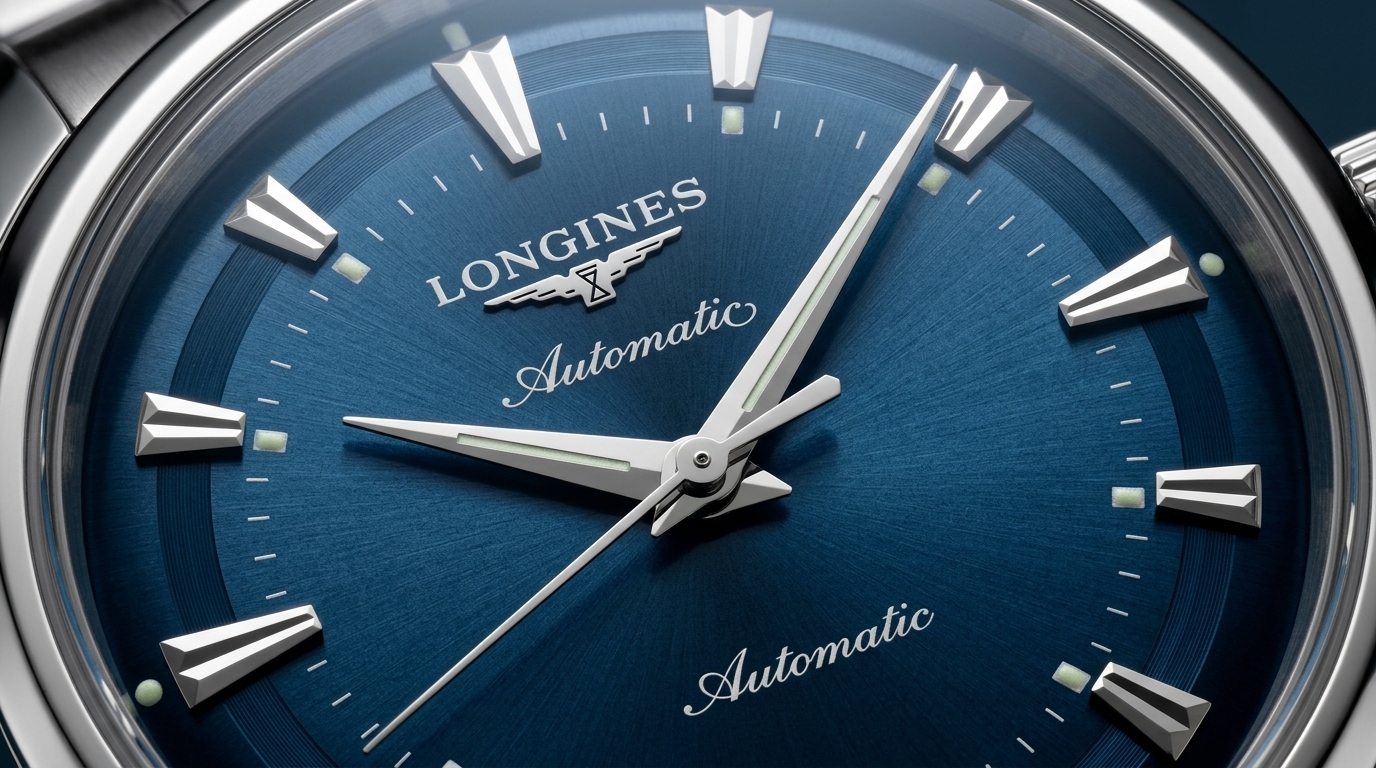
The chronograph is where that grammar becomes especially rich. Longines was not a latecomer to the complication. Its early wrist chronographs, particularly those using the 13ZN, remain among the most admired ever serially produced. The 13ZN was not merely beautiful beneath the bridgework; it was technically serious, with a flyback function valuable to pilots and navigators who needed to time consecutive intervals without losing their chain of measurement. In an aircraft cockpit before digital instruments, the difference between stopping, resetting and restarting a chronograph and doing all three with one press was not theoretical. It was time kept under pressure.
Modern Longines chronographs cannot recreate that world, and they should not try. A watch such as the Avigation BigEye approaches the archive through another door. Its asymmetrical dial, with an enlarged thirty-minute counter at three o’clock, is based on a vintage pilot’s chronograph whose exact story was long wrapped in the softer fog of collector lore. The modern piece uses the L688 calibre, a column-wheel automatic chronograph derived from ETA’s architecture, with a reassuringly firm logic beneath the dial. It offers what the vintage original suggested: rapid reading, visual hierarchy, a cockpit sensibility that values one counter above the others because some elapsed minutes matter more than decorative balance.
The BigEye is not delicate. Its case has mass, its pushers stand proud, its dial is thick with function. Yet there is restraint in its refusal to polish away the oddness of the source. The enlarged register makes the design slightly uncomfortable, and that discomfort is precisely what gives it life. Historic watches were not always symmetrical beauties. They were often solutions. Their quirks came from use. To revive a watch without its awkwardness is to remove the evidence of need.
A similar tension runs through Longines’ aviation pieces. The brand’s relationship with flight is neither invented nor incidental. In the 1920s and 1930s, Longines supplied timing instruments for aviation and navigation, and its name became linked with figures such as Philip Van Horn Weems and Charles Lindbergh. The Weems Second-Setting Watch allowed the seconds indication to be synchronized with a radio time signal by means of a rotating central disc. Lindbergh’s Hour Angle Watch, developed after his 1927 transatlantic flight and produced by Longines in 1931, helped navigators calculate longitude using celestial observations. These were not romantic accessories for men in leather jackets. They were mathematical tools worn against uncertainty, fog, fuel limits and the curvature of the earth.
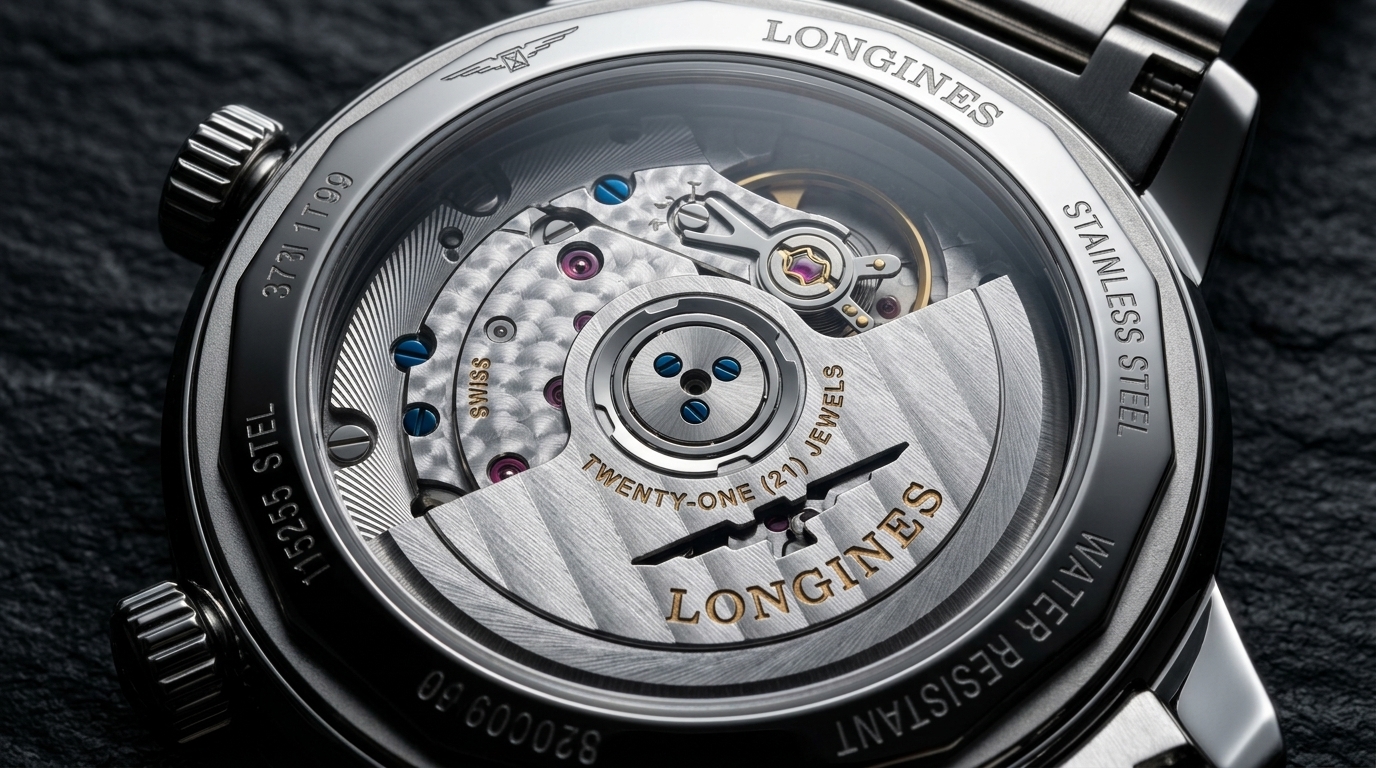
The modern Spirit collection approaches that inheritance with caution. It is not, strictly speaking, a reissue. It borrows the emotional climate of Longines aviation rather than copying a single antique. Arabic numerals, a broad dial, diamond-shaped markers, a clean case and pronounced crown produce the impression of an instrument made legible first and charming second. The five applied stars on the dial may trouble purists, partly because stars in watch marketing have been made to carry too much cheer. Yet in Longines history, the stars had meaning as a mark associated with high-grade movements. On the Spirit, they form a bridge between old internal codes and modern brand language, not always quietly, but not falsely either.
The Spirit Zulu Time, with its independently adjustable local hour hand and twenty-four-hour bezel, draws from another Longines thread: dual-time and navigation watches connected with the term “Zulu,” aviation shorthand for Coordinated Universal Time. Here the modern calibre L844.4, with silicon balance spring and COSC certification, performs the work behind the romance. Its jumping local hour makes the watch practical in the contemporary sense, fit for airports rather than dead reckoning. The older dream of travel is there, but so are security lines, boarding groups and hotel lamps switched on at strange hours. The past has learned the habits of the present.
Longines’ challenge, always, is proportion. Many archival designs were born in cases of thirty-two to thirty-eight millimetres. Sometimes they were small because habits were different; sometimes because movements dictated it; sometimes because a watch was expected to disappear under a cuff until called upon. Modern buyers, for decades, were taught that presence meant diameter. The results across the industry were often uneasy: vintage dials stretched, numerals swollen, sub-registers stranded too far from the centre because the movement beneath remained smaller than the case suggested. Longines has not been immune. But its recent corrections show a brand listening to the designs themselves. The movement from forty-two toward thirty-nine, from breadth toward coherence, has made several pieces sharper. A reissue does not become more faithful by being smaller in all cases, but it does become more convincing when diameter, lug length and dial furniture speak the same language.
The Ultra-Chron is a different kind of retrieval. Its story belongs to the high-frequency race of the 1960s and 1970s, when mechanical watchmaking sought precision through speed just as quartz technology was preparing to alter the field entirely. Longines introduced the original Ultra-Chron in 1967, using a movement beating at 36,000 vibrations per hour. A faster balance could divide time into thinner slices, improving potential accuracy, though at the cost of greater demands on lubrication, wear and regulation. The modern Ultra-Chron returns with the calibre L836.6, again beating at 5 Hz, and with certification as an “ultra chronometer” by Timelab rather than the more familiar COSC route. Its cushion case, bold minute track and sharp retro profile do not whisper. They come from an era when mechanical watchmaking, threatened by the future, responded by accelerating.
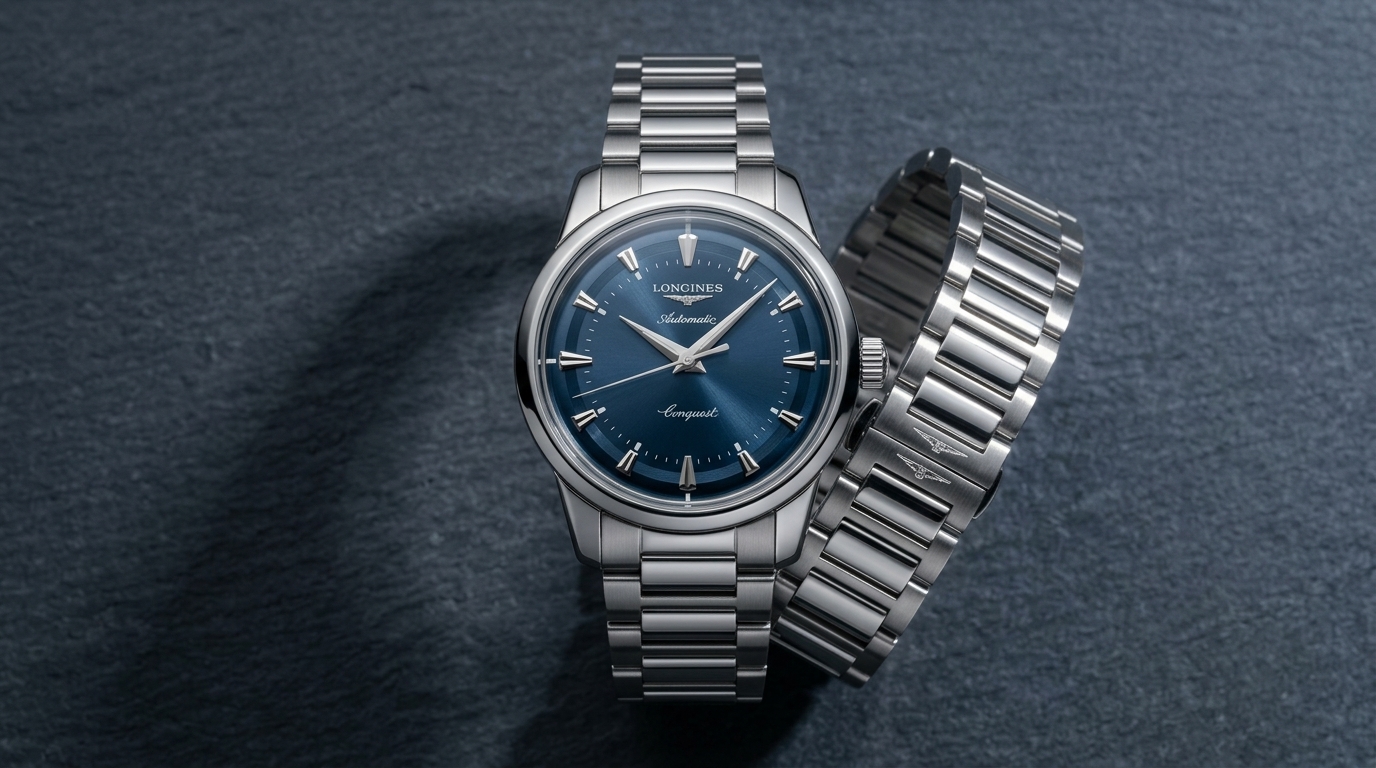
There is something poignant in that. The high-beat mechanical watch is a machine trying to answer a question that quartz would soon change entirely. It is a record of confidence just before disruption. Longines revisiting the Ultra-Chron now is not merely a design exercise; it is a return to a moment when precision still had a heartbeat, and when beating faster seemed a way to survive. The modern version knows what happened next. It carries the knowledge silently.
That silence matters. The better Longines heritage watches avoid the theatrical ageing that has infected parts of the vintage-inspired market. Faux patina is a dangerous substance. Used carefully, a warmer lume tone can keep a dial from looking sterile; used carelessly, it becomes costume makeup. Longines sometimes walks near that line, as nearly every brand does when rummaging through mid-century drawers. But the strongest pieces rely less on stained colour and more on shape: the bevel of a lug, the thinness of a bezel, the typography of a numeral, the relationship between crown and case flank. These are the details that persuade over time. Age cannot be printed convincingly; proportion can.
Typography, in particular, is one of Longines’ quiet strengths. The company’s old dials carried numerals with a practical grace, whether in radium-painted Arabic forms, scientific sector layouts or slender applied markers. Modern revivals succeed when they respect that lettering as functional architecture. A badly chosen font can ruin a historic watch more efficiently than an incorrect caseback. It changes the accent of the object. Longines, at its best, understands that numerals are not decoration placed after design; they are the design speaking.
The dials also reveal the tension between memory and regulation. Vintage watches were made with luminous material that aged, darkened and sometimes became hazardous. Modern watches must use safe compounds, modern tolerances, modern seals. Acrylic has warmth; sapphire has resistance. Old cases had charm; new cases must survive water tests and warranty claims. A watch cannot return to 1947 without bringing along 2026 in its gaskets. This is why exact reproduction is often a fantasy. The laws of manufacturing, liability and daily use stand between then and now. The art lies in deciding which compromises are honest.
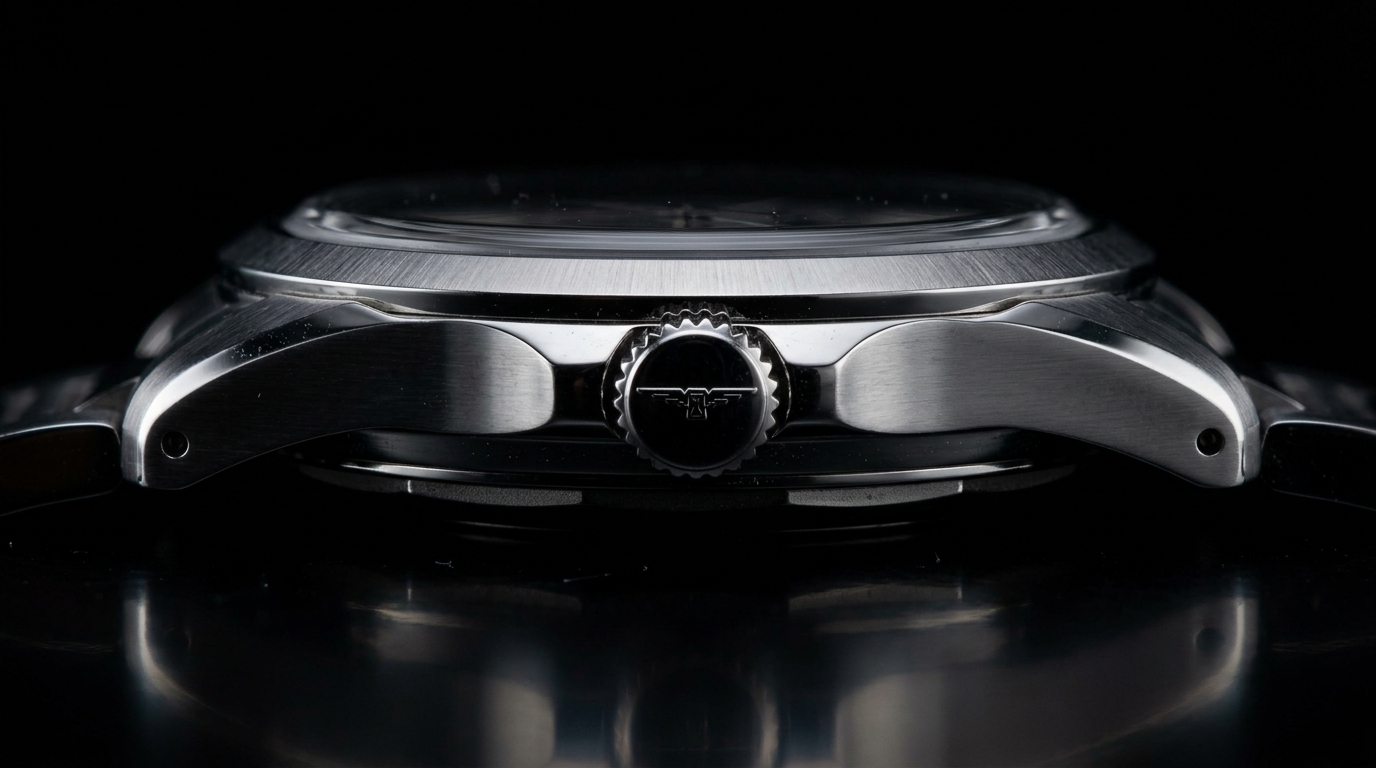
Longines has an advantage here because its prices, while no longer inexpensive in the old sense, still occupy a realm where watches are expected to be worn rather than worshipped from a distance. This changes the moral temperature of the objects. A modern sector dial, diver, pilot’s watch or high-beat cushion-cased piece can enter ordinary rotation. It can acquire its own scratches instead of borrowing them visually from an ancestor. That may be the healthiest relationship a modern watch can have with vintage design: not to simulate age, but to invite it.
The brand’s use of ETA-derived calibres is sometimes discussed as if it were a deficiency, but that complaint often misunderstands Longines’ place in the Swatch Group hierarchy and in watch history. Longines has deep movement-making credentials; the old manufacture calibres are central to its reputation. Today, its movements are industrially produced, frequently exclusive or specially configured, and often technically improved with extended reserves, silicon hairsprings and chronometer certification where appropriate. They are not hand-finished fantasies viewed through sapphire backs with loupe-ready theatrics. They are engines designed to work at scale. In that, there is continuity with much of Longines’ own past, when precision and production were not enemies.
Finishing, too, requires the right expectations. These watches are not exercises in black-polished steel or inward angles. Their cases rely on brushed planes, polished bevels, crisp enough transitions and dials that carry the emotional weight. The seriousness lies not in artisanal excess but in whether the object holds together. A Longines heritage watch fails when it feels assembled from vintage signals. It succeeds when the signals disappear into a single tone.
The past that will not sit still is not only Longines’ archive. It is the collector’s imagination. Vintage watch culture has spent years training the eye to want smaller cases, aged lume, gilt print, domed crystals, beads-of-rice bracelets, stepped bezels, drilled lugs, closed casebacks and movements whose bridges look like lost maps. Those desires are real, but they can harden into doctrine. Longines complicates the doctrine by making watches that are accessible enough to be judged by use, not merely by alignment with forum memory. A thirty-nine millimetre diver with modern lume is not a 1959 compressor. A sector-dial automatic with a 64-hour reserve is not a fragile interwar dress watch. A Zulu Time is not Lindbergh’s navigational instrument. Each is a translation, and translation always reveals the language of the translator.
The risk of translation is smoothness. Too smooth, and the old sentence loses its grain. Too literal, and it becomes unreadable in the new tongue. Longines’ most persuasive modern watches keep some grain. The Legend Diver’s twin crowns still look faintly strange beside contemporary dive watches. The BigEye’s dial still gives one register too much authority. The Ultra-Chron still carries the bright impatience of the high-frequency years. The Heritage Classic Sector still divides its face with a severity that does not flatter every taste. These are not flaws to be corrected. They are the small resistances by which the past proves it is alive.
In the broader watch industry, heritage often behaves like a refuge. When the future becomes difficult to imagine, brands retreat to the catalogue, polish an old case shape, darken the lume and ask memory to do the selling. Longines could have fallen entirely into that habit. Its archive is large enough to support years of comfortable repetition. Yet the better evidence suggests something more restless. Recent releases show recalibration, not simple repetition: smaller cases where needed, improved movements, cleaner dials, renewed attention to bracelets and straps, and a willingness to let certain old designs remain odd.
That restlessness is essential because Longines’ history was itself restless. The company timed races, equipped navigators, pursued chronometric performance, built chronographs of lasting importance and adapted constantly to changes in taste and technology. To treat such a past as a static mood board would be to misunderstand it. The archive is not a cemetery. It is a set of unfinished instructions.
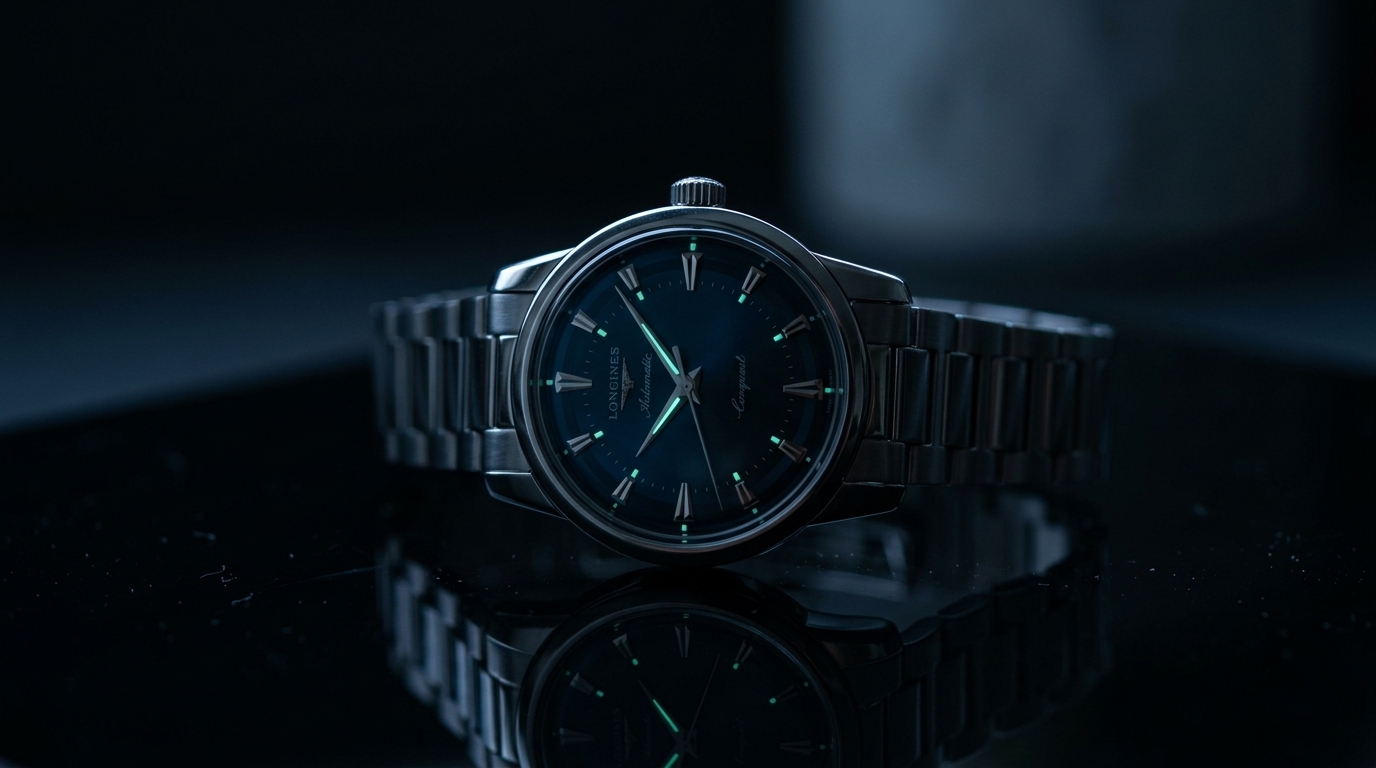
Near midnight, under a weak lamp, a Longines dial can appear older than it is. The minute hand crosses printed hash marks with the same quiet authority its ancestors once had, and the winged hourglass sits beneath twelve like a mark stamped on a travel document. But the balance inside is not old. The seals are not old. The luminous compound has not burned itself brown with decades. The watch belongs to the present, even when its face remembers another room, another aircraft, another shoreline, another wrist.
That is the source of its fascination. Longines does not preserve the past by stopping it. It winds it, regulates it, changes its case size, fits it with sapphire, argues with its proportions and sends it out again. The result is sometimes imperfect, occasionally too polished, occasionally too careful. But at its best, it feels honest to the deeper history of the brand: time measured not as a museum label, but as motion. The past, on a Longines, is not behind the glass. It is beneath the hands, refusing to sit still.