Laurent Ferrier and the Calm Intelligence of Curves
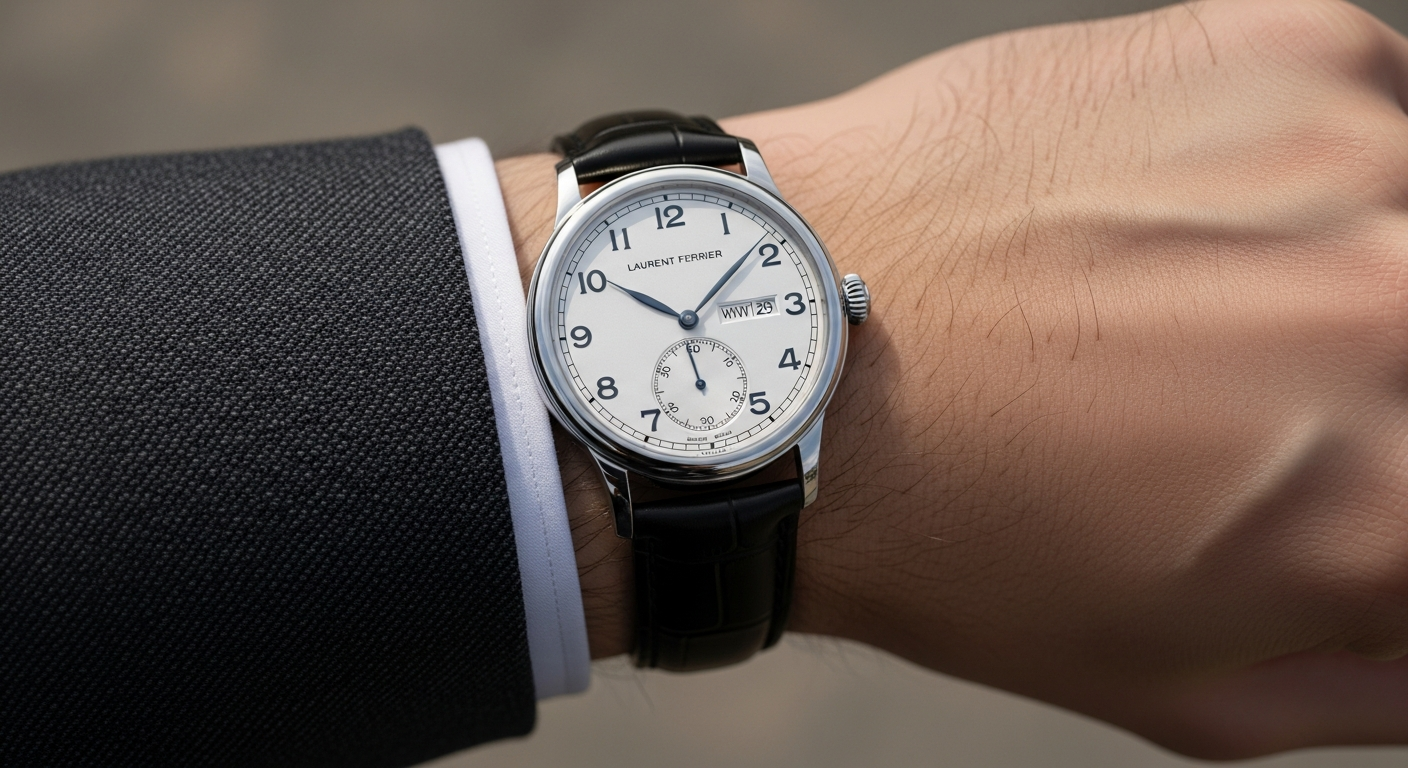
There are watches that announce themselves before you even read the name on the dial. They arrive with sharp edges, bright angles, a kind of visual insistence that says, Look at me. And then there are the watches that seem to wait for your attention with the patience of well-made furniture, the kind you notice only after you’ve lived with it long enough to understand why it feels right. Laurent Ferrier belongs to that second category, and not by accident or nostalgia or some marketing idea of “quiet luxury,” but because the brand is built on a particular form of intelligence: the calm intelligence of curves.
The first time you encounter a Laurent Ferrier in person, you might not have language for what’s happening. You might only feel that your eyes slow down. The case doesn’t grab; it guides. The dial doesn’t shout; it breathes. Nothing seems to be trying to win an argument. It’s not minimalism as a posture, or restraint as an aesthetic trend. It’s something older and more demanding: a disciplined confidence that has no need to prove itself in public. You can sense that every line has been thought through by someone who has spent decades learning what happens when you change a curve by a fraction, when you decide to polish here and satin-brush there, when you choose softness not as decoration but as structure.
There’s a story that sits behind this softness, and like all good stories, it’s not a slogan. It’s a life. Laurent Ferrier the man spent a long career at Patek Philippe, starting as a watchmaker and rising through the ranks until he became technical director. That’s a detail that can sound like a credential on paper, but it’s more like a climate you’ve lived in. Working at that level for that long teaches you the difference between a good idea and a durable one. It teaches you that elegance is not the opposite of engineering; it is often the result of engineering done so well it disappears.
And then there’s motor racing, which seems at first like an odd companion to this world of quiet curves. Ferrier famously raced at Le Mans, even finishing third overall in 1979. Endurance racing is not about bravado. It is about pacing, about reading the road, about understanding where to push and where to conserve. It is a sport of long attention. That mentality, carried into horology, makes sense of the brand’s temperament. Laurent Ferrier watches feel like they were designed by someone who knows the difference between speed and haste, between performance and drama.
If you want to understand the calm intelligence of curves, start with the case. Many brands can make a round watch. Few can make a truly resolved round watch, one where the silhouette feels inevitable. Laurent Ferrier’s “Galet” case—galet meaning pebble in French—doesn’t just reference nature; it borrows nature’s logic. Pebbles become smooth not because they are designed to be, but because they are refined by time, by pressure, by repeated contact. The Galet case has that same sensation: the bezel’s gentle dome, the mid-case’s soft volume, the way the lugs flow like a thought being completed.
Those lugs are their own small lesson. In lesser hands, a lug is a functional appendage, something welded on to hold a strap. Here they are integrated in a way that feels anatomical. They bend downward with a controlled tenderness, as if they’re already anticipating the wrist. The watch looks composed head-on, and then when you tilt it, you realize the real composition is in profile, in the way the case thickens and thins, catches and releases light. The curves aren’t there to be “pretty.” They manage transitions. They make the watch wear a size smaller than its diameter suggests. They create comfort, both physical and visual.
This is where the word intelligence matters. A curve can be sentimental—rounded for the sake of softness. But an intelligent curve solves problems. It eliminates awkwardness. It prevents the eye from snagging on a corner that feels unresolved. It makes the object feel finished. Laurent Ferrier’s watches do this in a way that’s almost suspiciously natural, like they were always supposed to look exactly like this.
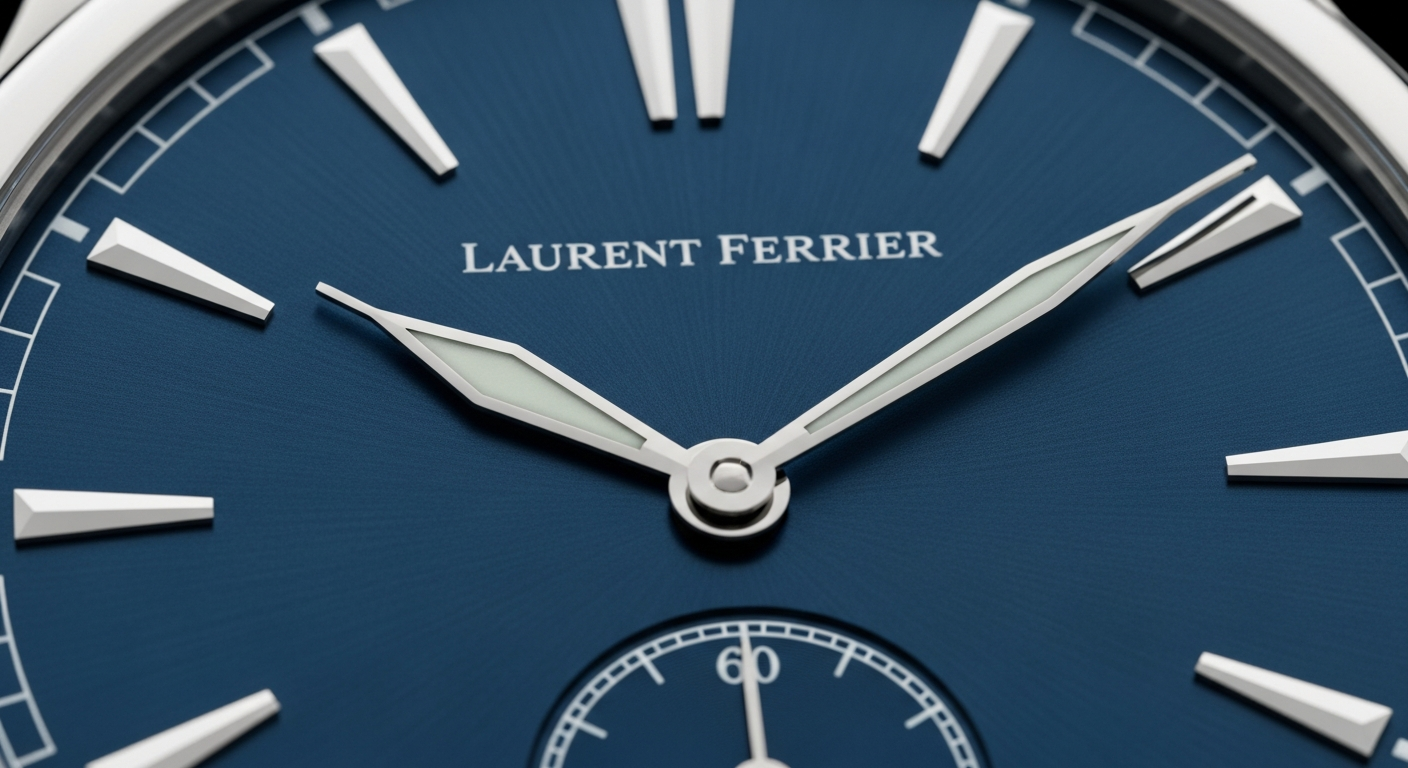
Then there’s the dial, which is where many brands choose to turn up the volume. Laurent Ferrier often does the opposite. Consider the restraint of typography: legible, calm, never performative. Consider the fine printing, the way a minute track can be present without becoming a fence. Consider the curvature of the hands—often Assegai-shaped, slender and slightly arched—moving with the quiet authority of tools made for work, even if the work is simply telling you it’s 3:17 and the afternoon is slipping by.
The brand’s most recognizable detail, perhaps, is the “sector dial” style seen in models like the Classic Micro-Rotor or certain Galet variants: a central zone set apart, an outer track, subtle tonal differences that allow depth without ornament. You read it instantly, but you also keep looking because the dial isn’t flat; it’s staged. The best Laurent Ferrier dials feel like rooms with good acoustics. You don’t notice the architecture at first, only that everything sounds right.
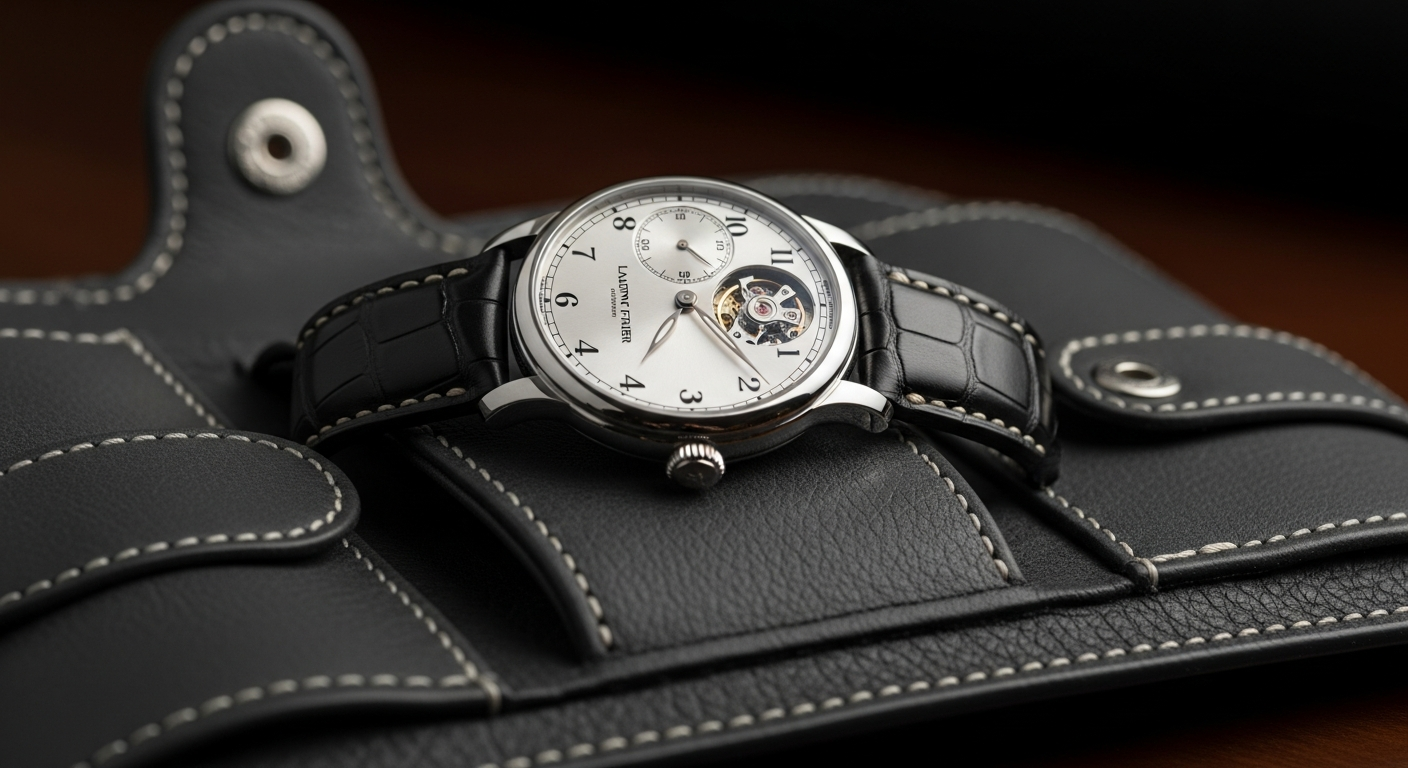
There is, too, a particular kind of emotional temperature to these watches. Many modern timepieces are built around a concept of masculinity that equates hardness with strength: thick bezels, aggressive angles, industrial textures. Laurent Ferrier offers another option: strength as composure. The watches seem to say that you can be serious without being severe, that you can be technical without looking like a machine. They carry a human warmth, not in a nostalgic, faux-vintage way, but in their proportions and finishing, in the way their curves acknowledge the hand that made them.
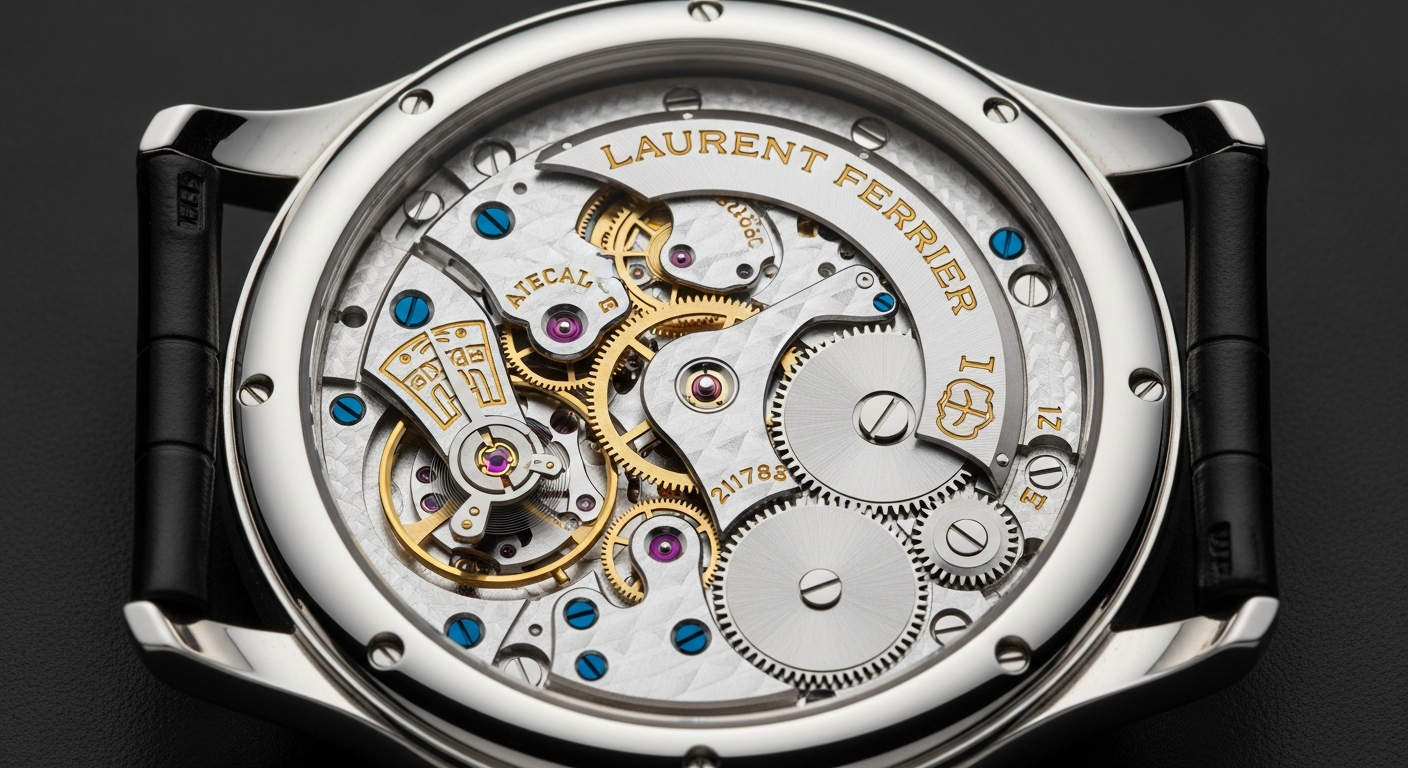
It’s easy to talk about finishing in this world as if it’s a checklist: polished bevels, Geneva stripes, perlage, black polish. Laurent Ferrier certainly delivers on those, but the more interesting point is how finishing supports the brand’s philosophy. Sharp interior angles on a bridge aren’t just flexing; they show a commitment to handwork that requires time and patience. A perfectly even stripe isn’t just decoration; it’s evidence of control. The finishing is another kind of curve, really—light curving along an edge, reflections flowing without interruption.
And then there’s the micro-rotor, a complication that tells you a lot about a brand’s temperament. A full rotor is efficient and common; a micro-rotor is more complex to execute well, especially if you want thinness, stability, and a beautiful view of the movement. Laurent Ferrier’s micro-rotor caliber became one of those modern benchmarks that collectors mention with a slightly softened voice, as if they’re talking about a wine they don’t want everyone to discover. The rotor itself—often in platinum—sits like a small planet inside a carefully ordered universe. It turns quietly, and it feels like the watch’s whole design philosophy made mechanical: efficiency without fuss.
The escapement choices matter here too. The brand has explored its own natural escapement concept in certain models, and even where it doesn’t, the approach is consistent: pursue performance, but do it in a way that looks calm. When you look through the caseback of many watches, you see a message: complexity, power, intensity. When you look through the caseback of a Laurent Ferrier, you more often see clarity. The bridges are shaped with grace. The layout feels like it had time to become itself.
That sense of time is important. We live in an era where watch design often feels reactive. A trend emerges—integrated bracelets, bright colors, skeletonization—and brands scramble to produce their version with just enough difference to claim originality. Laurent Ferrier feels almost immune to that cycle, not because it’s stubborn, but because it has a coherent internal compass. The watches are not designed to win this year; they’re designed to make sense ten years from now, and twenty. Curves help with that. Angles can date quickly; they belong to particular decades and particular cultural moods. Curves endure because they belong to bodies, to stones, to bowls and wheels and architecture that has outlasted fashion. Curves are older than taste.
There’s a scene I imagine, whether or not it happened exactly this way. A watchmaker sits at a bench late in the day, light from a window turning the dust in the air into something almost visible. In front of him is not a drawing, not a rendering, but a partially finished case or a dial prototype. He turns it in his fingers, not to admire it but to test it. Does the lug line resolve into the case flank without a hiccup? Does the bezel dome create the right highlight? Is the transition between polished and brushed surfaces placed exactly where the eye wants to rest? He doesn’t ask if it looks expensive. He asks if it looks right.
That is the difference between luxury as a price point and luxury as a form of care. Laurent Ferrier seems preoccupied with care. The watches feel cared for even before you own them, as if the brand refuses to let any part be merely adequate. And because so much of that care is embedded in curvature, it reads as ease. It’s hard to explain to someone who hasn’t handled one: the watch feels less like a product and more like an object that earned its form through effort.
Of course, the calmness can be misunderstood. To the casual eye, a Laurent Ferrier may appear “simple,” and simplicity, in a market trained to equate complexity with value, can look like an absence. But spend time with these watches and you realize the simplicity is the hardest kind. It’s the simplicity that comes after you’ve wrestled with all the possible decisions and refused most of them. It’s the simplicity that leaves just enough, and then refines that “enough” until it becomes persuasive.
Even the brand’s use of color often feels like a whisper rather than a statement. Many dials sit in restrained palettes—silvers, creams, deep blues, smoky grays—chosen not to seduce but to support legibility and mood. When there is a bolder moment, it tends to be controlled, like a single note held in a quiet room. This is not design meant to be photographed at an angle for maximum wrist-shot impact. It is design meant to be lived with, looked at in ordinary light, checked quickly in a meeting, noticed again in the evening when you take it off and realize you’ve been wearing it without thinking about it at all.
That last point might be the ultimate compliment. Some watches demand attention constantly. They want to be part of your identity performance. A Laurent Ferrier is content to be part of your life. It doesn’t interrupt. It accompanies. It’s the difference between a conversation that tries to impress you and one that listens.
This is where the editorial part becomes personal, because what we ask of objects is often what we feel we lack. In loud times, quiet objects become valuable. In an age of sharp opinions, there is something almost radical about a design language built on gentleness. Curves suggest compromise, but not in the sense of settling. They suggest accommodation, the ability to fit, to adapt, to meet a human body without insisting on its own geometry.
And yet, there is nothing soft about the standards behind that gentleness. The finishing is unforgiving. The tolerances are real. The movements are conceived with a seriousness that doesn’t need to posture. This combination—visual tranquility backed by technical rigor—is what makes the brand feel mature. Not old. Mature. Like someone who has learned that the most impressive thing you can do is make something difficult appear easy.
The watch world often romanticizes the idea of the independent maker as a rebel, someone rejecting the mainstream with eccentricity. Laurent Ferrier is independent in a different way. It’s independent like a person who knows themselves. There is no anxiety in the design, no frantic striving to be recognized as “different.” The watches are different because they are specific, because they are the product of a singular taste refined over decades. That kind of specificity can’t be faked quickly, and it can’t be scaled without losing something essential.
If you follow the arc of a collector, you often see a shift over time. Early on, people chase statements: bold complications, famous references, watches that serve as trophies. Later, many begin to look for something else—not necessarily rarer, not necessarily more complicated, but more satisfying. They start asking whether a watch feels coherent, whether it has balance, whether it will still feel like itself when the novelty is gone. Laurent Ferrier tends to enter the conversation at that later stage, when the collector has learned that quietness can be a form of depth.
It’s tempting to describe this as understatement, but understatement can still be a strategy, a kind of humblebrag in physical form. The better word might be sincerity. A Laurent Ferrier looks sincere. It doesn’t feel designed to manipulate desire. It feels designed to honor the act of wearing a watch at all: the intimacy of time on the wrist, the private glance, the way a caseback can hold a small universe that only you regularly visit.
And the curves keep doing their work. They soften the boundary between you and the object. They make the watch feel less like a device and more like a companion. In the end, that might be what all the best design aims for: not to dominate your attention, but to earn your trust.
When you put a Laurent Ferrier on, the sensation isn’t that you’ve armed yourself with something formidable. It’s that you’ve settled into something considered. The watch doesn’t change who you are; it clarifies you a little. It suggests that taste can be quiet, that excellence can be gentle, that precision doesn’t need sharpness to be precise. It is, in its own way, a reminder that strength can be fluent.
In a world that often mistakes volume for value, Laurent Ferrier offers another equation. Curves are not decoration; they are decisions. They are engineering choices, ergonomic choices, philosophical choices. They are the shape of patience. They are the shape of restraint that has earned the right to exist. And if you listen closely enough, they tell a story not of nostalgia, but of confidence so settled it can afford to be kind.