Jaeger-LeCoultre: Why the ‘Watchmaker’s Watchmaker’ Still Rules Quietly
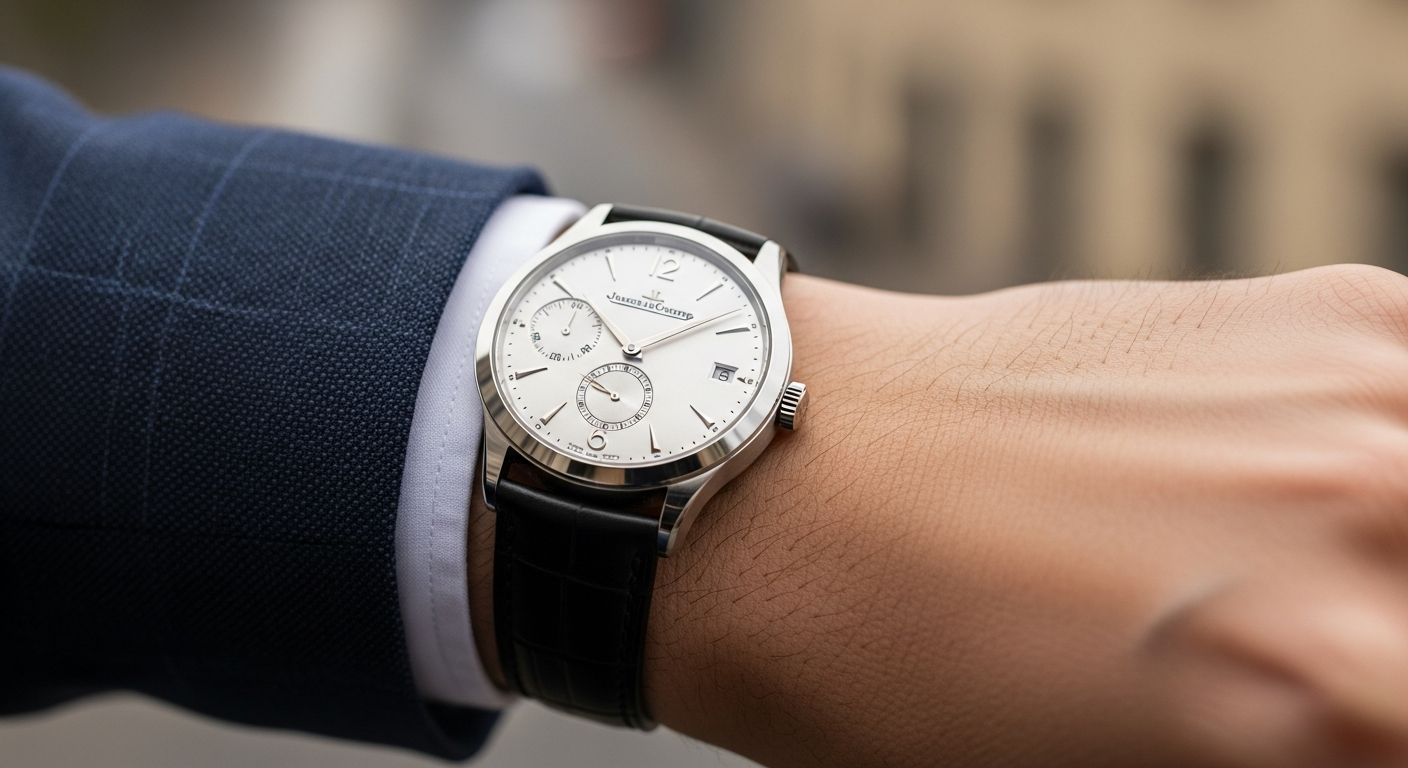
There’s a particular kind of confidence you only notice when it isn’t trying to be noticed. It doesn’t announce itself with a billboard dial, doesn’t chase the loudest colorway of the season, doesn’t attempt to win the group photo from three tables away. It simply arrives, sits down, and begins doing the work at a level that makes everyone else—especially the people who know—pause for a beat. Jaeger-LeCoultre has spent more than a century perfecting that kind of confidence, and it’s why the maison keeps its curious nickname even now, in an age that often rewards volume over substance: the watchmaker’s watchmaker.
If you’ve ever met a watchmaker in the wild, not a “watch guy” in the internet-comment sense but someone who genuinely repairs, adjusts, restores and sweats over tolerances, you’ll hear the reverence change pitch when Jaeger-LeCoultre comes up. It’s not always sentimental. Sometimes it sounds clinical, almost like a technician acknowledging another technician’s work. There’s a respect for engineering choices you don’t make if you’re only trying to sell a story. There’s an appreciation for movement architecture that thinks about servicing five, fifty, a hundred years from now. And there’s a quiet recognition of a brand that, for decades, has been both in the spotlight and backstage at the same time—building its own watches while helping set the technical bar for others.
The phrase “watchmaker’s watchmaker” isn’t just marketing poetry. Historically, it lands because Jaeger-LeCoultre made itself indispensable in the engine room of Swiss watchmaking. In the early and mid-20th century, when many houses still relied on specialists for components, JLC’s ability—its obsession, really—with producing not just parts but fully integrated movements at scale put it in a rare position. It wasn’t merely assembling; it was inventing, refining, and supplying. When you make the heartbeat that keeps other legends alive, you gain a kind of authority that doesn’t need to shout. You become the reference point that peers consult, even if consumers don’t always see your name on the marquee.
That backstage presence shaped the brand’s personality. Jaeger-LeCoultre grew up in the Vallée de Joux, a landscape that seems designed to produce patience: long winters, bright snow, time measured in seasons and in the unglamorous repetition of craft. The valley is often described like a myth—an alpine cradle of watchmaking—and in some sense it is, but what matters more is the mentality it produces. When you spend generations solving mechanical problems, you start to treat difficulty as a normal ingredient rather than an obstacle. Jaeger-LeCoultre’s catalog reads like an ongoing argument with the limits of miniaturization, reliability, and elegance: not in the form of a tantrum, but as a steady, lifelong conversation.
One of the best ways to understand why JLC still rules quietly is to look at how the brand treats complexity. In the modern luxury market, complexity can be a kind of fireworks show: big cases, skeletonized bridges, dramatic tourbillons staged like theater props. Jaeger-LeCoultre can do theater when it wants, but its real signature is something subtler: making complications behave like they belong there. The magic trick isn’t that a movement can do more, it’s that it can do more while keeping the watch wearable, coherent, and—crucially—serviceable. That last word doesn’t sell posters, yet it’s the one professionals care about most. A watch that can’t be maintained is not a triumph of mechanics; it’s a dead-end.
This is why the Reverso keeps resurfacing in conversations about taste, even among people who otherwise avoid “icon” watches. It’s an idea born from function—the swiveling case created to protect the crystal during polo—yet it turned into a design grammar with endless room for interpretation. The Reverso is architectural in a way most watches aren’t; it has lines, edges, a defined silhouette that isn’t merely a circle on a strap. You could argue it shouldn’t work in an era of casual everything, and yet it does, precisely because the design is so resolved. It doesn’t ask permission from trends. And underneath the Art Deco discipline, Jaeger-LeCoultre found a canvas for serious mechanical work, from simple time-only elegance to complications that sit inside that rectangular frame like secrets.
Then there is the Master Control family, which seems almost intentionally under-photographed compared to louder peers. The Master Control ethos is a kind of internal promise: precision, robustness, and an insistence on testing that’s more than ceremonial. There’s a practical, almost tool-like integrity to these watches even when they’re dressed in precious metal. They’re the kind of pieces you can imagine actually living with—through travel, through long days, through the inevitable knocks of a life that isn’t curated for wrist shots. When a brand can make refinement feel durable, it has achieved something more meaningful than mere “luxury.”
The Polaris line, too, carries an interesting contradiction: sportiness without the need to become a hype machine. It’s not trying to dethrone the usual suspects by engineering a shortage. It’s trying to be a good watch with a specific voice—compressor-inspired cues, legible dials, a sense of adventure that’s more Jules Verne than jet-set. There’s confidence in letting the product compete on merit rather than on how quickly it sells out.
Still, the deeper reason Jaeger-LeCoultre retains its quiet rule isn’t any single model. It’s the way the house behaves like a true manufacture in the old sense of the word. The term gets thrown around now until it barely means anything, but for JLC it remains central: an ability to design, develop, and produce a vast range of components and calibers under one roof, including complications that many brands treat like outsourcing opportunities. Behind the scenes, this isn’t romantic; it’s expensive, time-consuming, and riddled with logistical headaches. But it yields a kind of coherence. When your teams live with the consequences of their design decisions—when you can’t simply hand off the hard parts—you build a culture that respects fundamentals.
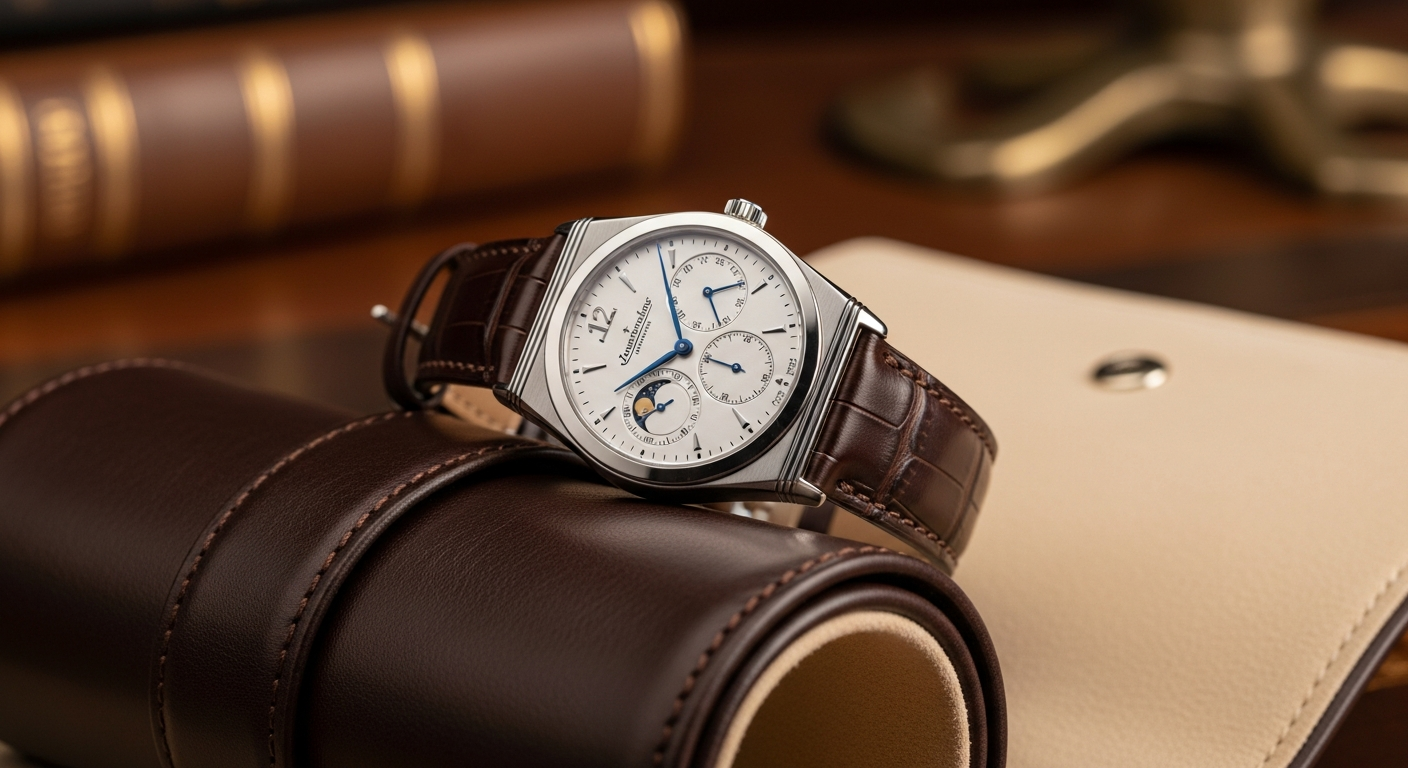
There is also Jaeger-LeCoultre’s relationship with timekeeping itself, a relationship that extends beyond wristwatches into measurement and precision. The maison’s history includes instruments and calibers built with the seriousness of laboratory equipment, the kind of work that reminds you watches were once, before they were jewelry or status signals, essential tools for a world trying to coordinate itself. In a modern context, where a phone keeps time more accurately than any mechanical watch ever could, the point of mechanical timekeeping has shifted toward emotion, craft, and continuity. Yet JLC’s lineage in precision gives the romance a backbone. It’s easier to fall in love with a watch when you feel it is not pretending to be something it isn’t.
What’s fascinating is how this seriousness doesn’t curdle into self-importance. Jaeger-LeCoultre’s design language tends to favor proportion over spectacle. Even when you look at its more elaborate pieces—perpetual calendars, minute repeaters, multi-axis tourbillons—there is a sense that the brand wants you to live with them, not merely display them. The dials often remain readable. The cases, while refined, usually avoid the kind of aggressive geometry that can feel like a dare. Complications are integrated into the face rather than fighting for dominance. It’s a mature aesthetic: the watch as an object meant to accompany a person, not eclipse them.
This is where “quietly” becomes a strategy rather than an accident. In today’s watch culture, noise is amplified by design. Social media rewards immediacy: the watch that photographs well in fluorescent airport lounges, the one whose identity can be understood at a glance. Jaeger-LeCoultre asks you to look twice. It asks you to notice the curvature of the lugs, the restraint of the typography, the way a seconds hand lands with purpose. It invites the kind of attention that isn’t performative. In a landscape where many purchases are as much about being seen as about owning, JLC remains a refuge for people who want the satisfaction of knowing rather than the thrill of signaling.
Of course, understatement is not the same as invisibility. The brand has its own form of recognizability, but it’s coded. A Reverso on a wrist communicates something specific, especially among enthusiasts: a preference for design history, a comfort with elegance, and an appreciation for mechanics that don’t need to be broadcast. A Master Ultra Thin suggests someone who values proportion and finishing, who sees restraint as an achievement rather than a lack. Even a more contemporary JLC with a bolder dial still tends to feel like it’s speaking in a normal voice while everyone else is raising theirs.
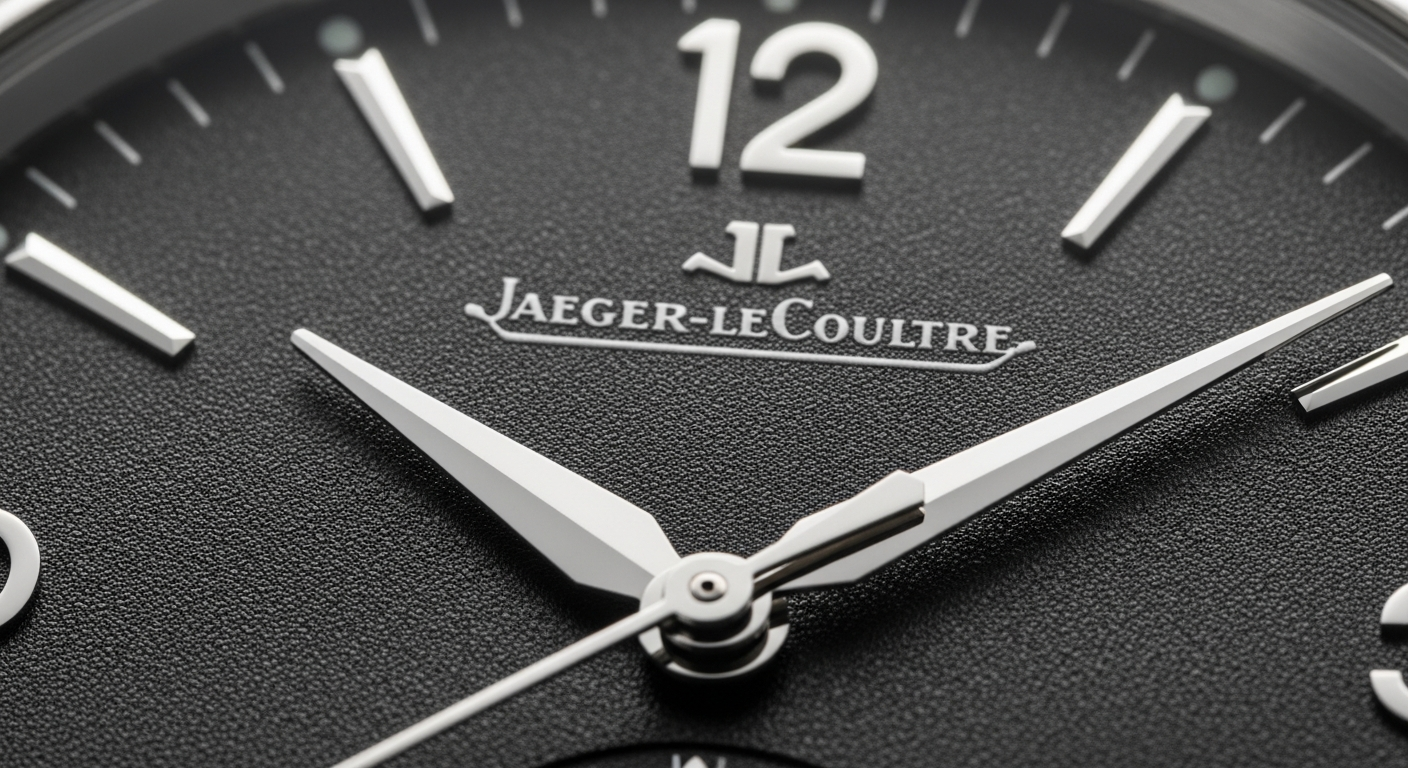
Another reason Jaeger-LeCoultre continues to “rule” is that it’s one of the few houses that can credibly claim both breadth and depth. Many brands are either specialists with a narrow range that they execute brilliantly, or generalists whose catalogs sprawl without a clear spine. JLC’s portfolio is wide—sport, dress, complication, artistic métiers—and yet there’s a consistent logic to it, rooted in movement-making and a particular kind of Swiss modern classicism. When you move from one line to another, you feel you’re still in the same universe, just in a different district of the city.
And then there’s finishing, that topic that can turn watch conversations into theology. Jaeger-LeCoultre tends not to chase finishing as a form of shock-and-awe. It doesn’t always aim for the most flamboyant anglage or the loudest Geneva-striping. Instead, it aims for finishing that serves the architecture and the long-term integrity of the movement. It’s finishing that you feel rather than instantly photograph, the kind that becomes more impressive the longer you live with it. In a world increasingly trained to judge by macro shots and magnification, JLC’s approach feels almost defiantly human-scale.
This sensibility also shows up in how the brand handles innovation. Jaeger-LeCoultre has never been allergic to pushing boundaries, but it tends to do so in a way that respects continuity. Even its more experimental pieces often feel like they grew out of prior work rather than appearing as disconnected concept cars. The innovation is integrated, not pasted on. It’s the difference between engineering as a headline and engineering as a habit.
It’s tempting to say Jaeger-LeCoultre suffers from being “underrated,” but that word is too simplistic, and frankly a bit lazy. Among the people who matter in the craft—watchmakers, serious collectors, historians—the brand is rated exactly where it should be: very high. The difference is that JLC’s acclaim doesn’t always convert into mainstream hype, and the maison appears perfectly comfortable with that. Some brands actively court the frenzy. Others are happy to let the frenzy orbit them without ever becoming their sun. There is dignity in that choice, especially when it means focusing energy on product rather than performance.
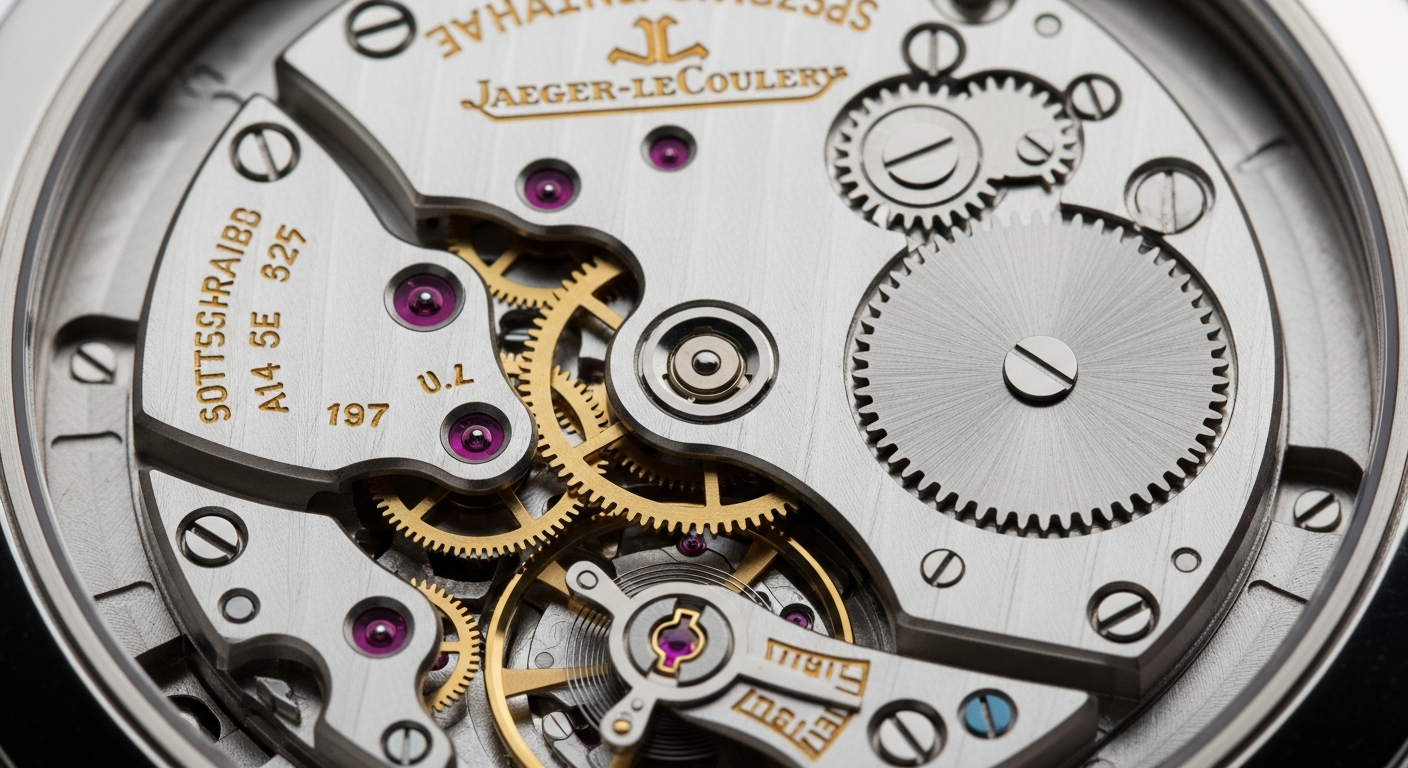
Look closely and you’ll see that Jaeger-LeCoultre’s quiet rule is also a kind of guardianship. The mechanical wristwatch is no longer a necessity, which makes it vulnerable to becoming pure costume. When everything becomes costume, design decisions can become cynical. A brand like JLC helps keep the category honest. It reminds the industry that craft still matters, that mechanical solutions can be elegant rather than theatrical, that durability and serviceability are part of luxury, not a distraction from it. It anchors the conversation in fundamentals, and in doing so it elevates everyone around it.
There’s also something reassuring about a company that doesn’t seem to be chasing an identity. Jaeger-LeCoultre already has one, forged over generations of solving problems in metal and spring steel, refined through countless iterations of calibers that most people will never see. When you buy into that, you’re not buying into a trend cycle; you’re buying into a lineage. The watch becomes not just an accessory, but a small, wearable argument for patience. It ticks in a world that scrolls.
And perhaps that is the ultimate reason the “watchmaker’s watchmaker” still rules quietly. Jaeger-LeCoultre doesn’t need to win the loud competitions because it’s playing a longer game. It wins in the way a well-made tool wins: by working, by lasting, by being capable of more than it needs to prove. It wins when a watchmaker opens the case decades from now and finds thoughtful construction instead of shortcuts. It wins when a collector realizes, after the honeymoon of louder watches fades, that the piece they keep reaching for is the one that feels balanced, intimate, deeply considered. It wins when design, mechanics, and restraint meet in the same object and none of them fights for attention.
In the end, Jaeger-LeCoultre’s quiet rule is not a mystery. It’s the result of a brand acting like what it is: a manufacture that believes the inside matters as much as the outside, that sees complication not as spectacle but as discipline, and that treats elegance as something earned. In an industry increasingly fluent in noise, Jaeger-LeCoultre remains fluent in craft. The people who know, know. And the rest, eventually, tend to find out—often not through advertisements or algorithms, but through a moment of stillness, when a watch on a wrist makes them look twice, then lean in. That is how quiet authority works. It doesn’t chase you. It waits for you to notice it was there all along.