IWC Schaffhausen: Engineering-Driven Luxury for the Modern Gentleman
There are watch boutiques that feel like jewel boxes, all velvet hush and chandelier light, where timepieces sit like rare birds in glass cages. And then there is IWC Schaffhausen, a name that seems to carry its own atmosphere: steel and river air, drafting tables and bridge pylons, the clean insistence of geometry. Even when you encounter the watches far from Switzerland—under the bright, indifferent lighting of an airport duty-free, or on the wrist of someone who doesn’t feel the need to explain his choices—they retain a certain disciplined calm. They don’t look like they’re auditioning for attention. They look like they were built to be used.
That’s the enduring spell of IWC, and it’s also the best way to begin understanding it. The brand’s luxury doesn’t start with ornament. It starts with intent. It starts with the idea that elegance can be engineered, not simply decorated—that refinement can be a matter of tolerances, legibility, and balance rather than sparkle. You can sense it in the way an IWC case sits with quiet certainty against the wrist, in the way numerals align as if snapped into place, in that particular kind of confidence that doesn’t need to raise its voice.
Schaffhausen itself matters to the story, because it is not the stereotypical watchmaking postcard of the Vallée de Joux. It sits in the German-speaking north, near the Rhine, a place shaped by waterpower and industry as much as by alpine romance. The company’s founding myth has the clean lines of a blueprint: an American engineer, Florentine Ariosto Jones, arrives in Switzerland in 1868 with a vision of marrying Swiss craftsmanship to modern manufacturing. That sentence alone—Swiss craftsmanship plus modern methods—still feels like the DNA of IWC today. It’s the reason the brand has always seemed slightly more comfortable with the language of mechanics than with the vocabulary of pure luxury.
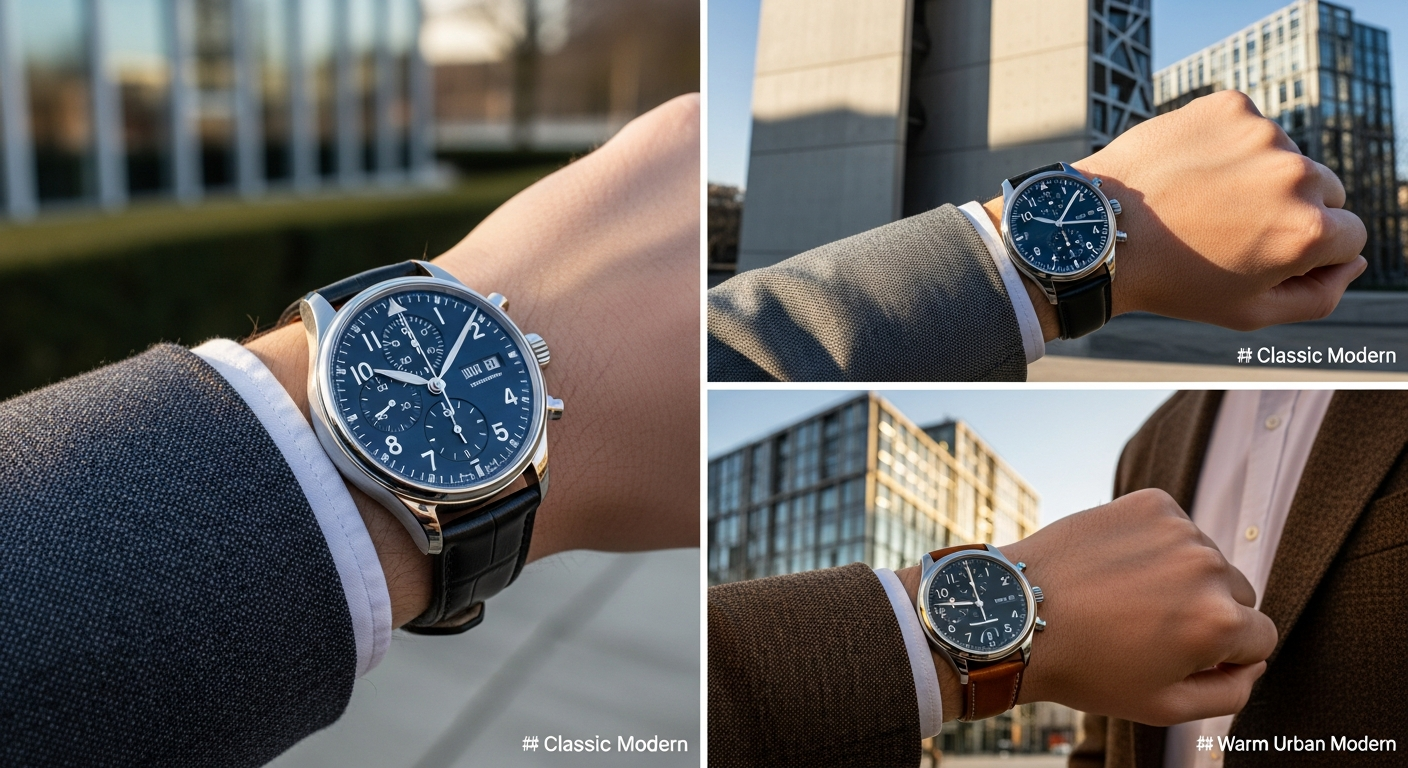
If you listen closely, IWC has always spoken in the dialect of the modern gentleman: the man who appreciates beautiful objects, yes, but who also wants them to do something. The gentleman who travels, works, builds, negotiates, and moves through the world with a sense of purpose. He may enjoy tradition, but he doesn’t live inside it. He wants a watch that can handle a day that refuses to be predictable. A watch that can be worn with a blazer, a sweater, a leather jacket, or a white shirt with rolled sleeves. A watch that feels like an instrument without sacrificing poise.
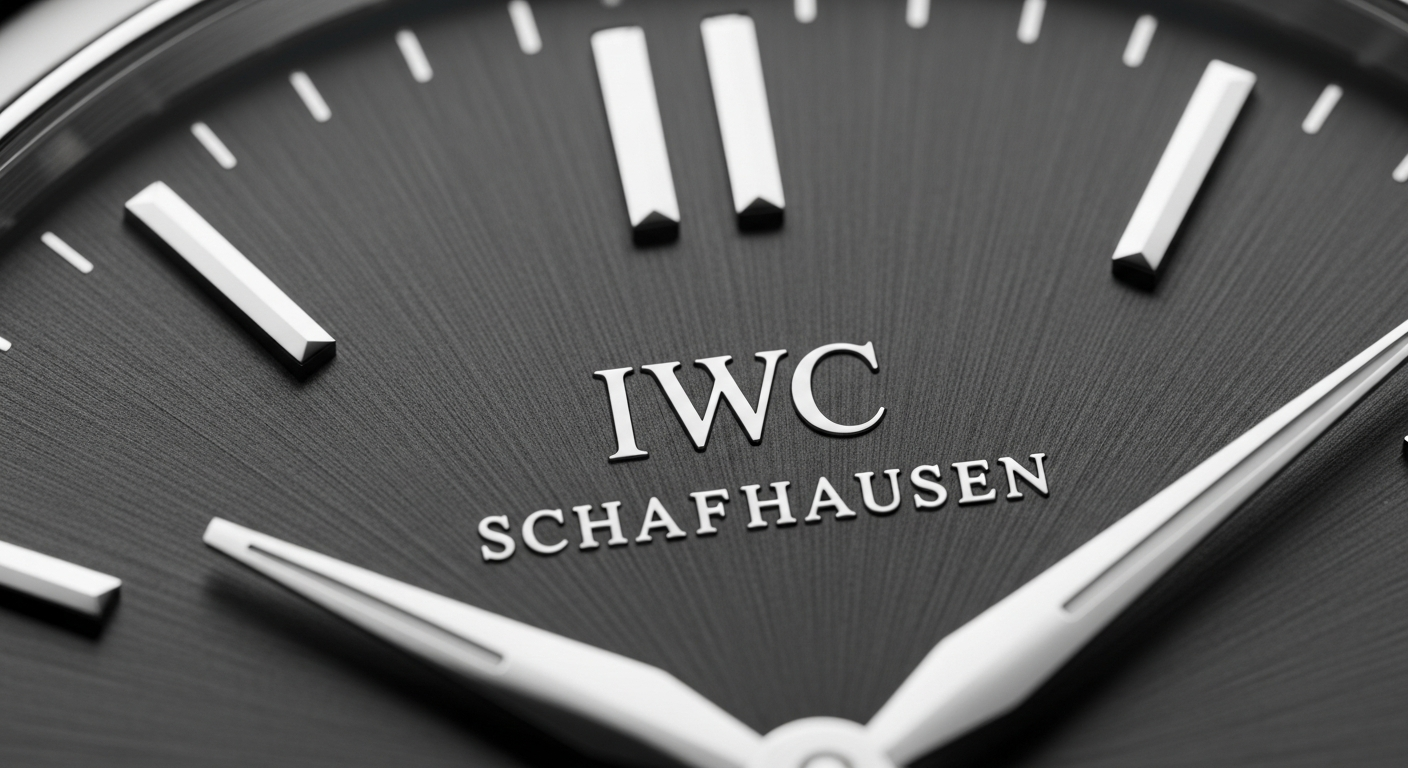
It’s easy to forget, in an age where everything is branded and curated, that the wristwatch was once primarily a tool. That is where IWC has always seemed most at home: building instruments that happen to be exquisitely finished, rather than jewels that happen to tell time. The idea comes into focus when you think about the way the brand approaches legibility. The dials often read like cockpit dashboards or ship chronometers—clear, proportionate, and designed to be understood at a glance. There’s an underlying respect for the user, as if to say: you have a life to live; the watch will not complicate it.
Consider the Pilot’s Watches, perhaps the most recognizable expression of IWC’s engineering-first philosophy. Their cultural footprint is so strong that even people who can’t name the reference can often describe the look: the crisp Arabic numerals, the triangle at 12, the assertive crown, the unapologetic clarity. Many brands borrow aviation cues. IWC tends to treat them as a duty, not a costume. The Pilot’s watches are less about pretending you have a hangar and more about honoring the logic of a tool designed for a cockpit—where glare, vibration, and urgency make nonsense of delicate flourish.
And yet, they’re not sterile. That’s the trick. They carry romance precisely because they refuse to perform it. A Big Pilot on the wrist has presence, but the presence feels earned, like a well-made boot or an old field jacket that has seen weather. The chronographs, too, have that balanced busyness that makes them feel like you could time something practical without feeling like you’re wearing a spreadsheet. Even when the finishing is meticulous—and it is—there’s an honesty in the design language that keeps it grounded.
From the skies, it’s a short narrative leap to the sea, and IWC’s Aquatimer line suggests another part of the brand’s psyche: the willingness to build something robust in a world that often prefers fragile spectacle. Dive watches are among the most competitive categories in the industry, crowded with heritage claims and lifestyle marketing. IWC’s approach tends to be characteristically pragmatic. The forms are bold, the functionality is front and center, and the watches wear as if they’re prepared for real saltwater, not just a poolside photo. Even the ingenuity of certain bezel systems, with their tactile assurance, feels like a nod to engineers who would rather solve problems than tell stories about solving them.
But perhaps the most telling expression of IWC’s modern-gentleman sensibility is the Portugieser. It has the kind of quiet gravitas that makes it feel at home in the company of tailored clothing, but it also carries a fascinating origin: oversized wristwatches built with pocket-watch movements to meet demands for precision and legibility. That origin matters because it reflects IWC’s habit of making design decisions for functional reasons and only later letting the aesthetic become iconic. The Portugieser is elegant, certainly, but it’s not delicate. Its open dial, long feuille hands, and measured spacing create a sense of calm order. It doesn’t sparkle; it breathes.
Wearing a Portugieser feels like stepping into a room and turning the volume down. Not because it’s shy, but because it has nothing to prove. That’s a recurring IWC theme: confidence through restraint. The modern gentleman, after all, is often navigating enough noise—notifications, meetings, travel delays, the relentless performance of being “on.” A watch that offers visual clarity and composure can feel like a private antidote.
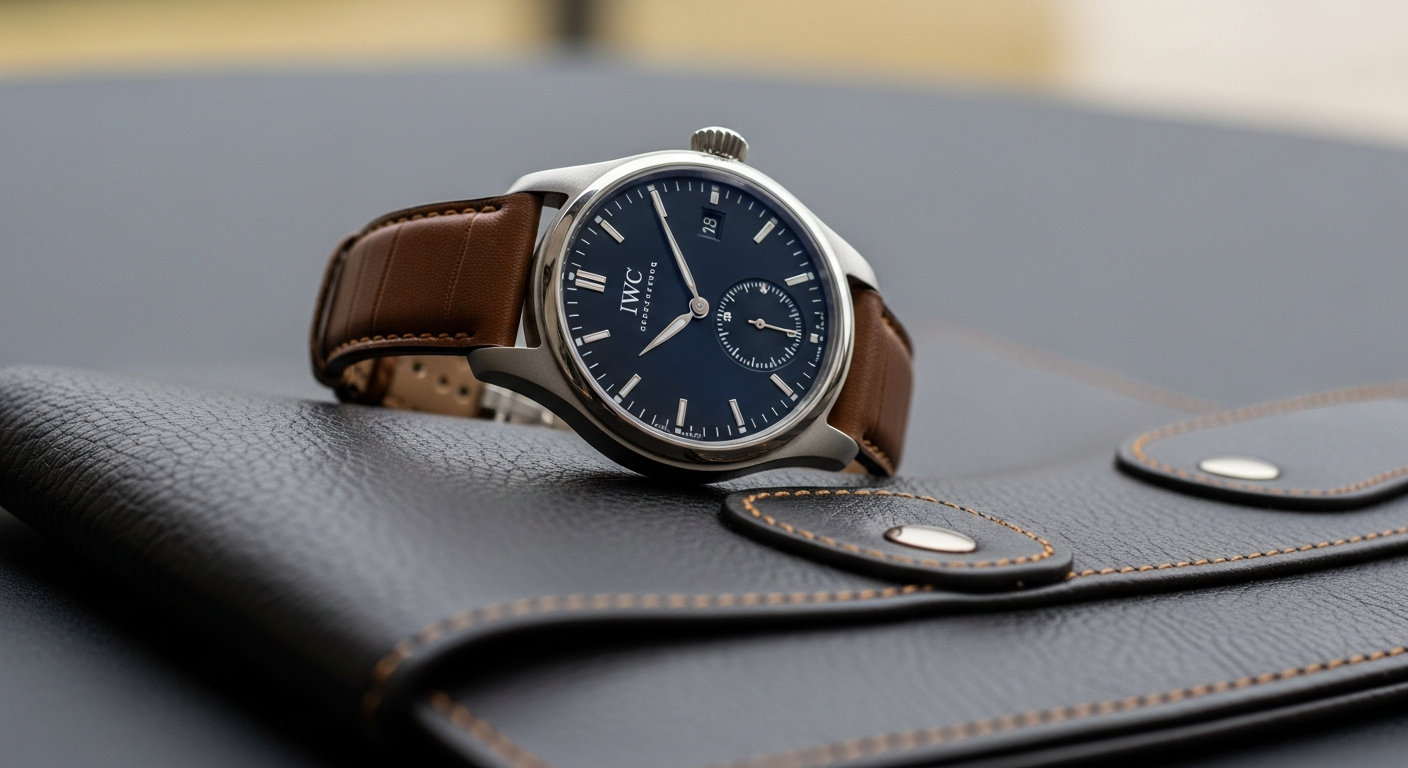
Then there is the Ingenieur, whose very name—engineer—reads like a mission statement. In a market that often romanticizes handcraft while hiding the industrial reality that makes precision possible, IWC has long been willing to embrace the aesthetics of engineering. The Ingenieur line historically addressed practical concerns like magnetic fields, and over time became a canvas for a certain kind of modernist masculinity: integrated forms, purposeful lines, and a subtly technical stance. It’s the kind of watch you imagine on someone who appreciates architecture, who likes a pen that closes with a click that sounds exact, who notices when things are made well.
And if the Ingenieur is IWC’s bridge to the world of industrial design, the Portofino is its reminder that engineering doesn’t exclude softness. It’s a collection that leans into simplicity and classic proportions, offering a more overtly dress-oriented tone without slipping into excess. In the Portofino, you see the brand’s discipline expressed as understatement: clean dials, gentle curves, and an almost meditative refusal to overcomplicate. It’s not a watch that demands a gala; it’s a watch that elevates the everyday dinner, the meeting, the quiet celebration.
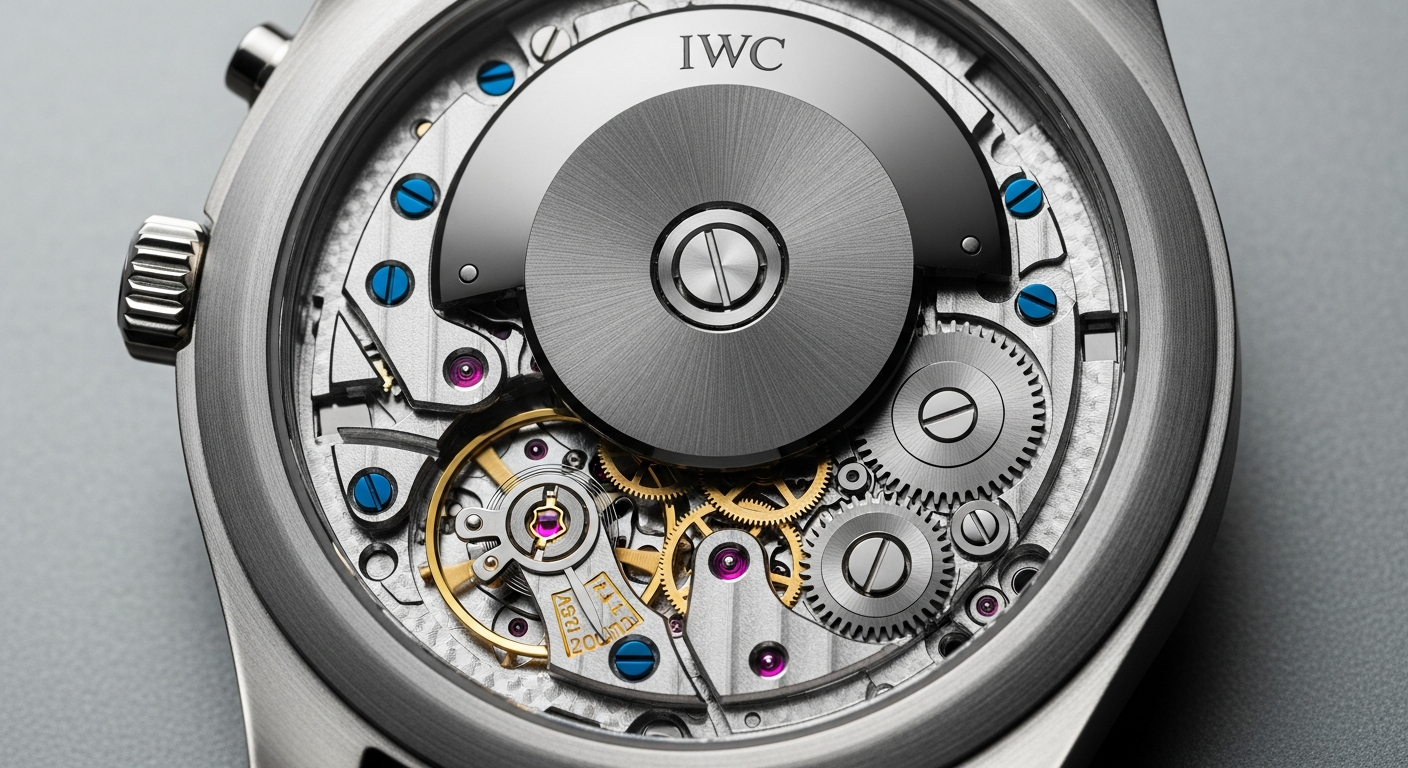
IWC’s engineering-driven luxury is also felt in what you don’t immediately see, the way a door feels solid when it closes properly. Case construction, water resistance, crown action, pushers that respond with the right amount of firmness—these are sensual experiences, but not the scented-candle variety. They are the pleasures of good machinery. A chronograph pusher that engages with crisp certainty is its own form of poetry, an acknowledgment that the hand deserves honesty. In a culture that increasingly delivers everything through glass screens, the tactile truth of a mechanical watch can feel like a private rebellion.
The modern gentleman, in this sense, is not defined by old-world rules so much as by a contemporary commitment to quality. He may not wear a tie every day. He might work across time zones. He might spend as much time in transit lounges as in boardrooms. His sense of style is often less about formality and more about coherence: everything he owns should make sense together. IWC fits that ethos because its watches tend to be stylistically fluent. They can live in multiple contexts without feeling like they’re changing costumes. A Pilot’s Chronograph can follow you from a morning flight to an afternoon meeting to an evening out, and it won’t look out of place anywhere. That versatility is a kind of luxury on its own.
There’s also the question of complication—what a watch can do beyond telling time—and IWC has always treated complications with a certain sobriety. When the brand makes perpetual calendars, for instance, they often feel like engineering achievements disguised as wearable objects. The information is there, but it’s organized. The complexity is managed, disciplined, made legible. That’s a hallmark of good engineering: not merely adding features, but integrating them so they serve the user rather than overwhelm him.
It’s worth noting that IWC’s relationship with luxury has never been about shouting. In an era where some watches announce themselves with aggressive shine and oversized logos, IWC tends to communicate status more quietly, through recognition by those who know. That doesn’t mean the watches are anonymous. Many are instantly identifiable to enthusiasts. But their identity is coded in proportions and details rather than in spectacle. The modern gentleman often prefers that. He wants something that signals taste, not volume.
This is where the storytelling of IWC becomes interesting. The brand has plenty of narrative material—aviation, ocean, engineering, cinema, even the occasional limited-edition collaboration—but the watches themselves rarely feel like merchandise built to serve a story. Instead, the stories feel like reflections of the watches’ underlying character. The essential idea remains stable: precision made wearable, durability made handsome, function made elegant.
And then, of course, there is the matter of time itself. A mechanical watch is an irrational object in the best way. It doesn’t need to exist; your phone is more accurate, more connected, more convenient. Yet here you are, drawn to a machine that measures time with springs, gears, and the disciplined oscillation of a balance wheel. That attraction often has less to do with utility and more to do with values. Wearing a mechanical watch can be a way of choosing patience in a culture of instant updates, choosing permanence in a world of disposable upgrades.
IWC’s particular contribution is to make that choice feel modern rather than nostalgic. Some brands lean heavily on heritage, inviting you to cosplay another century. IWC, even when it honors its past, tends to keep one foot planted in the present. The watches feel compatible with contemporary life. They don’t demand that you become someone else to wear them. They simply ask that you appreciate the intelligence of their construction.
If you imagine the modern gentleman standing at his closet in the morning, he isn’t searching for a symbol; he’s selecting a companion. He’s choosing what will be with him when he shakes hands, when he writes, when he reaches for a passport, when he adjusts his cuff, when he checks the time before walking into a room. In those moments, the watch becomes less an accessory and more an extension of his personal standards. It should be reliable. It should be comfortable. It should make sense. It should look good without trying too hard.
IWC watches often succeed because they embody a kind of masculine elegance that has room for humility. They are strong without being loud, refined without being precious. They suggest that luxury can be practical, and that practicality can be beautiful. They remind you that engineering is not cold; it is a form of care. Someone thought about how the light would hit the dial, how the hand would read against it, how the case would resist wear, how the movement would hold up over years of real use. Someone made decisions not just to impress, but to endure.
Perhaps that’s why IWC feels so relevant now. The modern gentleman is not simply a man of means; he is a man of intent. He curates less for display and more for alignment. He wants objects that reflect competence, restraint, and a preference for substance. In a world where luxury is often confused with attention, IWC offers a different proposition: luxury as quiet capability.
And so the image that lingers isn’t of a watch lying in a box, untouched. It’s of a watch on a wrist as life happens—on a train platform, at a desk, in a hotel lobby, under the sleeve of a coat, catching just enough light to reveal thoughtful contours. The seconds hand moves with steady purpose, indifferent to hype, faithful to the physics that make it possible. It doesn’t promise to stop time. It simply honors it.
That, in the end, is the particular romance of IWC Schaffhausen: it treats time not as a stage for flamboyance, but as something worth measuring well. It offers the modern gentleman an object that is both a statement and a tool, both a piece of art and a piece of engineering, both tradition and forward motion. And when you wear one, you don’t feel like you’re decorating yourself. You feel like you’re equipped.