Grand Seiko: The Japanese Pursuit of Mechanical Perfection
In the early hours of a winter morning in Nagano, when the mountains are still deciding whether to reveal themselves or remain a silhouette, a watchmaker sits beneath a lamp that makes a small sun over the bench. Outside, snow presses softly against the windows. Inside, the air is dry and quiet, as if noise itself would be an act of disrespect. The watchmaker’s hands move with a patience that seems older than the room, older than the tools, older even than the idea that time must be conquered. A balance wheel, no bigger than a coin, waits to be persuaded into perfect, repeatable motion. Each touch is deliberate, but not tense. There is no flourish here, no theatrical wink at the camera. The work is intimate, closer to calligraphy than construction, and it begins with an assumption that will guide everything that follows: perfection is not a finish line. It is a practice.
Grand Seiko has always felt like that room—quiet, bright, exacting—built around the conviction that mechanical timekeeping can still be worthy of reverence in an age that measures time with satellites and solves problems with swipe gestures. If Swiss watchmaking often tells its story through aristocratic lineage and the romance of old Europe, Grand Seiko tells it through weather and craft, through the way light falls on steel, through the discipline of doing one thing correctly and then doing it again, better, for the rest of your life.
The brand was born in 1960, in a Japan still stitching itself back together, with a simple but audacious aim: to create the best watch possible. Not the best Japanese watch, not the best watch for the price, not the best watch under certain conditions. Just the best. That kind of ambition can sound like marketing until you understand the cultural soil it grows in. There is a Japanese word, monozukuri, that gets translated as “making things,” but it means more than manufacturing. It’s about devotion to process, respect for materials, and the idea that the spirit of the maker lives in the object. In that sense, a Grand Seiko is less a product and more a record of decisions made carefully, over and over, by people who refuse to be casual about their work.
To talk about Grand Seiko is to talk about time, but it is also to talk about surface. The first time many people truly see a Grand Seiko, the reaction has less to do with complications and more to do with how the case catches light. The steel doesn’t look simply polished; it looks clarified, like the difference between water and distilled water. This is Zaratsu polishing, a technique borrowed from traditional methods and refined into something almost surgical. The goal is distortion-free planes—broad, flat expanses that reflect like a mirror without warping the world. That sounds like a detail until you hold the watch and watch the edge of a lug slice a clean line between brightness and shadow. Suddenly the watch isn’t just telling time; it’s teaching you to look.
And then there are the dials, which are where Grand Seiko’s storytelling becomes overt without ever becoming loud. Swiss dials often announce themselves with gloss, lacquer, enamel, guilloché—ornament that signals luxury. Grand Seiko, instead, tends to look outward. A dial is not merely a background; it is a landscape. The Snowflake dial, famous now almost to the point of cliché, is still astonishing in person because it doesn’t sparkle so much as it breathes. It’s textured like freshly fallen snow, not the kind you see in movies but the kind you step into and hear compress under your boot. The Shunbun dial carries the blush of spring. The White Birch feels like bark caught in bright sun. These are not metaphors stapled onto a product after the fact. They are a design language rooted in the place the watches come from, in the seasonal obsession that runs through Japanese culture like a quiet current.
For all the attention paid to surfaces, Grand Seiko’s deeper seduction happens beneath them, in the hidden choreography of gears and springs. Mechanical watches are, in essence, arguments against inevitability. Everything that moves wants to stop. Friction is always collecting its tax. Gravity is always pulling. Metal expands and contracts with temperature, lubricants age, impacts happen, human habits are inconsistent. A quartz watch sidesteps many of these problems by translating time into pulses. A mechanical watch accepts the problems and tries to solve them with geometry, materials science, and a kind of stubborn grace.
Grand Seiko’s trajectory through the twentieth century is inseparable from Japan’s relationship with precision itself. In the 1960s and 1970s, the international watch world was locked in a race for accuracy, and Grand Seiko entered it with a seriousness that bordered on defiance. Their watches were tested to strict standards, adjusted with care, and built to compete with the best chronometers anywhere. Then quartz arrived like a wave that didn’t ask permission. It changed the economics of timekeeping, rewrote expectations, and forced every traditional watchmaker to decide what, exactly, they were selling. Grand Seiko’s answer was not to retreat into nostalgia, but to keep refining the idea that there is value in a machine made to be beautiful and precise even when beauty and precision are no longer necessary.
That answer took an unexpected turn in 1999, when Grand Seiko introduced Spring Drive. It is one of the most quietly radical innovations in modern horology, and it is deeply Grand Seiko in its refusal to fit neatly into established categories. Spring Drive starts like a mechanical watch, with a mainspring storing energy. But instead of using a conventional escapement—the tick-tock mechanism that parcels out time—it uses a glide wheel regulated by a quartz reference and an electromagnetic brake. The seconds hand doesn’t tick; it glides in a continuous sweep that looks like time flowing rather than time being chopped into pieces.
Purists argued, of course. Some still do. Is it truly mechanical if it references quartz? But that debate misses the point. Spring Drive isn’t trying to win a philosophical argument. It’s trying to solve a problem: how to combine the romance of stored mechanical energy with accuracy that approaches the modern ideal, and to do so in a way that feels serene rather than clinical. It’s engineering as aesthetics. The smooth seconds hand is not a gimmick; it’s the visible evidence of an invisible decision to pursue a different kind of perfection.
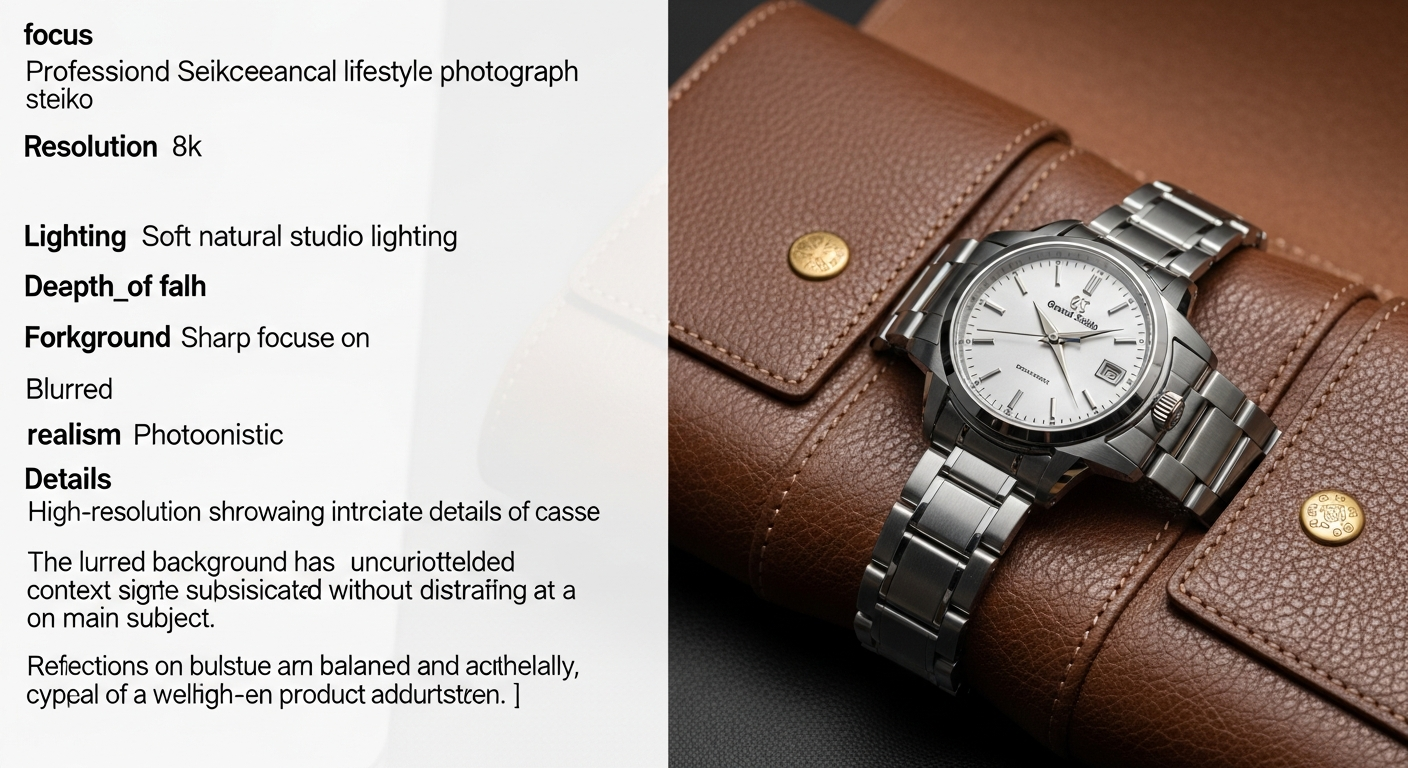
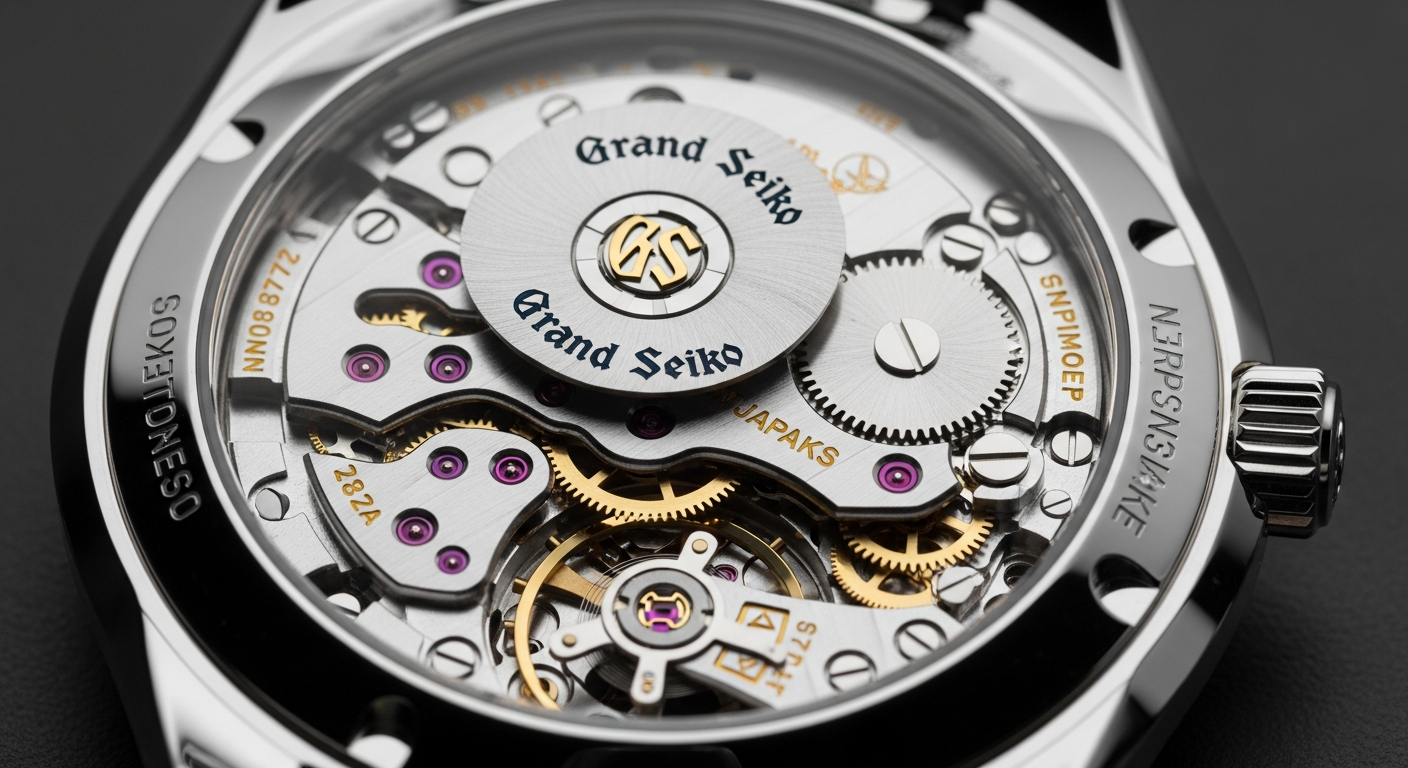
Yet Grand Seiko’s pursuit of mechanical perfection does not end at Spring Drive. In the more traditional mechanical realm, their movements have grown increasingly sophisticated, and their standards increasingly strict. The Hi-Beat calibers, beating at 36,000 vibrations per hour, chase stability through speed, smoothing out minor disturbances by sheer frequency. Achieving that without sacrificing power reserve or durability requires careful materials, lubrication, and tolerances tight enough to make you wonder how any human hand can assemble and regulate them. And still, human hands do assemble and regulate them. That is the paradox at the heart of fine watchmaking: the most advanced objects are often dependent on touch, on experience, on judgment that cannot be fully automated.
This is where the story returns to place, because Grand Seiko is not one workshop but a conversation between them. There is the Shizukuishi Watch Studio in Iwate, associated with many mechanical movements, where the air is clean and the outlook is green, and time feels like it moves at the speed of craft. There is the Shinshu Watch Studio in Nagano, home to Spring Drive, where the seasons are dramatic and the mountains feel close enough to touch. Each studio carries its own rhythms, its own specialties, and together they form a kind of internal dialectic: tradition and invention, tick and glide, heritage and horizon.
To wear a Grand Seiko is to participate in this conversation, whether you know it or not. The wearer becomes a final, moving part of the system—a human environment with body heat, motion, routine, and occasional carelessness. A mechanical watch is a companion that reacts to you. It gains and loses seconds depending on how you live. It must be wound or worn. It needs service. It will outlast trends but not neglect. Grand Seiko seems to embrace this relationship with an unusual sincerity. There is no pretense that the object exists above the human world. Instead, it is built to be used, to be looked at in shifting light, to endure daily life while quietly insisting that daily life can contain excellence.
There is something distinctly Japanese in that insistence, too: the idea that utility and beauty are not enemies. The hands are razor sharp not purely for style, but for legibility. The indices are faceted to catch light, not merely to impress but to be read instantly. The cases are carefully shaped to sit comfortably, to balance presence with restraint. Even when Grand Seiko makes a watch that is unmistakably bold—an angular case, a dial like hammered metal, a bracelet that flashes—it still carries itself with a certain discipline. It is luxury without swagger.
And then, inevitably, the discussion turns to value, because modern watch culture is rarely free from it. Grand Seiko exists in a marketplace where narratives are traded almost as eagerly as objects, where scarcity can be manufactured and perception can be priced. Yet Grand Seiko’s appeal has often been that it feels anchored in something less negotiable: the work. Pick up a Grand Seiko and you sense the hours embedded in it—not just the hours the watch will measure, but the hours spent finishing, adjusting, inspecting. That doesn’t make it immune to branding, of course. Nothing is. But it does make the proposition feel unusually honest, as if the watch is willing to be judged by what it is rather than what it represents.
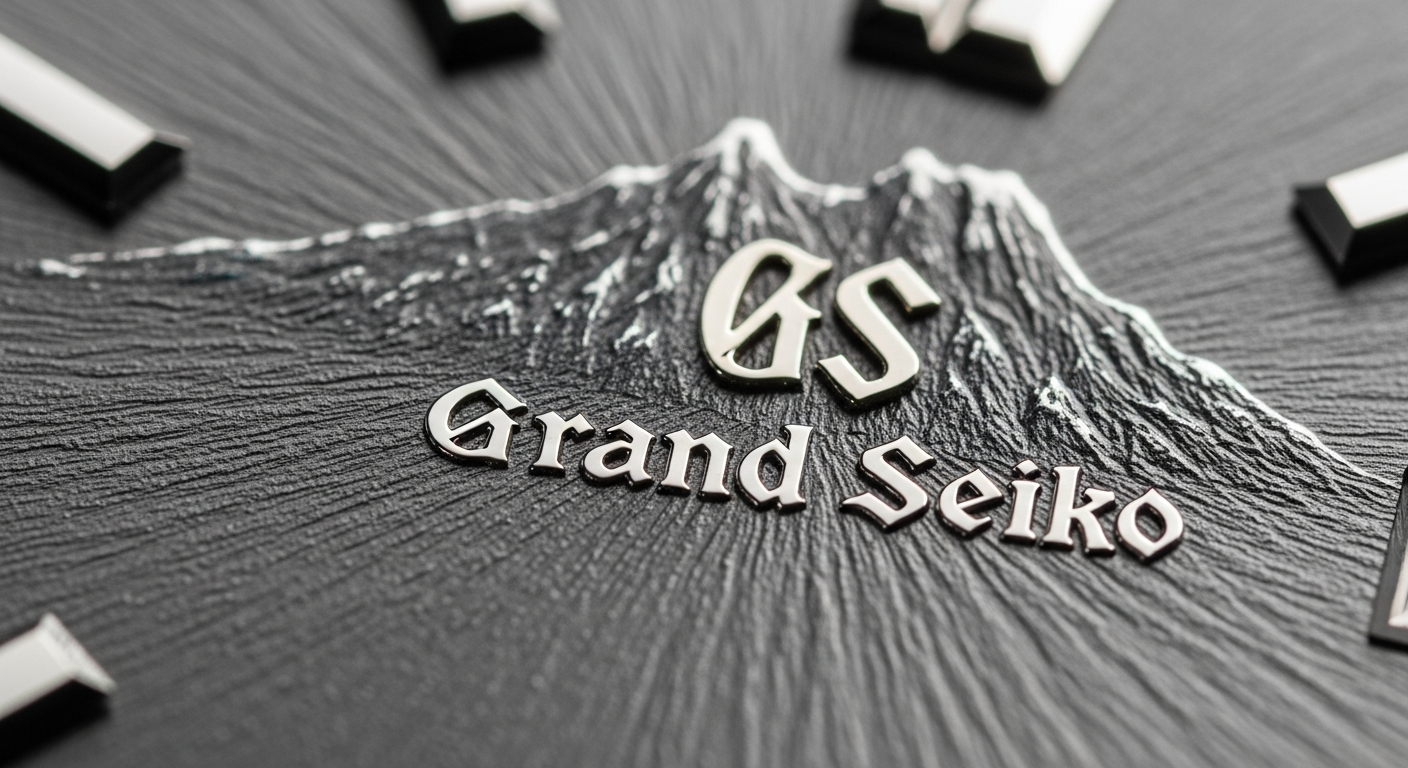
There is also the quiet subversion Grand Seiko offers to the Western idea of what a “perfect” watch should look like. Swiss perfection often leans toward the ornate or the historic: Geneva stripes, elaborate complications, flourishes that speak to lineage. Grand Seiko’s perfection is often emptier, cleaner, more contemplative. The dial might be almost plain until you notice it isn’t plain at all; it’s textured like wind over water. The case might be simple until you see the exactness of its edges. The movement finishing might be subtler, but it has its own vocabulary—broad stripes, crisp bevels, a kind of controlled elegance that doesn’t need to shout.
Perfection, in this Japanese framing, is not a crown to wear. It’s a room to enter. It asks you to slow down enough to notice it. And once you do, it changes your standards in ways that are hard to reverse. You start to see how other watches distort reflections along their polished surfaces. You start noticing how hands disappear into dials at certain angles. You begin to care about the way a crown feels as it threads in, the way a clasp closes, the way the seconds hand lands—whether it hits the markers cleanly, whether it stutters, whether it glides. Grand Seiko makes you more demanding, but not in a cynical way. In a grateful way.
Of course, no brand is perfect, and Grand Seiko’s story contains tensions. There are collectors who wish the bracelets were more refined, the clasps more adjustable, the case sizes more consistent. There are debates about pricing, about availability, about whether the brand’s rapid rise in global attention risks diluting the quiet character that made it special. These critiques matter because they come from people paying close attention. Grand Seiko invites that attention, almost challenges it. When you position yourself as a maker in pursuit of mechanical perfection, you accept that your audience will inspect your work the way your watchmakers do—under a bright lamp, with a magnifier, in silence.
Still, when you return to the core of what Grand Seiko has accomplished, the arc is hard not to admire. They have built a modern luxury identity without leaning too heavily on borrowed myths. They have made innovation feel poetic rather than disruptive. Spring Drive, especially, stands as a reminder that the future of traditional craft may depend on refusing false binaries: mechanical versus quartz, tradition versus technology, art versus engineering. Grand Seiko suggests that these boundaries are negotiable, and that the most interesting work happens in the overlap.
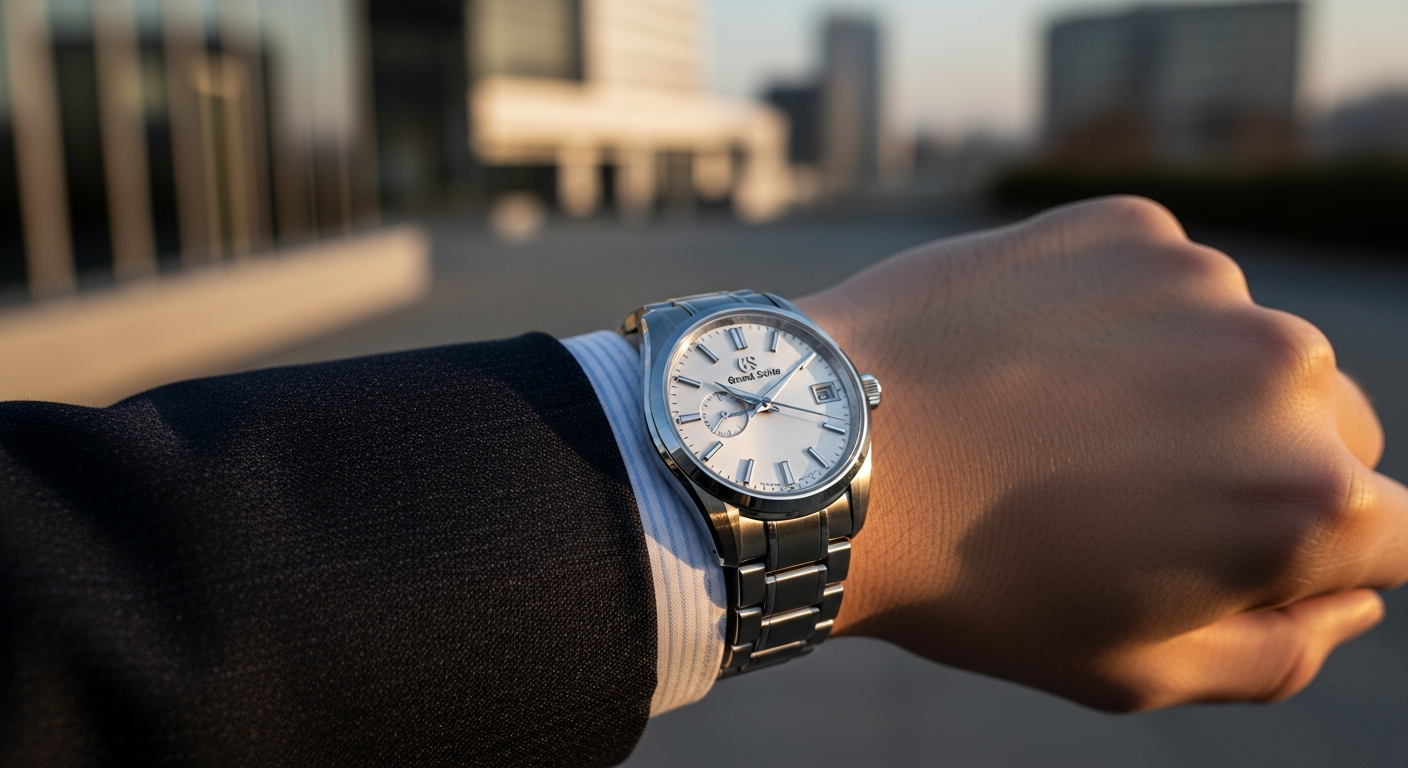
There is a moment that happens sometimes when you’re wearing a Grand Seiko in ordinary life—waiting at a crosswalk, holding a coffee, sitting in a train as afternoon light shifts across your wrist—and you catch the dial at just the right angle. The hands flash, the indices light up, the texture reveals itself like a secret, and for a second you feel as if you are seeing time rather than reading it. Not time as urgency, not time as deadline, but time as atmosphere. In that moment, the watch doesn’t make you feel powerful. It makes you feel present.
That, perhaps, is the most Japanese aspect of Grand Seiko’s pursuit of mechanical perfection: it is not ultimately about domination. It’s about alignment. A watch that keeps excellent time is impressive, yes, but a watch that makes you notice time—its flow, its light, its seasons—is something rarer. It’s the difference between a tool and a companion, between precision as a statistic and precision as a way of paying attention.
Back in that quiet room in Nagano, the watchmaker finishes an adjustment and listens—not with ears, exactly, but with a practiced sensitivity to what a mechanism is saying through resistance, through motion, through the feel of it. The balance wheel swings, the spring breathes, the gears turn, and the watch begins again its long, patient argument against stopping. Outside, snow continues to fall, indifferent to human ambitions. Inside, a small machine insists, with every smooth sweep or measured beat, that indifference can be met with craft. Not loudly. Not quickly. But faithfully, one second at a time.