Glashütte Original: German Haute Horlogerie’s Quiet Powerhouse—Why Saxon Craft Now Rivals Switzerland
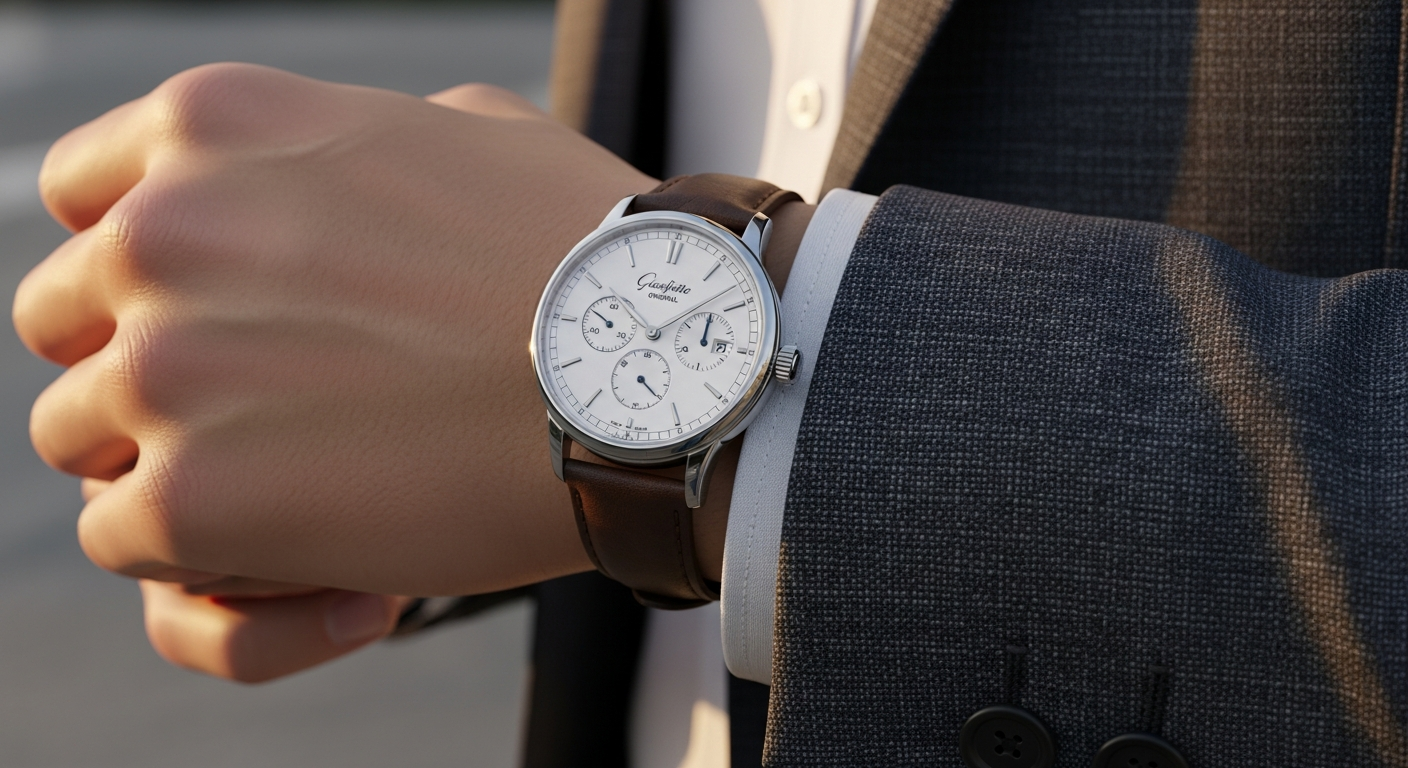
In a market where heritage is often performed louder than it’s practiced, Glashütte Original wins by speaking softly and machining precisely. From the three-quarter plate tradition of Saxony to in-house movements engineered for long-term serviceability, the brand offers a rarer kind of luxury—one that rewards close inspection, not social validation—and that’s exactly why collectors are reappraising what modern German haute horlogerie can be when it’s backed by true manufacturing depth rather than marketing mythology alone.
To understand Glashütte Original’s position in 2026, it helps to discard the lazy framing of “German alternative to Swiss.” The brand is better understood as a fully realized manufacture with its own engineering codes, its own finishing grammar, and an unusually coherent product strategy. Swiss prestige is often built on recognizable signatures and social consensus; Glashütte Original is built on repeatable craft and industrial competence used in service of traditional mechanics. The result is not anti-luxury. It is insider luxury: a proposition that assumes the owner is fluent, patient, and more interested in what sits under the dial and behind the caseback than what the logo signals across a room.
Saxon DNA, Not Swiss Imitation: Engineering-First Watchmaking with a Distinct Visual Code
Glashütte watchmaking has never been a stylistic cosplay of Geneva. Its foundations are practical and structural: the three-quarter plate that stabilizes the gear train, the tradition of clearly laid-out architecture, and a preference for restrained elegance that reads as deliberate rather than minimal. Glashütte Original keeps that DNA intact, but it refines it for modern expectations—better tolerances, stronger consistency, and a clearer product-language that spans classic, contemporary, and sport without losing the underlying “Saxon” feel.
The three-quarter plate is the most visible and the most misunderstood element of this identity. It is sometimes reduced to a decorative trope, but its origin is mechanical: rigidity, stable alignment, and controlled assembly. In modern Glashütte Original calibres, that philosophy is expressed through clean bridges, purposeful geometry, and finishing that sits comfortably between artisanal and industrial. It is not the maximalist, high-contrast theater of some Swiss independents. Instead it’s a disciplined finishing approach: the kind that looks better the longer you hold it, because the decisions appear rational rather than decorative.
Then there is the brand’s characteristic blend of symmetry and asymmetry. The Pano family in particular has become Glashütte Original’s most recognizable modern signature—off-center time with an outsize date, small seconds, and a layout that feels architectural rather than ornamental. This is not “quirky” design. It is engineered visual tension: enough deviation from the centerline to be unmistakable, but executed with a precision that prevents it from turning into novelty. Collectors who have grown tired of Swiss predictability often find the Pano approach intellectually satisfying: it has rules, and those rules hold across references.
Equally important is what Glashütte Original does not do. It does not chase short-lived dial trends with constant limited editions as a primary strategy, and it does not rely on the loud codes that dominate the Swiss luxury conversation. You can argue that this makes the brand less immediately legible to casual buyers. But that is also its advantage. In a market increasingly inflated by branding gravity, Glashütte Original presents something closer to engineering dignity—watches that are calm on the wrist and compelling in the hand.
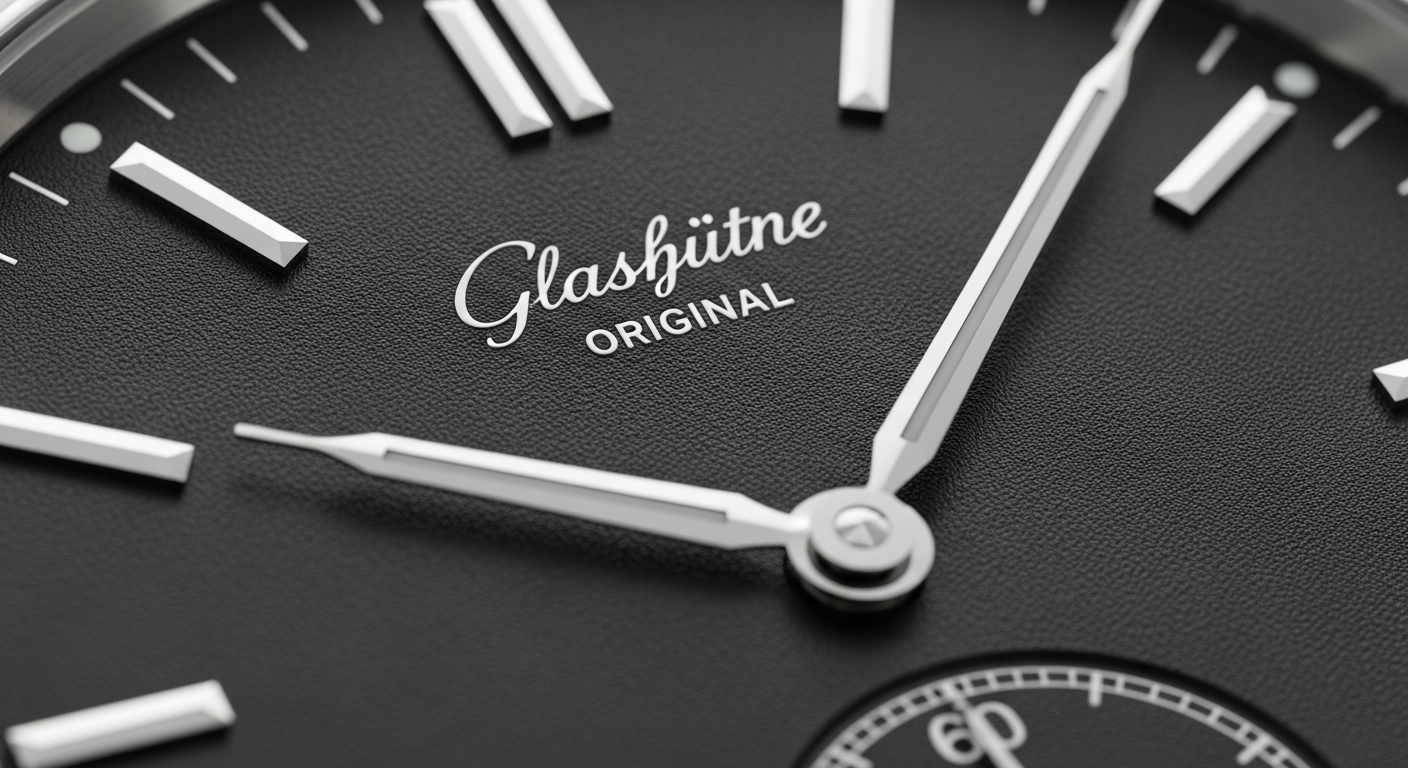
Movement finishing is where the Saxon difference becomes tangible. Features such as ribbing on plates, perlage on base surfaces, blued screws, and an engraved balance cock are not merely a checklist; they are presented with a particular restraint. The brand’s finishing tends to emphasize clarity of construction over spectacle. This matters strategically because it aligns with a collector’s long-term satisfaction. Many buyers learn, after accumulating watches, that the pieces they keep are the ones that remain interesting when the novelty passes and the internet moves on.
Even the brand’s most “classic” offerings avoid generic dress-watch anonymity. The Senator line, for example, leans into legibility and proportion rather than retro pastiche. The result is a portfolio that feels rooted, not referential. Glashütte Original is not trying to be Switzerland with a German accent; it is building the case that German haute horlogerie can be its own apex category—one that honors tradition, but is fundamentally engineered for continuity.
Manufacture Credibility in 2026: Vertical Integration, In-House Calibres, and Why the Dial Matters
Collectors throw around the word “manufacture” too casually. In 2026 it has become a loaded term: sometimes meaningful, often diluted. Glashütte Original’s advantage is that its manufacturing depth is not rhetorical—it is an operating reality tied to movement development, component production, and a broader ecosystem that includes dial-making capabilities that many Swiss brands still outsource or treat as a separate world.
At the center of Glashütte Original’s credibility is its in-house calibre strategy. The brand has long maintained families of movements rather than one-off mechanical stunts. From a collector’s perspective, that matters more than occasional headline complications. A calibre family implies repeatability, a stable supply of parts, and watchmakers who can service the architecture for decades. It also implies that improvements can be layered over time without abandoning the platform. This is the kind of slow advantage that becomes obvious only after ownership: a watch that remains supportable and sensible long after a model cycle ends.
The engineering choices often reveal that serviceability was not an afterthought. Robust construction, clear component access, and a design intent that balances refinement with real-world maintenance all reinforce the brand’s “quiet powerhouse” identity. Glashütte Original is not building movements only to impress at launch. It is building them to live a long, repairable life—a philosophy that feels increasingly valuable as collectors become skeptical of fragile complexity and proprietary dead ends.
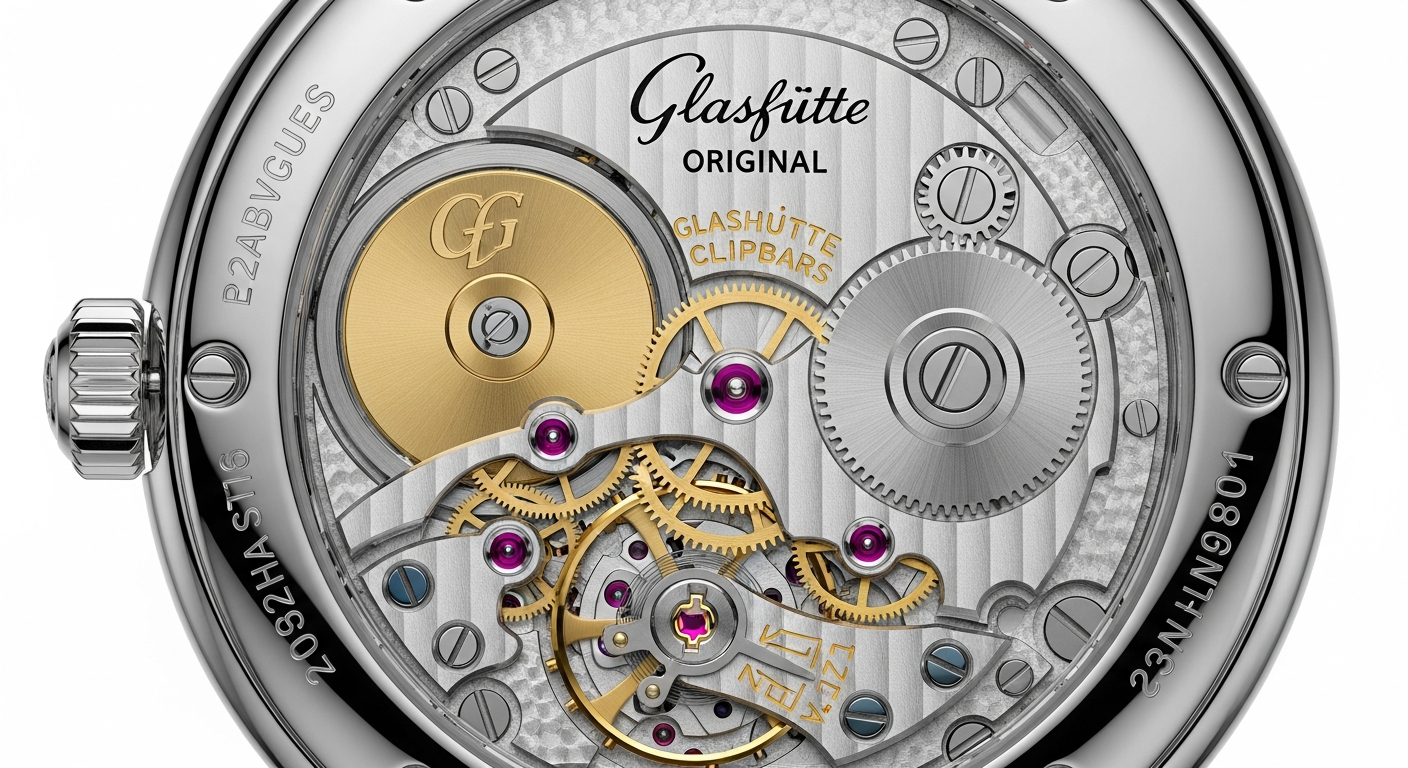
Then there is the dial, the part of the watch that owners actually look at every day. Here, Glashütte Original’s modern credibility is strengthened by its dial-making capabilities in Pforzheim. Strategically, this is a bigger deal than it first appears. In a market where many brands rely on external suppliers for dials—sometimes excellent, sometimes inconsistent—the ability to control dial production and experimentation is a lever for quality and differentiation.
Dial execution is also where the brand’s restraint becomes persuasive rather than bland. Consider the textures, printing, and finishing in its signature lines: the confident use of negative space, the way indices catch light without shouting, and the careful color choices that avoid trend saturation. Glashütte Original’s dials tend to reward repeated viewing, which is a different value system than the “first impression” economy of social media. The brand is not optimizing for the thumbnail; it is optimizing for the wrist.
The outsize date is another example of functional identity done correctly. It is not merely a signature; it is a legibility tool, executed with a crispness that feels engineered rather than decorative. When done poorly, big dates can look like a gimmick or a cut-out. When done well—as Glashütte Original typically does—they become a daily-use complication that aligns with the brand’s pragmatic Saxon roots.
Zoom out and the strategic picture clarifies: vertically integrated movement development plus credible dial-making yields a rare combination—control over the two most important sensory interfaces of the watch. This is why Glashütte Original can play in the same conversation as Switzerland’s historic houses, while not depending on their narratives. The brand earns its place through manufacturing competence, not inherited aura.
Where Glashütte Original Wins for Collectors: Value, Wearability, and a Portfolio That Maps to Real Goals
Glashütte Original’s strongest argument is not that it is “better” than Swiss watchmaking. It is that it is a different kind of high-end proposition—one that maps well to what experienced collectors increasingly want: substance over theater, distinctiveness without gimmickry, and a watch that still feels honest when the hype cycle turns elsewhere.
Start with value, and be precise about what that means. This is not bargain hunting. It is the relationship between price and manufacturing depth, between finishing and long-term ownership confidence. Glashütte Original often presents a compelling ratio: in-house calibres with traditional architecture, consistently strong finishing, and credible dial execution, packaged in designs that do not chase loud status cues. For collectors who already own the Swiss icons—or who have decided they no longer need them—this ratio becomes attractive in a very grown-up way.
Wearability is another quiet advantage. Glashütte Original tends to design cases with practical presence rather than exaggerated theater. Many references sit comfortably under cuffs, balance well on the wrist, and avoid the trap of feeling “too precious” for daily use. This matters because the watches are often at their best when worn regularly. The brand’s design language is calm enough to live with, and its mechanical approach is reassuring enough to justify frequent wear.
The portfolio itself is unusually coherent for a manufacture with genuine depth. It splits into three collector-relevant territories without diluting brand identity. The Pano line is for those who want design intelligence and mechanical beauty in one frame—modern Saxon iconography that stands apart from Swiss symmetry. The Senator line is for collectors who value classical proportion and legibility, but want it backed by real manufacturing substance rather than heritage storytelling alone. And the SeaQ line gives the brand a sport pillar that feels serious, not opportunistic: a capable diver that still carries Glashütte Original’s finishing discipline and design restraint.
That last point matters. Many high-end brands have added sport watches because the market demanded it, not because their design language naturally expanded in that direction. Glashütte Original’s SeaQ succeeds when it remains a Glashütte Original product first, and a diver second. It is not trying to out-Rolex Rolex. It is offering a different sport-luxury experience—more discreet, more engineered, and more aligned with collectors who want quality without membership cues.
There is also a psychological dimension to ownership that the brand understands implicitly. Glashütte Original rewards the owner in private: the tactility of the winding, the satisfying legibility of the date, the calm balance of a dial that doesn’t demand attention, and the movement view that continues to deliver long after the initial purchase. This is why it functions as a connoisseur’s alternative. It is less about being recognized, and more about recognizing what you’re wearing.
In 2026, the reappraisal of modern German haute horlogerie is not a trend; it is a correction. As collectors become more educated and more skeptical, manufacturing depth matters again. Glashütte Original sits in a strong strategic position because it has the capabilities that marketing departments often imitate—real movement architecture, stable calibre families, dial-making credibility, and a finishing philosophy that prioritizes coherence over spectacle. Switzerland still sets many of the industry’s cultural rules, but Glashütte Original is proof that rule-setting is not the only path to greatness. Quiet power, executed in metal, can be just as compelling—and in the long run, often more satisfying.