Girard-Perregaux: The Quiet Powerhouse of Swiss Haute Horlogerie—From Tourbillon Heritage to the Modern Laureato
In a market that rewards the loudest launches and the most instantly recognizable silhouettes, Girard-Perregaux has built something rarer: credibility that compounds. Its story isn’t about chasing trends—it’s about a manufacture that quietly shaped modern Swiss watchmaking, then used that technical backbone to create a design icon in the Laureato, offering collectors an alternative definition of prestige: innovation you can wear every day, and heritage you can verify on the movement bench and in the archives alike. This is the brand’s real advantage—and why it deserves a fresh look now.
The temptation with Girard-Perregaux is to reduce it to a handful of reference points: the Three Bridges tourbillon, the Laureato’s octagonal bezel, a few high-complication showcases that remind the industry the brand can still swing hard. But GP’s real identity sits in the connective tissue between those highlights: an old manufacture mentality focused on solutions, repeatability, and finishing that is meant to be lived with, not merely photographed. That combination—technical legitimacy without constant self-mythologizing—is what makes GP a quiet powerhouse.
Quiet power, measurable impact
“Quiet” in this context doesn’t mean obscure. It means the brand’s strongest arguments are usually mechanical and historical rather than marketing-native. Collectors who respond to evidence—calibre architecture, long-term parts strategy, coherent design evolution, documented milestones—often find Girard-Perregaux easier to respect than to categorize.
The market tends to overpay for instant recognizability. When a brand is a uniform, demand becomes self-reinforcing; when it is a set of technical choices, demand becomes cyclical. GP has lived more in the second reality. That has costs in the short term, but it also creates a particular kind of collector confidence: the sense that the product is built because it should exist, not because it will trend.
GP’s strategic advantage is that its legitimacy is not performative. It is found in old solutions executed with modern consistency, and in modern designs that still behave like watchmaking rather than merchandise. That is why the brand’s best pieces feel like they were engineered from the movement outward, even when the aesthetic is the headline.
Tourbillon heritage that still holds up under scrutiny
Girard-Perregaux’s tourbillon history is not interesting because the word “tourbillon” is on the dial; it is interesting because the brand treated the complication as a platform for architecture. The famous Three Bridges configuration is a case study in how a movement can be made legible. The bridges are not decoration applied after the fact; they are the structural grammar of the calibre, turned into a visual signature without abandoning purpose.
That matters today because so many modern “heritage” narratives are style-first. GP’s tourbillon identity is one of the few in Swiss watchmaking where the visual language is inseparable from mechanical layout. It is a design code that came from engineering constraints and finishing priorities, then became recognizable. In collector terms, it’s a lineage you can verify with a loupe rather than a press release.
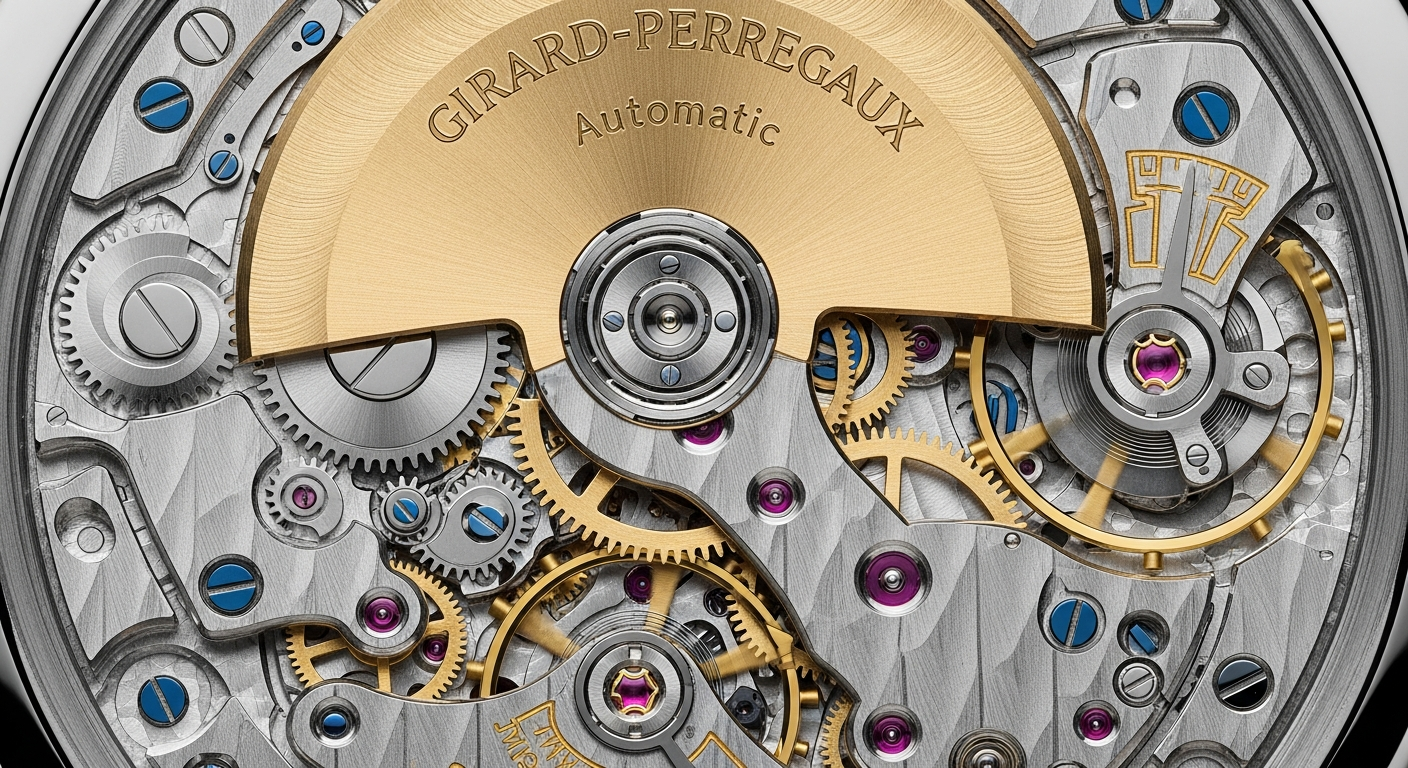
It also establishes the brand’s long-term seriousness. A manufacture that can repeatedly build and finish tourbillon movements—across eras, across ownership structures, under different market incentives—has internal disciplines that tend to spill into simpler watches. You see it in the way GP handles tolerances, in the crispness of its anglage when it wants to show it, and in the baseline competence of its automatic calibres when it doesn’t.
Manufacture thinking: in-house as a means, not an excuse
There are two kinds of “in-house” in the modern market. One is a marketing checkbox: an internalized movement with minimal distinction, built for narrative control. The other is manufacture thinking: movement families designed to serve a range, upgraded over time, and supported like industrial products. Girard-Perregaux is closer to the second category than its current public profile suggests.
The practical collector takeaway is that GP tends to build watches with a sense of mechanical stewardship. A coherent calibre strategy usually correlates with parts availability, predictable servicing pathways, and incremental technical refinement rather than constant reinvention. Those are unglamorous virtues, but they are the ones that matter after the honeymoon phase of ownership.
GP’s movements often signal this mindset through architecture and finishing choices. Where some brands chase extreme thinness or novelty for its own sake, GP has historically balanced performance, durability, and aesthetics. When the brand leans into display backs, finishing is there to justify transparency; when it doesn’t, the movements are still engineered with the expectation of long-term use. That consistency is part of the quiet-power formula: fewer dramatic swings, more compounding competence.
The Laureato: a design icon anchored in restraint
If the tourbillon heritage is Girard-Perregaux’s legitimacy, the Laureato is its relevance. Integrated-bracelet sports watches are now a saturated category, but the Laureato has something many latecomers lack: an identity that doesn’t depend on being a substitute for someone else’s icon.
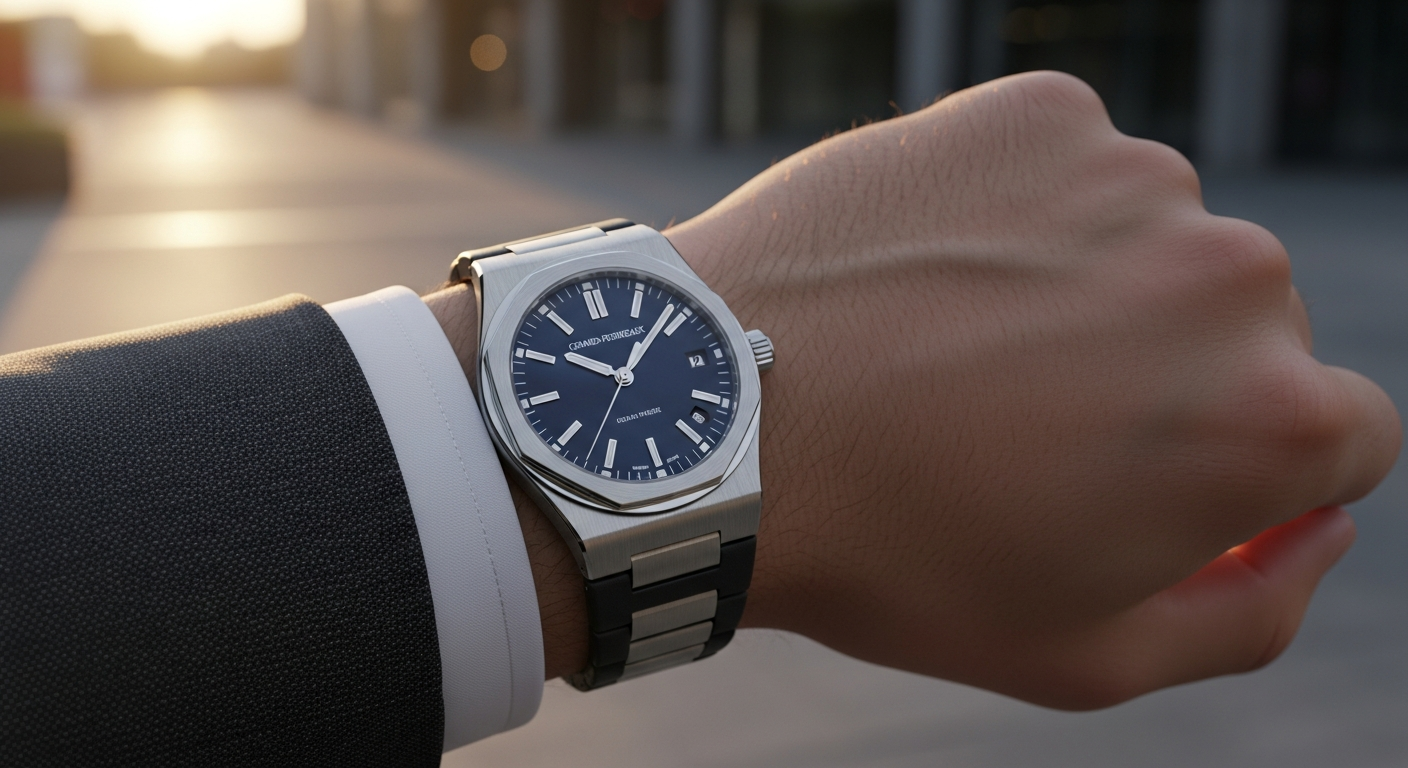
The Laureato’s strength is proportion and restraint. The layered geometry—round within octagon within cushion—has enough complexity to be recognizable without screaming for attention. The bracelet is athletic but not aggressive, with a rhythm of brushed surfaces that reads cleanly in daylight. It is a watch designed to be worn in routine life, which is precisely why it has become a collector’s object: it can carry prestige without acting like a billboard.
There is also a strategic advantage in how the Laureato wears. Many integrated-bracelet watches are visually loud in photos but awkward in rotation. The Laureato’s case and bracelet tend to sit with a balanced center of gravity, and its dial furniture is typically chosen for legibility rather than theater. Even when the brand experiments with bolder colors or textures, the underlying design remains disciplined. For collectors who want an everyday luxury watch that doesn’t feel like a costume, that discipline is the point.
Laureato details that separate it from the crowd
It is easy to say “integrated bracelet” and stop thinking. The Laureato rewards closer inspection because its best details are subtle. The bezel’s geometry is not an octagon pasted onto a circle; it is a soft-edged shape that plays differently depending on light and wrist angle. That softness is a functional aesthetic choice: it keeps the watch from looking sharp or overly industrial, and it broadens the contexts in which it feels appropriate.
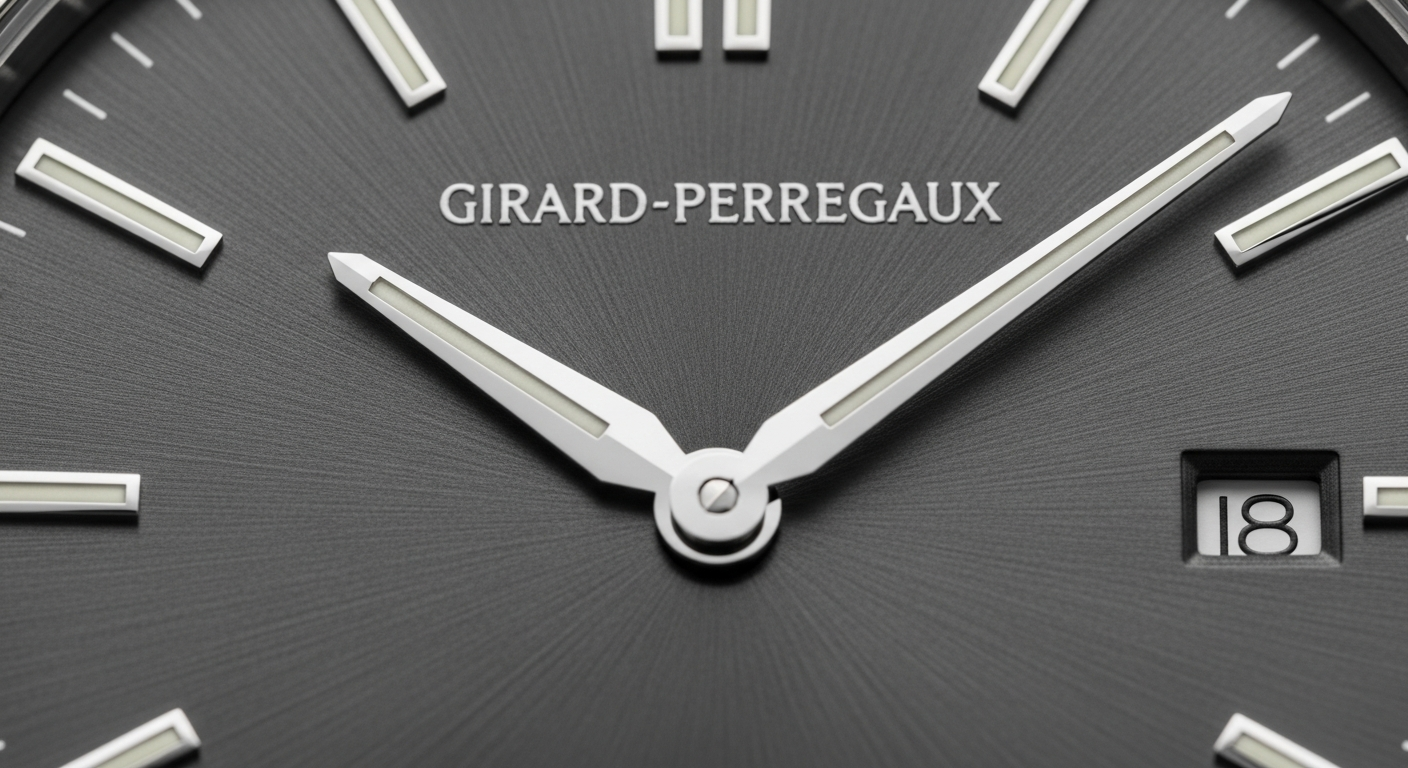
Dials are another differentiator. The Clous de Paris-style texture on many Laureato references adds depth without sacrificing clarity. It is a traditional craft cue expressed in a modern sports format, which aligns with GP’s broader identity: old-world watchmaking competence adapted for contemporary use. Hands and indices often favor clean, conservative forms; lume is typically present but not shouted about. In other words, GP builds a sports watch that still behaves like a Swiss dress watch in its discipline.
And then there is the bracelet finishing. High-end bracelet work is one of the hardest places for a brand to hide shortcuts. The Laureato’s alternating finishes and link articulation generally communicate care. Not perfection in every reference, not the last word in sculpture, but a level of execution that makes the watch feel like a complete product rather than a case with a strap attached.
Collector confidence: why GP can be a smart long-term hold
Collector confidence is often misunderstood as resale performance. In reality, it is the probability that you will still respect the watch after the novelty fades. Girard-Perregaux tends to score well on that internal metric because its watches are built around durable values: coherent design, mechanical substance, and finishing that doesn’t need a spotlight to justify itself.
There is also a contrarian advantage. When a brand is not constantly inflating its own mythology, pricing tends to be less detached from substance. That can create opportunity for buyers who prioritize watchmaking over social proof. It also lowers the psychological pressure of ownership; you are less likely to feel you must “perform” the watch. You can simply wear it.
None of this suggests GP is immune to market forces. Like every Swiss manufacture, it operates within cycles of fashion, ownership realities, and shifting consumer attention. But GP’s underlying proposition—manufacture capability expressed in wearable designs—has proved to be unusually resilient. It is easier to rebuild hype than to rebuild competence. GP already has the competence.
How to approach the brand today: a pragmatic buying framework
For collectors revisiting Girard-Perregaux, the most productive approach is to separate three questions: design, movement, and intent. Design is about whether the Laureato or the brand’s more classical pieces fit your actual wardrobe and lifestyle. GP’s strength is versatility, but the best choice is still the one that fits your daily rhythm.
Movement is about what you value: the satisfaction of a historically resonant architecture in tourbillon-oriented pieces, or the practical confidence of modern automatic calibres in time-and-date or chronograph references. GP generally rewards buyers who enjoy looking through the caseback and understanding what they are paying for. If you want your luxury to be mostly external, you may miss the point.
Intent is the final filter. If you are buying primarily for immediate recognition, there are easier routes. If you are buying for long-term ownership—where the watch will be serviced, worn, and gradually associated with your own life—the Laureato and GP’s broader catalogue make a persuasive case. The brand’s quietness becomes an asset: the watch belongs to you rather than the moment.
The quiet powerhouse thesis, tested
Girard-Perregaux is not the brand for collectors who need constant validation. It is for those who like their prestige to be structural: in the calibre, in the finishing decisions, in the way a case transitions into a bracelet, in the fact that the brand’s most famous visual signatures originated from watchmaking logic rather than a branding workshop.
That is the dual narrative that matters now. The tourbillon heritage is not a museum piece; it is proof of an engineering culture. The Laureato is not a trend-chasing sports watch; it is a disciplined design that has aged into icon status without losing its practicality. Together they form something increasingly rare in modern luxury: credibility that compounds, and a product line that can be enjoyed daily without diluting the seriousness behind it.
If the next phase of collecting is less about loud affiliation and more about informed ownership, Girard-Perregaux is positioned better than its volume of headlines would suggest. The brand’s real advantage has been hiding in plain sight: it builds watches that can be argued for—on the wrist, on the bench, and in the archives.