F.P. Journe: Invenit et Fecit – The Art of True Independence
There is a particular kind of quiet you can hear in a small watchmaker’s workshop when the day’s noise has been pushed outside the door. It isn’t silence, exactly. It’s the soft insistence of tools being put down and picked up again, the gentle scrape of a file against metal, the measured breath of someone who knows that time—real time, not the sort that blinks on a screen—must be persuaded, not forced. Independence in watchmaking begins in that quiet. Not as a slogan. Not as a marketing posture. As a habit. As a refusal to rush. As the steady confidence of an artisan who is willing to be judged by the work alone.
The story of F.P. Journe can be told through auction results and waiting lists, through celebrity wrists and collector forums, through the fevered shorthand of model names. Yet if you stand close enough to his watches, the story you hear is older and more human. It’s about a man who chose to sign his dials with a line that reads like a vow: Invenit et Fecit—“invented and made.” Two verbs, almost blunt in their simplicity, that carry the weight of a life spent insisting that invention is meaningless without execution, and execution is hollow without an idea worth building.
Before the brand became a benchmark, before boutiques and catalogs and the familiar glow of gold movements photographed under studio lights, there was François-Paul Journe and the long apprenticeship of curiosity. Born in Marseille and shaped early by the intimate culture of traditional horology, Journe grew up in the orbit of those who spoke to the past not as nostalgia but as a living library. The great names—Breguet, Janvier, Berthoud—were not distant monuments. They were conversations, arguments, problems to be solved again with modern hands. If you spend time with Journe’s work, you feel that dialogue. It’s not imitation. It’s continuation.
A watch, after all, is a small machine that tries to do something impossible: it attempts to domesticate an abstraction. Time cannot be contained, but it can be counted, and the counting must be stable enough that the human mind will trust it. The earliest independent watchmakers understood this as philosophy as much as engineering. Journe’s independence belongs to that lineage, where the aim is not simply to create an object of luxury but to confront a technical challenge with personal conviction, and then to put your name on the result without hiding behind a group or a committee.
In the modern Swiss watch industry, independence is said often and meant rarely. Many brands speak the language of autonomy while relying on the same suppliers, the same industrial solutions, the same comforting safety nets. True independence is more demanding. It requires risk, patience, and a willingness to be misunderstood for long stretches of time. It means making decisions that are irrational in the short term because they feel necessary in the long term. It means building not only watches, but the capacity to build watches: the tooling, the skill, the standards, the people.
Journe didn’t arrive at his place in the pantheon by accident. In the 1980s and 1990s, when quartz still cast a long shadow and mechanical watchmaking was recovering its confidence, he was already thinking like an inventor. His early work included restorations and complicated commissions, including a fascination with the tourbillon that was less about spectacle than about what the mechanism represented: the old ambition to overcome the errors introduced by gravity, to create a more honest chronometer in a world that never sits still. When the Tourbillon Souverain appeared in 1999, it didn’t present itself as a flamboyant trophy. It looked, in Journe’s hands, like a thesis statement written in metal: a chronometric tourbillon combined with a remontoir d’égalité, a constant-force mechanism that delivers consistent energy to the escapement. The details mattered, because the details were the point.
In those early days, Journe’s watches were cased largely in platinum, and their movements were traditionally finished in brass. Collectors now speak reverently about those first series, partly because rarity always adds heat to desire, but also because they reveal a mind in motion: a maker testing his own limits, refining his language. There is a living quality to the progression. Then, in a move that now seems inevitable but at the time was bold, Journe shifted to 18k rose gold movements for most of his production. It was not a decision designed merely to impress. Gold is expensive, yes, but it is also difficult, heavy, and unforgiving. To choose it as the standard material for a movement—hidden behind a solid caseback in some models, revealed in others—is to commit to a kind of internal luxury that doesn’t rely on being noticed. It is independence expressed as inward confidence.
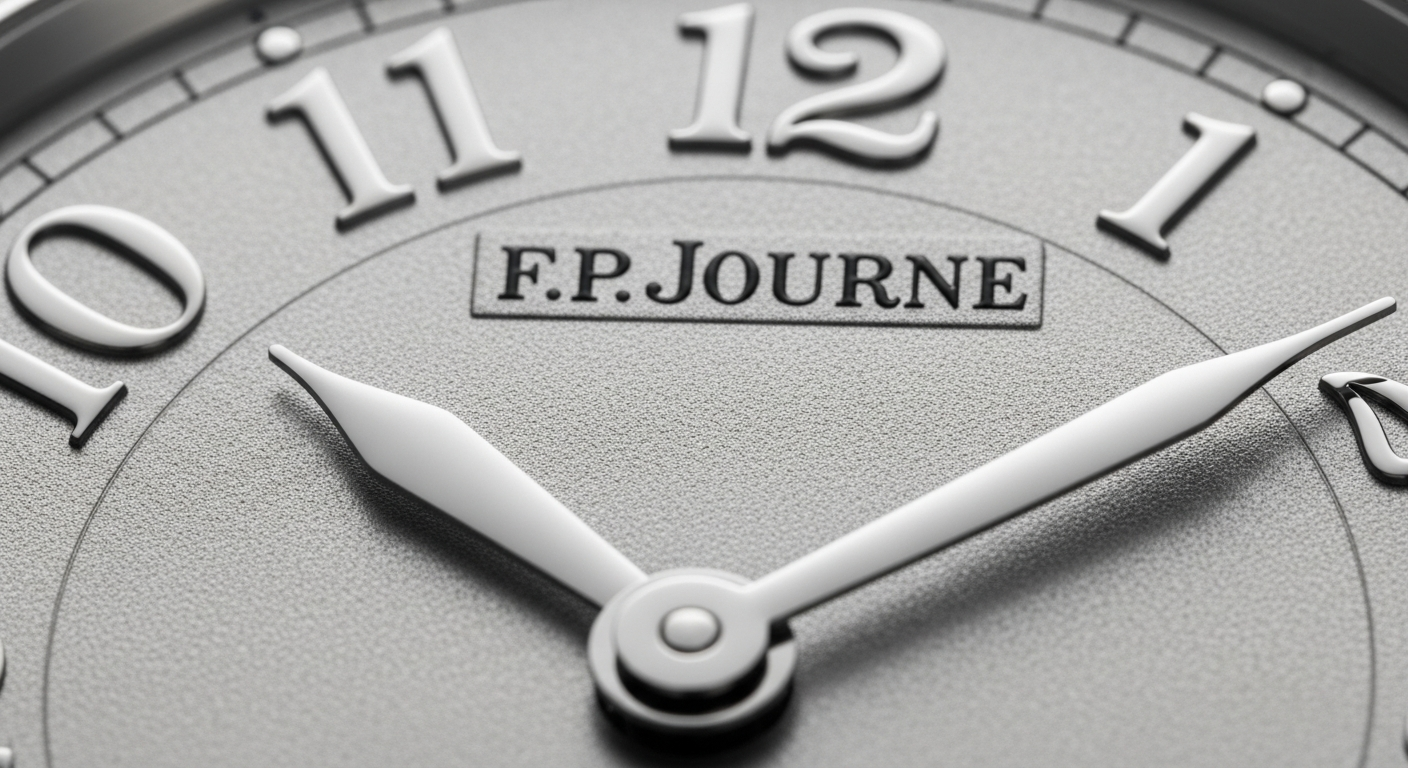
The design codes that have become unmistakably his—Arabic numerals with a certain posture, a dial layout that feels both classical and quietly radical, heat-blued hands that seem to float—work the way a great writer’s voice does. You recognize it without needing to see the signature. A typical Journe dial can look deceptively calm, like a still pond. Then you notice the asymmetry, the sub-dials positioned where convenience yields to balance, and the typography that feels lifted from another century yet perfectly at ease in the present. The effect is not retro. It’s timeless in the strict sense: not belonging to any single moment because it speaks to the perennial problem the watch is trying to solve.
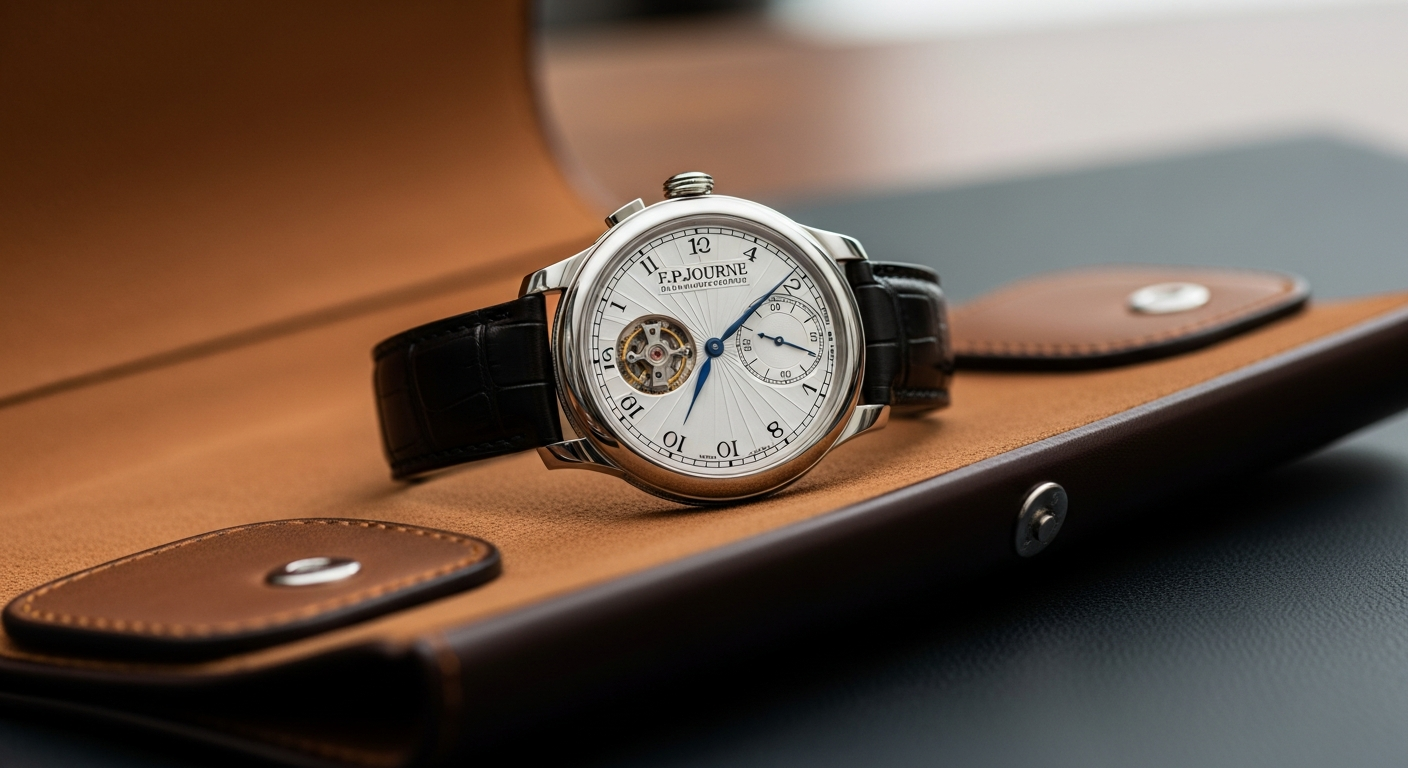
There is, too, a particular emotional temperature to Journe’s complications. Many high complications in modern watchmaking are built to astonish at first glance. The goal can become display: what can we show, how much can we reveal. Journe is capable of spectacle—anyone who has watched the resonance phenomenon in his Chronomètre à Résonance understands that—and yet the spectacle is always tied to a chronometric question. The resonance watch is perhaps the purest example of his philosophical streak: two balance wheels placed close enough that, through subtle interaction, they can synchronize and stabilize each other. It’s a phenomenon observed in clocks centuries ago, translated into a wristwatch with stubborn determination. It’s not the easiest path to a marketable story. It’s the most honest path to an idea that has occupied him for decades.
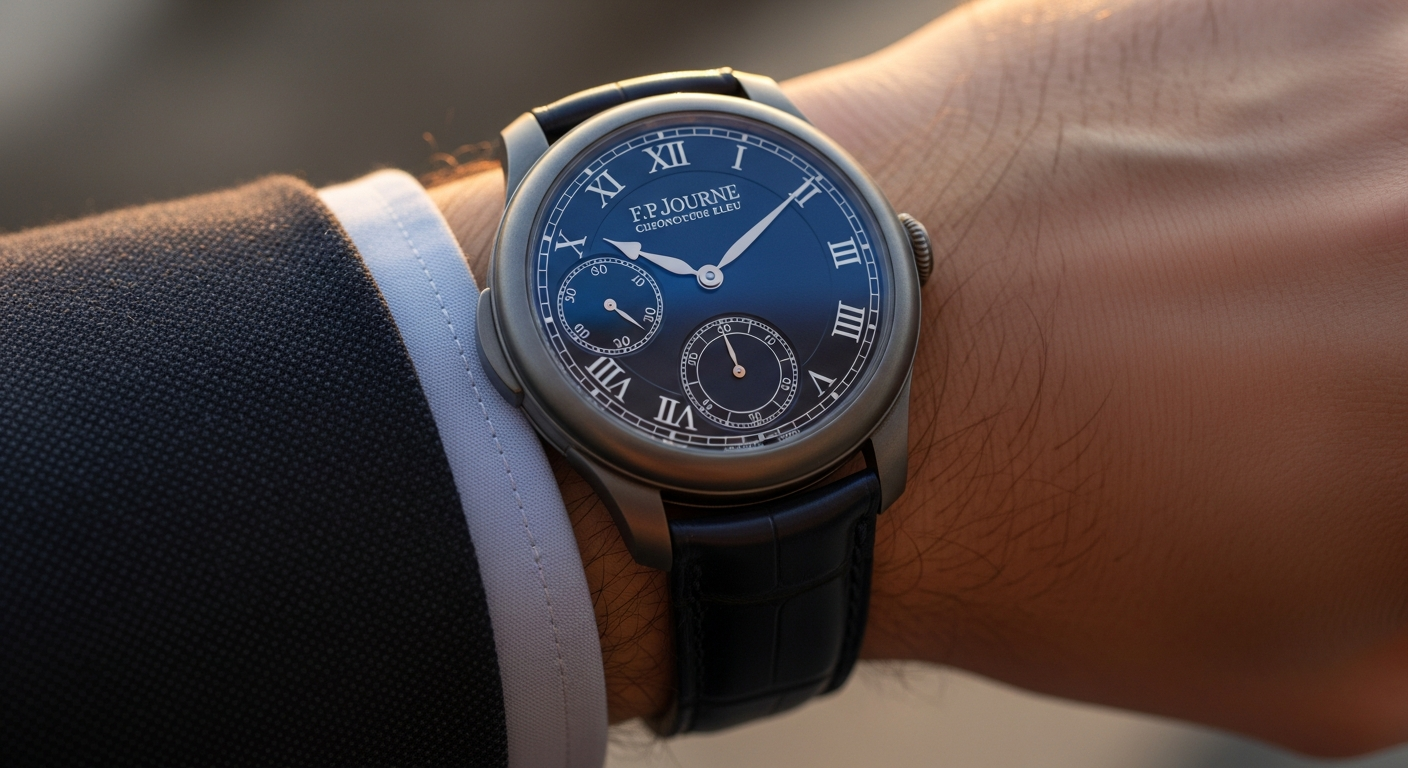
If you want to understand “Invenit et Fecit” as more than Latin theater, you can trace it across his catalog like a line through a constellation. The Octa collection, for example, reflects a sustained meditation on automatic winding and power reserve—how to create a movement architecture that can support multiple complications while maintaining a consistent energy supply and real wearability. The Chronomètre Bleu, often described as an entry point into the brand, is in some ways the most mischievous expression of independence: a watch that looks simple enough to the untrained eye, housed in tantalum with a deep blue dial, yet carries within it the same insistence on quality and coherence. It does not apologize for being “only” time and date. It argues that simplicity is a discipline, not a concession.
Then there are the pieces that feel like formal debates with time itself: the Sonnerie Souveraine, with its grand and petite sonnerie mechanism miniaturized for the wrist; the Chronomètre Optimum, a dense concentration of chronometric solutions—constant force, detent escapement, high-frequency balance—arranged with the logic of someone who has been thinking about accuracy the way a poet thinks about meter. These are not watches made to fill a segment. They are watches made because someone wanted to know if it could be done, and whether doing it could reveal something new.
What makes Journe’s independence particularly compelling is that it is not solitary. Independence is often romanticized as the lone genius at the bench, but the truth of modern watchmaking is that even the most autonomous creator needs a team, a structure, a small society built around a shared standard. Journe’s manufacture in Geneva represents that shift from singular artisan to independent institution, and it’s here that craftsmanship becomes culture. To sustain a high level of finishing, to maintain consistency in production while preserving the spark of invention, is not merely a technical task. It is managerial, educational, and moral. It requires recruiting and training people who can see the difference between good and great under a loupe, and who care enough to chase that difference down.
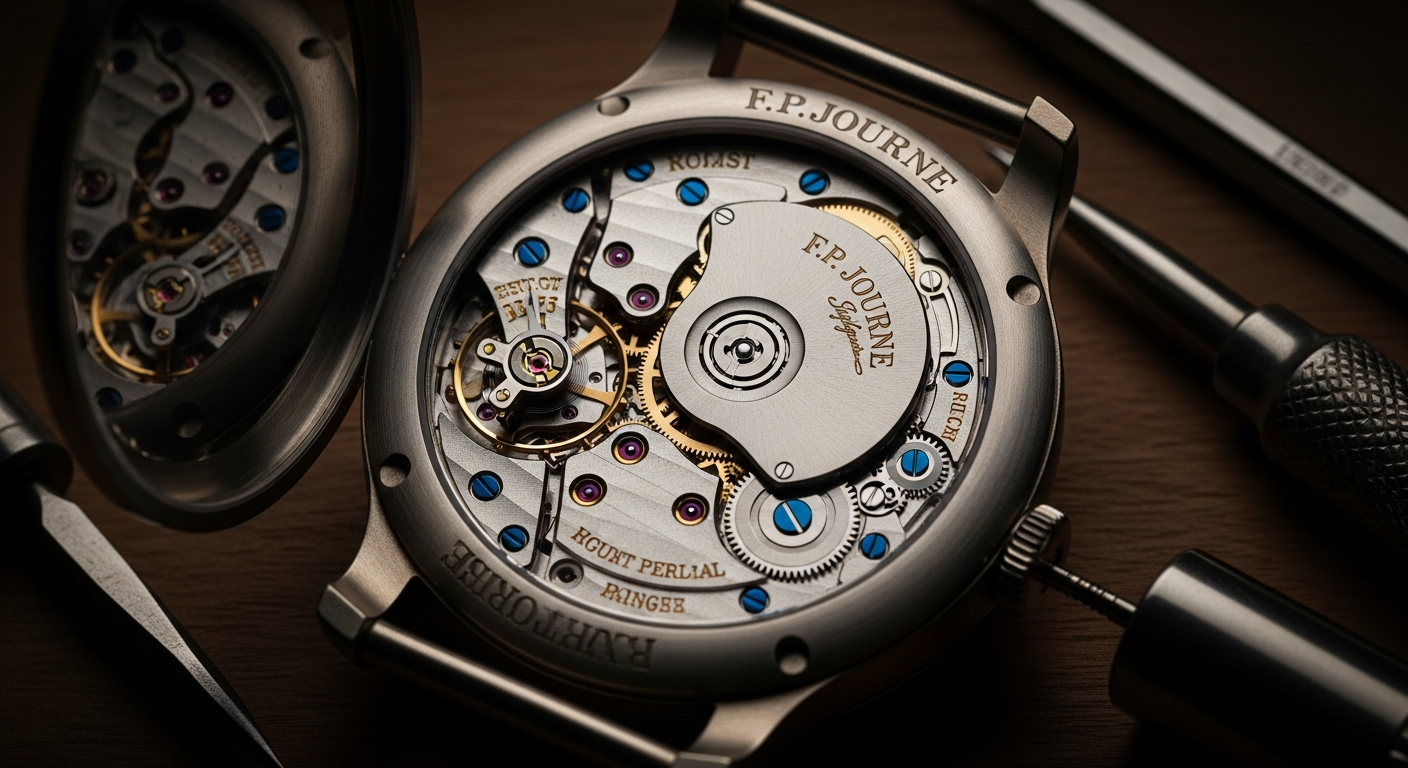
Collectors sometimes speak about “Journe-ness,” that elusive quality that distinguishes these watches even in a room full of masterpieces. Some of it is aesthetic coherence, the way the brand refuses to dilute its identity. Some of it is mechanical: the movements have an architectural clarity, bridges arranged with an almost musical rhythm, screw heads aligned, angles polished, surfaces finished with a confidence that never slips into ostentation. Yet I suspect the deepest part of it is psychological. A Journe watch feels like it belongs to someone who made a choice. It is a declaration that you value the mind behind the mechanism, and that you are willing to live with a watch that does not shout, that does not chase trends, that does not flatter you with instant recognition.
This is where the editorial fascination becomes personal. In an age that rewards scale and speed, the idea of a maker insisting on independence can feel like an anachronism, and yet it is precisely what many people are hungry for. We have grown accustomed to products that are designed by consensus and optimized by data, objects that arrive smooth and frictionless and strangely forgettable. A watch like a Journe reintroduces friction in a meaningful way. It asks you to learn it. It asks you to notice. It invites you to develop taste rather than just preference.
And taste, like independence, is not something you can fake for very long. The market will always try to reduce a watch to its investment potential, to its scarcity, to its position on a chart. Journe is not immune to those forces; no significant creator is. But there is a reason his best pieces resist being fully explained by hype. Even when demand becomes feverish, the watches themselves remain stubbornly rooted in horological legitimacy. You can feel it in the way complications are integrated rather than piled on, in the refusal to turn every dial into a billboard, in the disciplined handwriting of the brand’s visual identity. The watches do not need you to believe in them. They function whether or not you are impressed.
The motto, Invenit et Fecit, also carries a provocation aimed at the wider industry. It draws a line between those who conceive and those who merely assemble. Of course, no watchmaker is an island; suppliers exist, metallurgy is specialized, and even the most independent manufacture participates in networks of expertise. But Journe’s point is not literal self-sufficiency down to the last atom. It is authorship. It is accountability. When you claim to have invented and made, you are saying: this is mine, in idea and in execution, and I accept the judgment that follows.
There is a quiet courage in that. Making a tourbillon is difficult; making a tourbillon that improves real-world chronometry is harder. Building a sonnerie is a feat; building one that can survive the chaos of a wrist is an act of stubbornness. Creating resonance on the wrist is not the sort of thing you do to win a quick headline. It’s the sort of thing you do because you must know whether the ancient phenomenon can be tamed at miniature scale. Journe’s watches are full of these must-know questions.
One could argue that true independence is measured not only by what you create, but by what you refuse. Journe refuses to turn his work into a costume. He refuses to let complication become caricature. He refuses, most notably, to treat the customer as someone to be dazzled rather than respected. There is respect in building a movement in gold even when most people will never see it. There is respect in keeping the design consistent over decades, trusting that the right audience will understand why restraint is a form of strength. There is respect in continuing to explore chronometry when the market is easily distracted by novelty.
The brand’s growth has inevitably brought new pressures: increased demand, broader visibility, the gravitational pull of mainstream luxury. And still, the most telling evidence of independence is how the work continues to feel personal. A Journe watch does not read like a product designed to satisfy a focus group. It reads like correspondence from a particular mind, sent through the medium of gears and springs. Even the imperfections that collectors debate—the slight variations, the evolving details between series—contribute to that sense of a living oeuvre rather than a static catalog.
To write about Journe is also to write about the modern renaissance of independent watchmaking. He is not alone. He stands among peers who have insisted on individuality in a field that once seemed destined to become industrially homogeneous. Yet Journe occupies a unique place because his independence is both artisanal and systematic. He is an inventor with a manufactural infrastructure, a poet who also runs a printing press. That combination—creative obsession supported by the means to execute it at the highest level—helps explain why his watches have become touchstones. They are not prototypes. They are production pieces with the soul of prototypes.
The final measure of a watch is not how much it costs or how loudly it announces itself. The final measure is whether, after the novelty wears off, it continues to reward attention. A Journe watch rewards attention the way a well-made mechanical object always does: by revealing layers. The longer you live with it, the more you sense the decisions that shaped it. You begin to read the dial not simply as information but as composition. You begin to appreciate the movement not merely as a mechanism but as an argument about how the mechanism should be built. You begin to see that independence, here, is not isolation. It is integrity.
Invenit et Fecit is easy to translate, but harder to live. It means accepting that your name will stand beside your work, and that your work will be asked to justify itself without excuses. It means choosing the hard way often enough that the hard way becomes your signature. In a world crowded with claims, that kind of independence is rare. That is why the quiet in the workshop matters. It is where the claims become metal. It is where the abstraction of time is met with the stubborn, beautiful reality of craft. And it is where F.P. Journe’s watches begin—again and again—with a mind that insists on inventing, and hands that will not settle for anything less than making.