F.P. Journe Explained: Why an Independent Watchmaker Became the New Benchmark for Modern Haute Horlogerie
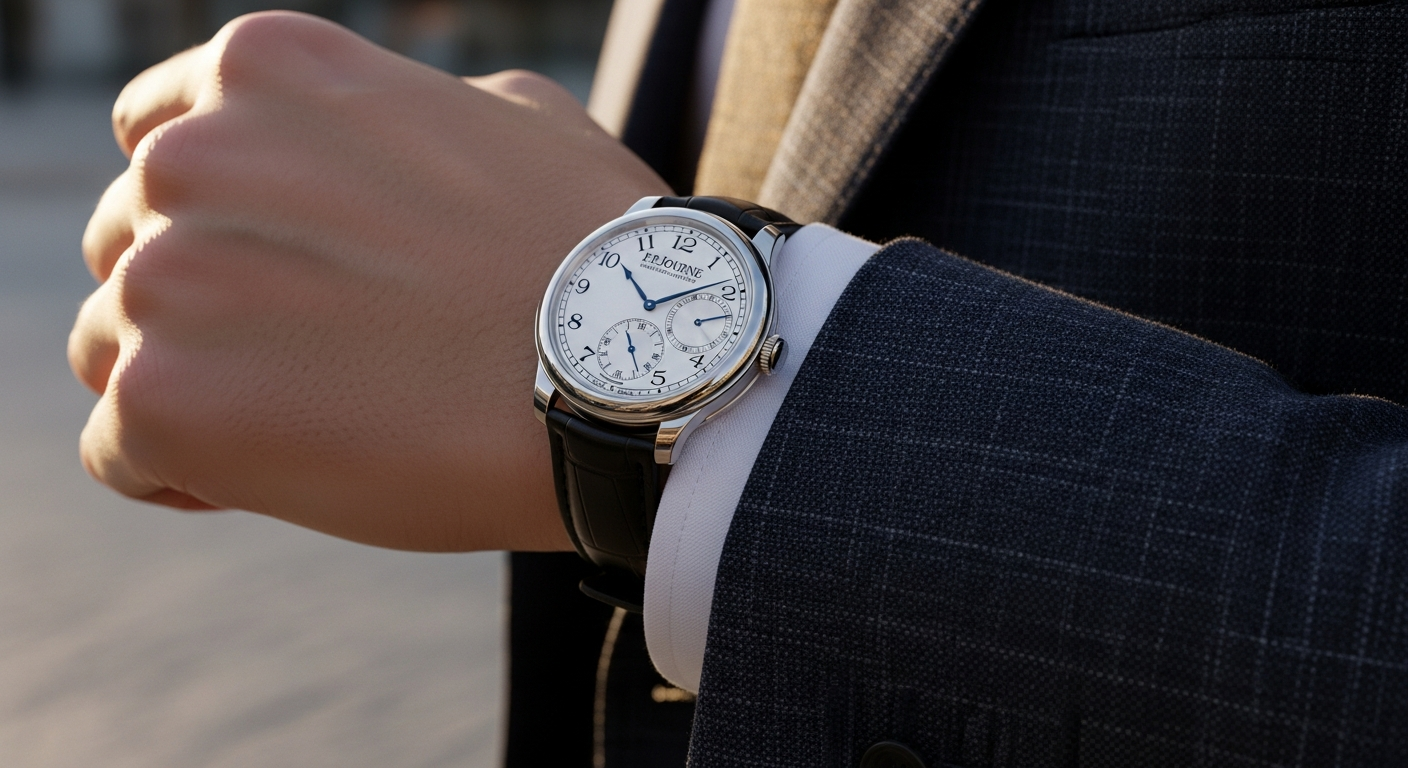
In a market crowded with limited editions and loud collaborations, F.P. Journe feels almost anachronistic: a brand built on the quiet confidence of solutions, not slogans. The fascination isn’t just that the watches are hard to get—it’s that each piece reads like a published thesis on timekeeping, where materials, mechanics, and typography align into a signature that collectors recognize at a glance and scholars can justify line by line, component by component, mistake by mistake avoided before it ever reaches the wrist. This is how a modern independent became a reference point.
The Benchmark Isn’t Scarcity. It’s Authorship.
The collector shorthand around F.P. Journe often starts with availability: small production, waiting lists, a secondary market that behaves like a weather system. But to treat the brand as a phenomenon of scarcity is to miss the more durable point. Journe’s modern relevance is closer to authorship than to marketing—an insistence that a watch is an engineered argument, executed under one roof, with choices that can be traced back to first principles.
This is why Journe has become a benchmark for contemporary haute horlogerie. Not because it is fashionable, but because it is internally consistent. The brand’s watches are recognizably “Journe” while rarely repeating themselves mechanically. They feel like a coherent body of work: chronometry-first priorities, a preference for solutions that scale to series production without losing intellectual sharpness, and an aesthetic language that refuses to chase the last trend.
Chronometry-First Design: The Movement Leads, Not the Mood
F.P. Journe’s most consequential move was to make modern high watchmaking talk about timekeeping again—then to back the talk with architecture. The brand’s core proposition is that performance should be designed into the movement, not sprinkled on as a certification label. Journe doesn’t treat chronometry as an optional complication; it is the organizing principle.
That shows up early in decisions that many brands now imitate but rarely integrate as cleanly. The use of twin mainspring barrels to improve torque stability, the choice to separate functions for efficiency, and the repeated attention to isochronism are all less about scorekeeping and more about building a movement that behaves predictably as it runs down. This is a different mindset than “add complication, then adjust.” It is “engineer stability, then complicate.”
Even the brand’s more expressive pieces tend to preserve that hierarchy. Journe’s tourbillon, for example, is not presented as an aesthetic vortex but as a managed system: remontoire d’égalité, careful energy transmission, and a dial layout that makes the mechanism legible rather than theatrical. The point is not to dazzle; it is to demonstrate control.
Vertical Integration as Cultural Strategy
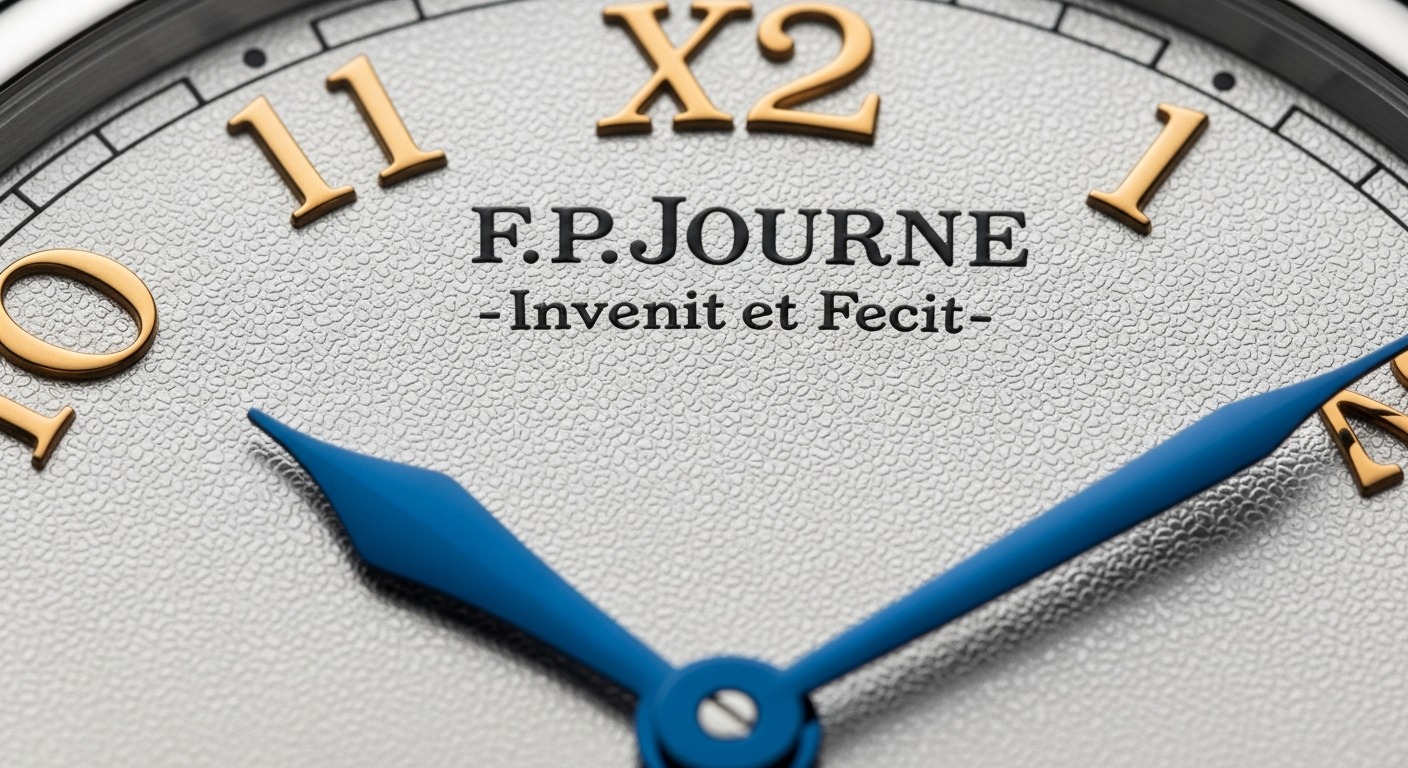
Vertical integration is often discussed as a manufacturing fact: in-house cases, dials, movements, and the ability to say “manufacture” without qualification. With Journe, it functions more like a cultural strategy. Control over fabrication means control over the brand’s vocabulary—materials, finishing standards, tolerances, even typographic execution—and therefore control over what the watches mean over time.
The result is a rare thing in modern luxury: a house style that is not merely cosmetic. The typography, the dial proportions, the case shapes, and the movement finishing all feel part of one system. This matters because collector value—real collector value, not temporary market price—depends on the coherence of a brand’s output across decades. Journe’s vertical integration makes his watches less dependent on external suppliers and external taste cycles, and more dependent on a stable internal standard.
There’s also a pragmatic angle: true integration enables iterative improvement. When a brand owns the full chain, it can refine a component because it affects chronometry, serviceability, or durability—not because an outside supplier changed its catalog. Journe’s production is not massive, but it is series production, and that is a key distinction. Many independents make small numbers; fewer can make small numbers reliably, year after year, with consistent quality and a clear identity. That repeatability is part of why the brand has become a benchmark rather than a curiosity.
The Brass-to-Gold Pivot: Material as Message
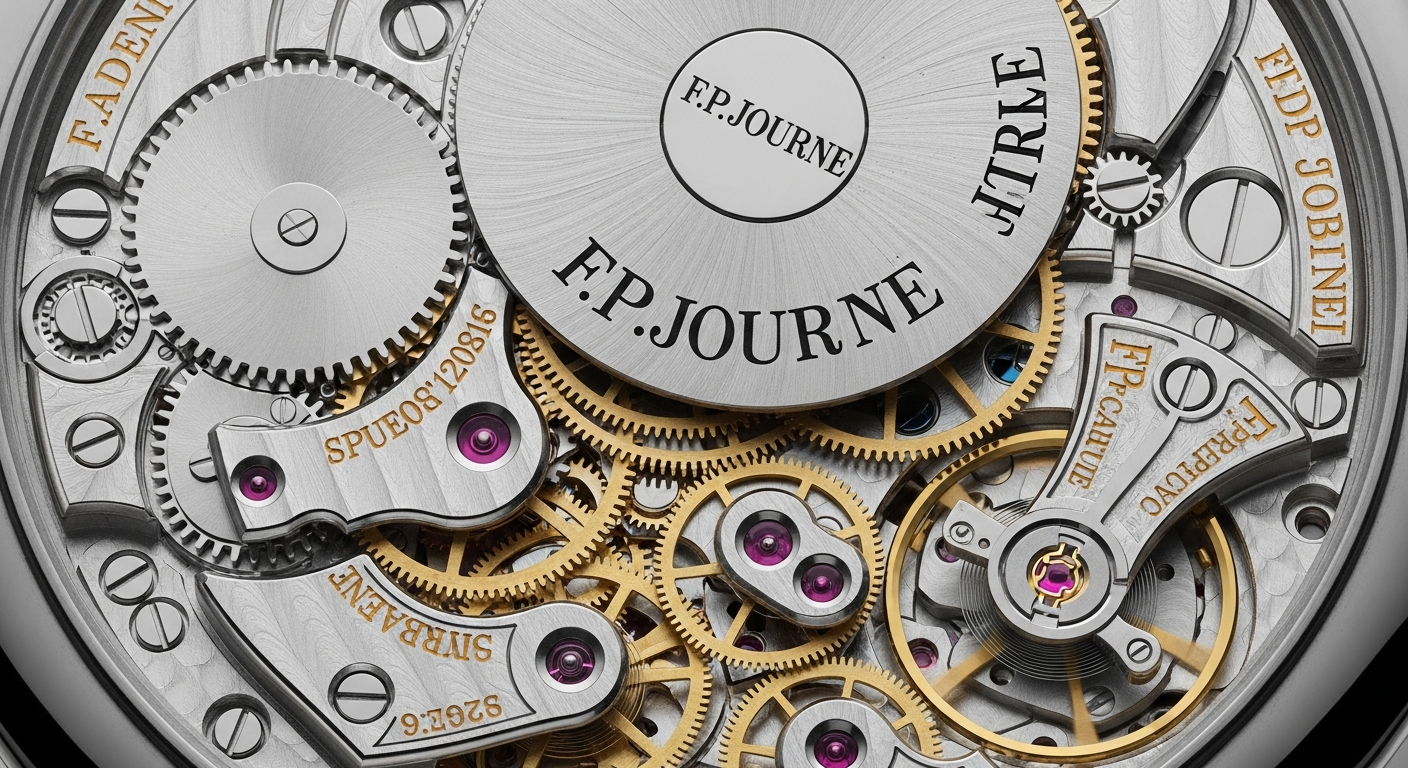
One of the most discussed Journe signatures is invisible to casual buyers but obvious to anyone who has spent time with the movements: the shift to precious-metal movement plates and bridges, most notably 18k gold. In an industry where movement material can be treated as either purely functional or purely decorative, Journe turned it into a statement about permanence.
This choice is not about adding luxury for its own sake. Gold is stable, resistant to corrosion, and offers a certain long-horizon confidence; it also forces a manufacture to take its finishing seriously, because imperfections and tool marks read differently on noble metals. The message is clear: these are not movements built to hide under a rotor and a marketing line. They are built to be examined, photographed, debated, and serviced decades from now.
Importantly, the gold movement became a unifying element across a diverse catalog. Whether one is looking at a time-only piece or a higher complication, the movement material helps anchor the watch within the Journe ecosystem. It’s a cue that travels with the watch through ownership changes and market cycles, reinforcing the idea of a “Journe” as a category—similar, in a way, to how certain dial maker signatures or case manufacturer marks once oriented collectors within vintage watchmaking.
Typography, Dials, and Proportions: A Coherent Visual Language
Many luxury watches achieve recognition through loud design tropes: aggressive bezels, extreme case shapes, colors tied to seasonal release schedules. Journe’s recognition works differently. It is typographic, proportional, and architectural. The numerals, the placement of subdials, the negative space, and the hands’ geometry form a language that is consistent without being repetitive.
The dials often carry a studied asymmetry, but it is not decorative asymmetry. It tends to follow function: where the power reserve reads best, how the time can remain dominant even when multiple indications are present, how the eye moves naturally across information. Journe dials are notable for allowing complexity without clutter. This is harder than it looks, and it distinguishes the brand from peers who scale up dial busyness as prestige.
There is also restraint in finishing choices on the dial side. Even when precious metals and guilloché appear, they are used as structure rather than spectacle. The goal is legibility and hierarchy, not shimmer. That restraint is one reason Journe pieces photograph well but wear even better: the watches do not rely on lighting tricks to feel special.
Complications That Behave Like Instruments
Journe’s complications tend to feel like instruments rather than ornaments. The best examples are those where an abstract high complication is made practical, readable, and logically serviced. The Octa family, for instance, treats automatic winding and long power reserve not as a brag, but as a platform for adding calendars, moon phases, or annual calendars without compromising balance or wearability.
Chronographs, too, reveal the brand’s priorities. Journe’s approach emphasizes mechanical clarity and correct behavior over retro styling. The result is a chronograph that appeals to a collector who cares about what happens under the dial when the pusher is pressed, and how the system wears over years, not just how it references a decade.
This instrument-like quality also explains why Journe attracts collectors who already own the expected icons. When the collection is mature, novelty becomes less interesting than intention. Journe offers intention—solutions that can be defended as engineering decisions, not just as differentiators.
Why Journe Became the Modern Reference Point
Calling F.P. Journe a benchmark is not the same as calling it the best at everything. The brand’s finishing is excellent, but it is not trying to mimic the particular handwork theater of every Geneva school; its aesthetics are specific, not universal; its production is limited, but not artisanal chaos. The benchmark claim rests on something more strategic: Journe demonstrates how a modern independent can operate with the coherence and reliability of a serious manufacture while retaining the personality—and accountability—of an author.
That combination is rare. Many large brands can execute at scale but struggle to maintain a single voice when management changes or the market demands new stories. Many independents have voice but cannot guarantee long-term continuity in parts, service, or consistency. Journe sits in the narrow middle: small enough to remain personal, controlled enough to remain institutional.
This is also why the watches matter culturally. Journe helped reset what collectors expect from modern watchmaking: not nostalgia alone, not design noise, not scarcity theater, but a clearly argued mechanical identity. The watches reward reading. They reward inspection. They reward ownership over time, when the initial rush fades and what remains is the daily experience of something built with a point of view.
Collector Value Beyond Price: The Case for Endurance
Market prices are not the same as collector value, even when they move together. Collector value is what endures when liquidity dries up and attention moves on. Journe’s endurance rests on three pillars that are difficult to counterfeit: a consistent chronometry-first philosophy, vertical integration that preserves a coherent output, and a visual language that is instantly identifiable without being trend-dependent.
There is also an educational dimension. Journe watches often serve as entry points into deeper horological thinking: energy management, torque curves, escapement behavior, the logic of displays. A collector can go from “I like how this looks” to “I understand why this was built this way” in a single ownership cycle. That transformation builds long-term loyalty more effectively than any collaboration ever could.
Ultimately, F.P. Journe feels anachronistic because it resists the modern temptation to turn watchmaking into content. The brand’s loudest statements are mechanical. Its signature is not a slogan, but a set of repeatable choices—material, architecture, typography, proportion—implemented with enough control that the watches can be judged like texts. And that is why, in modern haute horlogerie, Journe is not merely collected. It is cited.