Bovet Watches: The 200-Year Luxury Maison Turning Hand-Finishing Into High-Complication Theater
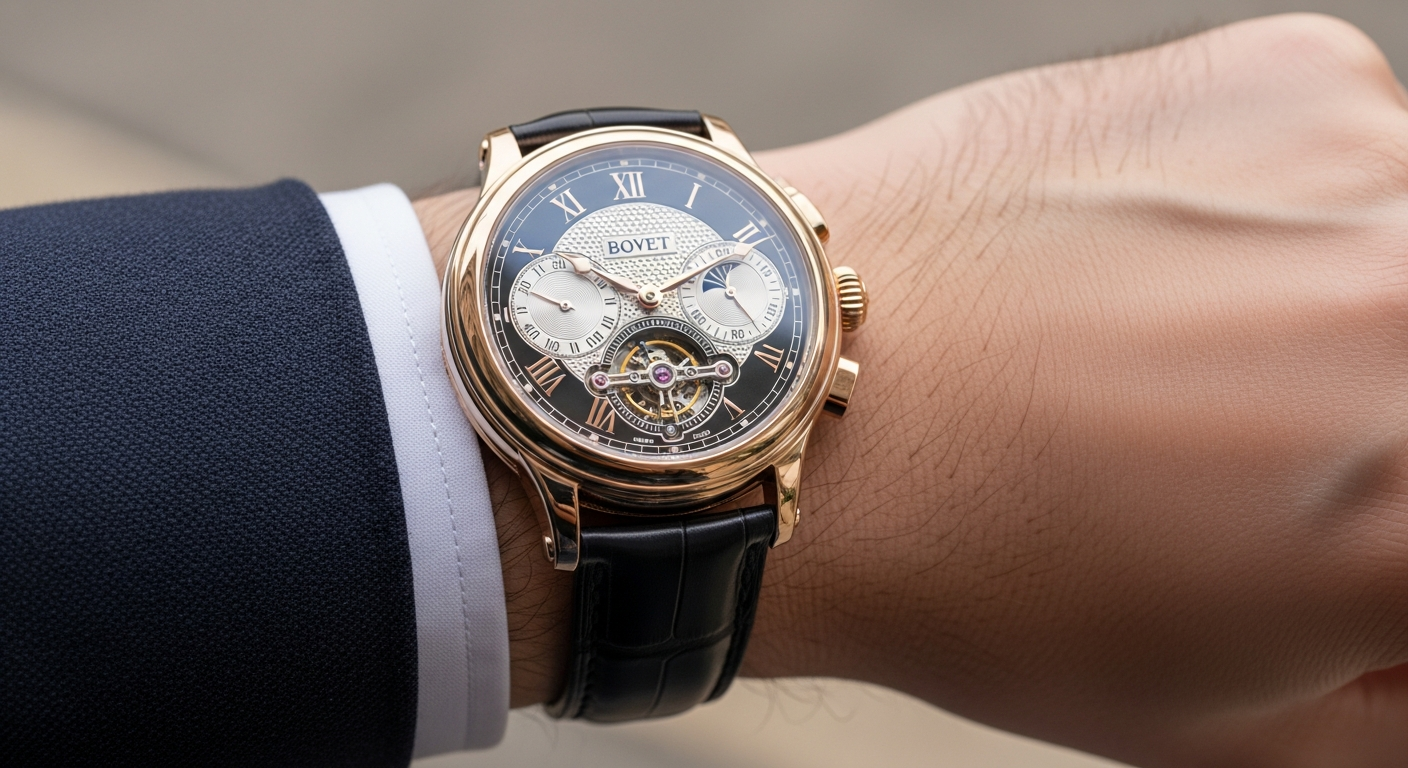
Bovet doesn’t chase modern luxury’s usual signals—celebrity heat, sports sponsorships, or algorithm-friendly minimalism. Instead, it builds watches like portable objets d’art: movements engineered to be seen, cases designed to transform, and dials treated as canvases where old-world métiers d’art become the main complication. The result is a maison that feels simultaneously 19th‑century and radically current—if you know what you’re looking at—and that’s exactly why collectors keep rediscovering it at the top of the independent conversation without ever fitting neatly into it.
The market still struggles to place Bovet. It is neither a mainstream luxury house nor a garage-scale independent. The more accurate framing is a vertically integrated maison with deep historical precedent and a stubbornly coherent design language—one that treats hand-finishing and decorative crafts as structural elements of watchmaking, not as optional garnish. In an era where collectability is often driven by scarcity narratives and hype liquidity, Bovet makes a different proposition: value anchored in artisan authorship, architecture you can physically reconfigure, and complications staged for visual legibility.
If you want to evaluate Bovet seriously, you need to read it the way the brand builds it: from history to craft to mechanics, with a bias toward what’s visible, manual, and difficult to counterfeit conceptually. The watches are not subtle. They are, however, disciplined in their own maximalism.
From Chinese Market Origins to Château de Môtiers: How Bovet’s History Still Shapes Its Aesthetic DNA
Bovet’s origin story is not a marketing invention; it is a business model that evolved into an aesthetic. In the early 19th century, Edouard Bovet’s success in the Chinese market helped define what the maison would become: Swiss precision packaged as an object of cultural desire, with finishing and ornament treated as integral to the product’s identity. Those early pocket watches were not quietly “well made.” They were designed to perform visually, to reward close looking, and to carry status through craft as much as through timekeeping.
That export-driven heritage matters because it explains why modern Bovet is comfortable being literal about luxury. Where many contemporary brands chase a pared-back neutrality to maximize universality, Bovet leans into specificity: engraved surfaces, lacquered and painted dials, sculptural cases, and movements that behave like display pieces. This isn’t nostalgia. It’s continuity. A house built on elaborate pocket watches is naturally inclined to treat the wristwatch as a miniature portable cabinet, not a minimalist instrument.
The 20th century diluted many brands through consolidation and licensing. Bovet’s modern revival, anchored in Fleurier and later associated with the Château de Môtiers, reasserted something rare: a sense of place and authorship. Fleurier is not just a line on a brochure; it is a manufacturing ecosystem with a particular tradition of finishing standards and a collector audience attentive to them. Bovet’s decision to root itself there signals institutional seriousness. It is one thing to commission crafts. It is another to build an organization capable of repeatably producing them at a level where the craft is not an exception but the baseline.
Collectors sometimes misread this as “niche theater.” The better interpretation is strategic differentiation. Bovet is not trying to win the same game as industrial luxury. It is competing in a category where the story is embedded in the object: the continuity of hand skills, the sensibility of ornament, and the willingness to engineer around display rather than around production efficiency.
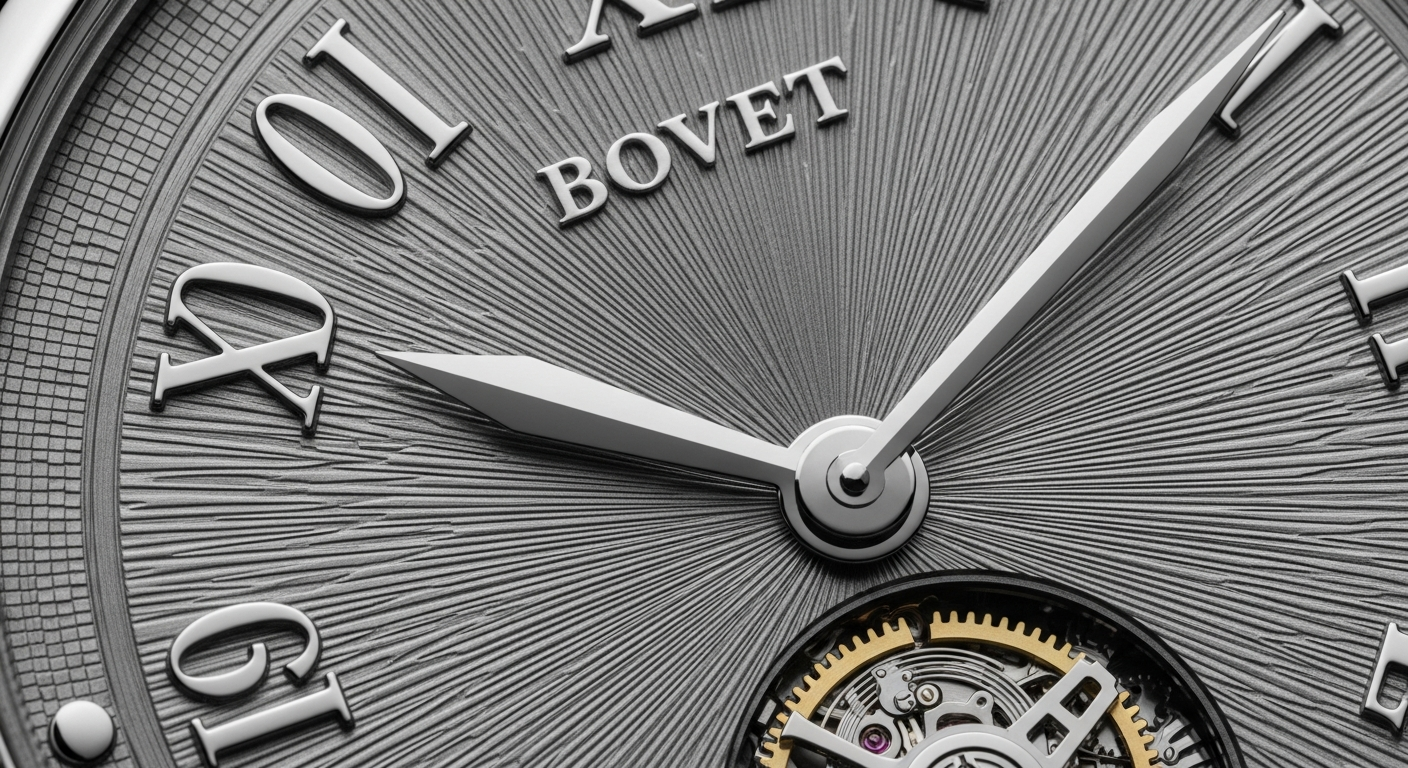
Even the maison’s famed affinity for pocket-watch cues—bow-like crowns, display-oriented movements, and elaborate dial work—makes sense when considered as design DNA rather than retro styling. Bovet is one of the few brands whose “heritage” is directly compatible with contemporary collector desires: visibility, narrative, and craftsmanship that can be audited by the naked eye.
The Signature Codes: Fleurier Craft, Hand-Finishing as Identity, and Dials as High Art (Not Decoration)
Plenty of brands claim hand-finishing; fewer build a product identity around it. Bovet’s finishing is not merely a quality marker—it is the point. The maison’s signature codes are consistent: three-dimensional architecture, lavish yet controlled engraving, and dial work that often functions as the central complication in terms of labor intensity and unique authorship.
Start with the movement surfaces. Bovet frequently uses expansive bridges and plates that behave like stages for decoration: broad Geneva waves, polished bevels with a deliberate gleam, and engraving that reads more sculptural than illustrative. The finishing is often designed to be read from a distance as well as up close, which is a subtle but important distinction. Some haute horlogerie finishing is intimate and quiet. Bovet’s finishing is theatrical in the literal sense: it is composed for viewing.
That theater can be misunderstood as mere extravagance, but it is tighter than it looks. The engineering and the decoration are usually arranged to avoid visual clutter. Openworking, for example, is used not simply to hollow out material, but to create layered depth and to frame key mechanisms. The goal is guided attention. The viewer’s eye is meant to move: from engraving to balance, from bridge shape to a complication’s geometry.
The dials are where Bovet’s strategy becomes clearest. Many luxury brands treat métiers d’art as a limited-edition detour—an annual artisan dial series, a short run for collectors who want a painting. Bovet treats the dial as a core surface of value creation. Miniature painting, engraving, guilloché, and enamel are not side quests; they are a parallel engine of differentiation that also supports pricing power without having to lean on artificial scarcity.
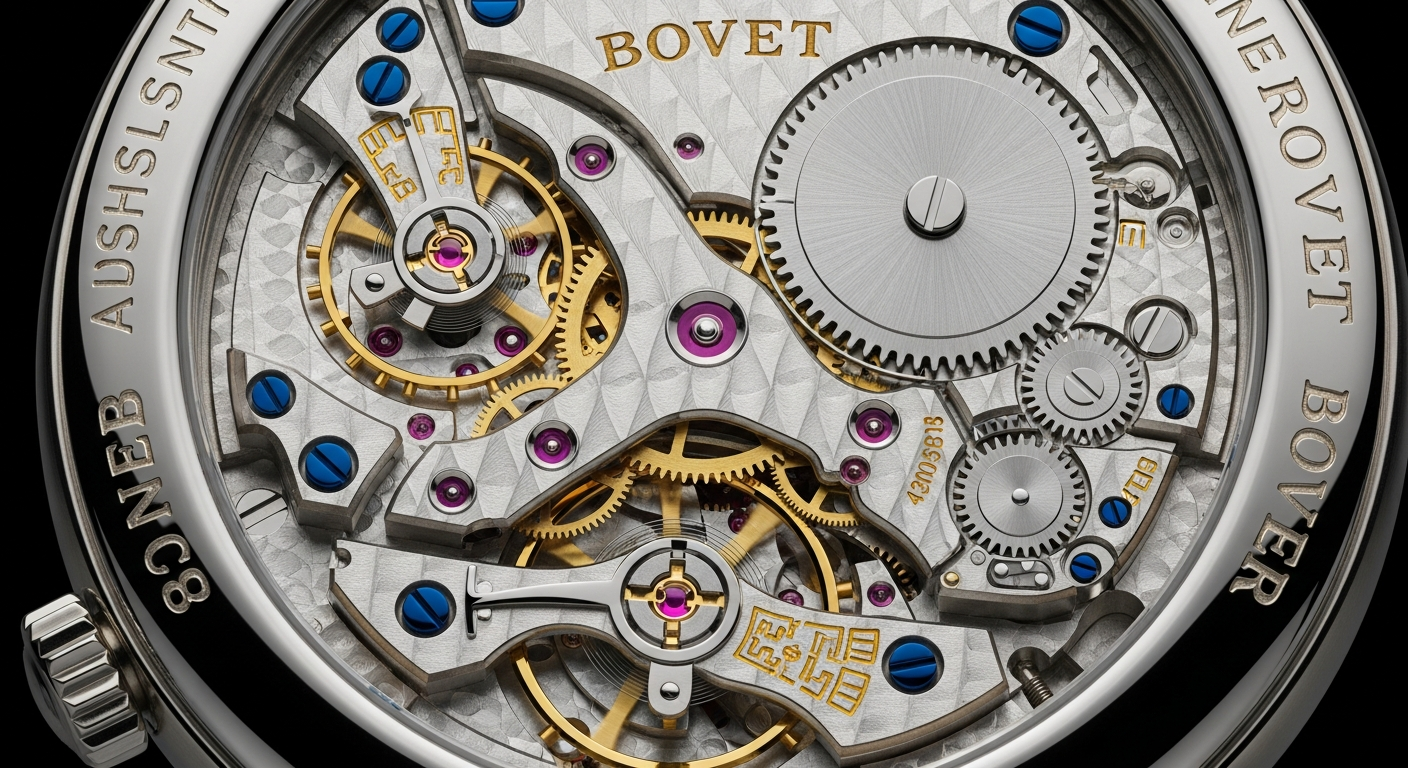
Crucially, these crafts are not always used as “decoration.” In the best Bovet pieces, dial craft serves architecture and legibility. Guilloché can be deployed to create functional contrast between indications. Hand engraving can define borders and depth in a way printing cannot. Enamel can deliver a particular tonal saturation and permanence that aligns with the brand’s objecthood—watches that are meant to age like heirlooms, not like fashion.
Collectors evaluating Bovet should therefore think less like shoppers and more like connoisseurs of attribution. Who executed the engraving? How consistent is the hand? Is the guilloché cut with the crispness and rhythm that marks mastery rather than patterning? Does the enamel show the depth and evenness that separates serious work from competent work? Bovet’s real moat is not “complication count.” It is the density of manual decisions embedded into the surfaces.
This is also where the brand’s position as a vertically integrated maison matters. When crafts are structurally embedded, production is not just about assembling parts. It’s about coordinating artisans, tolerances, and timelines. A brand that merely sources decorative dials can produce highlights; a maison that integrates these skills can build a coherent catalog where craft is predictable in standard, even if individual outcomes remain unique.
There is an additional strategic benefit: artisan authorship ages well in collector culture. Hype cycles are fragile; handwork is resilient. When demand shifts, a watch that is obviously difficult to replicate retains meaning even when it is not trending. Bovet is effectively converting human labor into long-term identity, and that identity is independent of mainstream visibility.
Modern Bovet’s Differentiator: Transformable Architecture (Amadeo) and High Complications Built for Display—What Collectors Should Evaluate
If craft is Bovet’s foundation, architecture is its modern signature. The Amadeo case concept remains one of the most strategically distinctive ideas in contemporary high watchmaking: a transformable system that can convert between wristwatch, pocket watch, and table clock configurations, depending on the model. In a landscape where “versatility” usually means swapping straps, Bovet’s approach is mechanical and structural.
This transformable architecture is more than a gimmick when executed well. It changes the relationship between owner and object. A complicated watch is typically locked into one mode of wear, with a display back as a concession. Bovet’s transformable designs treat viewing as a primary use case. The watch becomes a display instrument—something you can set down, frame differently, and experience as an object in space rather than as a dial glanced at on the wrist.
That matters for complications. Bovet tends to build high complications that are meant to be seen, not merely possessed. Tourbillons are placed and framed for visual impact. Perpetual calendars, retrograde indications, and power reserve displays are integrated in ways that emphasize symmetry and dimensionality. Even when a complication is conventional in concept, Bovet often presents it with uncommon clarity—using depth, bridge shapes, and dial layering to make mechanics legible.
For collectors, the evaluation framework should be specific and unsentimental.
First, assess coherence between craft and mechanics. In the strongest Bovet pieces, engraving and finishing reinforce the mechanical architecture rather than competing with it. Look for intentional negative space, visual hierarchy, and a sense that the movement layout was designed with decoration in mind from the start. When decoration is applied as an afterthought, it reads as surface noise. Bovet at its best reads as designed totality.
Second, examine the transformable system like you would any other mechanism. The conversion should feel precise, secure, and repeatable, with no sense of fragility. If the watch is meant to be handled as an object, its interfaces must be robust. Collectors should treat the case engineering as a core complication, because that is effectively what it is: an engineered set of tolerances that enables multiple forms without compromising security.
Third, prioritize artisan quality over reference familiarity. Bovet’s catalog can be broad, and the market is not always efficient at pricing the difference between “highly decorated” and “exceptional.” The delta often lives in bevel consistency, polish quality, engraving depth and crispness, and dial craft that shows deliberate control rather than generic flourish. In other words, the same reference name can contain meaningful variance depending on execution level and artistic ambition.
Fourth, think about collectability as authorship plus architecture, not as internet consensus. Bovet does not reliably benefit from the same liquidity dynamics that reward more universally recognized sports models. That is not a weakness if you are collecting, not trading. The value proposition is closer to art acquisition than to speculative watch flipping: you buy because the work is there, the object is distinctive, and the maison’s history supports the legitimacy of the style.
This is where Bovet’s positioning becomes clearest. Calling it a “niche independent” undersells the reality. Bovet behaves like an established maison with integrated capabilities, a long historical through-line, and a clear thesis about what a luxury watch should be: an engineered canvas. The crafts are not nostalgic; they are strategic. They allow the brand to produce watches where complication is not only measured in functions, but in human hours that remain visible forever.
For the collector willing to look past mainstream status signals, Bovet offers a rare combination: a house with real history that builds unapologetically ornate objects, yet does so with sufficient technical discipline to make that ornament feel structural. It is high-complication theater, but it is also manufacturing strategy—one that converts traditional craft into modern differentiation without needing to chase the temperature of the moment.