Bovet: The Most Underrated High-Horology Maison You’re Not Talking About

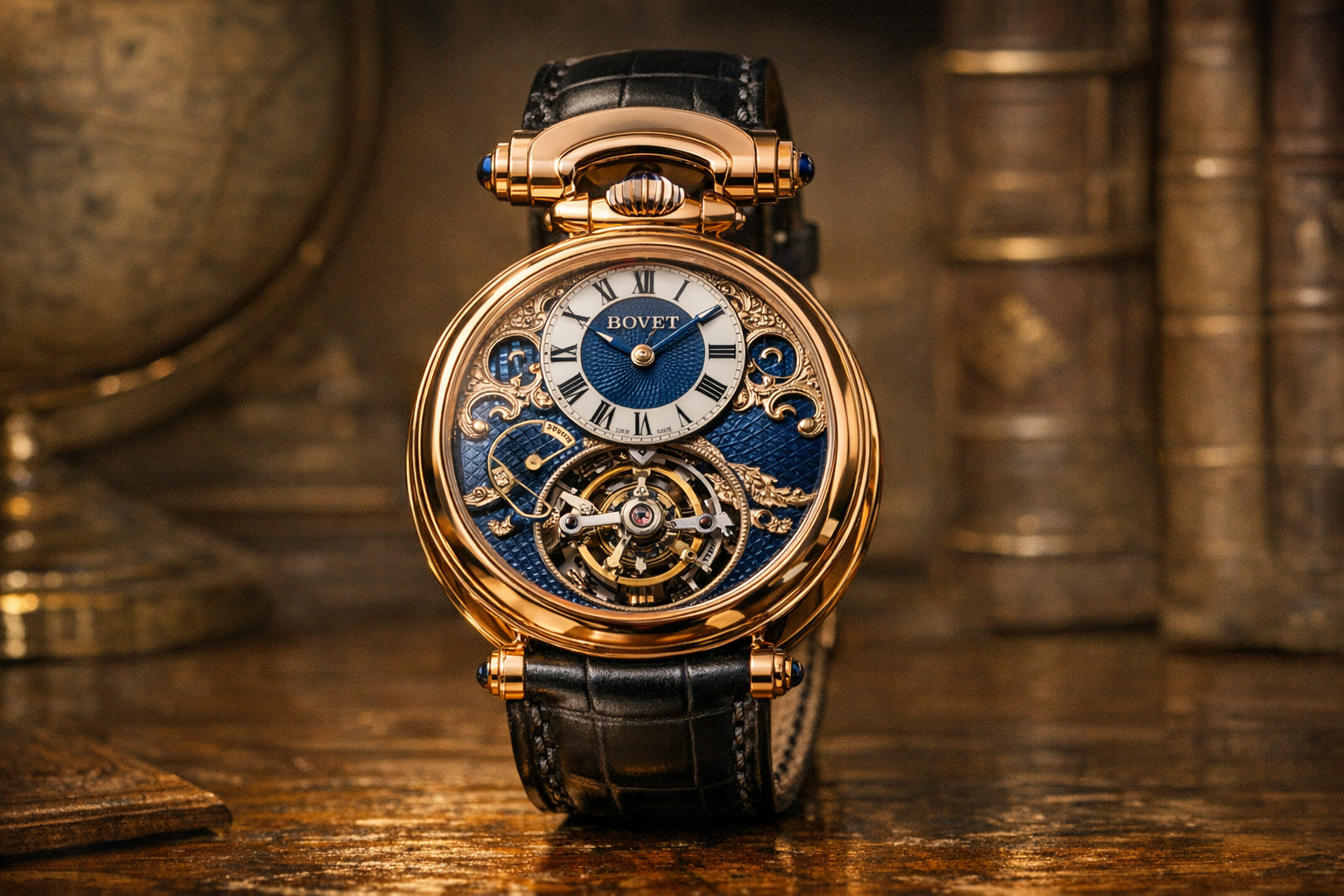
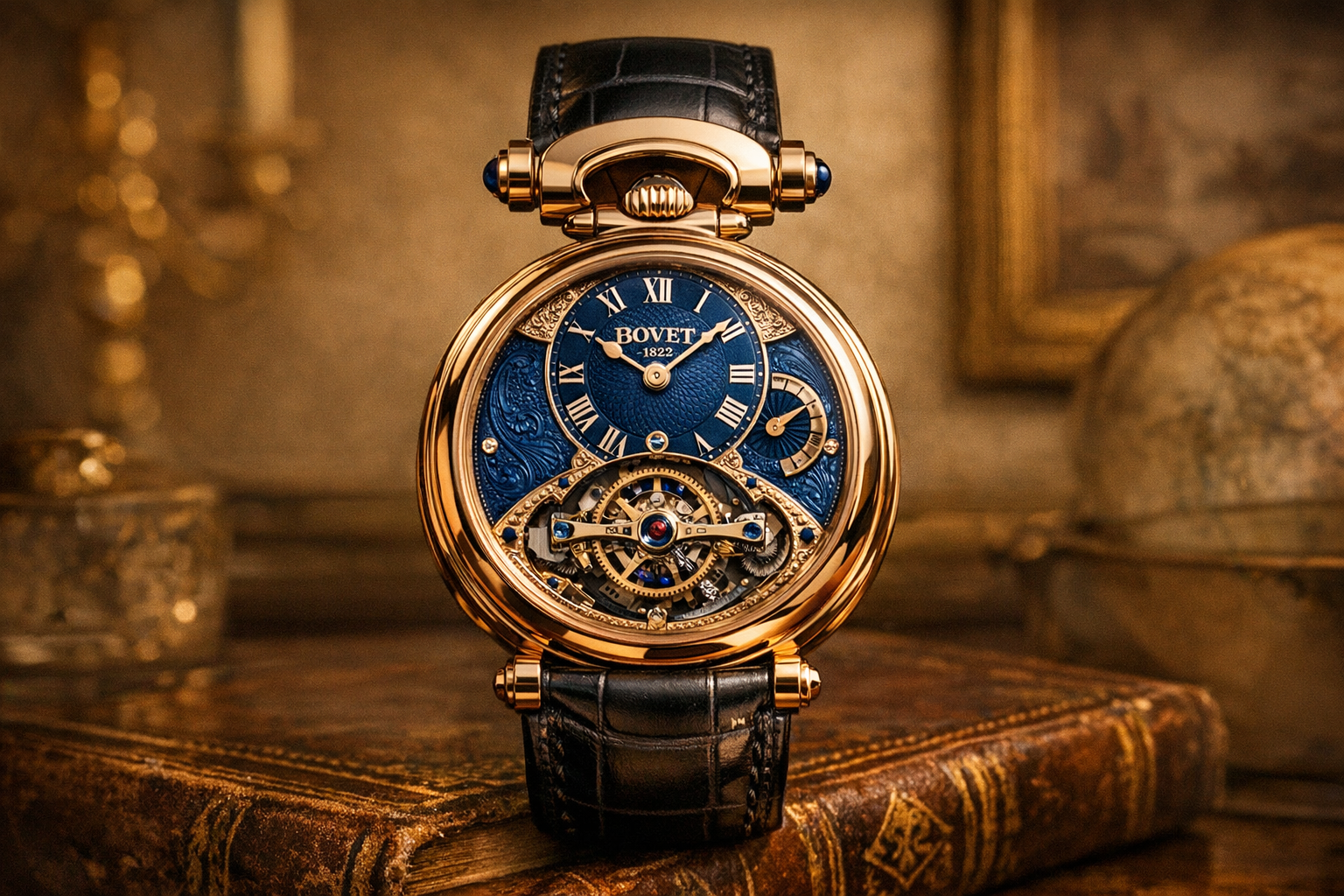
There’s a particular kind of quiet you notice the first time you handle a Bovet. Not the silence of a boutique where the carpeting dampens your footsteps, nor the practiced hush of sales talk that never quite becomes a conversation. It’s a different quiet, the kind that comes from realizing you’ve been looking at the wrong parts of the watch world for far too long. You feel it when the case turns in your hand and nothing about it is timid. You feel it when you find the crown where other watches would have already made it convenient. You feel it when the dial seems to look back at you—too ornate to be “minimalist,” too composed to be merely decorative, too historically loaded to be a modern stunt. And then you realize what the brand has been doing to you the whole time: it isn’t competing for your attention. It’s daring you to bring a longer attention span.
Bovet is, almost perversely, one of the easiest names in high horology to overlook if your idea of importance is rooted in the usual signals. The hype cycles don’t really bend toward it. The online discourse doesn’t reliably revolve around it. People speak of it in the same tone they use for niche artists: admired, respected, sometimes even coveted, but rarely treated as the obvious choice. Yet the deeper you go into contemporary independent and artisanal watchmaking—the kind of work that refuses assembly-line shortcuts and refuses, too, to apologize for beauty—the more it becomes clear that Bovet has been hiding in plain sight. Or maybe it hasn’t been hiding at all. Maybe we’ve trained ourselves to ignore anything that doesn’t sound like a status slogan.
Part of the misunderstanding starts right away with how Bovet presents itself. The maison doesn’t offer neat, easily digestible narratives. It has the inconvenient habit of making watches that look unapologetically like watches from another era, and of engineering them like they’re meant to outlive this one. It doesn’t chase the clean-room modernism that photographs so well against a café table. It doesn’t always flatten itself into the safe geometry of “sport-luxury.” Instead it leans into engraving, into lacquer, into miniature painting, into guilloché that catches light as if light were something you could carve. In a culture that’s grown addicted to one-watch uniformity, Bovet feels like a refusal to dress down.
And yet, that refusal is exactly what makes it one of the most relevant high-horology maisons of the moment—if relevance means anything beyond a waiting list.
To understand why Bovet still doesn’t get its due, you have to step back from the contemporary game of brand league tables and remember that watchmaking has always contained two parallel impulses. One is the pursuit of precision as a kind of industrial philosophy: standardization, robustness, the clean logic of repeatable excellence. The other is the pursuit of time as art: the desire not merely to measure hours, but to hold the imagination of hours, to give time a face worth looking at. Bovet is firmly in the second lineage, and in our era that can read as eccentric. We’re surrounded by engineering marvels, yes, but we’re also surrounded by watches that treat aesthetics like a liability. Bovet treats aesthetics like the point.
Its origins don’t sound like the typical modern brand origin myth, either. Bovet’s story begins not as a tidy Swiss tale of alpine ateliers, but as a narrative threaded through global trade and the 19th-century appetite for luxury objects that served as cultural currency. Long before “international markets” became a corporate phrase, Bovet was building watches with an eye for export and for spectacle, especially destined for China, where elaborate ornament and mechanical ingenuity were not opposites but co-conspirators. This matters because it explains why the maison never learned to be shy. It didn’t grow up in the school of restraint; it grew up in the school of astonishment.
That astonishment, in modern Bovet, isn’t a costume. It’s embedded methodology. The kinds of crafts you find on a Bovet are the kinds that other maisons talk about reverently and then deploy sparingly. Hand engraving that isn’t merely a flourish on a rotor but a fully committed sculptural language. Dials that are not just “finished” but composed, with depth and nuance that doesn’t flatten under harsh lighting. Cases that don’t treat the back as an afterthought. Movements that are built to be looked at, not hidden—because if you’re going to ask an artisan to spend days bringing steel to life, hiding that work would be the real extravagance.
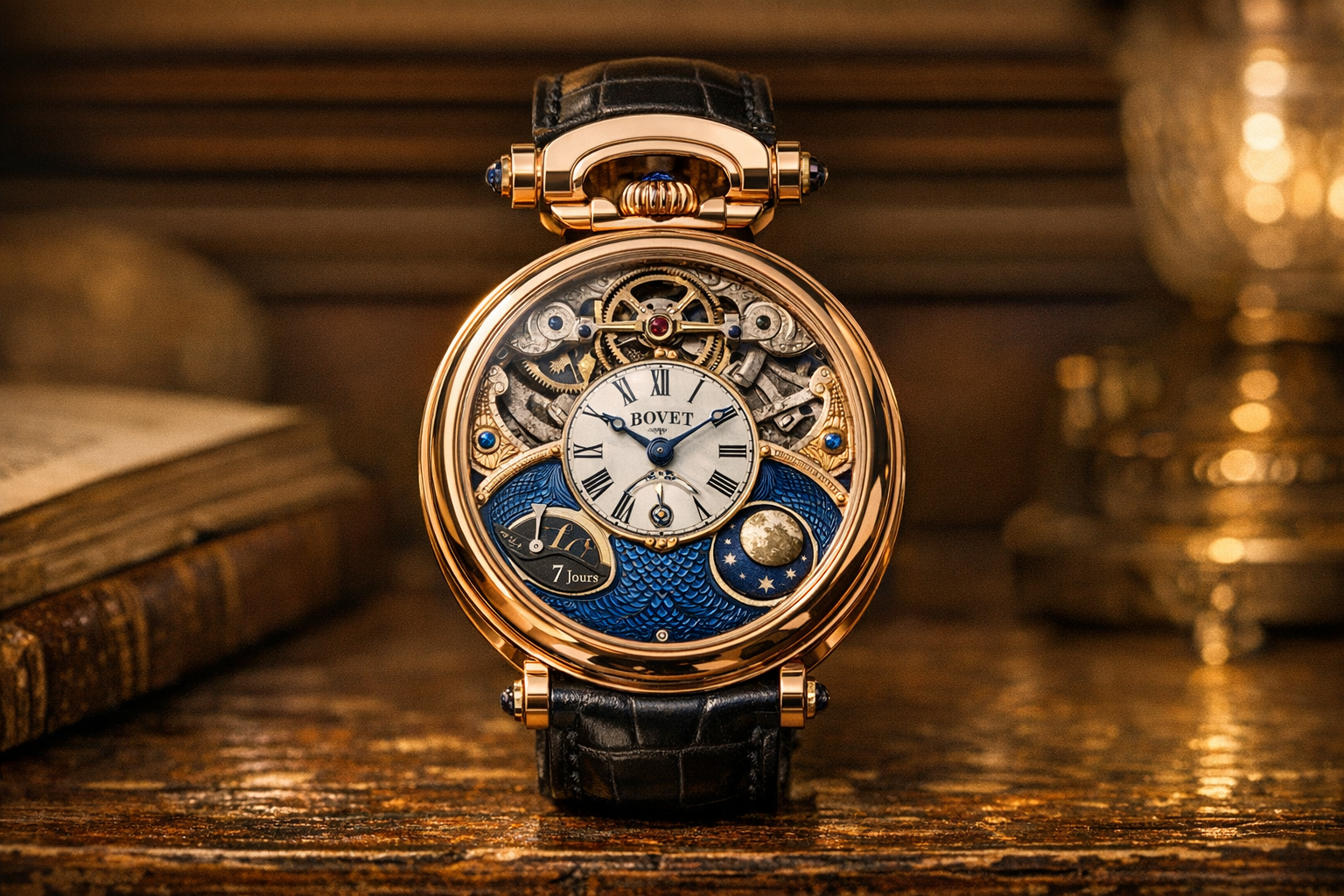
The first time I really understood the peculiar genius of Bovet, it wasn’t through a spec sheet. It was through the way a watch could shift identity without ever feeling like a gimmick. Bovet has a long-standing fascination with transformation—most famously in designs that let the watch convert between a wristwatch, a pocket watch, a desk clock. In a lesser brand’s hands, that might become a novelty, a party trick brought out once and then forgotten. But Bovet approaches it with a kind of old-world practicality: you are not meant to own a single object for a single use. You are meant to own a precious object that adapts to ceremony and to solitude, to travel and to stillness.
There’s something almost philosophical in that, especially now. We live with devices that become obsolete by design, objects whose value decays on a schedule. Bovet’s convertibility feels like an argument against that entire rhythm. It’s a watch telling you, in its own mechanical language, that longevity isn’t just about durability; it’s about continuance of meaning. A desk clock mode isn’t only “useful,” it’s an invitation to slow down and see time the way you see a painting: from a distance, with room for contemplation. A pocket watch mode isn’t merely a nod to tradition; it’s a different social posture, one that changes how you handle the object and how you inhabit the moment.
The irony is that the very elements that make Bovet exceptional are also what keeps it out of lazy conversations. It doesn’t slot cleanly into the mainstream collector archetypes. If your collecting identity is built around stealth wealth, Bovet is too expressive. If your identity is built around tool-watch severity, Bovet is too lyrical. If your identity is built around the most recognizable shapes in the room, Bovet is too individual. And if your identity is built around investment narratives, Bovet is too idiosyncratic to be easily “explained” to someone who wants a brand name to do the talking.
But the people who spend time with Bovet tend to become almost protective of it, like they’ve found a secret door behind a crowded gallery wall. Because the deeper you look, the more you see a brand making choices that are not optimized for mass approval. That, in a luxury industry increasingly shaped by marketing uniformity, is a kind of radical act.
Consider the relationship Bovet has with craft. Plenty of maisons claim handwork, but often the handwork functions like garnish: a bit of anglage here, a signed dial there, a nod to heritage that serves the press release. Bovet’s craft is not garnish. It’s architecture. The decorative arts aren’t applied to distract you from the mechanism; they are integrated into the identity of the mechanism. And the mechanism isn’t designed to be sterile; it’s designed to contribute to the visual narrative.
Even when you ignore the dial entirely and live on the movement side, you see this. A Bovet movement often feels like it was built with the assumption that the owner will spend time there, that the caseback is not a compliance requirement but a stage. Bridges can be shaped and arranged with a sense of drama. Finishing can be assertive without being gaudy, the way a well-tailored suit is confident without needing a logo. And when Bovet goes for complications, it tends to do so with a peculiar blend of tradition and theatricality: the complication is genuinely watchmaking, but it’s also presented as storytelling.
This is where the maison’s underappreciation starts to become almost comical. We live in a watch culture that says it loves “finishing,” “craft,” and “artistry,” but often only insofar as those things can be packaged into a single photo, a single line of text, a single flex. Bovet asks you to do something more difficult: to look longer. The guilloché isn’t just a pattern; it’s a landscape of repeating decisions. The engraving isn’t just texture; it’s a record of pressure and patience. The miniature painting isn’t just color; it’s time made visible.
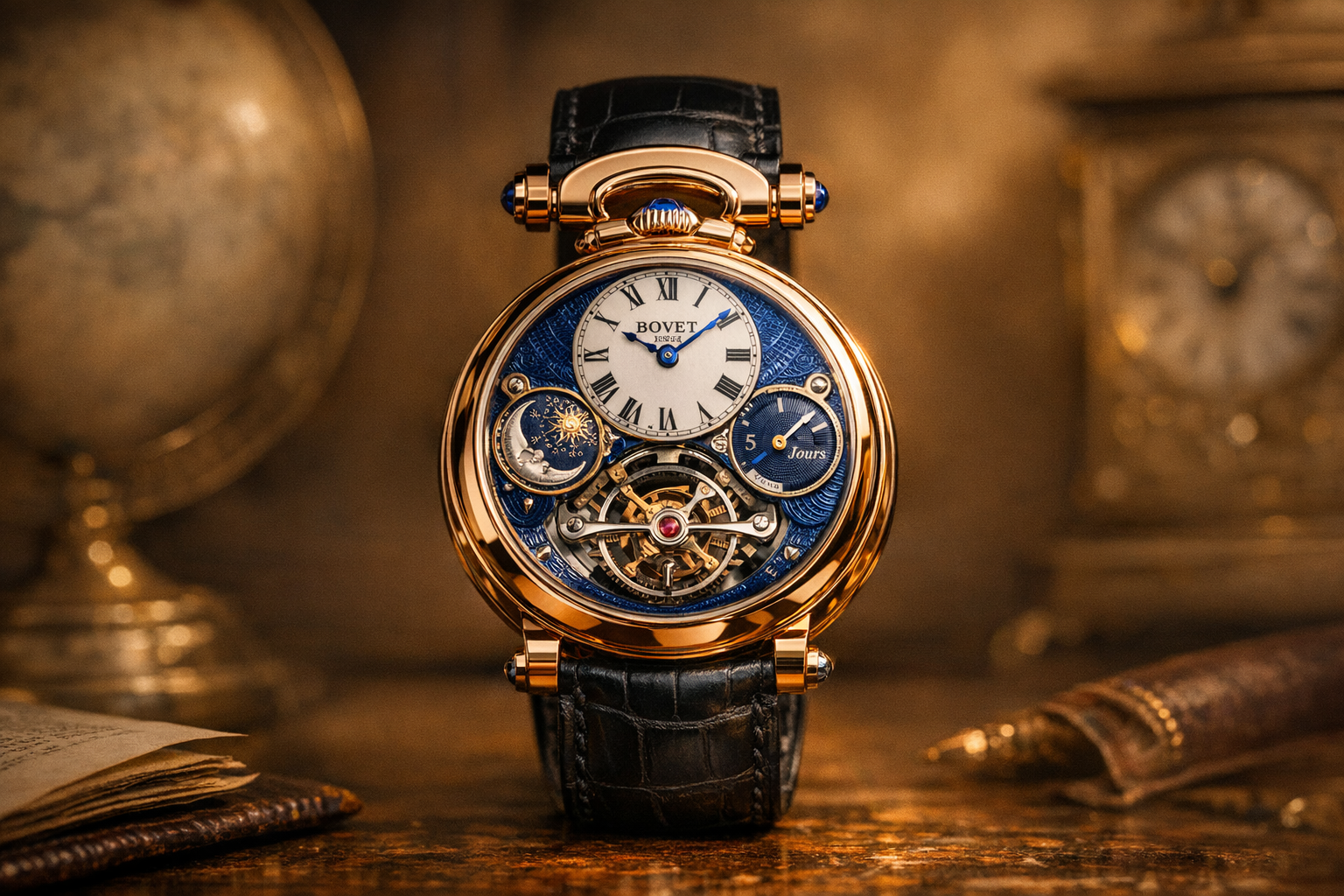
There’s also the matter of design courage, which is easy to talk about and harder to actually practice. Many brands experiment, but they experiment inside guarded boundaries. Bovet’s boundaries are different. It is not afraid of looking like “a Bovet” even if that makes it less universally wearable. It is not afraid of case shapes that break the expected silhouette. It is not afraid of crowns and bows that recall pocket watches, even if the modern eye has been trained to expect symmetry and low profile. And it is certainly not afraid of ornament, even if the past decade of taste-making has elevated understatement into a kind of moral virtue.
The thing is, Bovet’s ornament isn’t random. It’s disciplined. There’s a difference between decoration as noise and decoration as language. Noise is when you add elements because you can. Language is when the elements speak to each other, when the watch feels composed rather than crowded. Bovet, at its best, is composition. It may not always be the composition you would wear with a T-shirt, but it’s the composition you return to when you remember that watches were once made to be wondrous.
If you’ve ever watched a collector handle a complicated Bovet, you’ll notice something that doesn’t happen with more mainstream grails. There’s less performative certainty. With a Royal Oak or a Nautilus, people often handle the watch as if they already know what they’re supposed to feel. With a Bovet, they handle it like they’re learning. They turn it, pause, turn it again. They trace lines with their eyes the way you do in front of a painting that doesn’t give you the whole image at once. The watch is not a shorthand; it’s an encounter.
And that encounter is precisely why Bovet becomes addictive to the right kind of enthusiast. It refuses to be reduced to a single “icon” in the way some maisons are. There isn’t one model that flattens everything else into background noise. Bovet’s world is a constellation: different expressions of the same core idea that high horology is both mechanical and decorative, both intellectual and sensual. If you want an easy entry point, you might start with the reversibility and transformation that has become part of its modern signature. If you want to fall down the rabbit hole, you start paying attention to the dials, to the handwork, to the way the maison treats the entire object as an arena for craft.
This is also why the usual talk about “value” fails to capture Bovet. In watch circles, “value” often means you’re getting more brand equity per dollar, or more complication per dollar, or more resale stability per dollar. But there’s another kind of value, the kind that isn’t comforting and isn’t liquid: the value of owning something that very few others even recognize, and fewer still could replicate. Bovet’s pricing, like all high horology, is not a bargain. But the cost begins to make sense when you understand what you’re actually paying for: not just a movement, but time spent by human hands on surfaces that most brands would leave machine-perfect and emotionally empty.
Underrated doesn’t mean obscure, and Bovet isn’t obscure to people who genuinely live in this world. But it is underrated in the broader culture because it refuses to be digestible. It doesn’t always fit the profile photo. It doesn’t always match the “daily wearer” narrative. It doesn’t always look like what the internet has agreed a luxury watch should look like in 2026. It insists on being its own thing, which is the most expensive stance a brand can take, because it means forfeiting the easy sales that come from imitation.
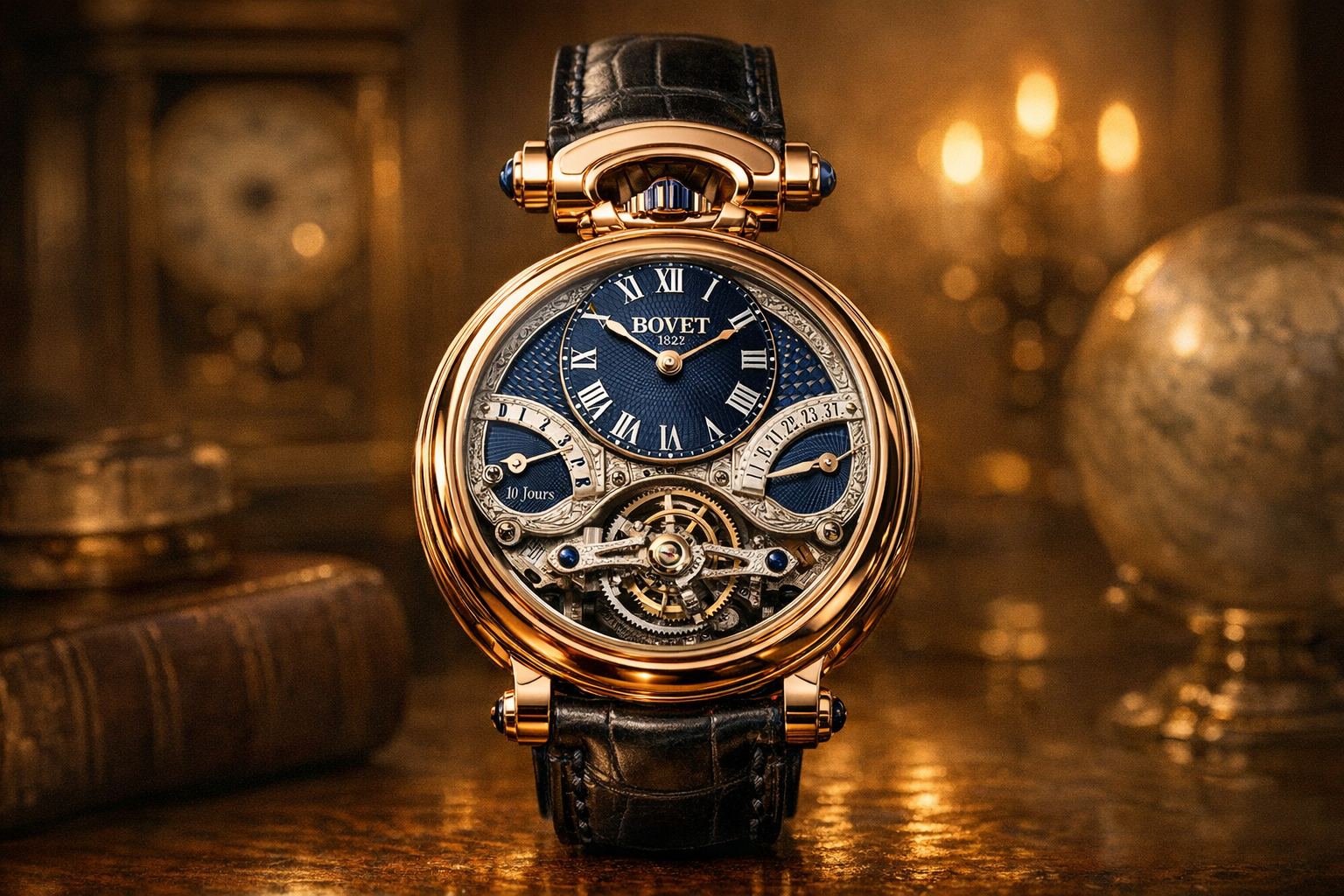
Sometimes I imagine Bovet as a kind of salon at the edge of the modern watch party. Inside, the lighting is warmer. The conversations are slower. The objects on the table are strange in the best way, because they are not optimized to win. They are optimized to endure. The people who drift into that room don’t always stay, not because the room lacks quality, but because it requires a different mood. It asks you to be a person who can sit with something and let it reveal itself.
And maybe that’s the real reason you’re not talking about Bovet. Not because the watches aren’t great, but because they complicate the usual narratives. They make it harder to pretend that the best watches are simply the most recognized ones. They make it harder to pretend that “taste” must always mean “quiet.” They make it harder to treat high horology as a contest of references and resale charts. Bovet nudges you back to the older, stranger idea that a watch can be a personal artifact, a small mechanical theater, a piece of culture you carry.
If you’re the kind of collector who loves the clean engineering of modern Swiss watchmaking, Bovet will still impress you. The finishing, the mechanics, the seriousness of construction are all there. But if you’re the kind of collector who secretly wishes more watches felt like they had souls—if you want to see the trace of the maker in the made—Bovet doesn’t just impress you. It implicates you. It asks why you’ve accepted so many watches that are perfect and yet somehow empty.
The funny thing about underrated maisons is that they don’t stay underrated forever. They remain quiet until the culture catches up, until people tire of sameness and begin searching again for objects with a point of view. That shift is already happening. You can see it in the renewed hunger for métiers d’art, for handcraft, for watches that take risks with form and narrative. You can see it in collectors who have already checked off the obvious trophies and now want something that doesn’t just signal success but signals curiosity.
Bovet is waiting there for those people, not with a megaphone, but with a kind of steady conviction. Its watches don’t plead for validation; they offer companionship for a particular temperament. They’re for someone who wants to feel the weight of history without wearing a costume, someone who wants mechanics that don’t apologize for beauty, someone who understands that extravagance can be measured not only in carats and complications but in the willingness to do things the hard way because the hard way is the point.
So if you’re tired of talking about the same brands in the same tones, if you find yourself craving a watch that rewards attention instead of merely collecting it, you could do worse than to spend a quiet hour with a Bovet. Turn it over. Let the light move across the finishing. Let the dial’s details resolve slowly, like your eyes adjusting in a museum. And notice how the silence returns—not emptiness, but the calm that comes from encountering something made with enough intent that it doesn’t need you to post about it to be real.
Bovet is not the watch world’s best-kept secret. It’s something rarer and more interesting: a maison so committed to its own language that it has, inadvertently, become a test. Not of wealth, not of access, but of attention. And in an age that treats attention as a currency to be spent as quickly as possible, that may be the most luxurious thing of all.