Rolex Daytona vs Omega Speedmaster: Two Ideas of Greatness
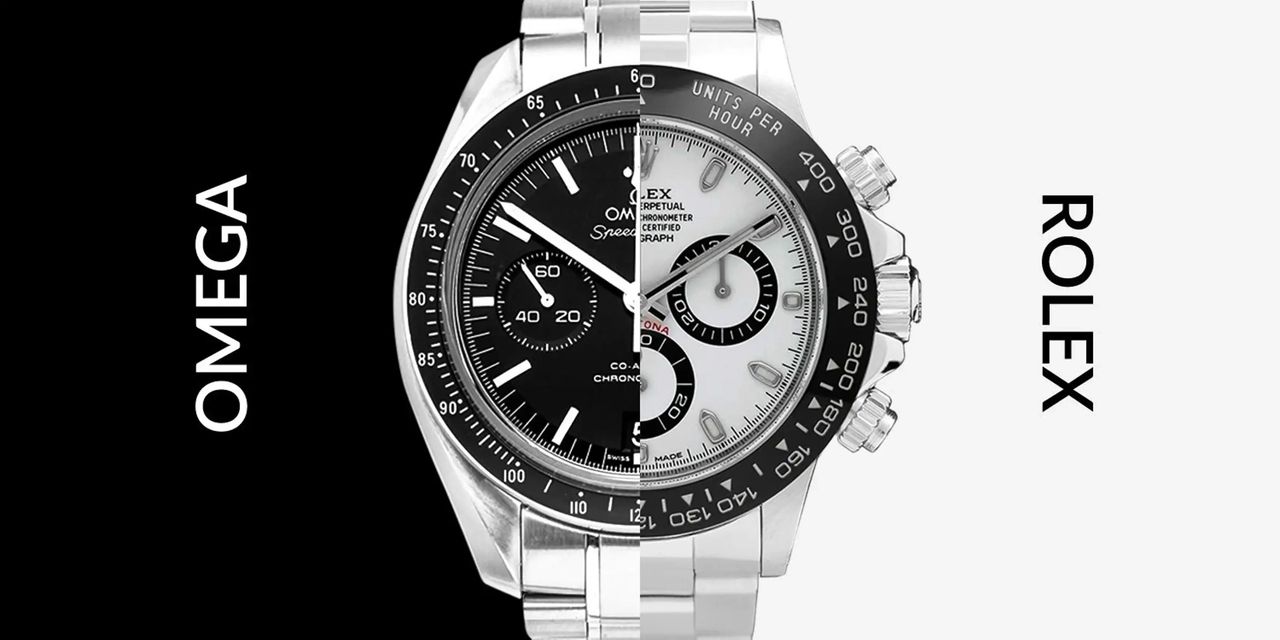
People often speak about the Daytona and the Speedmaster as rivals.
They are not.
They happen to share a complication — the chronograph — but everything else about them points in opposite directions. Their reputations were shaped by different kinds of pressure. Their success was earned in different arenas. Their meanings today could not be more distinct.
The confusion between them — calling one what the other is not — says more about modern watch culture than it does about either watch.
The Speedmaster Was Chosen
The Daytona Was Built
This is the most important difference, and it came early.
The Omega Speedmaster did not set out to become legendary. It was tested, evaluated, and selected. It survived a process that was indifferent to romance and blind to brand prestige.
When NASA put watches through brutal qualification tests — heat, cold, vibration, shock, vacuum — the Speedmaster passed. Others didn’t.
That mattered.
The Speedmaster’s legacy is therefore procedural. It was proven under scrutiny. Its mythology was created by documentation, checklists, and results.
The Rolex Daytona, by contrast, was not chosen. It was constructed — gradually, deliberately — into an icon.
Rolex did not need an external validator. It relied on internal discipline: refinement, consistency, and control. The Daytona’s legitimacy grew not from one defining test, but from decades of incremental confidence-building.
One chronograph was certified by history.
The other was shaped by it.
What Each Watch Was Asked to Do
The Speedmaster was asked to survive indifference.
NASA did not care what it looked like. It did not care how it wore. It did not care whether it would become collectible. The watch was expected to work when everything else failed.
That expectation still defines the Speedmaster today.
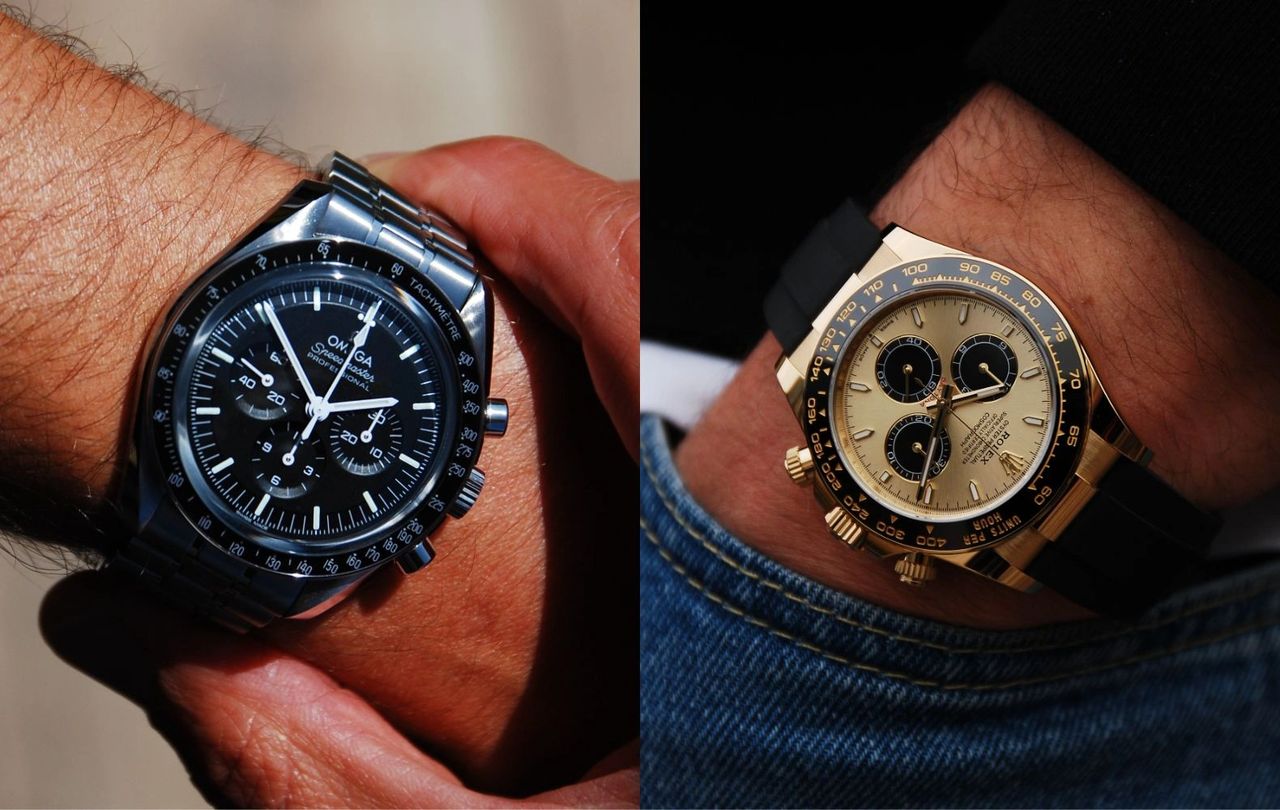
It is legible.
It is familiar.
It is unchanged in spirit.
Even its hesalite crystal — often criticized — exists because it behaves predictably under failure. This is a watch shaped by risk management.
The Daytona was asked something else entirely.
It was designed for precision under control. Racing timing is not chaos — it is structure at speed. The Daytona’s evolution reflects that: tightening tolerances, improving movements, refining ergonomics.
Where the Speedmaster carries the marks of survival, the Daytona carries the marks of optimization.
How Each Brand Treats Change
Omega is comfortable with narrative.
It revisits the Speedmaster carefully, often reverently. Updates are cautious. Changes are debated publicly. Continuity is part of the watch’s moral authority. Alter it too much, and something breaks.
The Speedmaster feels like a responsibility.
Rolex treats change differently.
The Daytona evolves almost invisibly. Movements improve. Materials change. Proportions adjust. Rolex rarely explains itself. It does not ask permission. It simply moves forward and lets acceptance follow.
The Daytona feels inevitable.
This difference explains why enthusiasts argue endlessly about the Speedmaster, and far less about the Daytona. One invites discussion. The other ends it.
Relationship With Scarcity
The Speedmaster is available.
That availability is intentional. It reinforces its identity as a watch meant to be worn, used, and trusted. Scarcity would feel dishonest. The Speedmaster’s value comes from what it represents, not from how hard it is to obtain.
The Daytona, on the other hand, is scarce by design.

Not theatrically scarce — structurally scarce. Rolex controls production, distribution, and exposure tightly. The result is a chronograph that exists as much in anticipation as in ownership.
This is not an accident. It is system design.
One watch earns meaning through history.
The other accrues meaning through control.
How They Sit on the Wrist — Emotionally
The Speedmaster feels like a companion.
It invites familiarity. It tolerates wear. It absorbs scratches. It does not punish daily use. It feels correct in ordinary moments — which is precisely why it worked in extraordinary ones.
The Daytona feels like an achievement.
It is tighter. Sharper. More exacting. It carries an implicit sense of arrival. Even when worn casually, it retains a certain formality — a reminder that this is a watch that exists inside a carefully maintained ecosystem.
Neither feeling is better.
They are simply different relationships with time.
The Real Difference Isn’t the Watch
The real difference is what kind of confidence you value.
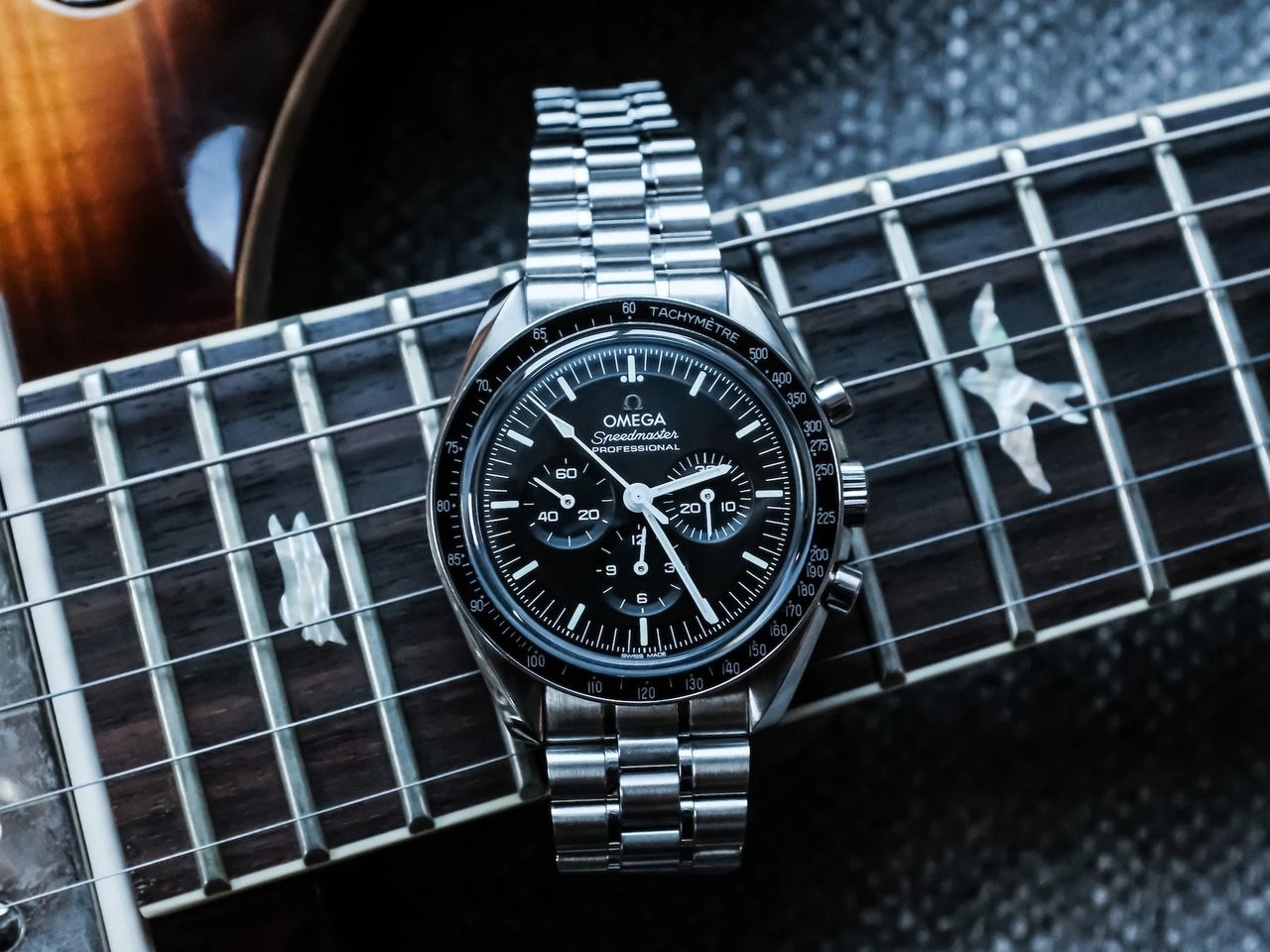
The Speedmaster represents confidence earned through exposure to failure. It stood where mistakes mattered, and it endured.
The Daytona represents confidence earned through refusal to compromise. It did not need to be tested publicly because it was engineered to avoid surprise.
One trusts history.
The other trusts systems.
Why They Will Never Replace Each Other
People often ask which one is “better.”
That question misunderstands both watches.
The Speedmaster cannot become the Daytona without betraying its origin.
The Daytona cannot become the Speedmaster without surrendering its control.
They are answers to different questions.
The Speedmaster asks:
What happens when everything else stops working?
The Daytona asks:
What happens when everything works exactly as intended?
Both answers matter.
Final Thought
The reason people confuse the two is because modern watch culture flattens meaning into category.
“Chronograph” becomes the identity.
Everything else gets blurred.
But the Daytona and the Speedmaster are not competing for the same place in history. They occupy different moral positions in watchmaking.
One was trusted when no one cared who made it.
The other is trusted because of who makes it.
And in that difference lies the real story.