Patek Philippe and the Discipline of the Long Game

Patek Philippe and the Discipline of the Long Game
Patek Philippe is most revealing when viewed not through its auction records, but through what it refuses to optimise. The company could produce more Nautilus watches, flatten its waiting lists, convert scarcity into volume and still sell every piece for years. It does not, because Patek’s real asset is not steel sports-watch demand. It is control: control of production, family ownership, archival continuity, complicated-watch credibility, and the pace at which the market is allowed to consume the brand.
That control has made Patek Philippe the most strategically conservative of the great Swiss maisons, and also one of the most resilient. Founded in Geneva in 1839 by Antoni Patek and Franciszek Czapek, then reconstituted in 1845 with the arrival of Adrien Philippe, inventor of a keyless winding and setting system, the company has survived because it has rarely confused attention with authority. The Stern family, originally dial suppliers, acquired Patek Philippe in 1932 during the Depression. That date matters. Patek’s modern mythology is not built on corporate luxury consolidation; it is built on a family-controlled Geneva manufacturer that bought time when others needed scale.
The Stern Model: Independence as a Commercial Weapon
Since 1932, the Stern family has treated independence less as romance than as leverage. Philippe Stern shaped the modern company from the late twentieth century, investing in manufacturing depth, the Philippe Stern Patek Philippe Museum in Geneva, and a public identity centred on continuity. Thierry Stern became president in 2009, the same year Patek Philippe abandoned the Geneva Seal in favour of its own Patek Philippe Seal. That decision remains divisive. It allowed the brand to certify the entire watch rather than only the movement, but it also replaced an external hallmark with a self-administered standard. For a company at Patek’s level, the move was both practical and politically assertive.
This independence gives Patek room to make unpopular decisions. The discontinuation of the Nautilus reference 5711/1A in 2021 was the clearest recent example. Few modern watches generated more irrational demand: the blue-dial 5711, powered in later years by the calibre 26-330 SC after the earlier 324 SC, traded at multiples of retail before the wider market corrected in 2022 and 2023. Patek could have expanded production and monetised the frenzy. Instead, Thierry Stern removed the model and permitted a final green-dial run, followed by the 5711/1A-018 with Tiffany & Co. dial, produced in 170 pieces. One sold at Phillips in December 2021 for over $6.5 million. That result said less about horology than about controlled distribution, symbolic scarcity, and the financialisation of watch collecting.
The Nautilus Problem
The Nautilus is both a triumph and a distortion. Designed by Gérald Genta and launched in 1976 as reference 3700/1A, it gave Patek an answer to Audemars Piguet’s 1972 Royal Oak without abandoning Geneva refinement. Its monobloc case, integrated bracelet and horizontally embossed dial were radical within Patek’s catalogue, but the original watch was still thin, expensive and restrained, using the calibre 28-255 C, derived from Jaeger-LeCoultre’s calibre 920 architecture. It was never intended to become the gravitational centre of the brand.
The reference 5711, introduced in 2006 for the Nautilus fortieth anniversary, changed that balance. It was not Patek’s most technically interesting watch; it was a slim automatic time-and-date steel watch with an integrated bracelet. Yet it became the modern market’s shorthand for status with plausible taste. Even after its discontinuation, the Nautilus line remains powerful through references such as the 5811/1G in white gold, introduced in 2022 with a 41 mm case and calibre 26-330 SC. The strategic shift from steel to precious metal was not accidental. Patek’s message was clear: if the market insists on treating the Nautilus as a trophy, Patek will decide the terms of that trophy.
The risk is that steel-sports demand has taught a generation of buyers to approach Patek backwards. They discover the Nautilus, then learn the complications. Historically, Patek’s hierarchy was the opposite. The brand’s authority came from perpetual calendars, minute repeaters, split-seconds chronographs and ultra-thin dress watches. The Nautilus is important, but it is not the foundation. Treating it as such reduces one of the most technically significant manufacturers in Switzerland to a waiting-list brand.

The Complication Lineage That Still Matters
Patek Philippe’s serious claim to greatness rests in its complicated wristwatches. The reference 1518, introduced in 1941, was the first serially produced perpetual calendar chronograph wristwatch. Its successor, the reference 2499, produced from 1950 to 1985, defined the mid-century Geneva grand complication format: balanced subdials, pump or square pushers depending on series, and case proportions that still influence Patek today. The later references 3970, 5970 and 5270 trace the same bloodline through changing movement strategies and collector taste.
The 3970, launched in 1986, used the Lemania-based CH 27-70 Q and helped re-establish complicated mechanical watchmaking when quartz had weakened the category. The 5970, introduced in 2004 under Philippe Stern, enlarged and sharpened the form while retaining the Lemania ébauche. The 5270, launched in 2011, moved to Patek’s in-house CH 29-535 PS Q, a manual-wind chronograph calibre with six patented innovations and a more modern construction. Collectors still debate the aesthetics of early 5270 dial layouts, particularly the so-called “chin” on first-series references, but mechanically the watch marked an essential transition: Patek could no longer rely on historic ébauches for its highest-profile chronographs.
The same story applies to the standalone chronograph. The calibre CH 29-535 PS, introduced in 2009 in the ladies’ reference 7071 before appearing in men’s references such as the 5170, was more than a movement launch. It was Patek demonstrating that traditional column-wheel, horizontal-clutch chronograph architecture could be developed internally at the level collectors expected. In a market where “in-house” is often used loosely, Patek’s move had substance because it replaced a revered external base rather than filling a marketing gap.

Calatrava: The Brand’s Quiet Control Group
If the Nautilus shows how Patek manages demand, the Calatrava shows how it manages identity. The reference 96, launched in 1932, is the essential Patek wristwatch: round case, flat bezel, small seconds, disciplined proportions. It arrived in the same year the Sterns acquired the company, making it both product and manifesto. Its influence runs through references such as the 3796, 5196 and more recent 6119, the latter introduced in 2021 with the manual-wind calibre 30-255 PS.
The 6119 is strategically important because it corrected a weakness in earlier modern Calatravas. The 5196, though elegant, used the calibre 215 PS, a small movement in a case size that exposed the compromises of scaling classic designs for contemporary wrists. The 30-255 PS, by contrast, is a larger manually wound calibre with twin barrels, 65 hours of power reserve and architecture better matched to the 39 mm case. This is Patek at its best: not chasing novelty, but solving a proportion and movement problem that collectors had been discussing for years.
The Calatrava line also illustrates Patek’s restraint and its occasional inflexibility. The brand knows how to make a perfect simple watch, but it prices simplicity as institutional authority. A Calatrava competes not only with Vacheron Constantin and A. Lange & Söhne, but with high-end independents offering more visible hand-finishing or stronger movement theatre at comparable prices. Patek’s answer is not spectacle. It is continuity, liquidity, service infrastructure and the weight of reference history. That answer is persuasive, though not always emotionally exciting.

Movements, Materials and the Limits of Conservatism
Patek Philippe’s movement catalogue is deeper than casual observers assume. The calibre 240, introduced in 1977, remains one of the great automatic micro-rotor movements, enabling thin perpetual calendars and elegant complications without excessive case thickness. The calibre 324 SC powered a generation of automatic watches before the calibre 26-330 SC introduced technical refinements including a stop-seconds function and improvements to the automatic winding and seconds hand behaviour. The annual calendar, launched in 1996 with reference 5035, created a practical complication category between simple calendar and perpetual calendar, and became one of Patek’s most commercially meaningful modern inventions.
Patek’s Advanced Research programme has been more selective. The Spiromax silicon balance spring appeared in 2006, the Pulsomax escapement followed in 2008, and the Oscillomax ensemble was presented in 2011. These developments showed that Patek was willing to adopt silicon components without turning its watches into laboratory products. The brand has generally avoided the public engineering theatre favoured by some competitors. That restraint suits Patek’s clientele, but it also means the company can appear technically cautious beside Rolex’s industrialisation, Omega’s METAS-certified anti-magnetism, or independents experimenting with new escapements and resonance systems.
The point is not that Patek lacks technical depth. The Grandmaster Chime reference 5175, introduced in 2014 for the company’s 175th anniversary, contained 20 complications. The unique steel reference 6300A sold at Only Watch 2019 for CHF 31 million, the highest auction result for any watch at the time. The Calibre 89, completed in 1989, had 33 complications and was for years the benchmark of portable mechanical excess. The question is whether those halo pieces meaningfully shape the watches most clients encounter. Often, they function as institutional proof rather than product direction.

Aquanaut, Cubitus and the Search for the Next Casual Patek
The Aquanaut, launched in 1997 with reference 5060A, has aged better than many expected. Initially dismissed as a younger, less formal derivative of the Nautilus, it developed its own logic through the rounded octagonal case, composite strap and embossed dial. The reference 5167A became the entry point into casual Patek ownership for many buyers, while the travel-time references such as 5164A and later precious-metal variants demonstrated that the line could carry real utility. It remains less architecturally pure than the Nautilus, but arguably more wearable in contemporary use.
The 2024 launch of the Cubitus was more contentious. References 5821/1A in steel, 5821/1AR in steel and rose gold, and 5822P in platinum introduced a new square-cased collection clearly related to the Nautilus design vocabulary. The time-and-date models used the calibre 26-330 SC, while the platinum model introduced a more complicated display with large date, day and moon phase based on the calibre 240 platform. The reaction was predictable: collectors saw either disciplined brand extension or overfamiliar geometry. The truth is less binary. Cubitus is strategically logical because Patek needs another casual platform that is not simply Nautilus allocation theatre. Aesthetically, however, it asks a difficult question: can Patek create a new icon while borrowing so visibly from an old one?
That question matters because Patek’s authority has always depended on proportion, not novelty. When the company gets the proportions right, as with the 96, 2499, 3940, 3970 or 5711, the watch can survive changing taste. When it misjudges dial balance, case scale or typography, collectors notice. Patek’s audience is unusually literate, and its mistakes are preserved in auction catalogues as carefully as its triumphs.

The Collector’s View: What Patek Still Does Better
Patek Philippe remains the strongest brand in complicated serial-production watchmaking because it combines technical legitimacy with market memory. A perpetual calendar chronograph from Patek is not merely a complication; it belongs to a documented line beginning with the 1518. A Calatrava is not merely a dress watch; it refers back to the reference 96 and to Geneva classicism under Stern ownership. A Nautilus is not merely an integrated-bracelet sports watch; it is part of a 1976 design decision that Patek has carefully prevented from overwhelming the manufacture, even when the secondary market tried to do exactly that.
The weaknesses are equally real. Retail access is opaque. Servicing can be slow and expensive. Some modern cases have grown larger than their movements aesthetically justify. The Patek Philippe Seal, however rigorous internally, lacks the independence some collectors prefer. Secondary-market premiums have distorted buyer behaviour, especially around Nautilus and Aquanaut references. And the brand’s design conservatism, usually an asset, can become hesitancy when it needs to introduce a genuinely new form.
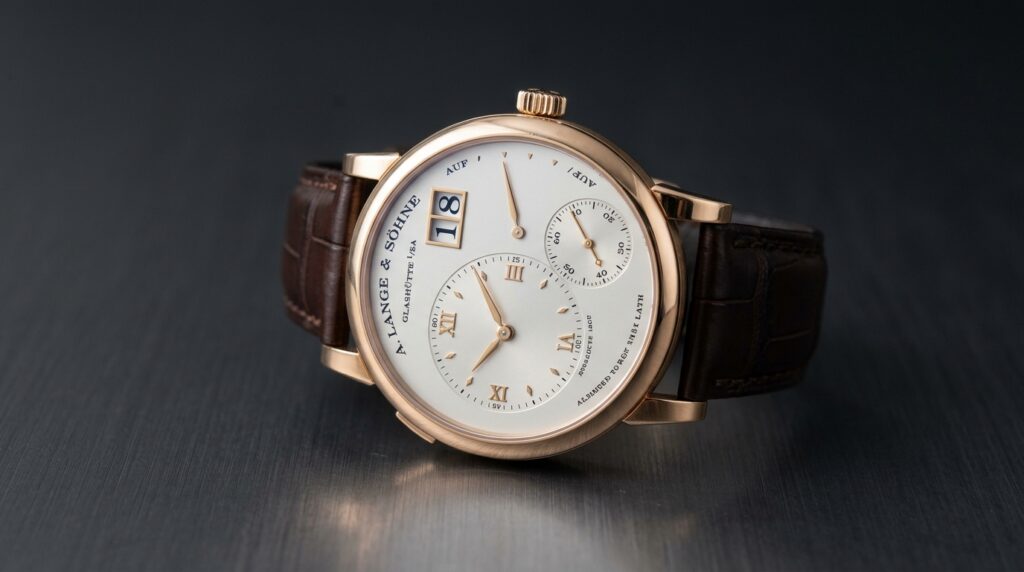
Yet Patek’s position remains unusually defensible. Rolex dominates industrial precision and cultural reach. Audemars Piguet has built a formidable modern identity around the Royal Oak. Vacheron Constantin offers older continuous history and often more accessible elegance. A. Lange & Söhne provides German movement architecture with exceptional visible finishing. Patek’s advantage is different: it owns the central canon of the complicated Swiss wristwatch. Auction rooms, museum collections and collector scholarship continue to reinforce that canon, reference by reference.
Why Patek Philippe Still Sets the Terms
The modern luxury watch market rewards noise, but Patek Philippe is built to outlast it. The company’s strongest decisions are usually acts of refusal: refusing to overproduce the Nautilus, refusing to abandon grand complications, refusing to let corporate ownership dictate quarterly strategy, refusing to turn every technical development into a spectacle. That discipline can look aloof, and sometimes it is. But in a market crowded with brands trying to manufacture heritage under pressure, Patek’s control of its own tempo remains a serious advantage.
The best way to understand Patek Philippe is not to ask whether it is the greatest watch brand. That question is too broad and too easily corrupted by auction prices. The sharper question is whether any other manufacturer has managed the relationship between family ownership, complication legitimacy, design continuity and market scarcity with comparable precision. On that narrower question, Patek still has the strongest case. Not because every watch it makes is beyond criticism, but because the architecture behind the brand remains exceptionally hard to replicate.