The Curious Survival Story of Corum
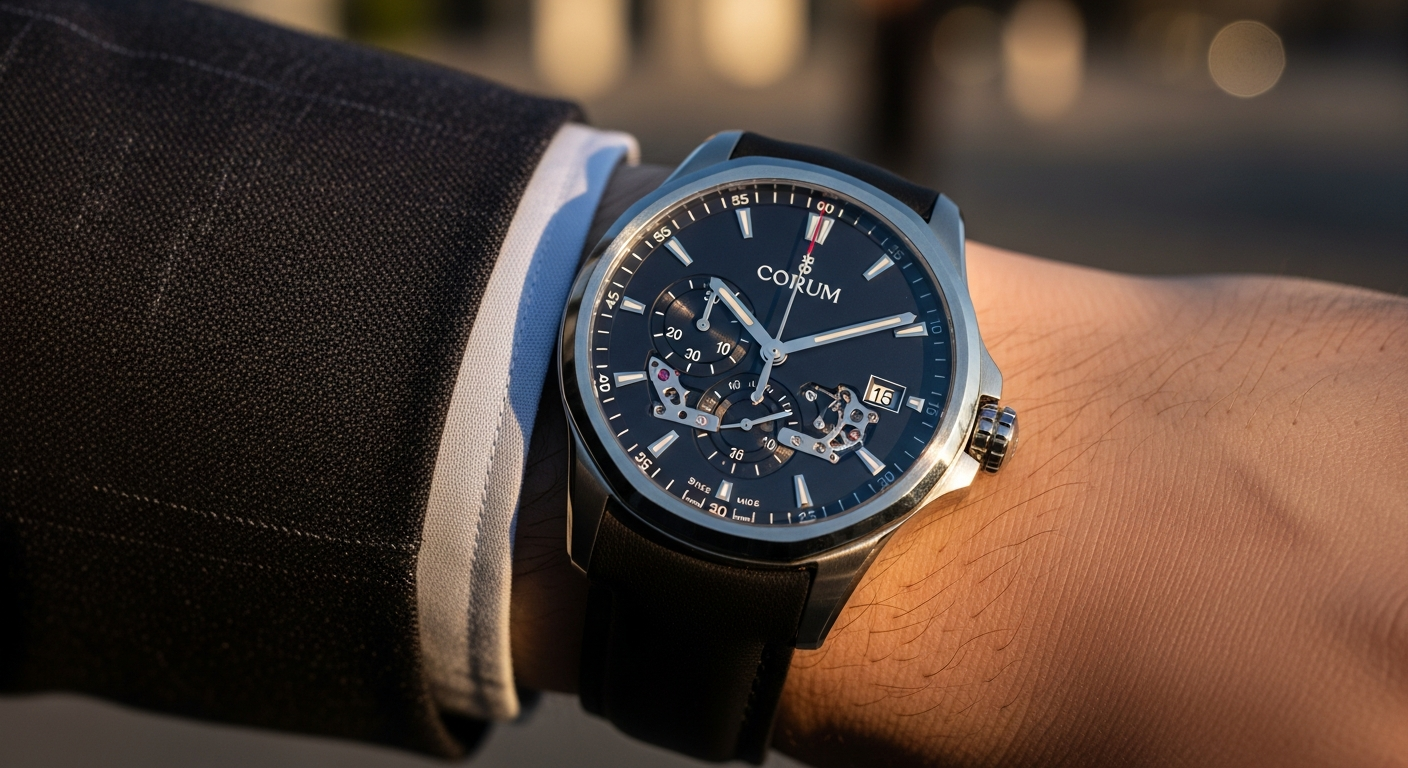
There is a certain kind of watch brand that survives because it becomes inevitable. It builds a shape or a movement or a name so firmly into the architecture of taste that the market, however fickle, keeps returning to it like a familiar street. Corum was never that kind of brand. Corum survived in a stranger way, by being memorable when logic suggested it should have been disciplined, by being theatrical when the industry was trying to be sober, and by betting again and again that somebody, somewhere, still wanted a watch that looked as though it had escaped from a dream.
To understand Corum, you have to picture Switzerland in the mid-1950s, still wrapped in the aura of postwar order. Watchmaking was serious business, full of restraint, precision, and tradition. In La Chaux-de-Fonds, where snow and industry seemed to sharpen one another, the Swiss watch world knew what it was supposed to look like. The safest route was refinement: round cases, discreet dials, elegant signatures, incremental improvements. A watch was allowed to be beautiful, but not usually eccentric. Then, in 1955, Gaston Ries and his nephew René Bannwart founded Corum and chose as their emblem a key pointing upward. It was almost too perfect a symbol, because Corum’s entire history would become a long search for doors that other brands had not yet noticed.
The name itself sounded old, though the company was new. Corum had no centuries-old archive to lean on, no royal appointments from another age, no inherited mythology of marine chronometers or aviation exploits. It had to invent itself, and perhaps that was its hidden advantage. Without the weight of ancestral seriousness, it could play. Bannwart had come from the watch industry, but he was not content to repeat its manners. He understood something that would not become obvious to the wider luxury world until much later: a watch could be more than an instrument, more than jewelry, more than a status marker. It could be a conversation piece. It could be an object with a punchline, a wink, a philosophical proposition, even a little scandal.
In the early years, Corum began sending out signals that it would not behave. The brand experimented with unusual dials and bold design gestures, refusing to accept that good taste had to whisper. Its watches often carried the strange energy of mid-century optimism, that belief that the future might arrive not in gray machines but in gold, color, geometry, and surprise. In a conservative industry, Corum behaved like the guest at a formal dinner who starts telling brilliant, risky stories just as the soup is served. Some people shifted uncomfortably. Others leaned in.
Then came the Coin Watch, which remains one of the most wonderfully improbable ideas in modern horology. The concept was simple enough to sound like a dare: take a real gold coin, slice it with impossible delicacy, hollow it out, and fit a movement inside so that time would be worn literally within money. The first major version used a $20 Double Eagle coin, and the result was both luxurious and mischievous. It was not merely decorated with wealth; it was wealth, transformed into a watch. On the wrist, it collapsed several ideas into one object: currency, craftsmanship, patriotism, extravagance, and time itself. Plenty of brands made gold watches. Corum made a watch out of gold that had once passed as money, as if to suggest that value was always a matter of imagination.
The Coin Watch could have been a gimmick, and perhaps in lesser hands it would have remained one. But Corum treated the absurd premise with technical seriousness. The coin had to be parted and preserved so that its engraved surfaces remained intact. The watch had to be slim enough to carry the illusion. It had to feel not like a novelty from a tourist window but like a luxurious object with the nerve to smile at itself. That balance between craft and audacity became Corum’s peculiar territory. At its best, the brand could make the ridiculous feel inevitable.
This was the paradox that followed Corum through the decades. It was never just eccentricity for eccentricity’s sake. The watches often began with ideas that sounded almost childish in their directness. What if a watch looked like a coin? What if it had no dial and displayed its movement like architecture? What if it wore a tiny golden ingot on its face? What if a bridge became the whole watch? These questions were playful, but making them real demanded expertise. The survival of Corum depended on that tension. The brand could flirt with novelty because it had enough watchmaking ability to avoid becoming a joke.
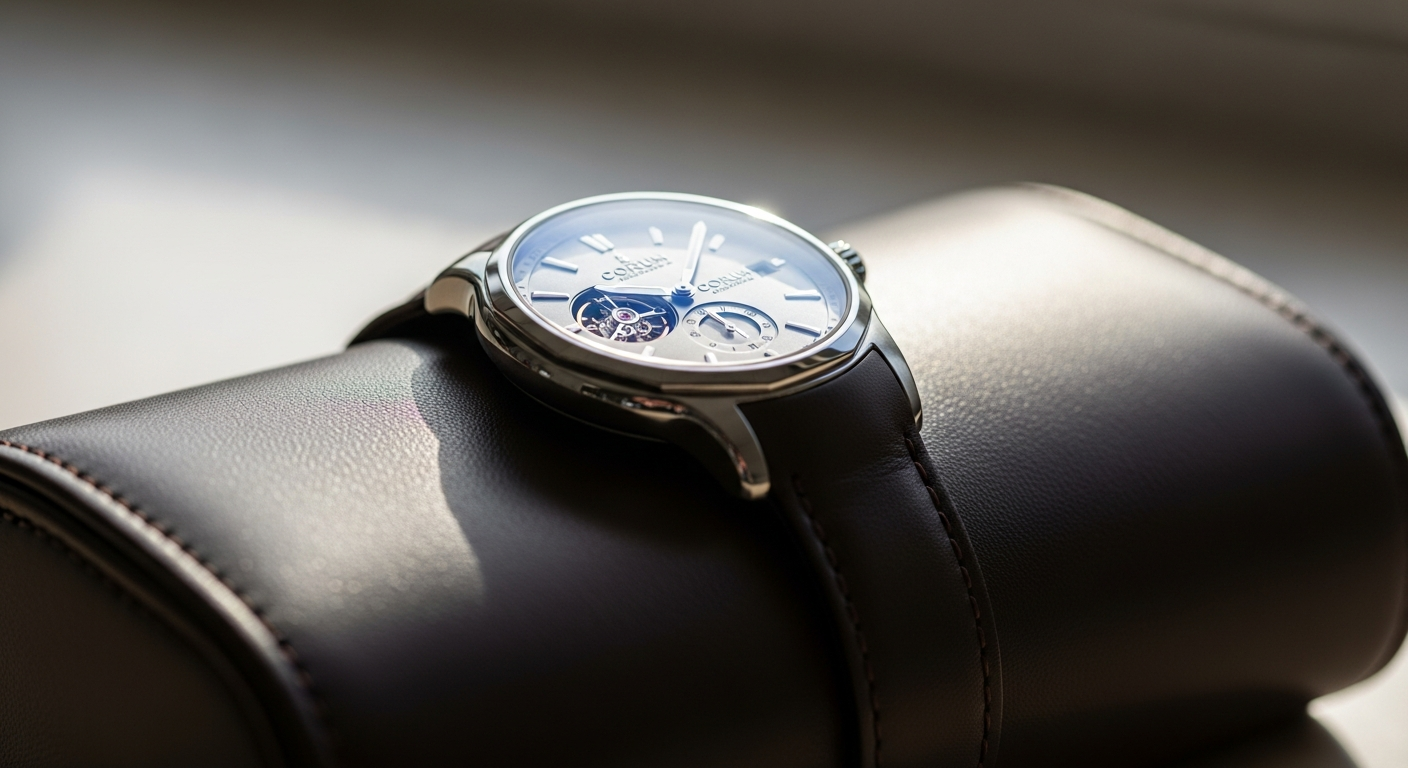
By the 1980s, when quartz had already battered the Swiss watch industry and changed the meaning of survival, Corum produced one of its defining acts of defiance: the Golden Bridge. To see it is to understand how literal and poetic the brand could be at once. A baguette-shaped movement stretches across the case like a suspended avenue, held in view beneath sapphire crystal. There is no hiding place. The movement is not tucked behind a dial or treated as a private mechanism. It becomes the sculpture, the body, the subject. The watch seems to say that time does not need a room; it can live on a bridge.
The Golden Bridge arrived when much of Swiss watchmaking was questioning its own future. Quartz technology had made mechanical watches look old, expensive, and inconvenient. Factories closed, skills vanished, and brands scrambled either to modernize or to insist that mechanical watchmaking still mattered. Corum’s response was neither purely nostalgic nor purely technological. It made a mechanical watch that looked futuristic not because it chased electronics, but because it reimagined how a movement could be seen. That was classic Corum: walking into an industry crisis and answering not with caution but with spectacle.
There is something deeply revealing in that choice. Many brands survive crisis by narrowing themselves, by reducing risk, by repeating the icons that customers already understand. Corum often survived by doing the opposite, by making its identity harder to summarize and easier to remember. This was not always commercially convenient. A brand built on surprise can struggle to create continuity. Collectors like stories, but markets like categories. Corum could make elegant dress watches, nautical sports watches, coin watches, skeletonized fantasies, jeweled creations, and architectural experiments, but the very range that made it fascinating sometimes made it elusive. Ask ten enthusiasts what Corum means, and you may receive ten answers. A key. A coin. A bridge. A bubble. A cup. A skull. A sailboat. A risk.
The Admirals Cup, launched in the 1960s and later evolved into one of the brand’s most recognizable families, gave Corum a more grounded icon, though even here the brand could not resist flair. With its twelve-sided bezel and nautical pennants as hour markers, it turned maritime inspiration into graphic theater. The watch had sporty aspirations, but it was never merely utilitarian. It belonged less to the world of icy instrument watches and more to the imagined deck of a yacht where the sea is deep, the clothing is expensive, and the horizon exists partly for pleasure. For years, the Admirals Cup helped give Corum a commercial spine, a repeatable identity amid the fireworks.
Still, Corum’s story was never smooth. Few independent or semi-independent Swiss brands lived smoothly through the late twentieth and early twenty-first centuries. Ownership changed, management changed, tastes changed, distribution changed. The luxury watch market became both broader and more unforgiving. Mechanical watches returned from near-obsolescence to become objects of passion, investment, and performance, but the renaissance favored brands with strong institutional narratives. Heritage became currency. Archives became marketing engines. The world fell in love with continuity, or at least with the appearance of it.
Corum had heritage, but it was a different kind. Its heritage was not a single unbroken line of conservative excellence. It was a cabinet of curiosities. That made it exciting and difficult. The modern collector, trained by auction catalogs and Instagram feeds, often wants a watch to fit neatly into a lineage. Corum’s lineage is more like a map with hidden passages. It contains legitimate design milestones, but also moments of extravagant eccentricity that resisted the clean seriousness of contemporary collecting culture. This is precisely why the brand inspires affection among those who know it. Corum did not always behave like a brand trying to become a museum exhibit. It behaved like a brand trying to keep watchmaking strange.
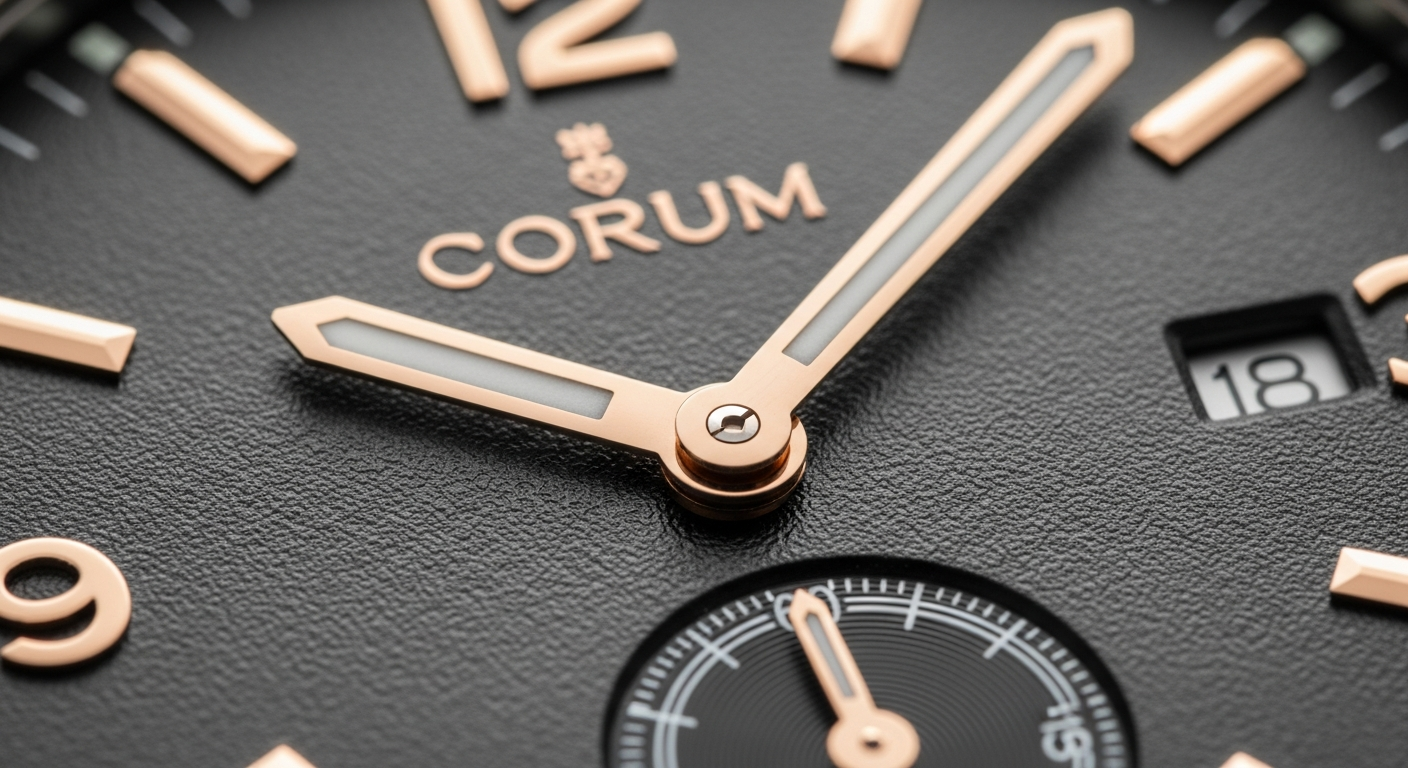
And then there was the Bubble. If the Golden Bridge was Corum as architectural poet, the Bubble was Corum as nocturnal storyteller. First appearing around the year 2000, it took inspiration from deep-sea diving watches and then pushed the idea into something almost surreal. Its huge domed sapphire crystal magnified and distorted the dial beneath it, turning time into a funhouse image. Some versions were playful, some sinister, some comic-book wild. The case was thick, the presence unapologetic. It arrived in an era when large watches were gaining cultural power, but the Bubble was not simply big. It was hallucinatory.
The Bubble has often divided opinion, which is another way of saying it did its job. It refused the polite neutrality that makes many luxury objects easy to approve of and easy to forget. A Bubble on the wrist announces a willingness to be seen. It is not elegant in the old sense, and it does not want to be. It belongs to the lineage of objects that understand taste as a living argument. Some collectors recoil from it; others grin immediately. Corum’s magic has often lived in that grin.
Of course, curiosity alone does not guarantee survival. The watch industry is littered with names that made interesting things and vanished anyway. Corum endured because behind the flamboyance there remained enough substance, enough manufacturing competence, and enough emotional recognition to keep the key turning in the lock. The brand’s best pieces did not merely chase attention; they created images that stayed in the mind. In luxury, memory is a form of capital. A person may not remember the reference number, the caliber designation, or the production year, but they remember the watch that looked like a gold coin, the movement that stretched like a bridge, the crystal that swelled like a bubble of glass.
One reason Corum’s survival story feels curious is that the modern watch world often rewards seriousness to the point of solemnity. Enthusiasts talk about finishing, provenance, case dimensions, waiting lists, auction results, and historical correctness with the intensity of legal scholars. There is nothing wrong with that; watches deserve study. But somewhere in the march toward legitimacy, playfulness can be treated as a vice. Corum reminds us that playfulness is not the opposite of seriousness. Sometimes it is seriousness freed from fear. It takes nerve to make a watch that might be laughed at before it is understood. It takes nerve to build a brand around ideas that a committee might reject for being too obvious, too odd, too theatrical.
The economics of such nerve are complicated. A brand cannot live forever on surprise alone. Surprise becomes exhausting if it is not anchored by quality and coherence. Corum’s history shows both the power and peril of creative volatility. At times, its catalog felt like a brilliant room full of unrelated guests. At other times, that same variety made it feel alive in a way more disciplined brands did not. The Admirals Cup could speak to sporty luxury, the Golden Bridge to mechanical art, the Coin Watch to symbolic opulence, the Bubble to pop surrealism. Rather than one identity, Corum assembled a set of moods. It was less a single character than a theatrical troupe.
This is why the brand occupies such an unusual place in the imagination. It is famous, but not always central. It is respected, but not always fashionable. It is known, but not always understood. Many watch lovers pass through phases where Corum seems too eccentric, too uneven, or too far from the canonical path. Then, sooner or later, one of its creations appears in an auction listing, a vintage shop window, a collector’s post, or on the wrist of someone with unusual confidence, and the reaction returns: there it is, that thing nobody else quite made.
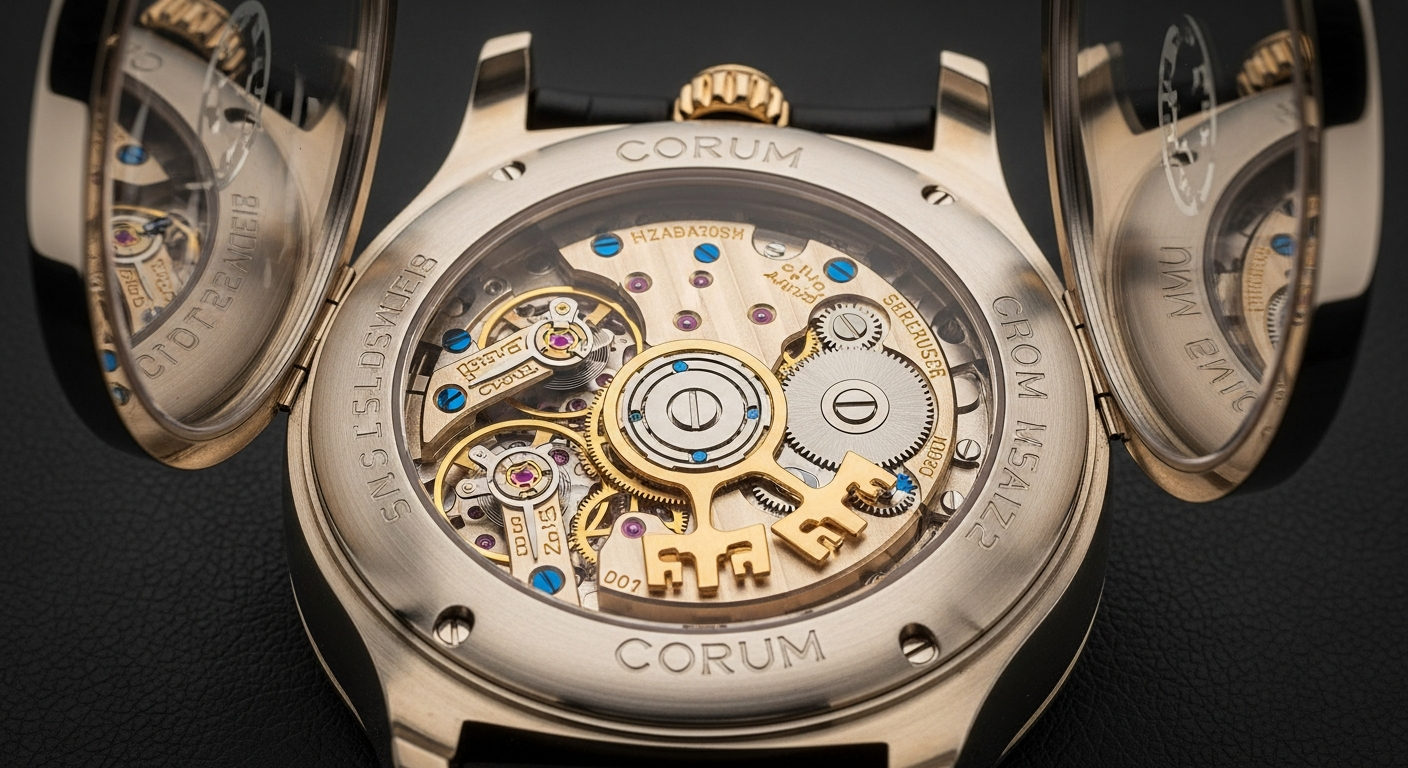
The independent spirit associated with Corum is not the same as independence in a strict corporate sense. Over the years, business realities reshaped the company, and like many brands, it had to navigate ownership, restructuring, and the global luxury machine. Yet the spirit persisted because it was embedded not only in who owned the company, but in what the name had permission to do. Some brands cannot suddenly become eccentric without looking desperate. Corum can, because eccentricity is part of its birthright. The challenge is not whether Corum may be strange. The challenge is how to be strange with purpose.
That question matters today more than ever. The luxury watch market has become simultaneously adventurous and conservative. On one hand, collectors celebrate independent makers, wild dials, new materials, and limited editions. On the other, the most powerful gravity still pulls toward a handful of icons, safe shapes, familiar bezels, and references that seem backed by financial consensus. The appetite for originality exists, but it is often filtered through the desire for validation. Corum’s history feels almost rebellious in this climate, because it suggests that a watch can matter without needing to become universal. It can matter by being particular, by finding the people who understand its frequency.
There is a tender lesson in that. Survival does not always belong to the most consistent, the most famous, or the most approved. Sometimes survival belongs to the memorable. Corum’s story is not that of a brand marching triumphantly from one commercial victory to another. It is the story of an idea that kept reappearing in different costumes. The upward key. The coin split open to house time. The bridge carrying a movement through empty air. The nautical flags circling a bezel. The domed crystal bending reality. Each was a reminder that watches are emotional machines, and emotion rarely follows a straight line.
If Corum has sometimes seemed like an outsider inside Swiss watchmaking, that may be precisely why it continues to fascinate. It belongs to the tradition, yet it keeps tugging at the curtains. It respects craft, yet it likes concept. It understands luxury, yet it is not content with mere polish. In its finest moments, it reveals that horology has room not only for the perfect and the timeless, but also for the odd, the witty, the theatrical, and the brave. The industry needs its monuments, but it also needs its curiosities. Without them, the landscape becomes too tidy, too predictable, too much like a showroom after closing time.
The curious survival story of Corum is ultimately a story about refusing to disappear into good taste. Good taste is useful, but it can become a velvet cage. Corum survived by occasionally rattling that cage, by making objects that people might debate, desire, dismiss, rediscover, and remember. Not every experiment became an icon. Not every era served the brand kindly. Not every watch was beautiful in the conventional sense. But across decades of upheaval, from the quartz crisis to the age of globalized collecting, Corum retained something rare: permission to surprise.
Perhaps that is why the key still feels like the right emblem. A key is not valuable because of its material alone. It is valuable because of what it opens. Corum’s key has opened some strange doors, and behind them the rooms have not always matched. One contains a gold coin ticking quietly. Another holds a transparent bridge of gears. Another is filled with signal flags and sea air. Another is distorted through a glass dome, bright and bizarre as a carnival mirror. To walk through them is to be reminded that watchmaking, for all its precision, is also a form of storytelling.
And stories survive differently than products do. Products must compete with newer products, shinier products, better-priced products. Stories linger. They attach themselves to objects and wait for the right listener. Corum’s great accomplishment is not that it avoided every mistake or conquered every market. It is that it created watches with stories strong enough to outlive the uncertain seasons around them. In an industry obsessed with measuring time, Corum has endured by making time feel curious again.