Seiko’s Luxury Paradox: How Japan’s Watchmaker Built Credibility From Tool Watches to Grand Complications
Seiko doesn’t sell the fantasy of heritage; it sells the proof of competence. In a category where luxury is often narrated through Swiss geography and maison mythology, Seiko’s prestige is built the opposite way—by shipping reliable, thoughtful watches to millions, then using that hard-won credibility to justify everything from serious dive instruments to some of the most meticulously finished dials in modern watchmaking. The result is a brand that can be simultaneously “everyone’s first watch” and a collector’s long-term benchmark—without needing to change its accent to be taken seriously at the top table.
The Luxury Paradox: Seiko’s Prestige Wasn’t Announced, It Was Accumulated
Most luxury watch narratives begin with a house style and a founding myth, then invite the buyer to step into the story. Seiko’s story runs the other direction: competence first, romance later. The brand’s credibility is less about being from a particular valley and more about being the company that delivered functional, well-engineered watches at scale, year after year, and then used that trust to push engineering boundaries without asking permission.
This creates a paradox that still confuses casual buyers and even some collectors: Seiko can feel ubiquitous and elite at the same time. It sits in department stores and specialist boutiques; it makes daily beaters and watches finished to standards that invite loupe work. The connective tissue is not price escalation for its own sake. It’s a ladder of legitimacy built from a culture of vertical integration, manufacturing discipline, and a bias for solutions that work in the real world.
Vertical Integration as Strategy, Not Trivia
“In-house” has become a marketing suffix in Swiss luxury, often used to suggest purity even when it simply means a movement was assembled under one roof. Seiko’s integration is older, broader, and more operationally meaningful. The company’s strength has long been its ability to design, manufacture, regulate, and industrialize almost every critical component—movements, cases, dials, hands, crystals, lubricants, springs—while maintaining a feedback loop between engineering and production.
This matters because it changes the economics of credibility. A brand that controls its technical stack can iterate faster, solve problems methodically, and keep consistency across price tiers. The result is something Seiko leverages quietly: when it introduces a new escapement architecture, a new regulation approach, or a new dial process, it can bring that learning down the range over time. Seiko’s “luxury” therefore reads less like exclusivity and more like the top of an engineering pyramid—an apex built on decades of shipped product.
Collectors sometimes frame vertical integration as a sign of seriousness at the high end. With Seiko, it’s also the reason the low end often overdelivers. That creates a long-term relationship with the buyer: the first Seiko is purchased for practicality, but the next one is purchased because the buyer already trusts the brand’s competence.
Seiko 5 and the Compounding Effect of Reliability
If you want to understand Seiko’s luxury positioning, start with the opposite of luxury: the affordable automatic. Seiko 5, in its various eras and interpretations, built an enormous installed base of owners who learned that mechanical watches can be resilient, accurate enough, and enjoyable without the anxieties that often accompany entry-level Swiss mechanicals.
The strategic impact is difficult to overstate. A first watch is a brand imprint. For many, Seiko 5 didn’t just introduce a purchase; it introduced the habit of wearing a mechanical watch daily. That habitual trust compounds. It becomes a mental reference point against which future purchases are evaluated, including far more expensive watches from other brands.
What Seiko gained here was not margin, but legitimacy. By proving basic competence at scale—durable cases, robust movements, sensible servicing expectations—it established a baseline expectation: Seiko makes watches that behave. This is the foundation of the brand’s luxury paradox. When Seiko later asks collectors to take its highest-end products seriously, it is not asking for belief. It is asking for recognition of a track record.
Prospex: Tool Watches as Credibility Engines
Prospex is often discussed as a product family, but it’s more strategically useful to see it as a credibility engine. Dive watches, field watches, and professional-tinted sports models are the hardest categories in which to fake authenticity. They have objective requirements—legibility, durability, water resistance, bezel action, lume performance, shock tolerance, bracelet integrity—and they are judged ruthlessly by actual use.
Seiko’s long relationship with functional sports watches, especially divers, has become a substitute for the traditional Swiss luxury narrative. You don’t need to be told Seiko is serious; you can measure it in case geometry that wears well, lume that embarrasses competitors, and movements that prioritize stability over thinness. Even the brand’s quirks—non-standard lug widths, distinctive case shapes, conservative regulation from the factory—read less like carelessness and more like a company optimizing for real-world reliability rather than showroom perfection.
Prospex also functions as the middle rung in Seiko’s ladder. It’s where many enthusiasts first encounter the idea that Seiko offers not just value, but intention: design choices made for performance and wearability, not for trend compliance. Once you accept that, the jump to more rarefied Seiko—higher-end mechanicals, specialist dials, more refined finishing—feels like a continuation, not a rebrand.
Innovation as Quiet Marketing: Quartz, High-Beat, Spring Drive
Swiss luxury often uses continuity as proof. Seiko uses technical achievement. That is not a claim of superiority; it is a different route to authority. Even the quartz story, which is usually framed as an industry disruption, doubles as a statement about Seiko’s culture: precision as a moral preference, and industrial capability as a competitive weapon.
Collectors sometimes separate “innovative” from “luxurious,” as if innovation belongs to electronics and luxury belongs to tradition. Seiko’s best work challenges that separation. High-beat mechanical movements are not nostalgia plays; they are engineering decisions with tradeoffs in lubrication demands, wear, and regulation. Spring Drive is not a novelty; it is a coherent philosophy about timekeeping stability and smooth energy release, executed at manufacturing scale with discipline.
Crucially, Seiko doesn’t talk about these innovations with the anxiety of a challenger brand. It releases them, refines them, and lets the secondary market and the enthusiast press do the arguing. The effect is strategic: innovation becomes marketing without needing to be marketed. Over time, that builds a different kind of luxury aura—one rooted in technical literacy.
Grand Seiko-Level Finishing: When the Proof Becomes Aesthetic
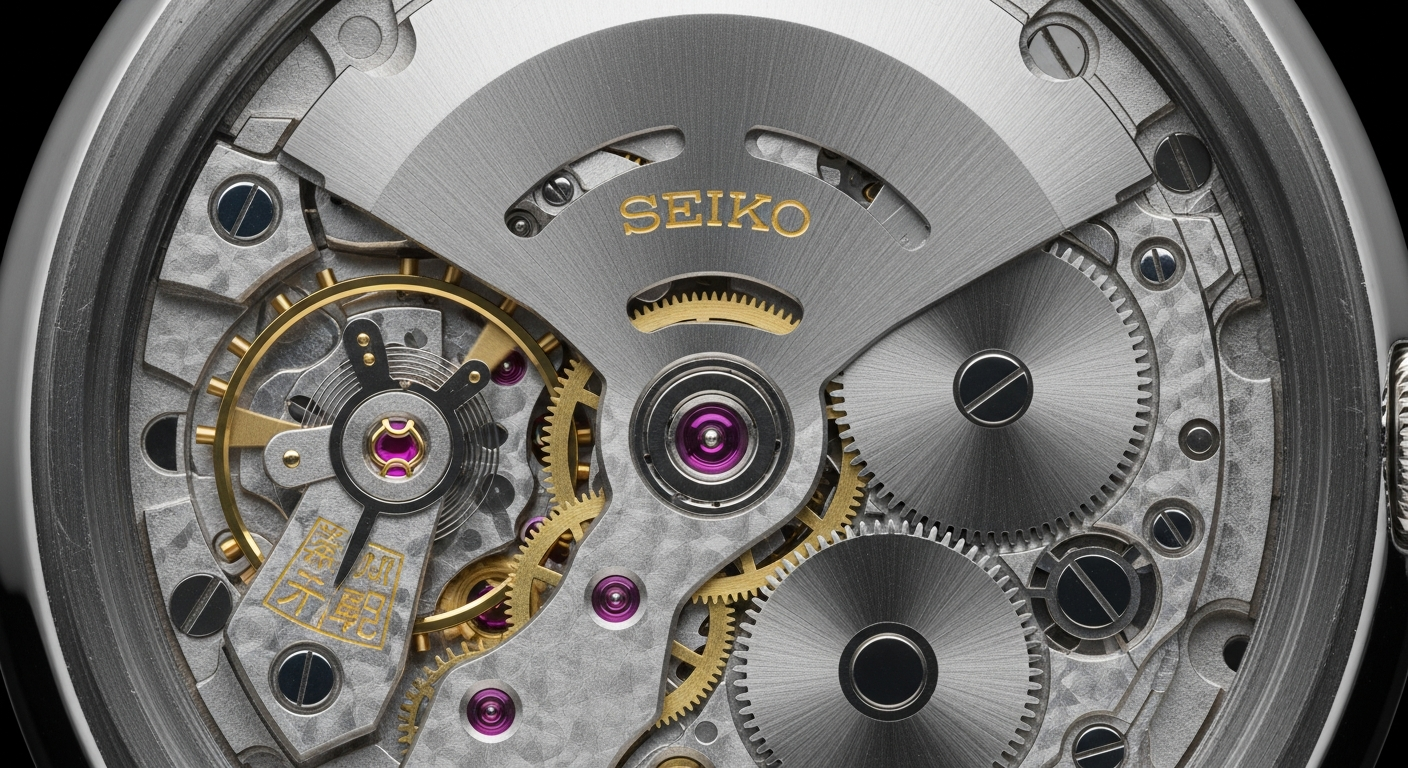
At the top end, Seiko’s luxury case is strongest when it stops trying to resemble anyone else. The best Grand Seiko-era work does not win by borrowing Swiss codes; it wins by presenting finish quality and dial craft as a Japanese expression of discipline. The transition from tool-watch credibility to high-end desirability happens when Seiko’s competence becomes visual.
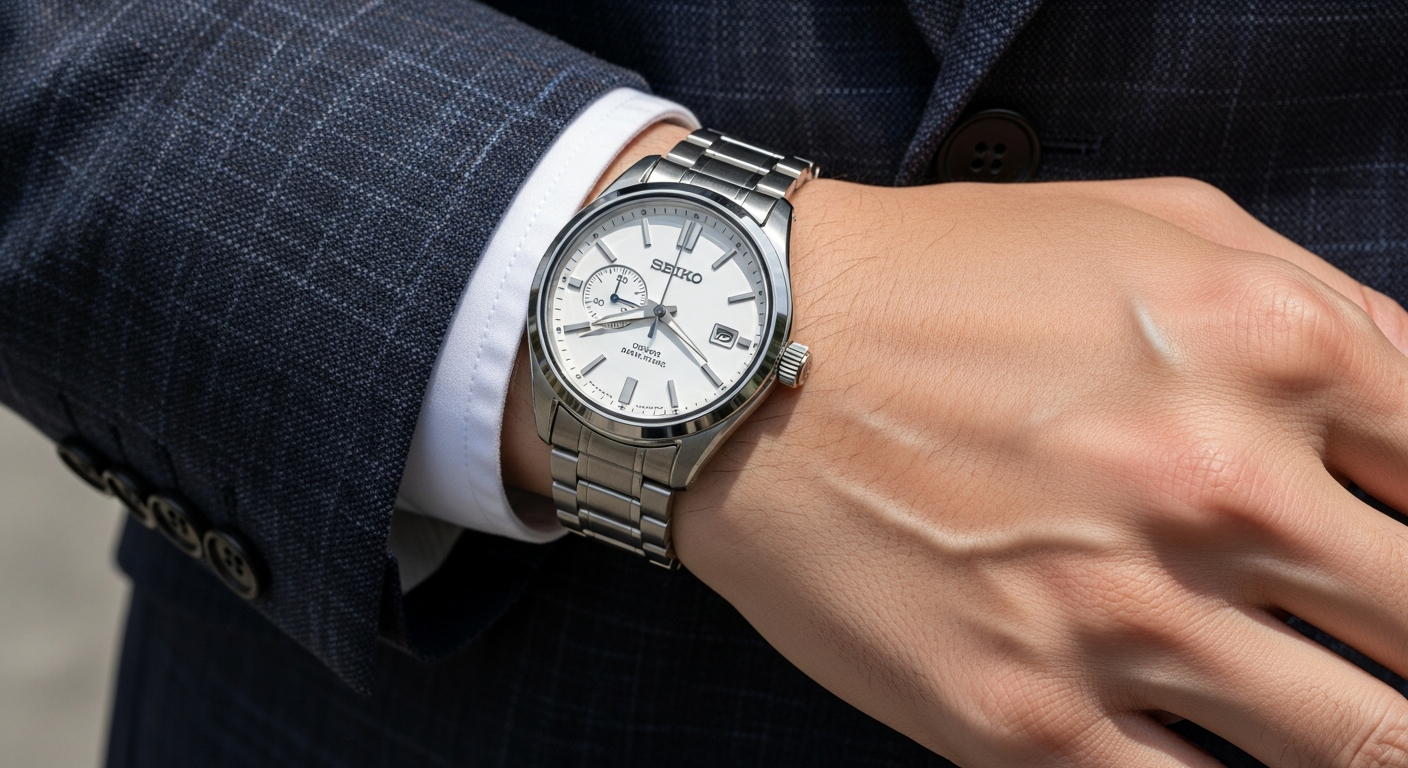
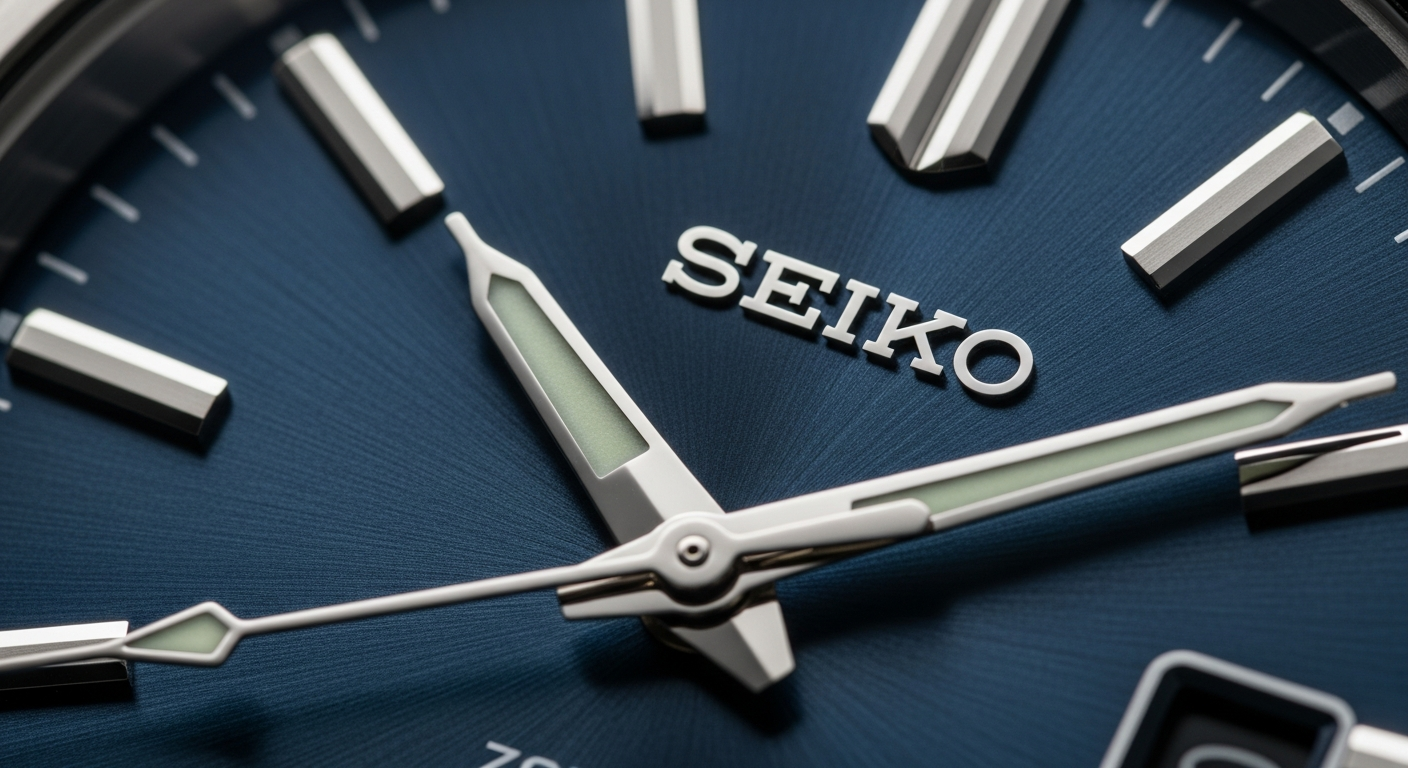
Dials are the most obvious example. Texture, light play, and restraint—often executed with a level of consistency that suggests manufacturing rigor rather than artisanal randomness—create watches that reward repeated viewing. The appeal isn’t loud. It’s insistently precise. Hands and indices that catch light cleanly, surfaces that look calm until you tilt the case, and finishing that reads as deliberate rather than decorative.
Casework and polishing are another inflection point. The collector response to sharp transitions, distortion-free mirrored planes, and controlled brushing is not just about beauty; it is about evidence. These are surfaces that require process control. They suggest a company that can standardize excellence, not only achieve it occasionally. That matters because Seiko’s entire luxury story rests on repeatability: competence that scales, not perfection that happens once.
This is where Seiko’s paradox becomes functional. A buyer who started with an entry-level Seiko is not stepping into an alien world when considering something far more premium. The brand language is consistent: clarity, precision, and purpose, simply executed with greater refinement.
The Ladder of Legitimacy: A Cohesive Range Without a Costume Change
Many brands struggle to sell both entry-level and luxury without diluting one side or turning the other into cosplay. Seiko’s advantage is that its ladder is built on the same attribute at every rung: trust. Seiko 5 earns it through accessibility and durability. Prospex earns it through performance credibility. The high end earns it through finishing and technical distinctiveness.
This continuity is strategic. It reduces the psychological friction of trading up. The buyer isn’t paying more for a different brand identity; they are paying more for additional layers of competence—precision, finishing, material execution, movement architecture, and dial craft. Seiko’s best products aren’t luxury because they are expensive. They are expensive because they are labor- and process-intensive in ways collectors can detect.
It also means Seiko can maintain a mass presence without eroding prestige, provided the upper tiers remain genuinely excellent. The risk for most brands is that broad availability signals commoditization. Seiko’s counterargument is simple: millions of watches in the wild can be a credibility asset if those watches keep performing.
Where Seiko Wins—and Where the Market Still Resists
Seiko’s engineering-first luxury strategy wins with buyers who care about product reality. It wins with collectors who have owned enough watches to value stability over story. It wins in categories where performance can be felt on-wrist: lume, legibility, case ergonomics, bracelet durability, and movement resilience.
Where the market resists is equally revealing. The highest end of luxury is still, in part, a social language—signals, recognition, and inherited prestige. Seiko’s “earned” luxury does not always translate into immediate status in the way Swiss maisons can. Some buyers want the mythology as part of the product. Seiko offers a different proposition: the satisfaction of owning something that is excellent even when it isn’t universally recognized as such.
There are also practical tensions. Seiko’s range breadth can create pricing confusion. Limited editions and regional variants can feel like noise. And because Seiko’s identity is not anchored to one narrow aesthetic, it occasionally produces designs that polarize. Yet these are the tradeoffs of a brand that prioritizes engineering and manufacturing capability over a single, fixed style doctrine.
The Strategic Lesson: Luxury That Feels Earned Is Hard to Dislodge
Seiko’s luxury paradox is ultimately a durability story. Not just the durability of its tool watches, but the durability of its reputation—built by delivering competence at scale, then proving that the same culture can produce refinement without abandoning its roots.
In a market that often elevates narrative above product, Seiko remains a brand that earns its authority through execution. That makes its prestige harder to dismiss and, over time, harder to compete with. The collector who learns to trust Seiko at the entry level is already halfway to trusting it at the top. Not because the brand told them to, but because the watches did the work.